Rendering Leaf Lard

Leaf lard surrounds a pig’s kidneys and is of very high quality. Leaf lard enjoyed a revered place on the baking counter, until it was usurped in the early part of the 20th century by the brilliant needs no refrigeration marketing campaign of vegetable shortening.

To Render:

  • Ask your butcher for leaf lard and not back fat. Five to 6 pounds is a decent amount to make 4 or 5 pints worth. Look at it to make sure it doesn’t have a lot, or preferably any red meat on it. If it has a lot, it may be back fat which is not as high quality.
  • With a clean sharp knife, chop the fat into small pieces about the size of an almond.
  • Cover the bottom of a heavyweight stockpot with a bit of water. Spread the pieces of fat evenly over the surface of the pan.
  • Turn the burner to low, and set the pot on top. Then relax and stir occasionally while the fat melts. The white fat will turn clear as it melts. Five to 6 pounds of fat can take three hours or so in the oven, but less time on the stovetop.
  • Be sure that the fat doesn’t scorch or it will give a noticeable flavor to the finished leaf lard.
  • When most of the pieces are melted, carefully pour the clear hot fat through a double layer of cheesecloth and into a bowl. Ladle out any remaining fat bits and finish by ladling into jars. Let cool completely before you put on the lids.
  • To freeze, you can let the rendered leaf lard cool completely in the bowl, weigh out 4-ounce pieces, individually wrap, and freeze in dated freezer bags.
  • When you feel a pie making or biscuit session coming on, you’re already one step ahead.

Offal: Butchering a Beef Heart – Chris Cosentino (Video)

What is Offal?

• Edible internal organs: the edible, mainly internal organs of an animal, e.g. the heart, liver, brains, and tongue, sometimes regarded as unpalatable.
• Literally mean “off fall,” or the pieces which fall from a carcass when butchered.
• Meat which is used as food which is not skeletal muscle.
• Aka. Organ meats and variety meats.
• Ex. Heart, liver, kidneys, brains, tongue, tails, feet, etc.

Beef Heart was described by Michael Ruhlman,

“Heart is an excellent muscle to eat: it’s lean and flavorful (meaty but not organy—it’s a hard working muscle, not squishy spleen), it’s got a good bite, and it’s inexpensive (I bought the three-pound grass-fed beef heart for six bucks last Saturday). And one more thing: it puts to use a cut that is often thrown away; it’s important that we do our best to make use of all parts of the animals we kill for our food.”

This video shows Chris Cosentino cleaning a beef heart.

Culinary Fun Fact: Salmon Pin Bones

Food Scientist Harold McGee tells us in “On Food and Cooking,” (Scribner 2004) that fish in the herring, salmon, and related families have these pin bones to “help stiffen some of the connective-tissue sheets and direct the muscular forces among them.” Other members of the salmon family include steelhead, trout, whitefish, and Arctic char. Basically, the pin bones allow the fish to swim faster.

Veal Cut Profile: Veal Shank

Description: Veal shank the lower portions of both the front and rear legs, is legendary for its rich, smooth, melting texture.

Meat Characteristics: Shank meat is tough and lean, with small muscles surrounded by connective tissue. Braising turns it smooth and rich.

How much should I buy: For Osso Buco one crosscut round, 12 to 20 ounces each, per person. A whole shank serves four.  You may also serve a smaller whole veal shank.

Common flavor combinations: Bay leaves, cilantro, cinnamon, cumin, garlic, golden raisins, lemons, marjoram, oranges, porcini mushrooms, red onion, white truffles, white wine.

Beef Cut Profile: Beef Rolls

82016A8E-6423-4951-920D-3EB13414634B

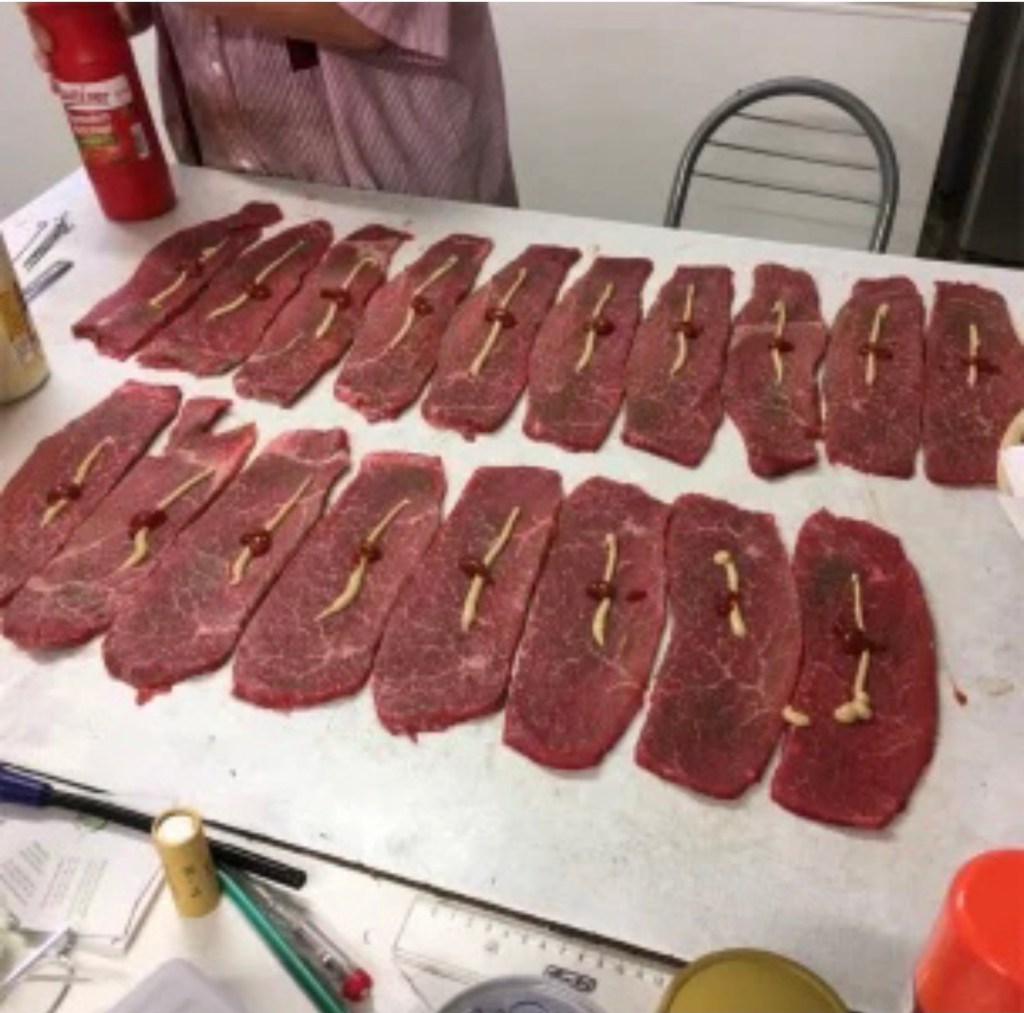
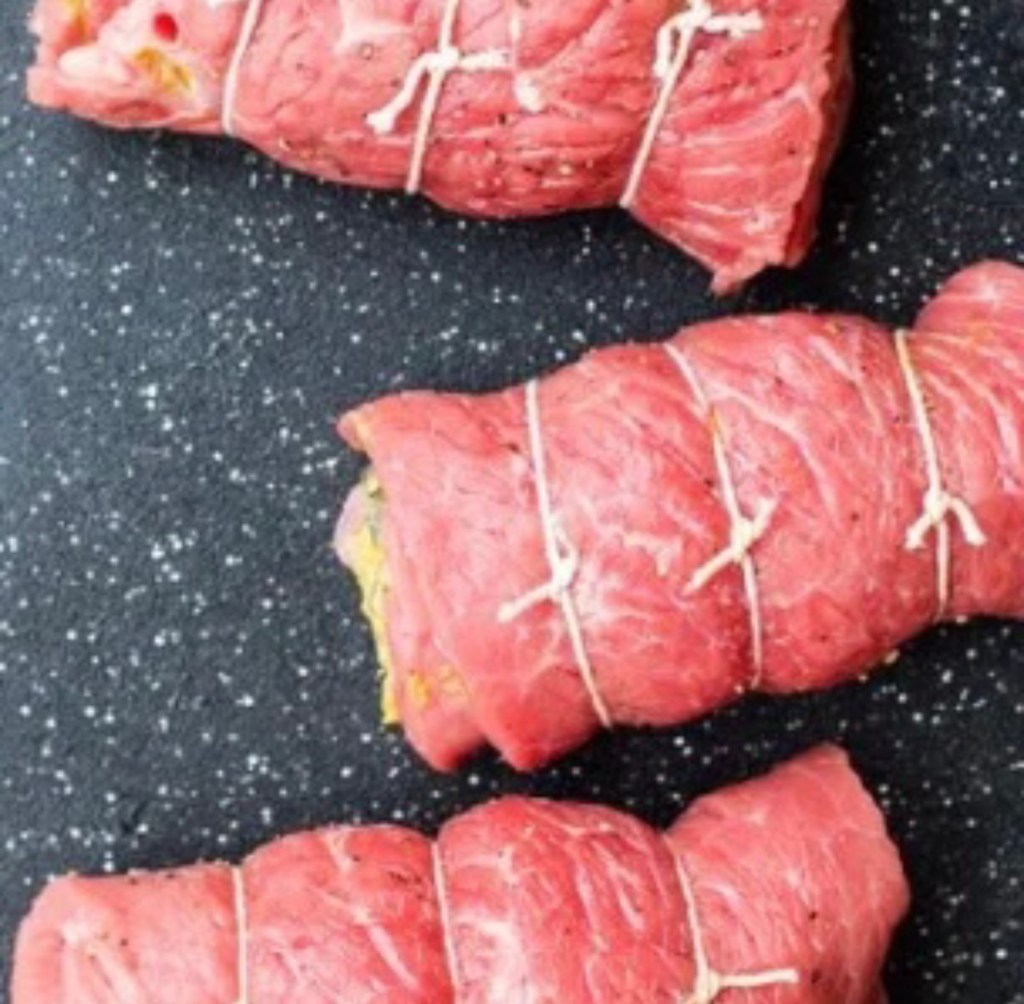
Description: Beef rolls are thin slices of beef that can be filled, rolled up, and then braised. Beef rolls originated in medieval times when cooks prepared thin slices of beef, veal, or mutton with a stuffing.

Other Names: Beef olives, braciole (southern Italian), involtini (Italian, usually veal), paupiettes and roulades (French), roll-ups, Rouladen (German).

Meat Characteristics: Beef rolls are made from tough cuts of beef, which become tender when braised.

How Much Should I Buy: Choose the largest slices of single-muscle meat sliced about ¼ inch thick. About 4 ounces per person.

Common Flavor Combinations: Basil, capers, garlic, lemons, mustard, onions, Parmesan cheese, prosciutto, red wine, tomatoes.


Beef Cut Profile: Short Ribs

Description: Short ribs are cut from the 12 ribs that start at the chuck and continue to the loin. Relatively square, short ribs have full-bodied flavor and luscious tenderness that develop when they are slow-cooked by hot-smoking, slow-roasting, or braising. Short ribs are especially popular in Korean, Chinese, and Jewish cuisines.

Meat Charcteristics: Short ribs consist of dense layers of rather tough, medium-coarse grain meat interwoven with layers of fat and connective tissue. They usually include the rib bones.

How much should I buy: Buy at least 1 pound of bone-in short ribs per person to allow for bone and shrinkage. Allow ½ pound of boneless short ribs per person.

Common flavor combinations: Cilantro, garlic, ginger, green onions, molasses, mushrooms, onions, red wine, sesame oil, soy sauce, thyme.

Note: They’re not as inexpensive as they used to be as they are rather in vogue right now, but still much cheaper than a quality steak.