Seasoning Meat for Greens

“TOO MANY PEOPLE THINK MEAT, often fried meat, sits at the center of the Southern plate. Maybe it does today, but historically we ate large pieces of meat once or twice a week. The rest of the time, cooks used “seasoning meat” as a condiment—a means to round out a vegetable-and-grain-focused meal. Seasoning meat is usually pork, but never a fancy cut. Instead, it is every nook, cranny, nugget, and bone salted, smoked, or ground into sausage to lend flavor to pots of anything you can boil.”

~ Vivian Howard

Air-Dried Sausage: The seasoning meat of choice in Eastern North Carolina.  The tang and funk is unforgettable.

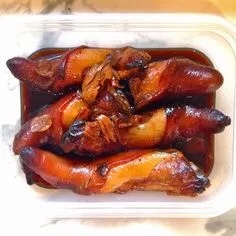
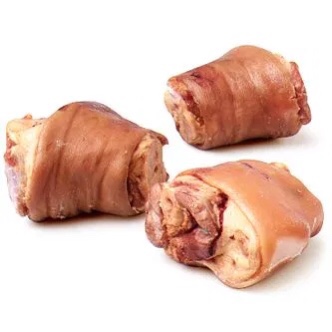
Smoked Pig Tails: An often overlooked option.  These little morsels will give off a lot of flavor especially if you have them split it half.

Smoked Pig Trotters: That’s pig’s feet to most of us.  Have the butcher split them in half so they give up their fat and flavor.

Smoked Ham Hocks: This is the seasoning meat everyone thinks of when making collards or other greens.  That’s for good reason As hocks offer flavor, body, and good-size chunks of meat.  It takes a long Cooking time to coax the flavor and meat out of these, but it’s time we’ll spent.  Oh and then the potlikker.

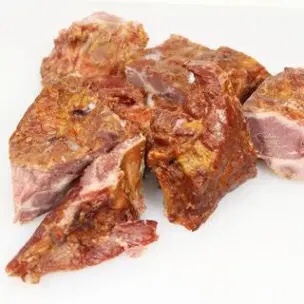
Smoked Neck Bones: These nuggets do double duty as seasoning meat and centerpiece.  They have a almost obsessive following that loves to gnaw at the luscious bits of meat.

Belly Bacon or Jowl Bacon: Bacon is typically made from the belly, but their cousin jowl bacon is fattier and more flavorful.  Both are a cured and smoked meat that can either be rendered in the pot before water is added or simply added with the water.  You might consider rendering half of it and then adding the rest with the water for a more complex seasoning.

Fatback: It’s just what it sounds like the fat from the back of the pig.  If you’re going to use it as seasoning meat first cure it in salt and treat as you would bacon.  It can also be used to make lard, but not as coveted as leaf lard.

Pickled Pork: A staple of Creole and Cajun cooking that is often added to red beans and rice.  Usually made from Pork butt or pork belly.

Smoked Country Ham: If you have a limitless budget this is an option. It lacks fat for the most part and thus won’t add as much flavor. A better place for it is as the centerpiece of a meal, on a biscuit or with grits. It’s up to you though if you wish to experiment.
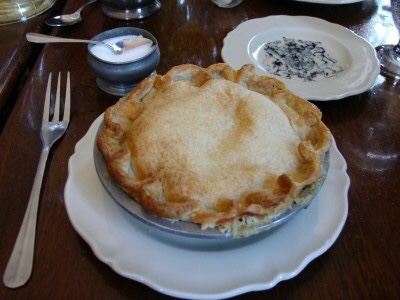
“Kings Arm Tavern” Inspired Chicken Pot Pie

1 whole chicken, about 2 lb.
2 ribs celery, chopped
1 med. onion, sliced
1 bay leaf
1 tsp. salt
1/2 tsp. white pepper
1/2 c. butter
1/2 c. flour
1 (10 oz.) pkg. frozen peas
4 ribs celery, diced and cooked
4 carrots, sliced and cooked
4 potatoes, diced and cooked
1 egg
2 tbsp. milk
Pastry crust

Put chicken on stove to cook in a large saucepan with enough water to cover. Add 2 ribs of celery, chopped onion, bay leaf, salt and pepper. Bring water to a boil, reduce to a simmer and cook until chicken is done. Remove fat and strain stock. Discard chicken and bones and cut chicken into large pieces.  For a quick cheat see note.

Melt butter and flour. Cook 5 minutes making a roux stirring constantly. Add enough chicken stock, stirring constantly, to achieve sauce consistency desired. Simmer 5 minutes. Salt and pepper to taste. Divide chicken and cooked vegetables equally into 6-8 individual casseroles or 1 large one.

Add sauce to amount desired.  Mix egg and milk together to make egg wash. Cover each casserole with pie pastry, brush with egg wash, and puncture pastry with a fork in several places to allow steam to escape. Preheat oven to 375 degrees for 10 minutes before the pies are to go in the oven.  Bake at 375 degrees until crust is golden brown.

Note: A quick cheat is to use a rotisserie chicken to reduce cooking time on stove.

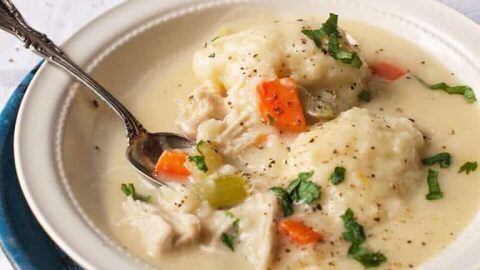
“Williamsburg Inn” Inspired Chicken & Dumplings

  • 1 Stewing chicken (4 to 5 Pounds)
  • 1 small onion sliced
  • 1 Carrot sliced
  • 2 Ribs celery chopped
  • 1 teaspoon Salt
  • 4 tablespoon butter
  • 6 tablespoons of flour
  • 1⁄8 teaspoon Paprika
  • 1⁄2 cup light cream
  • Pepper, to taste

Dumplings

  • 2 cups All-purpose flour
  • 1 teaspoon Salt
  • 4 teaspoons baking powder
  • 1 tablespoon Shortening
  • 3⁄4 cup Milk

Simmeri the chicken, onion, carrot, celery, and salt in enough water to cover until the chicken is done, 1 ½ to 2 hours.  Remove the chicken from the broth.  When it is cool enough handle, remove the skin and bones and dice the chicken.

Strain the stock and, if necessary, add enough water to make 1 quart.  Melt the butter in a saucepan.  Stir in the flour mixed with the paprika.  Add the chicken stock gradually, stirring constantly; cook for 2 minutes.

Add the chicken, cream, and pepper and adjust the seasoning to taste.

For dumplings combine the dry ingredients. Blend in the shortening with a fork.  Add the milk and mix well.

Spoon the dumplings on top of the gently bubbling chicken mixture and cover.  Cook for 15 minutes without lifting the lid.

Serve.

“Stephenson’s” Inspired Baked Chicken ‘N’ Butter and Cream

  • 1/2 cup flour
  • 1 1/2 teaspoons salt
  • 1/2 teaspoon paprika
  • 1/4 teaspoon pepper
  • 4-6 bone in chicken breasts
  • 1/4 cup butter
  • 1 1/2 cups whole milk

Dip chicken in water.  Coat with mixture of flour and seasonings. Place skin side down in a 13x9x2 baking dish. Dot with butter. Bake at 350 degrees for 30 minutes.  Pour milk around chicken.  Bake 1-1 1/4 hours more or until chicken is tender.