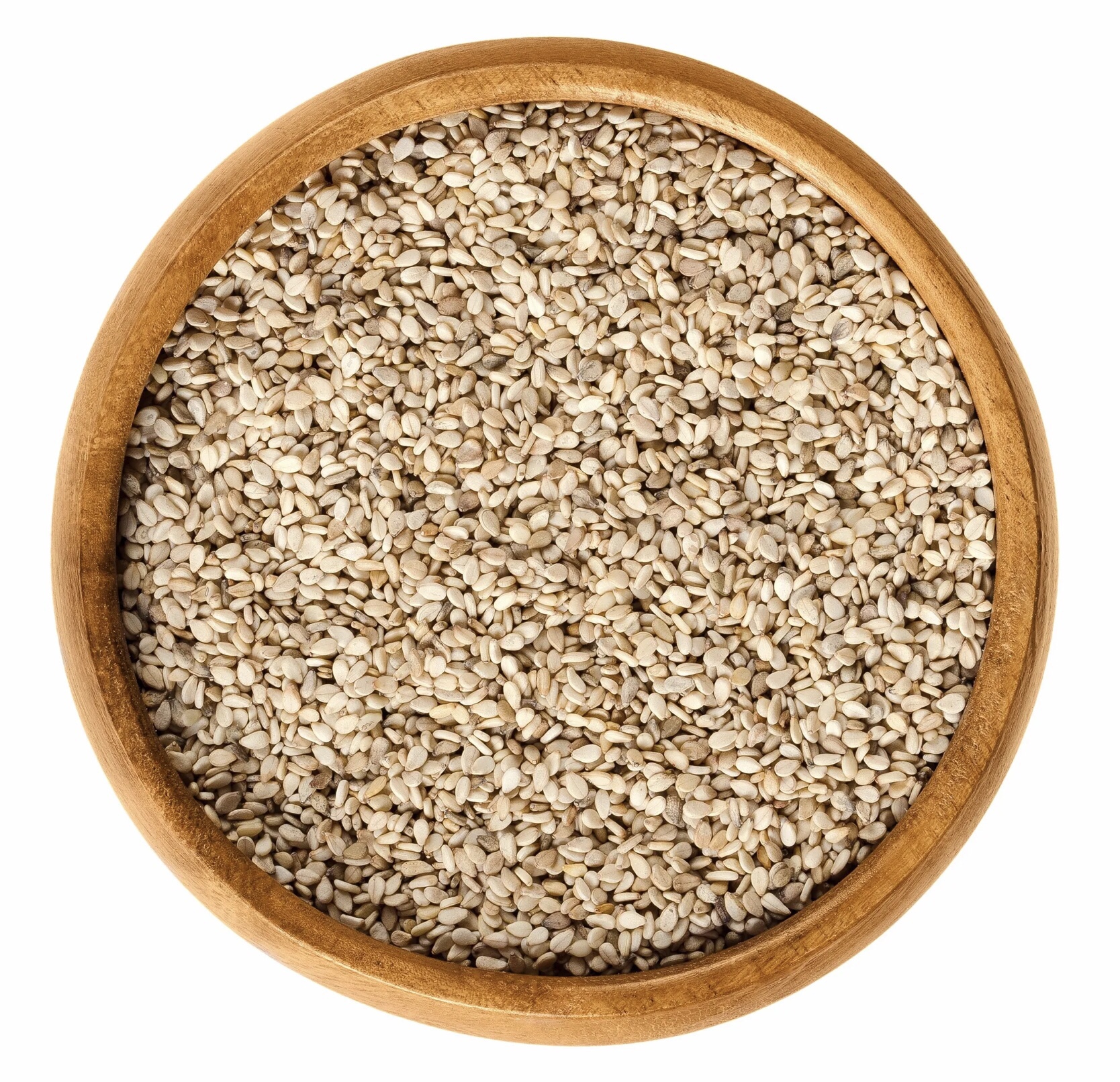
A benne seed is to a run of the mill sesame seed as a juicy heirloom tomato is to the anemic supermarket variety. They may look the same, but there’s a world of difference in taste. Benne came to the South from West Africa by way of the slave trade, the plant often grown in secret by the enslaved, who used the leaves, stems, and seeds as both a nutritional supplement and a flavor enhancer.
Over the years, as benne became commoditized and was grown mostly for oil, those flavorful seeds became the more muted sesame seeds we know today. With a renewed interest among history-minded chefs and farmers, heirloom varieties of the seed have made something of a comeback in the South, though short of a trip to a Charleston-area farmers’ market, your best bet is ordering a bag from culinary revivalist Anson Mills. So, no, the benne seed is not the sesame seed, exactly; the benne seed is living history.
Source: S Is for Southern by Editors of Garden and Gun
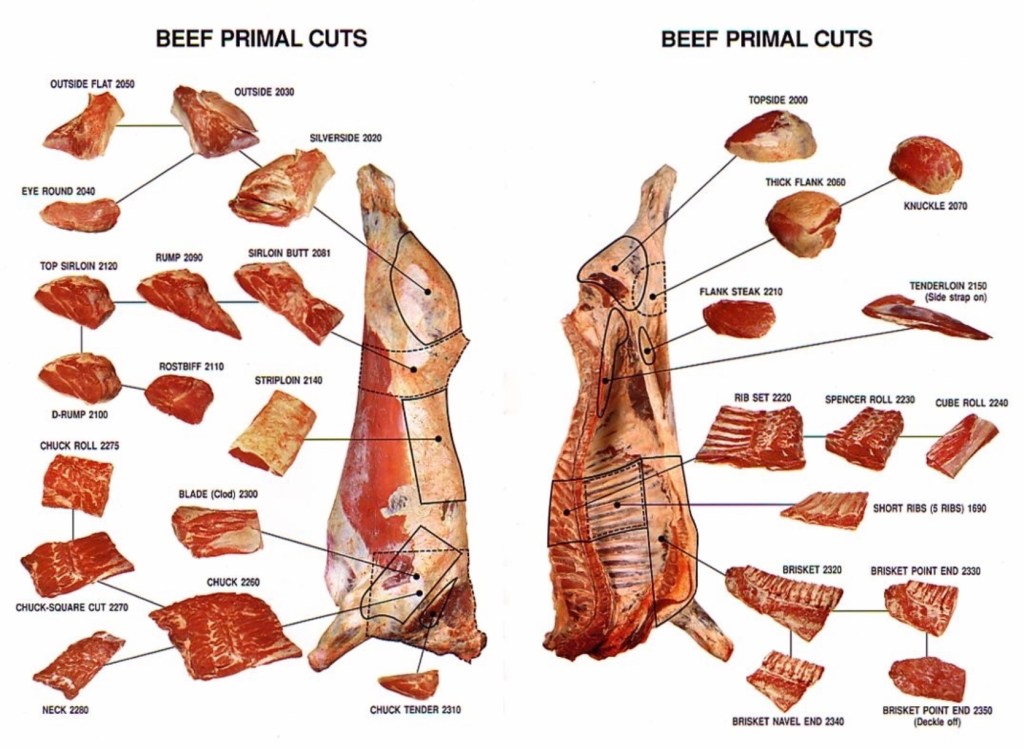
The beef knuckle is a sub-primal from the beef round. It weighs approximately between 9 to 14 lbs., depending on the carcase weight.
The knuckle goes by many names: The ball of the round, sirloin tip, round tip, tip center (centre in UK and Ireland) and sometimes thick flank, beef ball tip roast, sirloin tip roast and French roll roast (there are different names around the world).
After the knuckle cap is removed this is a very lean beef cut. The beef knuckle is a very versatile beef sub-primal cut and a great source of lean beef.
There are four main muscles in the Beef Knuckle including the knuckle cap. This outer layer has a small piece of meat but mainly consists of dry connective tissue that should be removed.
The femur muscle
This is the muscle that is attached to the femur and has a fair bit of fat and gristle that needs to be removed. It also has a layer of connective tissue from where it connected to the femur. When trimmed, this muscle is great for lean ground beef.
The wedge muscle
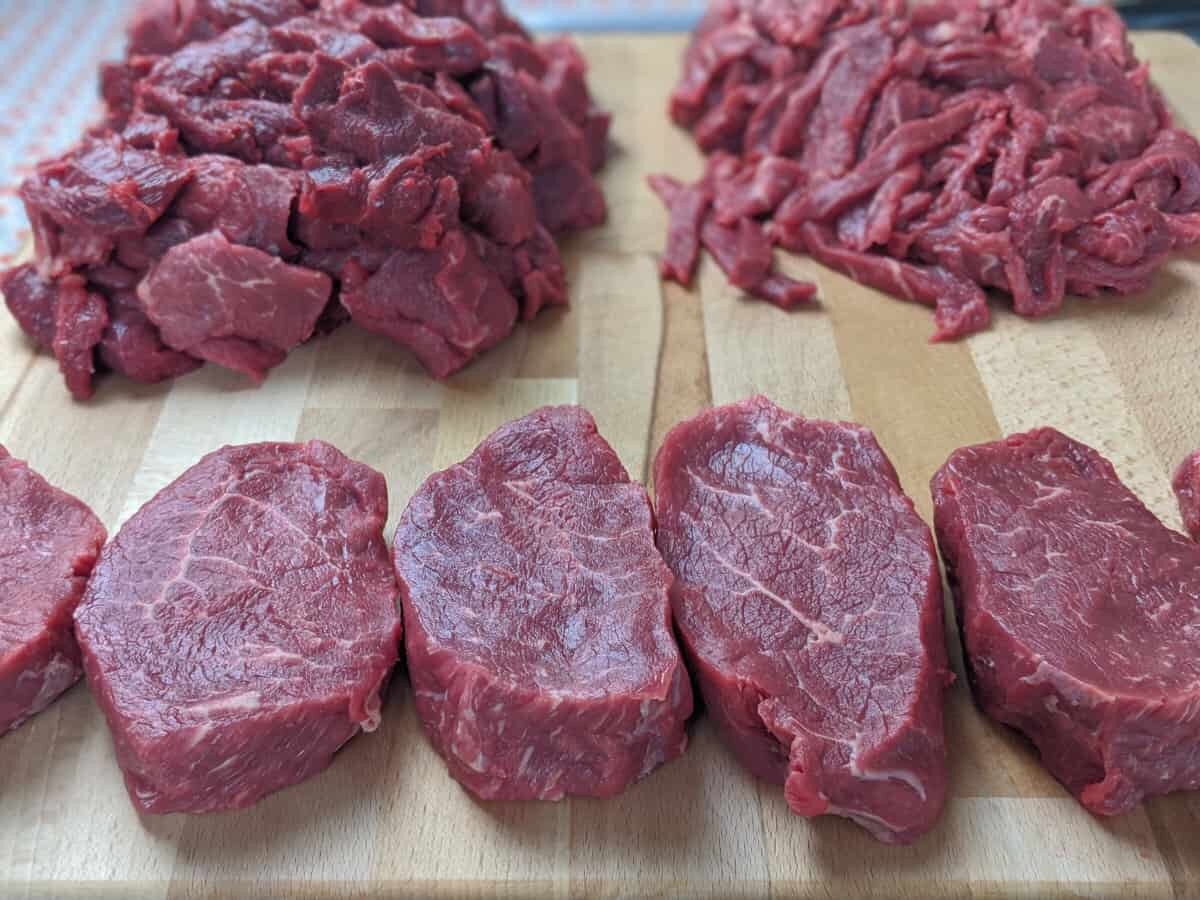
This one is a solid lean piece of beef with a thin outer covering of connective tissue on the outside and a thick silverskin on the inside. When it is completely trimmed, there are many options for this cut. Diced for stews, casseroles, beef bourguignon. Sliced thinly for minute steaks, sandwich steaks, Philly cheesesteak or cut into strips for stir-frying or beef stroganoff, it is an excellent product. You could roast it, but you would need to add some fat to the outside because it is very lean.
The bullet muscle
This is the best muscle of the group. It could be roasted, with a layer of fat added for flavour and moisture, and it has really lean wide-ish slices, so very good for portion control. The inter-muscle connective tissue does not need to be removed as it will melt during roasting.
The bullet can be further subdivided by cutting along the thin silver skin to make two smaller cuts. If these cuts are matured for long enough, say 14 to 21 days, they are very tender and full of flavour. The thicker of the two, if tenderised, is as tender as some of the premium steaks and the thinner piece makes really good beef strips for stir-fry.
Tenderising steaks using a Jaccard tenderiser is a useful method of breaking down the fibres of meat prior to cooking. The unit has 48 needle-pointed blades that cut into the muscle and leave the meat softer to the tooth and create a better eating experience. The Jaccard tenderisation also allows more marinade to penetrate the meat, giving a lot more flavour to the final product.
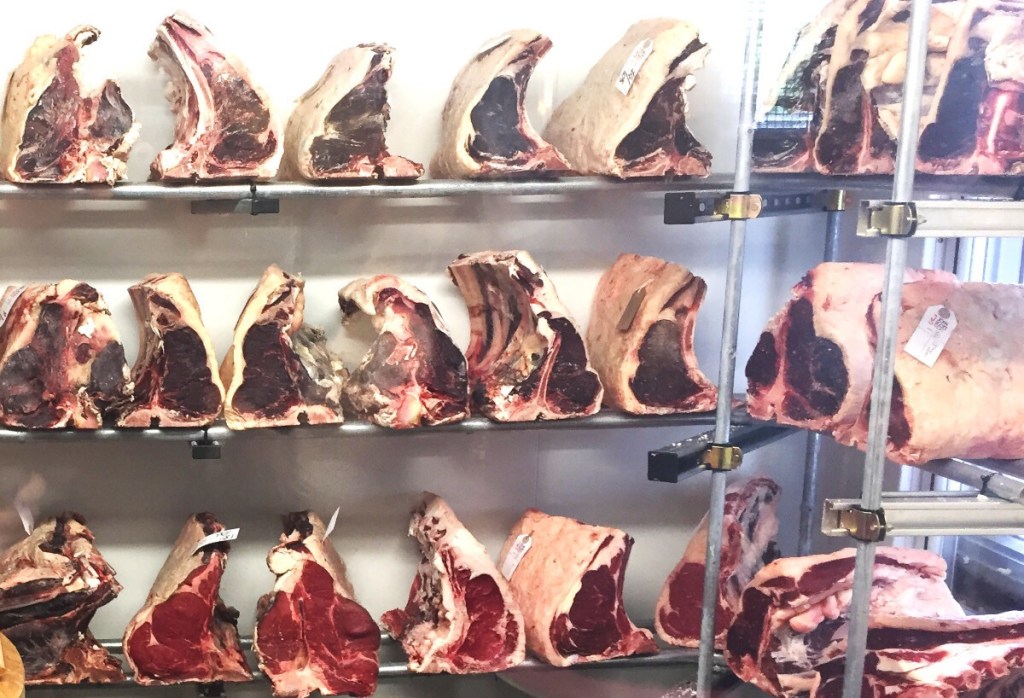
Aging beef in a drying chamber is a different process to maturing beef normally.
Premium cuts are kept for twice as long as normal, or longer, to intensify the flavor.
Tenderization tails off at about 20 days.
Then dry aging intensifies the flavor through moisture evaporation.
There is a particular smell and taste to dry aged beef.
Sometimes described as similar to blue cheese, it is not for everyone and some people feel it is meat that has gone bad.
Not so.
Properly dry aged steak is like fine wine with its own bouquet and attracts a premium price because of the losses from evaporation and trimming.
What Should It Look Like?
Dry aged beef can be aged for 50 days or more. It will blacken on the outer surfaces, but will be red on the inside when cut. The temperature, airflow and humidity must be constantly monitored.
Beef that’s gone bad has a sour smell. Sometimes with an aroma like milk that has gone off.
Eating meat that has gone off, or is slimy, can cause food poisoning.
How can you tell if steak has gone bad? Smell is the first indicator followed by color.
First thing: Fresh meat, like fresh fish, has no smell. If you get a sour odor from a piece of meat, you need to be careful. It may not be safe to eat. We have a maxim in our trade, “If in doubt, throw it out”.
There are lots of reasons meat goes bad:
Live handling
Unclean slaughter
Incorrect storage
Insufficient refrigeration
Poor handling,
The wrong packaging
How long since slaughter
Incorrect handling after purchase
Home refrigerator not working properly, among others.
Be careful though, meats with preservatives, i.e., some sausages and cured meats, if kept too long, can carry dangerous pathogens even though there may be no smell. Always buy from a trusted source.
Hanger steak is the central muscle in the beef diaphragm. It is unusual in that there is only one in the beef carcase, whereas all other muscles coming in pairs. There’s a big, beefy flavour you won’t get in other muscles.
A hanger steak should be cooked to a medium rare temperature, as well-done steak will be dry and tough.
Beef Short Ribs
Beef short ribs are my absolute favourite cuts of beef for slow cooking. They have it all. Tasty, flavorful meat, a nice layer of fat, and the tactile pleasure of eating it on the bone. When cooked for long enough, they become very tender and fall away from the bone.
Flank Steak
Flank steak is a hidden gem among low fat cuts of beef. The wall of the animal’s belly has this lovely lean muscle that can be cooked in a variety of ways. You can use flank to make tacos, stuff them, roast them, and cube them for stews and casseroles.
Beef Cheeks
When customers became more affluent, beef cheeks went out of style. In the past, cheek meat was viewed as cheap food, so it was avoided. However, when they are slow-cooked, the beefy flavor is incredible. Slow cooking in liquid brings out the best in cheeks, so make sure you try it now if you haven’t. You will thank me for this tip.
Bavette
Bavette is another type of flank or skirt steak that is under-used. A relatively unknown cut of meat, it is thicker and meatier than the flank, has a rich beefy flavor, and is quite tender if cooked properly. Also known as flank steak or skirt steak.
Chuck Steak
When sold with the bone in, Chuck steak is sometimes referred to as 7 bone steak in America. No, not because there are 7 bones, but because the bone is approximately shaped like a 7 (roughly). Chuck steak has a bit of connective tissue and several muscles, and not all of them are as tender as you would like. The chuck steak cut is good if you don’t mind chewing a bit. If you buy the chuck in a thick piece, say three pounds, it makes a great roast.
Feather Blade
The feather blade steak is considered the second most tender muscle in the beef carcass. It isn’t the most photogenic steak, and it needs a skilled butcher to remove the connective tissue and prepare it properly. Beef chuck is delicious fried or grilled.
The Flat Iron
Like the feather blade, the flat iron steak is also from the chuck and can be cooked in the same way. The underrated cut is tasty and tender, but it lacks fat.
Pectoral Muscle
Outside butchery or chef circles, the pectoral muscle is probably unknown. Lean and full of flavor, this shoulder cut is ideal for casseroles and stews and it makes great ground beef as well. The texture is similar to brisket, so it could fill in if you were short of brisket.
Heel
Another little-known cut is the heel, which is surprisingly tender. To separate this from the hind shin, you will need a good butcher. This low-cost cut of meat, also called merlot or velvet steak, is a good grill and fry choice.
Chuck Eye
Chuck eye steaks are often referred to as Delmonico steaks after the New York restaurant where they were a signature dish. The longissimus dorsi muscle begins in the chuck and becomes wider down the back of the animal where it is called rib-eye, then striploin (or sirloin) and it ends at the beginning of the rump.
There are only about two usable Delmonico steaks in the chuck, but if you can get them, you will be pleasantly surprised by the big beefy flavor. It can be grilled or fried and is cheaper than rib-eye.
Knuckle or Sirloin Tip
The beef knuckle (called sirloin tip in the USA) is very underrated and is quite inexpensive if you want to buy steak on a budget. You will enjoy this cut of meat if you have a good butcher cut it for you.
Spinalis
Spinalis is the rib eye cap and is becoming increasingly popular among chefs. While it is not as cheap as most of the other cuts, it is relatively unknown and I recommend you try it. Tender and full of flavour, try it at least once.
Beef Clod
The beef clod is a series of dense muscles in the shoulder and some of them are really good value. A 21-day maturation of the beef produces great value steaks for grilling and frying.
Eye Of Round
Let’s face it, eye of round is a tough muscle, but if it is matured properly and cooked correctly, it is a good value steak. It is best cut thinly and fried medium-rare. Sprite is said to tenderize eye of round, but I’ve never tried it myself.
Pineapple juice or papaya juice are great tenderizers. This cut of meat also makes a good lean, affordable roast, although it would benefit from a layer of fat on the outside.
Topside Cap
When stuffed and rolled, the topside cap is a great budget cut with excellent beef flavor.
Silverside or Bottom Round
They cure the Silverside in Ireland to make corned beef by slow roasting it to break down the fibers. Instead of the tinned corned beef made of compressed pieces of meat, get a flavorful solid piece of meat that goes great with potatoes and cabbage. It is called bottom round in the USA, and it is a popular budget cut.
Topside
The topside is a medium-priced cut of round or beef leg meat. After maturing for at least 21 days, it makes great sandwich steaks when sliced thinly. Flash fry quickly and avoid overcooking.
Tri-Tip
Californians seem to especially like tri-tip, but it is growing in popularity elsewhere. In addition to roasting and barbecuing, you can also fry or grill steaks if you cut them across the grain. Tri-tip is made from two distinct types of grain, so you should ask your butcher how to prepare it.
Brisket
Brisket used to be used almost solely to make corned beef, and the bone was left in. Times and tastes have changed and now brisket is very popular in BBQ, and in certain states in America they smoke it and slather it with marinades. Brisket is an inexpensive pot roast that has a fantastic beef flavor that benefits from slow cooking.
Ground Beef
Where would we be without ground beef? Hamburgers, rissoles, meatloaf, meatballs, spaghetti bolognese, lasagne, cottage pie all use ground beef. In fact, you could cook a different ground beef recipe every day for a year without repeating a dish. Ground beef is the least expensive of all cuts of meat and is infinitely versatile.
Food dating is not a US federal law, except for infant formula and baby foods. Freshness dating and the terms used are voluntary by manufacturers, except for dairy foods and meat in some states.
The butcher uses a Sell-By date provided by the supplier.
Sell-by dates are on the packaging delivered to the store.
Best-Before dates mean fresh, the product, eaten after the date will be past prime condition.
A Use-By date means DO NOT consume after this date. Rigorous tests by health authorities establish the Use-By date of food sold by butchers.
To avoid spoilage, the temperature, humidity and airflow in butcher refrigerators have to be monitored constantly. Depending on the type of meat and the species, we refrigerate carcasses before cutting. It is important that the carcass is in prime condition and clean before processing.
Refrigerating a carcase too soon will have an adverse effect. The internal muscle temperature has to be allowed to decrease slowly before refrigeration begins. If not a process called “cold shortening” will make the meat tough. Carcasses should cool at 16 degrees C for 16 hours.
The carcass is usually vacuum sealed after is cut and boned. This extends the shelf life by removing oxygen from the packaging. (Microbes need oxygen to multiply).
If you open a vacuum sealed pack, sometimes there will be a smell. A mild rotten egg is one way to describe it. This usually goes away in less than an hour and is from the vacuum packing process.
So, by the time you buy beef cut into steaks, it may have been maturing for up to 28 days.
The aging process has to be carefully monitored for beef to tenderize so that it is at its best.
Enzymes in meat break down the fibres and over a period of about 20 + days the tenderization occurs. You could eat meat two days after slaughter but it will be tough and lacking in flavor.
There is also a process called Modified Atmosphere Packaging. (MAP) that replaces oxygen with gas that retards microbial growth in the pack.
Meat cut from quarters into primals, then deboned and cut into steaks, ground beef and roasts.
Discoloration happens faster when the meat surfaces are exposed to air
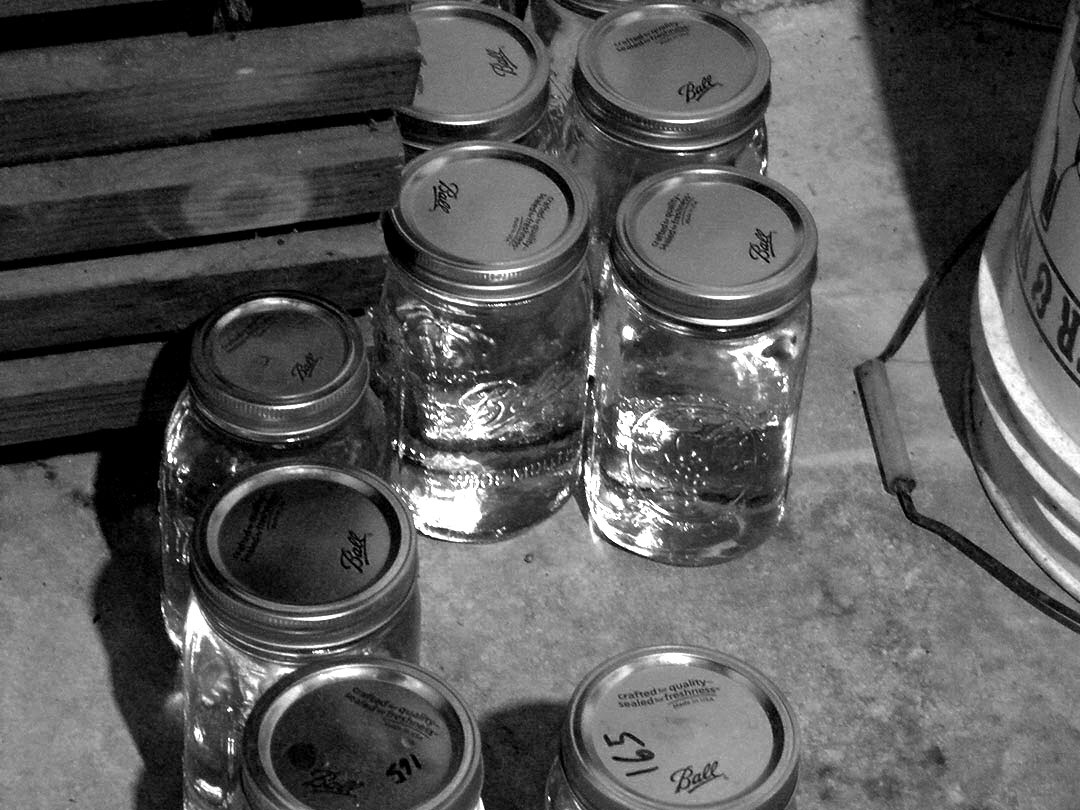
Stills, as in distillation contraptions and the art of home liquor-making came to America with the early settlers. The Scots, English, Irish, French, Dutch, Germans and Spanish all had a taste for alcohol, and with them they brought stills, expertise and generations of knowledge on how to ferment, brew and distill. One of the most beloved carry-on’s aboard ships sailing to the New World was yeast for the bread and beer and liquor and other eau de vie. The wild spores of America were untested by Europeans, so to be safe they scraped the lees and dregs from the bottoms of homeland vats and transported those strains abroad to be assured of some consistency in their alcohol. People carried on happily brewing and fermenting and distilling until war changed everything.
As a result of the Revolutionary War, the American government was overcome with debt. In an effort to generate revenue, it applied a federal alcohol tax to help manage the financial fray. Home distillers were furious. The Revolutionary War was fought, after all, to free Americans from being subject to British Imperialist taxation, so citizens were furious when the Distilled Spirits Tax of 1791 was created. Most Americans who had distilled continued doing so despite the taxation laws and refused to pay. As a result, the government sent forth tax collectors to obtain their share of the alcohol profits — tax collectors who were greeted with beatings, tarrings and featherings, and who subsequently trod lightly and forced collection halfheartedly. Distillers and farmers, many of whom were one and the same, remained furious, and in July 1794 the Whiskey Rebellion began. A militia force was sent by Alexander Hamilton to eradicate the rebellion, but, in reality, it served to drive distillers deeper underground.
In 1802, Thomas Jefferson repealed the whiskey excise tax and Americans were once again free to legally distill. From 1812 to 1817, the liquor tax was enacted to fund the War of 1812; post war, the tax was repealed. In 1861, burdened with debt from the Civil War, another liquor tax was imposed and has remained ever since. Making liquor (legal or not) was deeply ingrained in the culture of the American South, and for many people, it was the only means by which they had to make a living. The alcohol taxes applied post-Civil War were viewed by Southerners as an extension of Yankee tyranny. As such, local Southern politicians did little to enforce the laws on moonshiners.
Push ahead a few years to an experiment in piety also known as Prohibition. As it turns out, Prohibition was anything but dry — in fact, it’s where ‘shiners really revved up and made a name for themselves, profiting immensely from the low supply of legal alcohol. In the Southern United States, the number of moonshine stills quadrupled and illegal liquor production was at all-time high. To avoid the law, men modified their cars to outrun the police so they could transport moonshine to distribution points. Some of these drivers were the earliest stock car drivers who created NASCAR.
Eggnog Fun Fact —> While culinary historians debate its exact lineage, most agree eggnog originated from the early medieval Britain “posset,” a hot, milky, ale-like drink. By the 13th century, monks were known to drink a posset with eggs and figs. Milk, eggs, and sherry were foods of the wealthy, so eggnog was often used in toasts to prosperity and good health.
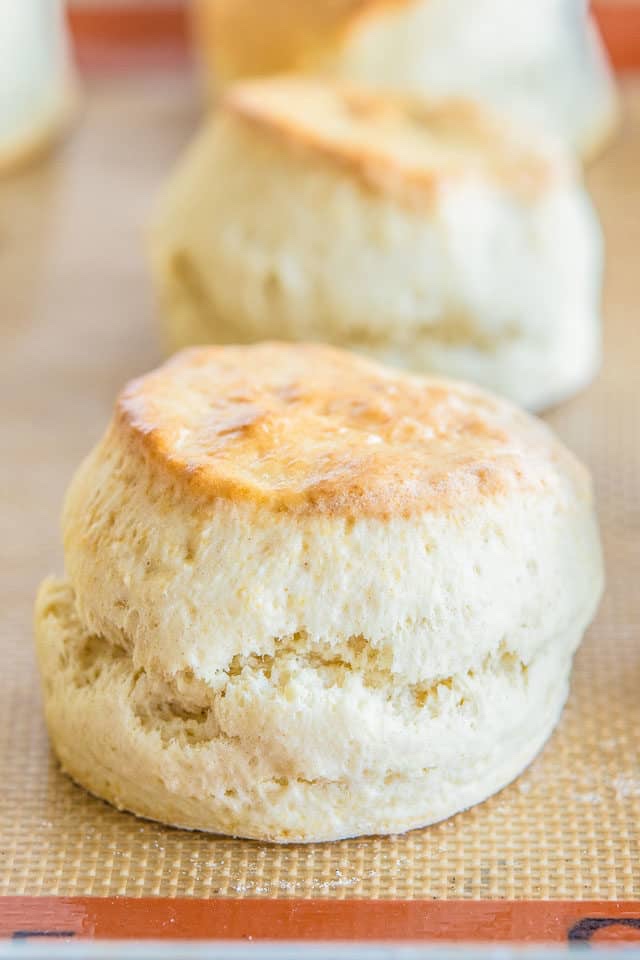
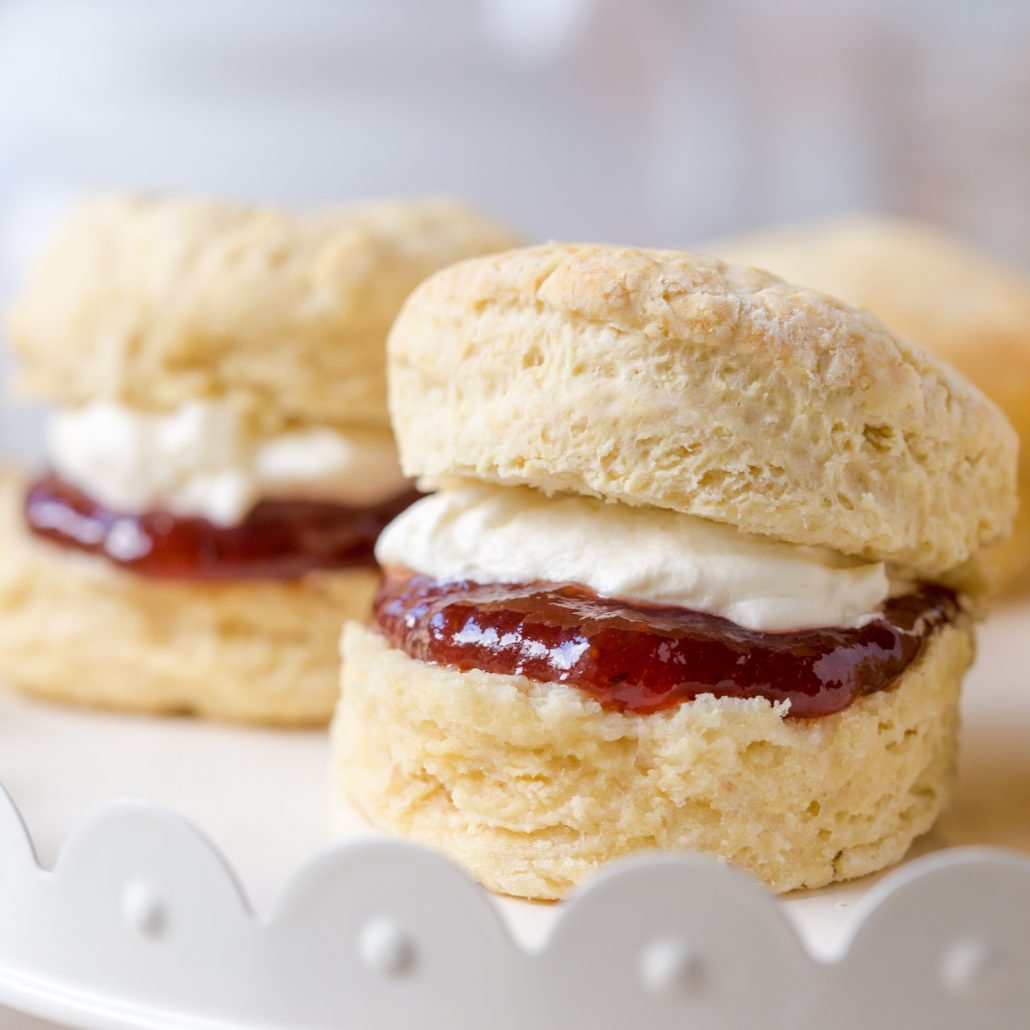
A proper afternoon/high tea couldn’t exist without British style scones with jam and clotted cream.
3½ cups all-purpose flour 3 teaspoons baking powder a pinch of salt 7 tablespoons butter, chilled and diced ⅓ cup sugar 2 egg yolks 1 cup whole milk, plus extra for glazing 1 teaspoon lemon juice
To Serve good-quality strawberry jam clotted cream or whipped cream
Makes about 24
Preheat the oven to 425°F
Sift the flour into a large mixing bowl with the baking powder and salt. Add the butter. Start by using a palette knife to cut the butter into the flour, then switch to using your hands to gently rub the butter in. Do not overwork the mixture but lift the flour and butter up in your hands and gently press and roll it across your fingertips. When there are no visible pieces of butter remaining add the sugar and mix to combine.
Make a well in the middle of the mixture and add 1 of the egg yolks, the milk and lemon juice. Use the palette knife to cut the wet ingredients into the dry, then gently mix with your hands until almost combined.
Turn the dough out onto a lightly floured work surface. Very gently knead until almost smooth. Pat or roll the dough to a thickness of 1¼ inches.
Dip the round cookie cutter in flour to prevent it sticking, then stamp out discs from the dough. Arrange them on the prepared baking sheet and set aside. Gather the off-cuts of dough into a ball, re-roll and stamp out more scones to make as many as possible.
Mix the remaining egg yolk with 1 tablespoon of milk and neatly brush the tops of the scones with the glaze.
Bake on the middle shelf of the preheated oven for about 10 minutes until well-risen and golden brown.
Remove from the oven, cool on wire racks and serve on the day of making with jam and clotted cream.











 Mark Bere Peterson’s Counterculture, Urban Legends, Paganism & Witchcraft