Skillet Cornbread

There is a lot of really bad cornbread out there served in restaurants and it gets a bad reputation.  There is also heated debate especially in the South whether it should have sugar or flour, in my opinion the resounding answer is no.  This version will convert you if you’re a skeptic.  You should use the highest quality ingredients as you can afford with recently ground cornmeal if possible.  Don’t skimp on your cornbread and you might find yourself making it a few times a week.  Of course it’s best served fresh from the oven still in the cast iron skillet.

4 ounces quality smoky bacon *
2 cups yellow cornmeal *
1 teaspoon kosher salt
½ teaspoon baking soda
½ teaspoon baking powder
1½ cups buttermilk
1 large egg, lightly beaten

* If you want the very best ingredients use Benton’s bacon and Anson Mills Antebellum Coarse Yellow Cornmeal.  These items will have to be special ordered online. *

Preheat the oven to 450°F. Put a 9-inch cast-iron skillet in the oven to preheat for at least 10 minutes.

Finely mince the bacon.  Add the bacon to a skillet large enough to hold it in a single layer and cook over medium-low heat stirring until the fat is rendered and the bits of bacon are crispy, usually 4 to 5 minutes. Remove the bits of bacon to a paper towel to drain, and reserve the fat. You need 5 tablespoons bacon fat.

Combine the cornmeal, salt, baking soda, baking powder, and bits of bacon in a bowl. Reserve 1 tablespoon of bacon fat and combine the remaining 4 tablespoons fat, the buttermilk, and egg in a small bowl. Stir the wet ingredients into the dry ingredients just to combine; do not over mix.

Move the cast iron skillet from the oven to the stove, placing it over high heat. Add the remaining tablespoon of bacon fat and coat the skillet. Pour in the batter, distributing it evenly. It will sizzle.

Bake the cornbread for about 20 minutes, until a toothpick comes out clean. Serve warm.

Throwback Fresh Peach Muffins

  • 1 egg
  • 1 cup milk
  • 1/4 cup melted shortening
  • 2/3 cup sugar
  • 1/2 teaspoon salt
  • 1/4 teaspoon cinnamon
  • 1 teaspoon lemon juice
  • 1/4 teaspoon vanilla extract
  • 2 cups flour
  • 3 teaspoons baking powder
  • 1 cup unpeeled, chopped fresh peaches

Beat egg.  Stir in milk, shortening, sugar, salt, cinnamon, lemon juice and vanilla. Mix together flour and baking powder. Stir into milk mixture until just blended. Do not overmix. Fold in peaches. Fill greased muffin cops 2/3 full. Bake at 450 degrees about 20 minutes or until brown.

Banana muffins: Use only 1/2 cup sugar and 1/2 cup milk in recipe above.  Use 2 tablespoons drained crushed pineapple and 1 cup mashed bananas in place of peaches.

Apple muffins: Use apples in place of peaches.

“Red Truck Bakery” Inspired Country Ham Scones with Cheddar and Scallions

3½ cups unbleached all-purpose flour
2½ teaspoons baking powder
¼ teaspoon baking soda
1 teaspoon kosher salt
1 teaspoon sugar
1 cup unsalted butter, chilled and cubed, plus 2 tablespoons, melted
1 cup buttermilk
1½ cups coarsely chopped (1-inch pieces) country ham
8 scallions, sliced into ¼-inch-wide pieces
2 cups grated Cheddar cheese

Preheat the oven to 400 degrees. Line a baking sheet with parchment paper.

In a large bowl, whisk together the flour, baking powder, baking soda, salt, and sugar. Cut the chilled cubed butter into the flour mixture with your fingers until broken down into pea-sized pieces.

Pour the buttermilk into the dry mixture all at once and, using a spoon, fold in the buttermilk quickly and as gently as possible. Add the ham, scallions, and cheese and gently mix until completely incorporated.

Flour your hands and reach into the bowl and under the dough and combine, flipping it around. Mix it up as gently as possible without being too tough on the dough. The dough will be sticky, but manageable. Add more flour if needed.

Turn the dough out onto a lightly floured surface and, working lightly, use your hands to pat the dough into a roughly 8 x 10-inch rectangle about ¾ inch thick.

Dip a 3-inch biscuit cutter into flour and cut as many scones as you can from the dough.  Place the scones on the prepared baking sheet and bake for 15 to 20 minutes, turning the pan after halfway through the cooking time, until the tops are light golden brown.

Meanwhile mix the 2 tablespoons melted butter with a pinch of salt.

Transfer the scones to a wire rack and brush their tops with the melted butter. The scones will keep in a tightly sealed plastic bag at room temperature for up to a day or so for best results.

Easy Hushpuppies

When I’m not in the South I miss these golden nuggets of deliciousness.  I’ve had elegant crab stuffed hushpuppies, but these are a delicious basic version made easy by using self-rising cornmeal.

  • 2 cups white lily self-rising cornmeal
  • 2 tablespoons self-rising flour
  • ½ medium onion, chopped
  • 1 cup buttermilk
  • 1 large egg, beaten
  • Vegetable oil for pan or deep-frying

In a large bowl combine the cornmeal, flour, and onion. Add the buttermilk and egg and mix well. Let the mixture stand for 5-6 minutes.

In a deep skillet heat about 3 inches of oil over medium heat. Drop the batter by tablespoons into the hot oil. Fry until golden brown, turning several times. Remove from the oil, drain before serving.

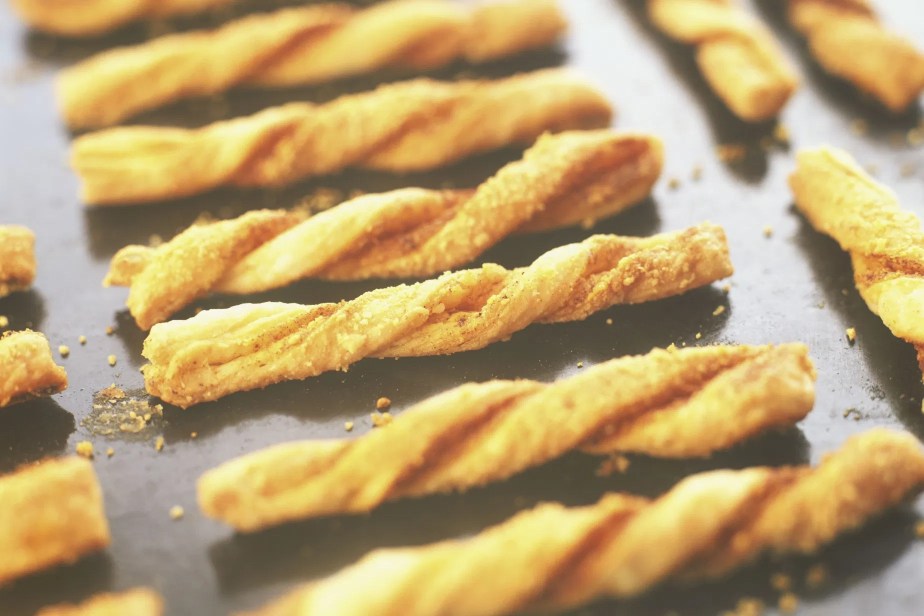
Cheese Straws

1 cup butter, room temperature
8 ounces Parmesan cheese, finely grated
8 ounces sharp Cheddar, finely grated
3/4 teaspoon Dijon mustard
2-1/3 cups all-purpose flour
1/4 teaspoon salt
1 teaspoon baking powder
1/2 teaspoon ground hot red pepper

Preheat oven to 375 degrees.

Cut the butter into thin pieces and beat with an electric hand mixer in a very large mixing bowl until butter is soft. Add all the cheese and beat with the butter until the mixture is smooth. Stir in the mustard.

Whisk together the flour, salt, baking powder, and hot red pepper. Add to the butter mixture and beat until combined. Form into a ball.

Press dough out with a cookie press into straws or divide dough into fourths. On waxed paper, roll each piece into a rectangle 1/3 inch thick. Use a pastry wheel to cut dough into 4- x 1/2-inch strips. Move straws onto a rimmed baking sheet lined with a silicone mat or parchment paper.

Bake at 375 degrees for 8 to 15 minutes, until light brown. Do not overly brown straws. Cool on a rack.

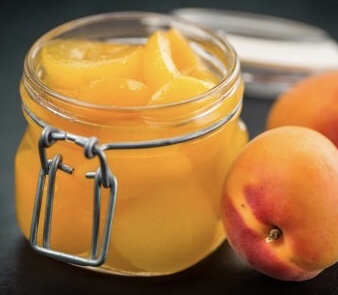
Pickled Peaches

12 small peaches, peeled with 4 cloves per peach
1 1/2 cups sugar
1 cup white vinegar
3 large cinnamon sticks

(Makes 3 pints)

Cut a shallow X in the bottom of each peach with a sharp knife and blanch in batches in a large pot of boiling water for 10–15 seconds.

Transfer the peaches to a large bowl of ice water and let stand until cool enough to handle. Peel the peaches, then halve them lengthwise and pit. Toss the peaches with the sugar and chill, covered, for at least 8 hours.

In a large stockpot, mix the vinegar and cinnamon sticks, with the peaches and their accumulated juices. Bring to a boil over moderate heat.  Skim off the foam. Reduce the heat and simmer until the peaches are barely tender, 3 minutes or so.

Divide the peaches and cinnamon sticks among the prepared jars. Return the peach-cooking liquid to a boil, then pour into the jars, leaving 1/4 inch of space at the top.

Wipe off the rims of the filled jars with a damp kitchen towel, place the lids on the jars, then firmly screw on the rings. Put the sealed jars on the rack of the canner and, if necessary, add enough hot water to cover the jars by 2 inches.

Boil the jars for 20 minutes, covered, then transfer to a towel-lined surface to cool. The jars will seal as they cool.

After the jars have cooled for 12–24 hours, press the center of each lid to check that it’s concave and that a vacuum has formed and they are sealed.  Store in a cool dry place for up to 1 year.

Place any jars that haven’t sealed in the refrigerator and use them first.

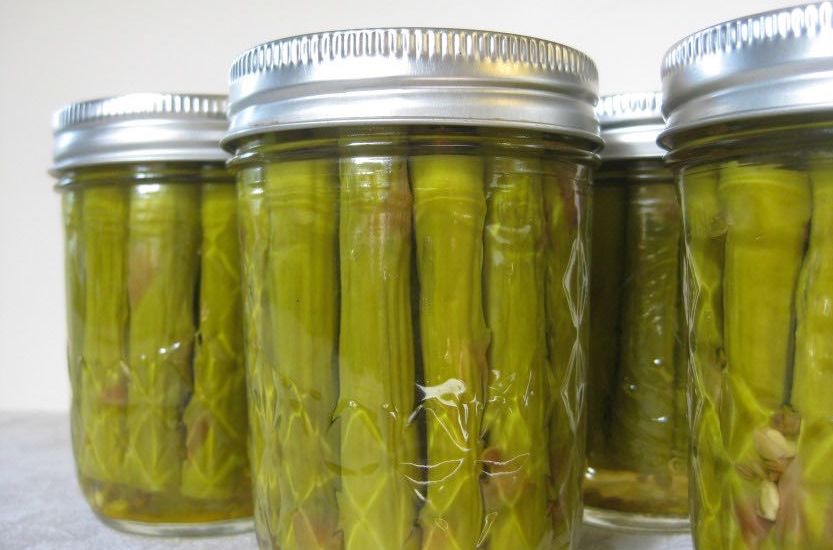
Pickled Lemon Asparagus

1⁄2 pound asparagus
3⁄4 cup distilled white vinegar
3⁄4 cup water
1 1/2 teaspoons sugar
1 (3-inch) strip lemon zest
2 garlic cloves
1 teaspoon coriander seeds
1 teaspoon pickling salt

Trim the woody ends from the asparagus. Cut the asparagus into 2-inch lengths.

Combine the white vinegar, water, and sugar in a saucepan and heat to boiling, stirring to dissolve the sugar.

Pack the lemon zest, garlic, coriander seeds, and salt into a hot 1-pint canning jar. Fill with the asparagus. Pour in the hot vinegar mixture, leaving 1⁄2 inch headspace. Seal.

Process in a boiling-water bath for 10 minutes.  Let cool undisturbed for 12 hours. Store in a cool, dry place. Do not open for 6 weeks to allow the flavors to develop.

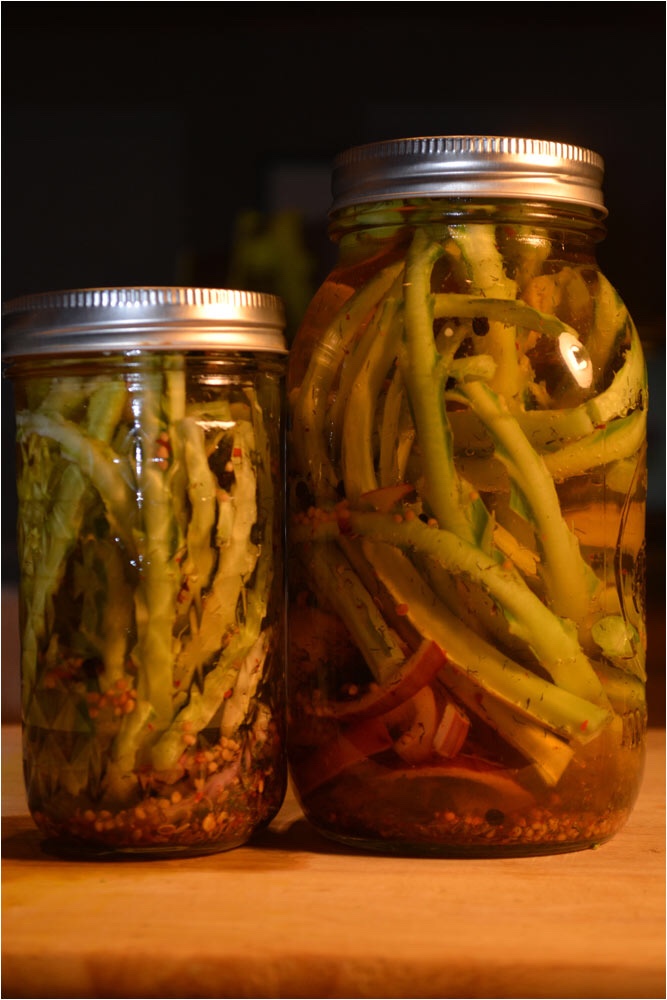
Pickled Collard Stems

  • 1 gallon glass container with lid or smaller jars
  • Stems from 2 bunches of collards, trimmed to 1 inch shorter than glass jar
  • 1/2 onion, sliced thinly
  • 6 cloves of minced garlic
  • 2 teaspoons whole black peppercorns
  • 3 bay leaves
  • 1 tablespoon diced jalapenos
  • 1 gallon filtered water
  • 3/4 cup pickling salt
  • 1/2 cup apple cider vinegar

Pack jar tightly with stems, onions, and spices. Bring water, salt, and vinegar to a low boil. Remove brine from heat and let cool for 15 minutes. Pour brine over veggies, making sure brine covers everything. Place a fermentation weight over the top to prevent as much contact between the air and the brine surface, or rig up something of your own that will serve the same purpose not the lid though.

Let your container sit at room temperature for 3-5 days, until your stems have the perfect saltiness, flavor, and crunchiness. When they reach that point, trade the weight for a lid and place the whole container in the fridge. Your pickled stems will last several weeks or less depending how much you enjoy them.

Green Tomato Chow Chow

  • 6 cups coarsely chopped green tomatoes, about 2 pounds

  • 2 cups chopped sweet onion
  • ½ cup diced red bell pepper
  • ⅓ cup seeded and minced red jalapeño pepper
  • 1 Tablespoon kosher salt
  • 1 cup cider vinegar
  • ⅔ cup sugar
  • 1 teaspoon crushed red pepper
  • 2 teaspoons sorghum syrup
  • 3/4 teaspoon celery seeds

Working in batches, pulse tomatoes and onion in a food processor until finely chopped. Transfer to a 6-quart Dutch oven. Stir in peppers and salt. Cover and chill for at least 8 hours, preferably overnight.

Uncover and bring to a rolling boil over medium-high heat, stirring occasionally. Pour through a wire-mesh strainer into a bowl, pressing with back of a spoon to release liquid. Discard liquid or save for another use.  Return solids to Dutch oven.

Add remaining ingredients; bring to a boil over medium-high heat. Boil, stirring occasionally for a few minutes until liquid evaporates. Spoon into clean jars. Let cool slightly. Cover and chill.  Keeps in the refrigerator for up to 3 weeks.

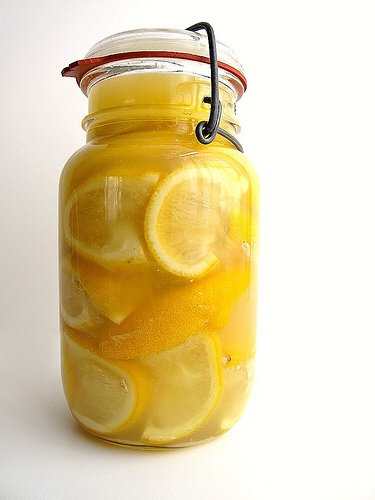
Sliced Pickled Lemons

Makes 1 quart jar

6 whole lemons
1 cup salt
1 cup sugar
1 cup pickling spice
4 cups distilled white vinegar

Bring 5 cups of water to a boil in a medium pot over high heat. Add the lemons and cook for 5 minutes. Drain. Cut off and discard the ends once cooled. Cut the lemons into thin slices and layer the slices into the jar, leaving 1 inch of headspace.

Combine the salt, sugar, pickling spice, and vinegar in a small saucepan, bring to a boil over high heat, and boil for 10 minutes. Pour this brine over the lemons to cover them and fill the jar, leaving ½ inch headspace. Cover with the lid and ring, and refrigerate for 10 days before using. These will keep for a month, refrigerated.