Red Wine Mustard

4 ounces Black mustard seeds
¾ cup Full bodied red wine
¾ cup Red wine vinegar
1 Shallot, finely chopped
1 teaspoon Salt
Freshly ground black pepper to taste
Thyme, marjoram, tarragon chopped to taste

Combine all the ingredients in a stainless-steel bowl, cover with plastic wrap, and refrigerate overnight.

Purée the mixture in a blender until it attains the desired thickness and texture. Store in the refrigerator in a jar with a tight-fitting lid.

Steak-frites

Steak-frites – It is considered by some to be the national dish of France. Historically, the rump steak was commonly used for this dish. More typically at the present time, the steak is an entrecôte also called rib eye, pan-fried rare (“saignant” – literally “bloody”), in a pan reduction sauce, although hollandaise or béarnaise sauce are not uncommon, served with deep-fried potatoes.

#SteakFrites #FrenchCooking

Herbes de Provence

Herbes de Provence

6 dried bay leaves, crumbled
2 tablespoons dried rosemary leaves
2 tablespoons dried thyme leaves
2 tablespoons dried oregano leaves
2 teaspoons crumbled dried lavender buds

In a small bowl, combine the bay, rosemary, thyme, oregano, and lavender and mix well. Transfer to a tightly capped jar or other airtight container and store in a cool, dark place. Use the blend within 3 to 4 months.

To use, pulverize the herbs in a mortar with a pestle, if you prefer a coarser texture, or in a spice grinder for a finely textured blend.

Garlic Olive Oil

Garlic Olive Oil

4 cups pure olive oil
¾ cup garlic cloves, peeled

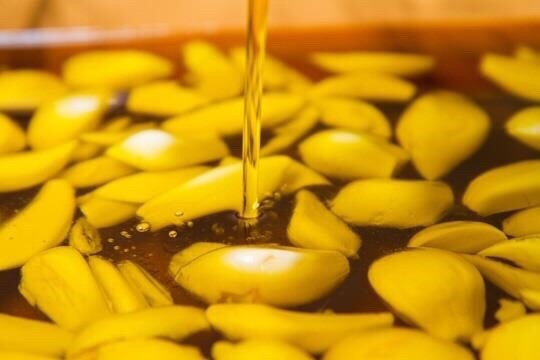
Pour the oil into a medium saucepan and add the garlic cloves. Place on the stove over medium heat. Bring up to 325°F on a candy or frying thermometer and then decrease the heat to low. Let simmer for 30 to 45 minutes. Remove from the heat, cool, strain through a fine-mesh sieve, and then put the oil into bottles for use.

Garlic Confit

1 cup peeled garlic cloves (45 cloves or so)
About 2 cups canola oil

Cut off and discard the root ends of the garlic cloves. Add the cloves to a small saucepan and add enough oil to cover them by about 1 inch.

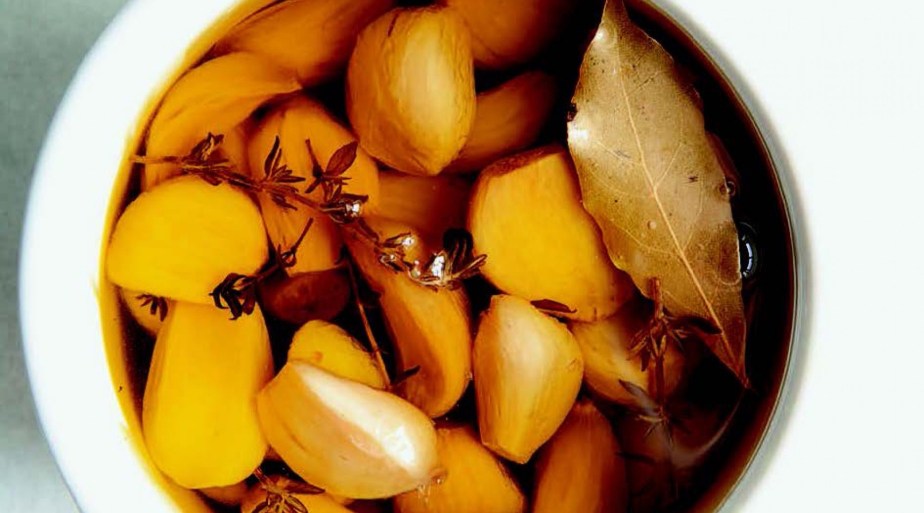
Place the saucepan over medium-low heat. The cloves should cook gently: small bubbles will come up through the oil, but the bubbles should not break the surface. Adjust the heat as necessary and move the pan to one side if it is cooking too quickly. Cook the garlic for about 40 minutes, stirring every 5 minutes or so, until the cloves are completely tender. Remove the saucepan from the heat and allow the garlic to cool in the oil.

Refrigerate the garlic, submerged in the oil, for up to a month.

Anchovy Butter

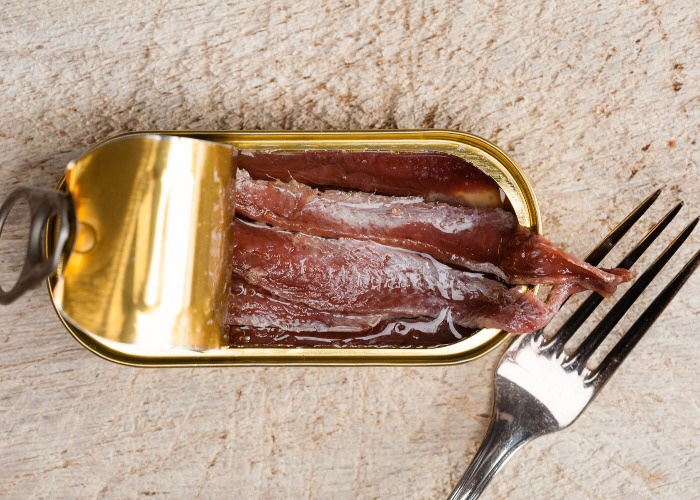
Anchovies are one of the most misunderstood ingredients out there. People literally fear these little morsels.  They are vital though for a traditional Caesar Salad and they have a multitude of other uses besides being a despised pizza topping. This butter is a great accomplishment on a steak, chicken, tossed in pasta and even on some strong flavored fish such as salmon.  You can soak the anchovies in white wine or milk to reduce the saltiness if desired

1 1.75-oz tin of anchovy fillets
1 Pound of butter, softened
2 shallots, finely chopped
½ cup chopped flat leaf parsley
½ cup pimentos, diced

In the bowl of a food processor with a steel blade, place all ingredients. Pulse until ingredients are uniformly distributed throughout the butter.

Lay a 16-in length of waxed paper on a clean work surface. Place all the anchovy butter ⅓ of the way up the paper. Fold the end nearest you up over the butter and roll to form a uniform 2 inch cylinder. Tightly wrap ends. Wrap again with plastic wrap and place in freezer.

Cut 1/2 inch off the cylinder and place on your grilled medium-rare steak or other uses.

Nuoc Cham (Vietnamese Garlic, Lime & Chile Dipping Sauce)

In Vietnamese, Nuoc means water, and cham means to dip, so nuoc cham literally means dipping sauce. Here we have the union of sweet, sour, spicy, bitter, and salty.

2 tablespoons granulated sugar
6 tablespoons warm water
4 tablespoons freshly squeezed lime juice
2 tablespoons crushed garlic
4 tablespoons fish sauce
1 teaspoon finely chopped bird’s-eye chile
Freshly ground black pepper

In a bowl, dissolve the sugar in the warm water.. Once the sugar has completely dissolved, add the lime juice. Add the garlic and stir. Gradually stir in the fish sauce, adding just enough to suit your taste. Add the chopped chile and then grind over some fresh pepper to taste.

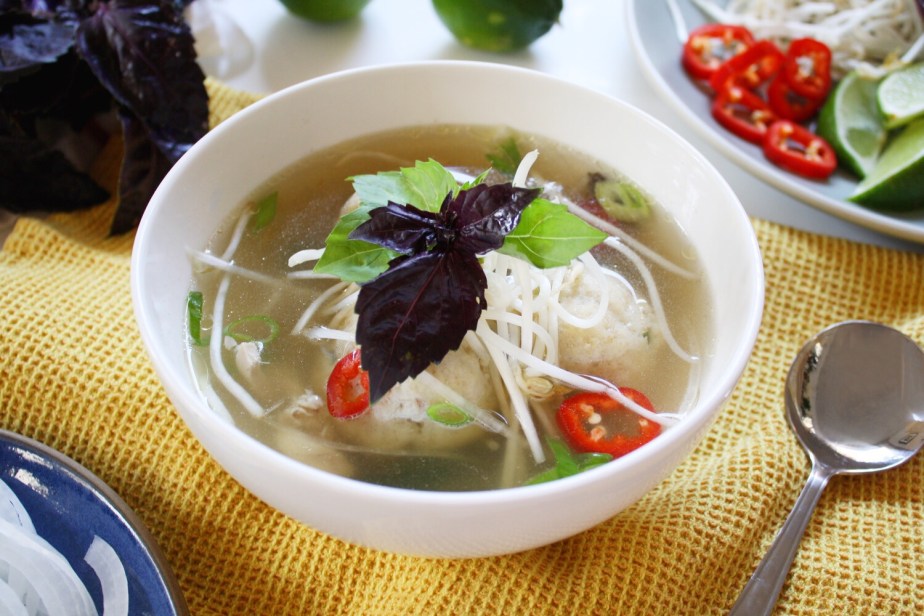
Chicken Matzah Ball Pho Fusion

Two amazing soups that were begging to be mashed together.

Pho was created in Viet Nam in the 1880’s under French occupation, influenced by the French taste for beef based dishes. Some even speculate the name comes from the French Feu (fire, as in pot au feu), though others believe that the dish may have inspired by Chinese occupiers from the previous thousand years.

Matzah Ball Soup was likely invented thousands of years ago, from leftover Matzah meal and an egg. Matzah is a flat cracker that is the “bread of affliction” during the Passover Holiday, symbolizing the Israelites hasty escape from Egypt. But the soup we think of as Matzah Ball Soup came to particular prominence in Eastern European Shtetl’s with קניידלעך kneydlach dumplings.

Ingredients

For the broth:

  • 2 medium unpeeled yellow onions, halved
  • 1 large 4”-5” piece of ginger, cut lengthwise in half
  • 5 quarts cold water
  • 1 4-5 lb. chicken, cut up
  • ½ lb. chicken wings
  • 2 tsp kosher salt, or to taste
  • 1 Tbsp rock sugar
  • 1 cinnamon stick
  • 2 star anise
  • 1 tsp whole coriander seeds
  • 2 Tbsp fish sauce, or to taste
  • 1 small white onion, thinly sliced
  • 4 scallions, thinly sliced

For the matzah balls:

  • 1 cup matzah meal
  • 1 teaspoon kosher salt
  • 1 teaspoon baking powder
  • ½ teaspoon baking soda
  • 4 large eggs, beaten
  • ¼ cup oil
  • ¼ cup minced scallion

For the toppings:

  • 1 large bunch of fresh Thai basil
  • limes cut into wedges
  • 3 cups mung bean sprouts
  • 2 jalapeños, sliced thin
  • Hoisin sauce if desired
  • Garlic chili sauce if desired
  • Sriracha if desired

Directions

To make the broth:

  1. Char your onions and ginger.  The onions and ginger should be nicely charred but still firm, this step will deepen the broth’s flavor. Once the onions and ginger are charred, remove the skin from the onions. Rinse the onion and ginger, and use a small knife to scrape off excess charred bits to prevent your broth from getting bitter.
  2. Cut your chicken into parts, separating the breasts, legs, wings and backbone. This will ensure that your chicken cooks evenly.
  3. In a small skillet over medium heat, toast the cinnamon, anise and coriander until lightly browned and fragrant 2-3 minutes. Don’t burn the spices. Add onion, ginger and chicken to a large pot. Fill the pot with 5 quarts of water. Bring the water to a simmer; continuously skim the impurities as they rise to the top.
  4. After about 20 minutes of simmering, or once they’re cooked through, remove the chicken breasts and allow them to cool. Add the toasted spices, salt and sugar to the pot. Continue to gently simmer the mixture for at least 1 hour for flavors to develop.
  5. Remove the remaining chicken parts and strain the liquid through a fine meshed sieve. Bring the liquid back to a simmer until the liquid has reduced by about a quarter. This will deepen the broth’s flavor.
  6. While simmering, shred the chicken meat and reserve for serving. Once reduced, turn off the heat and add the fish sauce to the broth. Taste, and add additional seasoning if desired.

To make the matzah balls: 

  1. While the soup is simmering, in a large bowl whisk together the matzah meal, salt, baking powder and baking soda. Add the beaten egg and oil (schmaltz would be a lovely replacement for the oil.  Schmaltz is rendered chicken fat). Add the scallions. Mix everything together until just combined.
  2. Refrigerate the mixture for at least 30 minutes.
  3. Form the matzah ball mixture into even-sized balls. You can determine the size based on your preference, but they will double when cooked.
  4. Bring a large pot of water to a boil. Lower to a simmer and gently drop the matzah balls into simmering water. Place the lid on the pot and continue to simmer for 30 minutes. Once cooked store in their cooking liquid.

To serve:

  1. Add the shredded chicken, raw sliced onion and scallions to a bowl. Ladle hot broth into the bowl. Add the matzah balls to the soup.
  2. Serve with Thai basil, bean sprouts, lime wedges, hoisin and hot sauces. Allow people to garnish and customize their pho to their liking.

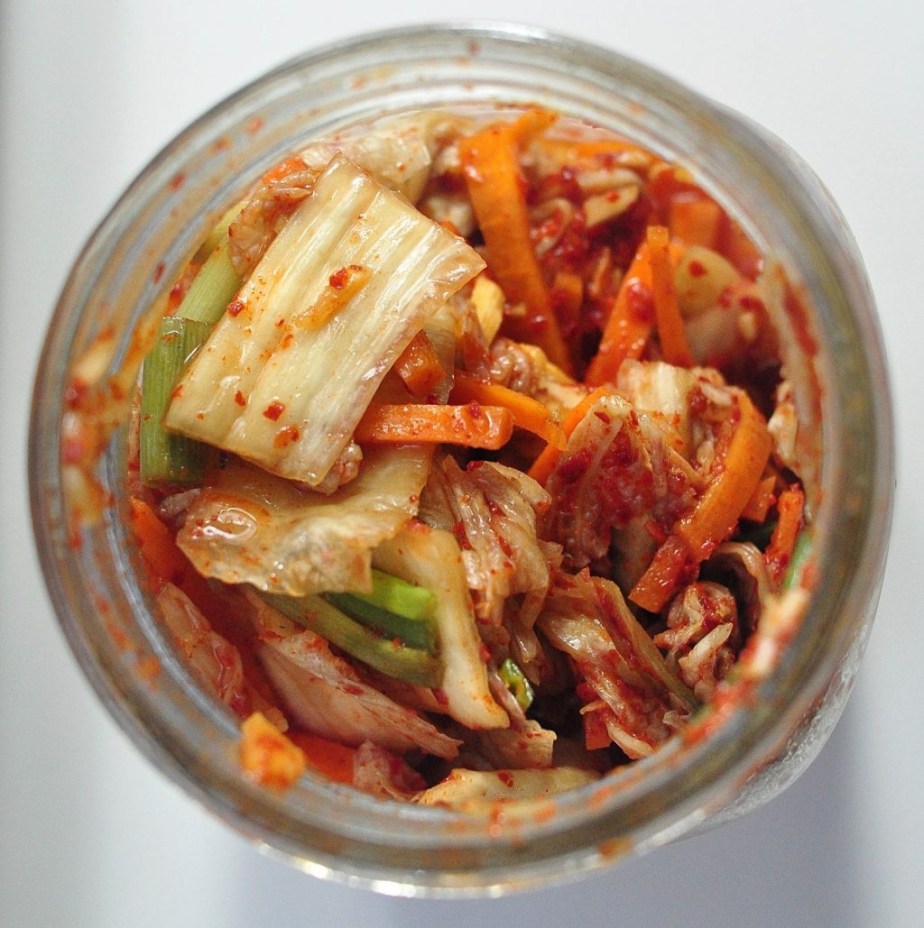
“Kimchi Chronicles” Inspired Quick Hot Kimchi

  • 2 tablespoons gochujang
  • 2tablespoons sherry vinegar
  • 2 tablespoons fish sauce
  • 2 tablespoons grapeseed or canola oil
  • 1 small red onion, thinly sliced
  • 1 teaspoon coriander seeds
  • 1 tablespoon gochugaru
  • 1 head napa cabbage, coarsely chopped, core discarded
  • 1 Korean cucumber (or ½ hothouse cucumber, seeded), coarsely chopped

Whisk together the gochujang, vinegar, and fish sauce in a small bowl.

Heat the oil in a large wok over high heat. Add the onion, coriander seeds, and gochugaru. Cook until the onion begins to brown, about 1½ minutes.

Pour the gochujang mixture over the onion, stirring to combine. Cook for 1 minute, until the liquid is nearly evaporated, then immediately stir in the cabbage and cucumber. Cook until the cabbage is wilted and the flavors are nicely combined, about 5 minutes. Taste and season with additional vinegar or fish sauce if you think it needs it.

Serve.