Bindaetteok (Korean Mung Bean Pancakes)

2 cups dried mung beans, rinsed a few times
¼ cup sweet rice, rinsed a few times
½ cup kimchi liquid
1 teaspoon fish sauce
1 teaspoon toasted sesame oil
1 teaspoon soy sauce
Pinch of coarse salt
1 generous cup finely diced kimchi
Vegetable oil, for frying
Korean Scallion Dipping Sauce

Add the mung beans and rice in a medium bowl. Add cold water to cover by 1 inch and soak for at least 6 hours and up to 24.

Drain the soaked mung beans and rice and place in a blender along with ½ cup fresh water, the kimchi liquid, fish sauce, sesame oil, soy sauce, and salt. Blend being careful not to over mix as it should be coarsely pureed.  Transfer the mixture to a large bowl and fold in the kimchi.

Heat vegetable oil in a large nonstick skillet over medium-high heat. Using a ¼-cup measure, ladle in the pancake batter to form pancakes and cook until crisp and browned on the first side, about 2 minutes. Carefully flip and cook until crisp and browned on the other side, about 2 minutes. Transfer the pancakes to a paper towel-lined plate and continue with the remaining batter and more oil as necessary.

Serve hot with Scallion Dipping Sauce.

Korean Culinary Terms

Anju: Food consumed with alcohol

Banchan: Small plates presented before a meal

Bap: Rice

Bokkeum: Stir-fried

Bokkeumbap: Fried rice

Bulgogi: Grilled, thinly sliced, marinated rib eye

Ddeok: Rice cakes

Doenjang: Fermented soybean paste

Dubu [also called Tofu]: Bean curd

Ganjang: Soy sauce

Gim [also called Nori]: Dried seaweed

Gochugaru: Dried red chile powder

Gochujang: Spicy fermented red pepper paste

Gui: Broiled or grilled

Guk [also called Tang]: Soup

Hwe: Raw seafood

Jeon: Savory pancake

Jeongol: Large stew or casserole

Jjigae: Stew

Jjim: Steamed and/or braised

Jorim: Long-simmered to reduce

Kalbi: Short ribs

Kimchi: Fermented or pickled vegetable side dishes

Makgeolli: Unfiltered alcoholic beverage made from rice

Mandu: Dumplings

Muchim: Seasoned or marinated side dishes

Myeon: Noodles

Naengmyeon: Cold noodles in a beef broth

Namul: Seasoned vegetable side dishes

Noraebang [also called Karaoke] Singing bar or room

Pojangmacha: Late-night restaurant, usually tents in Korea

Ramyun: Korean ramen

Samgyeopsal: Grilled, unmarinated pork belly

Soju: Clear alcoholic beverage, the most popular alcohol in Korea

Soondae: Blood sausage

Soondubu: Soft tofu

Ssam: Vegetables used to wrap grilled meat

Ssamjang: Barbecue paste; made with doenjang and gochujang

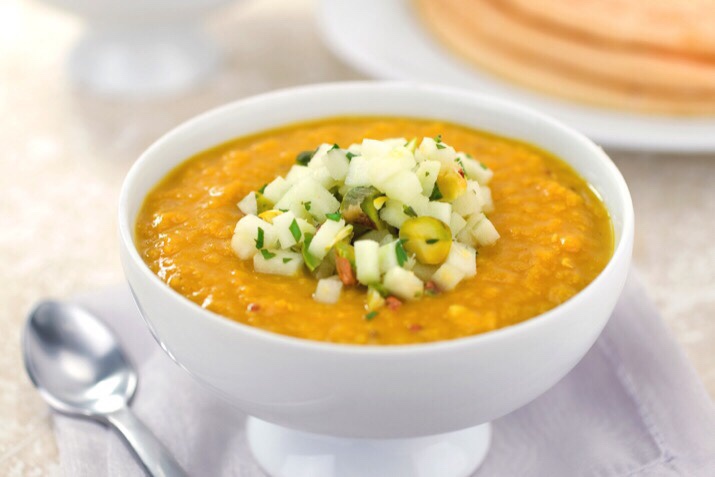
Easy Mulligatawny Soup

12 Cloves Garlic Minced

2 1” Pieces Fresh Ginger, Peeled And Chopped

1 Teaspoon Ground Cumin

1 Teaspoon Cayenne Pepper

1 Teaspoon Ground Coriander

1 Teaspoon Black Pepper

½ Teaspoon Turmeric

½ Teaspoon Curry Powder

2 Tablespoons Water

4 Tablespoons Vegetable Oil

1 Lb. Ground Beef

1 Large Onion

2 Quarts Chicken Stock

4 Tablespoons Uncooked Brown Rice

6 Tablespoons Cornstarch

½ Cup Water

2 Tablespoons Lemon And Lime Juice

Coriander or Mint Springs For Garnish, Fried Onions For Garnish

Combine garlic, ginger, cumin, cayenne, coriander, black pepper, turmeric, and curry with 2 tablespoons of water and mash into a coarse paste.  In a large pot heat oil over medium heat.  Add beef, onion, and spice paste.  Cook fifteen minutes or until beef well browned.  Add stock and rice.  Bring to a boil.  In a small cup blend cornstarch and water until smooth.  Add to soup and stir constantly to reheat to boiling.  Cover,  reduce heat and simmer forty minutes. Add lemon and lime juices.  Stir well and serve hot in small bowls for an appetizer or over bowls of white rice for a main dish.  Top with garnishes.

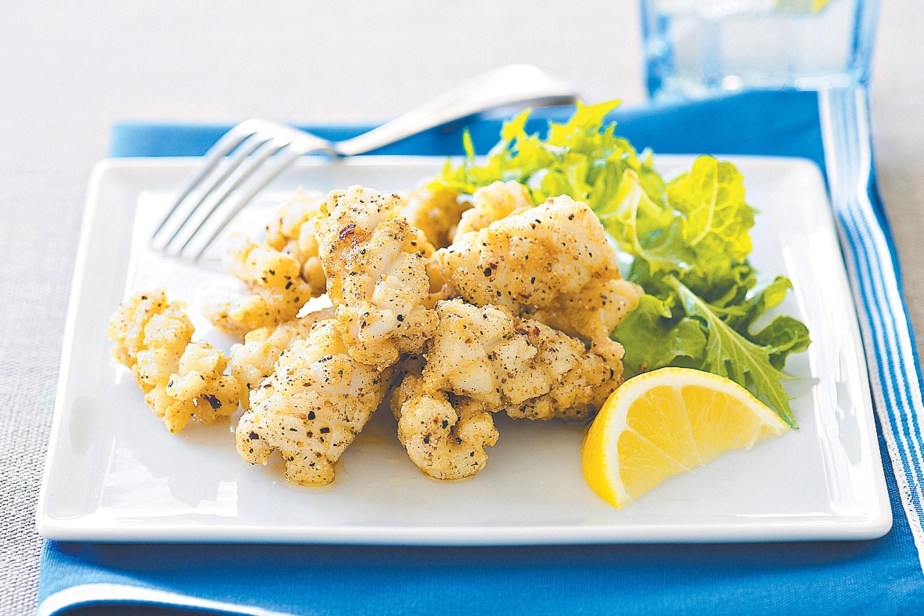
Jiao Yan You Yu (椒鹽魷魚): Salt & Pepper Squid

2 small squid (1 lb 7 oz uncleaned, 11 oz cleaned)

1 tbsp Shaoxing wine (Sake or Mirin may be used as a substitute.)

3 tbsp potato flour

1½ cups plus 2 tbsp (400ml) cooking oil

2 tbsp finely chopped garlic

2 tbsp finely sliced spring onion whites

1–2 tbsp finely sliced fresh red chilli

¼ tsp ground roasted Sichuan pepper, mixed with ¾ tsp salt

2 tbsp finely sliced spring onion greens

Gently tug the tentacles, innards and bony blade out of the body. Cut the tentacles away and pull out the beak. Discard the head, innards and beak. Peel the wings from the body of the squid. Peel away and discard the purplish membrane that covers the wings and body. Rinse everything well in cold water.

Slice open the body of the squid along its length and lay it flat on a board. Score the whole surface in parallel cuts a few millimetres apart. Don’t worry if some of your cuts go through to the board: the squid will taste delicious and look appetizing anyway. Make parallel scores at right angles to the first cuts. You should end up with the whole surface cross-hatched. Do the same with the wings. Cut the body into bite-sized pieces. Place in a bowl with the wings and tentacles, add the Shaoxing wine and mix well.

Drain the squid. Add the flour and mix well. Heat the oil in a wok over a high flame to 350°F. Add half the squid and deep-fry until lightly golden. Remove and drain on paper towels. Repeat.

Drain off all but 1 tbsp oil. Add the garlic, spring onion whites and chilli to the wok and stir-fry over a medium heat until they smell wonderful. Increase the heat to high, return the squid with the Sichuan pepper and salt mixture to the wok and stir and toss for a minute. Finally, add the spring onion greens, mix well and serve.

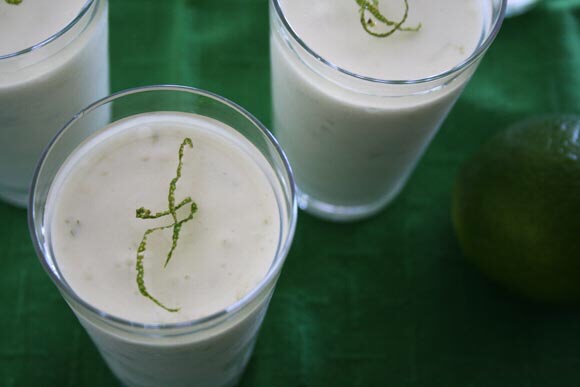
Soy Milk Mousse

  • 1¾ fluid ounces soymilk 
  • 4½ ounces silken tofu
  • 1 tablespoon raw sugar
  • 1 tablespoon maple syrup
  • 1¾ ounces banana
  • Fruits or Nuts (optional)

Sugar Syrup

  • 1 ounce raw sugar
  • ⅔ fluid ounces water

For the sugar syrup, combine sugar and water in a saucepan over low heat. Gently stir until all sugar is dissolved.

Set aside to cool.

Add soymilk, tofu, banana, sugar and maple syrup in a blender. Blend until smooth.

Divide into 4 portions and keep refrigerated for 2 hours.

To serve, add sugar syrup.

Top with fruits or nuts if desired

Japanese Fruit Sandwich

  • 4 oz whipping cream (1/2 cup)
  • 4 oz mascarpone (1/2 cup)
  • 1 tbsp sugar
  • 2 tbsp jam any type
  • 4 slices thick white bread (Use Shokupan Japanese bread if possible),
  • 4 small strawberries
  • 1/2 kiwi fruit
  • Small banana
  1. Place whipping cream, mascarpone and sugar in a large mixing bowl. Whip them all together by hand till it makes a soft peak. Refrigerate whipped cream and mascarpone till it is needed.
  2. Wash strawberries and cut the stem off and wipe off water. Peel and cut kiwi fruit. Peel and cut banana about 2cm (0.8inch) thick.
  3. Spread the jam on one side of 4 slices of bread. Place the bread on a cling wrap and spread the whipped cream about 1cm (0.4inch) thick. Layout the fruit according to how you want to cut the bread, and how the fruit will look when it is cut.
  4. Drop more whipped cream over the fruit and place another slice of bread to sandwich. Wrap with the cling wrap and draw the location of where each fruit piece is with a permanent marker over the cling wrap.
  5. Refrigerate at least 2 hours to settle. After refrigerated for 2 hours, take them out and slice.

Miso and Ginger Dashi Poached Salmon

Miso and Ginger Dashi Poached Salmon

4 – 8 ounce salmon fillets
1/3 cup white, yellow or red miso paste depending upon taste
4 to 5 cups simple traditional dashi, or enough to cover the fish
1 inch fresh ginger, peeled and diced
3 garlic cloves, crushed
1 bunch enoki mushrooms

Simple Traditional Dashi

One 3 x 6 inch piece of kombu
8 cups of water
2 handfuls of katsuobushi

Directions

Rinse the kombu. Combine it with water in a saucepan. Bring water to a simmer. Turn off stove. Steep for 10 minutes. Remove the pan from heat. Add the katsuobushi.. Cover and let steep for 7 minutes. Strain the dashi through cheesecloth.

Add and mix 2 cups of dashi and all ingredients for the poaching liquid in a pot. Bring it to a boil and turn the heat down to medium. Simmer the liquid for 5 minutes and turn the heat down to low. Place the salmon skin-side down. Add a little more dashi if the fish is not completely covered and enoki mushrooms. Cook on low heat and poach the salmon approximately 8 to 12 minutes depending on thickness or until salmon reaches an internal temperature of 145 degrees.

Plate the salmon in a wide bowl with a little bit of the poaching liquid and enoki mushrooms. Garnish with chopped spring onions or chives and toasted sesame seeds if desired.

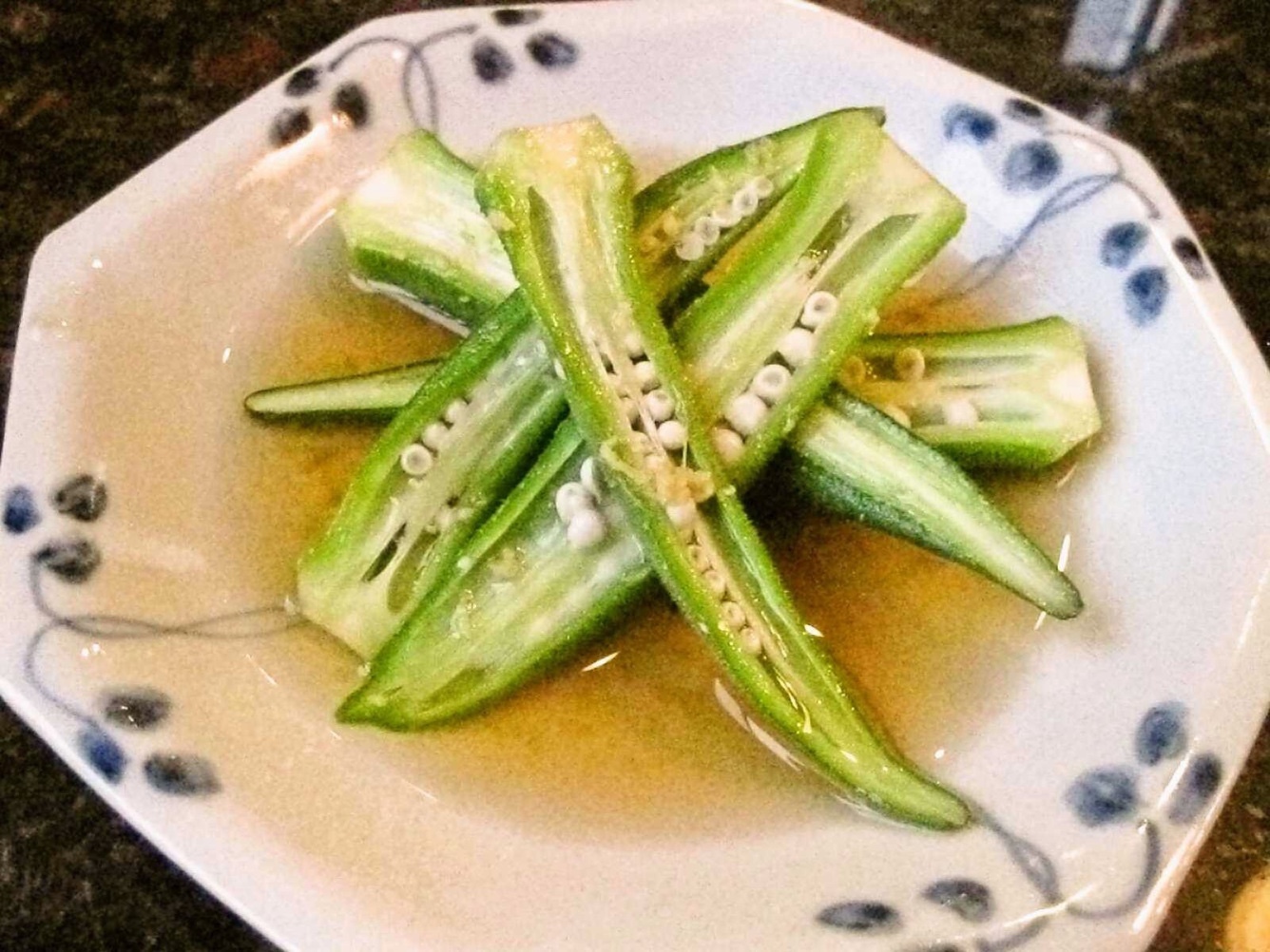
Okra in Ginger Sauce

  • 6 1/3 ounces small okra *
  • 1/3 ounce grated ginger
  • 8 fluid ounces Shiitake Mushroom Dashi
  • 2 Tablespoons  Japanese soy sauce
  • 1 Tablespoon  sake
  • 1 Tablespoon  mirin
  • 1 teaspoon  sesame oil
  • ¼ teaspoon sea salt

Wash and trim stem ends of okra.

Add Shiitake Mushroom Dashi, soy sauce, sake, mirin, sesame
oil and sea salt in a saucepan and bring to the boil. Lower
heat and add okra and grated ginger. Simmer for
about 10 minutes.

Remove and arrange on 4 individual serving plates.
Serve with some broth spooned over.

* Cut into halves if you are using okra of longer lengths.

Lotus Chips

Oil, for frying
7 oz lotus root, peeled and thinly sliced
Salt, to serve
Ichimi powder, to serve *

Pour enough oil into a wok or deep frying pan to come one-third of the way up the side and place over high heat until shimmering. Cook the lotus root, in batches, for 3–5 minutes, or until golden.
Drain on paper towel and sprinkle with the salt and ichimi powder to serve.

Ichimi powder —> Japanese Hot Red Chili Pepper, naturally dried in the sun and milled into a powder. Can be bought online or at most Asian Grocers.

Green Beans with Miso

Miso Sauce
3 tablespoons white miso
1 teaspoon caster (superfine) sugar
2 tablespoons sake
½ teaspoon Japanese soy sauce
5 drops of sesame oil
150 g or 5 ½ oz. baby green beans, trimmed

To make the miso sauce, combine all the ingredients in a small bowl along with 2 tablespoons of water.

Bring a large saucepan of salted water to the boil. Add the beans and cook for 2 minutes, or until just tender. Drain and plunge into a bowl of iced water. Drain again.

Transfer the beans to a bowl. Add the miso sauce, toss to combine and serve.