Mise en Place —> “Everything put in its place”

Poste de Trevail:
- Cutting board on a damp cloth.
- Knives on the right.
- Bowls to hold ready to prepare and prepared vegetables on top.
- Bowl to catch peelings on board.


Mise en Place —> “Everything put in its place”
Poste de Trevail:
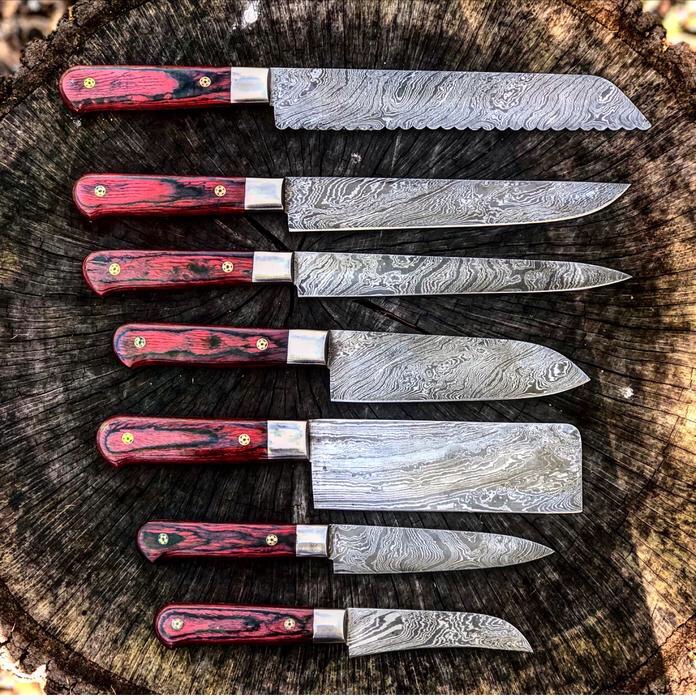
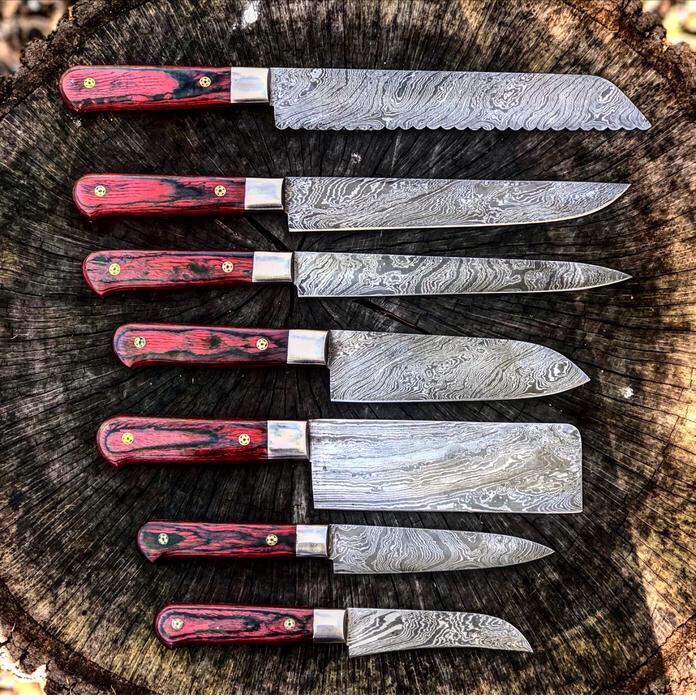
Chef’s (or French) Knife: Used for chopping, slicing, dicindand filleting. Blade 6-14 inches.
Utility Knife: Used for coring vegetables and slicing tomatoes and other fruits and vegetables.
Boning Knife: Used to bone various meats and poultry. Blade is 6-7 inches and curved.
Fillet Knife: Used to fillet fish. Flexible blade.
Slicing Knife: Used for slicing large cuts of meat or fish. Blade 12-16 inches.
Paring Knife: Small blade Used for peeling and turning vegetables.
Serrated Knife: Bevel edge blade for slicing breads.
Honing Steel: Hardened, ridged rod to keep blade aligned.
Sharpening Stone: Stone in a variety of grits used to sharpen knives.
The Cutting Edge the sharpened, honed edge of the blade. It should be razor sharp. Chef’s knife blades come in varying degrees of curvature, designed for various tasks, such as cutting, slicing, filleting, butchery.
The Back, or Spine, is the long side opposite the sharp blade. This is where you hold your non–knife hand when rocking the knife back and forth for rapid mincing. It can also be used as a makeshift bench scraper for moving pieces of food around on your cutting board. Never use the knife cutting edge for this.
The Tip is the sharp point at the end of the blade. It’s used for precision work.
The Heel is at the bottom of the blade. In Western-style knives, the metal thickens significantly at the heel. This is to make it easier to grip.
The Bolster is the part of the blade that meets the handle. It is thick and heavy, providing a good balancing point for the blade and the handle. The center of mass should be somewhere near the bolster, so that you can rock the knife back and forth with minimal effort.
The Tang is the extension of the blade that runs through the handle. It provides balance as well as sturdiness.
The Handle is where your hand rests if using the handle grip, or where your three smaller fingers rest if using the blade grip. Handles can be made of wood, polycarbonate, metal, or various exotic materials.
The Butt is the fattened section at the very bottom of the handle.
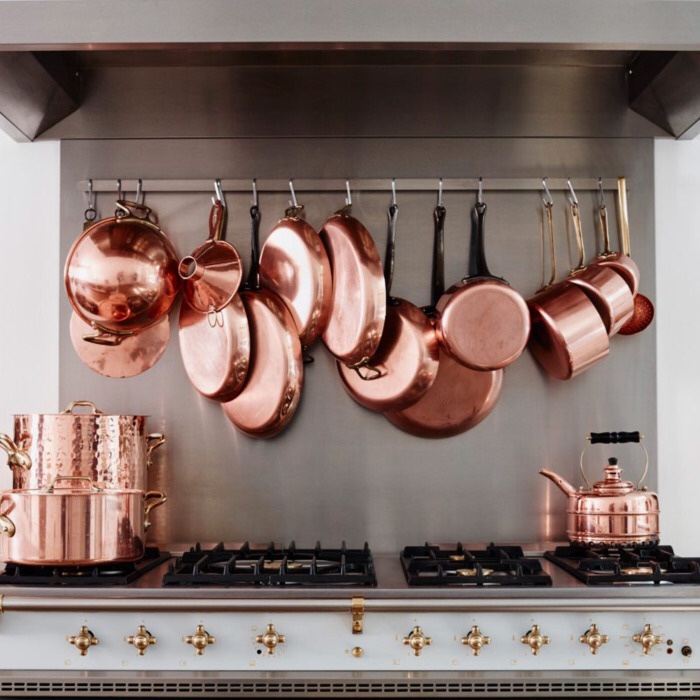
Materials:
Batterie de Cuisine (Pots and Pans):
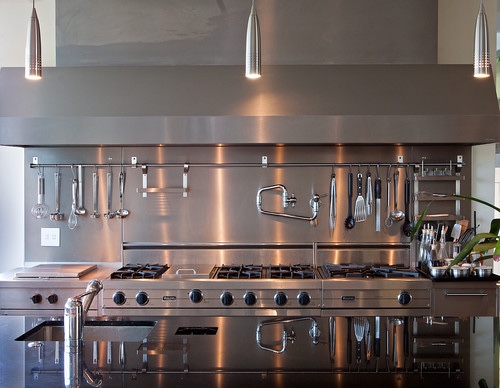
Large Appliances
Stoves:
Open Burner: Direct, adjustable heat.
Flat Top: Thick Steel plate over the heat source that provides indirect heat. Requires flat bottomed cookware and time to adjust settings.
Ring Top: Concentric rings and plates that can be removed to expose the burner. Indirect or direct heat. Has a higher BTU than an open burner.
Conventional Oven: Indirect heat source located at the bottom with adjustable shelves.
Deck Oven: Food is set directly on oven floor. Single or multiple levels available. Think pizza oven.
Convection Oven: Fan blows hot air through oven allowing food to brown more efficiently. Often used for pastries and baked goods.
Combi Oven: Temperature, moisture content and air flow may be controlled. Used for cooking and holding food.
Salamander: Open Box like apparatus with heat source located in roof. Generally used for intense browning (glacages)
Grill: Heating source (built in or added) is located below a heavy duty cooking rack.
Walk-In Refrigeration: Used for cold storage or freezing.
Reach-In Refrigeration: Larger version of a home refrigerator/freezer.
Under Counter Refrigerator and Refrigerated Drawers: Used primarily around the work areas. Some drawers designed to hold specialty products such as fish.
Small Appliances
Ber Mixer: Immersion blender either electric or battery powered.
Electric Blender: A machine that purées, Emulsified and crushes. Composed of a solid housing containing motor base and the blending jar Never fill more than 2/3 full.
Electric Food Chopper or Buffalo Chopper: Heavily built machine with a rotating bowl that passes under a hood where vertical blades chop the food.
Electric Food Processor: Heavy motor encased in plastic or metal housing with a detachable bowl and cover and various blades with specific functions. It can chop, blend, mix, purée, knead, grate, slice and julienne.
Electric Meat Grinder: Freestanding motor housing, as well a feed tray, and blades of varying sizes.
Electric Meat Slicer: Substantial machine with a metal encased motor as the foundation and a circular cutting blade attached.
Mandoline: Hand slicer supported by folding legs with a number of different sized blades used to cut vegetables into a variety of shapes, sizes and thicknesses.
Steam Jacketed Kettle: Used to make large quantities of stocks, soups, sauces and pastas. Two quarts to one-hundred gallons. Steam circulates through the kettle walls to provide heat.
Tilting Shallow Kettle: Large stainless steel unit with a hinged lid for making large quantities of sautés and braises.
Hand Tools
Channel Knife (Canneieur): Small Knife used to channel fruits and vegetables into decorative patterns.
Chef’s Fork: Longer handled, longer toned fork that keeps the chef’s hand from the heat.
Chinois: Conical strainer with a handle.
Chinois Etamine: Bouillon strainer. Constructed with fine metal mesh.
Perforated Chinois: Used when fine straining is not necessary.
Food Mill: Metal basket utensil with interchangeable discs and hand crank used to separate solids from skins, seeds, etc.
Kitchen Scissors: Sturdy shears to cut butcher’s twine. Or kitchen paper or for trimming fish or poultry.
Needle Nosed Plyers / Tweezers: Used to remove fine bones from fish.
Parisienne Scoop: Melon baller. Used to cut fruit or vegetables into small balls.
Pastry Spatula: Long thin spatula used to assist in cake decoration.
Ricer: Basket or cone shaped utensil with small holes and a plunger used to force small foods into grains.
Scales: Essential in pastry making.
Scrapers: Numerous styles:
Metal Bench Scraper: To clean off workspace.
Plastic Bowl Scraper: To remove dough from mixing bowls.
Spatulas: Large metal ones used to flip vegetables, meat, poultry. Rubber, composite, wood spatulas also used for various techniques.
Spider: Long handled device with a shallow almost bowl like shaped disk of mesh or perforated wire.
Spoons: Wide variety of sizes and shapes and materials.
Stem Thermometer: Measures degrees through a metal stem two inches from the tip.
Tamis: Used for fine straining of liquids, aka tammycloth.
Tongs: Helpful in turning, lifting and plating food without puncturing it.
Trusing Needle: Long skewer like needle used to truss poultry.
Vegetable Peeler: Small fixed or pivoting blade with a handle used to peel vegetables and fruit.
Whisks: Thin, flexible wire whips used to incorporate mixtures. Balloon whisks have large somewhat spherical centers to incorporate air into foods such as egg whites.

“Collard greens grow throughout the South and, probably as much as any other food, serve as a culinary Mason-Dixon line. Some claim greens kept Sherman’s scorched-earth policy from totally starving the South into submission; many today can testify to surviving Depression winters with greens, fatback, and cornbread. Southern childhood memories often focus on collard greens: either the pleasant, loving connection of grandma’s iron pot and steaming potlikker, or the traumatizing effects engendered by the first whiff of the unmistakable odor for which greens are famous. Writing in the Charlotte Observer in 1907, Joseph P. Caldwell explained, “The North Carolinian who is not familiar with pot likker has suffered in his early education and needs to go back and begin it over again.” Particularly among rural and poor southerners, collard greens have endured as a dietary staple.
Sometimes defined as headless cabbages, collards are best when prepared just after the first frost, though they are eaten year-round. They should always be harvested before the dew dries. When being prepared, they are “cropped,” then “looked,” then cooked; that is, cut at the base of a stalk, searched for worms, and then cooked “till tender” on a low boil, usually with fatback, or neck or backbone, added. The resultant “mess o’ greens,” topped with a generous helping of vinegar, can easily make a meal in itself. If they are summer greens (and much tougher), the tenderizing could take two hours or more of cooking; after first frost, it may take less than an hour. A whole pecan in the pot should eliminate the pungent and earthy smell. Potlikker, the juice left in the pot after the greens are gone, is a southern version of nectar from the gods and is valued both as a delicacy—particularly when sopped with cornbread—and for its alleged aphrodisiacal powers. Greens combine well with black-eyed peas and hog jowl in the South’s traditional New Year’s Day meal. To ensure good fortune, one should either eat lots of greens or tack them to the ceiling. In fact, a collard leaf left hanging over one’s door can ward off evil spirits all year long.
Though collard greens are grown year-round throughout the South and Southwest (Indians call them quelites), they are most prevalent in the Deep South and the eastern plains of North and South Carolina. The exporting of collards to displaced southerners in the Northeast has become a big business in the three leading collards-producing states. From the last week of October through May, eight firms from Georgia and the Carolinas ship a thousand tons of whole, fresh collards a week to the major northeastern metropolitan areas. The greens are cut and banded, then packed in bundles on ice, about 25 pounds per box or 20 tons a truckload.”
~ Alex Albright, East Carolina University. Excerpt From “The New Encyclopedia of Southern Culture”, John T. Edge (Editor)
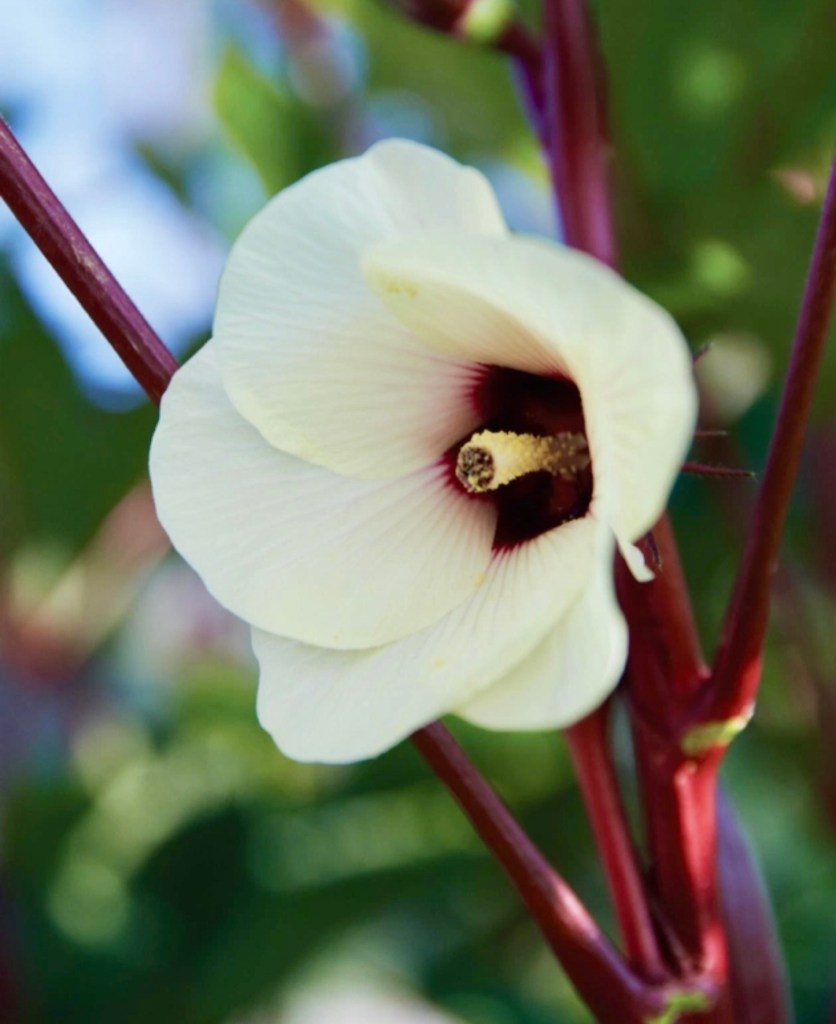
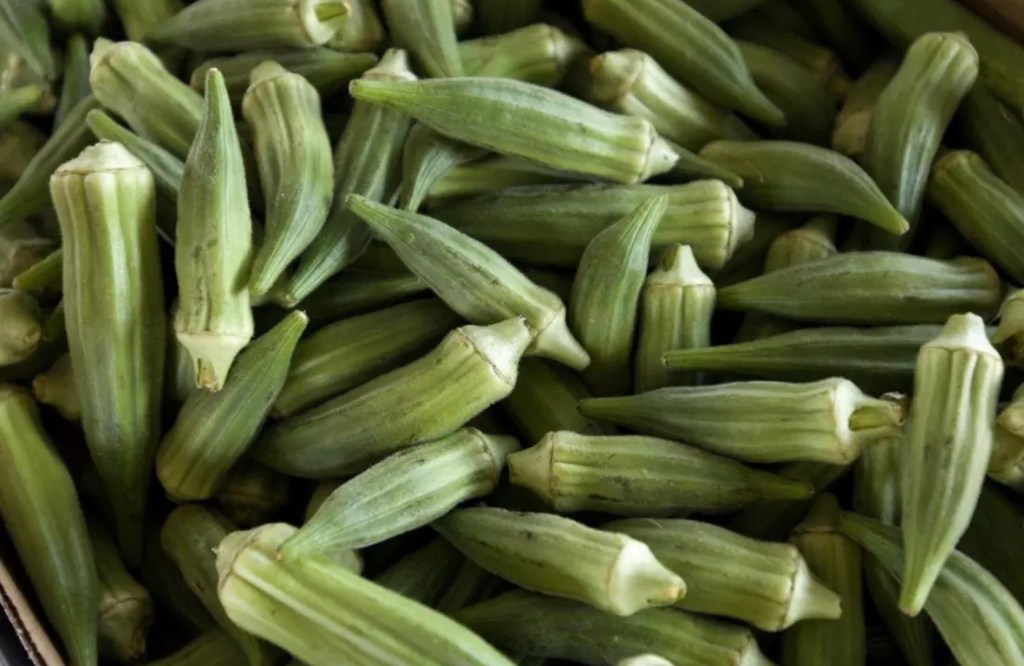

“I remember rediscovering okra as a young chef. One of the farmers who delivered our summer produce invited us to his farm for a visit. I had never seen okra growing in the field before, and was mesmerized by the sight: verdant rows of lanky stalks with broad leaves and gorgeous, hibiscus-like flowers blooming alongside ridged, finger-like pods pointing toward the sun. He clipped off a young tender pod and bit right into it, next offering me one. It was sweet and crunchy, and warm from the afternoon heat. I had only ever tried okra cooked and was stunned at how good it was raw, straight from the plant.
Until then, I had never thought much about okra beyond the traditional fried and stewed versions, which can both be either amazing or horrible depending on how they are prepared. Now it’s one of my favorite summer vegetables to work with. It is incredibly versatile: crisp and sweet when raw, sumptuous and meaty when roasted or sautéed, addictive when dipped in cornmeal and deep-fried. It builds layers of flavor and texture when stewed in soups and gumbos.”
~Steven Satterfield
Okra is a flowering plant like its cousins cotton, cocoa, and hibiscus, loves poor soil, unpredictable rains, and heat. It does not like frost, which is why many living above the Mason-Dixon Line are unfamiliar with its goodness or view it with suspicion. So much of the world relishes it. In India it is called “lady fingers.” Africans frequently call it “gumbo,” a term that has taken root in Louisiana and other Cajun areas as well as in the Gullah region of South Carolina and Georgia.
Purchasing: When buying okra, look for the smallest pods. By the time larger pods are cooked, they are much less palatable. If the smaller ones are not available, slice the larger ones on the diagonal before preparing.
Cornmeal Fried Okra
Fried okra is served everywhere in the South, but that doesn’t mean it’s always good. Same goes for stewed Okra and Tomatoes.
2 pounds fresh okra, smallest size preferred, washed
½ teaspoon kosher salt
3 quarts good frying oil
2 cups extra-fine cornmeal
5 tablespoons cornstarch
1 teaspoon fine sea salt, plus more to taste
Trim the tops off the okra and slice the okra in half. Place the trimmed okra in a dish and pour 1 cup water over it, then sprinkle with ½ teaspoon kosher salt. Agitate the okra in the water and let it sit 10 to 15 minutes. While the okra is soaking, using a frying thermometer, slowly heat the oil to 350°F.
In a bowl, whisk together the cornmeal, cornstarch, and sea salt. Pull a handful of okra from the dish and allow it to drain in your fingers a few seconds, then drop the okra slices into the cornmeal mixture. A metal skimmer works well. Toss to coat well, remove the okra from the dredge and sift the excess dredge away, being careful not to knock off too much coating. Repeat the dredging process until all the okra is coated and ready to fry. Working in batches, drop the coated okra into the hot oil and fry until crisp and golden, around 5 minutes. Do not overcrowd the pot. Transfer the hot okra to paper towels to drain, and sprinkle with more fine sea salt.
Serve immediately.
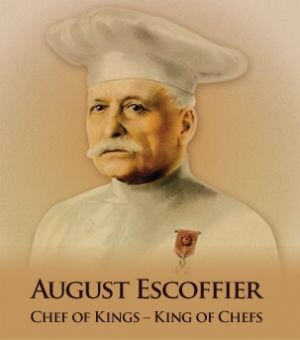
“The art of cuisine is perhaps one of the most useful forms of diplomacy.”
~ Auguste Escoffier
On October 28, 1846 one of the most important French chefs the world has ever known was born Georges Auguste Escoffier. He modernized and simplified the French culinary system. Among his achievements was codifying the five mother sauces of French cuisine. He also instituted a military hierarchy into the kitchen, a system that is followed to this day worldwide with few changes. This brigade de cuisine is a structured team system which delegates different responsibilities to different team members who specialize in certain tasks.
Escoffier began his apprenticeship aged 12 at his uncle’s restaurant in Nice, France. At 19 he moved to Paris and continued his apprenticeship. He was the first great chef that worked his entire career in the public sphere, as opposed to working for royalty. Among his customers were kings, heads of state, and stars on the London and Paris opera. He became known as, “the chef of kings and King of chefs”.
His belief, “above all, keep it simple,” led to him revolutionizing cuisine and a gastronomic philosophy of highly refined simplicity. Escoffier established sanitation standards that up until that point had been unheard of in the kitchen. He was an expert in food science of the time as well as preservation. He was one of the first to develop bottled sauces for the homemaker. Escoffier was dedicated to the belief that food service professionals should improve their skills through education. He wrote multiple books to this effect including Le Guide Culinaire.
The brigade system was instituted in the 19th century at London’s Savoy Hotel. The size and scope will vary according to the size of the kitchen and the establishment. In a large hotel kitchen, especially during Escoffier’s age, a brigade would consist of the following:
Executive Chef – An administrator in charge of all kitchen operations including menu planing, costing and scheduling.
Chef de Cuisine – A active cook who works in the kitchen during preparation periods as well as service. Also responsible for ordering and other administrative duties.
Sous Chef – Second in command under the chef de cuisine. Supervises all the cooks. Oversees the preparation of food and service in the chef de cuisine’s absence.
Chef de Partie – In charge of a specific station.
Commis – Assistants to the chef de partie.
Apprentice – Assists the commis. Common in Europe.
Stations:
Saucier – Responsible for the preparation of all stocks and sauces.
Rotisseur – Responsible for all roasts. Oversaw next two positions.
Grillardin – Responsible for all grilled meats.
Friturier – Responsible for frying everything from French fries to oysters and tempura.
Poissonier – Responsible for the cleaning and preparation of all fish.
Entremetier – Responsible for the “entrance” to the meal, a small lighter first course. Oversaw next two positions.
Potager – Responsible for making soups.
Legumier – Responsible for all vegetable hot dishes and sides.
Garde Manger – Responsible for the preparation of all cold dishes including hors d’oeuvres, terrines, pates, etc.
Patissier – Pastry chef. Responsible for the creation and presentation of all desserts.
Boulanger – Baker. Responsible for all bread and breakfast pastries.
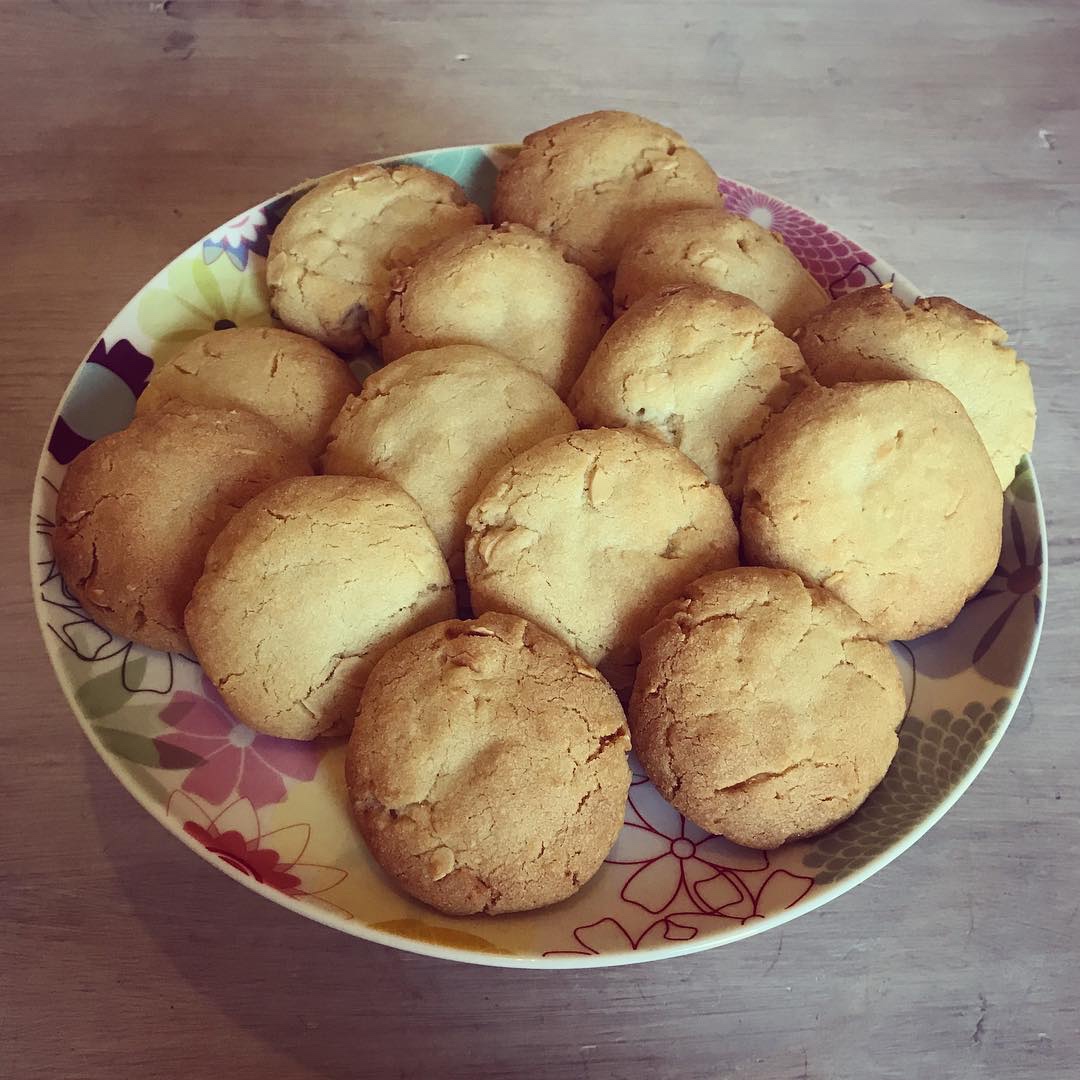
This is a simple recipe for a crunchy almond flavored biscuit from England during the Middle Ages.
1/2 cup butter
1 cup all purpose flour
1 cup sugar
2 tablespoons chopped, blanched almonds
1 teaspoon rosewater (or substitute) *
Cream the sugar and butter together in a large bowl until light and fluffy. Stir in the rosewater and almonds. Fold in the flour to form a stiff dough. Form pieces of dough into balls about the size of a golf ball in your hands and flatten them onto a baking tray lined with baking parchment. Bake for about 20 to 25 minutes at 350 degrees. When baked the biscuits should be golden brown in color.
* It was traditionally flavored with rosewater, which is still available in specialty food stores. If you can’t obtain rosewater, you can use vanilla or even orange extract instead.
 Palm Valley Fish Camp
Palm Valley Fish Camp and Marker 32 are two restaurants in the Jacksonville area that I frequent. They are both seafood restaurants owned and operated by the same owners. Palm Valley is a much more casual restaurant, and usually my preference, but Marker 32 is a great date or special occasion restaurant.
Palm Valley Fish Camp
 Broiled Oysters
 Fried Green Tomatoes
 Cajun Crawfish
 Stone Crab
 Pan Sauteed Flounder With Mashed Skin-On Red Potatoes And Sauteed Zuchinni & Yellow Squash
 Fried Shrimp, Fries, Hushpuppies, Coleslaw
 Bacon Butter Beans
 Roasted Cod with Blackeye Pea Succotash, Squash Puree over a Fried Green Tomato.
 Lowcountry Boil : Shrimp, Clams, Crawfish and Andouille Sausage for two.
Marker 32
 Broiled Oysters Appetizer : with bacon, spinach & sundried tomatoes.
 Southern style Blue Crab cakes with caper dill aiolli, Crushed Portatoes & steamod Spinach
 Fried local shrimp with celery root slaw, sweet fennel salt fries
 Seared Scallops with spicy shrimp and corn broth, Grits, Collard Greens and House Dried Tomatoes
 Herb grilled Snapper with basil pesto and Hoppin John
 Bouillabaisse
 Mark Bere Peterson’s Counterculture, Urban Legends, Paganism & Witchcraft