Anne Sexton was an American poet best known for her personal autobiographical style of confessional verse. In 1967 she won the Pulitzer Prize for poetry for her book “Live or Die.” Additionally she was a fellow of the Royal Society of Literature and the first woman to be a member of the Harvard chapter of Phi Beta Kappa. The main themes of her poetry consisted of her suicidal tendencies, her battle with depression, isolation, and personal details of her intimate life including her marriage and children. In 1928 she was born in Newton, Massachusetts and would remain in the Boston area for the rest of her forty-five years. She married in 1948 and had two daughters. She was diagnosed with what is now called bipolar disorder and struggled with it much of her life, including several suicide attempts and a long relationship with Glenside Hospital. On October 4th, 1974 she put on her mother’s fur coat, removed her rings, poured herself a glass of vodka, locked herself in her garage turning on the car and committed suicide by carbon monoxide poisoning.
Besides her reoccurring themes of depression, isolation and suicide she also focused on certain issues specific to women which were not commonly addressed in poetry up to that point such as menstruation and abortion. She also more broadly addressed such subjects as masturbation and adultery all subjects that were taboo up until that point. Early in her career she focused almost entirely on autobiographical verse, but as her career progressed she made attempts to reach outside her own personal experience. One of her most successful of these was the book, “Transformations,” in which she retold Grimm’s fairy tales. Kurt Vonnegut, Jr. commented after reading the book, “God love her.” The poet Denise Levertov said of her death, “We who are alive must make clear, as she could not, the distinction between creativity and self-destruction.”
A link to Anne Sexton reading her poem “Her Kind” : http://www.poets.org/viewmedia.php/prmMID/15297
A few quotes :
“All I wanted was a little piece of life, to be married, to have children…. I was trying my damnedest to lead a conventional life, for that was how I was brought up, and it was what my husband wanted of me. But one can’t build little white picket fences to keep the nightmares out.”
“Death, I need my little addiction to you. I need that tiny voice who, even as I rise from the sea, all woman, all there, says kill me, kill me.”
“The beautiful feeling after writing a poem is on the whole better even than after sex, and that’s saying a lot.”
Wanting To Die – By Anne Sexton
Since you ask, most days I cannot remember.
I walk in my clothing, unmarked by that voyage.
Then the almost unnameable lust returns.
Even then I have nothing against life.
I know well the grass blades you mention,
the furniture you have placed under the sun.
But suicides have a special language.
Like carpenters they want to know which tools.
They never ask why build.
Twice I have so simply declared myself,
have possessed the enemy, eaten the enemy,
have taken on his craft, his magic.
In this way, heavy and thoughtful,
warmer than oil or water,
I have rested, drooling at the mouth-hole.
I did not think of my body at needle point.
Even the cornea and the leftover urine were gone.
Suicides have already betrayed the body.
Still-born, they don’t always die,
but dazzled, they can’t forget a drug so sweet
that even children would look on and smile.
To thrust all that life under your tongue!–
that, all by itself, becomes a passion.
Death’s a sad Bone; bruised, you’d say,
and yet she waits for me, year after year,
to so delicately undo an old wound,
to empty my breath from its bad prison.
Balanced there, suicides sometimes meet,
raging at the fruit, a pumped-up moon,
leaving the bread they mistook for a kiss,
leaving the page of the book carelessly open,
something unsaid, the phone off the hook
and the love, whatever it was, an infection.
“What a fate: to be condemned to work for a firm where the slightest negligence at once gave rise to the gravest suspicion! Were all the employees nothing but a bunch of scoundrels, was there not among them one single loyal devoted man who, had he wasted only an hour or so of the firm’s time in the morning, was so tormented by conscience as to be driven out of his mind and actually incapable of leaving his bed?” ~ Franz Kafka,The Metamorphosis
The Metamorphosis (1915) by Franz Kafka
One of Kafka’s best-known works, The Metamorphosis tells the story of salesman Gregor Samsa who wakes one morning to find himself inexplicably transformed into a huge insect and subsequently struggling to adjust to this new condition. The novella has been widely discussed among literary critics, with differing interpretations being offered.
In Search of Lost Time (1913) by Marcel Proust
It is considered to be his most prominent work, known both for its length and its theme of involuntary memory, the most famous example being the “episode of the madeleine.” It gained fame in English in translations by C. K. Scott Moncrieff and Terence Kilmartin as “Remembrance of Things Past”, but the title In Search of Lost Time, a literal rendering of the French, has gained usage since D. J. Enright adopted it for his revised translation published in 1992.
Portnoy’s Complaint (1969) by Philip Roth
The novel tells the humorous monologue of “a lust-ridden, mother-addicted young Jewish bachelor,” who confesses to his psychoanalyst in “intimate, shameful detail, and coarse, abusive language.”Many of its characteristics (such as comedic prose, themes of sexual desire and sexual frustration, and a self-conscious literariness) went on to become Roth trademarks.
Death of a Salesman (1949) by Arthur Miller
It won the 1949 Pulitzer Prize for Drama and Tony Award for Best Play. The play premiered on Broadway in February 1949, running for 742 performances, and has been revived on Broadway four times,winning three Tony Awards for Best Revival. It is widely considered to be one of the greatest plays of the 20th century.
The Catcher in the Rye (1951) by J.D. Salinger
A classic novel originally published for adults, it has since become popular with adolescent readers for its themes of teenage angstand alienation. It has been translated into almost all of the world’s major languages. Around 1 million copies are sold each year, with total sales of more than 65 million books. The novel’s protagonist Holden Caulfield has become an icon for teenage rebellion. The novel also deals with complex issues of innocence, identity, belonging, loss, and connection.
The Trial (1925) by Franz Kafka
One of his best-known works, it tells the story of Josef K., a man arrested and prosecuted by a remote, inaccessible authority, with the nature of his crime revealed neither to him nor to the reader.
Herzog (1964) by Saul Bellow
Herzog is set in 1964 in the United States, and is about the midlife crisis of a Jewish man named Moses E. Herzog. At the age of forty-seven, he is just emerging from his second divorce, this one particularly acrimonious. He has two children, one by each wife, who are growing up without him. His career as a writer and an academic has floundered. He is in a relationship with a vibrant woman, Ramona, but finds himself running away from commitment.
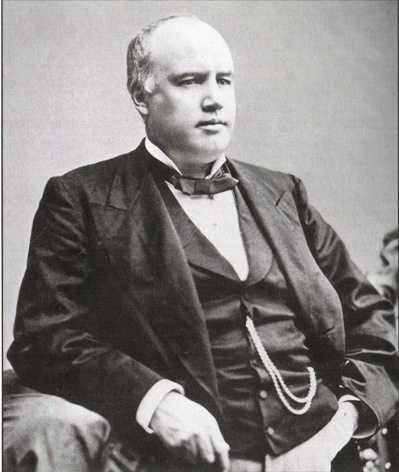
On August 11th each year we , celebrate “The Great Agnostic” (actually an atheist) born on that day in 1833.
By all accounts a fine man and an unparalleled speaker, the Christopher Hitchens of his time. Ingersoll was one of the most popular orators of his age, when oratory was public entertainment. He spoke on every subject, from Shakespeare to Reconstruction, but his most popular subjects were agnosticism and the sanctity and refuge of the family. He committed his speeches to memory although they were sometimes more than three hours long.
Many of Ingersoll’s speeches advocated freethought and humanism, and often ridiculed religious belief. For this the press often attacked him, but neither his opinions nor the negative press could stop his increasing popularity. During Ingersoll’s greatest fame, audiences would pay $1 or more to hear him speak, a considerable sum for that time.
Here’s a quotation on his belief of the harmony, or lack of, between religion and science which of course is still a contentious debate:
“There is no harmony between religion and science. When science was a child, religion sought to strangle it in the cradle. Now that science has attained its youth, and superstition is in its dotage, the trembling, palsied wreck says to the athlete: “Let us be friends.” It reminds me of the bargain the cock wished to make with the horse: “Let us agree not to step on each other’s feet.”
~ Robert G. Ingersoll, American Soldier, Lawyer, Orator and Politician
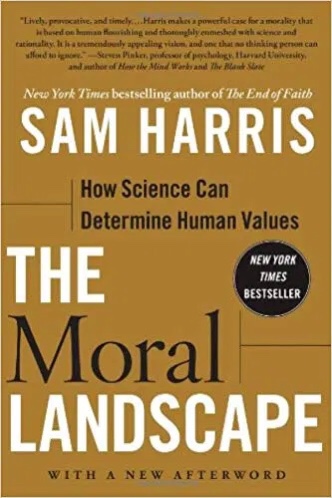
Evolutionary Ethics: Thoughts upon reading “The Moral Landscape” By Sam Harris (Originally Written 7/2011)
I find myself back in intensive care today having rushed to the ER throwing up blood. I have an endoscopy scheduled to see if they can find the bleed. I haven’t been here in Jacksonville long, but I have every faith that Mayo will discover what is wrong with me. There are a lot of medical questions I should be dominated with, but I’ll either survive this hospital stay or I won’t. There is nothing I can do about it so I am very calm. Instead my mind in preoccupied with morality. I just finished reading The Moral Landscape by Sam Harris and the questions he posits is morality defined and developed by religion or by science and specifically evolution is consuming me. It’s an interesting question and while he is firmly on the side of science, so many of my friends and family would argue the opposing point of view.
I’ve been on a religious search for meaning most of my adult life having tried on Christianity, Judaism, and finally Buddhism. Buddhist thought has carried a lot of weight with me for several years as I have an uneven practice. I will meditate and study for months on end and then nothing for a few months. As I lie here in the ICU though the desire to be able to pray to a loving God beseeches me. I can understand the comfort Christians receive
from such practices. The questions though with Christianity are too many and complex for me to find comfort. I’ve read the bible cover to cover three times, the first time back in college and the doctrine in not foreign to me in the least. The quote by an unattributed author keeps ringing in my head of the difference between philosophy and religion, “Philosophy is questions that may never be answered. Religion is answers that may never be questioned.”
Epicurus was an Ancient Greek philosopher who lived from 341–270 BC. He taught that pleasure and pain are measures of what is good and evil; death is the end of both body and soul and should therefore not be feared; the gods neither reward nor punish humans; the universe is infinite and eternal; and events in the world are ultimately based on the motions and interactions of atoms moving in empty space. Most of his writings have been lost, but among those saved was this question, “Is God willing to prevent evil, but not able? Then he is not omnipotent. Is he able, but not willing? Then he is malevolent. Is he both able and willing? Then whence cometh evil? Is he neither able nor willing? Then why call him God?”
Is there a universal morality which governs all of humanity upon which judgement can be placed as opposed to the predominantly liberal idea of cultural moral relativity? I argue yes and it is not tied to any religion, as a matter of fact religion confounds the matter and it is only through science and evolutionary theory that one might comprehend the overreaching standard of morality and how liberals, as well as conservatives, complicate this problem by allowing moral relativity to flourish. The desire not to judge other cultures and be a victim of ethnocentrism has taken on a life of its own in this politically correct world. This belief that there is no higher moral authority due to the fact that there are multiple faiths and each of those adherents believe they are living a moral life or promises of happiness and bliss in the next life. In Western culture for instance it is easy to judge Islam and their subjugation of women, gays, and infidels based on Judeo-Christian doctrine. I shall argue that it is a moral imperative to vanquish fundamentalism in all religions.
First to understand this argument there requires some understanding of some working definitions via the Oxford dictionary. Morality, principles concerning the distinction between right and wrong or good and bad behavior. Ethics, Moral principles that govern a person’s behavior or the conducting of an activity. Welfare, The health, happiness, and fortunes of a person or group. The absolute morality I am arguing is based upon the idea of that which increases the general welfare of humanity, or more simply for the greater good of society, as a whole is a moral framework. This is a human morality and not one simply for one ethnic, religious, or cultural group. You could argue for instance that slavery did indeed increase the welfare of the ancient Romans, but by all modern evaluations this is not seen as moral. For those of the Judeo-Christian faith for instance find the Old Testament of the bible is ripe with examples of God not only condoning, but embracing slavery. If God is indeed omnipotent and omniscient his condoning of slavery should be just as moral today as it was when the bible was first written. There are very few however who would argue that slavery is ethically right in this modern day.
Fundamentalists of virtually all faiths view their religious texts as the literal words of God. The prevalence of young earth creationists in Western civilization who believe the world is only approximately 6,000 years old is an example of this despite the overwhelming evidence to the contrary. The rallying cry of this demographic seems to be, “I’m not a scientist. Science and evolution is only a possible theory.” This issue stems from the ignorance of understanding the difference between the concept of a scientific theory and the common use of the word theory. According to a Gallup poll in 2014, 4 in 10 Americans believe God created the world within the last 10,000 years. Approximately 50% of Americans believe in evolution over millions of years, with the vast majority believing God guided this process. Only 19% of Americans believe in a non-God guided natural selection view of evolution. Of course this is at odds with scientific consensus which dictates the humans or those of Homo genus emerged of earth some 2.5 million years ago. When I refer to evolution I will be referring to the unguided naturalistic theory of evolution.
The forced subjugation of women in Islam and requiring them to wear a burqa by Western standards is seen as immoral. The cultural apologists will argue that you can not judge one culture by your own standards. I agree with this up to a point, you can not ethically judge Islamic law based upon your Judeo-Christian standards as intrinsically they are all flawed as morality has changed in the past thousands of years since biblical law was written. If you can not apply religious standards to morality to determine an absolute it is obvious the morality is a relative concept based upon the culture? No. Through evolution, adaptation and science we can answer some of these questions about what is ethically permissible in a modern society and world at this moment in our evolutionary journey. Can we through evolutionary theory determine an exact moral code? No of course not, but we can theorize where our collective morality is headed. An example of this is the instance of slavery and racism in the United States. It is hard for anyone to reasonably argue that we haven’t morally evolved through the dismemberment of a slave based society, through lynchings in the not too distant past, to where we currently stand in the civil rights movement. Is this to say there is no racism? Of course not, but a great amount of progress has been made in the last one hundred and fifty years or so.
How can we derive our ethics from religion when the major religions of Judaism, Christianity and Islam condone and embrace such concepts we find morally abhorrent such as slavery, severe punishment or death of an adulteress, forced marriage of a rape victim, misogyny, homophobia, genocide, etc. Is the golden rule moral because of an ancient text or do we recognize it as moral because we brought that belief with us to the reading of the bible? I argue the later. The golden rule or the ethic of reciprocity is found cross-culturally in virtually every religion from ancient Egypt, Judaism, Islam, Buddhism, Hinduism, etc. The ethic of reciprocity can not be argued stems from a Judeo-Christian worldview or even that it was borrowed from Ancient Egypt since there are unaffiliated cultures which predate Judaism in this belief. My argument is that it is basic human nature or in another words the result of thousands of years of adaptation and evolution.
I realize this belief is bound to be met with fierce opposition, but this is my personal philosophy shared by others such as Sam Harris, Richard Dawkins, and many scientists, but far from all of them. A new philosophical worldview is always met with fierce opposition, such is this case. Examples of morality derived through evolution and adaptation is ripe throughout the animal world. An example of this is monkeys will starve themselves to prevent their cage mates from receiving painful shocks. JH Masserman reported such adaptation in 1964, (Masserman JH. Wechkin S, and Terris W. 1964. “Altruistic” behavior in rhesus monkeys. American Journal of Psychiatry 121: 584-585.), “In one experiment, 15 rhesus monkeys were trained to get food by pulling chains. Monkeys quickly learned that one chain delivered twice as much food than the other. But then the rules changed. If a monkey pulled the chain associated with the bigger reward, another “bystander” monkey received an electric shock. After seeing their conspecific get a shock, 10 of the monkeys switched their preferences to the chain associated with the lesser food reward. Two other monkeys stopped pulling either chain—preferring to starve rather than see another monkey in pain.” This study is far from the only example: mice show greater distress at the suffering of familiar mice than unfamiliar ones, and chimpanzees have a demonstrable sense of fairness when receiving food rewards.
Sam Harris argued when faced with this philosophical as well as scientific point of view scientific ignorance is ripe and intervenes, “There is an epidemic of scientific ignorance in the United States. This isn’t surprising, as very few scientific truths are self-evident, and many are deeply counterintuitive. It is by no means obvious that empty space has structure or that we share a common ancestor with both the housefly and the banana. It can be difficult to think like a scientist (even, we have begun to see, if one is a scientist). But it would seem that few things make thinking like a scientist more difficult than religion.” (The Moral Landscape, p. 176). If we examine this from a Judeo-Christian perspective we are faced many inconsistencies that require answers. It is not my role here to argue whether religious faith is faulty or not, that is between you and what you believe in. It is my belief that morality is defined independent of any particular religion through evolution and adaptation.
Having delusions is one of the most feared and fear mongered symptoms of Schizophrenia and Schizoaffective Disorder. Some people believe God is speaking to them directly or through a TV or through the radio. Some people believe they have supernatural powers or is a chosen one to lead a religious or secular special mission. There is an incredible variety in the delusions which may afflict people. When properly medicated many people have these delusions completely disappear and then there are some that don’t.
I am one of those that always has my delusions in varying degree no matter what medication cocktail I have tried. Thankfully when medicated I know they are delusions and not part of reality, although everything around me, my feelings, my thoughts tell me they are true. Sometimes it’s a vicious fight between the part of me grounded in reality and the part that isn’t. The level of stress and anxiety I am going through largely determines which part of me will win the fight.
Thankfully I rarely have delusions like those I previously referenced. My delusions can be summed up as thought broadcasting and thought insertion which drives my paranoia. Thought broadcasting is when I believe that other people can hear or read my thoughts. Whereas thought insertion is when I have thoughts that feel foreign to me and seem as if they have been inserted by an outside person. I rarely have both at the same time, but when I do it is crippling. Having either of these delusions can lead me to isolating from society, my support structure, my friends and family, and even the people I believe are controlling or spying on my thoughts. It’s not often, but the more I am unable to separate reality from what I’m feeling the more paranoid I become.
As much as my medication cocktail helps me survive everyday life and be a functioning member of society it never fully eradicates either my delusions or auditory hallucinations. I find myself reality testing when I’m dealing with thought broadcasting by thinking nod your head if you can read my thoughts. Of course nobody ever does which only feeds my paranoia that they don’t want me to know. When my meds aren’t working I’ve narrowly escaped going inpatient in a mental hospital on multiple occasions. I have had several partial hospitalizations though where I spend my days at the hospital, but am allowed to sleep at home.
Cheese I am an advocate of the growing community of cheese aficionados that believe for you to truly appreciate cheese you must have at minimum a cursory understanding of the cheese making process, it’s steps, and where what you are consuming comes from. The three main types of animals cheese comes from, and the only ones we will be concerned with here, are cows, sheep, and goats. After all cheese is simply concentrated milk with salt added so where do these three species milk vary and why do I have preferences for one over the other. Cows by far produce the most milk, but it is also the thinnest as opposed to Sheep’s milk which is the most concentrated – it has a higher percentage of fat solid, and thus flavor. Of course sheep produce far less of it. Cow’s milk has a fat content of 3.25 percent by weight, whereas sheep’s milk is 7.4 percent milk fat by weight. For some perspective as far as cow’s milk and milk fat: skimmed milk is 0 to 0.5 percent milk fat, low fat milk 1 percent, reduced fat milk 2 percent, whole milk 3.25 percent, half-and-half 10.5 to 18 percent, light whipping cream 30 to 36 percent, and heavy cream 36 to 40 percent milk fat. There is an old adage that goat’s milk is best for drinking, cow’s for making butter, but sheep’s is the best for cheese. Generally speaking it take 6 to 12 units (either pounds or kilograms) of milk to make a unit of cheese.
Raw Milk vs. Pasteurized vs. Ultra-Pasteurized Raw milk is just that, milk which has not been processed in any manner. It possesses all of its natural bacteria and thus makes more flavorful cheese. Raw milk will separate and curdle if left at room temperature. In the United States it is advised that raw milk should either be pasteurized or used to make cheese aged over 60 days. In many states you are unable to obtain raw milk. It will spoil in about a week.
Pasteurized milk is the best option for most people in the United States that do not have access to raw milk. Pasteurization kills dangerous pathogens, but as a result also to a great extent destroys vitamins, beneficial bacteria, texture and flavor. It will curdle if left at room temperature. Homogenized milk has been processed to break up the fat globules and force them into suspension within the milk. In an effort to prevent the separation of the milk and the cream it changes the Molecular structure which prevents it from producing a culture at room temperature. Most milk available in the United States is both pasteurized and homogenized.
In the United States we also have ultra-pasteurized and ultra-high temperature (UHT) milk. These two groups are unable to produce cheese and should be avoided. Ultra-pasteurized milk is heated to 191 degrees and UHT to 280 degrees Fahrenheit. Unfortunately these processes are used on a lot of organic milks as they are more fragile and susceptible to slower retail sales.
Ripening the Milk You can pick up most any professional cheese making book, or visit a website, and they will all basically show you the same eight steps in making cheese outlined by professor Kosikowski, the first of these is ripening the milk. This first step involves two interrelated functions acidification and coagulation. Starting with the freshest milk possible, ideally from the most recent milking, a starter culture is added. Traditionally this was done by adding a bit of soured milk from the day before. It is of course still possible to make cheese according to the traditional method, however it is much more difficult and time consuming. It is much more common, nearly universal, that cheese makers use freeze-dried starter cultures containing the beneficial bacteria. These starter cultures offer the cheese maker predictability and consistency.
Coagulation is the process which turns milk into the solid which makes cheese possible. Traditionally animal Rennets are used which are extracted from the stomach of young ruminants. Today there is also a vegetarian option with the rennet coming from various plants, most commonly the cardoon thistle. Rennet induced coagulation takes from half an hour to an hour depending upon the cheese recipe, the temperature, and the kind of coagulant used.
Cutting the Curds Ince the curds have formed a regular mass they will begin to expel the whey, which is mostly water, as they contract. The greater the surface area of the curds, the more whey they will expel. This is precisely the logic behind cutting the curds. To produce a softer cheese with more moisture content the curds are cut larger, likewise for a harder cheese they are cut small. The curds should be cut to a consistent size so that they yield a consistent texture and moisture content. Many cheese makers use wires stretched in a metal frame called a harp. The cheese maker will pass the hard through the mass of curd in one direction and then again at the perpendicular.
Cooking and Holding This third step involves some amount of heating the curds, hence cooking them, and allowing them to rest while the effects of acidification, heating, and cutting runs its course. It is crucial to watch your curds carefully during this step as the smaller curds will get hotter. Due to this is one of several reasons consistent curd size is so important.
Heating the curds is done slowly to prevent them from developing a hard outer skin. Oftentimes they are carefully stirred to aid in whey expulsion and prevent them from sticking. Commercial cheese makers usually employ large stainless steel vats with hollow walls through which hot water circulates to gently warm the curds. The harder the cheese the more it is cooked at higher temperatures and more it is stirred. Sometimes washing the curds is employed. In which case some of the whey is drained and replaced with water. This procedure lowers the acidification of the bath while adding moisture to the curds.
Dipping and Draining Dipping is when you carefully scoop out the curds to transfer them to a draining vessel or mold. Another way of draining is to open a valve at the bottom edge of the cheese vat. Soft curds will take on the shape of the draining vessel in a mass.
Knitting The curds in this stage fuse together to form a uniform consistency. Knitting can happen in the vat, mold, cheese press, or draining vessel.
Pressing Over a few hours or a few days varying degrees of pressure are applied to the curds until the desired moisture content, density, and texture of the cheese is achieved. The softer the cheese the more gradually it is drained with little to no pressure. Sometimes this is referred to as being pressed under their own weight. Conversely harder cheeses will have weights placed on top of them or other pressing measures.
Salting Salt is the major ingredient added to cheese to control moisture content, bacteria growth as well as for taste. This may be applied in two ways: wet and dry. In dry salting the salt is applied directly to the curd mass, often before pressing. Wet salting, also known as brining, is when the cheese is placed in a saltwater solution for anytime from several hours to several days.
Curing Curing is a term used for a multitude of special procedures used for desired effects during aging. Some of these are: rubbing, brushing, spraying, wrapping in cloth or leaves, regular turning, etc. This is where the aging process is employed from immediately ready for consumption to several years. In general the harder cheeses are aged longer, for instance true Parmesans are aged 3 to 4 years.
Affinage Traditional cheese makers relied on special ripeners (affineurs) for their cheese which could be immediately ready, while some might need days or even months to reach their ideal ripeness. This relationship is still in effect in many old world instances for example with Roquefort. Affinage is about nurturing the cheese to bring about its ideal ripeness. There are numerous variables the affineur must control including: setup of the cheese cave, temperature, humidity, duration of aging, and the treatments employed. There is quite some debate over the validity of the craft. Opinions run from not screwing up the cheese to you can’t save a poorly made cheese but you could ruin a good one to you can make a good cheese great.
Cheese Types There are multiple ways to consider cheese types by fat content, by water content, by aging period. Americans have a multitude of categories which the American Cheese Society breaks them up into. There are some basic categories however as follows: Fresh – Unaged, unmolded, unpressed. What is commonly referred to as tub cheese. Chèvre – Goat’s milk soft-ripened Loire valley style cheeses. An example is Selles-sur-Cher. Bloomy Rind – Also known as soft ripened. Unpressed cheeses produced from the curds being gently ladled into a mold. An example is Brie or Camembert. Washed Rind – These are often slimy on the outside, melting on the inside, mild tasting and stinky. A prime example of this type is Epoisses. They can also be semi-hard with strong flavors. Natural Rind – Any cheese for which the rind is allowed to develop on its own without special treatments. Blues are actually a member of this group. Uncooked, Pressed – These are semi-hard and hard cheeses that feature pressing. Examples of these are Cantal, and Laguiole. Cooked, Pressed – These are hard aged alpine style cheeses. An example is Comte or Gruyere. Blue – A large class of cheeses who a categorized by their blue-green mold. Most of these molds run through the interior (the paste) while a few only bare the mold on the outside. A famous example is Roquefort.
Tasting Cheese The very first thing you should consider doing is to slow down and really taste it, smell it, touch the cheese. Be certain your palate is clear, your nose is ready. Americans in general shy away from funky smells. With great cheese expect some smells that you are used to shunning. Get a good smell of the cheese. hold the cut slice of cheese right up to your nose. Be sure your hands are clean and unscented, perfume or even scented soap or hand cleanser can effect your appreciation.
Look and examine the cheese closely. Look at the rind and take note of the color, the texture, any imperfections. Some cheeses that look bad taste great, so know what you are looking for. Touch the cheese and give it a poke. Take note of the consistency, how did the knife go through the cheese. Is it soft, meaty, brittle?
Finally taste the cheese, yes this is the moment you’ve been waiting for. Always start with a thin slice, how does it stimulate your tongue and get your juices flowing, take note of the evolution of flavors and finally the finish. Shutting your eyes when first tasting a new cheese really does shut out other distractions, so you can become one with the cheese. Take note of the flavor – sweet, salty, bitter, sour, but also the texture or mouthfeel. Is it buttery and smooth or is it dry and crumbling or gooey and runny?
When serving cheese there are some general guidelines you should follow, especially if it is for your cliché wine and cheese tasting party: • Cheese should always be cut fresh – the air begins the oxidation process be which the cheese loses its aromas, taste and not to mention begins drying it out. The longer you wait the more you lose. • Trim all leftovers carefully. • Always serve cheese at room temperature – the cold diminishes the cheeses flavor and aroma, this is the most common mistake people make. Remove cheese from the refrigerator at least one hour prior to tasting. • If possible use a separate knife for each cheese, if not possible at least use a different knife for each type of cheese we discussed earlier. If this is not possible clean the knife well between cheeses so as not to mingle flavors. • Small wedges with some of the rind is the objective when slicing cheese. This isn’t always possible with crumbly blues or with gooey cheeses.
The cheese plate or the progression needs to be considered. The traditional classic progression is from simpler to complex, young to older, light to heavy, mild to strong. I always recommend following this progression. What should I serve with my cheese? Keep it simple. The oldest and best accompaniment is bread. Bread is a useful palate cleanser between cheese while also being the ideal complement to fine cheeses. Some classic bread options include: • Classic baguette • Olive breads • Tuscan rounds • Focaccia, plain or with herbs • Flatbreads or crackers that are fairly neutral in flavor. Robust cheeses such as cheddar go with the more strongly flavored bread. Mild bread like the baguette are ideal for the subtler cheeses. Strong cheeses such as the blues can support a sweet but bread.
Fruit and vegetables also make great accompaniments. The sweet juiciness of many fruits make a fine contrast to the saltiness of your cheese. Consider using fresh figs, apples, grapes, as well as dried apricots, preserves and chutneys for starters. Select vegetables as well provide the contrast when putting together a cheese tasting. For a luncheon try fresh vegetables such as carrots, radishes, zucchini, bell peppers, etc. You can also consider pickled vegetables to go along with your cheese and bread. Make certain though not to overwhelm the lighter more mild cheeses.
With the rise in charcuterie in America there are more and more meats available to add to your cheese tasting. When in France stop in the neighborhood charcuterie and pick out some sauccion. Make certain again you don’t overwhelm the lighter cheeses. When home consider prosciutto, sopressata, capitols, or salami. For a touch more you can consider Spanish jamon serrano or chorizo, German speck, or Virginia country ham.
Ugh,” it was a long night even though I came home early and now this knocking on my door. Just ignore it and they’ll go away. Persistent buggers they are. Squinting I open my eyes the room has a faint light through the fog or is it smoke. It’s much too early to get up. I glare at the nearly empty bottle of Jameson, my hands are shaking more than usual I need a shot. This endless cycle of drinking needs to end, but not today. I’ll close my shop for half an hour and drive to East Main Liquor. What happened last night after I got home it’s all still so hazy?
I puked. I remember that. How could I forget one hand braced on the bathtub and the other on the sink as I heaved until my throat was sore. Blood. I threw up blood and lots of it everywhere, the toilet overflowing as I couldn’t stop. Blood and vodka. That’s why I’m so weak this morning, I can hardly lift my arms. I’ve cheated death again I wasn’t supposed to wake. I puked at the bottom of the stairs too. I remember mopping it up, smearing the blood everywhere. Bookshelf, I knocked over a bookshelf. I must have been really drunk or is it the blood loss. Maybe I’ll just close the store for today. I need a break a day off just to sleep.
“Mark open up,” a familiar voice calls from outside my apartment door.
“Dad,” I groan, “must be dad.” I grab the Jameson bottle setting it on the floor in a vain attempt to hide it. My apartment hasn’t been cleaned in weeks. There are empty liquor bottles strewn everywhere, an overflowing ashtray, clothes piled anywhere and everywhere I felt like tossing them, piles of books, and trash everywhere. It was in a word revolting, only an insane alcoholic could live this way. I used to be such a germaphobe how did I let it get to this?
I struggle to sit up and get to the door. The knocking is much louder this time, hurried and concerned. Can knocking be concerned? This one is. Yesterday was my birthday and I hardly even spoke to my parents. It’s way too early for a lecture. I unlatch the door and collapse back on to the bed my legs unable to support my weight. I can feel the wave of unconsciousness coming over me. Must stay awake. I see the disapproval in my father’s eyes, no it’s concern, downright worry. I must look worse then I thought. That’s when I remember the blood. Blood everywhere downstairs. He had to walk through the dried caked on blood covering the floor and splattered up the walls.
“Put on your socks,” he pleads. I’m fading everything is going dark. The fog is creeping in burning my eyes. Unable to see. “Mark we’ve got to get you to the doctor, to the hospital. Put on your socks.” I’m fading further into the darkness. Maybe this is it, what I’ve been waiting for. Not like this, not with an audience. Would he cry? My father never cries, not when someone dies, not when he’s frustrated, never. I grab my socks tugging them on, tightly on my hands and up my arms. Later this will be humorous, but for now his youngest child’s life is in danger. Delay could mean my death.
I’m fading ever closer, closer to the brink. It’s welcoming me to the other side. Screaming, blood curdling anguished screaming. Someone shut that person up! “It’s cold,” the voice cries inside my own head, inside my body. I’m the one screaming my eyes flash open. I’m in the ER now, how did I get here, doctors and nurses huddled around me. A large IV piercing my vein as they dump the blood into my body. I’m near death and they’re saving me. Jerk out the IV and let me fade, fade away from this world. This isn’t how I wanted to go. I thought I’d go silently into the night, not with a struggle, not a fight.
Somewhere in the darkness of my mind Anne Sexton speaks to me, “Death, I need my little addiction to you. I need that tiny voice who, even as I rise from the sea… all there, says kill me, kill me.” I’ve been reading too much of the confessional poets lately: Sexton, Sylvia Plath, Robert Lowell. They speak to me, to my depression, to my hallucinations, to the people implanting thoughts in my head I can’t control. Would a therapist have made things different for me, a different outcome. Am I simply too proud to seek help, too stubborn, too foolish, too drunk.
Time passes fast and slow depending upon your mental state. For the next day I’m certain it crawled by for my parents as they awaited an update. For me it flew by as I faded in and out of consciousness a multitude of medical procedures performed. Before I was able to answer the doctor’s questions they performed an endoscopy banding my varices in an attempt to stop the bleeding. I was given seven units of blood, your body holds ten.
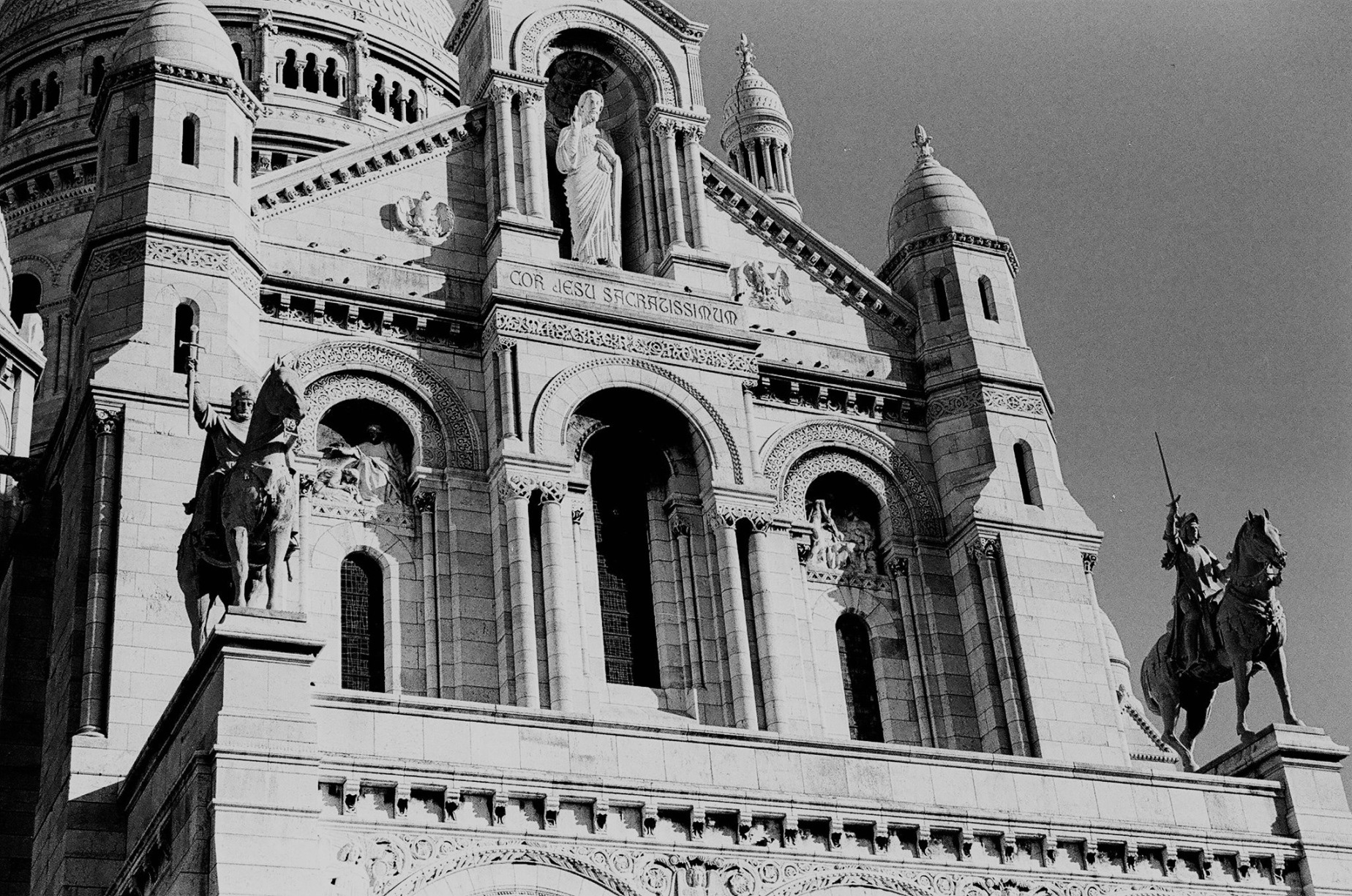
The Basilica of the Sacred Heart of Paris, commonly known as Sacré-Cœur Basilica and often simply Sacré-Cœur, is a Roman Catholic church and minor basilica, dedicated to the Sacred Heart of Jesus, in Paris, France. A popular landmark, the basilica is located at the summit of the butte Montmartre, the highest point in the city. Sacré-Cœur is a double monument, political and cultural, both a national penance for the defeat of France in the 1871 Franco-Prussian War and the socialist Paris Commune of 1871 crowning its most rebellious neighborhood, and an embodiment of conservative moral order, publicly dedicated to the Sacred Heart of Jesus, which was an increasingly popular vision of a loving and sympathetic Christ.
Science Denialism & Scientific Ignorance of the Trump Administration Policy and Statements:
(All quotes by Donald Trump unless otherwise noted)
~ “You like the F-35? You can’t see it. You literally can’t see it. It’s hard to fight a plane you can’t see.” (Guardian interview November 2017)
Nope it’s not literally invisible. It’s an impressive piece of machinery, equipped with stealth technology designed to make the craft less visible to radar, infrared, and radio-frequency detection. However, for all its technical wizardry, it’s not literally invisible.
~ According to Bill Gates, Donald Trump didn’t grasp the difference between HIV and HPV. In Spring 2018, Gates met with Donald Trump to discuss the possibility of him becoming a science advisor. Although he respectfully declined the offer, one gem did emerge from the meeting: Trump asked Gates if there was a difference between HIV and HPV. Twice. (Spring 2018)
~ “Remember, new ‘environment friendly’ lightbulbs can cause cancer. Be careful – the idiots who came up with this stuff don’t care.” (Tweet 2012)
Um nope, sorry this has no basis in fact.
~ “I know President Obama said global warming is our biggest problem and I would say that no, it’s nuclear warming is our biggest problem by a factor of about five million. I believe global warming is the single biggest problem in our country, but it’s made of the nuclear variety.” (Sean Hannity interview July 2018)
Nuclear warming isn’t a thing, nope never has been, never will be.
~ “If we didn’t remove incredibly powerful fire-retardant asbestos & replace it with junk that doesn’t work, the World Trade Center would never have burned down.” (Tweet 2012)
Do I really need to address how preposterous this statement is?
~ “You gotta take care of the floors. You know the floors of the forest, very important. I was with the President of Finland and he said: ‘We have, much different, we are a forest nation.’ He called it a forest nation. And they spend a lot of time on raking and cleaning and doing things, and they don’t have any problem.” (To reporters November 2018)
Um Finland doesn’t rake their forests. This is just beyond ludicrous.
~ “I think something’s happening [climate change]. Something’s changing and it’ll change back again. I don’t think it’s a hoax, I think there’s probably a difference. But I don’t know that it’s manmade.” (CBS News October 2018)
~ “Some say that [anthropogenic climate change] and some say differently, I mean you have scientists on both sides of it.” (November 2018)
~ “Brutal and Extended Cold Blast could shatter ALL RECORDS – Whatever happened to Global Warming?” (Tweet November 2018)
There is no debate AT ALL going on about this within the scientific community anthropogenic climate change is real. Its manmade. It’s not going to just change back in the short term geologically speaking. Please tell me Trump understands the difference between weather and climate.
~ “Despite the hysteria from the political class and the media, smoking doesn’t kill. In fact, 2 out of every three smokers does not die from a smoking-related illness and 9 out of ten smokers do not contract lung cancer.” ~ Mike Pence (Op-Ed 2000)
Please can we just not.
~ “In three years people won’t be building wind turbines anymore – they are obsolete & totally destroy the environment in which they sit. Wind turbines will quadruple your electric bills and destroy the value of your home. The wind is a very deceiving thing. It ruins golf courses and kills all the birds” (Twitter 2013)
Ludicrous with no basis in fact. Fun fact: although around 300,000 birds in North America die via wind turbines annually, cats kill as many as 3.7 billion. I’m not sure what Trump thinks about cats, though.
~ in August 2017, Trump said that at an unspecified coal mine in Pennsylvania, they would burn clean coal, “meaning they’re taking out coal and they’re going to clean it.”
Clean coal, for all intents and purposes, doesn’t exist. There will never be a low-carbon coal fuel source, nor is there any system that removes greenhouse gases and pollution from coal ignition operations
~ “In the East, it could be the COLDEST New Year’s Eve on record. Perhaps we could use a little bit of that good old Global Warming that our Country, but not other countries, was going to pay TRILLIONS OF DOLLARS to protect against. Bundle up!” (Twitter 2017)
The problems with this tweet, designed to stir up climate denial shenanigans, are multifaceted, but a) it’s not unusual that it’s cold in winter, b) the particularly cold spike was likely due to a temporarily warped polar jet stream, and c) one weather data point cannot be extrapolated to explain the long-term meteorological trends, or – as it’s better known – the climate.
~ According to a New Yorker article published back in May 2017, the President reportedly claimed that exercise – unless it’s golf – is misguided, positing that a person, like a battery, is born with a finite amount of energy.
This isn’t how biology or physics works. If this were true, then professional athletes would all be keeling over in their 20s, and those living a sedentary lifestyle would all be nonagenarians.
~ “If they don’t start [opiods], they won’t have a problem,” (August 2017)
Eye roll. Over 40 percent of all US opioid overdose deaths are due to prescriptions, not illegally obtained painkillers. At the same time, around a quarter of those who get them for non-cancer treatments struggle with addiction.
~ “We are very strong on the environment. I feel very strongly about the environment.” (November 2017)
His track record suggests that he either doesn’t care about the environment or simply doesn’t quite understand what its whole deal is. He certainly doesn’t feel very strongly about it, but his peons certainly enjoy trashing it as much as possible in the name of propagating fossil fuels.
Every year 1.520 billion people ride the Paris metro. Daily, the metro covers over 600,000 miles with 600 conductors shuttling 2,553 cars to all 303 stations.
Thanks to the incredible design of the Chief Engineer, Fulgence Bienvenüe, there are never more than 550 yards between one station and another; which means Paris has the most comprehensive underground rail system in the world.
Around 3,500 workers began constructing the metro in 1898, which was finished on July 19th, 1900, just in time for the World’s Fair and Summer Olympic Games at the Bois de Vincennes. Parisians immediately loved the new means of transport and it was quickly adapted as an inescapable feature of the Paris daily life.
Architect Hector Guimard’s design of the metro station kiosks fostered the Art Nouveau architecture, which is widely known as “le style metro”. There are two main variations of the metro kiosk designs: with and without glass roofs. The first has a glass canopy feature in the form of a dragonfly. The second’s masts lean over the steps of the metro like graceful plants; giving Parisians a little taste of nature in the hustle and bustle of the city.
Initially the metro was called, “La Compagnie du Chemin de Fer Metropolitan de Paris”, which was a mouthful, so then it was shortened to “Le Metropolitan”, which was then abbreviated to what has now become the most common word used for all subway networks around the world, the “Metro”.
When WWII arrived in Paris, metro authorities were forced to abandon their projects. Many services became limited and some stations, such as Arsenal, Champ de Mars, Croix Rouge, closed down. Now know as “ghost stations”, they are used as sets for films like Amélie and architects are now thinking of ways to revamp them as nightclubs and swimming pools.
Metro stations were too shallow to be used as bomb shelters during WWII, so they became a meeting place for the French Resistance. The extensive tunnels allowed them to conduct swift assaults on the Germans throughout Paris.
The newest addition to the Paris Metro, line 14, opened in 1998 and was instantly deemed the future of railway technology. It is the only Paris metro line that has operated automatically without a conductor since its opening. There are plans for lines 15, 16, 17, and 18 to open at varying dates through 2030.
Even the names and décor of the stations have significance. Stations are named for war heroes, important battles, main streets, and people who have had a significant impact on French history. Each metro station also has a theme. For instance, at the platform of Richelieu-Drouot there is a touching war memorial carved into black marble by the sculptor Carlo Sarrabezolles which is dedicated to the metro railway agents who died in WWI. The walls of Concorde are covered in the writing of the Declaration of the Rights of Man from the French Revolution of 1789. In 1994, the Belgian comic book artist Francois Schuite redesigned Arts et Métiers to be reminiscent of Jules Verne’s science fiction novel.
If you find yourself impressed by the quality of musicianship echoing through the halls, that is because starting in 1997, the Espace Metro Accords (EMA) began holding auditions to decide which musicians could showcase their music in the metro. Each year around 100 artists are picked and are given permission to perform for the active travelers.








 Mark Bere Peterson’s Counterculture, Urban Legends, Paganism & Witchcraft