Second Chances

Second chances (nine years past my expiration date):

Life is strange, it throws a lot at you testing your resolve, testing your fortitude, testing your fight, testing your will to live. People are fond of saying what doesn’t kill you makes you stronger, I suppose that is true although I don’t find it terribly comforting and I have enough character. End stage liver disease, throat cancer, ptsd, major depression, and schizoaffective disorder are a few of the hurdles placed in my path.

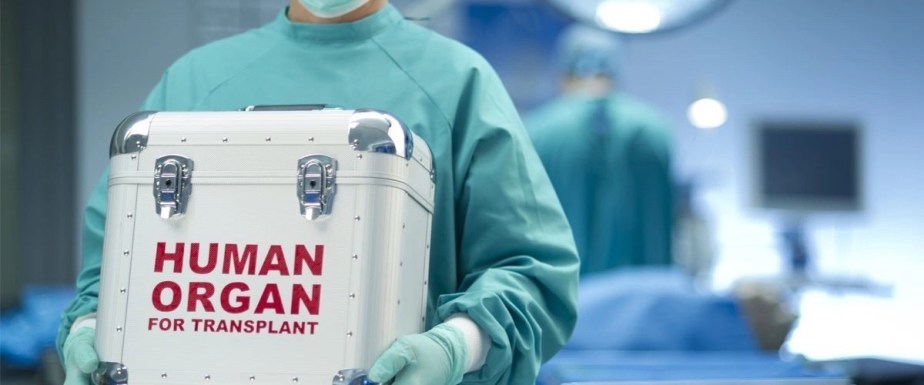
Today marks the anniversary of the September day back in 2011 I’d receive my liver transplant. End stage liver disease was a battle that as much as I mustered a strong front I really didn’t expect to survive. Survive I did though after two years of muscle atrophy, ruptured esophageal varices, Encephalopathy, near constant hospitalizations, procedures, and surgery. Through the process I was witness to the unbelievable strength of my mother, my caregiver. I would meet people along the way that would touch my life in ways I didn’t believe possible.

Today I pause on the eight year anniversary of my transplant to offer up my humble gratitude to my family, my friends, all the doctors, surgeons, and nurses that made my second chance at life possible. Most of all I am grateful for the donor family whose loss of their loved one provided me with the second chance at life. I am incredibly grateful to a person I’ll never meet, never know who or what they were, but through their selflessness provided me with a second chance.

If you’re not already registered to be an organ donor please register now. You can save lives…

#SecondChance #LiverTransplant #EightYears #Gratitude

School Prayer – Yes or No?

Congress shall make no law respecting an establishment of religion or prohibiting the free exercise thereof.”
~ First Sixteen Words of the First Amendment

The Constitution guarantees each of us religious freedom: the right to believe what you want, or not believe at all. Preaching and teaching are very different things. Telling teachers and school officials that they can’t preach to their students does not in any way bar our educators from teaching about religion.

The reason for this becomes clear when you stop and think about the mandate of public education in a pluralistic society. Public schools should give all kids an equal sense of belonging and respect their rights. School boards, principals and teachers must embrace this reality, and this means they must not be in the business of deciding which religious beliefs matter for students, and which don’t.

These examples are not hypothetical, but plucked from the plethora of choices in the news. This is not an uncommon occurrence:

An elementary school teacher walks around her classroom in Louisiana asking each of her young students what they want to pray for, they bow their heads and she recites a Christian prayer. But not all of her students are Christian. Do they opt out and risk being ostracized?

A coach in Michigan leads his players in prayer on a public high school football field after the games. But not all the kids agree with the coach’s faith, and some are not religious at all. Do they not participate, but then have to worry about the coach retaliating and not letting them play in the next game?

Preaching in public schools also undermines the unifying role public schools play in our communities. More than 90 percent of our nation’s children attend public schools. Those institutions are open to all students regardless of religion, race or ability; they should be safe spaces that enable all students to learn and grow. Public schools bring us together across our differences, rather than divide us because of them.

Religion’s effect on humanity and American life in particular is undeniable — and profound. In fact, you simply can’t understand subjects such as history, art, music, literature and even science without grasping how religion has shaped our thinking. So, it can be argued that a public school teacher should have the right to discuss religion with students — as long as it’s part of a legitimate program of instruction. American society is grounded in religious freedom. We should celebrate, treasure and honor this right and the diversity it fosters whether you’re Christian, Jewish, Muslim, Buddhist, Hindu, Sikh or any of the multitude of other religious belief system or not a believer at all.

Organ Donation: Time For An Opt Out System

On July 23rd, 2009 I was diagnosed with end stage liver disease and alcoholic cirrhosis. My journey would take me through being hospitalized every twenty-one days due to complications up until the day of my liver transplant September 16th, 2011. In that time I would relocate to Jacksonville, Florida to become a patient at The Mayo Clinic. I would be actively listed for transplant for just under eleven months. As of this writing there are approximately 120,000 people on the active organ waiting list and countless others needing to be added to that list. Another person is added to the waiting list every ten minutes, with twenty-two people dying each day waiting for an organ. This is in large part due to education of the need for organ donors and a lack of financial funding to have sign up drives.

There is an easy solution that will save the lives of thousands of Americans each year, an opt out system. Currently you have to register with your state if you want to be an organ donor. This is commonly done at the DMV when you are signing up for or renewing your drivers license. In far too many instances this option is not even brought up. This opt in system we currently use is failing this country and the need for more donors becomes more and more dire. I propose congress vote in a opt out system where everyone is automatically an organ donor unless they choose to opt out of the system for whatever reasons they have.

I’m sure you have some concerns and questions to this proposal. Is there a religious exemption? All major religions accept organ donation as a final gesture of compassion and generosity. If you however have a moral or religious objection you can simply opt out of the program. There is no cost to the donor family. There is a fear out there if you’re a donor your care in an emergency will be substandard. Your life always comes first. Only when you suffer irreversible loss of brain function are you considered clinically dead and a organ donation is possible. For those concerned an open casket funeral is still possible after you donate your organs.

If you donate your organs you could save up to eight lives, you could restore sight to two people, and your tissue could heal the lives of fifty people. In different regions of the country the level of illness you must be at are disparate and disproportional. California and the north-east are in dire need of donors. More and more people are flocking to Florida and hospitals such as The Mayo Clinic due to a larger availability of organs due largely to the procurement organizations education of students and adults alike. The time is now for an opt out system and saving countless lives in the process. I ask you to write your congressman and demand an opt out system of organ donation in this country. This is the moral, right, and sane way to save thousands of American lives every year.

Necrography of Paris: An Introduction

Necrography of Paris

There are a multitude of reasons for visiting Paris: the museums, the food, the cultural significance, but one of the primary reasons I propose you visit Paris is the necrography. The cemeteries of Paris are their own set of museums of the rich, famous and infamous. From Napoleon at Les Invalides, to Victor Hugo at The Pantheon, to Edgar Degas at Montmartre, to the unknown multitudes in the catacombs, but first A few words on Edith Piaf, Moliere, Jim Morrison, and the many other at Paris’s largest cemetery Pere Lachaise which I lived a few blocks from and wandered many times.

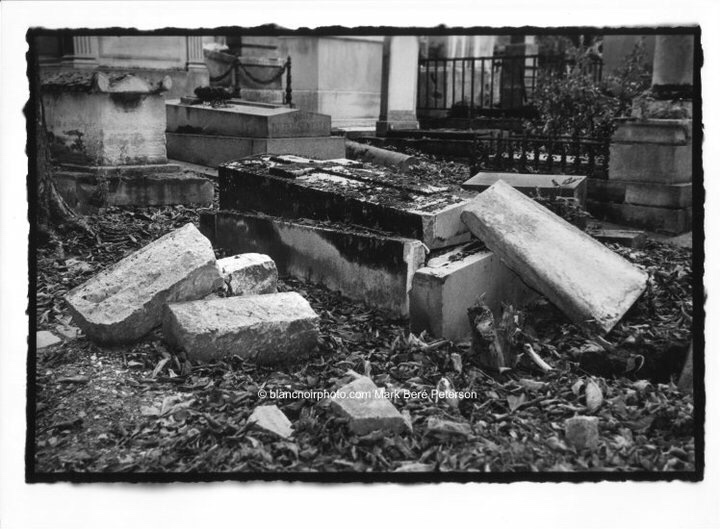
Pere Lachaise the oldest of the current cemeteries of Paris opened in 1804 under the direction of Napoleon. Later the same week Napoleon crowned himself emperor. At the time Paris was in dire need of a new cemetery’s with skeletons protruding from churchyard grounds. The old Cimetiere des Innocents was overloaded with corpses breaking through the walls of an adjacent apartment house spilling into the basement. The scandal that resulted, as well as the odor, led to laws that forbid the burials in the city’s cemeteries and churchyards. In 1786 a quarry south of Paris had been opened for the overflow of bones.

At the start people did not flock to the new cemetery. In an effort to give the cemetery more distinction they performed reburials of two noted authors Moliere and La Fontaine. Soon Pere Lachaise was considered the most prestigious as other cemeteries were built. To this day if you can afford the heavy price it is the preferred burial plot in Paris. Its 118 acres of famous men and women from France and the world can be explored in a multitude of fashions with several different entrances, my preferred entrance can be accessed from the Rue de la Roquette which turns into Avenue Principale. All of the roads within the grand cemetery are named and posted like a small city of the dead all their own. Picking up a free map at the entrance or downloading it is highly recommended. (https://pere-lachaise.com/plan-pere-lachaise/)

Following Avenue Principale leads you to some renown grave sites the first of which is Colette. Sidonie Gabriella Colette (b. January 28, 1873, Saint-Sauveur; d. August 3, 1954, Paris). The author of Gigi and Claudine at School among others. It wasn’t until 1904 that she was allowed to use her own name on her stories. She was never much into conventional morality. After separating from her first husband she toured the country working as a mime, approvingly baring her breasts when the script required it. She would go on to have two further marriages. She wrote, “It’s so curious: one can resist tears and ‘behave’ very well in the hardest hours of grief. But then someone makes you a friendly sign behind a window, or one notices that a flower that was in bud only yesterday has suddenly blossomed, or a letter slips from a drawer… and everything collapses.”

Map of Pere Lachaise Cemetery

Within this section are many other notable figures among them Georges Eugene Haussmann (1809-1891) a prefect who modernized and widened the streets of Paris. Interestingly he wished to do away with all cemeteries in Paris and instead have a huge (5,000 acre) cemetery 14 miles outside Paris and employ funeral trains to transport the coffins and mourners. The people of Paris resisted this idea. Eventually you will pass Camille Pissaro, Frederic Chopin and many others before arriving at one of the most visited and which a cult following of teens and early twenties make a vigil to nearly everyday.

James Douglas Morrison (b. December 8, 1943, Melbourne, Florida; d. July 3, 1971, Paris). Coming from a patriotic military family and with an IQ of 149 he dallied as a gifted philosophy student, poet, heavy drinker before finding the medium for which he would become infamous lead singer of the rock group The Doors. His fame soared between 1967 to 1970, yet he spent his final months in Paris while attempting to become a serious poet. His official death was a heart attack in his bathtub, but conjecture started immediately. There was no autopsy and he was secretly buried at Pere Lachaise. Of course Morrison had fantasized about faking his death and starting a new life under the name “Mr. Mojo Risin.” One of his more famous lyrics,

“ This is the end / Beautiful friend / This is the end / My only friend, the end. / Of our elaborate plans, the end / Of everything that stands, the end / No safety or surprise, the end / I’ll never look into your eyes…again”

Poetic Forms I Employ

There are a multitude of poetic forms that gave been used through the ages from a Shakespearian Sonnet to a Haiku to my favorite a Sestina. Definitions provided here adapted from poetryfoundation.org website. Here are a few of the ones I employ on a regular basis:

Ballad – A popular narrative song passed down orally. In the English tradition, it usually follows a form of rhymed (abcb) quatrains alternating four-stress and three-stress lines. Folk (or traditional) ballads are anonymous and recount tragic, comic, or heroic stories with emphasis on a central dramatic event; examples include “Barbara Allen” and “John Henry.” Beginning in the Renaissance, poets have adapted the conventions of the folk ballad for their own original compositions. Examples of this “literary” ballad form include John Keats’s “La Belle Dame sans Merci,” Thomas Hardy’s “During Wind and Rain,” and Edgar Allan Poe’s “Annabel Lee.”

Ballade – An Old French verse form that usually consists of three eight-line stanzas and a four-line envoy, with a rhyme scheme of ababbcbc bcbc. The last line of the first stanza is repeated at the end of subsequent stanzas and the envoy. An example is Hilaire Belloc’s “Ballade of Modest Confession”.

Free Verse – Nonmetrical, nonrhyming lines that closely follow the natural rhythms of speech. A regular pattern of sound or rhythm may emerge in free-verse lines, but the poet does not adhere to a metrical plan in their composition. Matthew Arnold and Walt Whitman explored the possibilities of nonmetrical poetry in the 19th century. Since the early 20th century, the majority of published lyric poetry has been written in free verse. Examples include the work of William Carlos Williams, T.S. Eliot, Ezra Pound, and H.D.

Haiku – A Japanese verse form of three unrhyming lines in five, seven, and five syllables. It creates a single, memorable image. The Imagist poets of the early 20th century, including Ezra Pound and H.D., showed appreciation for the form’s linguistic and sensory economy; Pound’s “In a Station of the Metro” embodies the spirit of haiku.

Limerick – A fixed light-verse form of five generally anapestic lines rhyming AABBA. Edward Lear, who popularized the form, fused the third and fourth lines into a single line with internal rhyme. Limericks are traditionally bawdy or just irreveren. Examples include “A Young Lady of Lynn” or Lear’s “There was an Old Man with a Beard.”

Sestina – A complex French verse form, usually unrhymed, consisting of six stanzas of six lines each and a three-line envoy. The end words of the first stanza are repeated in a different order as end words in each of the subsequent five stanzas; the closing envoy contains all six words, two per line, placed in the middle and at the end of the three lines. The patterns of word repetition are as follows, with each number representing the final word of a line, and each row of numbers representing a stanza:

1 2 3 4 5 6
6 1 5 2 4 3
3 6 4 1 2 5
5 3 2 6 1 4
4 5 1 3 6 2
2 4 6 5 3 1
(6 2) (1 4) (5 3)

Sonnet – A 14-line poem with a variable rhyme scheme originating in Italy and brought to England by Sir Thomas Wyatt and Henry Howard, earl of Surrey in the 16th century. Literally a “little song,” the sonnet traditionally reflects upon a single sentiment, with a clarification or “turn” of thought in its concluding lines.

Petrarchan sonnet, perfected by the Italian poet Petrarch, divides the 14 lines into two sections: an eight-line stanza (octave) rhyming ABBAABBA, and a six-line stanza (sestet) rhyming CDCDCD or CDEEDE. John Milton’s “When I Consider How my Light Is Spent” and Elizabeth Barrett Browning’s “How Do I Love Thee” employ this form.

Italian sonnet is an English variation on the traditional Petrarchan version. The octave’s rhyme scheme is preserved, but the sestet rhymes CDDCEE. Thomas Wyatt’s “Whoso List to Hunt, I Know Where Is an Hind” and John Donne’s “If Poisonous Minerals, and If That Tree.”

English (or Shakespearean) sonnet, which condenses the 14 lines into one stanza of three quatrains and a concluding couplet, with a rhyme scheme of ABABCDCDEFEFGG (though poets have frequently varied this scheme) George Herbert’s “Love (II),” Claude McKay’s “America,” and Molly Peacock’s “Altruism” are English sonnets.

Spenserian sonnet is a 14-line poem developed by Edmund Spenser in his Amoretti, that varies the English form by interlocking the three quatrains (ABAB BCBC CDCD EE).

Villanelle – A French verse form consisting of five three-line stanzas and a final quatrain, with the first and third lines of the first stanza repeating alternately in the following stanzas. These two refrain lines form the final couplet in the quatrain. Example “Do Not Go Gentle into That Good Night” by Dylan Thomas, Elizabeth Bishop’s “One Art,” and Edwin Arlington Robinson’s “The House on the Hill.”