Anne Frank on War

“I don’t believe that the big men, the politicians and the capitalists alone are guilty of the war. Oh, no, the little man is just as keen, otherwise the people of the world would have risen in revolt long ago! There is an urge and rage in people to destroy, to kill, to murder, and until all mankind, without exception, undergoes a great change, wars will be waged, everything that has been built up, cultivated and grown, will be destroyed and disfigured, after which mankind will have to begin all over again.”

~ Anne Frank, “The Diary of a Young Girl – 3 May 1944”

#FavoriteQuotes #AnneFrank

Dwight D. Eisenhower Vigilance to Preserve the Truth

Supreme Allied Commander Dwight D. Eisenhower had studied his World War II enemy, he was unprepared for the Nazi brutality he witnessed at Ohrdruf concentration camp in April 1945. Bodies were piled like wood and living skeletons struggled to survive. On International Holocaust Remembrance Day, learn how Eisenhower foresaw a day when the horrors of the Holocaust might be denied and hear about his vigilance to preserve its truth…

Otto Frank Liberated from Auschwitz

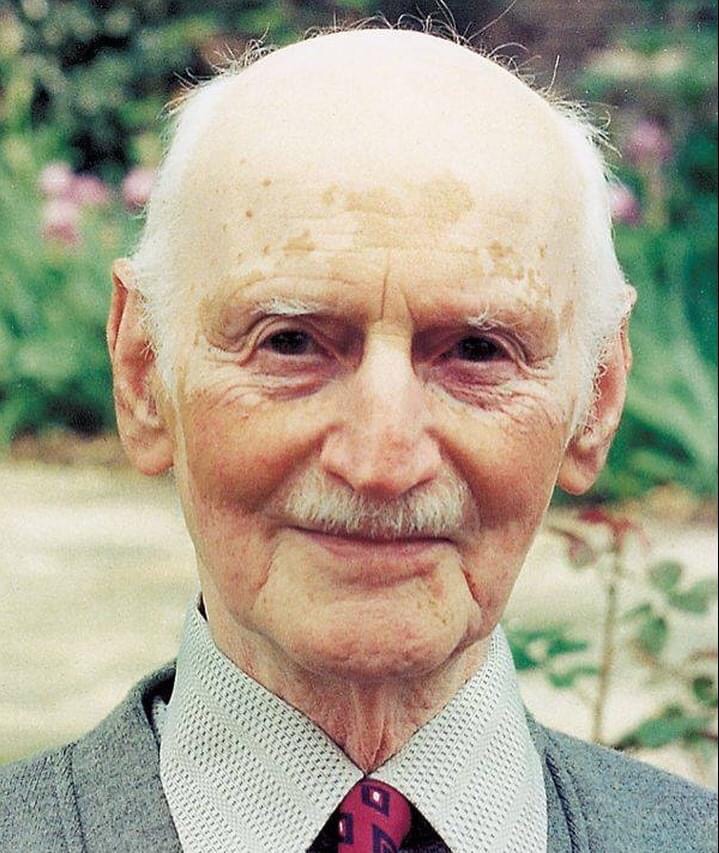
On this day in 1945, the Russian army liberates Auschwitz concentration camp. Otto Frank is one of around 8,000 prisoners remaining in the camp, most of them desperately ill.

Otto Frank is the only one of the eight people who hid in the Secret Annex to survive the horrors of the war. He has lost his wife Edith and his daughters Margot and Anne.

Shortly before his death he says:

“I am now almost ninety and my strength is slowly failing. Still, the task I received from Anne continues to restore my energy: to struggle for reconciliation and human rights throughout the world.”

Otto Frank died on 19 August 1980.

Photo Otto Frank 1979.

#HMD #HolocaustMemorialDay #Auschwitz

Steve Ross (né Szmulek Rozental)

Holocaust survivor Steve Ross (né Szmulek Rozental) was born in 1931 near Łódź, Poland. He spent five years in ten different concentration camps, including Budzyń, Auschwitz, and Dachau. He survived medical experiments, starvation, sexual abuse, and brutal beatings on a daily basis. When Ross was liberated from Dachau in April 1945, he was 14 years old and weighed 50 lbs. Among the American troops who liberated the camp was Lt. Steve Sattler, whose act of kindness restored Ross’s hope in humanity, even after everything he had been through. When Lt. Sattler saw Ross, he jumped down from atop his tank, hugged the emaciated child, and shared his food rations with him. He also gave the boy a handkerchief decorated with the American flag. After the war, Ross settled in the Boston area where he became a social worker and spent his life helping at-risk youth. When speaking to students about his experience, he would carefully unfurl the American flag handkerchief, and share how one small act of kindness can transform a life.

Photo: Steve Ross holding handkercheif (Getty Images)

Source: American Society for Yad Vashem

Time to take back Viking history and Symbolism from racists and white supremacists

“All manner of Viking symbols and misconceptions about a golden age of Nordic racial purity have been appropriated by racist extremists looking to justify their xenophobia and acts of violence, according to the University of Alberta researcher.

Van Deusen said the age of racial purity never existed and she is determined to debunk the corrosive myth at every turn, especially in the classroom.

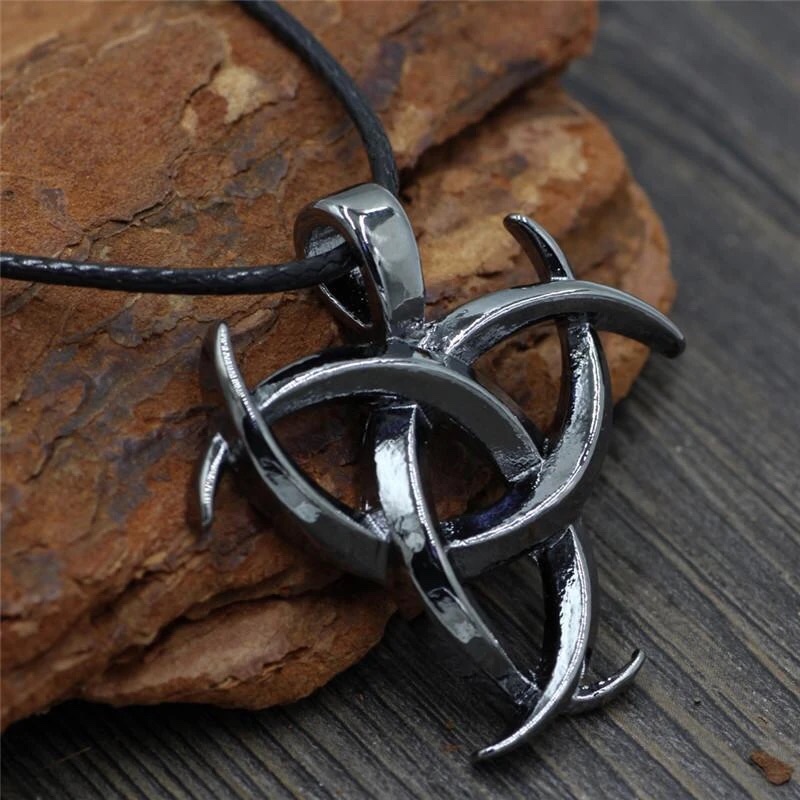
Viking symbols are everywhere among the ultra-right. When the Unite the Right rally took place in Charlottesville in 2017, some protesters carried banners featuring the Norse god Thor’s hammer, popular among the Nazis and neo-Nazi groups.

The perpetrator of New Zealand’s Christchurch massacre last year wrote, “See you in Valhalla”-referring to the great hall where heroes of Norse mythology go after they die-at the end of his manifesto.

Closer to home, the Soldiers of Odin-a Finnish white supremacist movement named after another Norse god in 2015-have recently emerged in Alberta and throughout Canada.

“The precedent was set with the Nazis,” said Van Deusen. “National Socialism and Hitler idealized the Norse people-those who lived in the Nordic areas. Even the swastika is based in part on a symbol based on Viking artifacts.”

Source: https://www.ualberta.ca/folio/2020/07/white-supremacists-are-misappropriating-norse-mythology-says-expert.html

Galloway Hoard

“National Museums Scotland acquired the Galloway Hoard, as it came to be known, in 2017. Since then, conservators have been working to clean and restore the items, all of which spent more than 1,000 years buried in the Scottish field. This week, the National Museum of Scotland (NMS) released new images of the latest object to undergo conservation: an intricately decorated Anglo-Saxon cross.

After a millennium underground, the cross was encrusted with dirt. Wrapped in a coiled silver cord made out of wire bundled around an animal-gut core, it proved difficult to clean. Improvising, conservators turned to a carved porcupine quill—a tool “sharp enough to remove the dirt yet soft enough not to damage the metalwork,” according to a statement.”

Source: Smithsonian Magazine Online

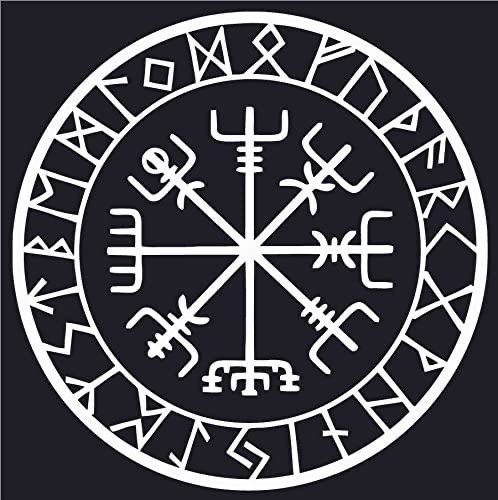
Viking Runes Introduction

By the beginning of the Viking Age, the Scandinavian rune-masters had developed an alphabet, or “futhark” (from the value of the first six characters), of sixteen characters that was quite distinct from the rest of the Germanic peoples. This alphabet was known as the “younger futhark”.

However, even within Scandinavia, there was no standard form for the characters and there are variations from inscription to inscription, but basically there were two main forms of futhark: the Common or Danish futhark (although it occurs outside of Denmark), and the Swedo-Norwegian futhark (although this also occurs outside of Sweden and Norway.

One can see that there are shortcomings with these alphabets. For example, there are characters for b, k and t, but there are none for p, g and d (this is because the futhark does not distinguish between these voiced and voiceless pairs. Therefore the rune-master had to use b for p, k for g and t for d.

There were other peculiarities: although there were two characters for the two different types of a, there were no symbols for e and o. This meant that the name “Svein” appears as in runes “suin” and the name “Gormr” appears as “kurmR”.

It becomes even more complicated, as the spelling practice allowed n to be omitted when it occurred before a consonant. Therefore the name Thormundr appears as thurmutR.

This of course means that many runic inscriptions can be very difficult to read and there can be a great deal of dispute about their true meaning.

Despite the difficulties in reading runic inscriptions, they can provide a good deal of useful information.

Source: Swedish National Museum Heritage Board’s website, but that page no longer exists.

Dr. William Price

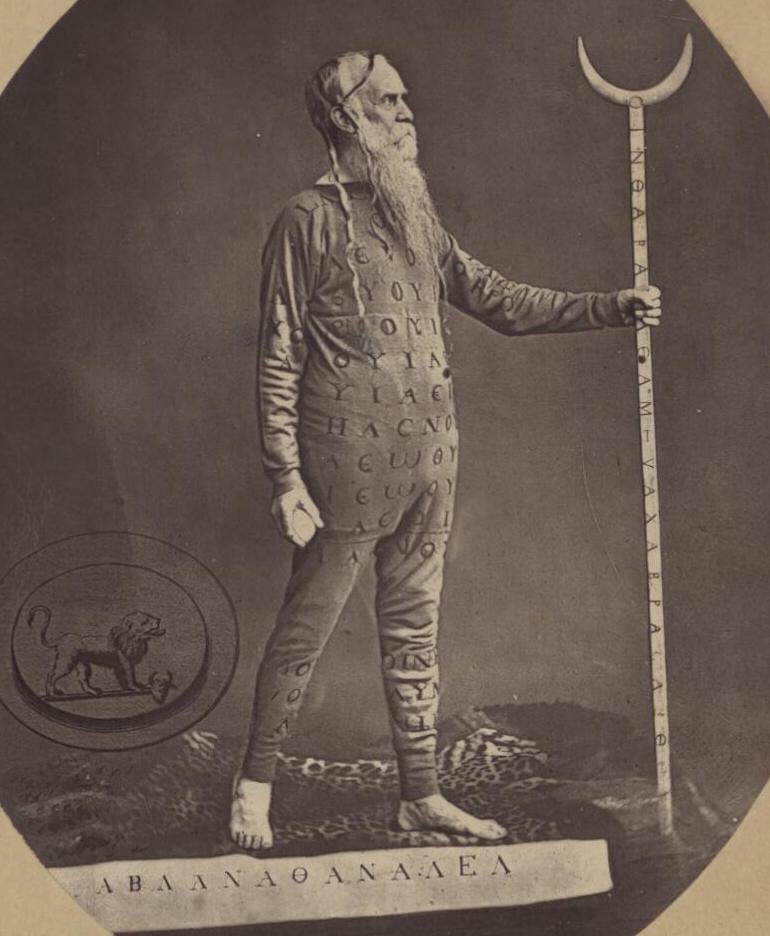
Today in weird history —> On January 18, 1884 Dr. William Price attempts to cremate the body of his infant son, Jesus Christ Price, setting a legal precedent for cremation in the United Kingdom. Price, a Welshman, was an interesting character in many ways. He adopted the Druid “religion” for many years; here he is onstage in 1884 wearing Druidic attire. At the time he cremated his infant son, cremation was illegal in England, but his action helped change the law…

#WeirdHistory #WilliamPrice #Cremation #Druid

The Euphronios Krater

Today in Museum History —> On this day in 2008 – The Euphronios Krater is unveiled in Rome after being returned to Italy by the Metropolitan Museum of Art.

Here’s a picture of that beautiful Greek vase, created by Euphronios about 515 B.C.

The Euphronios Krater (or Sarpedon Krater) is an ancient Greek terra cotta calyx-krater, a bowl used for mixing wine with water. Created around the year 515 BC, it is the only complete example of the surviving 27 vases painted by the renowned Euphronios and is considered one of the finest Greek vase artifacts in existence. Part of the collection of the Metropolitan Museum of Art from 1972 to 2008, the vase was repatriated to Italy under an agreement negotiated in February 2006, and it is now in the collection of the Archaeological Museum of Cerveteri as part of a strategy of returning stolen works of art to their place of origin

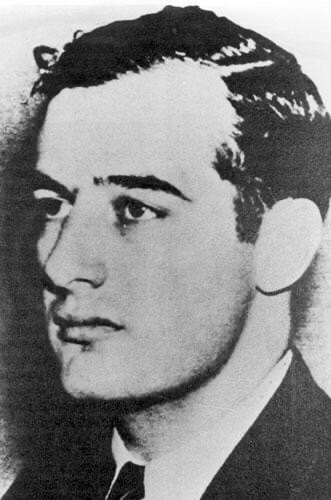
Raoul Wallenberg

Today in Holocaust History –> On this day 17 January 1945, Righteous Among the Nations, Raoul Wallenberg was taken away by Russian soldiers. He was never seen again.

Just prior to the Soviet army entering Budapest, Wallenberg said to his colleague in the Swedish embassy:

“I’ve taken on this assignment, and I will never be able to go back to Stockholm without knowing … that I’d done all a man could do to save as many Jews as possible”.

~ Raoul Wallenberg, Righteous Among the Nations

Raoul Wallenberg was sent to Budapest in 1944 to rescue Jews with connections to Sweden. He arrived with a list of Jews whom he was to help and 650 protective passports. However, he quickly widened the scope of his efforts by issuing 1000’s of “protective letters” and setting up a network of protective houses for Jews .

As the situation in Hungary deteriorated, Wallenberg abandoned all diplomatic protocol and attempted to rescue as many Jews as he could at great risk to himself.

Wallenberg used unconventional methods, including bribery and blackmail, to finance and run his huge rescue operation, successfully saving thousands of Jews. When Adolf Eichmann ordered a “death march” of tens of thousands of persons to the Austrian border, Wallenberg followed the marchers in their vehicles, and distributed food, clothing, and medications. He was able to free Jews from the death march by claiming that they were his “protected” Jews.

In 1956, 11 years after his disappearance, the Soviets finally stated that Raoul Wallenberg had died in prison in 1947.

In 1963 Yad Vashem recognized Raoul Wallenberg as Righteous Among the Nations.

Source: Yad Vashem