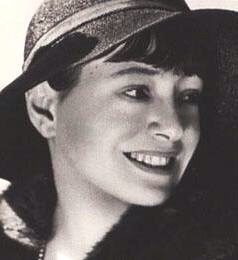

“When Mary Sherwood—wife of the playwright—gave birth to a child (an event that most of the Algonquin Round Tablers [1920’s literary group] felt she had made too much of), Mrs. Parker cabled her: “DEAR MARY, WE ALL KNEW YOU HAD IT IN YOU”

“When Mary Sherwood—wife of the playwright—gave birth to a child (an event that most of the Algonquin Round Tablers [1920’s literary group] felt she had made too much of), Mrs. Parker cabled her: “DEAR MARY, WE ALL KNEW YOU HAD IT IN YOU”

When Simone de Beauvoir wrote The Second Sex, she did not define herself as a feminist. She was a socialist and believed a socialist revolution would liberate women, but in the late 1960s, as feminism blossomed, she changed her mind. She told an interviewer in 1972 that the situation of women in France had not really changed over the last 20 years and that people on the left should join the women’s movement while waiting for socialism to arrive.
Defining herself as a feminist, but reluctant to join traditional reformist groups, de Beauvoir joined the radical Mouvement de Libération des Femmes (MLF)—the French women’s liberation movement. In 1971, when abortion was still illegal in France, de Beauvoir was one of more than 300 women who signed a pro-abortion manifesto, later known as the Manifesto of the 343, stating that she had had an abortion and demanding this right for all women.
Sources: Feminism (DK)

In her essay “A Room of One’s Own” (1929), Virginia Woolf discusses the struggles women writers had faced to win the same success as their male counterparts. Acknowledging the achievements of novelists such as Jane Austen and George Eliot, Woolf describes how the confines of domesticity could hinder such work. Women often wrote in communal areas of the home, surrounded by distractions, and seldom had the financial independence necessary to break free. She conjures up Judith, a fictitious sister of William Shakespeare, and wonders what life would have been like for her. Had she been “as imaginative, as agog to see the world” as her brother, she would still have been expected to be content with being a wife and mother. Woolf imagines that, in despair, Judith kills herself, her genius unexpressed.
In her essay, Woolf uses metaphors to explore social injustices and comments on women’s lack of free expression. Her metaphor of a fish explains her most essential point, “A woman must have money and a room of her own if she is to write fiction”. She writes of a woman whose thought had “let its line down into the stream”. As the woman starts to think of an idea, a guard enforces a rule whereby women are not allowed to walk on the grass. Abiding by the rule, the woman loses her idea. Here, Woolf describes the influence of women’s social expectations as mere domestic child bearers, ignorant and chaste.
Sources: Book of Feminism (DK)

In the aftermath of World War I there arose a group of young persons known as the “Lost Generation.” The term was coined from something Gertrude Stein witnessed the owner of a garage saying to his young employee, which Hemingway later used as an epigraph to his novel The Sun Also Rises (1926): “You are all a lost generation.” This accusation referred to the lack of purpose or drive resulting from the horrific disillusionment felt by those who grew up and lived through the war, and were then in their twenties and thirties. Having seen pointless death on such a huge scale, many lost faith in traditional values like courage, patriotism, and masculinity. Some in turn became aimless, reckless, and focused on material wealth, unable to believe in abstract ideals.
In literature, the “Lost Generation” refers to a group of writers and poets who were men and women of this period. All were American, but several members emigrated to Europe. The most famous members were Gertrude Stein, Ernest Hemingway, F. Scott Fitzgerald, and T. S. Eliot.
Common themes in works of literature by members of the Lost Generation include:
Decadence – Consider the lavish parties of James Gatsby in Fitzgerald’s The Great Gatsby or those thrown by the characters in his Tales of the Jazz Age. Recall the aimless traveling, drinking, and parties of the circles of expatriates in Hemingway’s The Sun Also Rises and A Moveable Feast. With ideals shattered so thoroughly by the war, for many, hedonism was the result. Lost Generation writers revealed the sordid nature of the shallow, frivolous lives of the young and independently wealthy in the aftermath of the war.
Gender roles and Impotence – Faced with the destruction of the chivalric notions of warfare as a glamorous calling for a young man, a serious blow was dealt to traditional gender roles and images of masculinity. In The Sun Also Rises, the narrator, Jake, literally is impotent as a result of a war wound, and instead it is his female love Brett who acts the man, manipulating sexual partners and taking charge of their lives. Think also of T. S. Eliot’s poem The Love Song of J. Alfred Prufrock, and Prufrock’s inability to declare his love to the unnamed recipient.
Idealised past – Rather than face the horrors of warfare, many worked to create an idealised but unattainable image of the past, a glossy image with no bearing in reality. The best example is in Gatsby’s idealisation of Daisy, his inability to see her as she truly is, and the closing lines to the novel after all its death and disappointment:
“Gatsby believed in the green light, the orgastic future that year by year recedes before us. It eludes us then, but that’s no matter- to-morrow we will run faster, stretch our arms farther… And one fine morning — So we beat on, boats against the current, borne back ceaselessly into the past.”
~ F. Scott Fitzgerald
Sources: Writers Inspire

Today in Literary History —> Happy Birthday to Dorothy Parker, American poet, satirist and critic best known for her wisecracks and sharp wit. Her writing graced the pages of Vogue, VanityFair, and The New Yorker, and she was a founding member of the Algonquin Round Table, a famous 20th century New York literary circle.
Following the breakup of the circle, Parker traveled to Hollywood to pursue screenwriting. Her successes there, including two Academy Award nominations, were curtailed when her involvement in left-wing politics led to a place on the Hollywood blacklist. Dismissive of her own talents, she deplored her reputation as a “wisecracker.” Nevertheless, both her literary output and reputation for sharp wit have endured. Born on this day in 1893…

In 1792, with the publication of A Vindication of the Rights of Woman, Mary Wollstonecraft fired a powerful early salvo in the battle for female emancipation from domesticity. She wrote her feminist polemic in response to 18th-century Enlightenment thinkers, such as the philosopher Jean-Jacques Rousseau, who did not extend their ideas of liberalism to women. She criticizes the injustice and inconsistency of such men calling for freedom yet still subjugating women. She also rejects the contemporary perception that women were less rational.
“Who made man the exclusive judge?” she demands. Women, she writes, might be weaker physically, but are just as capable of rational thought as men.
Wollstonecraft maintains that women remained inferior because they were kept in the domestic sphere, forced to be men’s “toys and playthings.” Society taught them that looks, male opinion, and marriage were more important than intellectual and personal fulfilment. Sculpted by a gender stereotype that their mothers reinforced, girls were brought up to exploit their looks in order to find a man who would support and protect them.
Wollstonecraft was the first feminist to describe “marriage for support” as a form of prostitution— a shocking assertion for the time. A lack of means often compelled women to marry. Degraded by their dependency on male approval, they effectively became men’s slaves. She felt that such a restricted life, limited by domestic trivia, could also wreak psychological damage.
To restore women’s dignity, Wollstonecraft recommends “a revolution in female manners.” She believed women and men should be educated equally, even suggesting a coeducational system. Women, she believed, should be in the public sphere and should be trained for work outside the home, in areas such as medicine, midwifery, and business. She urges an end to the social distinction between the sexes and calls for equal rights for women to enable them to take control of their lives.
Mixed reactions
Vindication was well received, particularly in intellectual circles. A hostile press, however, described Wollstonecraft as a “hyena in petticoats” for both her book and her unorthodox lifestyle. The book was not reprinted until the mid-19th century, when it was admired by figures such as British suffragist Millicent Fawcett and American activist Lucretia Mott. Wollstonecraft’s advanced ideas would be echoed in the works of feminists from Barbara Bodichon to Simone de Beauvoir”
Sources: The Feminism Book (DK)
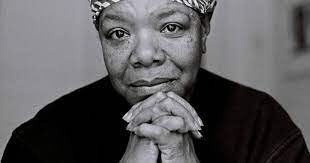
Alone
Lying, thinking
Last night
How to find my soul a home
Where water is not thirsty
And bread loaf is not stone
I came up with one thing
And I don’t believe I’m wrong
That nobody,
But nobody
Can make it out here alone.
Alone, all alone
Nobody, but nobody
Can make it out here alone.
There are some millionaires
With money they can’t use
Their wives run round like banshees
Their children sing the blues
They’ve got expensive doctors
To cure their hearts of stone.
But nobody
No, nobody
Can make it out here alone.
Alone, all alone
Nobody, but nobody
Can make it out here alone.
Now if you listen closely
I’ll tell you what I know
Storm clouds are gathering
The wind is gonna blow
The race of man is suffering
And I can hear the moan,
‘Cause nobody,
But nobody
Can make it out here alone.
Alone, all alone
Nobody, but nobody
Can make it out here alone.
~ Maya Angelou, 1928-2014
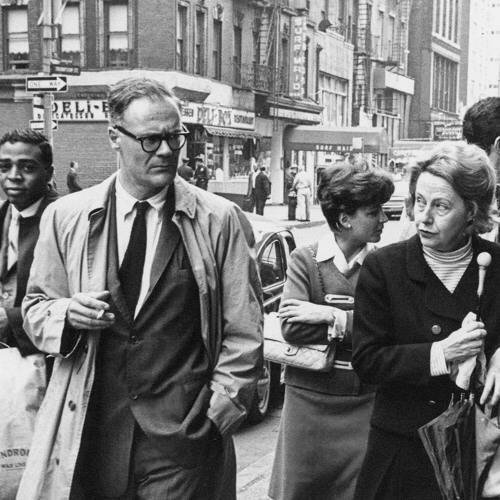
Confessional poetry is the poetry of the personal or “I.” This style of writing emerged in the late 1950s and early 1960s and is associated with poets such as Robert Lowell, Sylvia Plath, and Anne Sexton. Lowell’s book Life Studies was a highly personal account of his life and familial ties and had a significant impact on American poetry. Plath and Sexton were both students of Lowell and noted that his work influenced their own writing.
The confessional poetry of the mid-twentieth century dealt with subject matter that previously had not been openly discussed in American poetry. Private experiences with and feelings about death, trauma, depression and relationships were addressed in this type of poetry, often in an autobiographical manner. Sexton in particular was interested in the psychological aspect of poetry, having started writing at the suggestion of her therapist.
The confessional poets were not merely recording their emotions on paper; craft and construction were extremely important to their work. While their treatment of the poetic self may have been groundbreaking and shocking to some readers, these poets maintained a high level of craftsmanship through their careful attention to and use of prosody.
One of the most well-known poems by a confessional poet is “Daddy” by Plath. Addressed to her father, the poem contains references to the Holocaust but uses a sing-song rhythm that echoes the nursery rhymes of childhood:
Daddy, I have had to kill you.
You died before I had time–
Marble-heavy, a bag full of God,
Ghastly statue with one gray toe
Big as a Frisco seal
Another confessional poet of this generation was John Berryman. His major work was The Dream Songs, which consists of 385 poems about a character named Henry and his friend Mr. Bones. Many of the poems contain elements of Berryman’s own life and traumas, such as his father’s suicide. Below is an excerpt from “Dream Song 1”:
All the world like a woolen lover
once did seem on Henry’s side.
Then came a departure.
Thereafter nothing fell out as it might or ought.
I don’t see how Henry, pried
open for all the world to see, survived.
The confessional poets of the 1950s and 1960s pioneered a type of writing that forever changed the landscape of American poetry. The tradition of confessional poetry has been a major influence on generations of writers and continues to this day.
Sources: Poets.org

In suburban Massachusetts, on 240 acres of peaceful grounds, is a literary legend—of sorts. McLean Hospital, with its long history of treating the blue bloods of Boston, has become an unlikely poetry landmark after providing both recuperation and inspiration to Robert Lowell, Sylvia Plath, and Anne Sexton.
Plath was the first of the three to stay at McLean. In 1953, during a summer at home before her senior year in college, Plath swallowed a bottle of pills and crawled beneath her house. Her failed suicide attempt led to months of treatment at McLean and began her long relationship with the psychiatrist Ruth Tiffany Barnhouse. While there, Plath received insulin-shock therapy, anti-psychotic drugs, and ultimately electroshock therapy. The experience surfaced years later in her poem, “The Hanging Man,” which begins, “By the roots of my hair some god got hold of me / I sizzled in his blue volts like a desert prophet.”
Lowell was admitted to McLean in 1958, though his infamous manic outbursts had already resulted in numerous stays at other mental institutions. Over eight years, he stayed there four times, correspondeding frequently from his hospital address, and sending letters to Theodore Roethke, Ezra Pound, and even Jackie Kennedy. Written about his first stay at McLean, his poem “Waking in the Blue” mentions Bowditch Hall and was pasted on the wall of the nurse’s station there for years.
Highly competitive with Plath, Sexton tried for years to be admitted to McLean, but her therapist, aware of the high cost, refused to admit her. Sexton first entered McLean as a teacher. In 1968, she was invited to lead a weekly poetry seminar in the hospital, providing Sexton with her first teaching experience, after which she became a professor at Boston University. In 1973, a year before her death by suicide, Sexton achieved her wish and was admitted to McLean for a five-day examination.
Plath and Sexton both attended a poetry seminar taught by Lowell at Boston University in 1959. They were each inspired by his confessional poetry and the appreciation for madness that he cultivated. In “Elegy in the Classroom,” Sexton wrote about Lowell: “I must admire your skill. / You are so gracefully insane.” Through his encouragement, they began to turn their personal experiences into verse—a quality that would mark their later work.
Plath discovered she could mine her McLean experiences for literary inspiration. She wrote in her journal, “There is an increasing market for mental-hospital stuff. I am a fool if I don’t relive, recreate it.” Thus she began her famous novel, The Bell Jar. Years later, in his introduction to Plath’s posthumous poetry collection Ariel, Lowell said, “Everything in these poems is personal, confessional, felt, but the manner of feeling is controlled hallucination, the autobiography of fever.”
Source: poets.org

One need not be a chamber to be haunted,
One need not be a house;
The brain has corridors surpassing
Material place.
Far safer, of a midnight meeting
External ghost,
Than an interior confronting
That whiter host.
Far safer through an Abbey gallop,
The stones achase,
Than, moonless, one’s own self encounter
In lonesome place.
Ourself, behind ourself concealed,
Should startle most;
Assassin, hid in our apartment,
Be horror’s least.
The prudent carries a revolver,
He bolts the door,
O’erlooking a superior spectre
More near.
~ Emily Dickinson
 Mark Bere Peterson’s Counterculture, Urban Legends, Paganism & Witchcraft