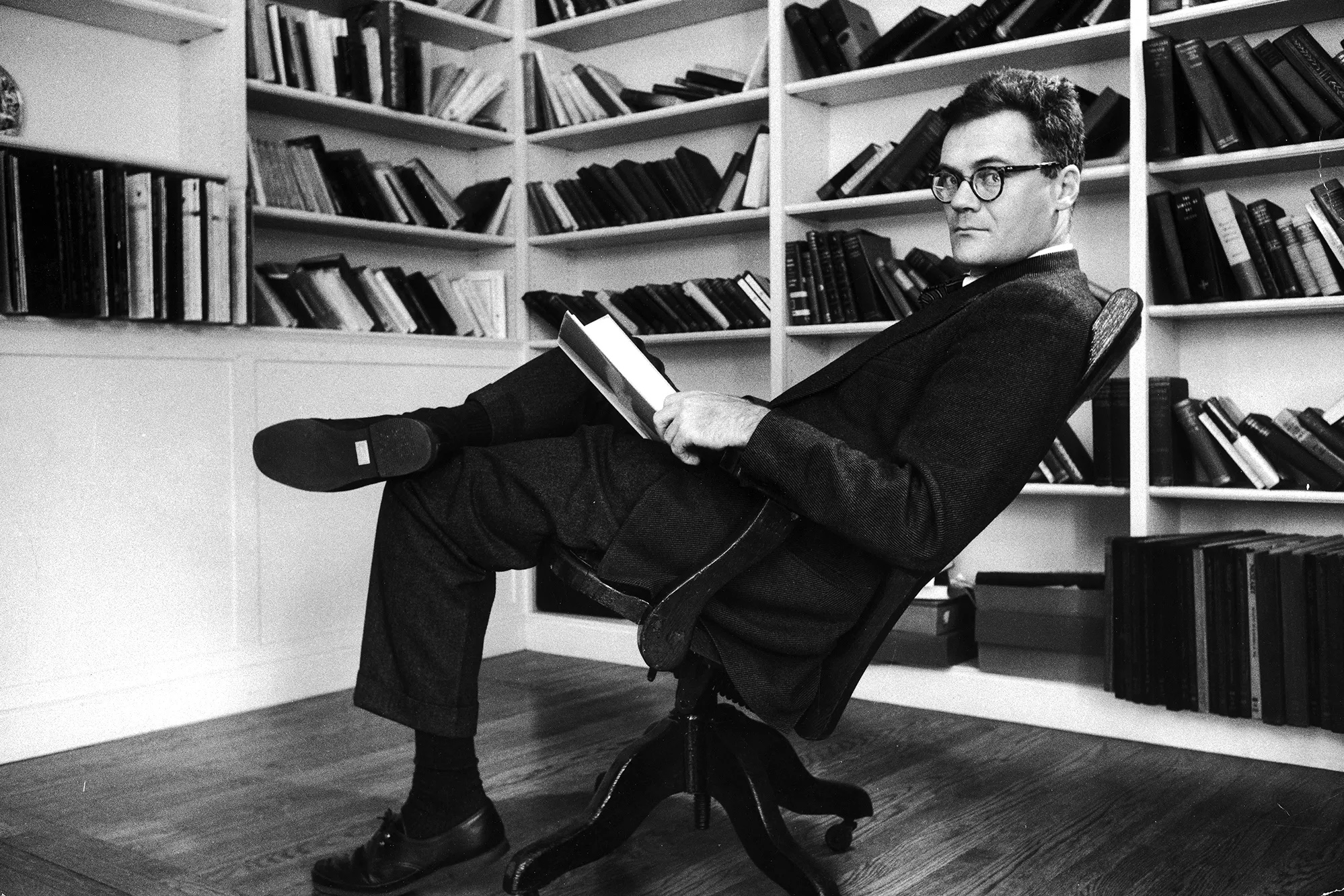
Waking in the Blue – By Robert Lowell

The night attendant, a B.U. sophomore,
rouses from the mare’s-nest of his drowsy head
propped on The Meaning of Meaning.
He catwalks down our corridor.
Azure day
makes my agonized blue window bleaker.
Crows maunder on the petrified fairway.
Absence! My hearts grows tense
as though a harpoon were sparring for the kill.
(This is the house for the “mentally ill.”)

What use is my sense of humour?
I grin at Stanley, now sunk in his sixties,
once a Harvard all-American fullback,
(if such were possible!)
still hoarding the build of a boy in his twenties,
as he soaks, a ramrod
with a muscle of a seal
in his long tub,
vaguely urinous from the Victorian plumbing.

A kingly granite profile in a crimson gold-cap,
worn all day, all night,
he thinks only of his figure,
of slimming on sherbert and ginger ale–
more cut off from words than a seal.
This is the way day breaks in Bowditch Hall at McLean’s;
the hooded night lights bring out “Bobbie,”
Porcellian ’29,
a replica of Louis XVI
without the wig–
redolent and roly-poly as a sperm whale,
as he swashbuckles about in his birthday suit
and horses at chairs.

These victorious figures of bravado ossified young. 

In between the limits of day, 
hours and hours go by under the crew haircuts 
and slightly too little nonsensical bachelor twinkle 
of the Roman Catholic attendants. 
(There are no Mayflower 
screwballs in the Catholic Church.) 

After a hearty New England breakfast,
I weigh two hundred pounds
this morning. Cock of the walk,
I strut in my turtle-necked French sailor’s jersey
before the metal shaving mirrors,
and see the shaky future grow familiar
in the pinched, indigenous faces
of these thoroughbred mental cases,
twice my age and half my weight.
We are all old-timers,
each of us holds a locked razor.

~ Robert Lowell, from Life Studies, 1959

Five principles of good writing according to George Orwell

Five principles of good writing according to George Orwell:

i. Never use a metaphor, simile or other figure of speech which you are used to seeing in print.

ii. Never use a long word where a short one will do.

iii. If it is possible to cut a word out, always cut it out.

iv. Never use the passive where you can use the active.

v. Never use a foreign phrase, a scientific word or a jargon word if you can think of an everyday English equivalent.

vi. Break any of these rules sooner than say anything outright barbarous.

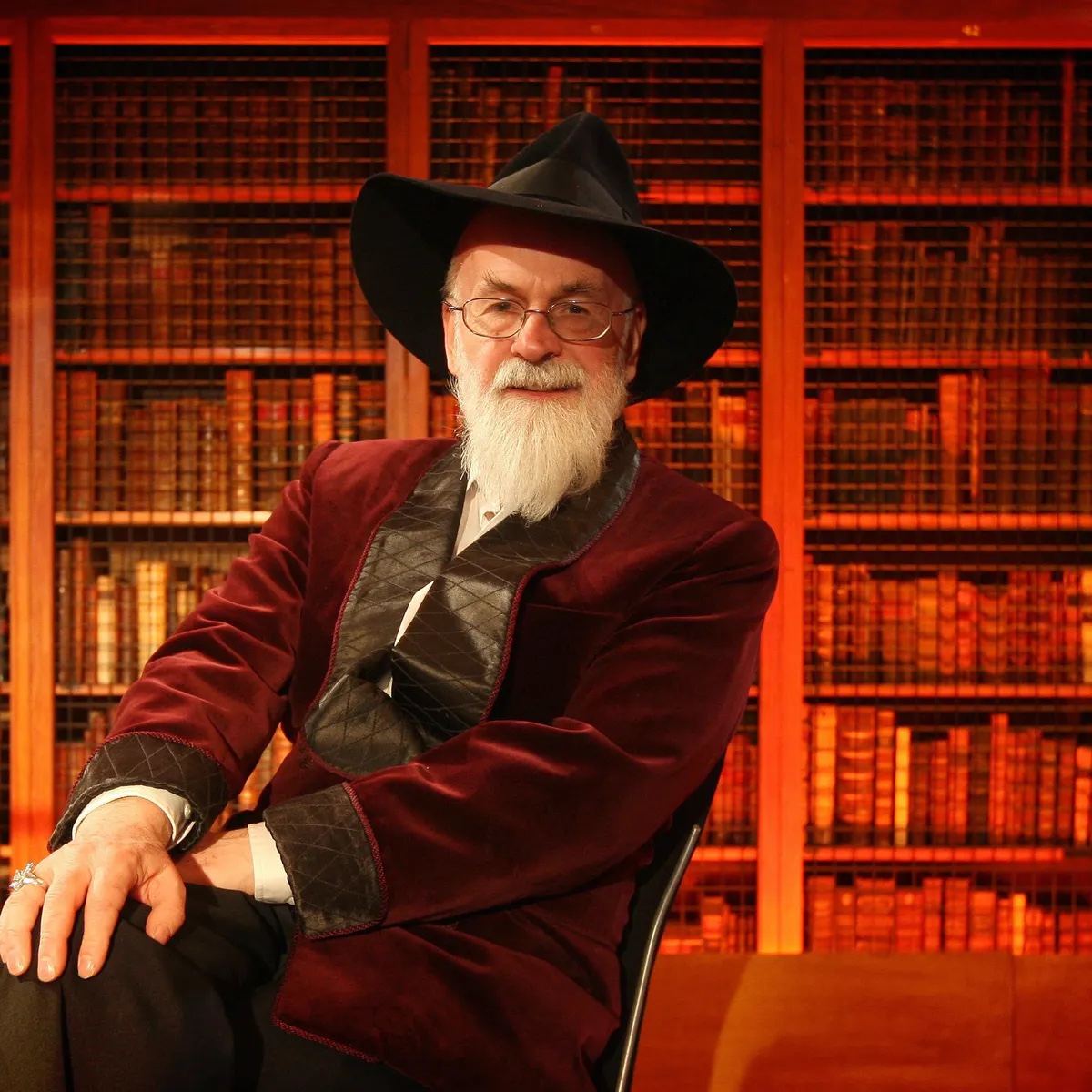
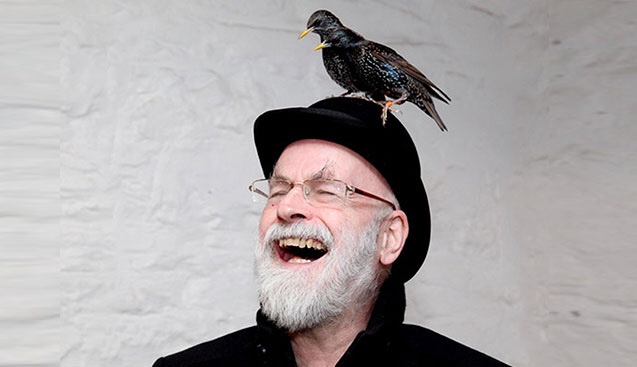
Terence (Terry) David John Pratchett

On this date in 1948, Terence (Terry) David John Pratchett was born in Buckinghamshire, England. He enjoyed reading, especially science fiction, fantasy, myth and ancient history. He has said that from a young age he was skeptical about Christianity and came to the conclusion that there was no god. He has won many awards, including the Carnegie Medal for The Amazing Maurice and Educated Rodents (2001), and was knighted in 2009 for his services to literature. Several of his books have been adapted as movies for television.

Pratchett’s first novel, Carpet People, a children’s fantasy, was published in 1971. Pratchett is best known for his “Discworld” novels, a fantasy series tied together not by characters or plot but by the setting of the Discworld, a flat world sitting on the backs of four elephants standing on the back of a giant turtle swimming through space. The first book in this series, The Color of Magic, a fantasy adventure starring a hapless wizard parodying many conventions of the genre, was published in 1983, and the thirty-eighth, I Shall Wear Midnight, a coming-of-age story featuring a strong young witch battling prejudice, was published in 2010. The Discworld, like many fantasy worlds, features gods who occasionally interfere directly in events or feature as characters in some way. In 2007, Pratchett was diagnosed with early-onset Alzheimer’s, but has continued to write and publish new books, albeit at a slower pace. He has made many public statements in support of the right to die, and talks openly about his Alzheimer’s experience, including his wish to take his own life before his disease is critical. He was knighted in 2009.

Throughout his work, Pratchett questions religion in many different ways, pointing out religious hypocrisy while at the same time illustrating how different the world would be if God, or any gods, were real. The 1992 Discworld novel Small Gods shows the god Om visiting his worshipers, and being deeply dissatisfied with the direction in which his church has gone. Good Omens (1990), co-written with fellow British fantasy author Neil Gaiman, deals with Christian mythology and the book of Revelations. It begins with an angel and a demon conversing outside the Garden of Eden and questioning God’s motives regarding the Tree of the Knowledge of Good and Evil. It ends with the ten-year-old antichrist, Adam, contemplating the raid of a neighbor’s orchard and thinking, “There never was an apple . . . that wasn’t worth the trouble you got into for eating it.” Pratchett said, “I read the Old Testament all the way through when I was about 13 and was horrified” (The Daily Mail, U.K., June 21, 2008).

“There is a rumor going around that I have found God. I think this is unlikely because I have enough difficulty finding my keys, and there is s evidence that they exist.”
~ Sir Terry Pratchett, The Daily Mail (U.K.), June 21, 2008

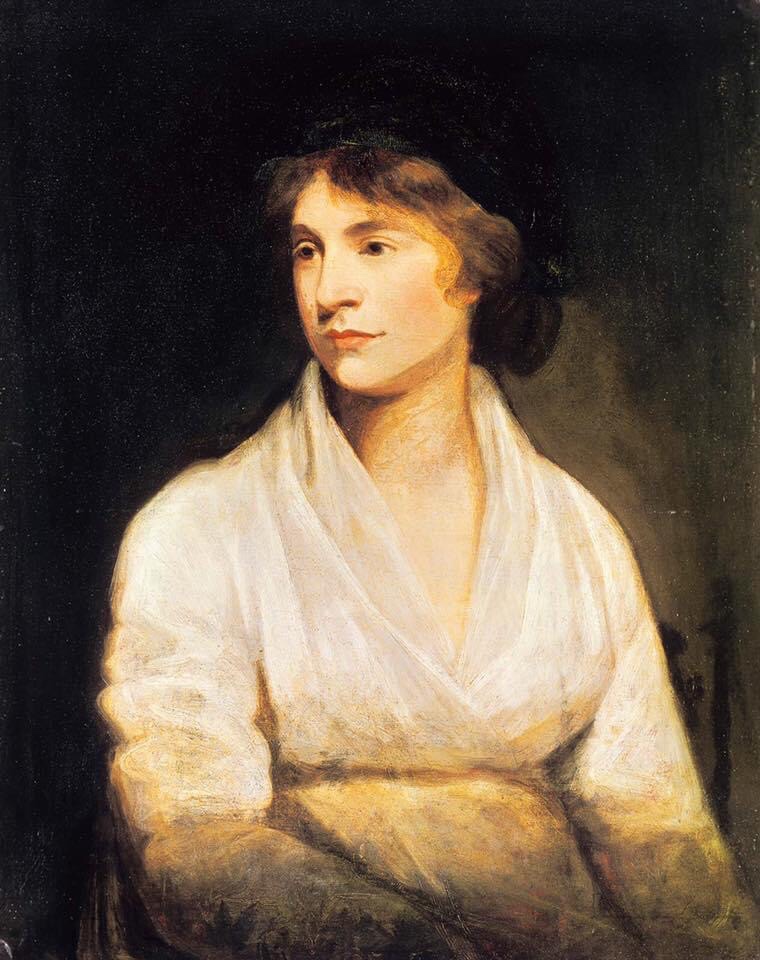
Mary Wollstonecraft Birthday

On this date in 1759, Mary Wollstonecraft was born in London, the second of seven children. The industrious young woman worked as a companion, governess and then opened her own school. Her first book, Thoughts on the Education of Daughters, was published in 1786, followed by a novel, a children’s book (re-issued with illustrations by William Blake), a translation, and The Female Reader. When Edmund Burke read her review of a sermon by dissenting minister Richard Price, he wrote a famous attack on the American and French Revolutions. Mary was the first to rebut his polemic. A Vindication of the Rights of Men was published five weeks later, rejecting all arguments from authority or precedent. Her seminal A Vindication of the Rights of Woman was published in 1792. The first influential book calling for the equality of the sexes, it urged that women be educated and treated as “rational creatures.” Wollstonecraft championed dress reform, breast-feeding, early education and a national system of coeducational primary schools. She warned of those who practice “on the credulity of women.”

She gave birth to a daughter in an unhappy liaison with Gilbert Imlay, then married atheist William Godwin in 1797. Following an uneventful pregnancy, 38-year-old Mary gave birth to a second daughter, Mary. The new mother died of a childbirth infection after ten intense days of suffering. Her daughter Mary ran off as a teenager with poet Percy Shelley, and wrote Frankenstein at age 19. Wollstonecraft was an ardent rationalist and Deist who adopted an agnostic point of view toward the end of her life. D. 1797.

“. . . the being cannot be termed rational or virtuous who obeys any authority but that of reason.”
~ Mary Wollstonecraft, A Vindication of the Rights of Woman (1792)

William Shakespeare on Religion

On this date in 1564, William Shakespeare was born in England. He died in 1616. The “master” playwright was eulogized by 19th century agnostic orator Robert Green Ingersoll. In one of his famous lectures, Ingersoll said that when he read Shakespeare, “I beheld a new heaven and a new earth.” (The Works of Robert G. Ingersoll, Interviews, Vol. IV, p. 39.) “All well-educated ministers know that the Bible suffers by a comparison with Shakespeare.” (Vol. VIII, p. 297) “If Shakespeare could be as widely circulated as the Bible . . . nothing would so raise the intellectual standard of mankind. Think of the different influence on men between reading Deuteronomy and ‘Hamlet’ and ‘King Lear’ . . . The church teaches obedience. The man who reads Shakespeare has his intellectual horizon enlarged.”

No one knows Shakespeare’s personal religious views, although he certainly was not orthodox, and put many different types of sentiments into the mouths of his characters. His philosophy seems most succinctly described in the famous “Seven Ages of Man” speech from “As You Like It,” which begins: “All the world’s a stage/ And all the men and women merely players:/ They have their exits and their entrances;. . .” ending with “mere oblivion./ Sans teeth, sans eyes, sans taste, sans everything.” Below are several of Shakespeare’s most famous irreverencies. D. 1616.

“In religion, what damned error but some sober brow will bless it, and approve it with a text, . . .?”
~ “The Merchant of Venice,” Act III, Sc. II

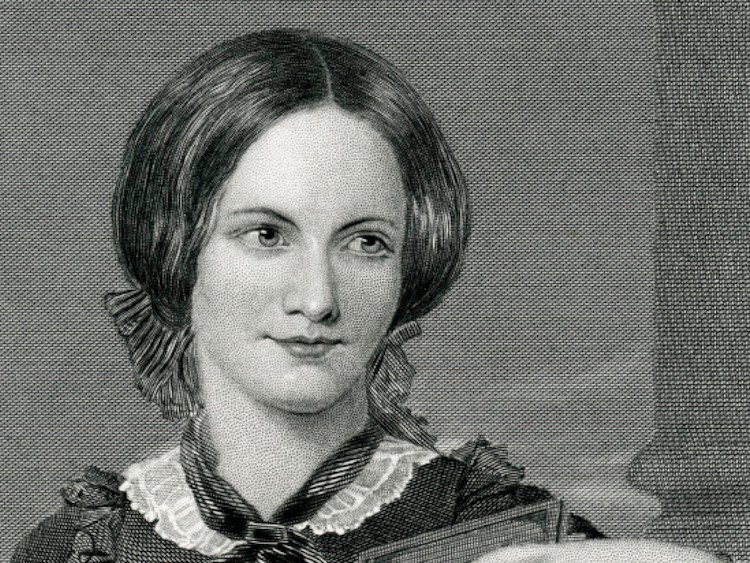
Charlotte Bronte

Charlotte Brontë was born the 21 April 1816 was an English novelist and poet, the eldest of the three Brontë sisters who survived into adulthood and whose novels have become classics of English literature. She first published her works (including her best known novel, Jane Eyre) under the pen name Currer Bell.

Jane Eyre had immediate commercial success and initially received favourable reviews. G. H. Lewes wrote that it was “an utterance from the depths of a struggling, suffering, much-enduring spirit,” and declared that it consisted of “suspiria de profundis!” (sighs from the depths). Speculation about the identity and gender of the mysterious Currer Bell heightened with the publication of Wuthering Heights by Ellis Bell (Emily) and Agnes Grey by Acton Bell (Anne). Accompanying the speculation was a change in the critical reaction to Brontë’s work, as accusations were made that the writing was “coarse”, a judgement more readily made once it was suspected that Currer Bell was a woman. However, sales of Jane Eyre continued to be strong and may even have increased as a result of the novel developing a reputation as an “improper” book.

“Averse to personal publicity, we veiled our own names under those of Currer, Ellis and Acton Bell; the ambiguous choice being dictated by a sort of conscientious scruple at assuming Christian names positively masculine, while we did not like to declare ourselves women, because — without at that time suspecting that our mode of writing and thinking was not what is called “feminine” – we had a vague impression that authoresses are liable to be looked on with prejudice; we had noticed how critics sometimes use for their chastisement the weapon of personality, and for their reward, a flattery, which is not true praise.”
~ Charlotte Bronte

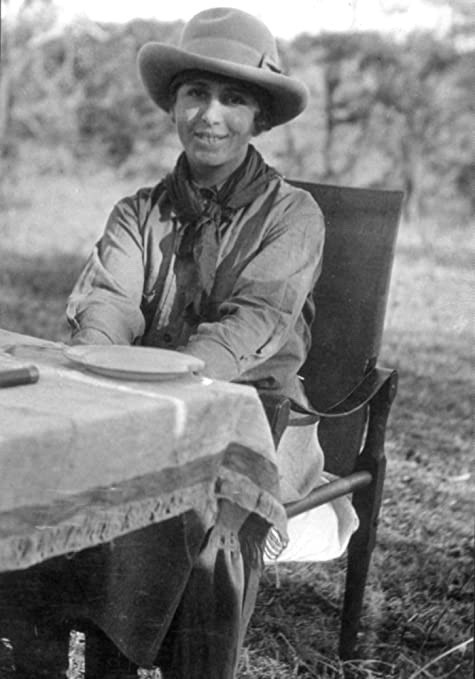
Isak Dinesen

On this date in 1885, Karen Dinesen, later known under the pen-name Isak Dinesen, was born in Denmark to a well-to-do Unitarian family. She attended the Royal Academy of Art in Copenhagen, and studied in four European countries. She published several short stories in 1907. She married her cousin, Baron Bror Blixen-Finecke, in 1914, and lived with him on a coffee plantation in Kenya. After they divorced in 1921 (he famously had given her syphilis, which she recovered from), Dinesen ran the plantation herself until 1931, when she returned to Denmark.

Those years are chronicled in her famous book, Out of Africa (1937), whose accounts of her adventurous struggles captured the public imagination. A film of the same name, directed by Sydney Pollack in 1985, was loosely based on the book. Her other books include Seven Gothic Tales (1934), several collections of short stories, and two other autobiographical works written after she returned many years later to Africa. Anecdotes of Destiny includes “Babette’s Feast,” originally written for a magazine, which also became the basis of a movie. Dinesen wrote in English, then translated her writings back into Danish. D. 1962.

“Africa, amongst the continents, will teach it to you: that God and the Devil are one, the majesty coeternal, not two uncreated but one uncreated, and the Natives neither confounded the persons nor divided the substance.”
~ Isak Dinesen, Out of Africa (1937)

Joseph Campbell on Immortality

“Those who know, not only that the Everlasting lives in them, but that what they, and all things, really are IS the Everlasting, dwell in the groves of the wish-fulfilling trees, drink the brew of immortality, and listen everywhere to the unheard music of eternal concord. These are the immortals.”

~ Joseph Campbell, from “The Hero with a Thousand Faces”

#JosephCampbell #Mythology #FavoriteBooks

Christopher Hitchens

On this date in 1949, writer and columnist Christopher Hitchens was born in Portsmouth, England. He attended Cambridge and graduated from Oxford in 1970, reading in philosophy, politics and economics. From 1971-1981 he worked as a book reviewer for The Times. In 1981 he emigrated to the United States. Hitchens wrote “Minority Report,” a column for The Nation, from 1982-2002. He then wrote for Slate, The Daily Mirror, as a contributing editor to The Atlantic Monthly and Vanity Fair, and also wrote for Harpers and many other U.S. newspapers and journals. As a foreign correspondent, he covered events in 60 countries on all five continents. Hitchens wrote a host of books, but is best-known in freethought circles for authoring God Is Not Great (2007). His criticisms of Clinton and pro-Iraqi war views made Hitchens increasingly controversial among progressive readership, but he remained a stalwart atheist and iconoclast. In “Papal Power: John Paul II’s other legacy” (Slate.com, April 1, 2005), Hitchens pointed out that the pope “was a part of the cover up and obstruction of justice that allowed the child-rape scandal to continue for so long.” Hitchens became a U.S. citizen in 2007. D. 2011.

“Gullibility and credulity are considered undesirable qualities in every department of human life—except religion . . . Why are we praised by godly men for surrendering our ‘godly gift’ of reason when we cross their mental thresholds? . . . Atheism strikes me as morally superior, as well as intellectually superior, to religion. Since it is obviously inconceivable that all religions can be right, the most reasonable conclusion is that they are all wrong.”

~ Christopher Hitchens, “The Lord and the Intellectuals,” Harper’s (July 1982), cited by James A. Haught in 2,000 Years of Disbelief (1996)

Samuel Barclay Beckett

Samuel Barclay Beckett (13 April 1906 – 22 December 1989) was born, an Irish avant-garde novelist, playwright, theatre director, and poet, who lived in Paris for most of his adult life and wrote in both English and French. He is widely regarded as among the most influential writers of the 20th century.

Beckett’s work offers a bleak, tragicomic outlook on human existence, often coupled with black comedy and gallows humour, and became increasingly minimalist in his later career. He is considered one of the last modernist writers, and one of the key figures in what Martin Esslin called the “Theatre of the Absurd”.

Beckett was awarded the 1969 Nobel Prize in Literature “for his writing, which—in new forms for the novel and drama—in the destitution of modern man acquires its elevation.”

#SamuelBeckett #NobelPrizeLiterature