The F.B.I. ostensibly kept records on Capote for being “a supporter of the Cuban Revolution,” based on his association with The Fair Play for Cuba Committee. When asked why he supported the FPCC, Capote told the F.B.I., “my step father is Cuban.” The bureau also took an interest in the author because he accompanied a black cast performing “Porgy and Bess” in the Soviet Union.
But Capote’s F.B.I. file may have actually been the result of the author’s lust for gossip. Capote himself admitted to spreading rumors about F.B.I. Chief John Edgar Hoover’s supposed homosexual relationship with friend Clyde Tolson. He went as far as telling a magazine editor about the affair and almost wrote an article about it titled, “Johnny and Clyde.” “It got Hoover upset, that much I know,” Capote said. “And it got me … about 200 pages in an F.B.I. file.”
“When Mary Sherwood—wife of the playwright—gave birth to a child (an event that most of the Algonquin Round Tablers [1920’s literary group] felt she had made too much of), Mrs. Parker cabled her: “DEAR MARY, WE ALL KNEW YOU HAD IT IN YOU”
1910 – Jean Genet, French novelist, playwright, and poet (d. 1986) Genet was a petty criminal early in life, and after ten convictions was threatened with a life sentence, but through the intercession of luminaries like Sartre and Picasso was left alone, and never committed a crime again.
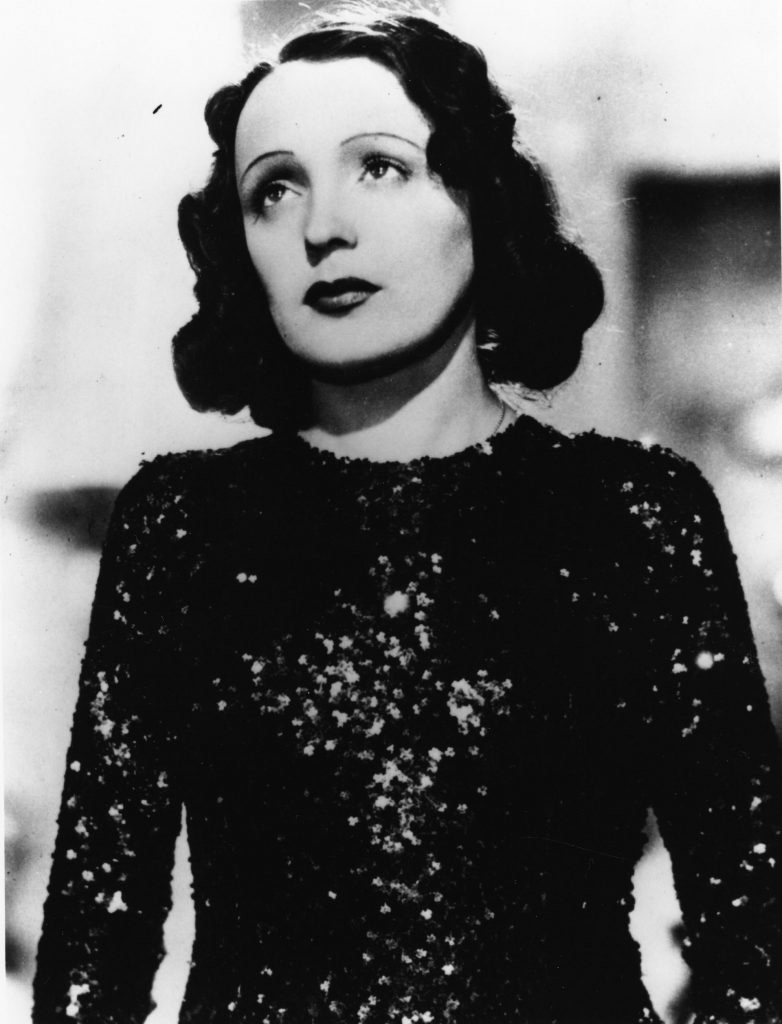
1915 – Édith Piaf, French singer-songwriter and actress (d. 1963) Here’s La Môme (her nickname, meaning “the little sparrow”). She was born Édith Giovanna Gassion, and took “Piaf”—slang for “sparrow”—as her last name.
A large fissure already existed at the time the inscription was created, divides the rock into two parts. Some areas are damaged, making some parts of the text unreadable.
It is written in hieroglyphs arranged in 42 columns. In the upper part three deities are represented; Khnum (the creator, represented with the head of a ram), Satis (a goddess, personification of the floods of the Nile) and Anuket (goddess of water and waterfalls). In front of them Pharaoh Djoser brings them offerings.
The text recounts the seven-year period of drought and famine that took place during the reign of Pharaoh Djoser of the Third Dynasty, the builder of the Step pyramid who reigned around 2665-2645 BC.
The drought began in the 18th year of his reign, caused because the Nile did not flood the farmlands and therefore there were no crops. The pharaoh then entrusted his vizier Imhotep to investigate where the god of the Nile was born, who was in charge of causing the flood annually. After consulting the archives in the temple of Thoth in Hermopolis, informs him that the rise of the Nile is the work of the god Khnum, who resides in a sacred spring on the island of Elephantine.
Imhotep travels to the temple of Khnum in Elephantine and while praying to the god he has a dream. In it, Khnum is introduced to him and describes his divine powers. He then promises the vizier to make the Nile flow again. Imhotep wakes up and writes down everything that Khnum has told him to tell pharaoh Djoser.
“I was grieving on my great throne, and those in the palace were grieving. My heart was in great pain, for the Nile had not arrived in time for seven years. The grain was scarce, the seeds were dry, everything that could be eaten was in short supply… Then I took pleasure in looking back and questioned the chief priest, Imhotep. Where does the Nile originate? I asked him, what god rests there, to support me? Imhotep replied, “There is a city in the middle of the water; the Nile surrounds it. Her name is Elephantine; Khnum is there”
Before the vizier’s account, the pharaoh orders priests, scribes and workers to restore Khnum´s temple and to once more make regular offerings to the god. Furthermore, by decree it grants him the territory between Aswan and Tachompso, and a part of all imports from Nubia.
However, the Famine Stela does not date from the reign of Djoser, or even that of any of his immediate successors. Researchers believe it was made during the time of the reign of the Ptolemies, the Greek rulers of Egypt after Alexander the Great, between 332 and 31 BC. That is, more than 2,300 years after the events that it narrates.
Specifically, it would belong to the reign of Ptolemy V (205-180 BC), and its creators would be the own priests of the temple of Khnum, who thus tried to justify their dominion over Elephantine Island and the surrounding regions. For this reason, for a time the inscription was considered a forgery of the priests. Today some Egyptologists believe that the facts it relates are true, others believe that they are fiction.
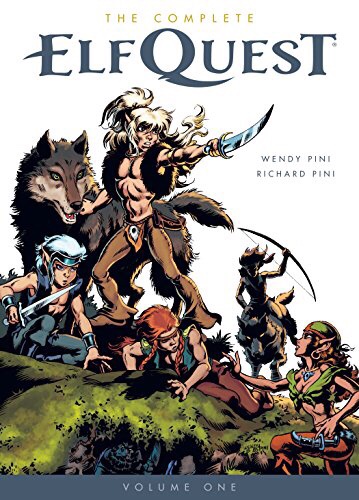
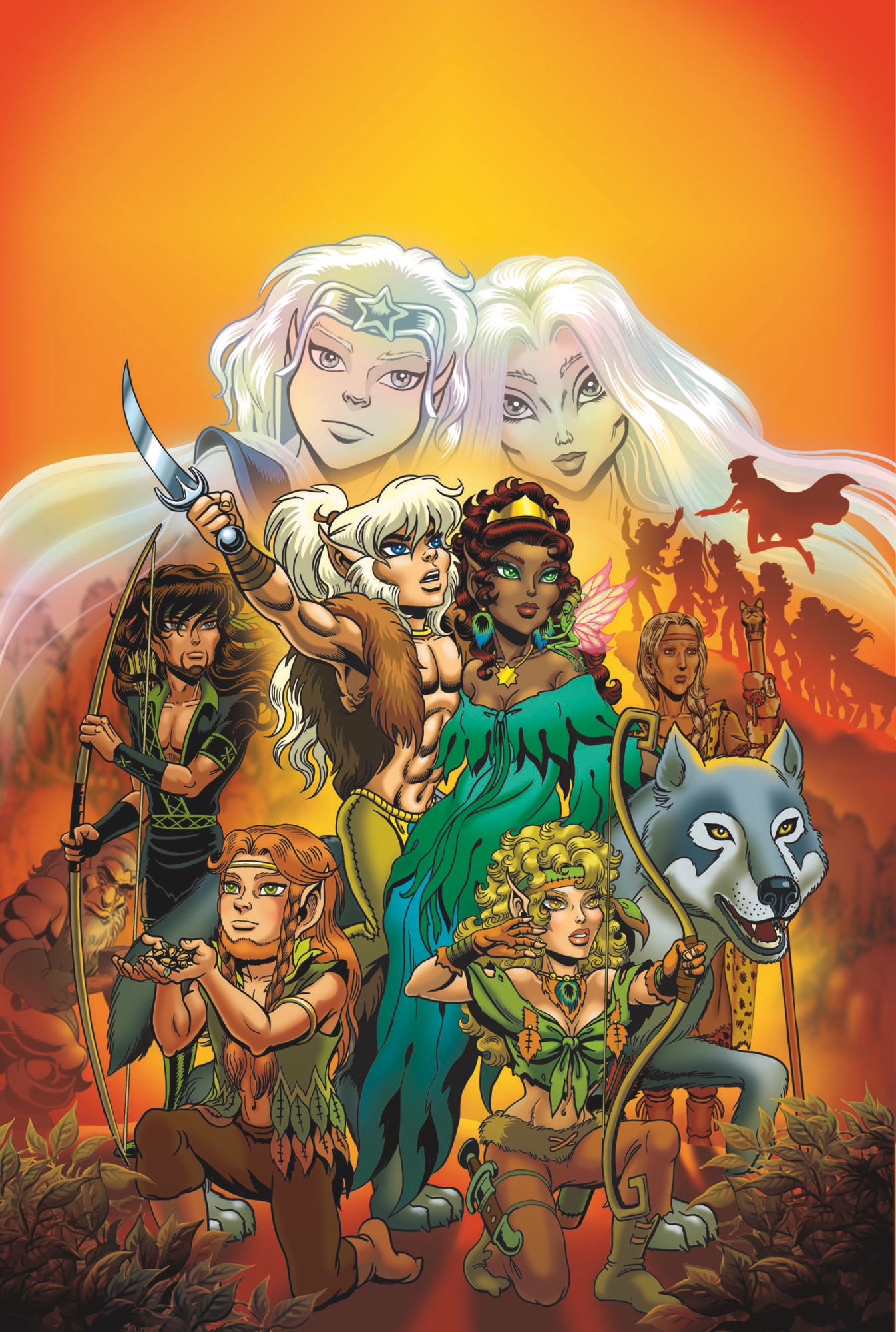
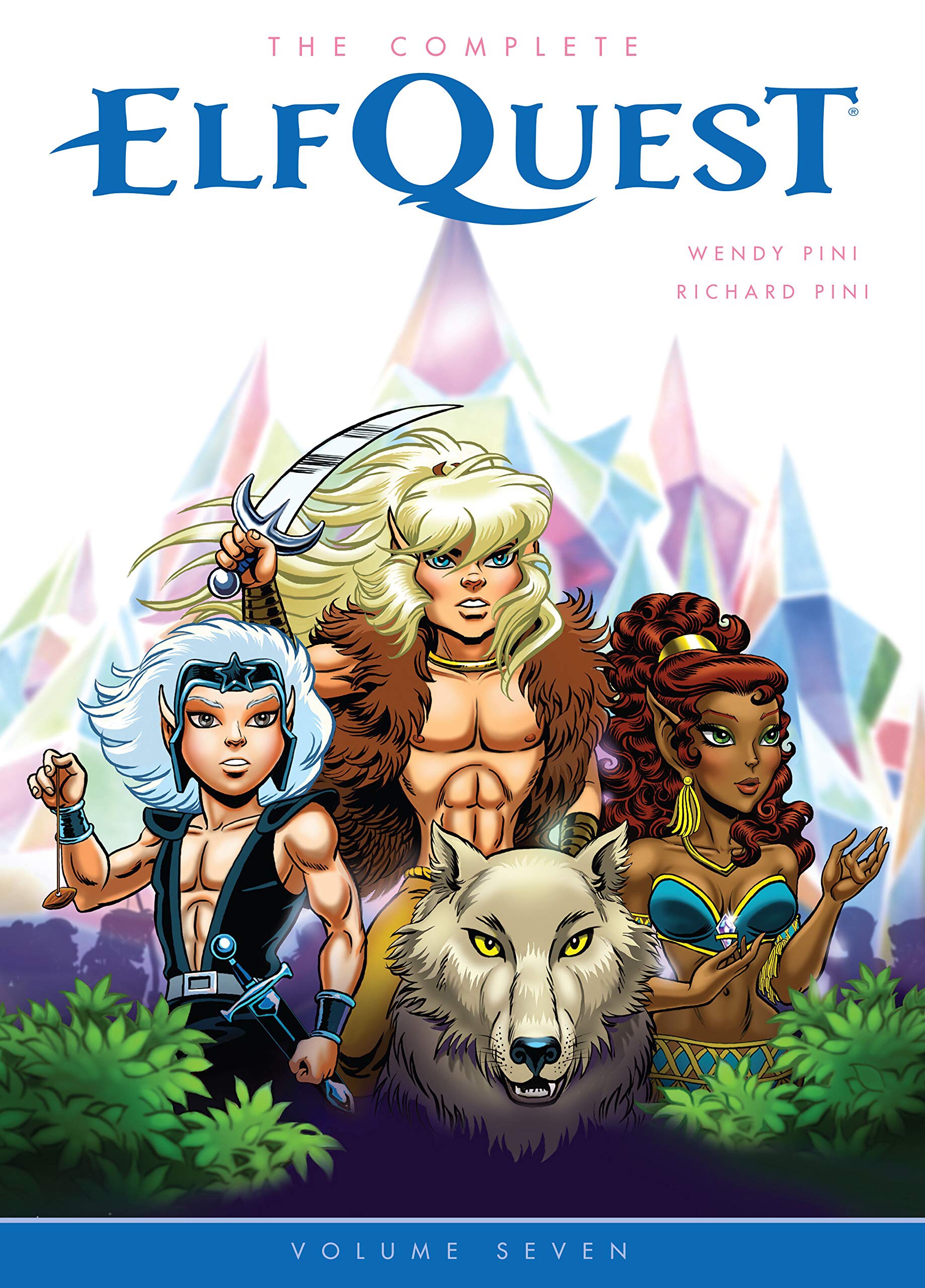
Elfquest is a comic book property created by Wendy and Richard Pini in 1978. It is a fantasy story about a community of elves and other fictional species who struggle to survive and coexist on a primitive Earth-like planet with two moons. Several published volumes of prose fiction also share the same setting. Elfquest was one of the first comic book series to have a planned conclusion. Over the years Elfquest has been self-published by the Pinis through their own company Warp Graphics, then Marvel Comics, then the Pinis again, more recently DC Comics and then Dark Horse Comics.
From an interview with Wendy a few years back, here’s a concise yet thorough, and still-relevant answer to what is Elfquest: ElfQuest is an ongoing heroic fantasy graphic novel series, with science fictional undertones, about a band of alien beings who look like elves trying to survive on a hostile world that is not their ancestors’ planet of origin. The storyline focuses on the elves’ struggle to remain true to their harmonious, nature-loving ways despite the encroachment into their territories of an ever-increasing human population. The art style of ElfQuest, whether mine or any of the other talented artists Warp Graphics has employed, is a combination of influences from classic fairytale illustration to Japanese anime or manga. Although our elfin cast of characters, like Cutter, Leetah, Skywise and Rayek, have a big-eyed, childlike appearance, their adventures take them psychologically, spiritually and physically to very dark, very grown-up places. It’s my firm belief, based on years of fan feedback, that anyone willing to fully explore the epic-sized world of ElfQuest will find their views of modern society mirrored, their prejudices challenged, and their understanding of relationships – of all kinds – forever changed.
When Simone de Beauvoir wrote The Second Sex, she did not define herself as a feminist. She was a socialist and believed a socialist revolution would liberate women, but in the late 1960s, as feminism blossomed, she changed her mind. She told an interviewer in 1972 that the situation of women in France had not really changed over the last 20 years and that people on the left should join the women’s movement while waiting for socialism to arrive.
Defining herself as a feminist, but reluctant to join traditional reformist groups, de Beauvoir joined the radical Mouvement de Libération des Femmes (MLF)—the French women’s liberation movement. In 1971, when abortion was still illegal in France, de Beauvoir was one of more than 300 women who signed a pro-abortion manifesto, later known as the Manifesto of the 343, stating that she had had an abortion and demanding this right for all women.
In her essay “A Room of One’s Own” (1929), Virginia Woolf discusses the struggles women writers had faced to win the same success as their male counterparts. Acknowledging the achievements of novelists such as Jane Austen and George Eliot, Woolf describes how the confines of domesticity could hinder such work. Women often wrote in communal areas of the home, surrounded by distractions, and seldom had the financial independence necessary to break free. She conjures up Judith, a fictitious sister of William Shakespeare, and wonders what life would have been like for her. Had she been “as imaginative, as agog to see the world” as her brother, she would still have been expected to be content with being a wife and mother. Woolf imagines that, in despair, Judith kills herself, her genius unexpressed.
In her essay, Woolf uses metaphors to explore social injustices and comments on women’s lack of free expression. Her metaphor of a fish explains her most essential point, “A woman must have money and a room of her own if she is to write fiction”. She writes of a woman whose thought had “let its line down into the stream”. As the woman starts to think of an idea, a guard enforces a rule whereby women are not allowed to walk on the grass. Abiding by the rule, the woman loses her idea. Here, Woolf describes the influence of women’s social expectations as mere domestic child bearers, ignorant and chaste.
The runic alphabet that was used during the Viking Age is called Younger Futhark. These runes can be found on hundreds of runestones throughout Scandinavia. This alphabet does not consist of many runes, and that is because the Norse language evolved a lot during the Iron Age, which meant that the runic alphabet was reduced from 24 to 16 runes.
Each rune has its own name and sound. Some of the runes are used to spell the same letter, for instance, the Týr rune is used for the letters “t” and “d”, and kaun is used for “g” and “k”.
The names on this list of the Younger Futhark runes have been taken from the website of The National Museum in Copenhagen. The names of the runes may vary slightly depending on the language and on which runologist has conducted the research.
The numerical value of bet is two, representing duality. Since it is the beginning of the word berachah (“blessing”) through which every food and drink is reconnected to its heavenly root, bet is also a link between the material world and the spiritual world of unity, reinforcing the truth that God is One.
Blessings open up our awareness of the bounty we receive and thereby open us up for receiving even more. As we stated earlier, the word ברכה – berachah (“blessing”) also means ברכה – bereichah (“large receptacle”). The more we bless God for the good we have received, the larger is the space we make that only He can fill.
Although we experience duality in this world—light and darkness, Yin and Yang, feminine and masculine, etc.—our spiritual work is to reach beyond the duality and reveal the source of Oneness hiding behind all duality. For example, our ultimate capacity for balancing Yin and Yang requires us to tap into pure essence, the deepest place in our souls that is beyond all time, space, and categories. As we shift our identity to pure essence, we may heal from all imbalances and fragmentation.
While Abraham is associated with the energy of alef, which unifies plurality, Isaac, in contrast, evokes the theme of bet, the perception of the deceptive plurality of creation and the need to overcome this deception. Although God’s creation is made of infinite variety and diversity, everything is endowed with His Spirit. Every event and situation is a manifestation of His will, even those which are most enigmatic.








 Mark Bere Peterson’s Counterculture, Urban Legends, Paganism & Witchcraft