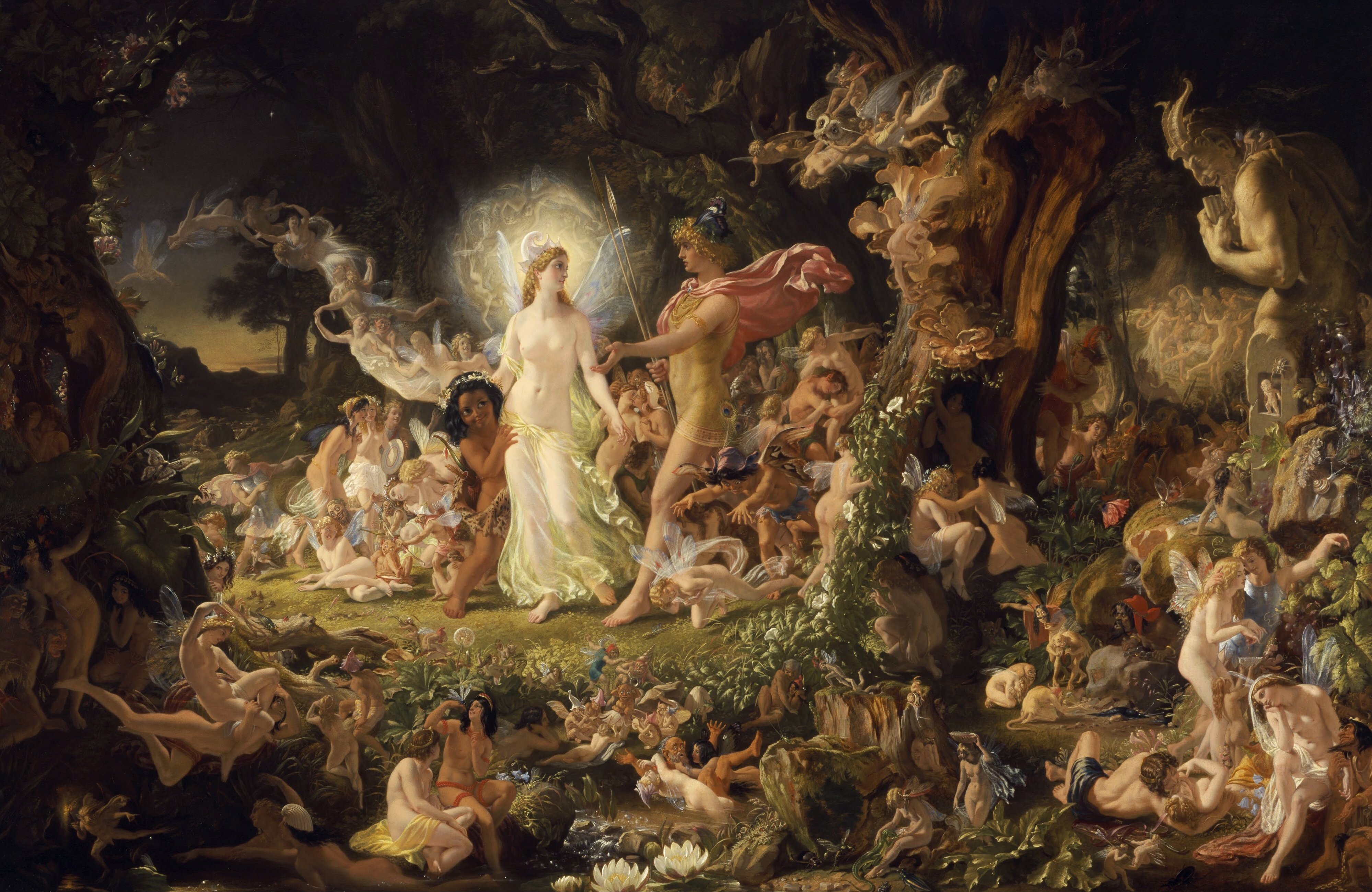
Titania is a Fairy Queen who appears as an important character in Shakespeare’s play ‘A Midsummer Night’s Dream’ written in the mid 1590’s. In the play she is the wife of the Fairy King Oberon and the two are fighting over a changeling child; because of the fight Titania is refusing her husband’s company and so he sets one of his servants out to make her fall in love with a foolish mortal as a punishment. Titania’s name connects to that of the goddess Diana, suggesting that Titania was meant to be an epithet for the well-known goddess. Diana is often associated by early modern writers with both fairies and witches so there is a certain logic to this idea. Titania’s name is not widely seen elsewhere in literature although it does appear in one magical text found in the British Museum.
Titania appears in a handful of works after Shakespeare, usually paired with Oberon or as a minor character; examples include a reference to her in Faust I and in an opera titled ‘Oberon, or the Elf King’s Oath’. Shakespeare’s Titania did not find widespread popularity in modern culture although she does either appear, or is referenced, in some video games and literature. Perhaps her most high profile modern appearance would be as the Summer Court Queen in the Dresden Files books, although she does also appear as the Queen of the Black Court in Dana Marie Bell’s ‘Grey Court’ series.
In Greek mythology, Antigone was the daughter of Oedipus by his own mother, Jocasta, and the sister of Eteocles, Polyneices, and Ismene. When her father went into exile she accompanied the blind man as his guide.
Two versions exist of Antigone’s fate after she defied King Creon. In the first, the subject of the tragedy Antigone by Sophocles, Creon ordered that she be immured as a punishment, but rather than face burial while alive she hanged herself; Haemon, the son of Creon to whom she was betrothed, committed suicide alongside her. In the second version, Creon turned Antigone over to Haemon for punishment, but he smuggled her away, and she later bore him a son. When Creon refused to forgive them, Haemon killed both himself and Antigone.
On this date in 1564, William Shakespeare was born in England. He died in 1616. The “master” playwright was eulogized by 19th century agnostic orator Robert Green Ingersoll. In one of his famous lectures, Ingersoll said that when he read Shakespeare, “I beheld a new heaven and a new earth.” (The Works of Robert G. Ingersoll, Interviews, Vol. IV, p. 39.) “All well-educated ministers know that the Bible suffers by a comparison with Shakespeare.” (Vol. VIII, p. 297) “If Shakespeare could be as widely circulated as the Bible . . . nothing would so raise the intellectual standard of mankind. Think of the different influence on men between reading Deuteronomy and ‘Hamlet’ and ‘King Lear’ . . . The church teaches obedience. The man who reads Shakespeare has his intellectual horizon enlarged.”
No one knows Shakespeare’s personal religious views, although he certainly was not orthodox, and put many different types of sentiments into the mouths of his characters. His philosophy seems most succinctly described in the famous “Seven Ages of Man” speech from “As You Like It,” which begins: “All the world’s a stage/ And all the men and women merely players:/ They have their exits and their entrances;. . .” ending with “mere oblivion./ Sans teeth, sans eyes, sans taste, sans everything.” Below are several of Shakespeare’s most famous irreverencies. D. 1616.
“In religion, what damned error but some sober brow will bless it, and approve it with a text, . . .?” ~ “The Merchant of Venice,” Act III, Sc. II
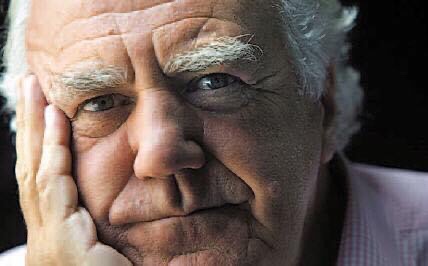
On this date in 1943, author Peter Watson was born in Birmingham, England. An intellectual historian and investigative journalist, he was educated at the universities of Durham, London and Rome, later living in the United States. He has written for The Observer, The New York Times, Punch and The Spectator, and is the author of fiction, as well as many books on art history, biography, psychology, and true crime. His books include: The Medici Conspiracy: The Illicit Journey of Looted Antiquities from Italy’s Tomb Raiders to the World’s Greatest Museums (2006, with Cecilia Todeschini), Ideas: A History of Thought and Invention, from Fire to Freud (2005), Modern Mind: An Intellectual History of the 20th Century (2001) (also published as A Terrible Beauty), Sotheby’s: The Inside Story (1998), Landscape of Lies (1989) and The Caravaggio Conspiracy (1984). In Ideas: A History of Thought and Invention, Watson seeks a new way to tell the history of the world from prehistory to modern day, asserting that human knowledge is divided into two realms: inward (philosophy and religion) and outward (observation and science). His stance supports the latter. Twins: An Uncanny Relationship? (1982), explores behavior patterns shared by identical twins, “to offer a rational alternative to mumbo jumbo for explaining many of the coincidences reported in twin studies, ” according to a Los Angeles Times review. “A few saints and a little charity don’t make up for all the harm religion has done over the ages,” he has said (CBC News, May 5, 2007).
When asked about the good that religion has done in the world in an interview by The New York Times Magazine (December 11, 2005), Watson replied: “I lead a perfectly healthy, satisfactory life without being religious. And I think more people should try it.” He went on to say, “I do not believe in the inner world. I think that the inner world comes from the exploration of the outer world–reading, traveling, talking. I do not believe that meditation or cogitation leads to wisdom or peace or the truth.” Since 1998, Watson has been a research associate at the McDonald Institute for Archaeological Research, at the University of Cambridge. He lives in London, England.
“Religion has kept civilization back for hundreds of years, and the biggest mistake in the history of civilization, is ethical monotheism, the concept of the one God. Let’s get rid of it and be rational.” ~ Peter Watson interview, CBC News (May 5, 2007)
On this date in 1830, Clémence-Auguste Royer was born in Nantes, France. Her parents were Catholic royalists, and Royer’s early education took place in a convent school. Royer became a republican following the Revolution of 1848, and began to question other common views at that time. Royer obtained a teaching certificate and taught at girls schools in Wales, where she mastered English, and in France. She read widely on science in these school libraries. In 1855, as a result of her inquiries, she rejected Catholicism thoroughly, and devoted herself to science. She began to offer lectures on science and logic for women in Lausanne, Switzerland, in 1858. Royer translated Charles Darwin’s Origin of Species into French in 1863. She famously wrote a preface to the work which used Darwin’s mechanism for evolution as part of an anti-religious argument which Darwin himself did not make — by this time, the book was in its third English edition and contained several strong references to a creator. Royer had been an evolutionist before reading Darwin, having been strongly influenced by the writings of Jean Baptiste LaMarck. French scientists, especially atheists and anthropologists, were strongly influenced by evolution and natural selection as framed by Royer, who also discussed the implications of evolutionary theory for human beings and society in her introduction (it would be almost ten years before Darwin himself grappled with these issues in The Descent of Man). Royer continued as Darwin’s official French translator until the third French edition of Origin was published in 1870.
Royer, despite not being a research scientist, remained a popular interpreter of science as well as a philosopher of science throughout her life. As a woman, she was denied access to many learned societies, as well as university teaching positions. It has been argued by Jennifer Michael Hecht, among others, that Royer opened doors to women within the freethinking movement. Royer was a feminist who argued passionately for the rights of women, married and unmarried, to child custody, property, education and equality with men. In 1866, she had a son by her lover and life partner, Pascal Duprat, a married man, which sharpened her concern about the major legal obstacles then present to unwed mothers and their children. She published many books and articles throughout her life, and considered the pinnacle to be 1900’s Natura rerum, her theory of nature. In 1900, Royer was named a Chevalier of the Legion of Honor for her contributions as “a woman of letters and a scientific writer.” D. 1902
“Yes, I believe in revelation, but a permanent revelation of man to himself and by himself, a rational revelation that is nothing but the result of the progress of science and of the contemporary conscience, a revelation that is always only partial and relative and that is effectuated by the acquisition of new truths and even more by the elimination of ancient errors. We must also attest that the progress of truth gives us as much to forget as to learn, and we learn to negate and to doubt as often as to affirm.” ~ Clémence Royer, preface to Charles Darwin, L’origine des espèces, in Jennifer Michael Hecht, The End of the Soul
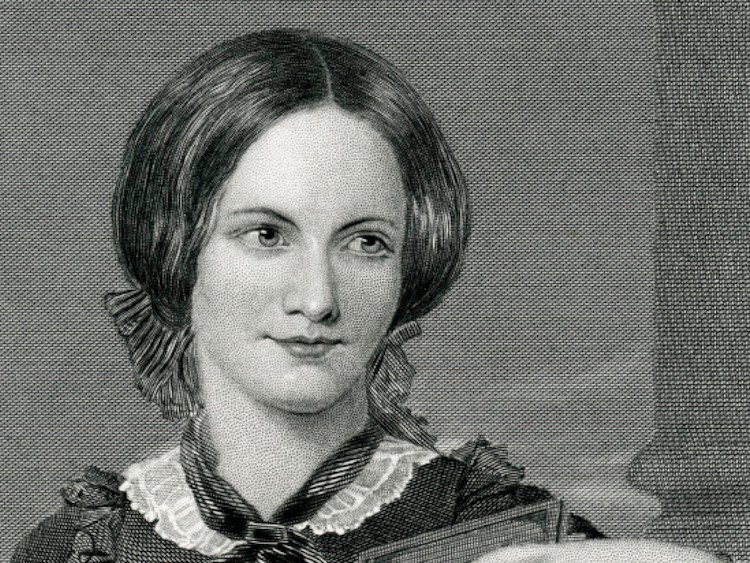
Charlotte Brontë was born the 21 April 1816 was an English novelist and poet, the eldest of the three Brontë sisters who survived into adulthood and whose novels have become classics of English literature. She first published her works (including her best known novel, Jane Eyre) under the pen name Currer Bell.
Jane Eyre had immediate commercial success and initially received favourable reviews. G. H. Lewes wrote that it was “an utterance from the depths of a struggling, suffering, much-enduring spirit,” and declared that it consisted of “suspiria de profundis!” (sighs from the depths). Speculation about the identity and gender of the mysterious Currer Bell heightened with the publication of Wuthering Heights by Ellis Bell (Emily) and Agnes Grey by Acton Bell (Anne). Accompanying the speculation was a change in the critical reaction to Brontë’s work, as accusations were made that the writing was “coarse”, a judgement more readily made once it was suspected that Currer Bell was a woman. However, sales of Jane Eyre continued to be strong and may even have increased as a result of the novel developing a reputation as an “improper” book.
“Averse to personal publicity, we veiled our own names under those of Currer, Ellis and Acton Bell; the ambiguous choice being dictated by a sort of conscientious scruple at assuming Christian names positively masculine, while we did not like to declare ourselves women, because — without at that time suspecting that our mode of writing and thinking was not what is called “feminine” – we had a vague impression that authoresses are liable to be looked on with prejudice; we had noticed how critics sometimes use for their chastisement the weapon of personality, and for their reward, a flattery, which is not true praise.” ~ Charlotte Bronte
On this date in 1966, philosopher David John Chalmers was born in Australia. Chalmers earned a bachelor’s degree in mathematics and computer science from the University of Adelaide in 1986. He was briefly a Rhodes Scholar at Oxford University, but transferred to Indiana University at Bloomington, where he obtained a Ph.D. in 1993 in philosophy and cognitive science. He worked at Washington University in St. Louis from 1993 to 1995, and at the University of California – Santa Cruz from 1995 to 1998. He worked in the Department of Philosophy and the Center for Consciousness Studies at the University of Arizona from 1999 to 2004. Since 2004, Chalmers is professor of philosophy and director of the Centre for Consciousness at Australian National University. As of 2009, he is also a part-time professor of philosophy at New York University. His 1996 book, The Conscious Mind, is considered a seminal work on consciousness. His numerous papers and books have had great influence in the realms of cognitive science, philosophy of the mind and philosophy of language.
“Now I have to say I’m a complete atheist. I have no religious views myself and no spiritual views, except very watered down humanistic spiritual views. And consciousness is just a fact of life. It’s a natural fact of life.” ~ David Chalmers in an interview on “Encounter” with Margaret Coffey for Australian ABC National Radio, April 10, 2011
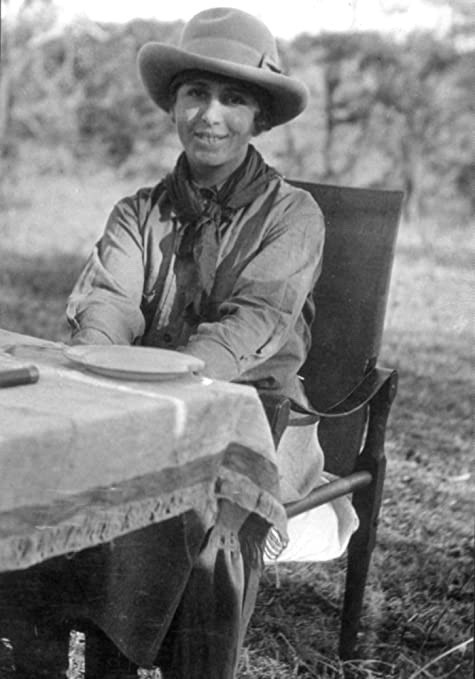
On this date in 1885, Karen Dinesen, later known under the pen-name Isak Dinesen, was born in Denmark to a well-to-do Unitarian family. She attended the Royal Academy of Art in Copenhagen, and studied in four European countries. She published several short stories in 1907. She married her cousin, Baron Bror Blixen-Finecke, in 1914, and lived with him on a coffee plantation in Kenya. After they divorced in 1921 (he famously had given her syphilis, which she recovered from), Dinesen ran the plantation herself until 1931, when she returned to Denmark.
Those years are chronicled in her famous book, Out of Africa (1937), whose accounts of her adventurous struggles captured the public imagination. A film of the same name, directed by Sydney Pollack in 1985, was loosely based on the book. Her other books include Seven Gothic Tales (1934), several collections of short stories, and two other autobiographical works written after she returned many years later to Africa. Anecdotes of Destiny includes “Babette’s Feast,” originally written for a magazine, which also became the basis of a movie. Dinesen wrote in English, then translated her writings back into Danish. D. 1962.
“Africa, amongst the continents, will teach it to you: that God and the Devil are one, the majesty coeternal, not two uncreated but one uncreated, and the Natives neither confounded the persons nor divided the substance.” ~ Isak Dinesen, Out of Africa (1937)
In the 17th and 18th centuries, hat-makers (hatters) often had cognitive issues (or went mad) as a result of mercury poisoning, a side-effect of manufacturing felt hats. The famous Mad Hatter of Alice in Wonderland is also a play on this phenomenon.
“Those who know, not only that the Everlasting lives in them, but that what they, and all things, really are IS the Everlasting, dwell in the groves of the wish-fulfilling trees, drink the brew of immortality, and listen everywhere to the unheard music of eternal concord. These are the immortals.”
~ Joseph Campbell, from “The Hero with a Thousand Faces”








 Mark Bere Peterson’s Counterculture, Urban Legends, Paganism & Witchcraft