Paroxetine (Oral Route)

US Brand Name

1. Brisdelle

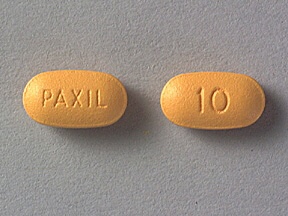
2. Paxil

3. Paxil CR

4. Pexeva

Descriptions

Paroxetine is used to treat depression, obsessive-compulsive disorder (OCD), panic disorder, generalized anxiety disorder (GAD), social anxiety disorder (also known as social phobia), premenstrual dysphoric disorder (PMDD), and posttraumatic stress disorder (PTSD). Brisdelle™ is used only to treat moderate to severe hot flashes caused by menopause.

Paroxetine belongs to a group of medicines known as selective serotonin reuptake inhibitors (SSRIs). These medicines are thought to work by increasing the activity of the chemical called serotonin in the brain.

This medicine is available only with your doctor’s prescription.

This product is available in the following dosage forms:

• Tablet

• Capsule

• Suspension

• Tablet, Extended Release

Along with its needed effects, a medicine may cause some unwanted effects. Although not all of these side effects may occur, if they do occur they may need medical attention.

Check with your doctor immediately if any of the following side effects occur:

Less common

• Agitation

• chest congestion

• chest pain

• chills

• cold sweats

• confusion

• difficulty with breathing

• dizziness, faintness, or lightheadedness when getting up from a lying or sitting position

• fast, pounding, or irregular heartbeat or pulse

• muscle pain or weakness

• skin rash

Rare

• Absence of or decrease in body movements

• bigger, dilated, or enlarged pupils (black part of the eye)

• convulsions (seizures)

• difficulty with speaking

• dry mouth

• fever

• inability to move the eyes

• incomplete, sudden, or unusual body or facial movements

• increased sensitivity of the eyes to light

• poor coordination

• red or purple patches on the skin

• restlessness

• shivering

• sweating

• talking, feeling, and acting with excitement and activity you cannot control

• trembling or shaking, or twitching

Incidence not known

• Back, leg, or stomach pains

• blindness

• blistering, peeling, or loosening of the skin

• blue-yellow color blindness

• blurred vision

• constipation

• cough or hoarseness

• dark urine

• decreased frequency or amount of urine

• decreased vision

• difficulty with swallowing

• electric shock sensations

• eye pain

• fainting

• general body swelling

• headache

• high fever

• hives or itching skin

• inability to move the arms and legs

• inability to sit still

• increased thirst

• incremental or ratchet-like movement of the muscle

• joint pain

• light-colored stools

• lockjaw

• loss of appetite

• loss of bladder control

• lower back or side pain

• muscle spasm, especially of the neck and back

• muscle tension or tightness

• painful or difficult urination

• painful or prolonged erection of the penis

• pale skin

• puffiness or swelling of the eyelids or around the eyes, face, lips, or tongue

• raised red swellings on the skin, the buttocks, legs, or ankles

• red, irritated eyes

• sensitivity to the sun

• skin redness or soreness

• slow heart rate

• sores, ulcers, or white spots on the lips or in the mouth

• spasms of the throat

• stiff muscles

• stomach pain

• sudden numbness and weakness in the arms and legs

• swelling of the breasts

• swelling of the face, fingers, or lower legs

• swollen or painful glands

• tightness in the chest

• unexpected or excess milk flow from the breasts

• unusual bleeding or bruising

• unusual tiredness or weakness

• vomiting

• weight gain

• yellowing of the eyes or skin

Some side effects may occur that usually do not need medical attention. These side effects may go away during treatment as your body adjusts to the medicine. Also, your health care professional may be able to tell you about ways to prevent or reduce some of these side effects. Check with your health care professional if any of the following side effects continue or are bothersome or if you have any questions about them:

More common

• Acid or sour stomach

• belching

• decreased appetite

• decreased sexual ability or desire

• heartburn

• pain or tenderness around the eyes and cheekbones

• passing gas

• problems with urinating

• runny or stuffy nose

• sexual problems, especially ejaculatory disturbances

• sleepiness or unusual drowsiness

• stomach discomfort or upset

• trouble sleeping

Less common

• Abnormal dreams

• change in sense of taste

• congestion

• discouragement, feeling sad, or empty

• drugged feeling

• fast or irregular breathing

• feeling of unreality

• headache, severe and throbbing

• increased appetite

• itching of the vagina or genital area

• itching, pain, redness, or swelling of the eye or eyelid

• lack of emotion

• loss of interest or pleasure

• lump in the throat

• menstrual changes

• pain during sexual intercourse

• problems with memory

• sense of detachment from self or body

• sneezing

• thick, white vaginal discharge with no odor or with a mild odor

• tightness in the throat

• tingling, burning, or prickling sensations

• trouble concentrating

• voice changes

• watering of the eyes

• weight loss

• yawn

Antidepressants and Weight Gain?

Weight gain is a possible side effect of nearly all antidepressants. However, each person responds to antidepressants differently. Some people gain weight when taking a certain antidepressant, while others don’t.

Generally speaking, some antidepressants seem more likely to cause weight gain than others. These include:

• Certain tricyclic antidepressants, such as amitriptyline, imipramine (Tofranil) and doxepin

• Certain monoamine oxidase inhibitors (MAOIs), such as phenelzine (Nardil)

• Paroxetine (Paxil, Pexeva), a selective serotonin reuptake inhibitor (SSRI)

• Mirtazapine (Remeron), which is an atypical antidepressant — medication that doesn’t fit neatly into another antidepressant category

While some people gain weight after starting an antidepressant, the antidepressant isn’t always a direct cause. Many factors can contribute to weight gain during antidepressant therapy. For example:

• Overeating or inactivity as a result of depression can cause weight gain.

• Some people lose weight as part of their depression. In turn, an improved appetite associated with improved mood may result in increased weight.

• Adults generally tend to gain weight as they age, regardless of the medications they take.

If you gain weight after starting an antidepressant, discuss the medication’s benefits and side effects with your doctor. If the benefits outweigh the side effect of weight gain, consider managing your weight by eating healthier and getting more physical activity while enjoying an improved mood due to the medication.

You can also ask your doctor if adjusting the dose or switching medications might be helpful — but again, be sure to discuss the pros and cons before making such a decision.

Sources: The Mayo Clinic, NAMI, NIMH

Antidepressants and Alcohol

It’s best to avoid combining antidepressants and alcohol. It may worsen your symptoms, and it can be dangerous. If you mix antidepressants and alcohol:

• You may feel more depressed or anxious. Drinking can counteract the benefits of your antidepressant medication, making your symptoms more difficult to treat. Alcohol may seem to improve your mood in the short term, but its overall effect increases symptoms of depression and anxiety.

• Side effects may be worse if you also take another medication. Many medications can cause problems when taken with alcohol — including anti-anxiety medications, sleep medications and prescription pain medications. Side effects may worsen if you drink alcohol and take one of these drugs along with an antidepressant.

• You may be at risk of a dangerous reaction if you take MAOIs. When combined with certain types of alcoholic beverages and foods, antidepressants called monoamine oxidase inhibitors (MAOIs) can cause a dangerous spike in blood pressure. If you take an MAOI, be sure you know what’s safe to eat and drink, and which alcoholic beverages are likely to cause a reaction.

• Your thinking and alertness may be impaired. The combination of antidepressants and alcohol will affect your judgment, coordination, motor skills and reaction time more than alcohol alone. Some combinations may make you sleepy. This can impair your ability to drive or do other tasks that require focus and attention.

• You may become sedated or feel drowsy. A few antidepressants cause sedation and drowsiness, and so does alcohol. When taken together, the combined effect can be intensified.

Don’t stop taking an antidepressant or other medication just so that you can drink. Most antidepressants require taking a consistent, daily dose to maintain a constant level in your system and work as intended. Stopping and starting your medications can make your depression worse.

While it’s generally best not to drink at all if you’re depressed, ask your doctor. If you have depression:

• You may be at risk of alcohol abuse. People with depression are at increased risk of substance abuse and addiction. If you have trouble controlling your alcohol use, you may need treatment for alcohol dependence before your depression improves.

• You may have trouble sleeping. Some people who are depressed have trouble sleeping. Using alcohol to help you sleep may let you fall asleep quickly, but you tend to wake up more in the middle of the night.

If you’re concerned about your alcohol use, you may benefit from substance abuse counseling and treatment programs that can help you overcome your misuse of alcohol. Joining a support group or a 12-step program such as Alcoholics Anonymous may help.

If you’re at low risk of addiction to alcohol, it may be OK to have an occasional drink, depending on your particular situation, but talk with your doctor.

Also, tell your doctor about any other health conditions you might have and any other medications you take, including over-the-counter medications or supplements. Keeping your doctor informed is important because:

• Some liquid medications, such as cough syrups, can contain alcohol

• As you age, your body processes medication differently and levels of medication in your body may need to be adjusted

• Adding a new medication may change the level of another medication in your body and how it reacts to alcohol

Sources: The Mayo Clinic, NAMI, NIH, NIMH

Depression and the Gender Gap

Women are nearly twice as likely as men to be diagnosed with depression. Depression can occur at any age.

Some mood changes and depressed feelings occur with normal hormonal changes. But hormonal changes alone don’t cause depression. Other biological factors, inherited traits, and personal life circumstances and experiences are associated with a higher risk of depression. Here’s what contributes to depression in women.

Puberty

Hormone changes during puberty may increase some girls’ risk of developing depression. However, temporary mood swings related to fluctuating hormones during puberty are normal — these changes alone don’t cause depression.

Puberty is often associated with other experiences that can play a role in depression, such as:

• Emerging sexuality and identity issues

• Conflicts with parents

• Increasing pressure to achieve in school, sports or other areas of life

After puberty, depression rates are higher in females than in males. Because girls typically reach puberty before boys do, they’re more likely to develop depression at an earlier age than boys are. There is evidence to suggest that this depression gender gap may continue throughout the lifespan.

Premenstrual problems

For most females with premenstrual syndrome (PMS), symptoms such as abdominal bloating, breast tenderness, headache, anxiety, irritability and experiencing the blues are minor and short-lived.

But a small number of females have severe and disabling symptoms that disrupt their studies, jobs, relationships or other areas of their lives. At that point, PMS may cross the line into premenstrual dysphoric disorder (PMDD) — a type of depression that generally requires treatment.

The exact interaction between depression and PMS remains unclear. It’s possible that cyclical changes in estrogen, progesterone and other hormones can disrupt the function of brain chemicals such as serotonin that control mood. Inherited traits, life experiences and other factors appear to play a role.

Pregnancy

Dramatic hormonal changes occur during pregnancy, and these can affect mood. Other issues also may increase the risk of developing depression during pregnancy or during attempts to become pregnant, such as:

• Lifestyle or work changes or other life stressors

• Relationship problems

• Previous episodes of depression, postpartum depression or PMDD

• Lack of social support

• Unintended or unwanted pregnancy

• Miscarriage

• Infertility

• Stopping use of antidepressant medications

Postpartum depression

Many new mothers find themselves sad, angry and irritable, and experience crying spells soon after giving birth. These feelings — sometimes called the baby blues — are normal and generally subside within a week or two. But more-serious or long-lasting depressed feelings may indicate postpartum depression, particularly if signs and symptoms include:

• Crying more often than usual

• Low self-esteem or feeling like you’re a bad mom

• Anxiety or feeling numb

• Trouble sleeping, even when your baby is sleeping

• Problems with daily functioning

• Inability to care for your baby

• Thoughts of harming your baby

• Thoughts of suicide

Postpartum depression is a serious medical condition requiring prompt treatment. It occurs in about 10 to 15 percent of women. It’s thought to be associated with:

• Major hormonal fluctuations that influence mood

• The responsibility of caring for a newborn

• Predisposition to mood and anxiety disorders

• Pregnancy and birth complications

• Breast-feeding problems

• Infant complications or special needs

• Poor social support

Perimenopause and menopause

Risk of depression may increase during the transition to menopause, a stage called perimenopause, when hormone levels may fluctuate erratically. Depression risk may also rise during early menopause or after menopause — both times when estrogen levels are significantly reduced.

Most women who experience bothersome menopausal symptoms don’t develop depression. But these factors may increase the risk:

• Interrupted or poor sleep

• Anxiety or a history of depression

• Stressful life events

• Weight gain or a higher body mass index (BMI)

• Menopause at a younger age

• Menopause caused by surgical removal of the ovaries

Life circumstances and culture

The higher rate of depression in women isn’t due to biology alone. Life circumstances and cultural stressors can play a role, too. Although these stressors also occur in men, it’s usually at a lower rate. Factors that may increase the risk of depression in women include:

Unequal power and status. Women are much more likely than men to live in poverty, causing concerns such as uncertainty about the future and decreased access to community and health care resources. These issues can cause feelings of negativity, low self-esteem and lack of control over life.

Work overload. Often women work outside the home and still handle home responsibilities. Many women deal with the challenges of single parenthood, such as working multiple jobs to make ends meet. Also, women may be caring for their children while also caring for sick or older family members.

Sexual or physical abuse. Women who were emotionally, physically or sexually abused as children or adults are more likely to experience depression at some point in their lives than those who weren’t abused. Women are more likely than men to experience sexual abuse.

Other conditions that occur with depression

Women with depression often have other mental health conditions that need treatment as well, such as:

Anxiety. Anxiety commonly occurs along with depression in women.

Eating disorders. There’s a strong link between depression in women and eating disorders such as anorexia and bulimia.

Drug or alcohol misuse. Some women with depression also have some form of unhealthy substance use or dependence. Substance misuse can worsen depression and make it harder to treat.

Recognizing depression

Although depression might seem overwhelming, there’s effective treatment. Even severe depression often can be successfully treated. Seek help if you have any signs and symptoms of depression, such as:

• Ongoing feelings of sadness, guilt or hopelessness

• Loss of interest in things you once enjoyed

• Significant changes in your sleep pattern, such as trouble falling or staying asleep or sleeping too much

• Fatigue or unexplained pain or other physical symptoms without an apparent cause

• Problems concentrating or remembering things

• Changes in appetite leading to significant weight loss or weight gain

• Physical aches and pains

• Feeling as though life isn’t worth living, or having thoughts of suicide

Seasonal affective disorder (SAD): Symptoms

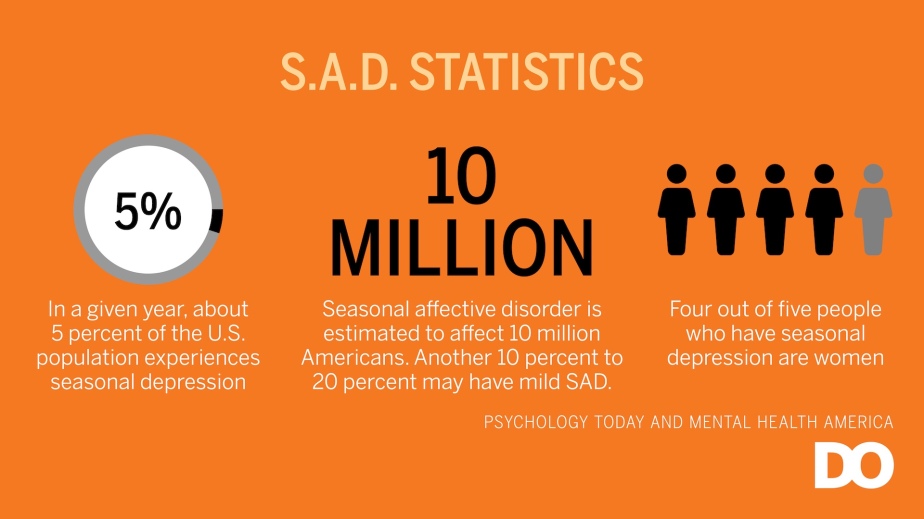
Seasonal affective disorder (SAD) is a type of depression that’s related to changes in seasons — SAD begins and ends at about the same times every year. If you’re like most people with SAD, your symptoms start in the fall and continue into the winter months, sapping your energy and making you feel moody. Less often, SAD causes depression in the spring or early summer.

Treatment for SAD may include light therapy (phototherapy), medications and psychotherapy.

Don’t brush off that yearly feeling as simply a case of the “winter blues” or a seasonal funk that you have to tough out on your own. Take steps to keep your mood and motivation steady throughout the year.

Symptoms

In most cases, seasonal affective disorder symptoms appear during late fall or early winter and go away during the sunnier days of spring and summer. Less commonly, people with the opposite pattern have symptoms that begin in spring or summer. In either case, symptoms may start out mild and become more severe as the season progresses.

Signs and symptoms of SAD may include:

• Feeling depressed most of the day, nearly every day

• Losing interest in activities you once enjoyed

• Having low energy

• Having problems with sleeping

• Experiencing changes in your appetite or weight

• Feeling sluggish or agitated

• Having difficulty concentrating

• Feeling hopeless, worthless or guilty

• Having frequent thoughts of death or suicide

Fall and winter SAD

Symptoms specific to winter-onset SAD, sometimes called winter depression, may include:

• Oversleeping

• Appetite changes, especially a craving for foods high in carbohydrates

• Weight gain

• Tiredness or low energy

Spring and summer SAD

Symptoms specific to summer-onset seasonal affective disorder, sometimes called summer depression, may include:

• Trouble sleeping (insomnia)

• Poor appetite

• Weight loss

• Agitation or anxiety

Seasonal changes in bipolar disorder

In some people with bipolar disorder, spring and summer can bring on symptoms of mania or a less intense form of mania (hypomania), and fall and winter can be a time of depression.

Causes

The specific cause of seasonal affective disorder remains unknown. Some factors that may come into play include:

• Your biological clock (circadian rhythm). The reduced level of sunlight in fall and winter may cause winter-onset SAD. This decrease in sunlight may disrupt your body’s internal clock and lead to feelings of depression.

• Serotonin levels. A drop in serotonin, a brain chemical (neurotransmitter) that affects mood, might play a role in SAD. Reduced sunlight can cause a drop in serotonin that may trigger depression.

• Melatonin levels. The change in season can disrupt the balance of the body’s level of melatonin, which plays a role in sleep patterns and mood.

Risk factors

Seasonal affective disorder is diagnosed more often in women than in men. And SAD occurs more frequently in younger adults than in older adults.

Factors that may increase your risk of seasonal affective disorder include:

• Family history. People with SAD may be more likely to have blood relatives with SAD or another form of depression.

• Having major depression or bipolar disorder. Symptoms of depression may worsen seasonally if you have one of these conditions.

• Living far from the equator. SAD appears to be more common among people who live far north or south of the equator. This may be due to decreased sunlight during the winter and longer days during the summer months.

Complications

Take signs and symptoms of seasonal affective disorder seriously. As with other types of depression, SAD can get worse and lead to problems if it’s not treated. These can include:

• Social withdrawal

• School or work problems

• Substance abuse

• Other mental health disorders such as anxiety or eating disorders

• Suicidal thoughts or behavior

Treatment can help prevent complications, especially if SAD is diagnosed and treated before symptoms get bad.

Sources: The Mayo Clinic

Sylvia Plath

One of my favorite writers was born on this day in 1932, Sylvia Plath:

Sylvia Plath was an American poet, novelist, and short story writer. Born in Boston, Massachusetts she studied at Smith College and Newnham College. She married poet Ted Hughes in 1956 and had two children Frieda and Nicholas. After a long struggle with depression she committed suicide in 1963. To this day controversy surrounds both her life and death, as well as her writing and legacy. She along with some of her contemporaries (Anne Sexton and Robert Lowell among others) advanced the genre of confessional poetry. She is best known for her two collections of poetry “The Colossus and Other Poems,” and “Ariel,” as well as her semi-autobiographical novel “The Bell Jar.” In 1982 she became the first poet to win the Pulitzer Prize posthumously for “The Collected Poems of Sylvia Plath.”

Growing up in Winthrop, Massachusetts an eight year old Plath published her first poem in the children’s section of the “Boston Herald.” In addition to her writing, she showed a lot of promise as an artist winning an award for her painting from The Scholastic Art & Writing Awards in 1947. Her father died when she was eight due to untreated diabetes and led to her having a loss in faith and remained ambivalent about religion for the rest of her life. In 1942 her mother moved the family to Wellesley, Massachusetts.

In 1950 while attending Smith College she wrote to her mother, “The world is splitting open at my feet like a ripe, juicy watermelon.” The summer after her third year of college she spent a month in New York City as a guest editor of “Mademoiselle” magazine. It did not go as well as planned. That summer she was refused admission to the Harvard writing seminar and began an emotional downward spiral. In August 1953 she made her first suicide attempt by crawling under her house and taking her mother’s sleeping pills. She was not found for three days. Later she would write of the experience, “blissfully succumbed to the whirling blackness that I honestly believed was eternal oblivion.” She would spend the next six months at McLean Psychiatric Hospital. While under the care of Dr. Ruth Beuscher she would receive insulin and electric shock treatments. She appeared to recover and returned to Smith College.

Plath and English poet Ted Hughes were married on June 16th, 1956. Plath described Hughes as, “a singer, story-teller, lion and world-wanderer with a voice like the thunder of God.” In 1957 they moved to the United States with Plath first teaching at Smith College, and then moving to Boston in 1958 where she worked as a receptionist in the psychiatric unit at Massachusetts General Hospital while in the evening attending a creative writing class by Robert Lowell (Anne Sexton was also in attendance). During this time both Lowell and Sexton encouraged her to write from her own experience. She openly discussed her depression with Lowell, and her suicide attempt with Sexton. At this time she began to see herself as a more serious and focused poet and storyteller. She also began a lifetime friendship with the poet W. S. Merwin. In December she resumed her treatment with Dr. Ruth Beuscher.

In December of 1959 Plath and Ted Hughes moved to London. She remained anxious about writing confessional poetry from her own experience. Around this time she would explain that she learned, “to be true to my own weirdnesses.” In 1960 she released her first book of poetry. In 1961 her second pregnancy ended in a miscarriage, severely of her poems address this including, “Parliament Hill Fields.” In January of 1962 her son Nicholas was born. In June she was in a car accident which she would explain as one of her many suicide attempts. That July she would discover Ted Hughes was having an affair and they would separate in September.

Beginning in October of 1962 she would enter into the greatest burst of creativity of her career. It is at this time she would write almost all of the poems for which she is remembered and released posthumously in the collection “Ariel.” Her novel “The Bell Jar” came out in January 1963 to critical indifference. On February 11th, 1963 Plath was found dead having committed suicide by carbon monoxide poisoning in the kitchen with her head in the oven and the gas turned on. Hughes was devastated and in a letter wrote, “That’s the end of my life. The rest is posthumous.”

In the years following her death there were many accusations that Hughes had been abusive to Plath. The feminist poet Robin Morgan published a poem which openly accused Hughes of assault and her murder. In 1989 Hughes wrote an article in “The Guardian,” with this quote, “In the years soon after [Plath’s] death, when scholars approached me, I tried to take their apparently serious concern for the truth about Sylvia Plath seriously. But I learned my lesson early. […] If I tried too hard to tell them exactly how something happened, in the hope of correcting some fantasy, I was quite likely to be accused of trying to suppress Free Speech. In general, my refusal to have anything to do with the Plath Fantasia has been regarded as an attempt to suppress Free Speech […] The Fantasia about Sylvia Plath is more needed than the facts. Where that leaves respect for the truth of her life (and of mine), or for her memory, or for the literary tradition, I do not know.”

Hughes inherited the Plath estate and has been condemned in some circles for burning Plath’s last journal. He lost another journal and an unfinished novel and instructed a collection of her papers and journals should not be released until 2013. In 1998 he would publish a collection of poems called, “Birthday Letters,” which consists of 88 poems about his relationship with Plath. It would go on to win the Forward Poetry Prize, T.S. Eliot Prize for poetry, and the Whitebread Poetry Prize. He would die later that year of cancer.

A couple of quotes :

“If you expect nothing from anybody, you’re never disappointed.”

“Perhaps when we find ourselves wanting everything, it is because we are dangerously close to wanting nothing.”

“Death must be so beautiful. To lie in the soft brown earth, with the grasses waving above one’s head, and listen to silence. To have no yesterday, and no to-morrow. To forget time, to forgive life, to be at peace.”

~ Sylvia Plath

Tulips – By Sylvia Plath

The tulips are too excitable, it is winter here.

Look how white everything is, how quiet, how snowed-in

I am learning peacefulness, lying by myself quietly

As the light lies on these white walls, this bed, these hands.

I am nobody; I have nothing to do with explosions.

I have given my name and my day-clothes up to the nurses

And my history to the anaesthetist and my body to surgeons.

They have propped my head between the pillow and the sheet-cuff

Like an eye between two white lids that will not shut.

Stupid pupil, it has to take everything in.

The nurses pass and pass, they are no trouble,

They pass the way gulls pass inland in their white caps,

Doing things with their hands, one just the same as another,

So it is impossible to tell how many there are.

My body is a pebble to them, they tend it as water

Tends to the pebbles it must run over, smoothing them gently.

They bring me numbness in their bright needles, they bring me sleep.

Now I have lost myself I am sick of baggage —-

My patent leather overnight case like a black pillbox,

My husband and child smiling out of the family photo;

Their smiles catch onto my skin, little smiling hooks.

I have let things slip, a thirty-year-old cargo boat

Stubbornly hanging on to my name and address.

They have swabbed me clear of my loving associations.

Scared and bare on the green plastic-pillowed trolley

I watched my teaset, my bureaus of linen, my books

Sink out of sight, and the water went over my head.

I am a nun now, I have never been so pure.

I didn’t want any flowers, I only wanted

To lie with my hands turned up and be utterly empty.

How free it is, you have no idea how free —-

The peacefulness is so big it dazes you,

And it asks nothing, a name tag, a few trinkets.

It is what the dead close on, finally; I imagine them

Shutting their mouths on it, like a Communion tablet.

The tulips are too red in the first place, they hurt me.

Even through the gift paper I could hear them breathe

Lightly, through their white swaddlings, like an awful baby.

Their redness talks to my wound, it corresponds.

They are subtle: they seem to float, though they weigh me down,

Upsetting me with their sudden tongues and their colour,

A dozen red lead sinkers round my neck.

Nobody watched me before, now I am watched.

The tulips turn to me, and the window behind me

Where once a day the light slowly widens and slowly thins,

And I see myself, flat, ridiculous, a cut-paper shadow

Between the eye of the sun and the eyes of the tulips,

And I hve no face, I have wanted to efface myself.

The vivid tulips eat my oxygen.

Before they came the air was calm enough,

Coming and going, breath by breath, without any fuss.

Then the tulips filled it up like a loud noise.

Now the air snags and eddies round them the way a river

Snags and eddies round a sunken rust-red engine.

They concentrate my attention, that was happy

Playing and resting without committing itself.

The walls, also, seem to be warming themselves.

The tulips should be behind bars like dangerous animals;

They are opening like the mouth of some great African cat,

And I am aware of my heart: it opens and closes

Its bowl of red blooms out of sheer love of me.

The water I taste is warm and salt, like the sea,

And comes from a country far away as health.

#SylviaPlath #Poet #Author #MentalHealth #ABellJar

Transcranial magnetic stimulation (TMS)

Transcranial magnetic stimulation (TMS) is a noninvasive procedure that uses magnetic fields to stimulate nerve cells in the brain to improve symptoms of depression. TMS is typically used when other depression treatments haven’t been effective.

This treatment for depression involves delivering repetitive magnetic pulses, so it’s called repetitive TMS or rTMS.

How it works

During an rTMS session, an electromagnetic coil is placed against your scalp near your forehead. The electromagnet painlessly delivers a magnetic pulse that stimulates nerve cells in the region of your brain involved in mood control and depression. It’s thought to activate regions of the brain that have decreased activity in depression.

Though the biology of why rTMS works isn’t completely understood, the stimulation appears to impact how the brain is working, which in turn seems to ease depression symptoms and improve mood.

There are different ways to perform the procedure, and techniques may change as experts learn more about the most effective ways to perform treatments.

Why it’s done

Depression is a treatable condition, but for some people, standard treatments aren’t effective. Repetitive TMS is typically used when standard treatments such as medications and talk therapy (psychotherapy) don’t work.

Risks

Repetitive TMS is a noninvasive form of brain stimulation used for depression. Unlike vagus nerve stimulation or deep brain stimulation, rTMS does not require surgery or implantation of electrodes. And, unlike electroconvulsive therapy (ECT), rTMS doesn’t cause seizures or require sedation with anesthesia.

Generally, rTMS is considered safe and well-tolerated. However, it can cause some side effects.

Common side effects

Side effects are generally mild to moderate and improve shortly after an individual session and decrease over time with additional sessions. They may include:

• Headache

• Scalp discomfort at the site of stimulation

• Tingling, spasms or twitching of facial muscles

• Lightheadedness

Your doctor can adjust the level of stimulation to reduce symptoms or may recommend that you take an over-the-counter pain medication before the procedure.

Uncommon side effects

Serious side effects are rare. They may include:

• Seizures

• Mania, particularly in people with bipolar disorder

• Hearing loss if there is inadequate ear protection during treatment

More study is needed to determine whether rTMS may have any long-term side effects.

What you can expect

Repetitive TMS is usually done in a doctor’s office or clinic. It requires a series of treatment sessions to be effective. Generally, sessions are carried out daily, five times a week for four to six weeks.

Your first treatment

Before treatment begins, your doctor will need to identify the best place to put the magnets on your head and the best dose of magnetic energy for you. Your first appointment typically lasts about 60 minutes.

Most likely, during your first appointment:

• You’ll be taken to a treatment room, asked to sit in a reclining chair and given earplugs to wear during the procedure.

• An electromagnetic coil will be placed against your head and switched off and on repeatedly to produce stimulating pulses. This results in a tapping or clicking sound that usually lasts for a few seconds, followed by a pause. You’ll also feel a tapping sensation on your forehead. This part of the process is called mapping.

• Your doctor will determine the amount of magnetic energy needed by increasing the magnetic dose until your fingers or hands twitch. Known as your motor threshold, this is used as a reference point in determining the right dose for you. During the course of treatment, the amount of stimulation can be changed, depending on your symptoms and side effects.

During each treatment

Once the coil placement and dose are identified, you’re ready to begin. Here’s what to expect during each treatment:

• You’ll sit in a comfortable chair, wearing ear plugs, with the magnetic coil placed against your head.

• When the machine is turned on, you’ll hear clicking sounds and feel tapping on your forehead.

• The procedure will last about 40 minutes, and you’ll remain awake and alert. You may feel some scalp discomfort during the treatment and for a short time afterward.

After each treatment

You can return to your normal daily activities after your treatment. Typically, between treatments, you can expect to work and drive.

Results

If rTMS works for you, your depression symptoms may improve or go away completely. Symptom relief may take a few weeks of treatment.

The effectiveness of rTMS may improve as researchers learn more about techniques, the number of stimulations required and the best sites on the brain to stimulate.

Ongoing treatment

After completion of an rTMS treatment series, standard care for depression ― such as medication and psychotherapy ― may be recommended as ongoing treatment.

It’s not yet known if maintenance rTMS sessions will benefit your depression. This involves continuing treatment when you are symptom-free with the hope that it will prevent the return of symptoms.

However, if your depression improves with rTMS, and then later you have another episode of symptoms, your rTMS treatment can be repeated. This is called re-induction. Some insurance companies will cover re-induction.

If your symptoms improve with rTMS, discuss ongoing or maintenance treatment options for your depression with your doctor.

Source: The Mayo Clinic

Trauma: The Next Morning, Every Morning

I inhale the stench of an eternal wait,

A breath, a gasp, a momentary lapse,

My eyes burn, my fingers bleed,

Scratching at my lack of patience,

I sigh, a tear trickles down my cheek,

A silent scream in the middle of the night,

Echoes through the darkness of my mind.

I’m consumed by the violation of my body,

The corruption of my soul,

Blood seeps from my eyes where tears once stood,

Involuntarily I wince as my body,

Wracked by the repeated violations,

Struggles to fight against my mind,

The disease of my own conception.

I stare transfixed upon the glistening mirror,

My clothes crumpled about my ankles,

The hollow eyes scrutinize my own,

The purple swelling and welts of my neck,

Coerce my eyes lower, down my bruised and battered torso,

My fingers trace over the blackish-purple festering welt,

Running down my throbbing ribcage.

My eyes linger over my aching waist,

Pleading me to stop, that I look away,

The stinging of my thighs makes me shudder,

Deep bruises traverse the muscles,

A yellowish fluid courses beneath my battered wounds,

Begging for release from my body,

Which holds it captive to my mind’s secrets.

I am engrossed as my body slowly turns in the mirror,

The lesions crisscross my stinging inner thighs,

My ass throbs as if a cruel joke,

Blood trickles down my thighs,

Reminding me of my past transgressions,

Conjuring visions of all that has been done,

My memories fashioned out of my past, my life.

The world around me swirls and contorts,

Reality drips down through my consciousness,

A gasp, a nightmare, a corruption of my mind.

Depression (Major Depressive Disorder): Symptoms

Depression is a mood disorder that causes a persistent feeling of sadness and loss of interest. Also called major depressive disorder or clinical depression, it affects how you feel, think and behave and can lead to a variety of emotional and physical problems. You may have trouble doing normal day-to-day activities, and sometimes you may feel as if life isn’t worth living.

More than just a bout of the blues, depression isn’t a weakness and you can’t simply “snap out” of it. Depression may require long-term treatment. But don’t get discouraged. Most people with depression feel better with medication, psychotherapy or both.

Symptoms:

Although depression may occur only once during your life, people typically have multiple episodes. During these episodes, symptoms occur most of the day, nearly every day and may include:

• Feelings of sadness, tearfulness, emptiness or hopelessness

• Angry outbursts, irritability or frustration, even over small matters

• Loss of interest or pleasure in most or all normal activities, such as sex, hobbies or sports

• Sleep disturbances, including insomnia or sleeping too much

• Tiredness and lack of energy, so even small tasks take extra effort

• Reduced appetite and weight loss or increased cravings for food and weight gain

• Anxiety, agitation or restlessness

• Slowed thinking, speaking or body movements

• Feelings of worthlessness or guilt, fixating on past failures or self-blame

• Trouble thinking, concentrating, making decisions and remembering things

• Frequent or recurrent thoughts of death, suicidal thoughts, suicide attempts or suicide

• Unexplained physical problems, such as back pain or headaches

For many people with depression, symptoms usually are severe enough to cause noticeable problems in day-to-day activities, such as work, school, social activities or relationships with others. Some people may feel generally miserable or unhappy without really knowing why.

Depression symptoms in children and teens:

Common signs and symptoms of depression in children and teenagers are similar to those of adults, but there can be some differences.

• In younger children, symptoms of depression may include sadness, irritability, clinginess, worry, aches and pains, refusing to go to school, or being underweight.

• In teens, symptoms may include sadness, irritability, feeling negative and worthless, anger, poor performance or poor attendance at school, feeling misunderstood and extremely sensitive, using recreational drugs or alcohol, eating or sleeping too much, self-harm, loss of interest in normal activities, and avoidance of social interaction.

Depression symptoms in older adults:

Depression is not a normal part of growing older, and it should never be taken lightly. Unfortunately, depression often goes undiagnosed and untreated in older adults, and they may feel reluctant to seek help. Symptoms of depression may be different or less obvious in older adults, such as:

• Memory difficulties or personality changes

• Physical aches or pain

• Fatigue, loss of appetite, sleep problems or loss of interest in sex — not caused by a medical condition or medication

• Often wanting to stay at home, rather than going out to socialize or doing new things

• Suicidal thinking or feelings, especially in older men

Source: Mayo Clinic