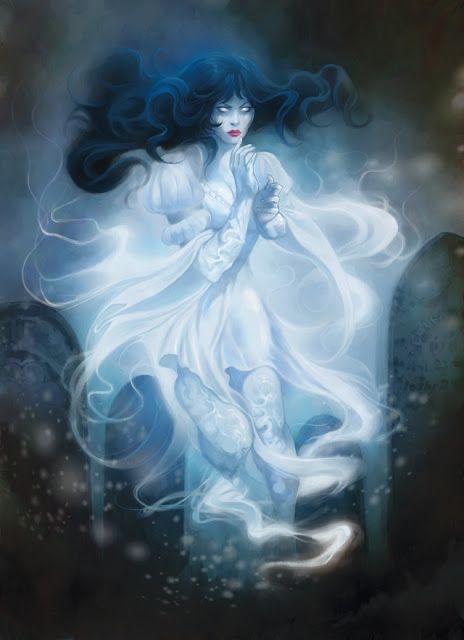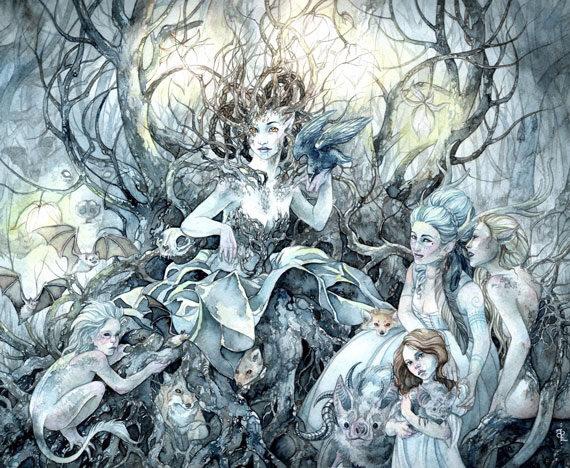
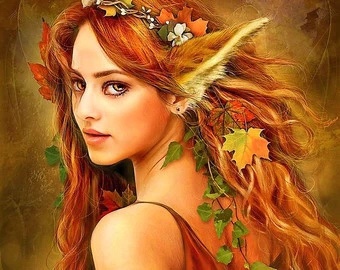
Seelie

The seelie and unseelie courts of Scottish fairies are a particular feature of the folklore of that country; the clear separation of the faes into good and bad groupings that’s entailed is almost unique in folklore. Moreover, the notion of the two courts has, in recent years, attracted considerable attention and popularity- notwithstanding the fact that they are not mentioned in the majority of the Scottish faery-lore texts and collections. Probably the majority of recorded Scottish folklore relates to the Highlands and Islands, the Gaelic (and Norse) speaking regions, which may explain why we have relatively little material documenting the two courts.

The Scots word ‘seelie’ derives from the Anglo-Saxon (ge)sælig/ sællic meaning ‘happy’ or ‘prosperous.’  The evolution of the word in Middle English and Scots seems to have been in two directions.  One sense was ‘pious,’ ‘worthy,’ ‘auspicious’ or ‘blessed.’  The second development extended the meaning incrementally through ‘lucky,’ ‘cheerful,’ ‘innocent,’ and ‘simple,’ from whence it was a short final step to ‘simple-minded,’ as the modern English ‘silly’ denotes.  Because of this evolution, as well as because of the dialectical differences between English and Scots, it is preferable to use ‘seelie’ rather than to try to translate it.  In passing, we might observe that Scots is in many cases far nearer to original Anglo-Saxon than modern English, which has imported so many French and Latin words.

By late medieval and early modern times, ‘seelie’ or ‘seely’ in Scots meant happy or peaceable, as in ‘seely wights,’ and the ‘seely court,’ which was the ‘happy or pleasant court.’ It followed from this that ‘unseelie’ or ‘unsilly’ described something that was unhappy or wretched. The poet Dunbar referred to Satan’s “unsall meyne” (his “wretched troop of followers”), a phrase which could be a very appropriate term for the fairies.

The Scots word with a variety of spellings, particularly sely, and meanings including “lucky, happy, blessed”; the adjective is applied euphemistically to fairies in Scotland. This term is used in relation to the Scottish fairies, calling them both ‘Seelie court’ and ‘gude wichts’.  Court in this sense meaning a group or company, and wichts meaning beings. Seelie fairies are those who are benevolently inclined towards humans and likely to help around homes and farms. It should be remembered though that they are as able and likely to cause harm as any fairy. The use of the term Seelie in relation to fairies dates back to at least the 15th century in Scotland and can be found in a book from 1801; in the ‘Legend of the Bishop of St Androis’ it says:

“Ane Carling of the Quene of Phareis

that ewill win gair to elphyne careis;

Through all Braid Albane scho hes bene

On horsbak on Hallow ewin;

and ay in seiking certayne nyghtis

As scho sayis, with sur sillie wychtis.”

“One woman of the Queen of Fairies

that ill gotten goods to Elphin carries

through all broad Scotland she has been

on horseback on Halloween

and always in seeking certain nights

as she says, with our Seelie wights.”


Antigone’s Fate

Antigone and Oedipus

In Greek mythology, Antigone was the daughter of Oedipus by his own mother, Jocasta, and the sister of Eteocles, Polyneices, and Ismene. When her father went into exile she accompanied the blind man as his guide.

Two versions exist of Antigone’s fate after she defied King Creon. In the first, the subject of the tragedy Antigone by Sophocles, Creon ordered that she be immured as a punishment, but rather than face burial while alive she hanged herself; Haemon, the son of Creon to whom she was betrothed, committed suicide alongside her. In the second version, Creon turned Antigone over to Haemon for punishment, but he smuggled her away, and she later bore him a son. When Creon refused to forgive them, Haemon killed both himself and Antigone.  

Nidhogg

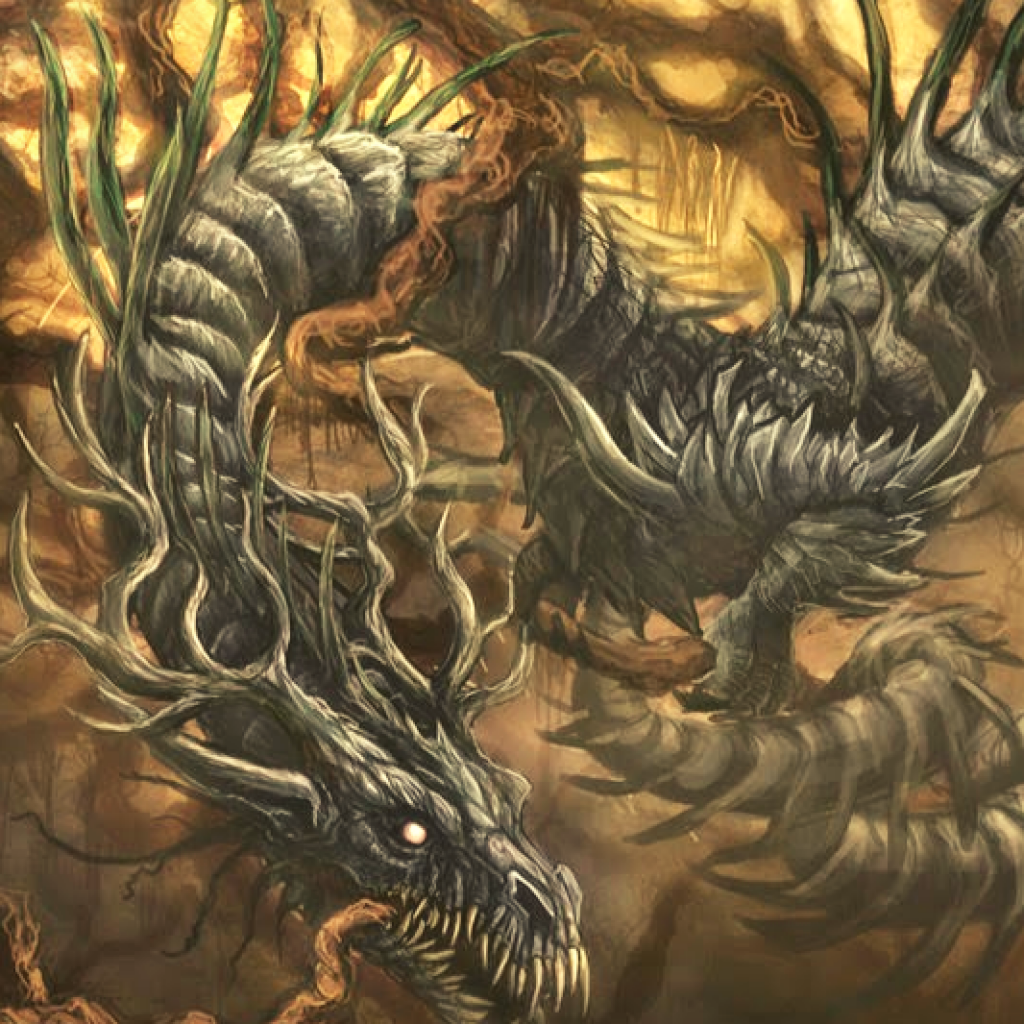
Nidhogg (Norse Níðhöggr) is a ferocious dragon who gnaws at the roots of Yggdrasil, the tree which supports the nine worlds of Norse mythology. This power-hungry monster is sometimes referred to as “the Malice Striker,” an appropriate name given that he rules over dark criminals and is bent on destroying peace and virtue.

Nidhogg is a tremendous dragon. His body is covered in bright scales, and horns erupt from his head. A pair of forelegs, complete with massive claws, help him to rip at the roots of Yggdrasil, but he has no back legs, only a serpentine tail. Beneath his bat-like wings, he carries the corpses of criminals.

His mammoth body can be found twisting through the roots of Yggdrasil, especially around Niflheimr, the cold world from which all the rivers of Midgard spring. Occasionally, he might slither into Hel to visit the dark goddess who some people consider his master.

Balance is extremely important in Norse mythology, and while Nidhogg does represent a ghastly force, he is still important to supporting the balance of Yggdrasil. A great eagle, who represents wisdom and virtue, perches in the uppermost branches of the tree, while Nidhogg, representing chaos and evil, lurks in its roots. The constant tension between the eagle and the dragon is fueled by Ratatoskr, a squirrel who runs up and down the tree ferrying insults between the two enemies. This tension may seem undesirable, but it actually promotes a cycle of growth in the tree of life. After the eagle and the dragon spend the day destroying Yggdrasil in their frenzy to attack each other, the tree is bathed in water from the wells of Urd, which promotes healing and new growth.

In addition to bringing balance to Yggdrasil, the monster also figures in the punishment of criminals. He rules over the dark shores of Nadastrond, to which the corpses of murderers, adulterers, and oath-breakers are banished. A terrifying hall, with walls woven from serpents and a ceiling that drips venom, waits for these criminals, and inside the hall, the dragon chews on their bodies.

Finally, the dreaded dragon has a role to play in Ragnarok, the day when the giants will attack the gods and destroy most of their world. Ragnarok will begin when the dragon finally manages to chew through the roots of Yggdrasil, causing the tree to yellow and the worlds it supports to plunge into a three-year winter. At the end of this frigid and chaotic period, he will fly up from the underworld, carrying dead criminals and leading the giants on an attack against the gods. Ultimately, the he will survive this battle and become the force of evil which balances good in the post-Ragnarok world.

Sources: mythology.net, Sons of Vikings

Fairy Path

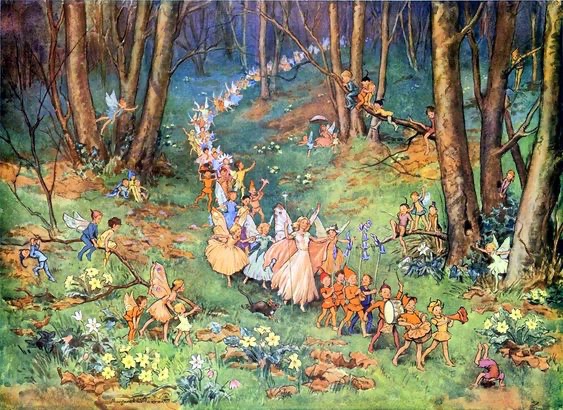
A Fairy Path or Fairy Road is the route by which the fairies regularly travel between any two locations. These paths can be found in many places and are invisible to anyone without the Second Sight, unless they happen to catch the Fairy folk unaware. Fairy Paths are often said to stretch between known fairy hills or locations but may also be found in more obscure locations.

It is considered very bad luck to build on a fairy path and those who do so always suffer for it one way or another. In the most benign cases the building will suffer from disturbances, often at night, as the fairies pass through the building following their accustomed route. As one source says:

When the house happens to have been built in a fairy track, the doors on the front and back, or the windows if they are in the line of the track, cannot be kept closed at night, for the fairies must march through.

In other instances attempts at building would be destroyed as soon as they were begun by being knocked down and a noted method of testing for a fairy path by those who “could not see them was to put up posts where the building was meant to go and see if they remained standing the next day. In extreme cases the person attempting to build might be killed or suffer extreme misfortune.

The Welsh Tylwyth Teg (“Fair Family”) have fairy paths as the Irish and Scottish fairies do, although their reputation is more dangerous. As one anecdotal source says:

“…the Tylwyth Teg have paths (precisely like those reserved for the Irish good people or for the Breton dead), and that it is death to a mortal while walking in one of these paths to meet the Tylwyth Teg.”

The fairies were known to move their homes at certain times of year, notably on the quarter days, and when they did so they would travel along these fairy paths to get from one hill to another. At any time of year, however, a Fairy Path could be perilous.

Faun

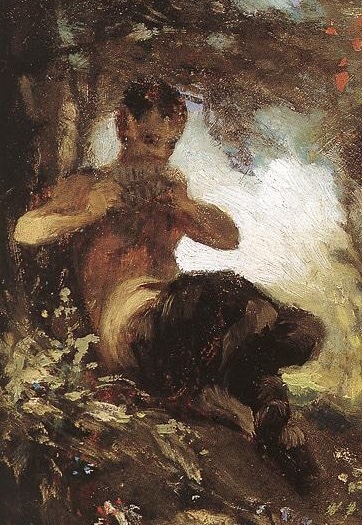
Fauns are mythical creatures with both human and goat features. They are notorious for their love of the forest, music, and beautiful women, and they are generally charming to the people they encounter as they trot along their happy, woodland paths.

Fauns are a peculiar, chimeric race: half goat, half human. With horns, hairy legs, hooves, and a twitchy tail, they might not sound like the loveliest characters, but they have their own undeniable charm. You can’t help but love their faces, which combine pointy ears and a head full of woolly curls with youthful features, sparkling eyes, and a roguish smile.

Above the waist, these woodland creatures have handsome male bodies with lithe limbs. Below the waist, they have two goat legs, which make them extremely nimble dancers. While they’re not especially fond of clothing, they like to adorn themselves with crowns of leaves and berries from their woodland home, especially before one of their legendary parties.

Fauns are merry creatures, and they have a talent for brightening the hearts of others. If you are waylaid by a group of them, you can be sure that you’re not going to get away any time soon. The little creatures will lure you into their festivities with their dancing, jokes, and delicious food.

Of course, they are best known for their flute playing. With just a small, wooden flute, they can hypnotize you with fantastic melodies. Hardly anyone can resist a Faun with a flute, and in truth, the power of their flutes has led some of them to act up, luring travelers into the forest, where they get lost, or stealing the hearts of beautiful maidens away from the rest of the world.

In Greek culture, Fauns are associated with Pan, the god of shepherds, mountain wilds, meadowlands, wooded groves, fertility, and rustic music. They join Pan in his merrymaking and act as his servants when he needs aid. In return, Pan has gifted them with his trademark musical instrument, the pan-flute. Like many Greek gods, Pan was eventually handed down into Roman culture under a new name, Faunus. His troop of Fauns made this transition with him.

Fauns and satyrs are commonly confused because they have some striking similarities in appearance and personality. However, they are separate creatures. Satyrs are followers of Dionysus, the god of harvest, wine-making, and ecstasy. Like Fauns, they love music, women, and parties, but they are far less innocent than their light-hearted cousins. Satyrs are crafty creatures, and they can be downright destructive when they are bent on enjoying themselves, no matter the cost. They are also less physically charming than their woodland cousins. Their faces are less human, and their lower bodies are mightier, more like a horse or a donkey than a harmless, furry goat.

Fauns were popular characters in both Greek and Roman mythology. They are mentioned in ancient texts that describe the gods’ grandest parties, and they are frequently written into the entourage of lovers who pursue nymphs. For example, they follow in the march of Bacchus, a half-god who wandered the earth teaching men how to cultivate vineyards before making a glorious march home to Greece, and in the myth of Vertumnus and Pomona, they are competitors against Vertumnus for the beautiful Pomona’s heart.

During the Hellenistic period, the mythical revelers became popular models for statues. In some of these statues, they were portrayed without any goat-like features, appearing as soft, romantic young men with flutes or beautiful women. The most famous of these statues is the Barberini Faun, which shows a young, handsome man exhausted after a long party.

Fauns were revitalized during the Romantic period, when fairytales gained wild popularity. They were separated from the old Gods of Greek and Roman mythology and became independent, magical creatures of the forest.

One of the Romantic period’s most famous authors, Nathaniel Hawthorne, nodded to the mythical creatures with his acclaimed novel The Marble Faun, while poet Stephane Mallarme composed a masterpiece around the charming chimera with “L’apres-midi d’un Faune.” This poem later inspired both a symphony composition and a ballet.

Remarkably, Fauns have changed very little from their early Greek play-days to their appearances in modern literature. Although they seem to have gotten out from under Pan’s thumb, they still have the same rustically charming appearance, fun-loving temper, and musical talent.

Today’s most famous Faun is Mr. Tumnus, a flute-playing creature who welcomes Lucy Pevensie to the world of Narnia. Mr. Tumnus captures an age-old personality, acting both as an agent of mischief and as a kind-hearted guide for Lucy, the human girl who has captured his fancy.

Shtriga

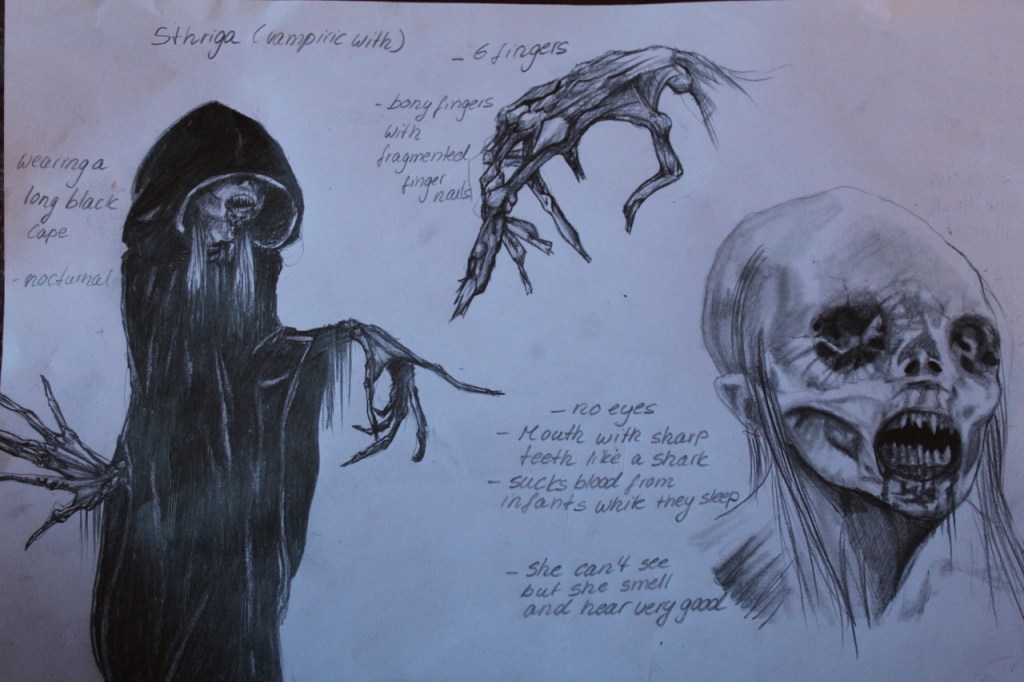
The Shtriga was a vampire-like witch that was found in Albania. The creature was similar to the Strigon, which was a witch found among the southern Slavs, the strigoi of Romania, and the vjeshtitza of Montenegro.

The Shtriga usually took the form of a woman who lived undetected in the community. She was difficult to identify, although a sure sign was a young girl’s hair turning white.

The vampire witch attacked her prey at night, usually in the form of an animal, such as a moth, fly, or bee.

In order to catch a Shtriga, two methods can be attempted:

~ On a day when the community gathered in the church, a cross made of pig bones could be fastened to the doors. Any Shtriga inside would be trapped and unable to pass the barrier.

~ If one followed a suspected Shtriga at night, one could see her vomit blood at some point after she sucked the blood of her victims. The vomited blood could be bottled and turned into an amulet to ward against witches.

Legend of the Shtriga:

According to legend, only the shtriga herself could cure those she had drained (often by spitting in their mouths), and those who were not cured inevitably sickened and died.

The name can be used to express that a person is evil. According to Northern Albanian folklore, a woman is not born a witch; she becomes one, often because she is childless or made evil by envy.   A strong belief in God could make people immune to a witch as He would protect them.

Usually, shtriga were described as old or middle-aged women with grey, pale green, or pale blue eyes (called white eyes or pale eyes) and a crooked nose. Their stare would make people uncomfortable, and people were supposed to avoid looking them directly in the eyes because they have the evil eye.  To ward off a witch, people could take a pinch of salt in their fingers and touch their (closed) eyes, mouth, heart and the opposite part of the heart and the pit of the stomach and then throw the salt in direct flames saying “syt i dalçin syt i plaçin” or just whisper 3–6 times “syt i dalçin syt i plaçin” or “plast syri keq.”

In some regions of Albania, people have used garlic to send away the evil eye or they have placed a puppet in a house being built to catch the evil. Newborns, children or beautiful girls have been said to catch the evil eye more easily, so in some Albanian regions when meeting such a person, especially a newborn, for the first time, people might say “masha’allah” and touch the child’s nose to show their benevolence and so that the evil eye would not catch the child.

Edith Durham recorded several methods traditionally considered effective for defending oneself from shtriga. A cross made of pig bone could be placed at the entrance of a church on Easter Sunday, rendering any shtriga inside unable to leave. They could then be captured and killed at the threshold as they vainly attempted to pass. She further recorded the story that after draining blood from a victim, the shtriga would generally go off into the woods and regurgitate it. If a silver coin were to be soaked in that blood and wrapped in cloth, it would become an amulet offering permanent protection from any shtriga.

In Catholic legend, it is said that shtriga can be destroyed using holy water with a cross in it, and in Islamic myth it is said that shtriga can be sent away or killed by reciting verses from the Qur’an, specifically Ayatul Kursi 225 sura Al-Baqara, and spitting water on the shtriga.

The Slavic Vampire

The Slavic vampire was not always the symbol of evil that it came to be in the nineteenth century European literature.

The Slavic vampire was originally the product of an irregularity within community life, such as problems with burial practices, death, or birth. People who had a violent death, people who committed suicide, or people who died of an accident became vampires.

Most Slavic cultures had a set of ritual activities that were to be followed after a death for for days following the death. Deviation of that ritual could result in the deceased becoming a vampire.

People who were excommunicated or deviated from the church would cause vampirism.

Problems at birth could also cause vampirism. In the Slavic culture, certain days of the year frowned upon intercourse, and children conceived on these days would become a vampire. Bulgarians believed that children who died before baptism would become an ustrel, which is a vampire who would attack and drink the blood of livestock. The Kashubs believed that children born with teeth or a caul would become a vampire after death.

The Slavic society offered many causes of vampires, and the belief the community members could become a vampire after being attacked or brought on by waves brought about vampire hysteria.

If a person is suspected to become a vampire, the community could take pre-burial actions to prevent the vampire from awakening. Religious objects were placed in the coffin. Plants such as the mountain ash would be left in the grave. Seeds were spilled in the grave, on top of the grave, and on the road from the graveyard. In extreme cases, the body was pierced with thorns or a stake. A wooden block may be placed under the chin to prevent the vampire from eating its burial clothes, or the clothes may be nailed on the outside of the coffin.

If a dead person was thought to be a vampire, the body would be dug up and examined for signs of a vampire. If the dead was a vampire, the body would appear lifelike, the joints would be pliable, blood would ooze from the mouth or other body openings, hair and fingernail growth would be seen, and the body may appear bloated (being filled with blood).

In order to destroy a vampire, the body would be staked with wood or metal. The object would be driven into the head, heart, or stomach of the body. In severe cases, the body would be decapitated. A priest, would also, repeat the ritual activities of the funeral service, sprinkling holy water on the body, or performing an exoricism.

The Dagda

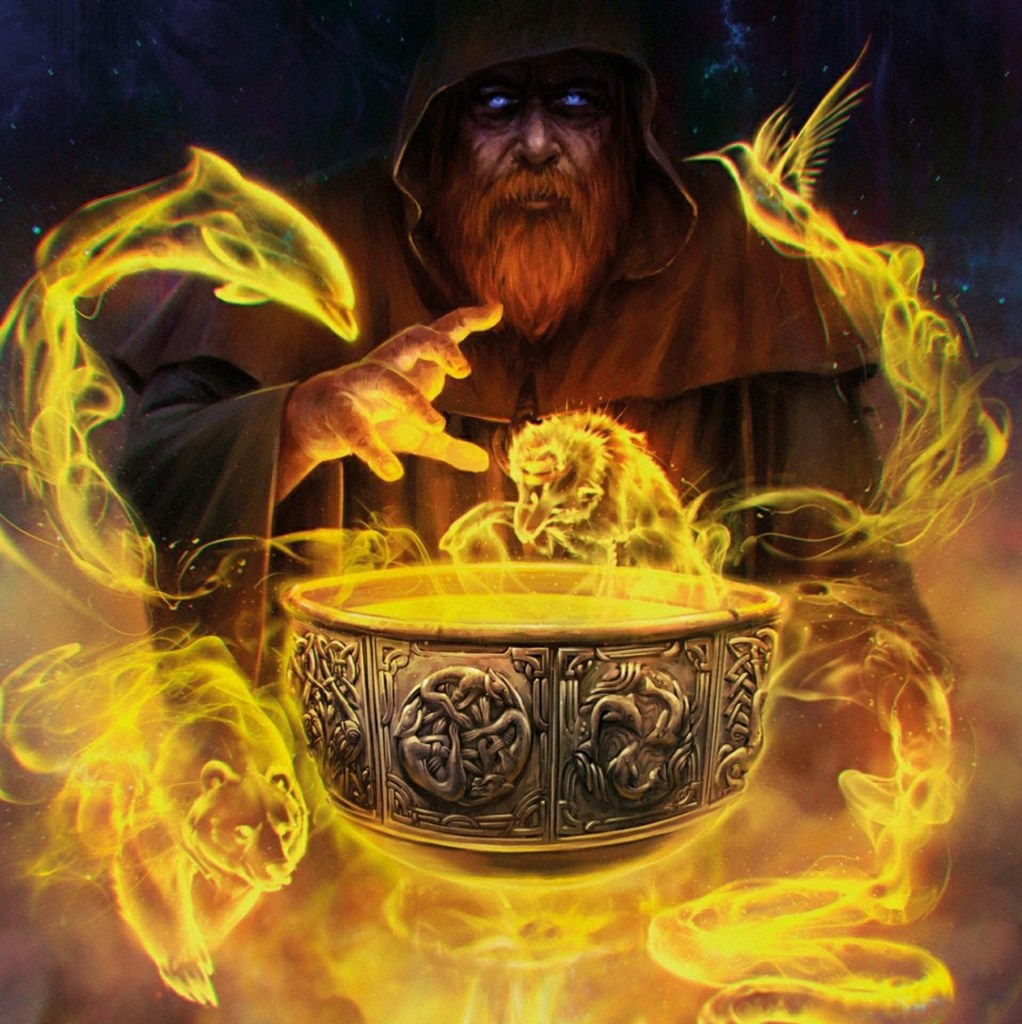
The Dagda was chief of the Tuatha dé Danann, the foremost of the Irish ancestral gods or faeries. Highly skilled and wise beyond measure, he was not only the god of life and death, but of seasons, agriculture, fertility, magic, and druidry as well. He wielded three sacred treasures: a cauldron of plenty, a club of life and death, and a harp that controlled men and seasons alike.

His children were plentiful, as were his lovers. His dwelling place was Brú na Bóinne.

The Dagda often carried three sacred relics with him that defined several of his many talents:

The coire ansic, a cauldron that could produce a bountiful feast; one could never be found wanting in the company of the Dagda. This particular relic was one of the Four Treasures of the Tuatha dé Danann, which were crafted in Murias.

The lorg mór, a mighty club (or staff) that possessed two distinct powers; its head had the power to slay nine men in a single swing while its handle could revive the slain with but a touch.

The uaithne, an ornate harp carved of oak. This harp could place the seasons in the proper order and command the wills and emotions of men. With these potent abilities, the Dagda was often seen as a god of order putting everything in its place, every time in its season, and every man to their rightful action.

In additions to these items, the Dagda owned two pigs—one always growing, the other always roasting—and an orchard that bore perennial sweet fruit.

The Dagda’s primary dwelling was at Brú na Bóinne, a series of Neolithic mounds on the banks of the River Boyne in County Meath. These ancient mounds were constructed around 3200 BCE, and as such are older than famous landmarks such as Stonehenge and the Great Pyramids. A mound called Newgrange aligned with the rising sun during winter solstice, representing the Dagda’s significance as lord of seasons and his mastery over day and night.

The Lebor Gabála Érenn laid out the coming of the Tuatha dé Danann, the fifth group of settlers to arrive in mythical Ireland. This group hailed from four cities north of the Emerald Isle, where they had learned the arts and sciences of their time, including magic. At this time, the Dagda was their chief. Though he did not hold the title of king, he was consulted and respected by many as if he was one.

The Dagda was also compared to the Germanic Odin and the Roman Dis Pater, as they bore certain similarities to him.


Vjesci

Vjesci was the name given to a Polish vampire known by the Kashubian people. The Vjesci vampire resembled the Nachzeher found to the west in northern Germany.

According to myths, a person was destined to become a vjesci if it was born with a caul. When a child was born with the membrane cap, it was removed, dried, ground up, and fed to the child on its 7th birthday in attempts to prevent the child from becoming a vampire.

Potential vjesci appeared to be completely normal and grew up in the community undetected, although in some cases, the potential vjesci had a restless and easily excitable nature and a ruddy complexion.

At the time of death, the person refused to take sacrament. His body cooled slowly, the limbs remained limber, and the lips and cheeks retained their color. Spots of blood often appeared under the fingernails and on the face of the body.

The vjesci didn’t really die, though. At midnight, after the burial, the vampire awakened and ate his clothing and some of his own flesh. He then left the grave and attacked his family, sucking their blood to the point of death. If the vampire is not satiated, he may go after the neighbors.

In order to protect oneself from a vjesci, steps could be taken.

  • The dying people should receive the Eucharist.
  • A little bit of earth was placed in the coffin under the body to prevent it from returning home.
  • A crucifix or coin was placed underneath the tongue for the vampire to suck.
  • A net may be placed in the coffin because the vampire had to untie the knots before it could leave the coffin.
  • A bag of seeds or sand man be placed in the coffin for the vampire to count each seed or grain. before leaving the coffin.
  • The body may be laid face down so that the vampire would dig further into the ground instead of out.
  • A nail may be driven through the forehead.
  • The head may be severed and placed between its feet.

If you were to open the coffin of a vjesci vampire, you would find a few tell-tale signs.

  • The eyes would open.
  • The head may move.
  • It may make noise.
  • The shirt may have been eaten.

If the precautions at the time of burial had not stopped the vampire to either drive a nail through the head or sever the head, there may be blood flowing from a new wound. It was said that if the blood was captured, it could be given to anyone who had been attacked by the vampire to prevent the victim from becoming a vampire.

The vjesci was closely related to the wupji (or opji), except the wupji had two teeth rather than a caul at birth. The Kashubian people immigrated to Ontario, Canada, bringing the vjesci with them. The vjesci and wupji were often used interchangeably.

Ubour

This Bulgarian vampiric revenant is created when a person dies a sudden and violent death and the spirit refuses or does not realize it needs to leave its body.

After 40 days the vampire will dig itself free from its grave and begins a reign of terror though this mainly consists of smearing manure on the sides of a person’s home and breaking the dishes in his house.

Active only between noon and midnight this vampire will exhaust all other food sources and options before seeking out a human to attack for his blood. If the person can make an offer to the vampire to spare their life the vampir must accept.

The only one with enough skill and knowledge to destroy this type of vampire is a Vampirdzhija (a type of vampire hunter).