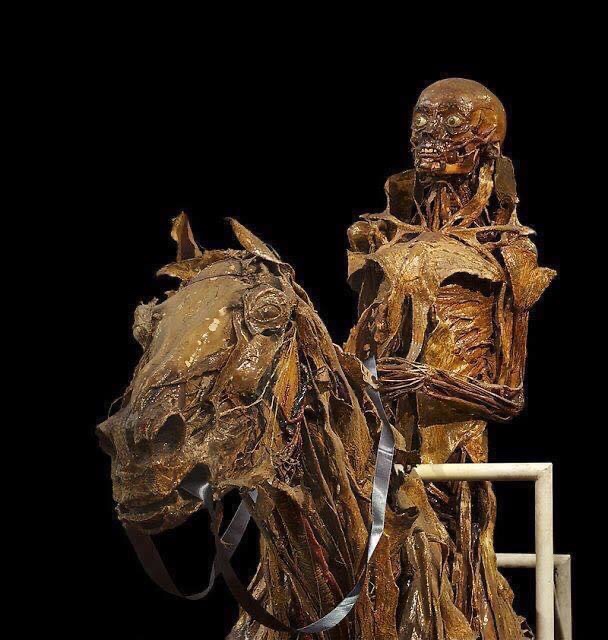
Honoré Fragonard’s 18th-Century écorché

This 18th-century écorché (anatomical figure depicting an animal or human with the skin removed to show the location and interplay of the muscles.) by Honoré Fragonard predates plastination by 250 years. Fragonard never divulged his preservation methods. In 1771, he was expelled from his teaching position at the École Nationale Vétérinaire d’Alfort as a madman.

#écorché #HonoréFragonard

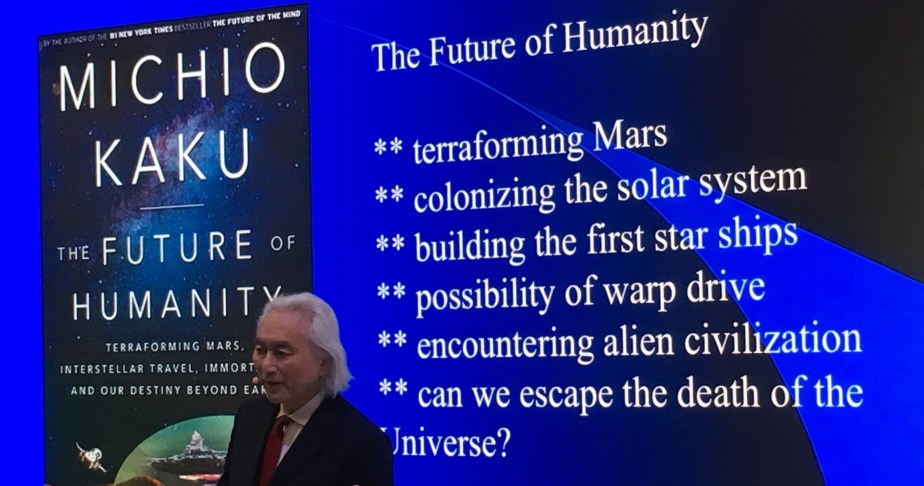
Dr. Michio Kaku on God and Stephen Hawking

“Can you prove the existence of God? Probably not. Science is based on evidence which is testable, reproducible, and falsifiable. So God is outside the usual boundary of science. Also, it is impossible to disprove a negative, so you cannot disprove the existence of God, either. Similarly, you cannot definitively prove the non-existence of unicorns. So I am not an atheist. I personally find much wisdom in Einstein’s belief in the God of Spinoza, a God of beauty, simplicity, elegance, and truth, when the universe might have been random, ugly, and chaotic.

My colleague, the late Stephen Hawking, did not believe in God because there was no time in which to create the universe right after the big bang. But string theory actually takes you before the big bang, to the multiverse. So the big bang is the not the beginning of time. String theory leaves open the possibility that our bubble/universe collided or fissioned into other universes, as in a bubble bath, so there was a multiverse of universes before our universe was born. This idea might even be testable. So the big bang was just the collision of two universes, or the fissioning of a universe into a baby universe. This concept fits into the inflationary universe theory, which all the data and is the leading theory of the big bang itself. So time did not begin with the big bang.”

~ Dr. Michio Kaku, Theoretical Physicist, Futurist, Bestselling Author.

#Science #MichioKaku #GodOfSpinoza

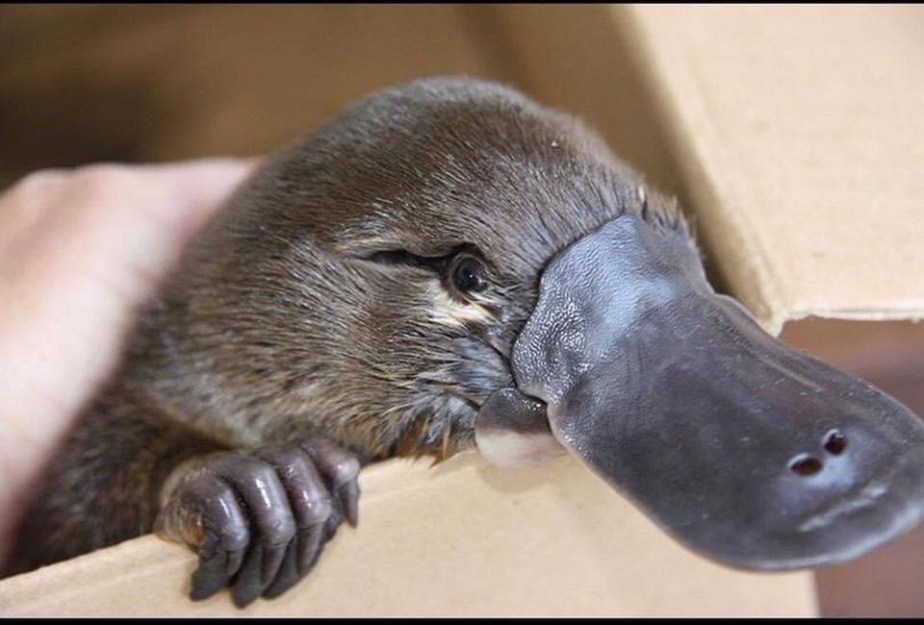
Platypus

Australia’s platypuses carry a surprising load in their cheek pouches. Platypuses feed on worms, snails, and shellfish on the river bottom, scooping them into their cheek pouches along with some gravel. The gravel is a natural blender, mashing the food for the toothless platypus, who consumes his to-go meal at the water’s surface.

#NatureFunFact #CheekPouches #Platypus

Speed of Light

In today’s physics lesson —> The speed of light (299,792,458 m/s):

Light travels at about 1 foot per nanosecond. Hold your hand up 12 inches from your face: you’re seeing your hand as it was a nanosecond ago. Everything you look at is, to one degree or another, in the past. The farther away in space, the more ancient in time.

You can’t see the Sun as it is now, but you can see it as it was about 8 minutes ago. You can’t see Alpha Centauri now, but you can see it 4.4 years ago. You can see the Andromeda Galaxy as it was 2.5 million years in the past. And so on. With powerful telescopes, we can see galaxies whose light has been traveling to us for more than 13 billion years. We see them shining in a universe that’s still young, where gravity has just begun to pull matter together into stars and galaxies.

We can see something even more distant, and more ancient, than the first galaxies. If we peer out far enough, in between the galaxies, we can see parts of the Universe that are so far away, it has taken the light from that distance almost the entire age of the cosmos to reach us. When we look at the most distant parts of the cosmos, in every direction, we see parts of the Universe that are so far in the past, they’re still in the final stages of the Big Bang. So far away, so far back, the space is filled with a dense, roiling plasma, the fire of creation.

We are not the center of the Universe. But we are the center of our own perception as light reaches us from afar; we lie embedded in nesting-doll layers of cosmic time. Each concentric sphere is an era. We can see the structure of matter changing, like geological strata around us. The most distant layer of time that we can see is the light that has been traveling since the moment the primordial fire began to cool. The cosmic microwave background surrounds us at every edge of our vision. We are embedded in shells of cosmic time, and the final one is fire.

The fire shell (as I’m calling it) is the cosmic microwave background, which comes from the final stages of the Big Bang, about 380,000 years after time zero. But it’s all dense plasma before that, so we can’t see through that shell with light. We could see farther if we could pick up the first neutrinos, and almost to time zero if we could catch primordial gravitational waves. But we can’t see past time zero no matter what — not with any kind of signal. From there, it’s inference and speculation.

Source: @AstroKatie

Where are the aliens?

Where are the aliens from space?

My guess is that they exist. But if they can reach us from the stars, they are a Type II or III civilization and are thousands of years ahead of us. So we have nothing to offer them. After all, if we meet chipmunks in the forest, do we want to talk to them? Maybe at first. But we quickly get bored because they don’t talk back. In the same way, they would get bored talking to us. They would also not want to plunder us. There are plenty of uninhabited planets to plunder so they would leave us alone. Unless, of course, we get in their way.

On this Kardashev scale, a type I might resemble the world of Flash Gordon. A type II civilization might resemble Star Trek. A type III civilization might resemble Star Wars. With an exponential growth in energy, one can also compute when we might attain these cosmic milestones.

What might an alien civilization look like, ranked by energy? A type I civilization would control the output of an entire planet. A type II would control a star’s energy. A type III would control the output of an entire galaxy.

What are we on this cosmic scale?

Type 0.

~ Dr. Michio Kaku, American theoretical physicist, futurist, and popularizer of science. He is a professor of theoretical physics in the City College of New York and CUNY Graduate Center.

#ScienceQuestions #TheoreticalPhysics #MichioKaku

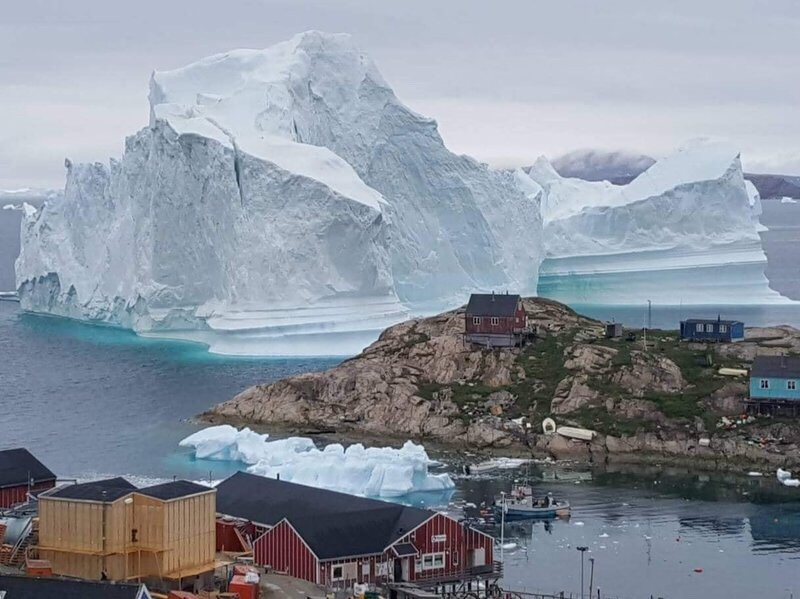
Greenland Ice Sheet Melt

Greenland Ice Sheet Melt:

Researchers reconstructed the mass balance of the Greenland Ice Sheet by comparing estimates of the amount of ice that has been discharged into the ocean with the accumulation of snowfall in the drainage basins in the country’s interior for the past 46 years. The researchers found that the rate of ice loss has increased sixfold since then — even faster than scientists thought.

Since 1972, ice loss from Greenland alone has added 13.7 millimeters (about half an inch) to the global sea level, the study estimates. The island’s ice sheet is the leading source of water added to the ocean every year. A study published in December that looked at ice core samples found that Greenland’s ice sheets have been melting at an “unprecedented rate” over the past couple decades, about 50% higher than pre-industrial levels and 33% above levels in the 20th century. Greenland’s ice sheets contain enough water to raise global sea levels by 23 feet, research shows.

If this year is any indication, the ice melt trend is sure to continue. The summer melt season has already started in Greenland, according to the National Snow & Ice Data Center — more than a month ahead of schedule. Without serious efforts to curb carbon emissions and slow climate change, ice loss could become a much bigger problem for the country and the world.

Forty percent to 50% of the planet’s population is in cities that are vulnerable to sea rise and is bad news for places like New York, Miami, Los Angeles, Tokyo and Mumbai.

“As glaciers will continue to speed up and ice/snow melt from the top, we can foresee a continuous increase in the rate of mass loss, and a contribution to sea level rise that will continue to increase more rapidly every year.”
~ Eric Rignot, professor of Earth system science at the University of California, Irvine.

Source: CNN & National Academy of Sciences

IPCC Report on Global Warming

IPCC REPORT ON GLOBAL WARMING:

The IPCC is an intergovernmental panel on climate change a group of scientists convened by the united nations to make recommendations to world leaders. Ninety-one leading scientists from 40 countries who together examined more than 6,000 scientific studies. Specialists such as Katharine Mach, who studies new approaches to climate assessment at stanford university; Tor Arve Benjaminsen, a human geographer at the Norwegian university of life sciences; and Raman Sukumar, an ecologist at the indian institute of science.

TITLE OF REPORT: “Global warming of 1.5 °c. An IPCC special report on the impacts of global warming of 1.5 °c above pre-industrial levels and related global greenhouse gas emission pathways, in the context of strengthening the global response to the threat of climate change, sustainable development, and efforts to eradicate poverty”

Scientists who reviewed the 6,000 works referenced in the report, said the change caused by just half a degree came as a revelation. We can see there is a difference and it’s substantial.

At 1.5c the proportion of the global population exposed to water stress could be 50% lower than at 2c, it notes. Food scarcity would be less of a problem and hundreds of millions fewer people, particularly in poor countries, would be at risk of climate-related poverty.

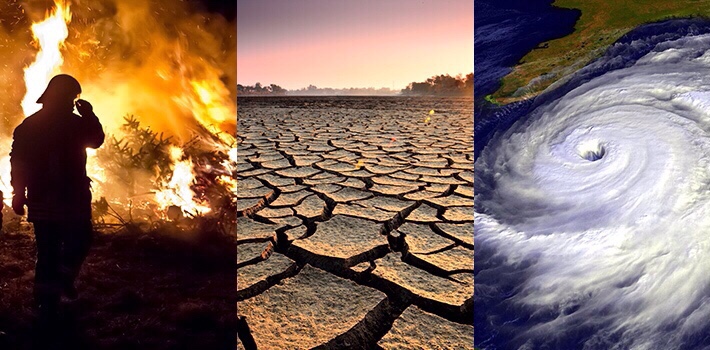
At 2c extremely hot days, such as those experienced in the northern hemisphere this summer, would become more severe and common, increasing heat-related deaths and causing more forest fires.

But the greatest difference would be to nature. Insects, which are vital for pollination of crops, and plants are almost twice as likely to lose half their habitat at 2c compared with 1.5c. Corals would be 99% lost at the higher of the two temperatures, but more than 10% have a chance of surviving if the lower target is reached.

This quote summarizes:

“The IPCC maps out four pathways to achieve 1.5c, with different combinations of land use and technological change. Reforestation is essential to all of them as are shifts to electric transport systems and greater adoption of carbon capture technology.”

~ Jonathan Watts, global environment editor at “The Guardian”

#ipcc #climatechange #actnow #sciencegeek