Jacksonville, Florida Pagan Shops

Earth Gifts
Serving the Jacksonville Alternative & Spiritual communities since 1994!
1951 Stimson St
Jacksonville, FL 32210
(904) 389-3690
www.earthgifts.com

The Triskele Cove
Located in the Avenues Mall and the Orange Park Mall
We are a multicultural metaphysical store that focuses on promoting acceptance and equality while honoring the beauty of all different spiritual traditions. We are located inside of the Avenues and Orange Park malls.
http://www.thetriskelecove.rock

Mystic Card
312 8th St W
Jacksonville, FL 32206
Find what may be waiting for you! We sell crystals, incense, jewelry, tarot cards, and more! We also do tarot readings.
https://www.facebook.com/themysticcard/

Maggie’s Herb Farm
11400 County Road 13
St Augustine, FL
904-829-0722
We are a Licensed Nursery
Established in 1983, Maggie’s Herb Farm now cultivates more than 200 species of herbs, succulents, vegetables, and flowering perennials. They host herbal classes throughout the year, so check out their calendar or call to schedule a class for your group! If the farm is a little out of reach, you can visit them at the Riverside Arts Market in Jacksonville, FL on Saturdays.
****We might be closed due to an unexpected emergency, so to avoid disappointment, please telephone 904-829-0722 before leaving on your journey.****

Midnight Sun
1055 Park St
Jacksonville, Fl 32204
904 358-3869
Midnight Sun is a retail store that specializes in unique handmade gift items from around the world. We have been in business for over 11 years, and are located in a historical district known as Five Points – Jacksonville, Florida.
In our shop we sell a wide variety of Sterling silver and gemstone jewelry; clothing – skirts, dresses, shoes, sarongs, yoga ware, furniture, wall and floor coverings, picture frames, photo albums, lanterns, natural body care, music, and incense. We hand select our products which are handmade and imported from a variety of countries. Our silver – gemstone and deity jewelry, clothing, and accessories come from Nepal, India, and Thailand. Most of our home furnishings we import from Bali, Indonesia.
For more information, please visit www.themidnightsun.net

Botanica El Monte Santo
1316 Cesery Blvd
Jacksonville, FL 32211
Botanica El Monte Santo, has all spiritual products to help bring, peace, love, strength and luck in a persons life. They carry a diverse variety of items ranging from candles to religious imagery as well as homemade products such as soaps, perfumes, baths, charms, and powders to bring love and money. Also, they offer consultations services to those seeking advice and help.
https://www.facebook.com/Botanica-El-Monte-Santo-1435017276747014/
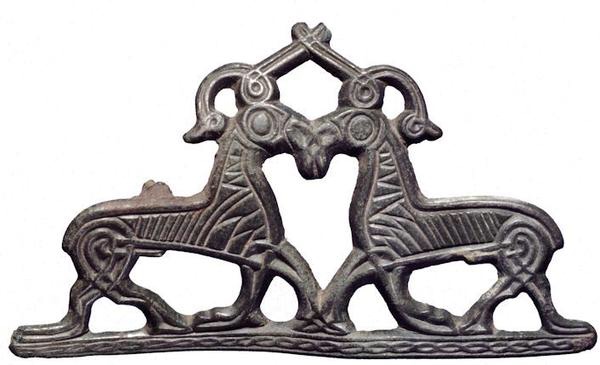
Tanngrisrnir and Tanngnjostr (Thor’s Goats)

Tanngrisrnir and Tanngnjostr

Tanngrisrnir and Tanngnjostr were the goats of Thor. They pulled Thor’s chariot across the sky. Everytime Thor crossed the sky with his goat-drawn chariot, there came the sound of thunder. 

In Norse mythology, Thor killed his goats for the food. And in the following day, he would resurrect his goats with his Mjolnir hammer. 

The symbol of Tanngrisrnir and Tanngnjostr also presented Thor and his presence. The goats symbolised the boundless endless and the masculinity. Modern archaeologists have excavated Viking artifact of the goats (as pictured).

Size of Faeries

The size of fairies is an often debated subject, yet folklore paints a clear, if varied, image of them. While modern depictions tend to favour small, childlike imagery looking at the wider scope of material we find everything from miniscule ant sized beings to gigantic fairies twice as tall (or more) than humans. The most common depictions fall into two main categories: those that are around 2 feet tall and those that are the height of an average human being.


What we find in many of the stories and ballads is that fairies look very much like human beings except that they have an aura of Otherworldliness to them or in some other intangible way project their fairy qualities. As Andrew Lang puts it:

“There seems little in the characteristics of these fairies of romance to distinguish them from human beings, except their supernatural knowledge and power. They are not often represented as diminutive in stature, and seem to be subject to such human passions as love, jealousy, envy, and revenge…The People of Peace (Daoine Shie [sic]) of Ireland and Scotland are usually of ordinary stature, indeed not to be recognized as varying from mankind except by their proceedings…” (Andrew Lang, 1910).”

Harpokrates Stelae

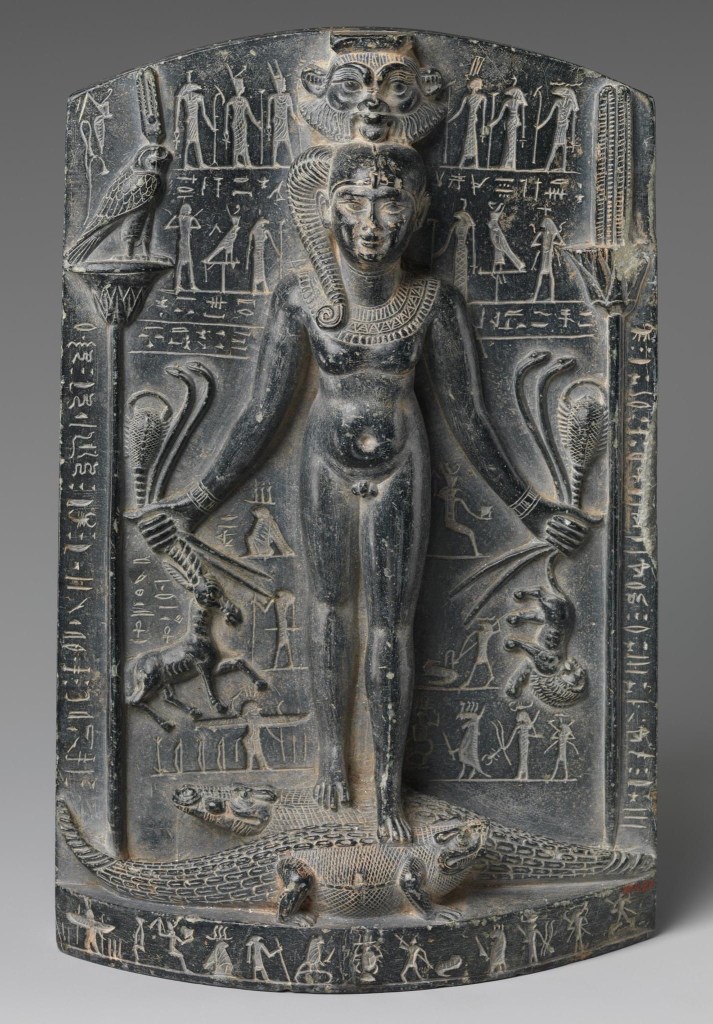
An amuletic plaque of the god Harpokrates (Horus the Child) standing in the center on the heads of two crocodiles and beneath a mask of Bes, a god especially associated with the protection of children and of pregnant women and those giving birth. In each hand Harpokrates clutches a scorpion by the stinger as well as two serpents. He also grasps a quadruped by the horns with his right while his left grips a lion by the tail. In addition, he is flanked by standards in the form of lotus and papyrus columns.

The plaque is extensively inscribed with magical spells to protect against scorpions, snakes, and the other noxious forces subdued by the god, and to heal the stings and bites of wild creatures.

The object is made of chlorite schist and is dated to the Ptolemaic Period (304-30 BCE). This type of stelae was often set up in homes, but examples have also been found in burials. This suggests that they were believed to extend their protective powers to the deceased.

This piece is now in the Metropolitan Museum of Art, New York, USA.

The Crooked Forest (Nowe Czarnowo, West Pomerania – Poland)

The Crooked Forest (Nowe Czarnowo, West Pomerania – Poland)

At first, Gryfino Forest looks to be a run-of-the-mill field of trees. And then you see it: a group of 400 pines, each with a mysterious, dramatic bend close to the ground.

The trees’ unusual but uniform “J” shape is likely the result of human intervention—probably farmers who manipulated the trees with the intention of turning them into curved furniture. The pines, planted in 1930, had around ten years of normal growth before being distorted. An alternative theory holds that regular flooding caused the unusual shapes.

Sources: Atlas Obscura

Golden Milk

This golden tonic milk is based on a traditional Ayurvedic recipe. Made with anti-inflammatory turmeric and sedative poppy seeds (these nourish the nervous system, aiding in a peaceful night’s sleep), along with cardamom and vanilla, it soothes and relaxes the muscles and mind. Drink a mugful before bed to slip into a deep slumber.

1 mugful of almond or oat milk
1 teaspoon freshly grated turmeric or turmeric powder
1 teaspoon ground poppy seeds
½ cinnamon stick
3 cardamom pods
½ vanilla pod
1 teaspoon coconut oil
1–2 teaspoons honey or unrefined sugar


Heat the milk, herbs and spices in a saucepan, bring to a simmer, cover and turn the heat off. Leave to steep for 5–10 minutes, strain mixture into a mug and then stir in the coconut oil and honey or sugar. Serve, stirring between sips.

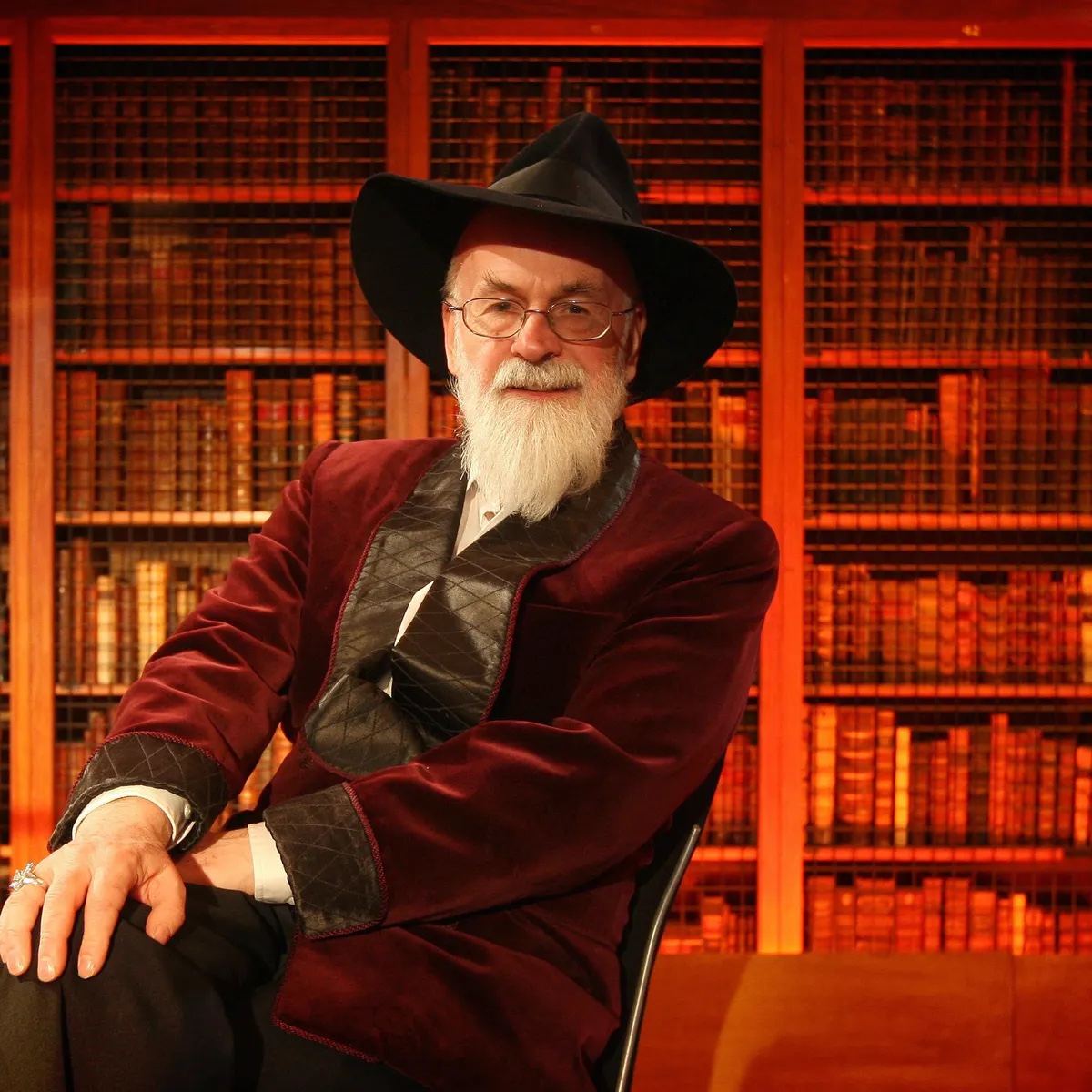
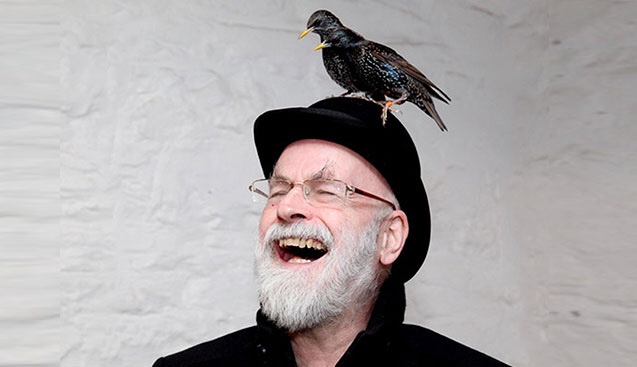
Terence (Terry) David John Pratchett

On this date in 1948, Terence (Terry) David John Pratchett was born in Buckinghamshire, England. He enjoyed reading, especially science fiction, fantasy, myth and ancient history. He has said that from a young age he was skeptical about Christianity and came to the conclusion that there was no god. He has won many awards, including the Carnegie Medal for The Amazing Maurice and Educated Rodents (2001), and was knighted in 2009 for his services to literature. Several of his books have been adapted as movies for television.

Pratchett’s first novel, Carpet People, a children’s fantasy, was published in 1971. Pratchett is best known for his “Discworld” novels, a fantasy series tied together not by characters or plot but by the setting of the Discworld, a flat world sitting on the backs of four elephants standing on the back of a giant turtle swimming through space. The first book in this series, The Color of Magic, a fantasy adventure starring a hapless wizard parodying many conventions of the genre, was published in 1983, and the thirty-eighth, I Shall Wear Midnight, a coming-of-age story featuring a strong young witch battling prejudice, was published in 2010. The Discworld, like many fantasy worlds, features gods who occasionally interfere directly in events or feature as characters in some way. In 2007, Pratchett was diagnosed with early-onset Alzheimer’s, but has continued to write and publish new books, albeit at a slower pace. He has made many public statements in support of the right to die, and talks openly about his Alzheimer’s experience, including his wish to take his own life before his disease is critical. He was knighted in 2009.

Throughout his work, Pratchett questions religion in many different ways, pointing out religious hypocrisy while at the same time illustrating how different the world would be if God, or any gods, were real. The 1992 Discworld novel Small Gods shows the god Om visiting his worshipers, and being deeply dissatisfied with the direction in which his church has gone. Good Omens (1990), co-written with fellow British fantasy author Neil Gaiman, deals with Christian mythology and the book of Revelations. It begins with an angel and a demon conversing outside the Garden of Eden and questioning God’s motives regarding the Tree of the Knowledge of Good and Evil. It ends with the ten-year-old antichrist, Adam, contemplating the raid of a neighbor’s orchard and thinking, “There never was an apple . . . that wasn’t worth the trouble you got into for eating it.” Pratchett said, “I read the Old Testament all the way through when I was about 13 and was horrified” (The Daily Mail, U.K., June 21, 2008).

“There is a rumor going around that I have found God. I think this is unlikely because I have enough difficulty finding my keys, and there is s evidence that they exist.”
~ Sir Terry Pratchett, The Daily Mail (U.K.), June 21, 2008

Ulysses S. Grant on Religion & Taxation

On this date in 1822, Ulysses S. Grant, 18th president of the United States, was born in Ohio. The Union victory at the end of the Civil War was credited to Grant, who became General of the Army. Grant was U.S. president from 1869 to 1877. He was a favorite of irreverent author Mark Twain, who gave the keynote at a toast for Grant at the Palmer House in Chicago in 1879, as part of an illustrious line-up of speakers that included agnostic Robert G. Ingersoll. Twain was entrusted to publish Grant’s Memoirs. Grant was not a member of any church, and was never baptized. After receiving eight demerits as a cadet at West Point for failure to attend chapel, he protested in a letter that it was “not republican” to be forced to go to church (Brown’s Life of Grant, p. 329, cited by Franklin Steiner, The Religious Beliefs of Our Presidents). Grant was on record in favor of taxation of church property. In an annual address to Congress in 1875, he warned of “the importance of correcting an evil that if permitted to continue, will probably lead to great trouble in our land . . . It is the acquisition of vast amounts of untaxed Church property . . . I would suggest the taxation of all property equally.” D. 1885.

“Leave the matter of religion to the family altar, the Church, and the private schools, supported entirely by private contributions. Keep the church and state forever separate.”
~ Ulysses S, Grant, address delivered in Des Moines, Iowa, in 1875

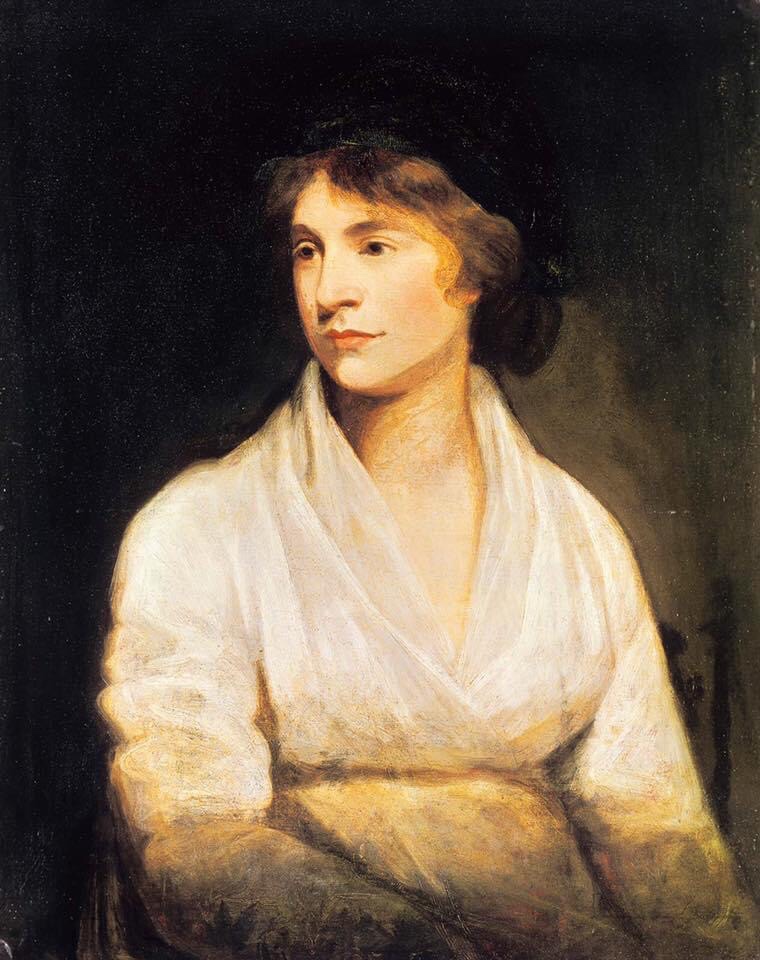
Mary Wollstonecraft Birthday

On this date in 1759, Mary Wollstonecraft was born in London, the second of seven children. The industrious young woman worked as a companion, governess and then opened her own school. Her first book, Thoughts on the Education of Daughters, was published in 1786, followed by a novel, a children’s book (re-issued with illustrations by William Blake), a translation, and The Female Reader. When Edmund Burke read her review of a sermon by dissenting minister Richard Price, he wrote a famous attack on the American and French Revolutions. Mary was the first to rebut his polemic. A Vindication of the Rights of Men was published five weeks later, rejecting all arguments from authority or precedent. Her seminal A Vindication of the Rights of Woman was published in 1792. The first influential book calling for the equality of the sexes, it urged that women be educated and treated as “rational creatures.” Wollstonecraft championed dress reform, breast-feeding, early education and a national system of coeducational primary schools. She warned of those who practice “on the credulity of women.”

She gave birth to a daughter in an unhappy liaison with Gilbert Imlay, then married atheist William Godwin in 1797. Following an uneventful pregnancy, 38-year-old Mary gave birth to a second daughter, Mary. The new mother died of a childbirth infection after ten intense days of suffering. Her daughter Mary ran off as a teenager with poet Percy Shelley, and wrote Frankenstein at age 19. Wollstonecraft was an ardent rationalist and Deist who adopted an agnostic point of view toward the end of her life. D. 1797.

“. . . the being cannot be termed rational or virtuous who obeys any authority but that of reason.”
~ Mary Wollstonecraft, A Vindication of the Rights of Woman (1792)

Mood Tea

In depression, it is important to take time for self care. Take a moment to make a healing, herbal tea at least once a day to help lift the spirits.

2 ounces dried rose

2 ounces dried skullcap

2 ounces dried St John’s wort

2 ounces dried vervain

Pour all the herbs into a sterilized jar and shake to mix them together. Seal, label and date.

Make an infusion with 1–2 teaspoons of the dried herb in a cup of boiling water, cover and steep for 15 minutes. Strain and drink.

Drink up to three times per day.

Shelf Life Keep the dried herb mix in a cool, dark place for up to 1 year.

Caution Check with a herbalist before taking St John’s wort with other medications.