Vegetable Cooking: A l’anglaise

Definition: Allows vegetable to be cooked prior to use, then reheated at time of service in a restaurant.

  • Fill large pot with water.
  • Salt to taste of seawater.
  • Over high heat bring to a rolling boil. Do not cover.
  • Add vegetable and cook until barely tender.
  • Drain well.
  • Shock in ice water. This stops the cooking and sets the color.
  • Drain well.
  • Pat dry.
  • Place in a container and cover with plastic film. Refrigerate.
  • To serve: reheat required amount in a small pan with butter and seasonings.
  • Serve immediately.

Knife Skills: Tournage

Tourner: “to turn.”  Cut vegetables into traditional faceted oval shapes.

Steps

  • Cut vegetables into pieces of equal length (troncons).
  • Cut each piece into approximate finished shape.
  • Holding with fingertips of one hand, slice off one side in a slightly curved stroke.
  • Continue to work around entire piece, slightly turning until the whole piece has been molded into an even sided barrel shape.

Different Sizes

  • Bouquetiere: 3 cm (1 3/16 inches) long
  • Cocotte: 5 cm (2 inches) long
  • Vapeur: 6 cm (2 3/8 inches) long
  • Chateau: 7.5 cm (3 inches) long
  • Fondants: 8-9 cm (3 1/8 – 3 1/2 inches) long

101 Ways To Cut Yourself: Vegetable Knife Skills

ED28BFDC-45E7-4B38-B172-7CB1DB96A512

101 Ways To Cut Yourself: Vegetable Knife Skills

The chinois, a conical strainer with a handle, is a useful, even necessary, chef’s tool, but not a glory tool. The glory tools are your personal set of knives. They are the tools you think of first and last when you think of a chef. Knives are usually the personal property of each chef in a professional kitchen and are guarded as such. The kitchen may have some general knives, but they are not usually of the highest quality. A prudent investment in fine knives early on in your career can be a lifelong one. It is no different for the home cook. A set of fine knives will make everything easier and more enjoyable in the kitchen. After all cooking and being in the kitchen should be enjoyable, should be fun.

Most knives are made of either high-carbon or forged stainless steel. These metals are resistant to rust and corrosion, besides they do not stain easily. One of the most important criteria when choosing a knife is the material it is made from. Some of the desirable materials are:

Carbon steel: an alloy of carbon and steel. Its primary advantage is that it holds a fine edge. Its major disadvantage it requires a high degree of maintenance as it corrodes quickly, isn’t suitable for salt-air climates or highly acidic food.

Stainless steel: a combination of iron and chromium or nickel. A very popular medium for chef’s knives. Resistant to abrasions and corrosion, but does not maintain a fine edge.

High-carbon: made up of many different materials including chromium, molybdenum, and vanadium. Most professional knives are in this class. Blades are less resistant to abrasion than stainless steel knives, but are much easier to sharpen.

Professional knife kits contain at minimum all of the following knives and tools:

Chef’s Knife: The most versatile of all the knives in your kit. Used for chopping, dicing, slicing, and filleting. The blade can range from 6 to 14 inches in length.

Utility Knife: Used for coring vegetables, slicing tomatoes and other fruits and vegetables.

Boning Knife: Used to bone various meats and poultry. Has a 6 to 7 inch curved blade that may be either firm or flexible.

Fillet Knife: A very sharp knife with a flexible blade that is essential to filleting.

Slicing Knife: Used for slicing large cuts of meat or fish such as roasts, hams, and smoked salmon. Blades range from 12 to 16 inches. May be round tipped or pointed.

Paring Knife: A small bladed knife used for peeling vegetables.

Serrated Knife: A bevel edged knife used for slicing breads, rolls, and other soft items.

Steel: A hardened fine, ridged rod used to keep a knife’s edge aligned.

Sharpening Stone: A natural stone, carborundum stone, or diamond studded block that is available in a variety of grits used to sharpen knives.

Cutting Vegetables

9D77C5D7-4B44-49F1-ABBC-CED57B6CC663

Cutting vegetables with proper technique ensures uniform size and shape resulting in even cooking. In a professional kitchen this allows more than one person to do the preparation. Practice, practice, practice is the only way to learn the cuts and yield uniform vegetables. The traditional cuts are as follows:

Emincer: to thinly slice.

Ciseler: to finely diced onions and shallots. This method keeps the juices from being forced out as standard chopping does.

Tronconner: to cut into 4 to 7 (1 ½ to 2 ¾ inch) centimeter segments.

Parer: to trim round slices of tronconneed vegetables to obtain a flat surface on every side.

Jardiniere: thin sticks, 4 to 5 (1 ½ to 2 inches) centimeters long.

Julienne: very thin sticks, 1 to 2 millimeters (1/32 to 1/16 inch) square and 5 to 7 centimeters (2 to 2 ¾ inches) long.

Macedoine: small cubes, 5 millimeters (3/16 inch) square.

Brunoise: minute cubes, 1 to 2 millimeters (1/32 to 1/16 inch) square.

Chiffonade: this method produces thin strips of herbs

1. Wash and thoroughly dry

2. Lay the leaves in a flat stack of three or four

3. Roll the stacked leaves into a cigar shape

4. Cut the leaf roll crosswise to form thin strips

Concasser: to coarsely chop a vegetable, usually tomatoes.

Hacher: to finely mince small bunches of herbs

Mirepoix: unshaped large chunks. These pieces are used as the aromatics, almost always strained out at the end of the cooking. It is important all pieces are of uniform size to provide even cooking. This term is often applied to a mixture 50 percent onion, 25 percent carrot, 25 percent celery.

Lavage & Épluchage: Washing & Peeling Vegetables


89588EF3-DD94-4F82-AB12-18EC52FC42B6

Lavage

  • Fill sink with enough water to cover the vegetables, or use basin.
  • For greens and cauliflower a little vinegar may be added to kill insects.
  • Usung your hands, agitate the items being washed.
  • Use hands, skimmer or colander to lift vegetables out and leave impurities behind.
  • Rinse the basin and repeat until the water is clear and clean.
  • Some vegetables such as spinach must be washed several times.
  • Mushrooms can often be wiped with a damp cloth.  If washing is needed it should be done just before use.
  • Watercress should be soaked for 30 minutes.
  • Leeks should be Cut in half lengthwise and held upside down under cold running water.

F5520C8C-DEEF-435C-80FE-8D9CAE761A80

Épluchage

Proper peeling techniques 

  • All items to be peeled should be thoroughly clean.
  • Workstation should be set up posts de travail.
  • Peeling motions should be regular, consistent and precise removing as little of the flesh as possible.
  • Peeling should procede in an orderly and clean manner.
  • Éplucher —> Peel by removing the skin, ex. Onion.
  • Écosser —> To shell or hull, ex. Peas.
  • Éfiller —> To pull off stringy side filaments, ex.string beans.
  • Emonder —> Remove the skin of a tomato.
    • Remove the core.
    • Score the opposite end.
    • Dip in boiling water for a few seconds.
    • Shockin ice water.
    • Pull off lose skin.
  • Pearl onions should be placed in warm water for a few minutes to rehydrate the skin.


Worst year ever?

So is it just me or have you wondered what was the worst year to be alive (btw it’s not 2020):

Was it 1349, when the Black Death wiped out half of Europe? Nope!

Was it 1918, when the flu colloquially known as Spanish flu infected 500 million people and killed 50 million to 100 million people, mostly young adults? Nope!

Was it any of the years of the Holocaust, between 1941 and 1945? Nope!

It was 536!!!

“It was the beginning of one of the worst periods to be alive, if not the worst year.”
~ Michael McCormick, Medieval Historian

A mysterious fog plunged Europe, the Middle East, and parts of Asia into darkness, day and night—for 18 months.

“For the sun gave forth its light without brightness, like the moon, during the whole year.”
~ Procopius (500-554 AD), Byzantine Historian

Temperatures in the summer of 536 fell 1.5°C to 2.5°C, initiating the coldest decade in the past 2300 years. Snow fell that summer in China; crops failed; people starved. The Irish chronicles record a failure of bread from the years 536–539. Then, in 541, bubonic plague struck the Roman port of Pelusium, in Egypt. What came to be called the Plague of Justinian spread rapidly, wiping out one-third to one-half of the population of the eastern Roman Empire and hastening its collapse.

The cause…a cataclysmic volcanic eruption in Iceland spewed ash across the Northern Hemisphere early in 536. Two other massive eruptions followed, in 540 and 547. The repeated blows, followed by plague, plunged Europe into economic stagnation that lasted until 640.

Commercial Fishing, Sustainability and Environmental Impact

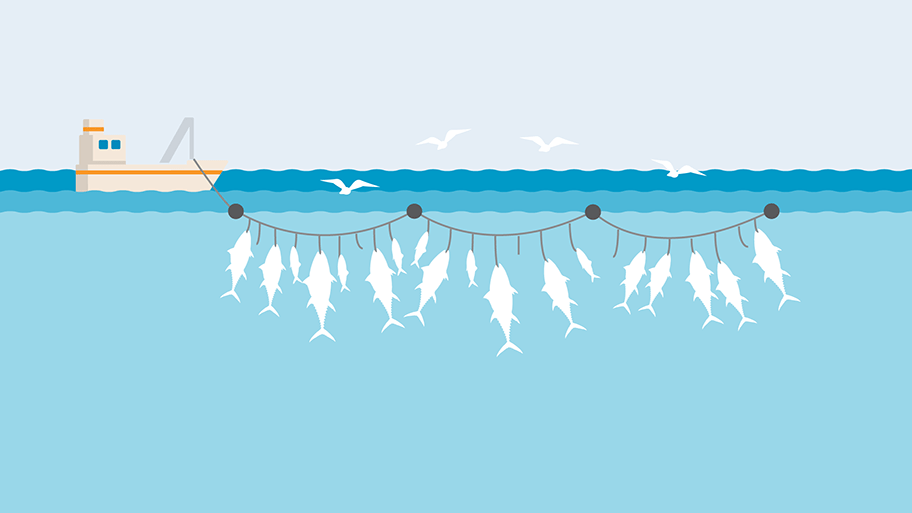
Longlining —> Longlining is one of the most productive methods of catching fish. Lines of varying lengths, some as long as 50 miles, are rigged with baited hooks at set intervals throughout the water. Bottom fish such as cod, halibut, and monk fish are caught with anchored lines set horizontally and are marked with surface buoys for Tuna and Mahi Mahi, whereas swordfish lines are set closer to the surface.

Horizontal lines are also employed and anchored to the bottom and buoyed on top. Longlining is a controversial fishing method because it indiscriminately catches unwanted fish species as well as marine mammals and birds, in particular the albatross. Methods deemed friendly to sea birds include fishing at night and setting streamers on the lines to scare the birds away. Eliminating, minimizing, or utilizing waste from fish fabrication is another step in the right direction. New methods are turning the fish by-products into usable fish meal on board the vessel. This encouraging development goes a long way toward true sustainability.

Gillnetting —> Gill nets are long walls of nets set close to or below the surface, on the bottom, or at various depths depending on species and location. They can be easily located along a known migration path to catch large quantities of fish. Varying in mesh size, these nets are invisible to the fish as they swim into them. Once their heads and gills go through the net, they become entangled and die, which drastically affects the quality of the fish, so speed in harvesting is essential.

Drift Nets —> Trapping fish in the same way as gill nets, drift nets are not affixed to anything and silently move with the tide, entangling the fish. Used at sea to catch squid, tuna, salmon, and other valuable species, these nets have prompted the United Nations to recommend a global moratorium on large-scale high-seas drift netting to protect the large pods of dolphins and turtles from becoming entangled in nets up to 3,000 yards long.

Easily lost, and invisible, they are referred to as ghost nets; they drift and fill up with fish until the weight causes them to sink to the bottom of the sea. Once the entangled fish are consumed by other marine life, the net floats back up to the surface repeating the process. Unfortunately, modern nylon nets do not disintegrate but stay intact, rising and falling in the sea. A disadvantage of both drift and gill nets is the indiscriminate catch of species.

Trawling —> Trawling is a method of fishing that pulls different sized nets through the water to capture various species of fish and shellfish. Boats can operate in tandem, pulling large nets through the water, or a single vessel can use a beam, which holds the net open as it is dragged along the ocean bottom or at various depths. Bottom trawlers have chains attached that stir up the seabed and force ground fish up into the waiting net. Trawling nets are controversial because of the damage they cause to the ocean floor.

Midwater trawling deploys a large cone-shaped net from the stern of the boat and pulls it through the water scooping up anything in its path.  Once full, the net is hauled onboard and the fish are placed in the hold. Unwanted bycatch and damage to the fish as they are lifted onto the vessel are disadvantages of this method.

Trolling —> Trolling utilizes lures or baited lines from the stern of the boat to capture valuable game fish such as Tuna, Mahi Mahi, and Sailfish. Weights are connected to wire lines with 15 to 20 leaders, each of which is pulled behind the boat. Each line can also be rigged individually and winched in to quickly recover the fish alive. This method is especially beneficial for Tuna because their body temperature can increase drastically during the fight and proper bleeding and immediate cooling are important to the value of the fish. Fish can also be more easily targeted by utilizing specific jigs and live bait.

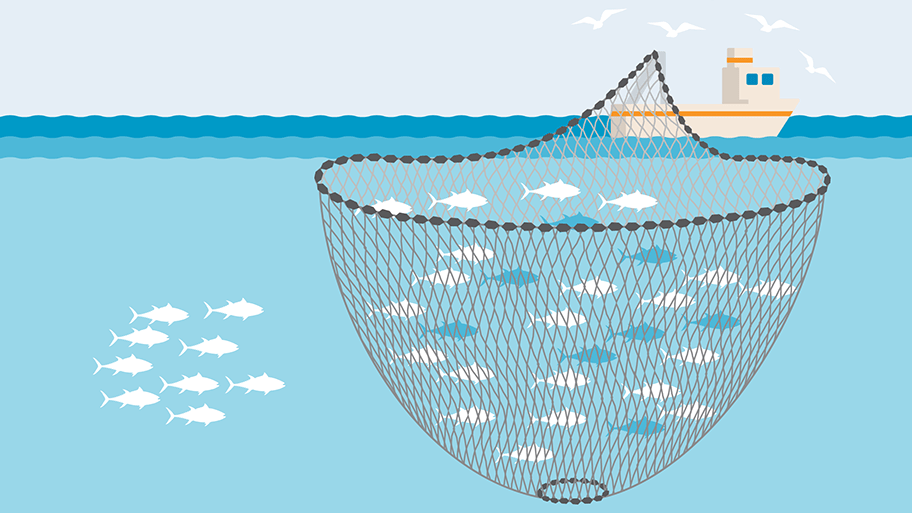
Purse Seining —> Purse seining encircles schools of fish with a wall of net that is then pursed (drawn together) on the bottom, trapping the fish. The entire net is brought to the side of the vessel and the fish are pumped or scooped onboard. Targeting large shoals of Tuna and Mackerel, this method became controversial in the 1970s when dolphins were deliberately encircled to facilitate catching the Tuna with which they congregated.

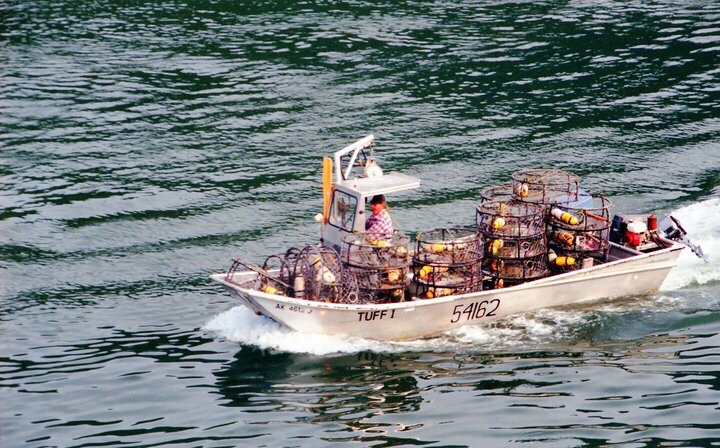
Fish Traps or Pots —> Lobster, crab, and fish are caught using various sized pots made of wire, metal, wood, and line. The pot is baited, thrown overboard, and sits on the bottom attached to a buoy. The entrance is designed to prevent escape from the trap. An advantage of this method is that it is highly selective; everything is caught alive with little or no bycatch or habitat destruction. Pot sizes vary; with Alaskan red crab, pots are able to hold hundreds of pounds of crab. Fish traps are especially popular throughout the warm calm waters of the world for their ability to catch specific varieties of fish.

Dredging —> Primarily used for shellfish such as clams, scallops, mussels, and oysters,a dredge is a metal basket with a type of rake or teeth assembly that aids in removing mollusks from the seabed. Clam dredges at sea are very large and must be towed from a sizable vessel. Modern dredges pump pressurized water in front of the rakes to loosen the silt and churn up the shellfish. Towed from bars off each side of the boat, the number of baskets or dredges deployed from a single vessel may reach several dozen depending on the catch. Dredging is controversial because it can tear up and disrupt the sea bottom, as well as have a negative effect on the natural sediment of the spawning habitat of shellfish.

Divers —> Divers utilizing scuba gear, or air pumped from the surface, collect a wide range of shellfish from the sea bottom.  Scallops collected this way are referred to as day boats because the divers harvest and return on the same day. Due to the high cost of harvesting, these items command a premium market price.

Sources —> “Kitchen Pro Series: Guide to Fish and Seafood Identification, Fabrication, and Utilization.” Culinary Institute of America (CIA), Mark Ainsworth. 2009.

Diagrams —> https://www.msc.org/home

Photographs —> © Mark Peterson

Theodor Seuss Geisel

Author Profile of the Day:

Theodor Seuss Geisel —> better known as Dr. Seuss. Geisel attended Dartmouth College, graduating in 1925. His first nationally published cartoon appeared in the July 16, 1927, issue of The Saturday Evening Post. His first book wasn’t published until 1931. His work includes several of the most popular children’s books of all time, selling over 600 million copies and being translated into more than 20 languages by the time of his death.

Geisel was a liberal Democrat and a supporter of President Franklin D. Roosevelt and the New Deal. His early political cartoons show a passionate opposition to fascism, and he urged action against it both before and after the United States entered World War II. His cartoons portrayed the fear of communism as overstated, finding greater threats in the House Un-American Activities Committee and those who threatened to cut the United States’ “life line” to Stalin and the USSR, whom he once depicted as a porter carrying “our war load”

#DrSeuss #TheodorSeussGeisel

Herman Wouk

46085F1C-6A46-4886-805F-C3E7C23FD265.jpeg

Author profile –> Herman Wouk (May 27th, 1915 – May 17th, 2019)

I was reading about Jewish novelists (Franz Kafka, Phillip Roth, Saul Bellow, Joseph Heller, Elie Wiesel) last night when I realized Herman Wouk is still alive at 103 years old.  Was I the only one who assumed he had passed away long ago?  I have to admit I’ve read a fair amount of his books and have always considered them a “guilty pleasure.”

Herman Wouk is an American author. His 1951 novel “The Caine Mutiny” won the Pulitzer Prize for Fiction. His other works include “The Winds of War” and “War and Remembrance,” historical novels about World War II. “The Hope,” and “The Glory,” historical novels about the founding of Israel.  He also wrote non-fiction such as “This Is My God,” a popular explanation of Judaism from a Modern Orthodox perspective, written for Jewish and non-Jewish audiences.  In 2010 he wrote “The Language God Talks: On Science and Religion.”  His books have been translated into 27 languages.  The Washington Post called Wouk, who cherishes his privacy, “the reclusive dean of American historical novelists.” Historians, novelists, publishers, and critics who gathered at the Library of Congress in 1995 to mark Wouk’s 80th birthday described him as an American Tolstoy.

Wouk was born in the Bronx, the second of three children born to Esther and Abraham Isaac Wouk, Russian Jewish immigrants from what is today Belarus.  When Wouk was 13, his maternal grandfather, Mendel Leib Levine, came from Minsk to live with them and took charge of his grandson’s Jewish education. Wouk was frustrated by the amount of time he was expected to study the Talmud, but his father told him, “if I were on my deathbed, and I had breath to say one more thing to you, I would say ‘Study the Talmud.’” Eventually Wouk took this advice to heart. After a brief period as a young adult during which he lived a secular life, he returned to religious practice. Judaism would become integral to both his personal life and his career. He would later say that his grandfather and the United States Navy were the two most important influences on his life.

After his childhood and adolescence in the Bronx and a high school diploma from Townsend Harris High School in Manhattan, he earned a Bachelor of Arts degree at the age of 19 from Columbia University in 1934, and served as editor of the university’s humor magazine, “Columbia Jester,” and wrote two of its annual variety shows. Soon thereafter, he became a radio dramatist, working in David Freedman’s “Joke Factory” and later with Fred Allen for five years.  In 1941, he began working for the United States government, writing radio spots to sell war bonds.

5DC2ABC3-1CD2-4E20-87E9-B7BB6A05F098

Wouk joined the U.S Navy following the attack on Pearl Harbor and served in the Pacific Theater during World War II, an experience he later characterized as educational: “I learned about machinery, I learned how men behaved under pressure, and I learned about Americans.” Wouk served as an officer aboard two destroyer minesweepers (DMS). During off-duty hours aboard ship he started writing a novel, “Aurora Dawn.”  Wouk sent a copy of the opening chapters to philosophy professor Irwin Edman, under whom he studied at Columbia, who quoted a few pages verbatim to a New York editor. The result was a publisher’s contract sent to Wouk’s ship, then off the coast of Okinawa. The novel was published in 1947 and became a Book of the Month Club main selection. His second novel, “City Boy,” proved to be a commercial disappointment at the time of its initial publication in 1948.  While writing his next novel, Wouk read each chapter to his wife as it was completed. At one point she remarked that if they did not like this one, he had better take up another line of work (a line he would give to the character of the editor Jeannie Fry in his 1962 novel “Youngblood Hawke”). The novel, “The Caine Mutiny” (1951), went on to win the Pulitzer Prize. A best-seller, drawing from his wartime experiences aboard minesweepers during World War II, The Caine Mutiny was adapted by the author into a Broadway play called “The Caine Mutiny Court Martial” and, in 1954, Columbia Pictures released a film version with Humphrey Bogart portraying Lt. Commander Philip Francis Queeg, captain of the fictional USS Caine.

His first novel after “The Caine Mutiny” was “Marjorie Morningstar” (1955), which earned him a Time magazine cover story. Three years later Warner Brothers made it into a movie starring Natalie Wood, Gene Kelly and Claire Trevor. His next novel, a paperback, was “Slattery’s Hurricane” (1956), which he had written in 1948 as the basis for the screenplay for the film of the same name. Wouk’s first work of non-fiction was 1959’s “This is My God: The Jewish Way of Life,” a primer on the beliefs and practices of Orthodox Judaism.

In the 1960s he authored Youngblood Hawke (1962), a drama about the rise and fall of a young writer modeled on the life of Thomas Wolfe, and “Don’t Stop the Carnival” (1965), a comedy about escaping mid-life crisis by moving to the Caribbean (loosely based on Wouk’s own experience). “Youngblood Hawke” was serialized in McCall’s magazine from March to July 1962. A movie version starred James Franciscus and Suzanne Pleshette, which was released by Warner Brothers in 1964. “Don’t Stop the Carnival”” was turned into a short-lived musical by Jimmy Buffett in 1997.

In the 1970s Wouk published two monumental novels, “The Winds of War” (1971) and its sequel, “War and Remembrance” (1978). He described the latter, which included a devastating depiction of the Holocaust, as “the main tale I have to tell.” Both were made into popular TV miniseries, the first in 1983 and the second in 1988. Although they were made several years apart, both were directed by Dan Curtis and both starred Robert Mitchum as Captain Victor “Pug” Henry, the main character. The novels are historical fiction. Each has three layers: the story told from the viewpoints of Captain Henry and his circle of family and friends; a more or less straightforward historical account of the events of the war; and an analysis by a member of Hitler’s military staff, the insightful fictional General Armin von Roon. Wouk devoted “thirteen years of extraordinary research and long, arduous composition” to these two novels, noted Arnold Beichman. “The seriousness with which Wouk has dealt with the war can be seen in the prodigious amount of research, reading, travel and conferring with experts, the evidence of which may be found in the uncatalogued boxes at Columbia University” that contain the author’s papers.

Wouk would spend the next several decades of his literary career writing about Jews, Israel, Judaism, and, for the first time, science. “Inside, Outside” (1985) is the story of four generations of a Russian Jewish family and its travails in Russia, the U.S. and Israel. “The Hope” (1993) and its sequel, “The Glory” (1994), are historical novels about the first 33 years of Israel’s history. They were followed by “The Will to Live On: This is Our Heritage” (2000), a whirlwind tour of Jewish history and sacred texts and companion volume to “This is My God.”  “A Hole in Texas” (2004) is a novel about the discovery of the Higgs boson (whose existence was proven nine years later), while “The Language God Talks: On Science and Religion” (2010) is an exploration into the tension between religion and science that originated in a discussion Wouk had with the theoretical physicist Richard Feynman. “The Lawgiver” (2012) is an epistolary novel about a contemporary Hollywood writer of a movie script about Moses – with the consulting help of a nonfictional character: Herman Wouk himself, a “mulish ancient” who gets involved despite the strong misgivings of his wife.

First Image of A Black Hole

We have seen what we thought was unseeable.  We have seen and taken a picture of a black hole.”

~ Sheperd Doeleman, director of the Event Horizon Telescope Collaboration.

What are black holes? 

Black holes are made up of huge amounts of matter squeezed into a small area, according to NASA, creating a massive gravitational field which draws in everything around it, including light. They also have a way of super-heating the material around them and warping spacetime. Material accumulates around black holes, is heated to billions of degrees and reaches nearly the speed of light. Light bends around the gravity of the black hole, which creates the photon ring seen in the image.

In April 2017, scientists used a global network of telescopes to see and capture the first-ever picture of a black hole, according to an announcement by researchers at the National Science Foundation Wednesday morning. They captured an image of the supermassive black hole and its shadow at the center of a galaxy known as M87.

The Event Horizon Telescope Collaboration, called EHT, is a global network of telescopes that captured the first-ever photograph of a black hole. More than 200 researchers were involved in the project. They have worked for more than a decade to capture this. The project is named for the event horizon, the proposed boundary around a black hole that represents the point of no return where no light or radiation can escape.

A lot of people have heard the term “event horizon” That isn’t what we’re  seeing in this image. The bright ring is light bending around the intense gravity of the black hole. The event horizon is actually a long way inside the black circular shadow. 

The visual confirmation of black holes acts as confirmation of Albert Einstein’s theory of general relativity. In the theory, Einstein predicted that dense, compact regions of space would have such intense gravity that nothing could escape them. But if heated materials in the form of plasma surround the black hole and emit light, the event horizon could be visible.

Black holes have sparked imaginations for decades.  They have exotic properties and are mysterious to us. Yet with more observations like this one they are yielding their secrets. This is why NSF exists. We enable scientists and engineers to illuminate the unknown, to reveal the subtle and complex majesty of our universe.” 

~ France Córdova, National Science Foundation Director 

Source: CNN

Sweet Tea

“She [my mother] still made sweet tea, of course, being a Southern woman of whom having iced tea on hand is expected. But instead of sugar, my mother used Sweet’N Low, which is kind of like making chocolate cake with dirt. She insisted no one could tell the difference: “They’re both sweet.”

“To say Southerners drink sweet tea like water is both true and not. True because the beverage is served at every meal, and all times and venues in between—at church and at strip clubs, at preschool and in nursing homes. Not true because unlike water or wine or even Coca-Cola, sweet tea means something. It is a tell, a tradition. Sweet tea isn’t a drink, really. It’s culture in a glass. Like Guinness in Ireland. Or ouzo in Greece.”
~ Allison Glock, from “Sweet Tea: A Love Story” Excerpt From “The Southerner’s Handbook: A Guide To Living The Good Life.”

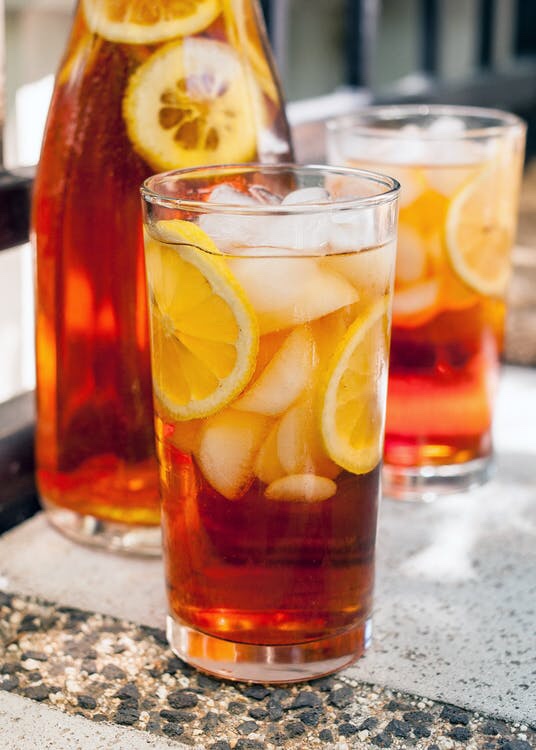
Simple Sweet Tea

6 family-size tea bags
8 cups boiling water
¼ teaspoon baking soda
1½ cups sugar

Place the tea bags in a large glass pitcher, pour the boiling water over, and steep for 15 minutes. Stir in the baking soda to remove bitterness and sugar.

Remove the tea bags and discard. Place the pitcher in the refrigerator.

Enjoy!

#SweetTea #SouthernCulture