Appearance: Hiderigami is a grotesque, hairy humanoid which stands between two and three feet tall. It has a single eye on the top of its head. It only has a single arm and a single leg, although it can run as fast as the wind. All hiderigami are female.
Behavior: Hiderigami are rarely encountered by humans. They live deep in the mountains and only rarely travel out into human-inhabited lands, but when they do their presence can be strongly felt over a wide area. A hiderigami’s body exerts such a strong heat that everywhere it goes the ground dries up, clouds fail to form, and rain cannot fall. Despite the incredible danger that they pose, it is said that throwing a hiderigami into a toilet will kill it.
Origin: Hiderigami originated in southern China, and come from a goddess. Their origin is recorded in some of the oldest ancient Chinese records. When the legendary Yellow Emperor of China fought the warlord Chi You, he summon a powerful goddess named Batsu to aid him in battle. Batsu contained an supernatural heat inside of her, and when she released her power, the battle was quickly and decisively won in the emperor’s favor; however, she had used so much of her power up that she was unable to return to Heaven or contain her heat. While Batsu was nearby, the waters all dried up and rain would not fall, and so her presence became a terrible problem for the emperor. Unable to kill her or to send her back to heaven, the emperor exiled the goddess to a far-away mountain and forbade her to return. Whether Batsu became the mother of the hiderigami or became corrupted and transformed into this yokai herself is unknown.
Translation: lady of the bridge Habitat: very old, very long bridges Diet: none
Appearance: Hashihime are intensely jealous goddesses who inhabit bridges — in particular, very old and very long bridges. As goddesses, hashihime may take different forms depending on occasion, however they are commonly depicted wearing white robes, white face-paint, an iron trivet, and carrying five candles. This is a ceremonial outfit used to perform curses.
Interactions: Hashihime ferociously guard the bridges they inhabit. As with most gods connected to a location, they are very competitive and jealous. If one praises or speaks positively about another bridge while on top of a hashihime’s bridge, or if one recites lines from certain Noh plays that feature a woman’s wrath as the main theme, something terrible is likely to happen to that person.
Despite their fearsome nature, they are highly honored by the people who live nearby, and shrines are established in their honor near the bridges they inhabit. In times of war, residents will beseech their local hashihime to guard the bridge against invaders. In times of peace, hashihime are goddess of separation and severing, and are asked to aid people in things such as break-ups, divorce, and severing bad luck. So strong is their power of severing that it is considered taboo for lovers to pass in front of a hashihime shrine together, or for wedding processions to pass in front of one. If newlyweds need to cross a bridge inhabited by a hashihime, they will instead pass underneath it on a boat rather than risk cursing their marriage.
Surviving an Encounter: The Hashihime is particularly fond of targeting happy couples. If you encounter one, your only chance to avoid a painful death is to swear to break up with your significant other.
The Hashime Shrine: There is a shrine to the Hashihime in the city of Uji, which is often visited by those who wish to cut ties with someone in their lives.
The Hashime Library: Hashihime is the title of one of the chapters of the Tale of Genji, the world’s first novel, written circa the year 1000 by a courtesan named Murasaki Shikibu.
The most famous hashihime story comes from Tsurugi no Maki, in The Tale of the Heike, and is retold in the noh play Kanawa.
A woman visited the the Kifune-jinja in Kyoto at the hour of the ox (roughly 2 am), filled with rage and jealousy towards her ex-husband who had thrown her away for another woman. Night after night she visited the shrine, praying to the gods enshrined there to turn her into a powerful demon. The woman wanted nothing else other than to see her ex-husband destroyed, even at the cost of her own life. After seven nights of pilgrimage, her prayers were answered: the gods told her that if she immersed herself in the Uji river for twenty-one nights, she would become a living demon.
The woman did as she was bid. She donned a white robe and tied her hair up into five horns. She painted her face and covered her body in crimson dye. She placed an upturned trivet on her head and attached torches to each foot. She lit a torch on both ends and placed it in her mouth. She immersed herself in the Uji river and for twenty-one days she kindled the hatred in her heart. Then, just as the gods told her, after twenty-one days she transformed into a terrible kijo with supreme power. She had become the hashihime of Uji.
That night, her husband awoke from a horrible dream with a premonition of danger. He quickly sought out the famous onmyōji, Abe-no-Seimei. Seimei recognized the dream as a sign that the man’s former wife would come and destroy the couple that very night, and promised to save them. He went to their house, recited magical prayers, and crafted two katashiro — magical paper doll representations of the man and his wife, meant to be used as substitutionary targets for the kijo’s rage. That night, as Seimei had predicted, the demon appeared. She attacked the two katashiro instead of the real couple, and Seimei’s magic worked: her power was reflected back upon her and she was driven away. The demon woman, realizing that she could not overcome Abe-no-Seimei’s magic, vanished, threatening that she would come back another time.
Translation: wisdom; specifically the Buddhist concept of Perfect Wisdom
Appearance: Hannya refers to demons or oni; more specifically to female demons called kijo—even more specifically to those kijo which appear in noh theater. They were once human women who were consumed by jealousy and transformed into demonesses. The name hannya also refers to a specific type of demon mask used in noh theater.
There are three grades of hannya: namanari, chūnari, and honnari. Namanari hannya are kijo that still resemble human women. They have small horns and use dark magic to perform their evil deeds, such as summoning ikiryō to attack their enemies. They are not completely evil; there remains a chance for these beginner demons to return to humanity. Chūnari hannya are mid-level demons. They have long, sharp horns, tusk-like fangs, and more powerful magic. However, they are still vulnerable to Buddhist prayers. Honnari hannya are true demons and the most powerful of the three. They have serpentine bodies and breathe fire. Honnari hannya have embraced their jealousy so deeply that there is no calming their fury.
Origin: Hannya originate from the Sanskrit term for wisdom—specifically Prajñāpāramitā, the highest form of Buddhist wisdom which leads to enlightenment. The juxtaposition of the highest form of wisdom and creatures who represent direct opposition to that wisdom comes from the use of the hannya mask in noh. In the play Aoi no Ue, a shugenja (an ascetic mystic) exorcises the spirit of the hannya Lady Rokujō from Lady Aoi. As it is driven away, the evil spirit cries out, “Oh, how horrible! The voice of wisdom is like a demon!” Since then, demon masks and wisdom have been associated with each other.
The three most famous hannya from Japanese literature are Lady Rokujō from Aoi no Ue, Kurozuka from Kurozuka, and Kiyo-hime from Dōjō-ji.
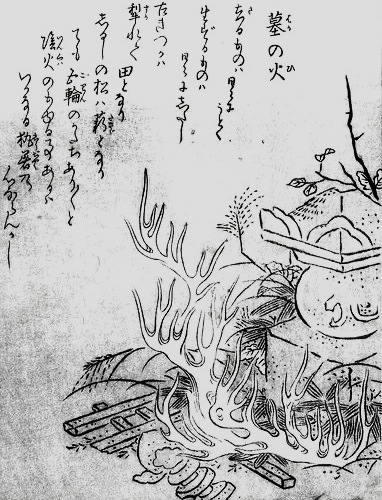
Translation: grave fire Habitat: tombs, graveyards, and burial grounds
Appearance: Haka no hi are mysterious, supernatural fires, or kaika. They spout forth from the base of graves.
This creature is described as a strange type of fire spirit (like a human soul) which can be seen lingering around a small five storied pagoda which you can see in graveyards.
Origin: The cause of haka no hi is unknown. It is commonly believed to be a result of failure on the part of the grave’s owner to reach enlightenment and pass on to Nirvana. The flames are thought to be residual energy from worldly attachments, or else feelings of grudge or resentment, coming from the remains interred in the grave.
Translation: lung shaku (a type of infection) Alternatenames: sokuhon Habitat: the lungs
Appearance: Haishaku originates under the right armpit and gradually migrates into the lungs. It grows from a smaller larval form into a large, white, lumpy shape that envelops the lungs and causes sickness. Its nose opens directly into the lugs, so it is extremely sensitive to smells.
Interactions: People infected with haishaku develop smooth, white skin. They begin to dislike strong smells, whether good or bad, and instead prefer raw, fishy smells. They prefer spicy foods over bland ones. They also commonly become pessimistic and depressed. Because the haishaku is shaped like a cloud, their hearts too become cloudy and subdued. Tears will also flow like rain.
Haishaku infections can be treated with very gentle and shallow acupuncture. Anything stronger than that will be too painful for the victim.
Translation: Dream Eater; based on the Chinese name for the same creature Habitat: deep in thick forests Diet: bad dreams
Appearance : The baku is a strange, holy beast that has the body of a bear, the head of an elephant, the eyes of a rhinoceros, the tail of an ox, and the legs of a tiger. Despite their monstrous appearance, baku are revered as powerful forces of good and as one of the holy protectors of mankind.
Behavior: Baku watch over humans and act as guardian spirits. They feed on the dreams of humans—specifically bad dreams. Evil spirits and yōkai fear baku and flee from baku-inhabited areas. Because of this, health and good luck follow baku wherever they go.
Interactions: The baku’s written name and image have been used as symbols of good luck in talismans and charms throughout Japanese history. In the old days, it was common to embroider the kanji for baku onto pillows in order to keep away bad dreams, sickness, and evil spirits. Fearsome baku images are commonly carved into the pillars above temple doors and on the columns supporting temple roofs. Baku are one of only a handful of holy creatures honored in this manner.
Origin: Legend has it that when the world was new and the gods were making the animals, the baku was put together from the leftover bits and pieces at the end of creation. That explains its bizarre appearance, and why it is considered a favorite of the gods.
Today, the Japanese word baku also refers to the tapir. The animal was named for its uncanny resemblance to this holy chimerical beast.
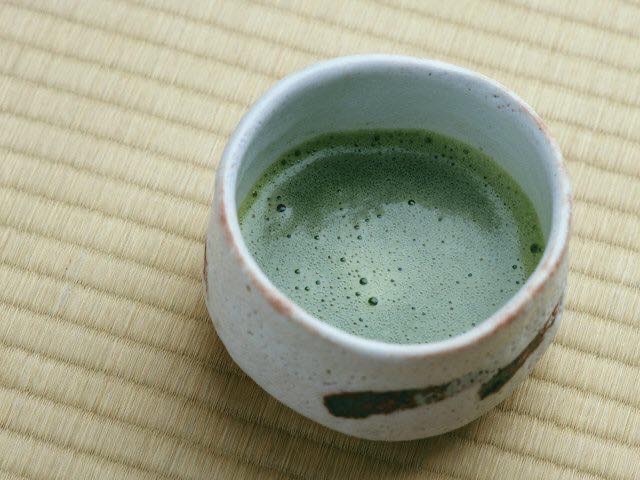
The tea ceremony involves preparing powdered tea for guests according to custom and enjoying its austere taste quietly and serenely. Influenced by Zen Buddhism, the tea ceremony seeks to purify the mind and attain oneness with nature.
The ceremonial serving of tea used to be exclusively practiced by nobles and priests who gave it its original form around the middle of the fourteenth century. Its popularity gradually spread to wealthy merchants, warlords during the era of civil warfare (in the 15th and 16th centuries), and their retainers.
The tea ceremony has been modified in many ways over the years. Until the end of the Edo period (1603-1867) it was practiced almost entirely by men; women joined in only after the beginning of the Meiji era (1868-1912).
There are many schools of tea ceremony, including the three Senke schools of Ura, Omote, and Mushanokoji. They all uphold the spirit of the ceremony while observing their own distinctive styles of preparing and serving tea.
The Japanese tea ceremony, also called the Way of Tea, is a Japanese cultural activity involving the ceremonial preparation and presentation of matcha (抹茶), powdered green tea.
In Japanese, it is called chanoyu (茶の湯) or sadō, chadō (茶道), while the manner in which it is performed, or the art of its performance, is called (o)temae ([お]手前; [お]点前). Zen Buddhism was a primary influence in the development of the Japanese tea ceremony. Much less commonly, Japanese tea practice uses leaf tea, primarily sencha, in which case it is known in Japanese as senchadō (煎茶道, the way of sencha) as opposed to chanoyu or chadō.
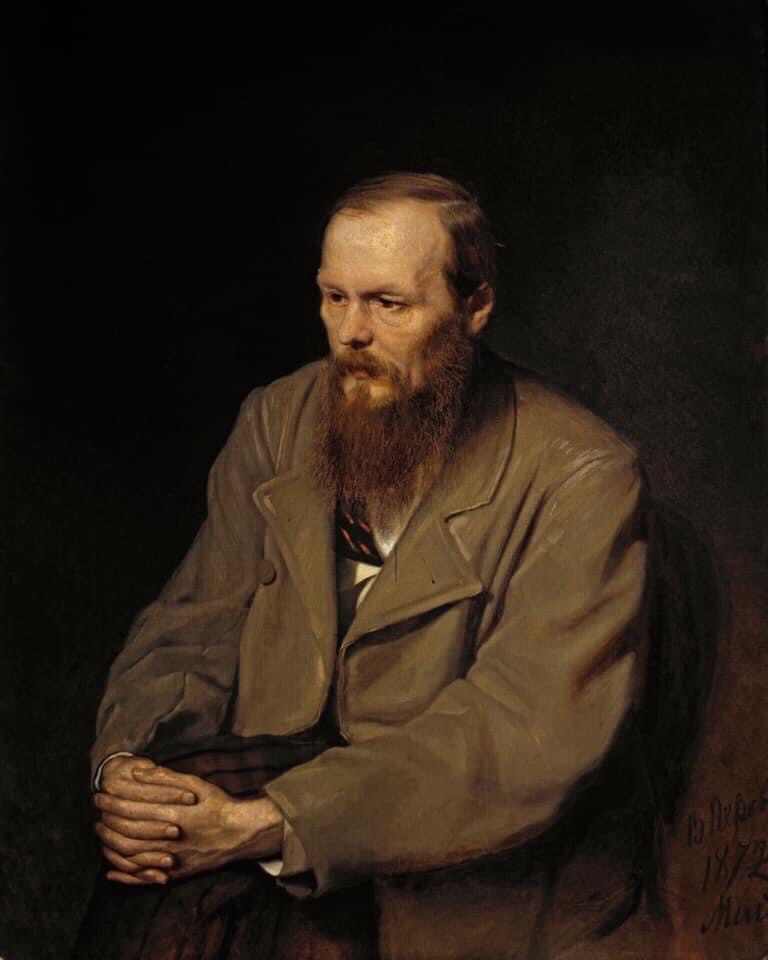
On November 16, 1849, Fyodor Dostoyevsky was sentenced to death by the Russian government for subversive activities. There was a mock execution, in which he and other were lined up before a firing squad, but at the last minute a reprieve came, and Fyodor served four years in a Siberian prison camp.
“Man is fond of counting his troubles, but he does not count his joys. If he counted them up as he ought to, he would see that every lot has enough happiness provided for it.”
On October 15th in 1674, the Torsåker witch trials begin (the largest single witch trial in Sweden) with 71 people (65 women and 6 men) beheaded and burned.
The main accusation against the suspected witches was that they had abducted children and taken them to Satan’s Sabbat at Blockula, the legendary meadow of Swedish folklore where the Devil held his Earthly court during a witches’ festival.
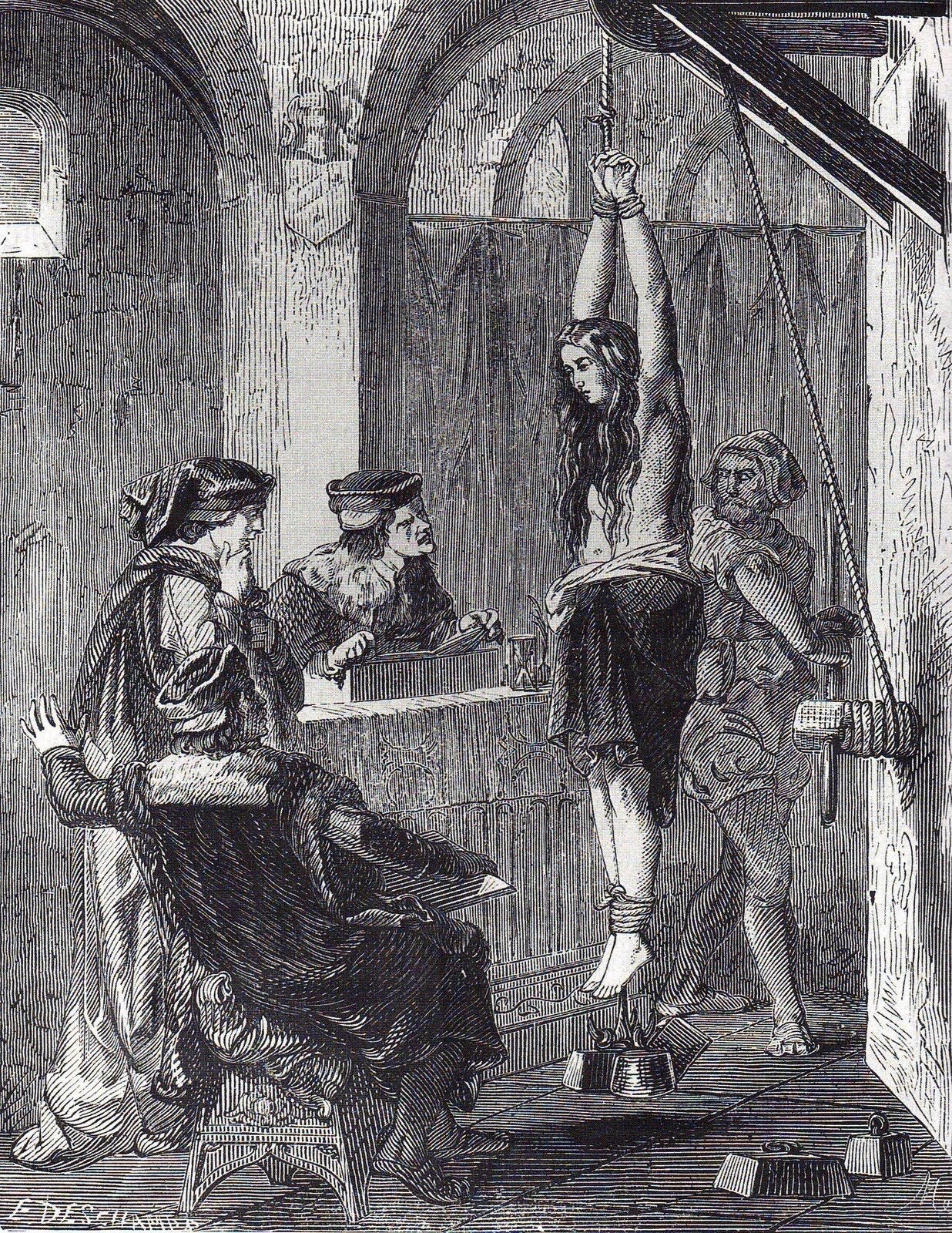
Most of the witnesses were children. Confessions were obtained through whippings, beatings, bathing them in an ice-cold lake, and threatening to roast them in ovens.
Jöns Hornæus, grandson of the priest who oversaw the trial, describes the execution in his book, where he wrote down the exact words of his grandmother, the eyewitness Britta Rufina: Then they began to understand what would happen.
Cries to heaven rose of vengeance over those who caused their innocent deaths, but no cries and no tears would help. Parents, men and brothers held a fence of pikes.