Foundational Principles For The Application Of Magical Herbs

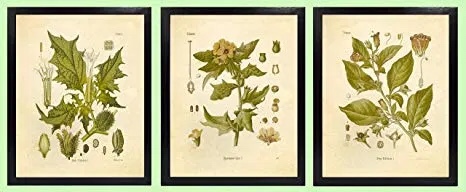
Magical herbs could be called the gateway drug to potions and alchemy, but they are so much more than that and a specialization of their own right. Here we’ll cover some of the more common magical herbs, and their applications when utilized by a skilled hand.

Sachets
Herbs to be carried or placed in the house (over doors, windows, etc.) should be made into sachets. A sachet is a small bag or piece of cloth in which herbs are contained. In voodoo magic this is often called a “charm bag” or “root bag.”

Poppets
This is also known as the voodoo doll, although it has been in magical use at least 4,000 years and was only lately associated with voodoo. Though they have been made out of roots, potatoes, lead, bark, paper, and other materials, in magical herbalism poppets are usually fashioned of cloth and herbs. The poppet is a doll made to represent the person to be aided through magic.

Infusion
The infusion is the origin of the potion so identified with Witches. It is simply a process of soaking herbs in hot water. Use no metal pots when boiling water or during the steeping process, for they interfere with the herb’s powers. Keep the liquid covered during infusion so that little steam is lost.

Baths
Baths are often used in herb magic, for they are an easy way to spread an herb’s power over the entire body. There are two methods; one, make a sachet (use about one-half to one cup of the appropriate enchanted herb) of cheesecloth. Drop this into the warm bath water. A better method entails the preparation of an infusion (see above). Add the strained liquid to the tub.

Ointments
An old form of herb magic as well as medicine, an ointment is simply any fatty substance to which powdered herbs and/or oils have been added. To a cup of shortening or lard, add three tablespoons of the enchanted, powdered herb(s). Pound or mash them together while visualizing until well-mixed, then place in an airtight container to store.

Oils
Essential oils are used in numerous ways. They are worn on the body, rubbed onto candles, dabbed onto sachets and poppets, added to baths, burned on charcoal blocks, and smeared onto roots.

Incense
Basically, an incense is any combination of plant materials, perhaps combined with essential oils and a base, which are mixed together and burned or smoldered on charcoal. This type of incense is known as raw or granular. It is usually used in magic, rather than the stick or cone forms.

Samhain: The Lore of Halloween

51EF6B60-5D71-4205-9695-0D67EC707FD6.jpeg

History

Samhain is a pagan religious festival originating from ancient Celtic spiritual tradition. In modern times, Samhain, a Gaelic word pronounced “sow-win”, is usually celebrated from October 31 to November 1 to welcome in the harvest and usher in the dark half of the year. The barriers between the physical world and the spirit world (the veil) break down during Samhain, allowing more interaction between humans and denizens of the Otherworld.

Ancient Celts marked Samhain as the most significant of the four quarterly fire festivals.  After the harvest work was complete, celebrants joined with Druid priests to light a community fire using a wheel that would cause friction and spark flames. The wheel was considered a representation of the sun and used along with prayers. Cattle were sacrificed, and participants took a flame from the communal bonfire back to their home to relight the hearth.

3566E2A0-AAB1-48A4-871D-C1BF342F93BC.jpeg

Christianity attempted to reframe Samhain as a Christian celebration The first attempt was by Pope Boniface in the 5th century. He moved the celebration to May 13 and specified it as a day celebrating saints and martyrs. The fire festivals of October and November, however, did not end with this decree.  In the 9th century, Pope Gregory moved the celebration back to the time of the fire festivals, but declared it All Saints’ Day, on November 1. All Souls’ Day would follow on November 2.

Neither new holiday did away with the pagan aspects of the celebration. October 31 became known as All Hallows Eve, or Halloween, and contained much of the traditional pagan practices. Trick-or-treating derives from ancient Irish and Scottish practices in the nights leading up to Samhain. In Ireland, mumming was the practice of putting on costumes, going door-to-door and singing songs to the dead. Cakes were given as payment.

Wicca Today

A broad revival of Samhain resembling its traditional pagan form began in the 1980’s.  Wicca celebration of Samhain run the gamut from the traditional fire ceremonies to celebrations that embrace many aspects of modern Halloween, as well as activities related to honoring nature or ancestors.  Wiccans look at Samhain as the passing of the year, and incorporate common Wiccan traditions into the celebration.

B1FCEDD1-46D6-4F67-8877-D1684059808B

Celtic Deconstructionists Today

Samhain is often called Oiche Shamnhna and celebrates the mating between Tuatha de Danaan gods Dagda and River Unis. They celebrate by placing juniper decorations around their homes and creating an altar for the dead where a feast is held in honor of deceased loved ones.

Sources:

  • History.com
  • BBC
  • “The Pagan Mysteries of Halloween,” By Jean Markale
  • “Samhain: Rituals, Recipes and Lore for Halloween,” By Diana Rajchel.

Pagan Roots: Saturnalia, Yule and Christmas

58E8FE6D-D96F-4F52-871A-7805A91E06B1

“It’s a mistake to say that our modern Christmas traditions come directly from pre-Christian paganism. you’d be equally wrong to believe that Christmas is a modern phenomenon. As Christians spread their religion into Europe in the first centuries A.D., they ran into people living by a variety of local and regional religious creeds.”

~ Ronald Hutton, Historian at Bristol University in the United Kingdom.

“Christian missionaries lumped all of these people together under the umbrella term pagan.”

~ Philip Shaw, who researches early Germanic languages and Old English at Leicester University in the U.K.

Early Christians wanted to convert pagans, but they were also fascinated by their traditions.  Christians of that period are quite interested in paganism.  It’s obviously something they think is a bad thing, but it’s also something they think is worth remembering. It’s what their ancestors did.  That’s why pagan traditions remained even as Christianity took hold. The Christmas tree is a 17th-century German invention, but it clearly derives from the pagan practice of bringing greenery indoors to decorate in midwinter. The modern Santa Claus is a direct descendent of England’s Father Christmas, who was not originally a gift-giver. However, Father Christmas and his other European variations are modern incarnations of old pagan ideas about spirits who traveled the sky in midwinter.

AD0485C3-E611-4717-81F1-265C203DD036

The two most notable pagan winter holidays were Germanic Yule and Roman Saturnalia. Christian missionaries gave these holidays a makeover and they are now known to us as Christmas:

Saturnalia was a lawless, drunken time in Rome where literally anything was okay.  This was the original Purge, in which laws were suspended for a brief stretch of time.  Saturn, the Roman god of agriculture, liberation and time, was celebrated at what is perhaps the most famous of the Roman festivals, the Saturnalia, It was a time of feasting, role reversals, free speech, gift-giving and revelry. (i.e.: gender-bending sex, drinking, telling people off, trading gifts and doing whatever you want).  After solstice, the darkest night of the year, the renewal of light and the coming of the new year was celebrated in the later Roman Empire at the Dies Natalis of Sol Invictus, the “Birthday of the Unconquerable Sun,” on December 25.

Scholars have connected the Germanic and Scandanavian celebration to the Wild Hunt, the god Odin and the pagan Anglo-Saxon Mōdraniht. Yule-tide was traditionally celebrated during the period from mid-November to mid-January.  Nordic countries use Yule to describe their own Christmas with its religious rites, but also for the holidays of this season. Present-day customs such as the Yule log, Yule goat, Yule boar, Yule singing, and others stem from the original pagan Yule, but are used in Christmas celebrations now, especially within Europe.  As leaders were baptized and converted, they shifted their traditional celebrations covertly, as not to upset the Chieftains. Yule was traditionally celebrated three days after midwinter, but shifted to reflect Christian dates.  Modern Wiccans and other neopagan religions often celebrate Yule as well. In most forms of Wicca, it’s celebrated at winter solstice as the rebirth of the Great horned hunter god, who is viewed as the newborn solstice sun. Some celebrate with their covens while others celebrate at home.

C650569F-1201-4A14-92A2-9BD795400534

Why this fixation on partying in midwinter, anyway? According to historians, it’s a natural time for a feast. In an agricultural society, the harvest work is done for the year, and there’s nothing left to be done in the fields. It’s a time when you have some time to devote to your religious life. It’s also a period when, frankly, everyone needs cheering up.  The dark days that culminate with the shortest day of the year, the winter solstice, could be lightened with feasts and decorations.

“If you happen to live in a region in which midwinter brings striking darkness and cold and hunger, then the urge to have a celebration at the very heart of it to avoid going mad or falling into deep depression is very, very strong.”

~ Ronald Hutton

“Even now when solstice means not all that much because you can get rid of the darkness with the flick of an electric light switch, even now, it’s a very powerful season.”

~ Stephen Nissenbaum, Author of the Pulitzer Prize finalist “The Battle for Christmas”

Without a Biblical directive to celebrate Jesus’s birthday and no mention of it in the Gospels of the correct date, it wasn’t until the fourth century that church leaders in Rome embraced the holiday. At this time many people had turned to a belief the Church found heretical: That Jesus had never existed as a man, but as a sort of spiritual entity.  If you want to show that Jesus was a real human being just like every other human being, not just somebody who appeared like a hologram, then what better way to think of him being born in a normal, humble human way than to celebrate his birth?”

Midwinter festivals, with their pagan roots, were already widely celebrated, and the date had a pleasing philosophical fit with festivals celebrating the lengthening days after the winter solstice.

“O, how wonderfully acted Providence that on that day on which that Sun was born…Christ should be born.

~ Thaschus Cæcilius Cyprianus (c. 200 – September 14, 258 AD) Bishop of Carthage

In the 16th century, Christmas became a casualty of this church schism, with reformist-minded Protestants considering it little better than paganism. This likely had something to do with the “raucous, rowdy and sometimes bawdy fashion” in which Christmas was celebrated.  In England under Oliver Cromwell, Christmas and other saints’ days were banned, and in New England it was illegal to celebrate Christmas for about 25 years in the 1600s. Forget people saying, “Happy holidays” instead of “Merry Christmas.”  If you want to look at a real ‘War on Christmas,’ you’ve got to look at the Puritans, they banned it!

While gift-giving may seem inextricably tied to Christmas, it used to be that people looked forward to opening presents on New Year’s Day.  They were a blessing for people to make them feel good as the year ends. It wasn’t until the Victorian era of the 1800s that gift-giving shifted to Christmas. According to the Royal Collection, Queen Victoria’s children got Christmas Eve gifts in 1850, including a sword and armor. In 1841, Victoria gave her husband, Prince Albert, a miniature portrait of her as a 7-year-old; in 1859, she gave him a book of poetry by Alfred, Lord Tennyson.

Let’s take on some of the traditions:

Almost every culture has someone like Santa Claus. He’s primarily based on St. Nicholas, a Fourth Century Lycian bishop from modern-day Turkey. One story says that he met a kind, impoverished man who had three daughters. St. Nick presented all three of them with dowries so that they weren’t forced into a life of prostitution, as dowries were expected to “pay off” families to take on the daughters.  Sinterklaas is the Dutch figure and Odin is the Norse god that Santa resembles. It wasn’t just Santa or men who did the gift-giving in those myths. There’s also the legend of La Befana, a kind Italian woman who leaves treats for children on the “Good” list, and the Germanic Frau Holle, who treats women during Solstice.

While people rarely show any excitement around the fruit-laden cakes these days, they were a real treat in times of yore. The cakes actually have origins in Egypt and were later disseminated by the Romans as they conquered parts of Europe.  Those cakes of Egypt were just about as dense and long-lasting as the brandied, fruit-studded cakes of today. Egyptians placed cakes of fermented fruit and honey on the tombs of their deceased loved ones so that they’d have something to munch on in the afterlife. Romans took similar cakes into battle made of mashed pomegranates and barley. Christians went into the crusades with honeycakes.  Fruitcakes are everywhere, no matter how hard you try to avoid them.

Caroling actually began as the Germanic and Norse traditions of wassailing. Wassailers went from home to home, drunk off of their asses, singing to their neighbors and celebrating their “good health.”  The traditional wassail beverage was a hot mulled cider, spiked with alcohol or fermented.

Mistletoe was considered a magical plant in Europe, especially among the Druids and Vikings, and holds significance in Native American cultures. Mistletoe is no modern quirk of Christmas, even Romans partook in fertility rituals beneath the mistletoe. Mistletoe stood as a neutral ground for feuding Norse tribes, who laid down their weapons in order to negotiate beneath the peace plant. The Druids thought it could protect them from thunder and lightning, as well.  Whether you’ve got the urge to make out, hide from a storm or talk it out, beware as mistletoe is super poisonous.

Romans loved wreaths and decorated everything with Laurel. Holly, ivy and evergreen are the more popular modern options today, and each one holds significance. Egyptians didn’t have evergreens, so they used palm fronds to celebrate Winter Solstice.  Christians love holly because the red berries symbolize the blood of Christ and the pointy leaves symbolize the crown of thorns. However, the advent of holly decor was around long before Christianity. Pre-Christian pagan groups believed that the Holly King did battle with the Oak King. They also thought holly could drive off evil spirits.  Romans, of course, were into laurel wreaths, but laurel was not easily procured throughout the northern reaches of the empire. Instead of laurel, they used evergreens.

All of this gift-giving and revelry, along with the secular embrace of Christmas, now has some religious groups upset. The consumerism of Christmas shopping seems, to some, to contradict the religious goal of celebrating Jesus Christ’s birth. In some ways excessive spending is the modern equivalent of the revelry and drunkenness that made the Puritans frown.   There’s always been a push and pull, and it’s taken different forms.  It might have been alcohol then, and now it’s these glittering toys.

Kemetism: An Introduction

01957F49-DB87-448F-A770-DED8CF480561

Neo-Paganism, also known as Contemporary Paganism and Modern Paganism, is a collective term for new religious movements influenced by or claiming to be derived from the various historical pagan beliefs of pre-modern Europe, North Africa and the Near East. Adherents rely on pre-Christian, folkloric and ethnographic sources to a variety of degrees; many follow a spirituality which they accept as being entirely modern, while others attempt to reconstruct or revive indigenous, ethnic religions as found in historical and folkloric sources as accurately as possible. Nep-Paganism in the United States is largely a phenomenon of a white college educated demographic with over 90% being whites and 65% having a college degree.

The 2014 Pew Research Center’s Religious Landscapes Survey included a subset of the New Age Spiritual Movement called “Pagan or Wiccan,” reflecting that ¾ of individuals identifying as New Age also identified as Pagan or Wiccan and placing Wiccans and Pagans at 0.3% of the total U.S. population or approximately 956,000 people of just over 1,275,000 individuals in the New Age movement. This is a dramatic increase from the 1990’s when only 200,000 individuals identified themselves as part of a New Age religion. Roughly 10 million Wiccan-related books were sold in 2000, up from 4.5 million in 1990. A division within modern Paganism rests on differing attitudes to the source material surrounding pre-Christian belief systems. “We might say that Reconstructionist Pagans romanticize the past, while Eclectic Pagans idealize the future. In the first case, there is a deeply felt need to connect with the past as a source of spiritual strength and wisdom; in the second case, there is the idealistic hope that a spirituality of nature can be gleaned from ancient sources and shared with all humanity,” according to Religious studies scholar Michael Strmiska.

7636908D-4FF4-4DE1-BD97-06F77FF3493A

Some of the more common Neo-Pagan religions are Wicca, the Goddess movement, Heathenism, Neo-Druidism, Eco-Paganism, and Syncretism. Today I am going to focus on the small, but growing religion of Kemetism. Kemetism also sometimes referred to as Neterism or Egyptian Neopaganism, is the contemporary revival of Ancient Egyptian religion and related expressions of religion in classical and late antiquity, emerging during the 1970s. A Kemetic is one who follows Kemetism. There are several main groups, each of which take a different approach to their beliefs, ranging from eclectic to reconstructionistic. Kemetic Orthodoxy is a modern religious sect based on Kemeticism, which is a reconstruction of Egyptian polytheism. It claims to derive a spiritual lineage from the Ancient Egyptian religion. It was founded in 1988 by Tamara Siuda, who remains its current Nisut or Pharaoh. Siuda’s leadership proved to be extremely successful, and in 1994, Kemetic Orthodoxy had attracted a sufficient number of new adherents to be officially recognized as a religious group by the federal government.

At the heart of the religion is a belief in ma’at: the guiding force of the universe and the principle of divine balance. Kemetics also believe in a supreme being, known as Netjer, and his many incarnations. Ancestor veneration, or Akhu veneration, is a very important aspect of Kemetic Orthodoxy. Adherents believe that their Akhu are their ancestors. As Akhu are believed to have already experienced human life, it is thought that they can give valuable advice and support regarding things related to daily human life. Kemetic Orthodoxy grew out of the personal teachings of Siuda. The temple began in 1988, when she claimed to have experienced a series of visions during her initiation as a Wiccan priestess. She started a small study and worship group at that time, which gradually grew in membership. In 1993, the group was federally recognized as a religious entity and changed its name from the House of Bast to the House of Netjer. The temple was granted tax-exempt status in 1999.

Kemetic Orthodoxy has a strong internet presence with rituals performed online via a chat room. They make the important distinction that they are a religion on the internet and not a internet religion. Members of Kemetic Orthodoxy gather at Tawy House (in Joliet, Illinois) in August for the Kemetic New Year, Wep Ronpet. As the largest gathering, it is the best example of an event held by the Kemetic Orthodox off-line. It includes rituals, fellowship, lectures and workshops. Personal worship is also observed in the form of personal deity-centered shrines in their homes as well as Senut ritual. The Senut ritual is composed of various rites, and is a fully functional ritual for individual use yet containing all of the necessary elements of all Kemetic ritual, whether practiced by one or a thousand.

If you’re interested you can find out more here: http://www.kemet.org/about

Sword Types: Khopesh

The khopesh is an Egyptian sickle-sword that evolved from battle axes.

A typical khopesh is 50–60 cm (20–24 inches) in length, though smaller examples also exist. The inside curve of the weapon could be used to trap an opponent’s arm, or to pull an opponent’s shield out of the way. These weapons changed from bronze to iron in the New Kingdom period The earliest known depiction of a khopesh is from the Stele of Vultures, depicting King Eannatum of Lagash wielding the weapon; this would date the khopesh to at least 2500 BC.

The word khopesh may have been derived from “leg”, as in “leg of beef”, because of their similarity in shape. The hieroglyph for ḫpš(‘leg’) is found as early as during the time of the Coffin Texts (the First Intermediate Period).

The blade is only sharpened on the outside portion of the curved end. The khopesh evolved from the epsilon or similar crescent-shaped axes that were used in warfare. The khopesh fell out of use around 1300 BC.

What does “clinical depression” mean?

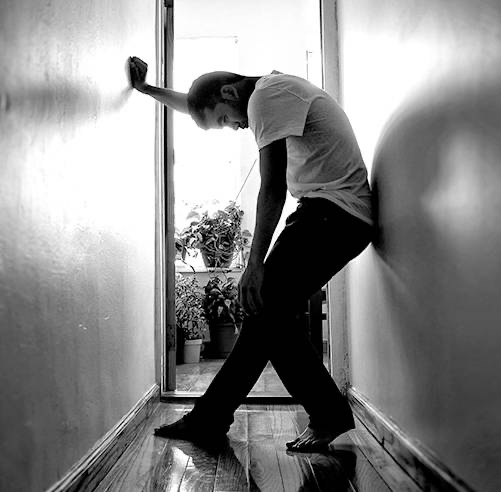
Depression ranges in seriousness from mild, temporary episodes of sadness to severe, persistent depression. Clinical depression is the more-severe form of depression, also known as major depression or major depressive disorder. It isn’t the same as depression caused by a loss, such as the death of a loved one, or a medical condition, such as a thyroid disorder.

To diagnose clinical depression, many doctors use the symptom criteria for major depressive disorder in the Diagnostic and Statistical Manual of Mental Disorders (DSM-5), published by the American Psychiatric Association.

Signs and symptoms of clinical depression may include:

• Feelings of sadness, tearfulness, emptiness or hopelessness

• Angry outbursts, irritability or frustration, even over small matters

• Loss of interest or pleasure in most or all normal activities, such as sex, hobbies or sports

• Sleep disturbances, including insomnia or sleeping too much

• Tiredness and lack of energy, so even small tasks take extra effort

• Reduced appetite and weight loss or increased cravings for food and weight gain

• Anxiety, agitation or restlessness

• Slowed thinking, speaking or body movements

• Feelings of worthlessness or guilt, fixating on past failures or self-blame

• Trouble thinking, concentrating, making decisions and remembering things

• Frequent or recurrent thoughts of death, suicidal thoughts, suicide attempts or suicide

• Unexplained physical problems, such as back pain or headaches

Symptoms are usually severe enough to cause noticeable problems in relationships with others or in day-to-day activities, such as work, school or social activities.

Clinical depression can affect people of any age, including children. However, clinical depression symptoms, even if severe, usually improve with psychological counseling, antidepressant medications or a combination of the two.

Sources: The Mayo Clinic, McLean Hospital, NAMI

19th Amendment Ratified

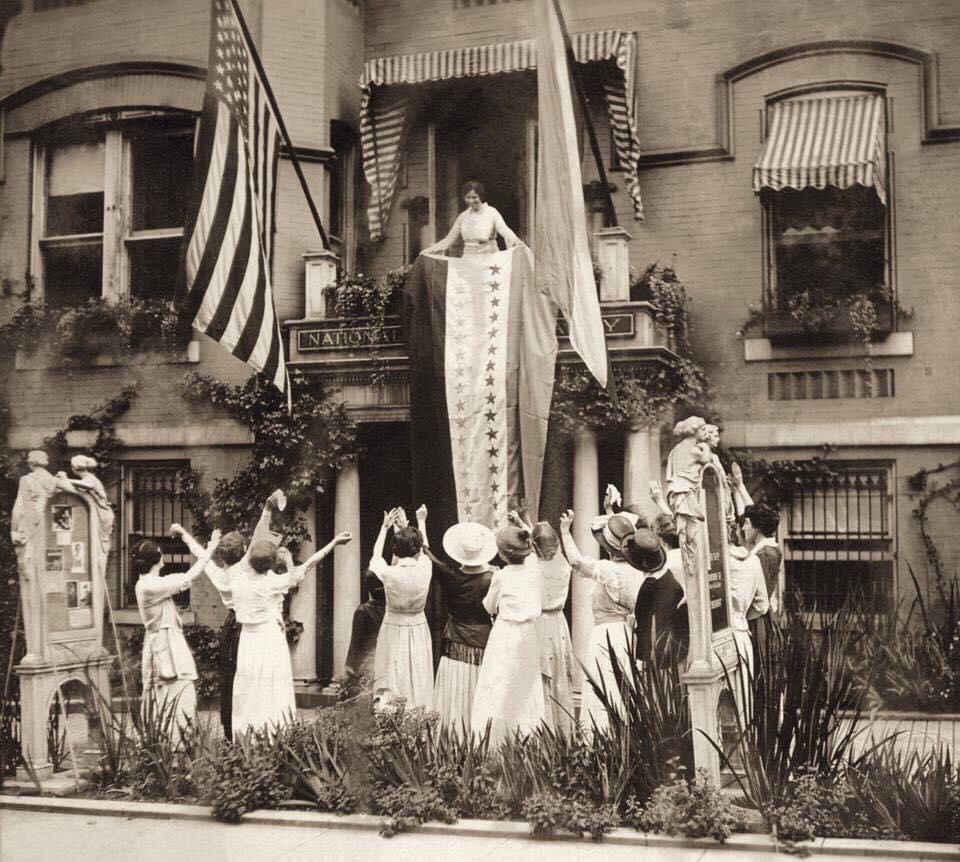
On August 18th of 1920, the 19th Amendment to the Constitution, guaranteeing women the right to vote, is ratified by Tennessee, giving it the two-thirds majority of state ratification necessary to make it the law of the land. The amendment was the culmination of more than 70 years of struggle by woman suffragists. Its two sections read simply: “The right of citizens of the United States to vote shall not be denied or abridged by the United States or by any State on account of sex” and “Congress shall have power to enforce this article by appropriate legislation.” In January 1918, the woman suffrage amendment passed the House of Representatives with the necessary two-thirds majority vote. In June 1919, it was approved by the Senate and sent to the states for ratification. Campaigns were waged by suffragists around the country to secure ratification, and on August 18, 1920, Tennessee became the 36th state to ratify the amendment, giving it the two-thirds majority of state ratification necessary to make it the law of the land…

#NineteenthAmendment #RightToVote #WomenSuffrage

Remember Pearl Harbor Day

1C66AF85-6ADC-444D-B614-36DBB1EC80A8

The attack on Pearl Harbor was a surprise military strike by the Imperial Japanese Navy Air Service against the United States naval base at Pearl Harbor, Hawaii Territory, on the morning of December 7, 1941. The attack, also known as the Battle of Pearl Harbor, led to the United States’ entry into World War II. The Japanese military leadership referred to the attack as the Hawaii Operation and Operation AI, and as Operation Z during its planning.

Japan intended the attack as a preventive action to keep the U.S. Pacific Fleet from interfering with its planned military actions in Southeast Asia against overseas territories of the United Kingdom, the Netherlands, and the United States. Over the course of seven hours there were coordinated Japanese attacks on the U.S.-held Philippines, Guam and Wake Island and on the British Empire in Malaya, Singapore, and Hong Kong.

The attack commenced at 7:48 a.m. Hawaiian Time (18:18 GMT).  The base was attacked by 353 Imperial Japanese aircraft (including fighters, level and dive bombers, and torpedo bombers) in two waves, launched from six aircraft carriers.  All eight U.S. Navy battleships were damaged, with four sunk. All but the USS Arizona were later raised, and six were returned to service and went on to fight in the war. The Japanese also sank or damaged three cruisers, three destroyers, an anti-aircraft training ship, and one minelayer. One hundred eighty-eight U.S. aircraft were destroyed; 2,403 Americans were killed and 1,178 others were wounded.  Important base installations such as the power station, dry dock, shipyard, maintenance, and fuel and torpedo storage facilities, as well as the submarine piers and headquarters building (also home of the intelligence section), were not attacked. Japanese losses were light: 29 aircraft and five midget submarines lost, and 64 servicemen killed. One Japanese sailor, Kazuo Sakamaki, was captured.

8F355911-2BA4-421D-AAEA-501641090F57
Pearl Harbor Memorial
The surprise attack came as a profound shock to the American people and led directly to the American entry into World War II in both the Pacific and European theaters. The following day, December 8, the United States declared war on Japan, and several days later, on December 11, Germany and Italy each declared war on the U.S. The U.S. responded with a declaration of war against Germany and Italy. Domestic support for non-interventionism, which had been fading since the Fall of France in 1940, disappeared.

There were numerous historical precedents for unannounced military action by Japan, but the lack of any formal warning, particularly while negotiations were still apparently ongoing, led President Franklin D. Roosevelt to proclaim December 7, 1941, “a date which will live in infamy”. Because the attack happened without a declaration of war and without explicit warning, the attack on Pearl Harbor was later judged in the Tokyo Trials to be a war crime.

Pledge of Allegiance

The Pledge of Allegiance was written in August 1892 by the socialist minister Francis Bellamy (1855-1931). It was originally published in The Youth’s Companion on September 8, 1892. Bellamy had hoped that the pledge would be used by citizens in any country.

In its original form it read:

“I pledge allegiance to my Flag and the Republic for which it stands, one nation, indivisible, with liberty and justice for all.”

On June 22nd in 1942 the Pledge of Allegiance is formally adopted by US Congress.

Every American—should know that, although the Pledge was adopted in 1942, the words “under God” were added only in 1954 in a bill signed by President Eisenhower. The words were added after a campaign by the Knights of Columbus (a Catholic organization) and a Presbyterian minister to help distinguish the U.S. from our “atheistic” Cold War enemies.

#PledgeOfAllegiance #UnderGod #FrancisBellamy