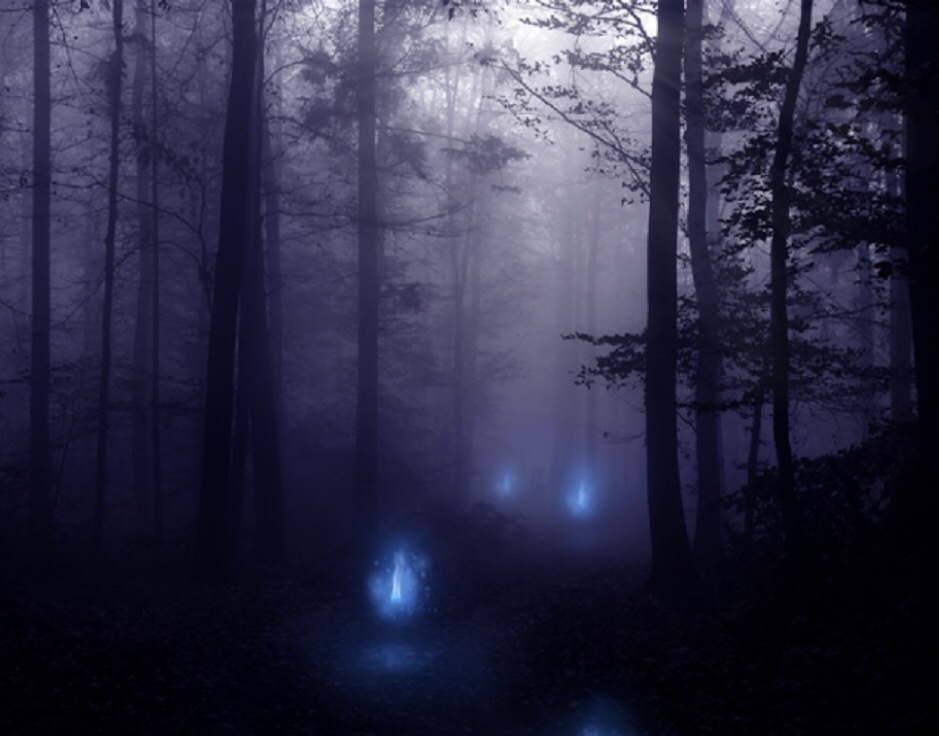
Will o’ the Wisps

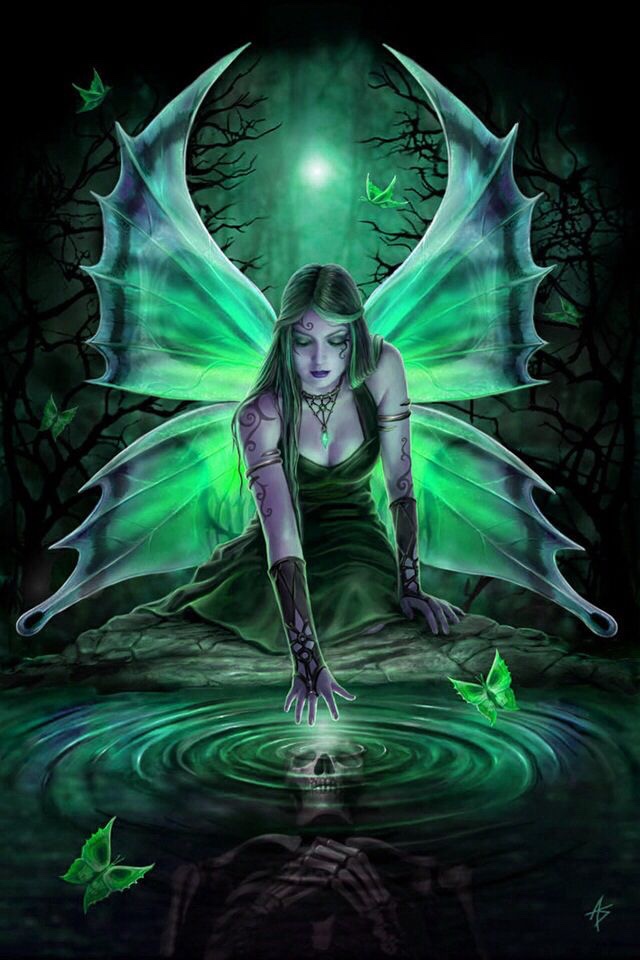
Will o’ the Wisp, sometimes known as Jack-o’-lantern, is a type of Fae pixie believed to inhabit the marshes and bogs of England. Will O’ Wisps are nature spirits that inhabit the elements of the earth.

The name Will o’ the Wisp is derived from the Saxon word wile and means trickery or deceitfulness combined with the Swedish word Wisp, meaning a bundle of tinder.

Travelers at night describe theWill o’ the Wisp as ghost-like blue flames, with an unwavering glow, that floats a few feet above the ground.

Will o’ the Wisps have a variety of folklore associated with them and some say they’re flames created by Fae, lights carried by Elves, unbaptized children, or souls who evaded purgatory.

They’re sometimes claimed to give you the power of divination and prophecy, but mostly they’re believed to be mischievous creatures.

It’s often said Will o’ the Wisps love to flit from one place to another, leading travelers astray with their ghost lights and into ditches or bogs.

Will o’ the Wisps have been observed in a variety of locations throughout the world with different names including Germany (Irrlicht), Finland (Liekko), France, (Feu Follets), Sweden (Irrbloss), the Netherlands (dwaallicht), and in Norway where it’s called Hoberdy’s Lantern.

The scientifc community has provided their explanation for these mysterious blue lights found above swamps and marshes throughout the world. It’s called ignis fatuus meaning foolish or false fire.

The [Jack-o’-lantern] phenomenon is generally believed to be due to the spontaneous ignition of marsh gas, which consists mostly of methane and which is produced by the decomposition of dead plant matter.

Britannica – Jack-o’-lantern phenomenon
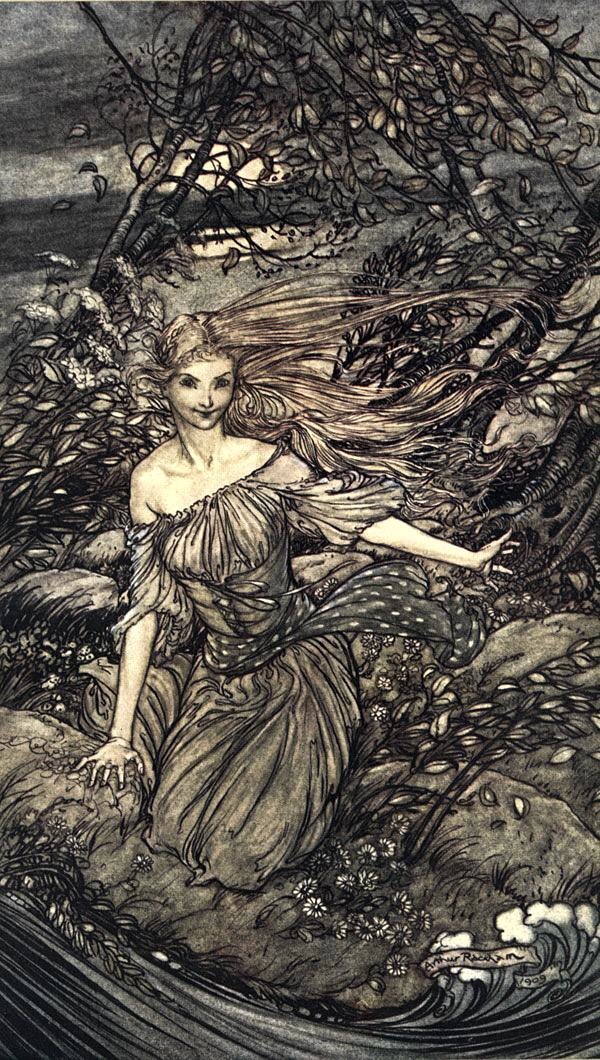
Undines

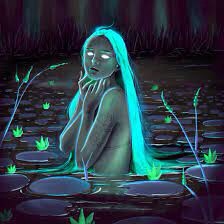
Undines, sometimes spelled Ondine, are a water nymph who becomes human when she falls in love with a mortal man. If he is unfaithful, her death is inevitable.

Derived from the Latin word unda, which means wave or water.

Undines were first discussed by Paracelsus (circa 1493 – 1541). They are believed to be connected to Greek mythology figures known as Nereids, who were portrayed as young women who lived in any body of water and were kind to humans.

A story of an Undine tells of how, in a fishing village, a human couple had lost their own child but shortly after found a baby left at their door. They took her in as their own, and she grew to a most beautiful young woman with pearly skin and green eyes, both loving and fickle in her nature.

Hildebrand saw and fell in love with her and took her as his wife. But he betrayed her with another named Bertalda. With this breaking of the vow, Undine was reclaimed by her Merfolk and vanished back to the sea.

However, on the eve of his wedding to Bertalda, Hildebrand went to the well in the courtyard and there he saw Undine. She embraced him and took his soul with her to the waters, leaving his body by the well.

Carol Rose – Spirits, Fairies, Gnomes, and Goblins

Vampyre Microgame

Microgames were a phenomenon of especially the 1970’s and early 1980’s. Vampyre was released by TSR in 1981, who was later bought out by Wizards of the Coast.

An overland hunt for the vampyre coffins ends in a tactical battle in Castle Dracula.

The Vampyre game is faithful to Stoker’s original novel. It may be played by up to 6 people, each playing the role of one of Stoker’s characters. Many of the game elements are also derived from the book. In Stoker’s novel, Dracula did indeed hide coffins in various secret locations so that he would always have a place to hide during the day, should his principle (sic?) lair be discovered. Dracula did have vampire brides and could command wolves, rats, bears and other supernatural beings. Effective against these un-dead creatures were The Host, holy water, crucifixes and silver bullets; not to mention the hammer and stake – tools required for dispatching vampires.

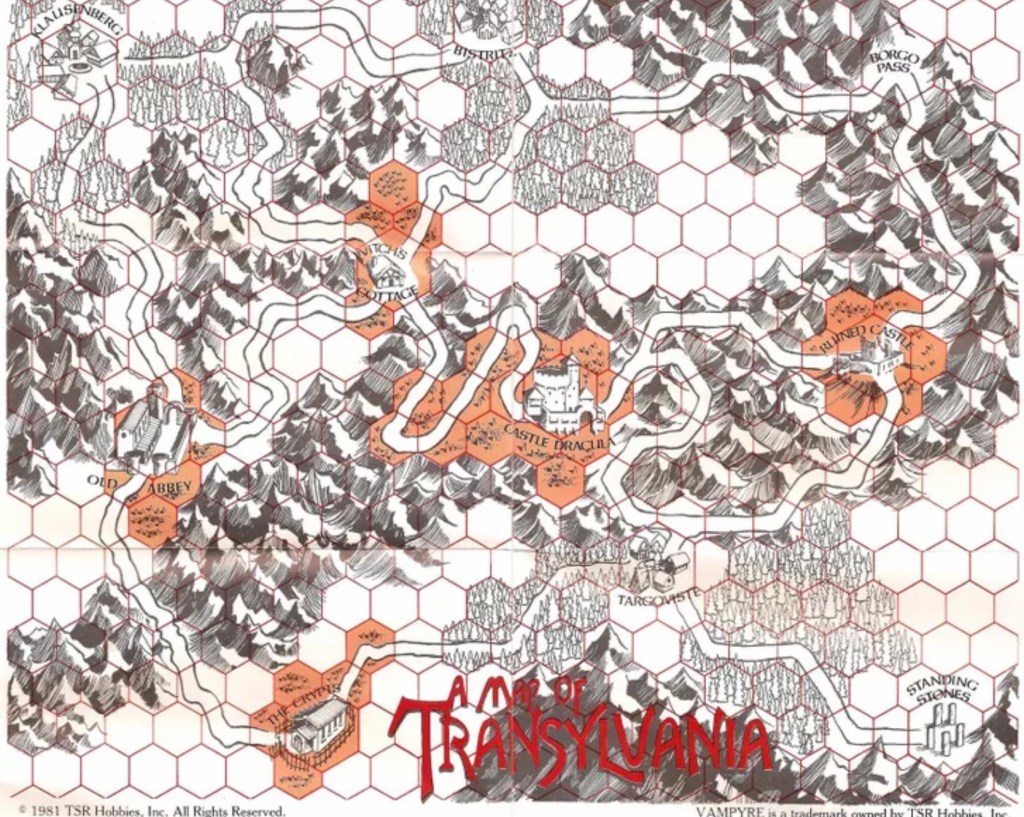
The Vampyre basic game takes place on the map of Transylvania. The game is a race between the vampire hunters to see who will be the first to find and destroy three of Count Dracula’s hidden coffins.

The extended game is played on the reverse side of the map, Dracula’s Castle, after the players have finished the basic game. Here, the players have already destroyed Dracula’s hidden coffins. Now they must track down and destroy the Count himself in his heavily guarded lair.

  • 2–6 Players, Best: 4–6
  • 45 Min Playing Time
  • Age: 12+

Demonlord Microgame

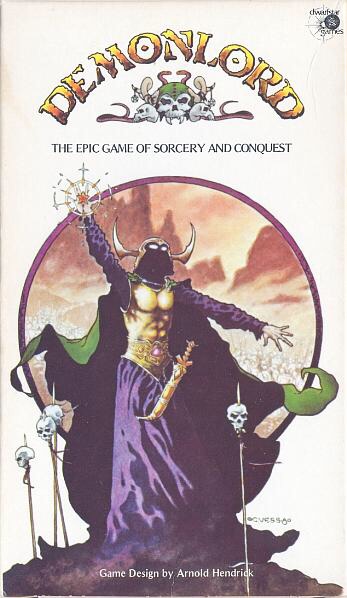
Microgames were a phenomenon of especially the 1970’s and early 1980’s. Demonlord was released by the long defunct Dwarfstar Heritage games in 1981.

Fight grand fantasy battles as the Demon Empire seeks to rise again!

After centuries of sleep, the Demon Empire once more sends forth its hideous armies to conquer the lands of men. Desperate fighters stand with bow and shield against the goblin hordes which blacken the fertile valleys. The wizards and priests are called together in a desperate attempt to counter the Demonlord’s dark magicks. But the balance of power lies with the neutral kingdoms. Will the Dwarven King, the Cloud Prince of Lyung, and the mysterious Ancients join with the forces of light, or will they cast their lots with the dark host commanded by the shadowy presence of the Demonlord.

Demonlord is a game of strategy for two players. It vividly recreates the grand sweep of empires in conflict in an age of sorcery and enchantment. Infantry and cavalry sweep across the land to meet in battle or besiege fortresses, as winged troops wheel overhead. Priests invoke friendly spirits, as magicians prepare potent battlefield magic, or summon great beasts to their aid. And controlling it all, the dread Demonlord, and the Captains of the Hosar alliance with their retinue of personalities and special powers.

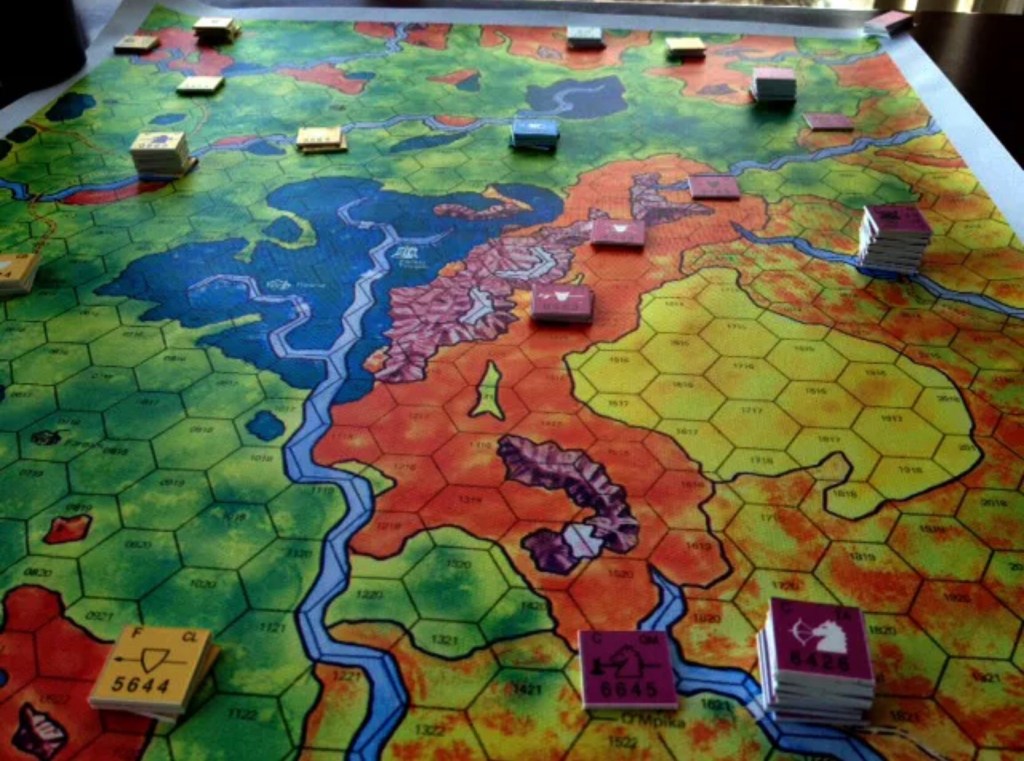
Demonlord contains — a full color card stock mapboard, 12″x14″; 154 full color counters; a die; instruction folder.

PLAY LEVEL – Intermediate/Advanced

Faerie Classifications

According to most Fae legends, there are two types of Fae: Trooping faeries and Solitary faeries.

It’s smart to familiarize yourself with the many types of Fae and research the ones you prefer to work with. Always cross-reference books, videos, or your research materials!

Trooping Faeries:

Trooping faeries usually travel in large groups and are recognized for dancing, partying, and throwing exciting festivities and fairs.

Most of the legends about Trooping faeries describe them as fun-loving and always looking for lighthearted entertainment.

Trooping faeries are typically a part of the Seelie Court and are mostly occupied with their community and peaceful society, including royalty and high society.

Solitary Faeries:

Some faeries exist entirely on their own and are referred to as Solitary faeries. Many stories of lone faeries portray them as quickly vanishing around boulders or appearing to evaporate into thin air. Solitary Fae are often less interested in human affairs.

Solitary Fae are often seen less frequently and are believed to be keepers of wisdom and knowledge. They live in caverns, pits, marshes, and ditches and are mostly hidden. Solitary Fae are only noticed by humans if they are intentionally enticed into peril or when the Fae were unknowingly observed by a passerby.

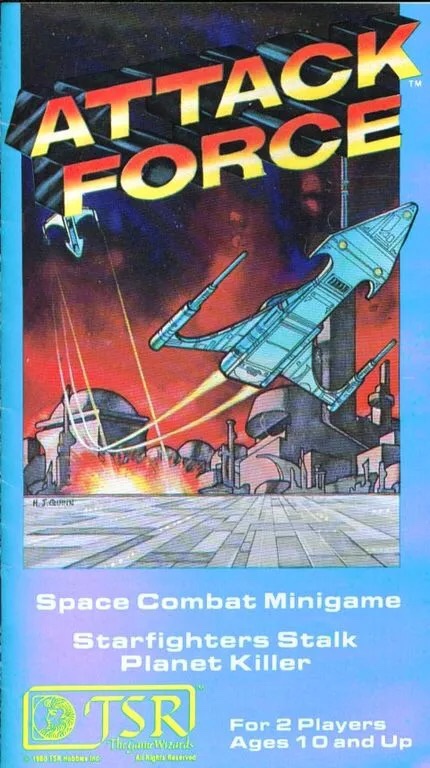
Attack Force Microgame

Microgames were a phenomenon of especially the 1970’s and early 1980’s. Attack Force was released by TSR, who was later bought out by Wizards of the Coast.

Attack Force minigame is a fast and exciting space combat game for two players. YOU, as leader of the dashing Arcturan pilots, must use your knowledge of the Novaship’s only weak point to destroy it before it reaches Arcturus. YOU, as the commander of the Novaship, must use your lasers, blasters, and pom-poms to keep the Arcturans at bay until you can launch your Cobra Starfighters and destroy them!

This game is quite simple but at the same time very nice to play for it’s time. The playing time is maximum 1 hour. The two sides are not well balanced because imperial forces are too strong for the rebels and can happen that the game ends in 4 or 5 turns. On the other hand, if the rebel player is lucky and clever he will have several advantages in maneuverability.

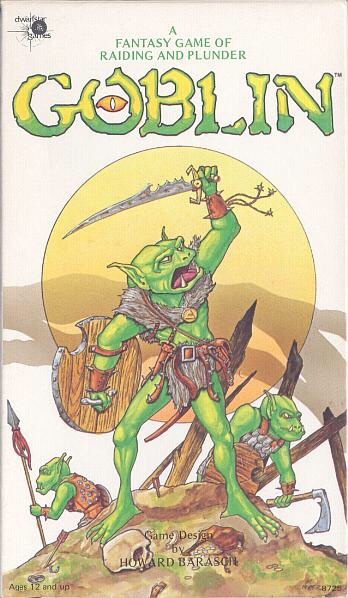
Goblin Microgame

Microgames were a phenomenon of especially the 1970’s and early 1980’s. Goblin was released by the long defunct Dwarfstar Heritage games.

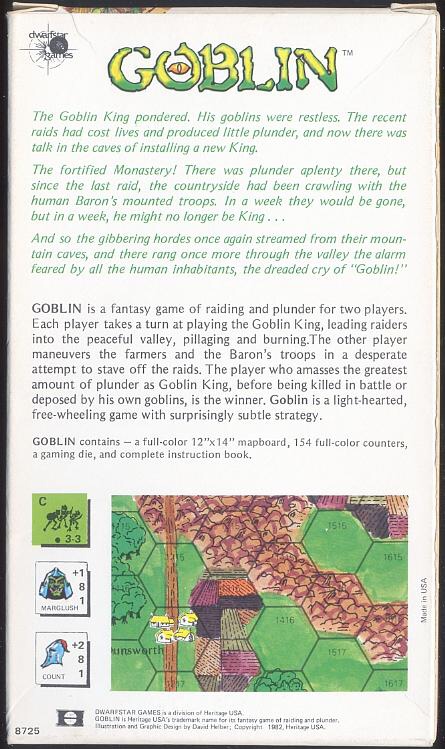
The Goblin King pondered. His goblins were restless. The recent raids had cost lives and produced little plunder, and now there was talk in the caves of installing a new King.

The fortified Monastery! There was plunder aplenty there, but since the last raid, the countryside had been crawling with the human Baron’s mounted troops. In a week they would be gone, but in a week, he might no longer be King . . .

And so the gibbering hordes once again streamed from their mountain caves, and there rang once more through the valley the alarm feared by all the human inhabitants, the dreaded cry of “Goblin!”

Goblin is a fantasy game of raiding and plunder for two players. Each player takes a turn at playing the Goblin King, leading raiders into the peaceful valley, pillaging and burning. The other player maneuvers the farmers and the Baron’s troops in a desperate attempt to stave off the raids. The player who amasses the greatest amount of plunder as Goblin King, before being killed in battle or deposed by his own goblins, is the winner. Goblin is a light-hearted, free-wheeling game with surprisingly subtle strategy.

Goblin contains — a full-color 12″x14″ mapboard, 154 full-color counters, a gaming die, and complete instruction book.

Feminism and “A Room of One’s Own” – by Virginia Woolf

In her essay “A Room of One’s Own” (1929), Virginia Woolf discusses the struggles women writers had faced to win the same success as their male counterparts. Acknowledging the achievements of novelists such as Jane Austen and George Eliot, Woolf describes how the confines of domesticity could hinder such work. Women often wrote in communal areas of the home, surrounded by distractions, and seldom had the financial independence necessary to break free. She conjures up Judith, a fictitious sister of William Shakespeare, and wonders what life would have been like for her. Had she been “as imaginative, as agog to see the world” as her brother, she would still have been expected to be content with being a wife and mother. Woolf imagines that, in despair, Judith kills herself, her genius unexpressed.

In her essay, Woolf uses metaphors to explore social injustices and comments on women’s lack of free expression. Her metaphor of a fish explains her most essential point, “A woman must have money and a room of her own if she is to write fiction”. She writes of a woman whose thought had “let its line down into the stream”. As the woman starts to think of an idea, a guard enforces a rule whereby women are not allowed to walk on the grass. Abiding by the rule, the woman loses her idea. Here, Woolf describes the influence of women’s social expectations as mere domestic child bearers, ignorant and chaste.

Sources: Book of Feminism (DK)

Saint John’s Wort (Hypericum perforatum)

Saint John’s wort (Hypericum perforatum): This true midsummer flower is strongly influenced by the midday sun. The countless gold-yellow filaments burst out of the calyx like sun rays. They make the flowers, which open only during dry weather, look like tiny suns. The flower petals look as if they might be small airplane propellers and are reminiscent of swirling beams of light and of the light chakras. As a medicinal herb, this plant of the Sunflower family has a soothing effect on the nerves, brings light into the soul, and chases away the darkness.

For centuries, St. John’s wort served as a talisman against evil. At the same time, it was prized for its medicinal power, both helping heal wounds and ease psychological stress. In ancient Rome and Greece, the herb was used to treat inflammation of all kinds, and was even put to use in compounds used on serious battle wounds.

Warning: St. John’s wort may interfere with some prescription medicines. If you take prescription drugs of any kind, be sure to talk with a naturopath or a health care professional familiar with Natural Standard, the top resource for drug-herb interactions, to determine a safe level before taking remedies containing the herb.

Salamanders

Salamanders are a type of elemental spirit commonly associated with fire. Salamanders were first described by German-Swiss physician Paracelsus (1493 -1541) and have remained popular in esoteric occultism, literature, and art since then.

Paracelsus believed that since Nature is made up of elements we can see, they must also have spiritual counterparts of peculiar creatures we can’t see. He called these the Elementals, which are now referred to as Nature spirits, and divided them into four groups gnomes (earth), undines (water), sylphs (air), and salamanders (fire).

In the folklore of Salamanders, there are two forms. The first is their association with fire: Salamanders purify the soul through fire and illuminate the mind with wisdom. Second, they represent an aspect of spirit that must be re-awakened and a force that assists in spiritual transformation.

Depictions of Salamanders vary greatly! Some people insist they are little balls of light, but during the Middle Ages, many claimed they are lizard-like in appearance. Alternatively, Salamanders are sometimes described as slender, red, and dry-skinned creatures with a malevolent demeanor.