What is Rape Culture?

What is the “Rape Culture?”

Rape Culture is an environment in which rape is prevalent and in which sexual violence against women is normalized and excused in the media and popular culture.  Rape culture is perpetuated through the use of misogynistic language, the objectification of women’s bodies, and the glamorization of sexual violence, thereby creating a society that disregards women’s rights and safety.

Rape Culture affects every woman.  The rape of one woman is a degradation, terror, and limitation to all women. Most women and girls limit their behavior because of the existence of rape. Most women and girls live in fear of rape. Men, in general, do not. That’s how rape functions as a powerful means by which the whole female population is held in a subordinate position to the whole male population, even though many men don’t rape, and many women are never victims of rape.  This cycle of fear is the legacy of Rape Culture.

Examples of Rape Culture
  • Blaming the victim (“She asked for it!”)
  • Trivializing sexual assault (“Boys will be boys!”)
  • Sexually explicit jokes
  • Tolerance of sexual harassment
  • Inflating false rape report statistics
  • Publicly scrutinizing a victim’s dress, mental state, motives, and history
  • Gratuitous gendered violence in movies and television
  • Defining “manhood” as dominant and sexually aggressive
  • Defining “womanhood” as submissive and sexually passive
  • Pressure on men to “score”
  • Pressure on women to not appear “cold”
  • Assuming only promiscuous women get raped
  • Assuming that men don’t get raped or that only “weak” men get raped
  • Refusing to take rape accusations seriously
  • Teaching women to avoid getting raped instead of teaching men not to rape
How can men and women combat Rape Culture?
  • Avoid using language that objectifies or degrades women
  • Speak out if you hear someone else making an offensive joke or trivializing rape
  • If a friend says she has been raped, take her seriously and be supportive
  • Think critically about the media’s messages about women, men, relationships, and violence
  • Be respectful of others’ physical space even in casual situations
  • Always communicate with sexual partners and do not assume consent
  • Define your own manhood or womanhood. Do not let stereotypes shape your actions.
  • Get involved! Join a student or community group working to end violence against women.

Asgard

The word Asgard comes from the Old Norse word Ásgarðr, meaning Enclosure of the Aesir. Asgard is one of the nine worlds in Norse Mythology, along with Niflheim, Muspelheim, Midgard, Jotunheim, Vanaheim, Alfheim, Svartalfheim, and Helheim. Asgard is the home of the Aesir, deities of one of two tribes of Norse gods. The other tribe, the Vanir, used to share Asgard but the two tribes fought a long, epic war over their differences and the Vanir were forced to leave Asgard. The two tribes did reach an eventual truce as they joined forces against their common enemy, the Giants.

Snorri Sturluson, author of the Prose Edda, wrote that Asgard was created by the gods after they created Jotunheim (Giantland), Midgard (Middle Earth or home of humanity), the seas, sky, clouds and the Earth. The home of the gods is said to be a giant fortress with walls reaching up into the clouds to protect them from their enemies, particularly the frost-giants.

Asgard is situated in the sky upon the plains of Idavoll, where the gods met to discuss important matters. It was connected to Midgard by a rainbow bridge called Bifrost. The mythical place was invisible and inaccessible to mortal men.

The ruler of the gods, Odin, had his throne in Asgard, in a hall called Valaskjalf. His throne was called Hlidskjalf and it is believed that when Odin sat on Hlidskjalf, he could see the whole of heaven and Earth and everything that happened anywhere! A hall made of pure gold was also situated in the home of the gods. It was called Gladsheim and housed the thrones of Odin and the 12 highest gods. The goddesses’ hall was called the Vingolf or hall of friendship. The gods and goddesses would meet every day and discuss the fate of world at the Well of Urd (destiny), from which the Yggdrasil (the tree connecting the nine worlds) grew.

Asgard also housed Valhalla (the hall of the fallen). Odin granted access to the worthy dead, the majority of whom were esteemed warriors. Here, he feasted and celebrated with the battle heroes. Valhalla was easily recognizable by its rafters formed of spears, and use of shields as roof tiles. According to certain sources, the doors of Valhalla were so wide that 800 warriors could walk through at the same time! A vast river, the Thund, and a barred gate, Valgrind, protected the entrances of Valhalla.

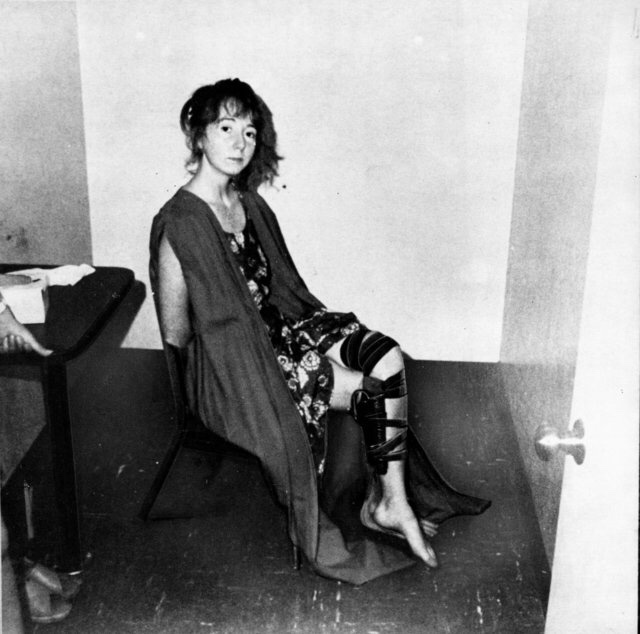
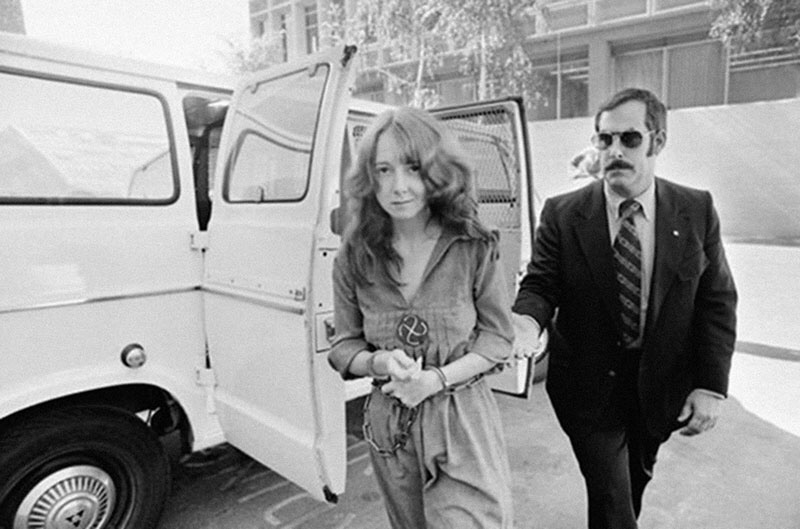
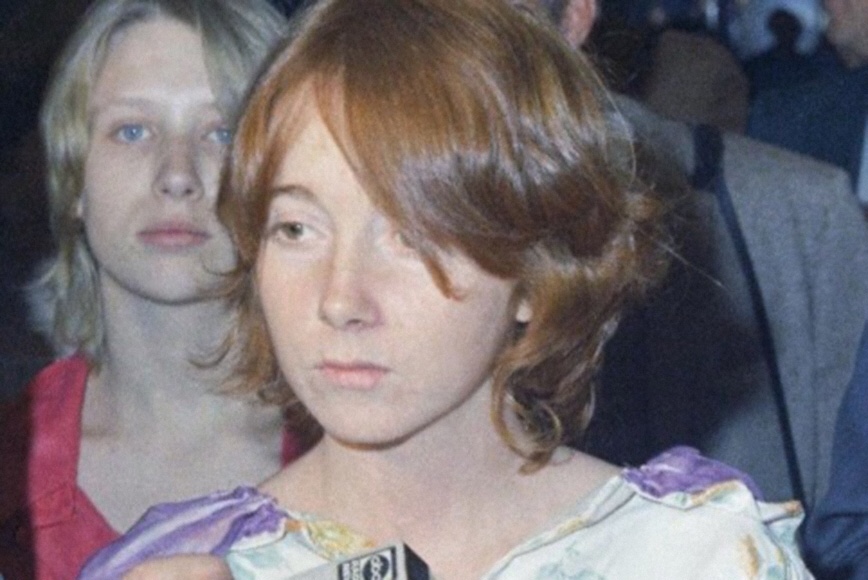
Lynette “Squeaky” Fromme

AKA: Squeaky, Red, Elizabeth Elaine Williamson

DOB: 10/22/48

Prisoner ID: 06075-180

Prison: Federal Medical Center Carswell

Parole Status: Paroled August 16, 2009

Born in Santa Monica, California, Lynette Alice Fromme grew up in Westchester, California where her father William worked as an aeronautical engineer. Lyn was the first of 3 children, was a talented, well-liked child that toured throughout the United States and Canada in a song and dance troop called the Lariats. In Junior High School Lynette was active with many after school activities. She was a member of the Athenian Honor Societyas well as the Girls Athletic Club. In her drama class Lyn befriended a young Phil Hartman, who eventually gained fame on shows like Saturday Night LiveThe Simpsons, & Newsradio. When her class gave out superlatives, Lynette was voted “Personality Plus”. 

As Lyn grew older, the relationship between her and her father grew apart. Neighbors remembered William Fromme as a tyrant-like figure, who seemed to punish Lyn for little or nothing at all. In High School, Lynette became more rebellious, using drugs and alcohol. She worked in a Canvas shop where coworkers would see Lyn burn herself with lit cigarettes, and shoot staples into her forearm with a staple gun. She briefly dated Bill Siddons, who went on to be the road manager of The Doors. However, Siddons’ mother felt that Lyn was disturbed, and talked Bill into steering clear of her. 

After High School, Lynette bounced around, living with different people. She eventually moved back home and enrolled at El Camino Junior College. It wasn’t long before Lyn and her father were fighting again. The two got into a fight over a definition of a word, and it was the last straw for Lynette; again, she hit the road. It was at this time, that Lyn met Charles Manson on Venice Beach. Impressed by Manson, she quickly decided to leave Los Angeles to travel with Charlie and Mary Brunner

Lynette had a special spot in the family; according to Paul Watkins, no one but Charlie was allowed to sleep with Lyn. At Spahn’s Ranch, Fromme spent most of her time taking care of the 80 year-old blind owner, George Spahn. Lynette would make squeak-like noises when George ran his hands up her legs, so he dubbed her “Squeaky.” Lynette was arrested with the family in both the Spahn and Barker Ranch raids. During the Tate-Labianca murder trial Lyn was frequently arrested. The charges ranged from contempt of court, loitering, trespassing on county property, to attempted murder, for a LSD lanced hamburger given to Barbara Hoyt in Hawaii.

After Manson was convicted, Squeaky moved to San Francisco to be closer to San Quentin. She maintained contact with defense attorney Paul Fitzgerald, and family members in and out of jail. However, prison officials were uncomfortable about her and wouldn’t permit her to see Charlie. When Lyn wasn’t petitioning to see Manson, she began writing a book about the family.

In September of 1972, Lynette was arrested in connection with the murders of James and Reni Willet. Authorities soon found she wasn’t involved with the murders, however they were reluctant to let her go. Finally on January 2nd 1973, all charges against Lyn were dropped, and she was released the following day. On her release Lynette was immediately arrested by LAPD. She had been accused of robbing a 7-11 convenience store in October of 1972. At the trial Lyn’s accuser, a 17 year-old 7-11 employee, admitted that the robber didn’t have the “X” scar on her forehead. Once again the charges weren’t dropped until another woman was arrested and confessed to the crime. Freedom was bittersweet for Lyn, the Family was falling apart. Mary, Gypsy, Katie, Leslie, and Sadie all wanted nothing to do with Manson.

Later that year, Lynette moved to Sacramento with Sandra Good. The reason for the move was once again to be closer to Manson; Charlie had been moved from San Quentin to Folsom Prison. While walking in a park Fromme befriended a 64 year-old man named Harold “Manny” Boro. According to Boro’s daughter-in-law, the two were lovers.

In Sacramento, Lyn and Sandy became more preoccupied with saving the environment. It was around this time that Charlie started to talk about the Order of the Rainbow, his own religion in which Lyn and Sandy would be nuns of. Each of the Manson girls was given a color; Lynette was dubbed “Red” and was given the duty of saving the Redwoods. Their Lifestyles would be very different compared to the Spahn’s Ranch days. The girls weren’t allowed to smoke, have sex, or watch “movies with violence that sets thoughts to death and confusion.”

From their P Street apartment, Lyn and Sandy started the International People’s Court of Retribution; a fictitious terrorist group that would assassinate executives and CEO’s of companies that polluted the earth. The two sent out hundreds of threatening letters that claimed that there were thousands of members of the terrorist group just waiting to kill. While trying to get the local news to report the damage being done to the Redwoods from logging, Lyn was informed that the President of the United States was coming to town. On September 5, 1975, Lynette headed down to Capital Park with a loaded Colt .45 automatic pistol (borrowed from Manny Boro) strapped to her leg. When President Gerald Ford came walking down the path, Lynette pulled out her gun. Immediately Secret Service Agents wrestled Lyn to the ground, and the President escaped untouched.

At her trial, Lynette followed Charlie’s example and chose to represent herself. However, her presence in the courtroom was short lived. When Lyn lectured about the Redwoods and her other environmental concerns, Judge Thomas McBride instructed Lyn to stick to things relevant to her case. As Lyn continued to talk about whales and pollution, McBride had her removed from the courtroom. Squeaky was returned to her jail cell, where she spent most of the trial, watching from closed circuit television. Later on in the case, and nearly costing a mistrial, it was discovered that U.S. Attorney Dwayne Keyes had failed to turn over some exculpatory evidence. In late November of 1975, a jury convicted Lynette of Attempted Assassination of the President of the United States of America. Upon sentencing, an angry Lynette threw an apple at Dwayne Keyes’ head, afterwhich Squeaky was sentenced to Life.

Squeaky was sent away to the Alderson Federal Corrections Institute in West Virginia. She was eventually reconnected with fellow family member Sandy Good, after she was transferred to a new prison in Pleasanton, California, where Good was serving time for sending threatening letters. In March of 1979, Lynette attacked a Croatian Nationalist named Julienne Busic, imprisoned from her connection in a 1976 airline hijacking. Squeaky hit Busic in the head with the claw end of a hammer, got 15 months added to her sentence, and was sent back to Alderson. On December 23, 1987, Lyn got word that Charlie was dying of cancer, and escaped from Alderson. She was picked up 2 days later having traveled only a few miles. Squeaky then bounced around the prison system: from Lexington, Kentucky, to Marianna, Florida, and finally to the Federal Medical Center Carswell, near Fort Worth, Texas where she remained until her release on August 16, 2009.

Exercise Addiction

Obviously, there are many health benefits to working out regularly. It’s good for our cardiovascular system, can relieve stress, and it releases feel good chemicals like endorphins. But just like anything, it’s best in moderation, and when exercise is done excessively, it can come with some dangerous health complications of its own.

So let’s jump into what exercise addiction is: simply put, it’s an unhealthy obsession with physical fitness and working out and we feel helpless to stop even if we know it’s not good for us or is out of control. It’s that second portion, the part about not being able to stop, that differentiates this from professional athletes, olympians, and marathon runners. Sure those people could have exercise addiction, but it’s not just the amount of exercise we do that’s an indicator of this, it’s much more than that.

If we think about it, we can imagine a lot of reasons why someone would become addicted to exercise: it’s a distraction, it makes us feel good, and it’s something our society supports. And it’s not a big jump from that for us to understand why those of us with eating disorders can struggle with it as well. Since eating disorders are coping skills, and exercise can reduce stress and make us feel good. Not to mention that it still feeds into that ED voice by giving us a false sense of control and makes us think that we are achieving something worthwhile.

Manson Family Movies

‘Manson’ (1973)

This is the original Manson documentary, featuring interviews with Family members like Lynette “Squeaky” Fromme and Paul Watkins, as well as Vince Bugliosi, the Los Angeles deputy district attorney and lead prosecutor for the Manson murder trial. Viewers get an inside look into what life was like in the Family thanks to footage shot on their home at Spahn Ranch. Other standout interviews include those with the cellmates of Susan Atkins — one of the three female Family members convicted of murder — who detailed her plans to murder other celebrities like Elizabeth Taylor and Frank Sinatra next. Manson was even nominated for an Academy Award for best documentary, though it lost to one about a different kind of charismatic preacher.

‘Helter Skelter’ (1976)

With taglines like “His name is Charles Manson. His disciples call him God. He preached death!” you know exactly what you’re in for with this campy CBS made-for-TV-movie based on Bugliosi’s bestselling book of the same name. Given the source material, much of the film takes place during the murder trial. To his credit, Steve Railsback is equally convincing and terrifying as Manson. Though it may appear dated now, the movie was incredibly popular when it first aired, even earning three Primetime Emmy nominations. 

‘Charles Manson: Superstar’ (1989)

Buckle up — this is a weird one. The film’s aim appears in the first few minutes: “This tape is designed to deprogram the minds of those who are still thinking — those who have not yet been lulled into sedation by the soothing lies that surround us.” The problem is that if the filmmakers were trying to convince people that Manson was a normal, rational guy, that mission was not accomplished — mostly due to interviews with the man himself from inside San Quentin prison. In case that wasn’t enough, the documentary is partially narrated by Zeena LaVey, daughter of Anton LaVey, the founder of the Church of Satan, and the person behind the topless revue called “the Witches’ Sabbath,” where Atkins was a dancer before she joined the Family. 

‘Manson, My Name Is Evil’ (2009)

 The plot of this movie centers around a fictional member of the Manson jury: a straight-laced, sheltered young man who becomes infatuated with Leslie Van Houten — one of the three women eventually accused of murder for the deaths of Rosemary and Leno LaBianca. The Canadian-produced film draws parallels between the Manson murders and the 1968 My Lai massacre, when American soldiers killed more than 500 civilians in Vietnam, including pregnant women and infants. It’s part satire, part social commentary, and a little odd, but overall a different spin on a well-known story. 

‘The Six Degrees of Helter Skelter’ (2009)

If you’ve ever wanted to take one of those tours in Los Angeles that visit locations associated with Manson, but have never had the opportunity, this documentary has you covered. which makes sense, considering it was produced in conjunction with Dearly Departed Tours, a company that specializes in showing tourists the macabre side of Los Angeles. (They’ve even had a five-hour tour of Topanga Canyon and Spahn Ranch scheduled for the 50th anniversary of the murders which sold out.) The draw of this film is being able to virtually visit more than 40 Manson-related locations in southern California from the comfort of your own couch — including footage Nine Inch Nails frontman Trent Reznor shot in 1993 while he was recording in the house on Cielo Drive where actor Sharon Tate and four others were murdered, shortly before it was demolished. 

‘Life After Manson’ (2014)

This quick, 25-minute documentary focuses on Patricia Krenwinkel — a Family member who participated in both nights of murders in August 1969. If you’ve ever wondered how a person could get to the place of leaving their old life behind to wholeheartedly follow someone like Manson, this film will provide some background. Krenwinkel openly discusses her life before Manson, as well as what it was like to endure his abusive manipulation techniques, and why she considers herself to be an entirely different person than the 19-year-old who committed murder almost 50 years ago. 

‘Manson Family Vacation’ (2015)

Unlike the other scripted films on this list, this movie’s plot isn’t a retelling of the Manson murders or trial. Instead, this film takes place in the present and stars Jay Duplass as your average family man whose adopted brother is obsessed with Charles Manson. When Conrad (the brother, played by Linas Phillips) makes a surprise visit to Los Angeles, he insists on dragging Nick (Duplass) around on a tour of the Manson murder sites. The final stop on their excursion is a remote house in Death Valley where Conrad supposedly has a job lined up with an “environmental organization.” At this point, Nick learns the real reason behind this trip and the truth about his brother. 

‘Manson’s Lost Girls’ (2016)

In a surprise move, Lifetime made a movie about the women of the Manson Family that Variety described as “a credible account of that historical moment.” This time, former follower Linda Kasabian — who played chauffeur and lookout for both nights of murders in August 1969 — takes center stage. She was granted immunity for her role in the crimes for agreeing to testify against Manson, Susan Atkins, Patricia Krenwinkel and Leslie Van Houten in court (both in real life and this movie). With an impossibly attractive cast and plenty of sex, drama and violence, it’s basically everything you’d hope for from a Lifetime movie.

‘Manson Speaks: Inside the Mind of a Madman’ (2017)

This two-part documentary examines Manson’s claim that the Family was responsible for more than 35 murders. Armed with more than 26 hours of conversations with Manson, taped over a decade, a retired cold-case detective and an independent researcher investigate several unsolved murders that took place in November and December 1969 in an attempt to determine if they were the work of Manson or his followers. Highlights include interviews with Aesop Aquarian — a former friend-of-the-Family who is reluctant to share too much — and Windy Bucklee, a former Spahn Ranch worker who lived there at the same time as the Family, and says he almost shot Manson during an argument. 

‘Manson: Music from an Unsound Mind’ (2019)

Manson made no secret of his ambitions to be a rockstar, famously befriending Beach Boys’ drummer Dennis Wilson. This documentary provides an in-depth look into his failed attempt to be a professional musician, starting with his love of music as a child. What really makes this documentary stand out, though, are the interviews. In addition to former Family member Dianne Lake — who was known within the Family as Snake — there are interviews with Manson’s fellow inmate from 1966, the Beach Boys’ producer who recorded Manson’s demo, as well as Anthony DeCurtis and David Felton from Rolling Stone.

‘Charlie Says’ (2019)

Another recent entry to the Manson movie canon, Charlie Says tells the story of the Family and murders from the perspective of three of his female followers. It flashes between the summer of 1969 and after the trial, when Atkins, Van Houten, and Krenwinkel are imprisoned for their crimes. This movie also stands out because it was written by Guinevere Turner, who was born into the Lyman Family — a commune lead by folk musician Mel Lyman, who Rolling Stone referred to as the “East Coast Charles Manson” in 1971.

Sources: IMDb, Rolling Stone

The Karpman Victim – Drama Triangle

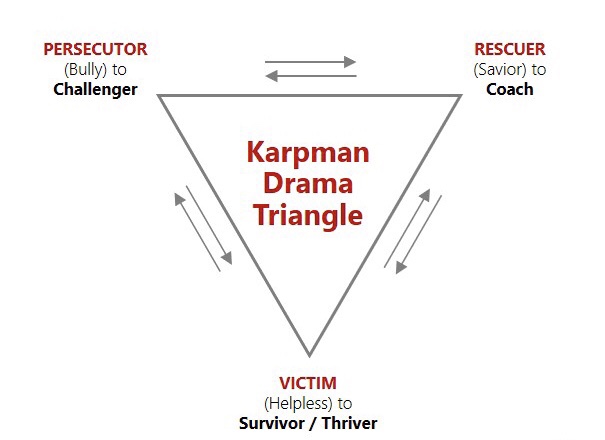
The magical tool to figure this pattern out is called the Drama Triangle. Stephen Karpman created the model in 1968 within the framework of Transactional Analysis. Thanks to this tool we can analyze clearly what is happening in the relationships since the Drama Triangle sheds light on the automatic and dysfunctional interaction between 2 (or more) people.

In a relationship within the Drama Triangle, there are 2 main characters (male or female) who shift from one role to another:

  • The Rescuer
  • The Persecutor
  • The Victim.

The Three Roles In The Drama Triangle

What do the roles entail? 

The Rescuer

Rescuers get involved in other people’s lives eagerly waiting for recognition and approval. By making assumptions on other people’s needs they are stepping in to help before anyone has asked them for anything and create a debt of gratitude. They believe that others need them and they impose their solution. In doing so they prevent others from solving their problems themselves. At the same time they manifest their moral superiority.

Feeling responsible for others

Since Rescuers feel responsible for the happiness and well-being of others, they immediately strive to comfort, pacify or calm people down so that these people don’t get to feel their disagreeable emotions like pain, anger, disappointment or sadness. Rescuers also want to have good relationships with everyone, as they like harmony. That is why they avoid conflicts or standing their ground at all costs, even if they end up wasting their time, money or energy. They have a tendency to please people in order to avoid criticism and rejection. After all, they aspire to feel accepted and loved by everyone.

Emotionally disconnected

For all these reasons they are disconnected from their own emotions. Therefore, it is difficult, if not impossible, to have emotional intimacy in a relationship with them. They will flee in “doing”, they are busy at all times … the evidence is their diary: they don’t have a minute.

Codependent relationships

Despite having good intentions, they need Victims to be Rescuers. As a result their behavior encourages the Victim’s dependence and lack of autonomy. Rescuers will continue to be involved in codependent relationships (as with addicts, for example) that are harming them because they do not realize how damaging they are for them. 

Saying no is difficult

Rescuers have an imperative need to feel useful to cover up their anxiety and low self-esteem … in short, to give their life meaning. They never stop giving; basically because they don’t know how to say no. However, if they dare to say no, they will feel guilty and label themselves as selfish or stingy. They prioritize others’ needs ignoring their own, because they project on others their own unmet needs. Most of all they have difficulties in identifying their needs and desires.

Am I just nice or too nice? 

In short, they sacrifice themselves because they want to prove that they are good, generous and selfless people, who deserve love and recognition. And when someone tells them: “You are too nice”, they feel accordingly offended.

But Rescuing creates resentment and anger in themselves and in the Victims, not recognition, nor gratitude or respect. Whereupon Rescuers confirm their belief that Victims are ungrateful and take advantage of them.

Benefice of the coaching sessions for the Rescuer

When Rescuers attend coaching sessions, working on boundaries and the Drama Triangle guarantees favorable results. Once they have understood the detrimental dynamics and know what their needs are, they are able to control their eagerness to rescue and consequently to change their behavior.

The Persecutor

Am I right  or … am I totally right? 

Persecutors know everything and are always right. Those who are wrong are the others. Therefore they pretend to know what is best for other people. They characteristically see everything either in black or in white; Grey does not exist. Their motto is: either you are with me or you are against me.

Like Rescuers, they feel morally superior and need Victims in order to play their role as a Persecutor.

Discounting others 

They ignore not only other people’s feelings but also their value. That is why they criticize, find fault, persecute, blackmail and abuse their power. In particular they use shame and guilt to manipulate. They can even punish (if only with their moodiness or their silence) so that Victims feel anxious and inferior. Persecutors always find a culprit or an enemy: the other. Thus there is no way to resolve a conflict with them since in each conversation you have to tread carefully and not contradict them. They use threats to get what they want because they have a sense of entitlement. And what they want is for others not only to learn their lesson and to agree with them, but also to change and do things the Persecutor’s way.

Relationships based on power and control

Persecutors feel a lot of anger and righteous indignation, which they vent on “innocent” Victims with gusto. They do not consider themselves as abusive or aggressive though because they believe that the Victims deserve their lot.
In order to feel safe Persecutors want to be in control and they fight for the power in the relationship. They impose their point of view to establish a Winner-Loser relationship that allows them to cover up their inferiority complexes, their insecurity and their vulnerability that they don’t recognize. Moreover they confuse having needs with being needy. Consequently they won’t accept any help or will refuse even to consider that someone can do something for them.

Others are to blame 

But there will always be somebody to blame, somebody who doesn’t meet their expectations. When something goes wrong, Persecutors hold others accountable for what happens to avoid blaming themselves. With that attitude it seems unlikely that they will attend coaching sessions since the person responsible or the culprit is always the other. They project on others (outside of themselves) what they don’t want to see in themselves. In effect, they would call others arrogant because they are not able to recognize and accept their own arrogance.

Childhood trauma 

As they have often suffered some kind of abuse in childhood, they always get defensive. They reproduce the behavior of the abuser because they hope that by dominating others they will preventively protect themselves from abuse or contempt.

The Victim

Discounting themselves

Victims feel powerless, incompetent, stuck and sometimes desperate. They discount their skills and their resources. They don’t recognize their own ability to change things or to influence their destiny either. Besides, precisely because life happens to them, they often suffer from depression. And if by miracle something good happens, they attribute it to luck.

Not owning it 

According to Victims they can’t be blamed for anything because they are not responsible. What’s happening is not their fault. They are convinced that life is very hard, that nobody understands them and that no matter what they do they will be unable to change their lot. They always find excuses that justify their situation.

Avoiding responsibilities 

Victims take any opportunity to complain; even their usual tone of voice is querulous. They are the eternal victims of life itself and manage to get sick, have ailments and attract misfortunes. As soon as they get stressed, which happens very easily, they make a mountain out of a molehill. They simply avoid responsibilities and don’t want to make decisions for fear of being wrong.

In addition, you can recognize Victims by their usual way of apologizing for everything and nothing. You can often hear them say “Sorry!”, “Excuse me!”, “I beg your pardon!”.

“A Victim is someone who is waiting for something bad to happen … and it usually does.”

~ Barry K. Weinhold

Not only do they live in an illusory world composed of all the things they imagine or assume (dire consequences, negative emotions or adverse reactions of others, …), they also make assumptions without relying on reality, without having sound evidence that would justify their beliefs.

Passivity

Of course Victims adopt a passive behavior: they don’t take action, they don’t make any effort to get out of the pothole. They are experts in manipulating others to get what they need without getting too involved in the result. They usually sabotage the help they receive and secretly rejoice in their failures. No matter how often they attend coaching sessions, their passivity and lack of commitment may cause the attempt to fail, so that they can blame the coach for the lack of results and prove them incompetent.

Two types of Victims 

Victims attract either Rescuers or Persecutors. On the one hand, Victims create codependence – an excessive emotional or psychological dependence on the Rescuer. This attitude encourages a passive behavior that prevents them from developing fully their abilities. On the other hand, Victims confirm their belief that life is hard and unfair when they are abused by Persecutors.

Therefore, to play their role as Victims they need Rescuers or Persecutors … or both.

Nutrition & Mental Health

Amazingly, people often don’t seem to understand the connection between nutrition and mental health. Time and again people struggling with their mental health don’t eat breakfast, skip lunch, or don’t bother to eat until later in the day. Sometimes people simply forget to eat because they’re busy. Some people lose their appetite because of emotional distress, and others just can’t be bothered to eat properly. Whatever the reason, it’s imperative to understand the connection between poor eating habits and mood and anxiety, as this will underscore the importance of eating properly.

Everybody has heard the cliché you are what you eat, but for some reason many people don’t connect that adage with how they feel mentally and emotionally. What you eat doesn’t affect just physical health; it can also affect general mood on a day-to-day basis. In order for the brain to communicate with the rest of the body, it needs neurotransmitters, such as serotonin, which are made from the nutrients in the foods we eat. Not eating enough, or not eating a well-balanced, nutritious diet, prevents the body from being able to create enough of these chemicals, and depression and anxiety can result.

Skipping meals can make blood sugar levels fall too low, and that eating starchy, sugary foods or simple carbohydrates can cause blood sugar levels to increase too much. These fluctuations in blood sugar levels can make a person irritable, forgetful, or sad. In addition, not eating enough can lead to emotional reactivity, higher stress levels, and an overall sense of reduced well-being. Research in children has shown that skipping breakfast has negative consequences on problem solving, short-term memory, and concentration, and that eating breakfast increases positive mood, contentment, and alertness.

Of course, if a person has anorexia or bulimia, this must be addressed in therapy, either by your therapist or by someone who has experience with eating disorders—and sooner rather than later due to the health risks these disorders present. Besides treating the eating disorder, make sure to see a medical doctor and declared physically healthy enough to do this kind of work.

Sources: DBT Made Easy

Bezoars

Bezoars are a mass of undigested fiber formed in the stomach of animals, and were once believed to be an antidote to poison. They have been found in the guts of cows and even elephants, but mostly they come from the “bezoar goat.” Bezoars were first introduced into medieval Europe by Arab physicians. Although doubts were sometimes cast over their properties, the demand continued well into the 18th century.

Wealthy collectors spent considerable sums to acquire the best “stones,” which were kept in elaborate cases. According to A Compleat History of Druggs, first published in French in 1694, the medicinal strength of the bezoar depended on the animal that produced it. “Bezoar Stones taken from Cows,” for instance, “have nothing near the good Qualities” of the true bezoar goat. On the other hand, a mere two grains of “the Bezoar that is found in Apes” will have a far greater effect than that of a mere goat.

Five principles of good writing according to George Orwell

Five principles of good writing according to George Orwell:

i. Never use a metaphor, simile or other figure of speech which you are used to seeing in print.

ii. Never use a long word where a short one will do.

iii. If it is possible to cut a word out, always cut it out.

iv. Never use the passive where you can use the active.

v. Never use a foreign phrase, a scientific word or a jargon word if you can think of an everyday English equivalent.

vi. Break any of these rules sooner than say anything outright barbarous.