
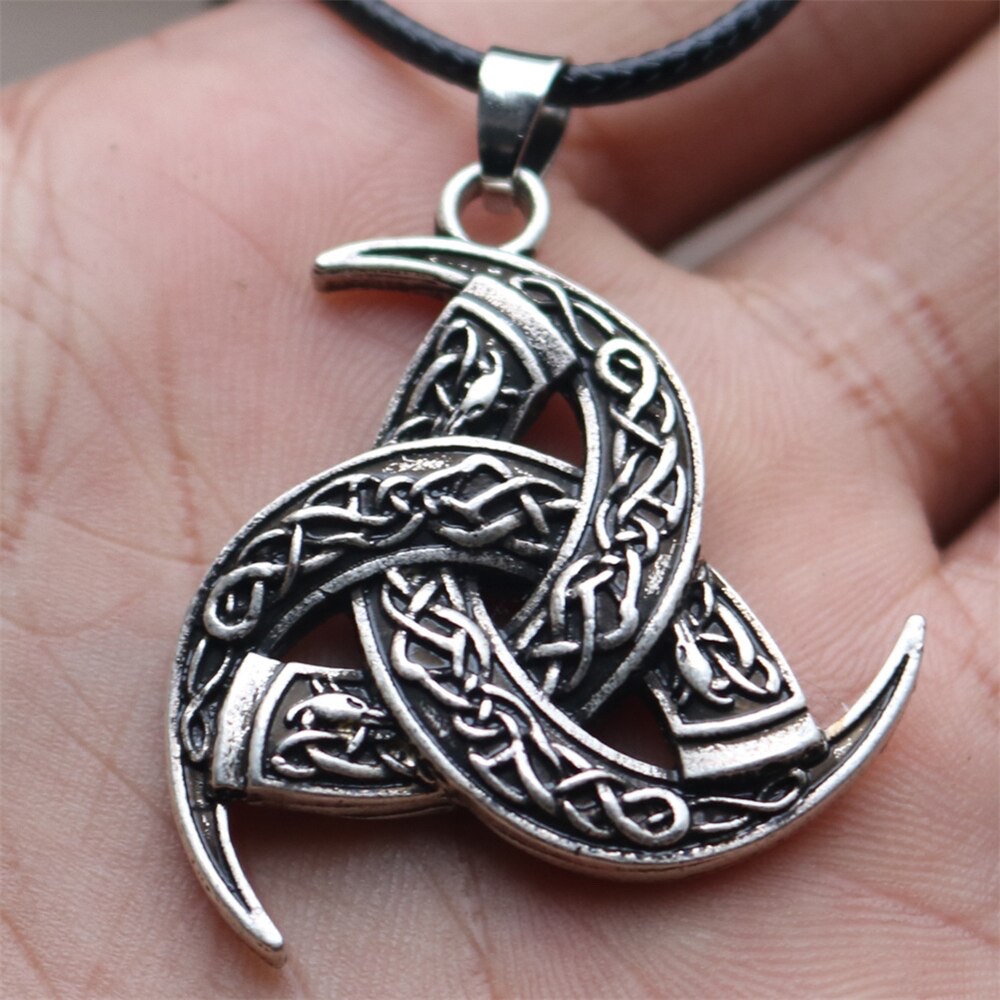


What is Asatru?
Long before Christianity came to northern Europe, the people there – our ancestors – had their own religions. One of these was Asatru. It was practiced in the lands that are today Scandinavia, England, Germany, France, the Netherlands, and other countries as well. Asatru is the original or native religious belief for the peoples who lived in these regions.
What does the word “Asatru” mean?
It means, roughly, “belief in the Gods” in Old Norse, the language of ancient Scandinavia in which so much of our source material was written. Asatru is the name by which the Norsemen called their religion.
When did Asatru start?
Asatru is thousands of years old. Its beginnings are lost in prehistory, but it is older than Christianity, Islam, Buddhism, or most other religions. The spiritual impulses it expresses are as ancient as the European peoples themselves – at least 40,000 years, and perhaps much older.
Why do we need Asatru? Aren’t most people who want religion satisfied with Christianity or one of the other “Established” religions?
People are attracted to the better-known religions because they have genuine spiritual needs which must be filled. People are looking for community and for answers to the “big questions”: What life is all about, and how we should live it. For many people today, the so-called major faiths do not have answers that work. Asatru has answers, but it has not been an alternative for most seekers because they haven’t known about it. Once they realize that there is another way – a better, more natural, more honorable way – they will not be satisfied with anything less than a return to the religion of their ancestors.
Why is the Religion of our Ancestors the Best One for Us?
Because we are more like our ancestors than we are like anyone else. We inherited not only their general physical appearance, but also their predominant mental, emotional, and spiritual traits. We think and feel more like they did; our basic needs are most like theirs. The religion which best expressed their innermost nature – Asatru – is better suited to us than is some other creed which started in the Middle East among people who are essentially different from us. Judaism, Islam, and Christianity are alien religions which do not truly speak to our souls.
Why Did Asatru Die Out if it was the Right Religion for Europeans?
Asatru was subjected to a violent campaign of repression over a period of hundreds of years. Countless thousands of people were murdered, maimed, and exiled in the process. The common people (your ancestors!) did not give up their cherished beliefs easily. Eventually, the monolithic organization of the Christian church, bolstered by threats of economic isolation and assisted by an energetic propaganda campaign, triumphed over the valiant but unsophisticated tribes.
Or so it seemed! Despite this persecution, elements of Asatru continued down to our own times – often in the guise of folklore – proving that our own native religion appeals to our innermost beings in a fundamental way. Now, a thousand years after its supposed demise, it is alive and growing. Indeed, so long as there are men and women of European descent, it cannot really die because it springs form the soul of our people. Asatru isn’t just what we BELIEVE, it’s what we ARE.
Wasn’t the Acceptance of Christianity a Sign of Civilization – A Step up From Barbarism?
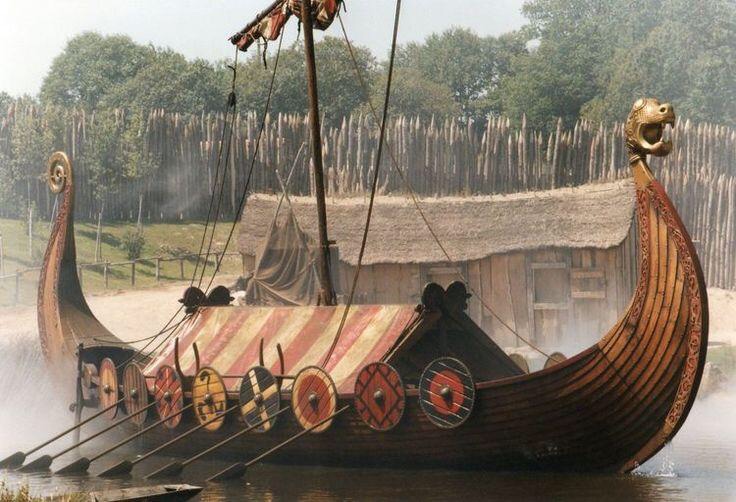
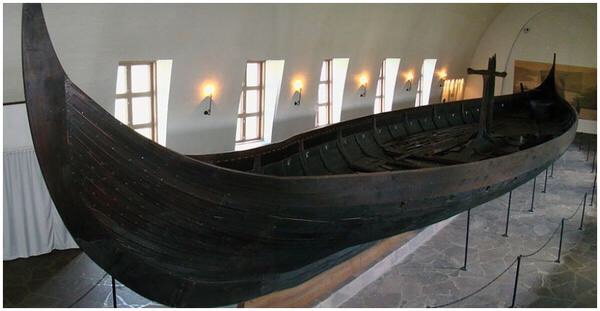
No! The atrocities committed by Christians, Muslims, and Jews throughout history are hardly a step up from anything. The so-called “barbarians” who followed Asatru (the Vikings, the various Germanic tribes, and so forth) were the source of our finest civilized traditions – trial by jury, parliaments, Anglo Saxon common law, and the rights of women, to name a few. Our very word “law” comes from the Norse language, not from the tongues of the Christian lands. We simply did not and do not need Christianity to be civilized.
You Say That Asatru was the Religion of the Vikings, Among Other Early European Cultures. Weren’t They a Pretty Bloodthirsty Lot?
Modern historians agree that the Vikings were no more violent than the other peoples of their times. Remember, the descriptions of Viking raids and invasions were all written by their enemies, who were hardly unbiased. Both the Islamic and Christian cultures used means every bit as bloody, if not more so, than the Norsemen. It was a very rough period in history for all concerned!
We Keep Talking About the Vikings. Does This Mean That Asatru is Only for People of Scandinavian Ancestry?
No. Asatru, as practiced by the Norse peoples, had so much in common with the religion of the other Germanic tribes, and with their cousins the Celts, that it may be thought of as one version of a general European religion. Asatru is for all European peoples, whether or not their heritage is specifically Scandinavian.
What are the Basic Beliefs of Asatru?
We believe in an underlying, all-pervading divine energy or essence which is generally hidden from us, and which is beyond our immediate understanding. We further believe that this spiritual reality is interdependent with us – that we affect it, and it affects us.
We believe that this underlying divinity expresses itself to us in the forms of the Gods and Goddesses. Stories about these deities are like a sort of code, the mysterious “language” through which the divine reality speaks to us.
We believe in standards of behavior which are consistent with these spiritual truths and harmonious with our deepest being.
How Does Asatru Differ From Other Religions?
Asatru is unlike the better-known religions in many ways. Some of these are:
We are polytheistic. That is, we believe in a number of deities, including Goddesses as well as Gods. We do not accept the idea of “original sin”, the notion that we are tainted from birth and intrinsically bad, as does Christianity. Thus, we do not need “saving”.
The Middle Eastern religions teach either a hatred of other religions or a duty to convert others, often by force. They have often practiced these beliefs with cruel brutality.
We do not claim to be a universal religion or a faith for all of humankind. In fact, we don’t think such a thing is possible or desirable. The different branches of humanity have different ways of looking at the world, each of which is valid for them. It is only right that they have different religions, which of course they do.
Do You Consider the Norse Myths to be True?
The myths are stories about the Gods and Goddesses of Asatru. They are ways of stating religious truths. That is, we would say they contain truths about the nature of divinity, our own nature, and the relationship between the two. We do not contend that the myths are literally true, as history.
What About These Gods and Goddesses? Are They Real?
Yes, they are real. However, just as most Christians do not think their God is really an old bearded figure sitting on a golden chair in heaven, we do not believe Thor (for example) is actually a muscular, man-shaped entity carrying a big hammer. There is a real Thor, but we approach an understanding of him through this particular mental picture.
Do followers of Asatru Pray to Their Gods and Goddesses?
Yes, but not quite the way most people mean by the word. We never surrender our will to theirs or humble ourselves before them, because we see ourselves as their kin, not as inferior, submissive pawns. Nor do we beg and plead. We commune with them and honor them while seeking their blessing through formal rites and informal meditation. Living a full and virtuous live is a form of prayer in itself. Our religion affects all parts of our lives, not just those fragments that we choose to call “religious”.
Don’t You Worship Stones and Trees and Idols?
No. These objects are not Gods, so we don’t worship them. We do sometimes use these items as reminders of a God or Goddess, and we believe they can become “charged” with a certain aspect of the divine energy, but we would never confuse them with the actual deities.
What are the Standards of Behavior Taught in Asatru?
Some of the qualities we hold in high regard are strength, courage, joy, honor, freedom, loyalty to kin, realism, vigor, and the revering of our ancestors. To express these things in our lives is virtuous, and we strive to do this. Their opposites – weakness, cowardice, adherence to dogma rather than to the realities of the world, and the like – constitute vices and are to be avoided. Proper behavior in Asatru consists of maximizing one’s virtues and minimizing one’s vices. This code of conduct reflects the highest and most heroic ideals of our people.
Don’t all Religions Believe in These Things You’ve Just Named?
No. People may honestly believe that this is the case, but examination does not bear this out. They believe in freedom, yet their scriptures say they are slaves to their God. They accept that joy is good, but their teachings laden them with guilt because of some imaginary “original sin”. Their instinct is to understand Nature’s world from verifiable evidence, yet they are trained to believe black is white, round is flat, and natural instincts are evil without question when the teachings of their church conflict with reason or with known facts.
Many of us instinctively believe in the values of Asatru because they have been passed down to us from our ancestors. We want to believe that other religions espouse those values, so we see what we want to see. Most people just haven’t yet realized that the major religions are saying things that conflict with the values we know in our hearts are right. To find northern European virtues, one should look where those virtues have their natural home – Asatru.
What do You Have to Say About Good and Evil?
Good and evil are not constants. What is good in one case will not be good in another, and evil in one circumstance will not be evil under a different set of conditions. In any one instance, the right course of action will have been shaped by the influence of the past and the present. The result may or may not be “good” or “evil”, but it will still be the right action.
In no case are good and evil dictated to us by the edicts of an alien, authoritarian deity, as in the Middle East. We are expected to use our freedom, responsibility, and awareness of duty to serve the highest and best ends.
What Does Asatru Teach About an Afterlife?
We believe that there is an afterlife, and that those who have lived virtuous lives will go on to experience greater fulfillment, pleasure, and challenge. Those who have led lives characterized more by vice than by virtue will be separated from kin and doomed to an existence of dullness and gloom. The precise nature of the afterlife – what it will look like and feel like – is beyond our understanding and is dealt with symbolically in the myths.
There is also a tradition in Asatru of rebirth within the family line. Perhaps the individual is able to choose whether or not he or she is re-manifested in this world, or there may be natural laws which govern this. In a sense, of course, we all live on in our descendents quite apart from an afterlife as such.
We of Asatru do not overly concern ourselves with the next life. We live here and now, in this life. If we do this and do it well, the next life will take care of itself.
Does Asatru Involve Ancestor Worship?
Asatru says we should honor our ancestors. It also says we are bonded to those ancestors in a special way. However, we do not actually worship them.
We believe our forebears have passed to us certain spiritual qualities just as surely as they have given us various physical traits. They live on in us. The family or clan is above and beyond the limits of time and place. Thus we have a reverence for our ancestry even though we do not involve ourselves in ancestor worship as such.
Does Asatru Have a Holy Book, Like the Bible?
No. There are written sources which are useful to us because they contain much of our sacred lore in the form of myths and examples of right conduct, but we do not accept them as infallible or inspired documents. Any religion which does this is deceiving its members about the purity and precision of the written word. The various competing factions of Middle Eastern religions are proof of this. Their conflicting interpretations can not all be correct!
There are two real sources of holy truth, and neither expresses itself to us in words. One is the universe around us, which is a manifestation of the underlying divine essence. The other is the universe within us, passed down from our ancestors as instinct, emotion, innate predispositions, and perhaps even racial memory. By combining these sources of internal and external wisdom with the literature left us by our ancestors, we arrive at religious truths. This living spiritual guidance is better than any dusty, dogmatic “holy book”, whose writings are often so ambiguous that even clerical scholars disagree and whose interpretations change with the politics of the times.
Asatru has Been Described as a “Nature Religion”. What Does That Mean?
We treasure the spiritual awe, the feeling of “connecting” with the Gods and Goddesses, which can come from experiencing and appreciating the beauty and majesty of Nature. Our deities act in and through natural law. By working in harmony with Nature we can become co-workers with the Gods. This attitude removes the opposition between “natural” and “supernatural” and between religion and science.
For us, following a “Nature religion” means recognizing that we are part of Nature, subject to all its laws, even when that offends our Christian-influenced misconceptions. We may be Gods-in-the-making, but we are also members of the animal kingdom – a noble heritage in its own right. Our ancestors and their predecessors prevailed through billions of years of unimaginable challenges, a feat which must awe even the Gods themselves.
Where Did the Universe Come From, According to Asatru?
Our myths describe the beginning of the universe as the unfolding of a natural process, rather than one requiring supernatural intervention. Followers of Asatru need not abandon modern science to retain their religion. The old lore of our people describes the interaction of fire and ice and the development of life from these – but this is symbolic, and we will leave it to our scientists to discover how the universe was born.
What are the Runes, and What do They Have to do With Asatru?
Runes are ancient Germanic symbols representing various concepts or forces in the universe. Taken together, they express our ancestors’ world view. Their meanings are intimately connected with the teachings of Asatru. Our myths tell how Odin, father of the Gods, won them through painful ordeal so that Gods and humans alike might benefit from their wisdom.
How is Asatru Organized?
Asatru is non-authoritarian and decentralized, expressing our love of freedom. While we do have definite tenets, we have little dogma. There is no all-powerful spiritual leader whose word is law, no “pope” of Asatru to dictate truth. No guru or priest has an exclusive direct line to the Gods. The Gods live in you!
Sources: asatru.org











 Mark Bere Peterson’s Counterculture, Urban Legends, Paganism & Witchcraft