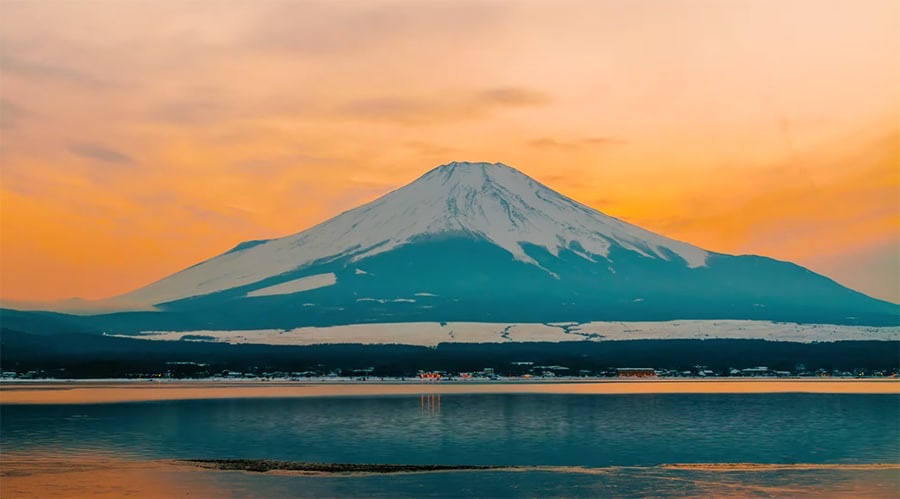
72 Micro-Seasons of Japan

There are many ways to think about the year, from the four seasons to the solstices, to holidays and yearly school traditions, to our everyday appointments and deadlines. In Japan, there are 72 micro-seasons that each connect around five days to happenings in the natural world…

The 72 milestones are smaller steps of change that reflect the rhythms of Japan’s ecosystems, but they also embrace the impermanence and constant change that can be applied to any ecosystem.

The 72 Seasons:

BEGINNING OF SPRING

East wind melts the ice (Feb  4th – 8th)

Bush warblers start singing in the mountains (Feb 9th – 13th)

Fish emerge from the ice (Feb 14th – 18th)

RAINWATER

Rain moistens the soil (Feb 19th – 23rd)

Mist starts to linger (Feb 24th – 28th)

Grass sprouts, trees bud (March 1st – 5th)

INSECTS AWAKEN

Hibernating insects surface (March 6th – 10th)

First peach blossoms (March 11th – 15th)

Caterpillars become butterflies (March 16th – 20th)

SPRING EQUINOX

Sparrows start to nest (March 21st – 25th)

First cherry blossoms (March 26th – 30th)

Distant thunder (March 31st – April 4th)

PURE & CLEAR

Swallows return (April 5th – 9th)

Wild geese wild north (April 10th – 14th)

First rainbows (April 15th- 19th)

GRAIN RAINS

First reeds sprout (April 20th – 24th)

Last frost, rice seedlings grow (April 25th – 29th)

Peonies bloom (April 30th – May 4th)

BEGINNING OF SUMMER

Frogs start singing (May 5th – 9th)

Worms surface (May 10th – 14th)

Bamboo shoots sprout (May 15th – 20th)

LESSER RIPENING

Silkworms start feasting on mulberry leaves (May 21st -25th)

Safflowers bloom (May 26th – 30th)

Whats ripens and is harvested (May 31st – June 5th)

GRAIN BEARDS & SEEDS

Praying mantises hatch (June 6th – 10th)

Rotten grass becomes fireflies (June 11th – 15th)

Plums turn yellow (June 16th – 20th)

SUMMER SOLSTICE

Self-heal withers (June 21st – 26th)

Irises bloom (June 27th – July 1st)

Crow-dipper sprouts (July 2nd – 6th)

LESSER HEAT

Warm winds blow (July 7th – 11th)

First lotus blossoms (July 12th – 16th)

Hawks learn to fly (July 17th – 22nd)

GREATER HEAT

Paulownia trees produce seeds (July 23rd – 28th)

Earth is damp, air is humid (July 29th – August 2nd)

Great rains sometimes fall (August 3rd – 7th)

BEGINNING OF AUTUMN

Cool winds blow (August 8th – 12th)

Evening cicadas sing (August 13th – 17th)

Thick fog descends (August 18th – 22nd)

MANAGEABLE HEAT

Cotton flowers bloom (August 23rd – 27th)

Heat starts to die down (August 28th – September 1st)

Rice ripens (September 2nd – 7th)

WHITE DEW

Dew glistens white on grass (September 8th – 12th)

Wagtails sing (September 13th – 17th)

Swallows leave (September 18th – 22nd)

AUTUMN EQUINOX

Thunder ceases (September 23rd – 27th)

Insects hole up underground (September 28th – October 2nd)

Farmers drain fields (October 3rd – 7th)

COLD DEW

Wild geese return (October 8th – 12th)

Chrysanthemums bloom (October 13th – 17th)

Crickets chirp around the door (October 18th – 22nd)

FROST FALLS

First frost (October 23rd – 27th)

Light rains sometimes fall (October 28th – November 1st)

Maple leaves and ivy turn yellow (November 2nd – 6th)

BEGINNING OF WINTER

Camelias bloom (November 7th – 11th)

Land starts to freeze (November 12th – 16th)

Daffodils bloom (November 17th – 21st)

LESSER SNOW

Rainbows hide (November 22nd – 26th)

North wind blows the leaves from the trees (November 27th – December 1st)

Tachibana citrus tree leaves start to turn yellow (December 2nd – 6th)

GREATER SNOW

Cold sets in, winter begins (December 7th – 11th)

Bears start hibernating in their dens (December 12th – 16th)

Salmons gather and swim upstream (December 17th – 21st)

WINTER SOLSTICE

Self-heal sprouts (December 22nd – 26th)

Deer shed antlers (December 27th – 31st)

Wheat sprouts under snow (January 1st – 4th)

LESSER COLD

Parsley flourishes (January 5th – 9th)

Springs thaw (January 10th – 14th)

Pheasants start to call (January 15th – 19th)

GREATER COLD

Butterburs bud (January 20th – 24th)

Ice thickens on streams (January 25th – 29th)

Hens start to lay eggs (January 30th – February 3rd)
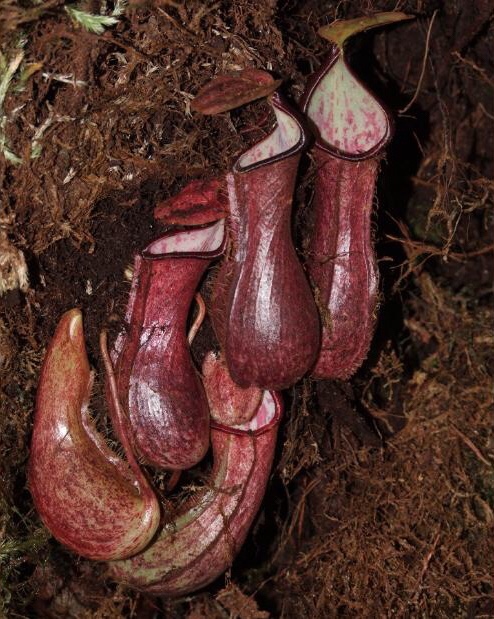
Underground Carnivorous Plant Discovered

Scientists have discovered a carnivorous plant that grows prey-trapping contraptions underground, feeding off subterranean creatures such as worms, larvae and beetles.

The newly found species of pitcher plant was unearthed in the Indonesian province of North Kalimantan, on the island of Borneo. Like other pitcher plants, Nepenthes pudica has modified leaves, known as pitfall traps or pitchers, that its prey fall into before being consumed. (One species is so large it can trap rats.)

No other species of pitcher plant known to science catches its prey underground. The plant forms specialized underground shoots with small, white, chlorophyll-free leaves, the researchers said. The pitchers are much larger than the leaves and have a reddish color.

“This species places its up-to-11-cm-long (4.3-inch-long) pitchers underground, where they are formed in cavities or directly in the soil and trap animals living underground, usually ants, mites and beetles,” said lead study author Martin Dančák of Palacký University Olomouc, Czech Republic, in a news release.

Only three other groups of carnivorous plants are known to trap underground prey, but they all use very different trapping mechanisms and, unlike Nepenthes pudica, can catch only minuscule organisms, the researchers said.

Source: CNN

Thich Nhat Hanh on “Right Speech”

Thich Nhat Hanh on “Right Speech”:

“Sometimes we speak clumsily and create internal knots in others. Then we say, ‘I was just telling the truth.’ It may be the truth, but if our way of speaking causes unnecessary suffering, it is not Right Speech.

The truth must be presented in ways that others can accept. Words that damage or destroy are not Right Speech.

Before you speak, understand the person you are speaking to. Consider each word carefully before you say anything, so that your speech is ‘Right’ in both form and content.”

~ Thich Nhat Hanh

Himeji Castle (姫路城)

Himeji Castle is a hilltop Japanese castle complex situated in the city of Himeji which is located in the Hyōgo Prefecture of Japan. The castle is regarded as the finest surviving example of prototypical Japanese castle architecture, comprising a network of 83 buildings with advanced defensive systems from the feudal period.

Himeji Castle, also known as White Heron Castle (Shirasagijo) due to its elegant, white appearance, is widely considered as Japan’s most spectacular castle for its imposing size and beauty and its well preserved, complex castle grounds. The castle is both a national treasure and a world heritage site. Unlike many other Japanese castles, it was never destroyed by war, earthquake or fire and survives to this day as one of the country’s twelve original castles. The castle recently underwent extensive renovation over several years and was fully re-opened to the public in 2015.

Himeji Castle lies at a strategic point along the western approach to the former capital city of Kyoto. The first fortifications built on the site were completed in the 1400s, and were gradually enlarged over the centuries by the various clans who ruled over the region. The castle complex as it survives today is over 400 years old and was completed in 1609. It is made up of over eighty buildings spread across multiple baileys, which are connected by a series of gates and winding paths.

K Coffee – Yamatokoriyama, Japan

K Coffee opened in February 2014. It grew originally out of “Art Festival Hanarart”, an art festival which was held in Yamatokoriyama in 2013 with the aim of using art to bring vitality to the region. During the festival, Mr. Kazuya Mori opened up a coffee shop at the old gas station where the current shop now stands.

The “goldfish phone box” was set up as one of the artworks displayed at the festival. After the art festival was over, there were plans to clear away both the coffee shop and the phone box; however, Mr. Mori had taken a liking to the place, and started direct negotiations to rent the spot. Most people living in the area apparently were of the opinion “a coffee shop will never work in this location”; however, Mr. Mori was determined to take up the challenge. He went ahead with the plan, and K Coffee was inaugurated as an official business.

What makes this literal hole-in-the-wall so well known is their peculiar fish tank out front. It’s an old school phone booth filled to the top with water and goldfish.

Buddha Park of Ravangla

The Buddha Park of Ravangla, also known as Tathagata Tsal, is situated near Ravangla in South Sikkim district of the Indian state of Sikkim. It was constructed between 2006 and 2013, and features a 130-foot-high statue of the Buddha, erected to mark the 2550th anniversary of the birth of Gautama Buddha, as its main attraction. The statue, built of 60 tonnes of copper, is an example of repousse work. Mount Narsing forms the backdrop to the statue.

The site was chosen within the larger religious complex of Rabong Monastery, itself a centuries-old place of pilgrimage. Also nearby is Ralang Monastery, a key monastery in Tibetan Buddhism. Built and installed through the joint efforts of the government and people of Sikkim, the statue was consecrated on 25 March 2013 by the 14th Dalai Lama. The Buddhist circuit of the park was built under a state government project, intended to boost pilgrimage and tourism to the region. The Cho Djo lake is located within the complex, surrounded by forest. The park has a tranquil setting with spacious pathways, and there is a Buddhist conclave, a meditation centre and a museum with a spiral gallery.

Roman Aqueduct of Segovia, Spain

The huge Roman aqueduct built in Segovia, Spain, by the Roman Emperor Trajan (AD 98-117).

One of the best preserved Roman engineering works, the structure was constructed from approximately 24,000 dark colored Guadarrama granite blocks without the use of mortar. The above ground part is 2,388 feet long. And it consists of approximately 165 arches that are more than 30 feet in height.