Cicero

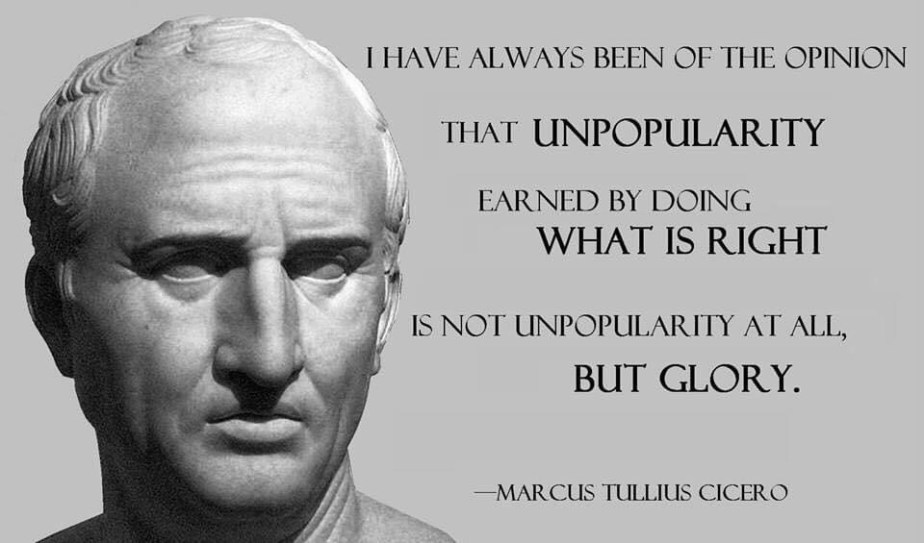
People will disagree with me, but hands down best politician in history and it’s not even close:

~ He squared off against Caesar and was friends with young Brutus.

~ He advised the legendary Pompey on his somewhat botched transition from military hero to politician.

~ He lambasted Mark Antony and was master of the smear campaign, as feared for his wit as he was for exposing his opponents’ sexual peccadilloes.

~ Brilliant, voluble, cranky, a genius of political manipulation but also a true patriot and idealist, Cicero was Rome’s most feared politician, one of the greatest lawyers and statesmen of all times.

~ Machiavelli, Queen Elizabeth, John Adams and Winston Churchill all studied his example.

If you haven’t read any of his books I’d suggest reading his book: “Orations” and then one or more of “Tusculan Disputations” or “On the Commonwealth and On the Laws” or “On Moral Ends” or “The Nature of the Gods.”

#Cicero

Vegvisir: Runic Compass

The device was believed to show the way back home and protect seamen and their ships from storms. The Vegvisir was like a guide helping its bearer to find his way home. Norse people believed that the Vegvisir had special powers and it was treated like talisman for luck, protection and blessings. This powerful symbol could help a person to find the right way in storms or bad weather whatever unfamiliar surroundings he or she may encounter. It has also long played an important role among people who believe in magic powers, such as Norse Shamans. As a spiritual compass, this magical device guides your heart and steps to make the right choices in life. If you have lost yourself and your faith, this sacred symbol helps you find confidence again.

The Triple Horn of Odin

The Triple Horn of Odin is yet another symbol of the great Norse God Odin. The symbol consists of three interlocked drinking horns, and is commonly worn or displayed as a sign of commitment to the modern Asatru faith. The horns figure in the mythological stories of Odin and are recalled in traditional Norse toasting rituals. In Norse mythology there are some tales describing God’s quest for the Odhroerir, a magical mead brewed from the blood of the wise god Kvasir.

Happy Saturnalia!

Happy Saturnalia!!

Saturnalia was celebrated December 17th – 23rd.

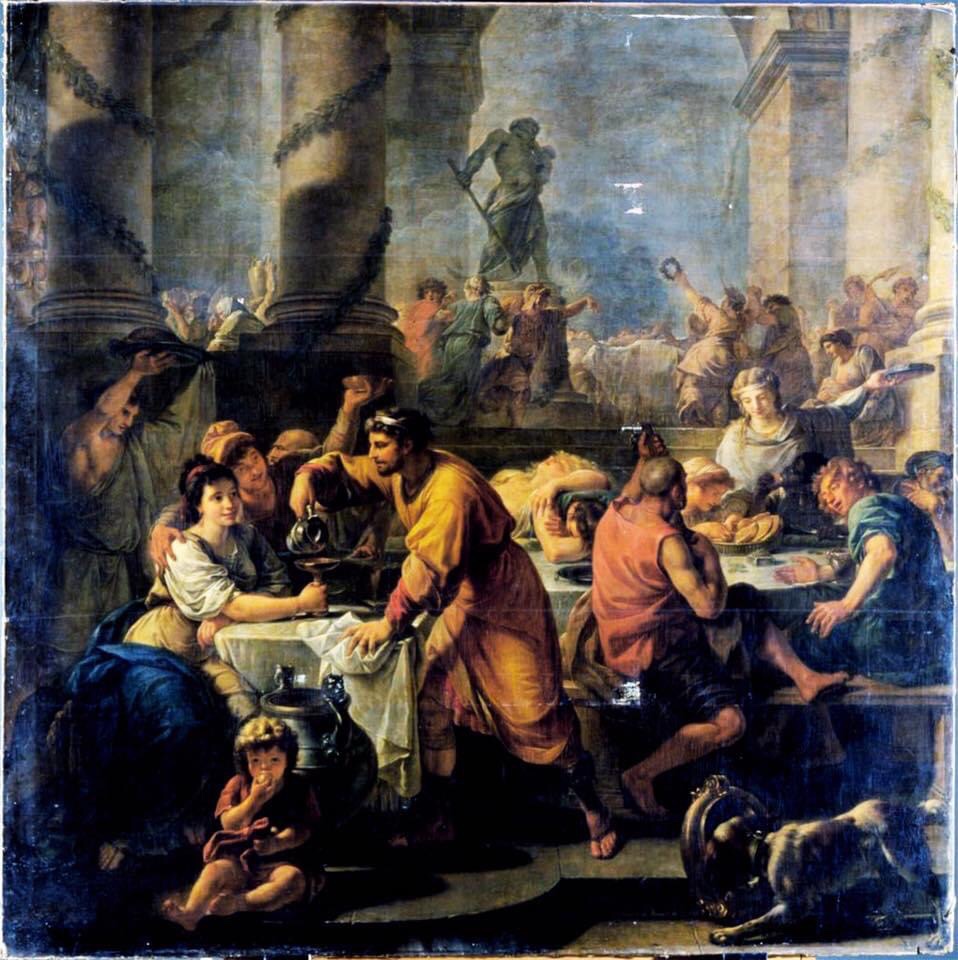
Saturnalia was a lawless, drunken time in Rome where literally anything was okay. This was the original Purge, in which laws were suspended for a brief stretch of time. Saturn, the Roman god of agriculture, liberation and time, was celebrated at what is perhaps the most famous of the Roman festivals, the Saturnalia, It was a time of feasting, role reversals, free speech, gift-giving and revelry. (i.e.: gender-bending sex, drinking, telling people off, trading gifts and doing whatever you want).

After solstice, the darkest night of the year, the renewal of light and the coming of the new year was celebrated in the later Roman Empire at the Dies Natalis of Sol Invictus, the “Birthday of the Unconquerable Sun,” on December 25th.

Image: Saturnalia (1783) by Antoine Callet, showing his interpretation of what the Saturnalia might have looked like.

#Saturnalia #AncientRome

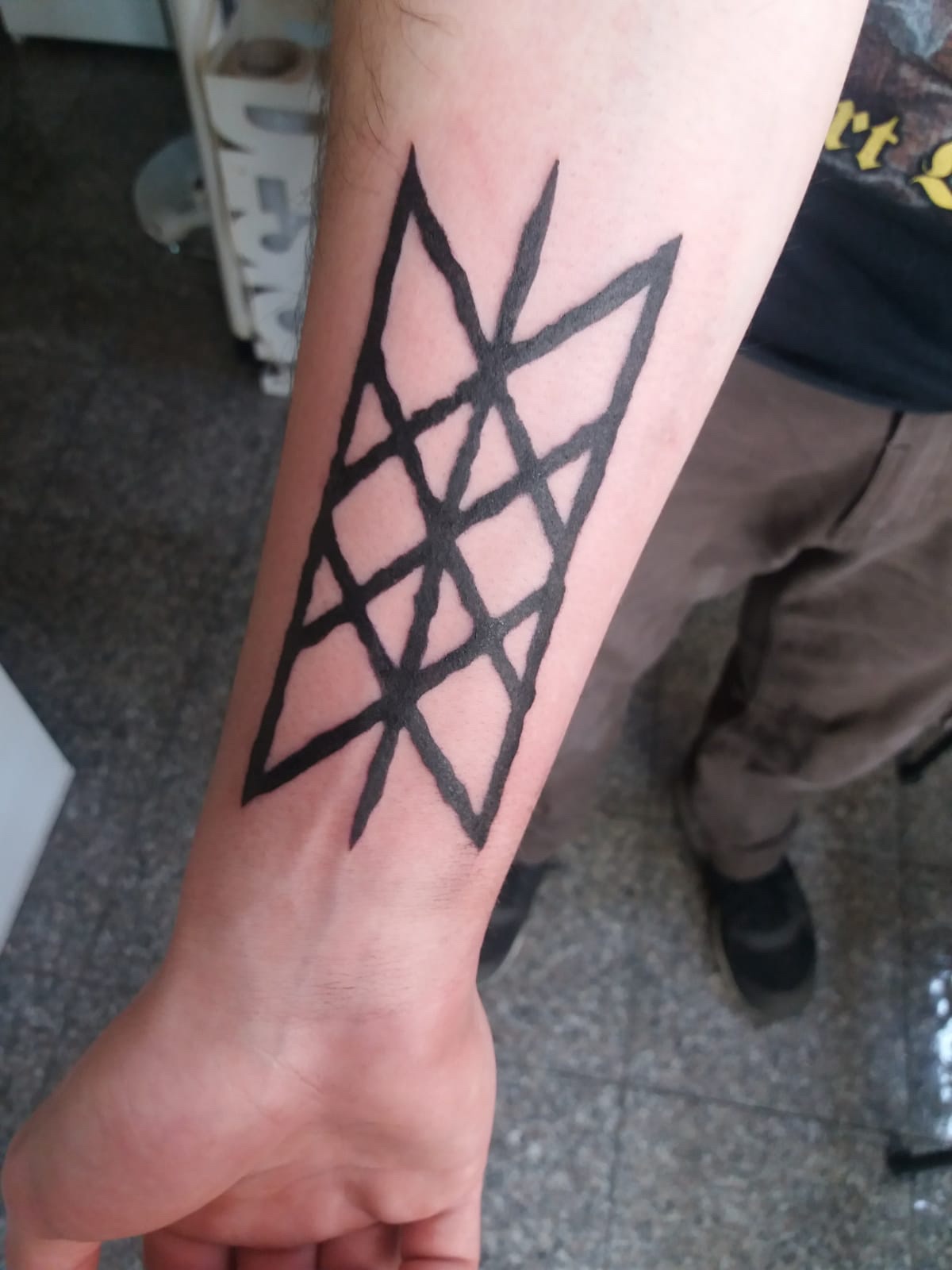
Web Of Wyrd (Skuld’s Net): Viking Matrix Of Fate

In Norse mythology the concept of fate is reflected by the Web of Wyrd that is created by the Norns who were known as ‘Shapers of Destiny. The Norns were goddesses who ruled the fates of people, determined the destinies and lifespans of individuals.

With its nine stave, the Web of Wyrd is a matrix of fate that represents past, present and future events in a person’s life. Norse people believed that everything we do in life affects future events and thus, all timelines, the past, present and future are connected with each other.

The Dullahan

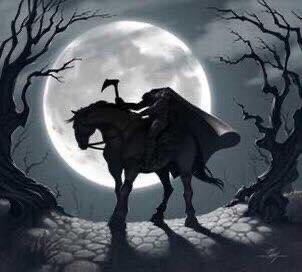
The Dullahan (pronounced DOOL-a-HAN) – also referred to as the Headless Horseman – is a type of Fae originating from Irish folklore. This sinister being appears as a man or a woman riding upon a black horse, but the rider has no head upon their shoulders. Typically, the Dullahan carries its head under its arm; the head appears dead and rotten (sometimes compared to having flesh resembling old cheese) with a demonic grin spread across its face from ear to ear.

The Dullahan carries a whip made from a human’s spine. Sometimes pulls wagon which is adorned with funeral objects (e.g., candles in skulls to light the way, the spokes of the wheels are made from thigh bones, the wagon’s covering made from a worm-chewed pall or dried human skin). When the Dullahan stops riding, that is where a person is due to die and when a Dullahan calls out the person’s name, the person immediately perishes.

There is no way to bar the road against a Dullahan—all locks and gates open to them when they approach. They do not appreciate being watched while on their errands, throwing a basin of blood on those who dare to do so (often a mark that they are among the next to die), or even lashing out the watchers’ eyes with their whips. They are however frightened of gold, and even a single gold pin can drive a Dullahan away.

Huginn And Muninn: The Twin Ravens In Norse Mythology

Among the Aesir gods in Norse mythology, the supreme god Odin, is frequently depicted sitting on his high seat, Hlidskjalf, in Asgard, the home of the gods.

Hugin is believed to represent ‘memory’, while Munin personifies ‘thought’. Every day, Odin sends them out and they fly across the worlds to seek for important news and events. Odin surveys the worlds from Hlidskjalf and must know reports of what is going on in all Nine Worlds. In the evening, Hugin and Munin return to Odin’s shoulders and during dinner in Valhalla, they whisper all they have heard in his ears.

The Helm Of Awe: Viking Symbol For Protection

The Helm of Awe is one of the most powerful protective Viking symbols used not only for the purpose of protection from disease, but even to encourage all people who might suffer from depression or anxiety.

In Norse myths it is said that the Helm of Awe symbol was worn between the eyes to cause fear in your enemies, and to protect against the abuse of power. The Norse word for this very important symbol (Ægishjálmr or Aegishjalmur) is translated in English “helm of awe” or “helm of terror.” The meaning of the name awe is to strike with fear and reverence; to influence by fear, terror or respect; as, his majesty awed them into silence.