Valhalla

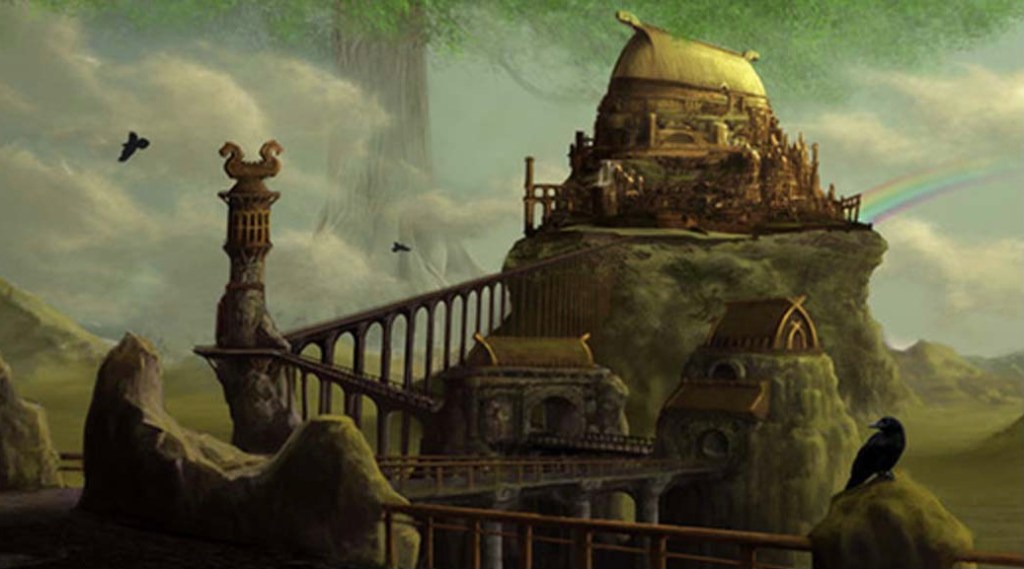
Valhalla (“Hall of the Slain”; Old Norse Valhöll): Odin’s dwelling in Ásgarðr and the paradise of warriors. One cannot enter it if death came as a result of illness or old age. Armor lies strewn about on the benches. The roof is made of spears and shields. Atop it is where the goat Heiðrún stands; she chews on the leaves of Læraðr (Yggdrasill), and from her udders comes the mead that the valkyries serve to the einherjar.

Near her is the stag Eikþyrnir (“Oak-thorny”) who munches on the branches of the tree; moisture flows from his antlers. Valhalla has 540 doors. Each day the warriors emerge from them to fight each other in the courtyard for amusement, and they return to the hall when the signal for dinner has sounded. The cook, Andhrímnir, then serves them the meat of the boar Sæhrímnir. On the day of Ragnarök the warriors will leave Valhalla to confront the forces of chaos.

Freyja

Freyja (“Lady,” “Mistress”): She is the primary goddess of the family of the Vanir, daughter of Njörðr and the sister of Freyr. She was married to Óðr, with whom she had a daughter, Hnoss, also called Gersimi. When her husband went away on his travels, she wept gold tears. She lives in Fólkvangr, one of the heavenly dwellings, and her hall is called Sessrumnir. She shares half of the dead with Odin. She is fond of love poetry and is famous for her promiscuity. The worship addressed to her was erotic, which likens her to several Eastern deities, Cybele in particular. Freyja travels in a chariot drawn by cats.

Her field of activity is vast: life (birth) and death, love and battle, fertility and black magic. It is Freyja who taught the Æsir the magic rites most honored by the Vanir.

She is beautiful and lascivious, which inspired the giants with an urge to wed her, and the historiographical texts tell us that she was good to invoke for matters concerning love.

In skaldic poetry she was called Vanadís (“Dise of the Vanir”), Sýr (“Sow”), Gefn (“The Giving One”), Hörn (“Spirit of Flax”?), and Mardöll (“Sea-brightener”). She was quite renowned because of her necklace, Brísingamen. She obtained this piece of jewelry by sleeping with the dwarves who had forged it. The strength of the worship dedicated to Freyja is well attested by Norwegian and Swedish place-names, but the texts remain silent on this point.

The Gorgons

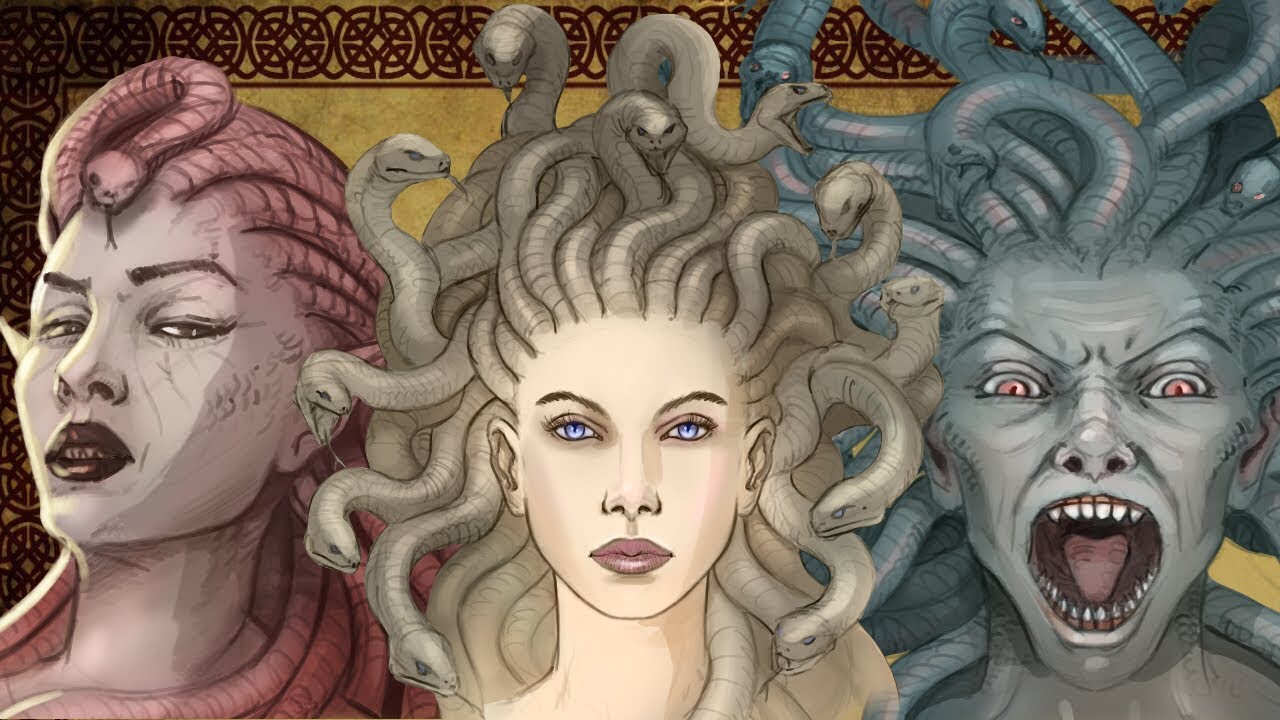
The Gorgons were three monstrous sisters whose lair was in the territory of Libya. Their names were Stheno, Euryale, and Medusa, and they were said to be the offspring of the sea deity Phorcys and his sister Ceto. According to an alternate tradition, they sprang from the earth goddess Gaia, who produced them to be her allies in the battle between the gods and Giants. Of the Gorgon sisters only Medusa was mortal, and for that reason Perseus was sent to fetch her head. According to mythographer Apollodorus, the Gorgons had serpents as hair, large tusks like a boar’s, hands of bronze, and golden wings. Indeed, they were so hideous in appearance that they turned to stone all who looked upon them directly.

Cerberus

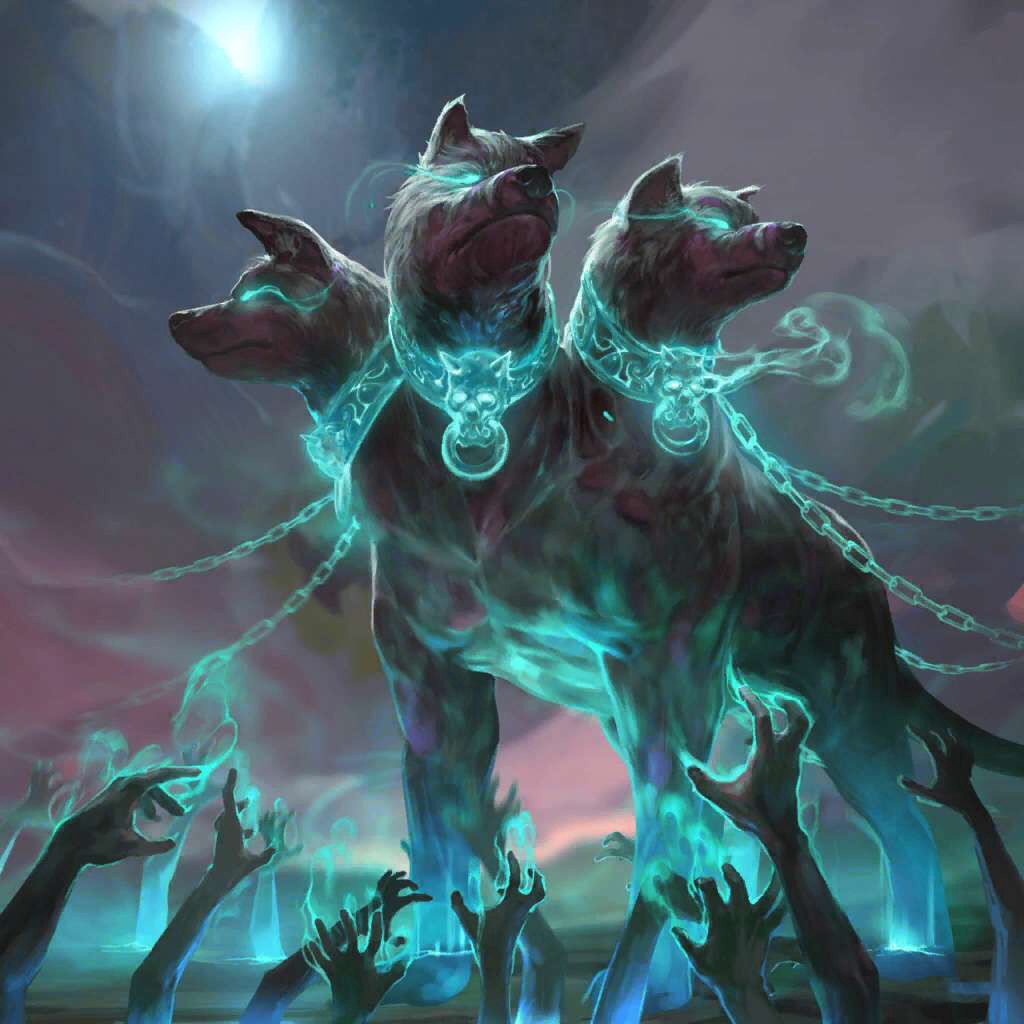
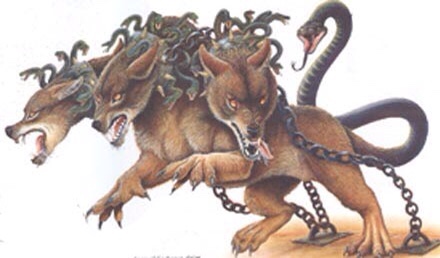
Cerberus, whom Homer calls “the hound of Hades,” was one of the brood of monsters, which include the Hydra of Lerna and the Chimaera, spawned by Typhon and the half maiden, half serpent Echidna. He was variously described as having as many as fifty or one hundred heads and as few as three. The mythographer Apollodorus writes that Cerberus, the three-headed dog, had the tail of a dragon and snakes’ heads growing from his back. For the poet Hesiod, Cerberus was an eater of raw flesh and had a bark like clashing bronze.

Cerberus’s duty was to allow the deceased to enter the House of Hades but to block the living from entering and the dead from leaving. On the instruction of the Sibyl of Cumae, the living hero Aeneas secured passage into Hades by throwing Cerberus a drugged honey cake. The best-known myth involving Cerberus is the tale of Hercules’s twelfth and final Labor (or by some accounts, the tenth): Hercules was ordered to bring Cerberus up from the Underworld, a task that he accomplished by overpowering the beast without the use of weapons. As the poet Ovid writes, upon reaching the realm of the living, the distressed hound raged, foam from its mouth falling upon the earth to produce the poisonous plant aconite, which the sorceress Medea used in attempting to kill the hero Theseus.

Worst year ever?

So is it just me or have you wondered what was the worst year to be alive (btw it’s not 2020):

Was it 1349, when the Black Death wiped out half of Europe? Nope!

Was it 1918, when the flu colloquially known as Spanish flu infected 500 million people and killed 50 million to 100 million people, mostly young adults? Nope!

Was it any of the years of the Holocaust, between 1941 and 1945? Nope!

It was 536!!!

“It was the beginning of one of the worst periods to be alive, if not the worst year.”
~ Michael McCormick, Medieval Historian

A mysterious fog plunged Europe, the Middle East, and parts of Asia into darkness, day and night—for 18 months.

“For the sun gave forth its light without brightness, like the moon, during the whole year.”
~ Procopius (500-554 AD), Byzantine Historian

Temperatures in the summer of 536 fell 1.5°C to 2.5°C, initiating the coldest decade in the past 2300 years. Snow fell that summer in China; crops failed; people starved. The Irish chronicles record a failure of bread from the years 536–539. Then, in 541, bubonic plague struck the Roman port of Pelusium, in Egypt. What came to be called the Plague of Justinian spread rapidly, wiping out one-third to one-half of the population of the eastern Roman Empire and hastening its collapse.

The cause…a cataclysmic volcanic eruption in Iceland spewed ash across the Northern Hemisphere early in 536. Two other massive eruptions followed, in 540 and 547. The repeated blows, followed by plague, plunged Europe into economic stagnation that lasted until 640.

Ancient Egyptian Concept of the Soul

To the Ancient Egyptians, the soul was the most important part of a person and it was separated into different parts making up it’s vehicle (the human, in this case).  There was one physical form and eight semi-divine parts which made up one’s soul. These parts are as follows:

~ Kha: The physical body of the human which decayed after death, according to the Egyptians, only if it was not mummified and persevered properly.

~ Ka: The double that lingered on in the tomb inhabiting the body or even statues of the dead, but was also independent of the deceased body and could move, eat and drink at will.

~ Akhu: This was the immortal part, the radiant and shining being that lived on in the Sahu, the intellect, will and intentions of the deceased that transfigured death and ascended to the heavens to live with the gods.

~ Sahu: The incorruptible spiritual body of man that could exist in the heavens, appearing from the physical body after the judgement of the dead was passed (if successful) with all of the mental and spiritual abilities of a living body.

~ Sekhem : This was the incorporeal personification of the life force of man, which lived in heaven with the Akhu, after death.

~ Khaibit: The shadow of a man, it could partake of funerary offerings and was able to detach itself from the body and travel at will, though it always was thought to stay near the Ba.

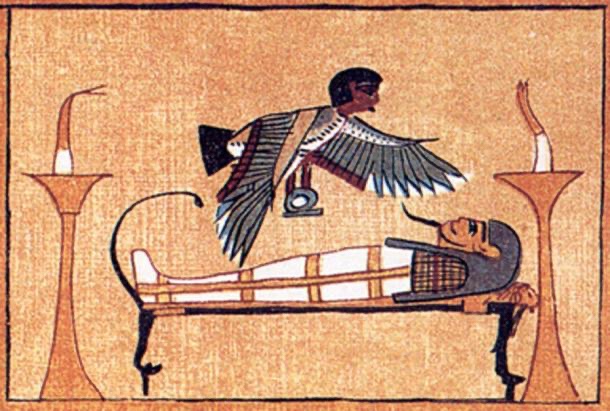
~ Ba: The human headed bird flitted around in the tomb during the day bringing air and and food to the deceased, but traveled with Ra on the Solar Barque during the evenings.

~ Ab: The heart, this was the source of good and evil within a person, the moral awareness and center of thought that could leave the body at will, and live with the gods after death, or be eaten by Ammut as the final death if it failed to weigh equally against Ma’at.

~ Ren: The true name, a vital part to man on his journey through life and the afterlife, a magical part that could destroy a man if his name was obliterated or could give power of the man if someone knew his Ren.

Duat: Ancient Egyptian Underworld

In ancient Egyptian mythology, the Duat is the underworld or the realm of the dead. It is the home of the god Osiris, Anubis, Thoth, Horus, Hathor, and Ma’at, and many grotesque spirits controlled by them. Ra, the sun god, also travels through the Duat every night and battles the serpent monster Apep.

The most important function of the Duat however is that it is where people’s souls go for judgment after death. Their tombs were viewed to be entrances into the Duat, and they could travel back and forth from the underworld through these burial chambers.

Within the Duat are many impressive geographical features. There are normal features like islands, fields, caverns, rivers, and mounds – but also unrealistic structures like lakes of fire, trees of turquoise, and walls of iron. Once someone had passed away, it was up to them to navigate this tricky landscape to become an akh, or blessed spirit. They had to pass through a series of gates protected by grotesque spirits with human bodies and heads of animals, knives, torches, or insects. Along the way were also mounds and caverns filled with animals or gods who would threaten the dead as they passed.

Once the dead passed all of these unpleasant spirits, if they did, they would reach the Weighing of the Heart. This ritual involved weighing the heart of the deceased against a feather, representing Ma’at – the goddess of truth and justice. This ritual was performed by Anubis. If the heart was out of balance, due to failure to follow Ma’at, then the heart would be devoured by Ammit, the Devourer of Souls. Those who did pass would travel to the paradise of Aaru.

** All we know about the Duat and the afterlife comes from funerary texts like the Book of the Dead, Pyramid Texts, Coffin Texts. **

Samhain: The Lore of Halloween

51EF6B60-5D71-4205-9695-0D67EC707FD6.jpeg

History

Samhain is a pagan religious festival originating from ancient Celtic spiritual tradition. In modern times, Samhain, a Gaelic word pronounced “sow-win”, is usually celebrated from October 31 to November 1 to welcome in the harvest and usher in the dark half of the year. The barriers between the physical world and the spirit world (the veil) break down during Samhain, allowing more interaction between humans and denizens of the Otherworld.

Ancient Celts marked Samhain as the most significant of the four quarterly fire festivals.  After the harvest work was complete, celebrants joined with Druid priests to light a community fire using a wheel that would cause friction and spark flames. The wheel was considered a representation of the sun and used along with prayers. Cattle were sacrificed, and participants took a flame from the communal bonfire back to their home to relight the hearth.

3566E2A0-AAB1-48A4-871D-C1BF342F93BC.jpeg

Christianity attempted to reframe Samhain as a Christian celebration The first attempt was by Pope Boniface in the 5th century. He moved the celebration to May 13 and specified it as a day celebrating saints and martyrs. The fire festivals of October and November, however, did not end with this decree.  In the 9th century, Pope Gregory moved the celebration back to the time of the fire festivals, but declared it All Saints’ Day, on November 1. All Souls’ Day would follow on November 2.

Neither new holiday did away with the pagan aspects of the celebration. October 31 became known as All Hallows Eve, or Halloween, and contained much of the traditional pagan practices. Trick-or-treating derives from ancient Irish and Scottish practices in the nights leading up to Samhain. In Ireland, mumming was the practice of putting on costumes, going door-to-door and singing songs to the dead. Cakes were given as payment.

Wicca Today

A broad revival of Samhain resembling its traditional pagan form began in the 1980’s.  Wicca celebration of Samhain run the gamut from the traditional fire ceremonies to celebrations that embrace many aspects of modern Halloween, as well as activities related to honoring nature or ancestors.  Wiccans look at Samhain as the passing of the year, and incorporate common Wiccan traditions into the celebration.

B1FCEDD1-46D6-4F67-8877-D1684059808B

Celtic Deconstructionists Today

Samhain is often called Oiche Shamnhna and celebrates the mating between Tuatha de Danaan gods Dagda and River Unis. They celebrate by placing juniper decorations around their homes and creating an altar for the dead where a feast is held in honor of deceased loved ones.

Sources:

  • History.com
  • BBC
  • “The Pagan Mysteries of Halloween,” By Jean Markale
  • “Samhain: Rituals, Recipes and Lore for Halloween,” By Diana Rajchel.

Pagan Roots: Saturnalia, Yule and Christmas

58E8FE6D-D96F-4F52-871A-7805A91E06B1

“It’s a mistake to say that our modern Christmas traditions come directly from pre-Christian paganism. you’d be equally wrong to believe that Christmas is a modern phenomenon. As Christians spread their religion into Europe in the first centuries A.D., they ran into people living by a variety of local and regional religious creeds.”

~ Ronald Hutton, Historian at Bristol University in the United Kingdom.

“Christian missionaries lumped all of these people together under the umbrella term pagan.”

~ Philip Shaw, who researches early Germanic languages and Old English at Leicester University in the U.K.

Early Christians wanted to convert pagans, but they were also fascinated by their traditions.  Christians of that period are quite interested in paganism.  It’s obviously something they think is a bad thing, but it’s also something they think is worth remembering. It’s what their ancestors did.  That’s why pagan traditions remained even as Christianity took hold. The Christmas tree is a 17th-century German invention, but it clearly derives from the pagan practice of bringing greenery indoors to decorate in midwinter. The modern Santa Claus is a direct descendent of England’s Father Christmas, who was not originally a gift-giver. However, Father Christmas and his other European variations are modern incarnations of old pagan ideas about spirits who traveled the sky in midwinter.

AD0485C3-E611-4717-81F1-265C203DD036

The two most notable pagan winter holidays were Germanic Yule and Roman Saturnalia. Christian missionaries gave these holidays a makeover and they are now known to us as Christmas:

Saturnalia was a lawless, drunken time in Rome where literally anything was okay.  This was the original Purge, in which laws were suspended for a brief stretch of time.  Saturn, the Roman god of agriculture, liberation and time, was celebrated at what is perhaps the most famous of the Roman festivals, the Saturnalia, It was a time of feasting, role reversals, free speech, gift-giving and revelry. (i.e.: gender-bending sex, drinking, telling people off, trading gifts and doing whatever you want).  After solstice, the darkest night of the year, the renewal of light and the coming of the new year was celebrated in the later Roman Empire at the Dies Natalis of Sol Invictus, the “Birthday of the Unconquerable Sun,” on December 25.

Scholars have connected the Germanic and Scandanavian celebration to the Wild Hunt, the god Odin and the pagan Anglo-Saxon Mōdraniht. Yule-tide was traditionally celebrated during the period from mid-November to mid-January.  Nordic countries use Yule to describe their own Christmas with its religious rites, but also for the holidays of this season. Present-day customs such as the Yule log, Yule goat, Yule boar, Yule singing, and others stem from the original pagan Yule, but are used in Christmas celebrations now, especially within Europe.  As leaders were baptized and converted, they shifted their traditional celebrations covertly, as not to upset the Chieftains. Yule was traditionally celebrated three days after midwinter, but shifted to reflect Christian dates.  Modern Wiccans and other neopagan religions often celebrate Yule as well. In most forms of Wicca, it’s celebrated at winter solstice as the rebirth of the Great horned hunter god, who is viewed as the newborn solstice sun. Some celebrate with their covens while others celebrate at home.

C650569F-1201-4A14-92A2-9BD795400534

Why this fixation on partying in midwinter, anyway? According to historians, it’s a natural time for a feast. In an agricultural society, the harvest work is done for the year, and there’s nothing left to be done in the fields. It’s a time when you have some time to devote to your religious life. It’s also a period when, frankly, everyone needs cheering up.  The dark days that culminate with the shortest day of the year, the winter solstice, could be lightened with feasts and decorations.

“If you happen to live in a region in which midwinter brings striking darkness and cold and hunger, then the urge to have a celebration at the very heart of it to avoid going mad or falling into deep depression is very, very strong.”

~ Ronald Hutton

“Even now when solstice means not all that much because you can get rid of the darkness with the flick of an electric light switch, even now, it’s a very powerful season.”

~ Stephen Nissenbaum, Author of the Pulitzer Prize finalist “The Battle for Christmas”

Without a Biblical directive to celebrate Jesus’s birthday and no mention of it in the Gospels of the correct date, it wasn’t until the fourth century that church leaders in Rome embraced the holiday. At this time many people had turned to a belief the Church found heretical: That Jesus had never existed as a man, but as a sort of spiritual entity.  If you want to show that Jesus was a real human being just like every other human being, not just somebody who appeared like a hologram, then what better way to think of him being born in a normal, humble human way than to celebrate his birth?”

Midwinter festivals, with their pagan roots, were already widely celebrated, and the date had a pleasing philosophical fit with festivals celebrating the lengthening days after the winter solstice.

“O, how wonderfully acted Providence that on that day on which that Sun was born…Christ should be born.

~ Thaschus Cæcilius Cyprianus (c. 200 – September 14, 258 AD) Bishop of Carthage

In the 16th century, Christmas became a casualty of this church schism, with reformist-minded Protestants considering it little better than paganism. This likely had something to do with the “raucous, rowdy and sometimes bawdy fashion” in which Christmas was celebrated.  In England under Oliver Cromwell, Christmas and other saints’ days were banned, and in New England it was illegal to celebrate Christmas for about 25 years in the 1600s. Forget people saying, “Happy holidays” instead of “Merry Christmas.”  If you want to look at a real ‘War on Christmas,’ you’ve got to look at the Puritans, they banned it!

While gift-giving may seem inextricably tied to Christmas, it used to be that people looked forward to opening presents on New Year’s Day.  They were a blessing for people to make them feel good as the year ends. It wasn’t until the Victorian era of the 1800s that gift-giving shifted to Christmas. According to the Royal Collection, Queen Victoria’s children got Christmas Eve gifts in 1850, including a sword and armor. In 1841, Victoria gave her husband, Prince Albert, a miniature portrait of her as a 7-year-old; in 1859, she gave him a book of poetry by Alfred, Lord Tennyson.

Let’s take on some of the traditions:

Almost every culture has someone like Santa Claus. He’s primarily based on St. Nicholas, a Fourth Century Lycian bishop from modern-day Turkey. One story says that he met a kind, impoverished man who had three daughters. St. Nick presented all three of them with dowries so that they weren’t forced into a life of prostitution, as dowries were expected to “pay off” families to take on the daughters.  Sinterklaas is the Dutch figure and Odin is the Norse god that Santa resembles. It wasn’t just Santa or men who did the gift-giving in those myths. There’s also the legend of La Befana, a kind Italian woman who leaves treats for children on the “Good” list, and the Germanic Frau Holle, who treats women during Solstice.

While people rarely show any excitement around the fruit-laden cakes these days, they were a real treat in times of yore. The cakes actually have origins in Egypt and were later disseminated by the Romans as they conquered parts of Europe.  Those cakes of Egypt were just about as dense and long-lasting as the brandied, fruit-studded cakes of today. Egyptians placed cakes of fermented fruit and honey on the tombs of their deceased loved ones so that they’d have something to munch on in the afterlife. Romans took similar cakes into battle made of mashed pomegranates and barley. Christians went into the crusades with honeycakes.  Fruitcakes are everywhere, no matter how hard you try to avoid them.

Caroling actually began as the Germanic and Norse traditions of wassailing. Wassailers went from home to home, drunk off of their asses, singing to their neighbors and celebrating their “good health.”  The traditional wassail beverage was a hot mulled cider, spiked with alcohol or fermented.

Mistletoe was considered a magical plant in Europe, especially among the Druids and Vikings, and holds significance in Native American cultures. Mistletoe is no modern quirk of Christmas, even Romans partook in fertility rituals beneath the mistletoe. Mistletoe stood as a neutral ground for feuding Norse tribes, who laid down their weapons in order to negotiate beneath the peace plant. The Druids thought it could protect them from thunder and lightning, as well.  Whether you’ve got the urge to make out, hide from a storm or talk it out, beware as mistletoe is super poisonous.

Romans loved wreaths and decorated everything with Laurel. Holly, ivy and evergreen are the more popular modern options today, and each one holds significance. Egyptians didn’t have evergreens, so they used palm fronds to celebrate Winter Solstice.  Christians love holly because the red berries symbolize the blood of Christ and the pointy leaves symbolize the crown of thorns. However, the advent of holly decor was around long before Christianity. Pre-Christian pagan groups believed that the Holly King did battle with the Oak King. They also thought holly could drive off evil spirits.  Romans, of course, were into laurel wreaths, but laurel was not easily procured throughout the northern reaches of the empire. Instead of laurel, they used evergreens.

All of this gift-giving and revelry, along with the secular embrace of Christmas, now has some religious groups upset. The consumerism of Christmas shopping seems, to some, to contradict the religious goal of celebrating Jesus Christ’s birth. In some ways excessive spending is the modern equivalent of the revelry and drunkenness that made the Puritans frown.   There’s always been a push and pull, and it’s taken different forms.  It might have been alcohol then, and now it’s these glittering toys.

Sword Types: Khopesh

The khopesh is an Egyptian sickle-sword that evolved from battle axes.

A typical khopesh is 50–60 cm (20–24 inches) in length, though smaller examples also exist. The inside curve of the weapon could be used to trap an opponent’s arm, or to pull an opponent’s shield out of the way. These weapons changed from bronze to iron in the New Kingdom period The earliest known depiction of a khopesh is from the Stele of Vultures, depicting King Eannatum of Lagash wielding the weapon; this would date the khopesh to at least 2500 BC.

The word khopesh may have been derived from “leg”, as in “leg of beef”, because of their similarity in shape. The hieroglyph for ḫpš(‘leg’) is found as early as during the time of the Coffin Texts (the First Intermediate Period).

The blade is only sharpened on the outside portion of the curved end. The khopesh evolved from the epsilon or similar crescent-shaped axes that were used in warfare. The khopesh fell out of use around 1300 BC.