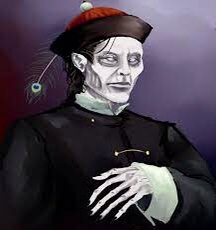
Jiangshi (Hopping Corpse)

The myth of the hopping corpse of China comes from a story titled The Corpse Who Traveled a Thousand Miles. It is a tale about a wizard who enchants corpses to hop home so that they may receive proper burial and their P’O (soul) can be laid to rest. It has been speculated that if smugglers did not invent the tale, they most certainly capitalized upon it by dressing up as these corpses and hopping to scare away superstitious local law enforcement.

According to the myth, a corpse that has had its yin shocked and its P’O disrupted will become a vampiric revenant. Events that can cause this to happen are if a cat jumps over a corpse, moonlight falls on it, or the body was not sent back to its home for proper burial. If the P’O will not leave the body, the soul cannot be laid to rest.

A hopping corpse is described as wearing burial clothes from the Qing Dynasty and is accom- panied by monks, mourners, and Taoist priests. Its eyes are bulging out of its sockets and its tongue is lolling from its mouth. Its arms are out stretched and it smells horrible enough to make a man fall unconscious.

A hopping corpse hunts by its sense of smell, and when it finds someone, it goes right for the throat, either biting right in the jugular or strangling the person to death. It has the power to kill a person instantly with a single touch, never grows tired, and can fly if need be.

Yellow and red Chinese death blessings placed on its forehead will slow it down, as will throwing long grain rice at it, since it will be compelled to count them. It can be warded off for a while, as it is afraid of chicken blood, straw brooms, and Taoist eight-sided mirrors. However, to destroy a hopping corpse, only long-term exposure to dawn’s light or by burning it and its coffin to ash will work.

Priests and Priestesses of Ancient Egypt

The ancient Egyptians understood that their gods had prevailed over the forces of chaos through the creation of the world and relied upon humanity’s help to maintain it. The people of Mesopotamia held this same belief but felt they were co-workers with the gods, laboring daily to hold back chaos through even the simplest acts, but the Egyptians believed all they had to do was recognize how the world worked, who was responsible for its operation, and behave accordingly.

This behavior was directed by the central cultural value, ma’at (harmony and balance) which was sustained by an underlying force known as heka (magic). Heka (personified as the god Heka) had been present at the creation of the world, pre-existing the gods, and allowed those gods to perform their duties. All the people, by observing ma’at, helped to maintain the order established by the gods through heka, but a special class was responsible for honoring and caring for the gods daily, and this was the priesthood.

The clergy of ancient Egypt did not preach, interpret scripture, proselytize, or conduct weekly services; their sole responsibility was to care for the god in the temple. Men and women could be clergy, performed the same functions, and received the same pay. Women were more often priestesses of female deities while men served males, but this was not always the case as evidenced by the priests of the goddess Serket (Selket), who were doctors and both female and male, and those of the god Amun. The position of God’s Wife of Amun, held by a woman, would eventually become as powerful as that of the king.

High priests were chosen by the king, who was considered the high priest of Egypt, the mediator between the people and their gods, and so this position had political as well as religious authority. The priesthood was already established in the Early Dynastic Period in Egypt (c. 3150-2613 BCE) but developed in the Old Kingdom (c. 2613-2181 BCE) at the same time as the great mortuary complexes like Giza and Saqqara were being constructed. Throughout Egypt’s history, the priesthood would serve a vital role in maintaining religious belief and tradition while, at the same time, consistently challenge the authority of the king by amassing wealth and power which at times rivaled that of the crown.

Sources: World History Encyclopedia

Freyr

Freyr is the god of sun and rain, and the patron of bountiful harvests. He is both a god of peace and a brave warrior. He is also the ruler of the elves. Freyr is the most prominent and most beautiful of the male members of the Vanir, and is called ‘God of the World’. After the merging of the Aesir and the Vanir, Freyr was called ‘Lord of the Aesir’. Freyr was also called upon to grant a fertile marriage. He is married to the beautiful giantess Gerd, and is the son of Njord. His sister is Freya.

He rides a chariot pulled by the golden boar Gullinbursti which was made for him by the dwarves Brokk and Eitri. He owns the ship Skidbladnir (“wooden-bladed”), which always sails directly towards its target, and which can become so small that it can fit in Freyr’s pocket. He also possesses a sword that would by itself emerge from its sheath and spread a field with carnage whenever the owner desired it. Freyr’s shield bearer and servant is Skirnir, to whom he gave his sword, which Skirnir demanded as a reward for making Gerd his wife. On the day of Ragnarok he will battle without weapons (for he gave his sword away to Skirnir), and will be the first to be killed by the fire giant Surt.

The center of his cult was the city Uppsala in Sweden. In southern Sweden he was called Fricco.

Saint John’s Wort (Hypericum perforatum)

Saint John’s wort (Hypericum perforatum): This true midsummer flower is strongly influenced by the midday sun. The countless gold-yellow filaments burst out of the calyx like sun rays. They make the flowers, which open only during dry weather, look like tiny suns. The flower petals look as if they might be small airplane propellers and are reminiscent of swirling beams of light and of the light chakras. As a medicinal herb, this plant of the Sunflower family has a soothing effect on the nerves, brings light into the soul, and chases away the darkness.

For centuries, St. John’s wort served as a talisman against evil. At the same time, it was prized for its medicinal power, both helping heal wounds and ease psychological stress. In ancient Rome and Greece, the herb was used to treat inflammation of all kinds, and was even put to use in compounds used on serious battle wounds.

Warning: St. John’s wort may interfere with some prescription medicines. If you take prescription drugs of any kind, be sure to talk with a naturopath or a health care professional familiar with Natural Standard, the top resource for drug-herb interactions, to determine a safe level before taking remedies containing the herb.

Selkies

Originating from Orkney and United Kingdom folklore, a Selkie is a gentle water spirit believed to live in the sea as a seal, but once on land, they fully assume human form.

They must shed their seal skins to become human but should always keep their pelt close by otherwise, they will remain in human form forever.

According to some legends, Selkie are fallen angels who were too pure to be condemned to Hell and instead fell to the shoreline of Earth. They’re often described as beautiful and doe-eyed.

Other folklore stories warn humans from shedding Selkie blood, or wild and violent storms will claim many human lives at sea.

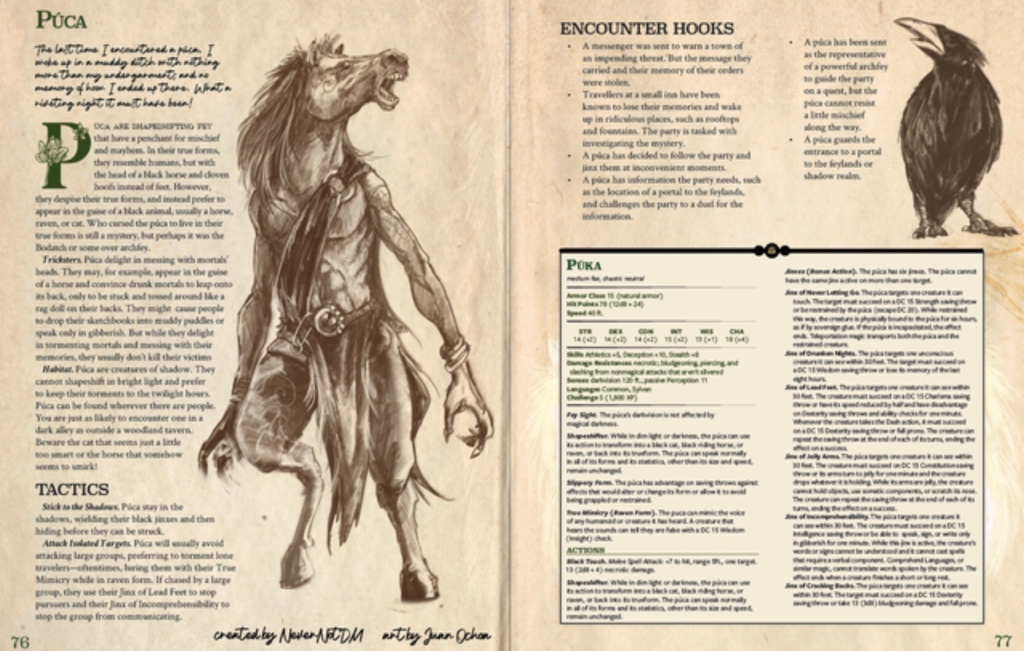
Pùca

Pùca, sometimes spelled Pooka, is a Celtic spirit andshape-shifter that can take various forms, including horses, rabbits, goats, and humans.

It’s also known as Puck in English Folklore, is sometimes believed to use the light of Will o’ the Wisp to lure people into swamps or ditches and then fleeing with delight.

Depending on circumstances, Pooka may be helpful to humanity, but more often than not, its pranks are damaging and hurtful. It has been said that seeing a Pooka in some form is an omen of imminent death.

It was believed during medieval times Pooka would whisk away little children if they were to go near them.

Púca are said to inhabit wild places like remote thickets and glens. A household would leave a plate of food at night for the púca outside their house or yard; in return, it would do chores during the night and protect the property from fire and trespassers.

During the Celtic Feast of Samhain, it was believed the Pooka, shaped like a horse, would stomp the last seasonal blackberries and offer prophecy and divination to anyone who wished to receive it.

In Old and Middle English the word meant simply “demon.” In Elizabethan lore he was a mischievous, brownie like fairy also called Robin Goodfellow, or Hobgoblin.

As one of the leading characters in William Shakespeare’s Midsummer Night’s Dream, Puck boasts of his pranks of changing shapes, misleading travelers at night, spoiling milk, frightening young girls, and tripping venerable old dames.

Britannica – Puck fairy

Asanbonsam

Asanbonsam (Ah-SAN-bon-some)

Variations: Asambosam, Asanbosan, Asasa-bonsam, Sasabonsam

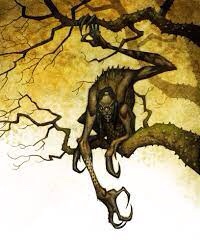
The asanbonsam terrorizes mankind from southern Ghana in Togo and along the Ivory Coast of Africa. Although it is rarely encountered, it looks like a human with hooks for its hands and feet. Its preferred method of hunting is to patiently sit in a tree and wait for some luckless individual to pass directly underneath it. When this happens, the asanbonsam will use its hooks to snatch up its prey and drain it dry of blood. When times are lean, it will venture into a village at night and sip blood from a sleeping person’s thumb. Fortunately, the regular sacrifices of a goat and the spilling of its blood on the ground will keep it satisfied enough to not hunt within the village.

Leanan Sidhe

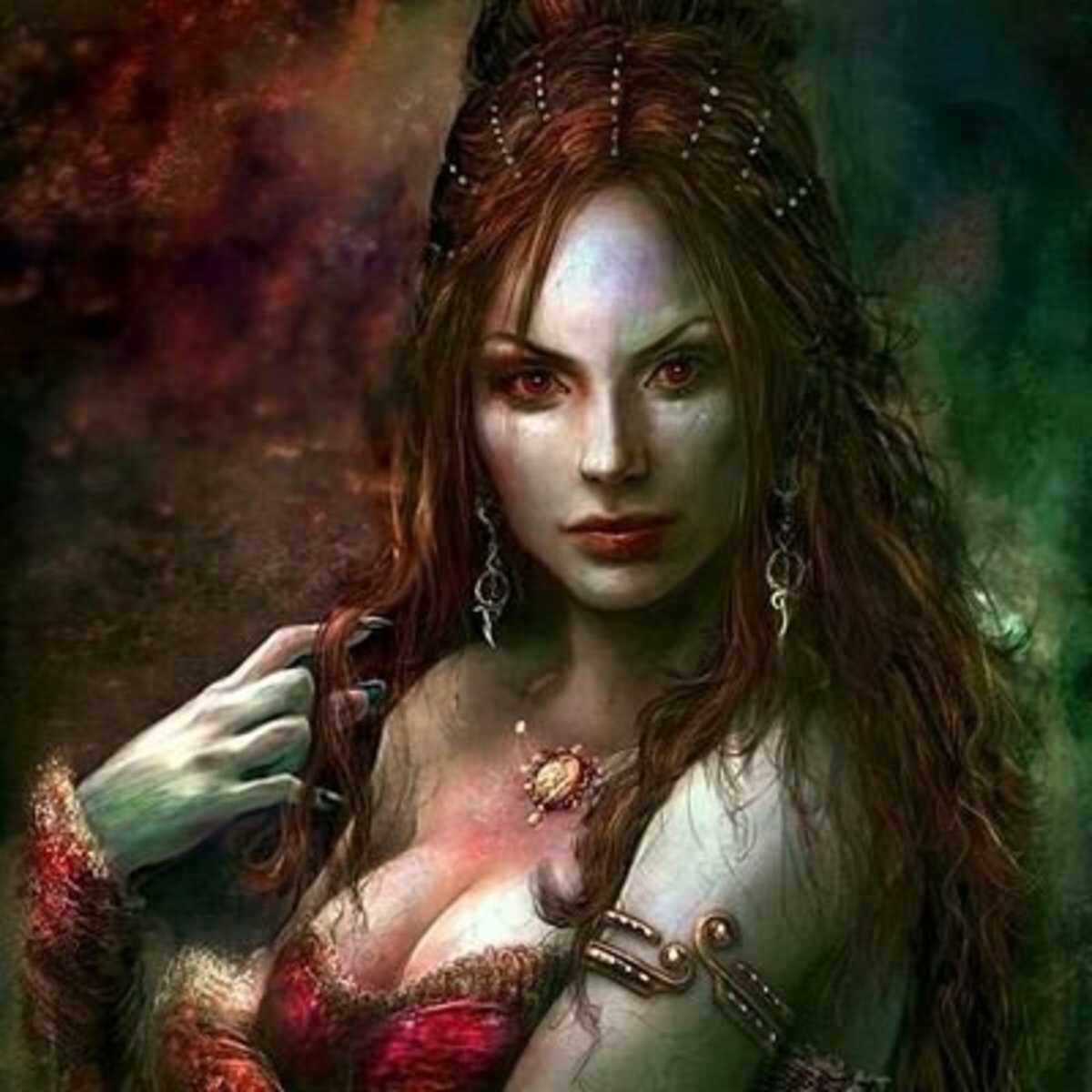
The Leanan Sidhe (pronounced La-non shee) means Fairy Mistress and is a beautiful Irish solitary Fae from the Otherworld. Leanan Sidhe is often portrayed as female, but a few folklores characterizes them as male.

Leanan Sidhe often seduce and help people with creative abilities like poets, artists, or musicians. They are gorgeous and fascinating to their lovers, but entirely invisible to their lover’s friends and family.

Leanan Sidhe inspires their lovers so they can achieve prestige and success, while simultaneously draining their life and vitality until they eventually waste away.Once their lover dies,Leanan Sidhe roam about until they find another.

TheLeanan Sidhe is not always seen as evil. In fact, theLeanan Sidhe is sometimes misunderstood and it’s believed many truly care for their human lovers. They try to provide them with as much inspiration as they can offer, without draining too much of their life energy away.

Some claimLeanan Sidhe is an invention of W. B. Yeats, while they could also be a variation of older Fae mythology.

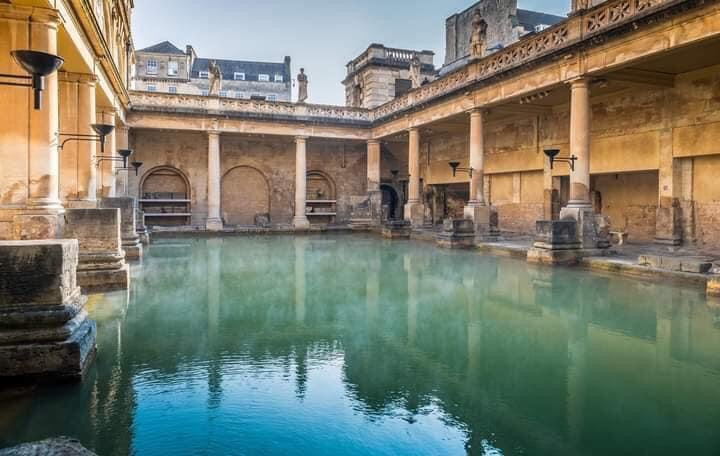
Roman Baths

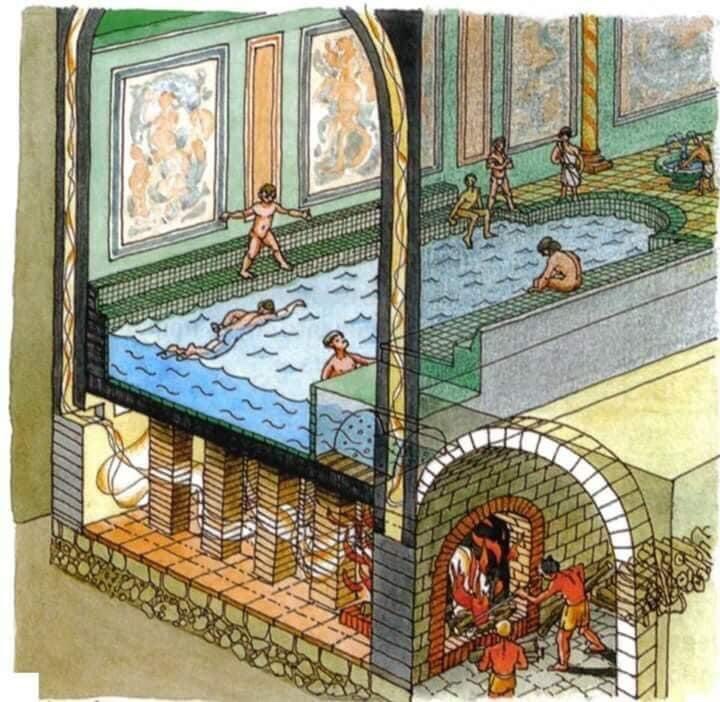
Roman baths, used for both socializing and cleaning, were a marvel of engineering. The water was heated by the fire lit under the pool and the hot air was circulated between the walls of the bath; so that both the water temperature and the temperature of the building would remain constant. The water used in the Roman baths was generally carried from the water source to the bath with the help of aqueducts.

The dirty water coming out of the baths had a function. These dirty waters were drained from the canal and used to clean the dirty canals of the latrinas (Public Toilet) next to the baths.

For the Romans, these baths were an important part of daily life. They would go every day and stay for a few hours. The wealthy Romans used to come with their slaves. The slaves brought in usually took on the task of carrying towels and drinks. Before bathing in Roman baths, sports exercises were done. Running, weight lifting and wrestling are examples of these. After the exercises, the servants would smear their masters with oil and then scrape off the oil with the help of a board or bone. In this way, great dirt would be removed.

In the Roman bath, body cleaning was done with an apparatus called strigilis. With this apparatus, sweat, sand and dust sticking to the body were removed, and then the body was lubricated in the area called aleipterion.

Roman baths were also present inside various palaces or castles. The Romans used the same name (Thermae) for them as well. The design of the baths is mentioned a lot on Vitruvius’ De architectura.

Since the limits of socialization were exceeded in some baths and there were incidents such as prostitution, it was decided that women would enter the bath from morning to noon and men would enter the bath in the afternoon. So they were prevented from entering to baths together.

For example, Emperor Trajan forbade men and women to bathe together in the Ephesus Bath in 98 AD.

Boggart

A Boggart is a shapeshifting spirit or creature from English folklore that inhabits both moors and marshes and is sometimes called a Boggard or Bag. Some legends say that boggarts haunt the swamps of northern England, Scotland, and Wales.

In many Scottish and northern English folklore, there are numerous household boggarts who act similar to a Brownie by doing household chores. However, Boggarts tend to be more malevolent by destroying household items if not rewarded or mistreated, whereas Brownies tend to be more friendly.

These types of fae can appear in a variety of forms and act like a demon or poltergeist.

Boggarts are notorious for their deception and seldom have a description because they rarely appear, and when they do they take on other forms. Boggarts who manifest as people are typically more violent than those who manifest as animals.

Boggarts were featured in the Harry Potter series written by J.K Rowling. Stephen King is also a Boggart.

Another [story] tells of the Boggart of the Brook, at Garstang in Yorkshire, which appears as a woman in a hooded cloak at the roadside requesting a lift from travelers, usually those on horseback. When the “hitchhiker” has become a passenger, she reveals herself to be a skeleton, and her demonic cackle and clawing grip spur the traveler into a frenzied ride, causing injury or death.

~ Carol Rose – Spirits, Fairies, Gnomes, and Goblins