Fenrir

Fenrir (or Fenris) is a gigantic and terrible monster in the shape of a wolf. He is the eldest child of Loki and the giantess Angrboda. The gods learned of a prophecy which stated that the wolf and his family would one day be responsible for the destruction of the world. They caught the wolf and locked him in a cage. Only the god of war, Tyr, dared to feed and take care of the wolf. When he was still a pup they had nothing to fear, but when the gods saw one day how he had grown, they decided to render him harmless. However, none of the gods had enough courage to face the gigantic wolf. Instead, they tried to trick him. They said the wolf was weak and could never break free when he was chained. Fenrir accepted the challenge and let the gods chain him. Unfortunately, he was so immensely strong that he managed to break the strongest fetters as if they were cobwebs.

After that, the gods saw only one alternative left: a magic chain. They ordered the dwarves to make something so strong that it could hold the wolf. The result was a soft, thin ribbon: Gleipnir. It was incredibly strong, despite what its size and appearance might suggest. The ribbon was fashioned of six strange elements: the footstep of a cat; the roots of a mountain; a woman’s beard; the breath of fishes; the sinews of a bear; and a bird’s spittle. The gods tried to trick the wolf again, only this time Fenrir was less eager to show his strength. He saw how thin the chain was, and said there was no pride in breaking such a weak chain. Eventually, though, he agreed, thinking that otherwise his strength and courage would be doubted. Suspecting treachery however, he in turn asked the gods for a token of good will: one of them had to put a hand between his jaws. The gods were not overly eager to do this, knowing what they could expect. Finally, only Tyr agreed, and the gods chained the wolf with Gleipnir. No matter how hard Fenrir struggled, he could not break free from this thin ribbon.

In revenge, he bit off Tyr’s hand.Being very pleased with themselves, the gods carried Fenrir off and chained him to a rock (called Gioll) a mile down into the earth. They put a sword between his jaws to prevent him from biting. On the day of Ragnarok, Fenrir will break his chains and join the giants in their battle against the gods. He will seek out Odin and devour him. Vidar, Odin’s son, will avenge his father by killing the wolf.
Ginnungagap

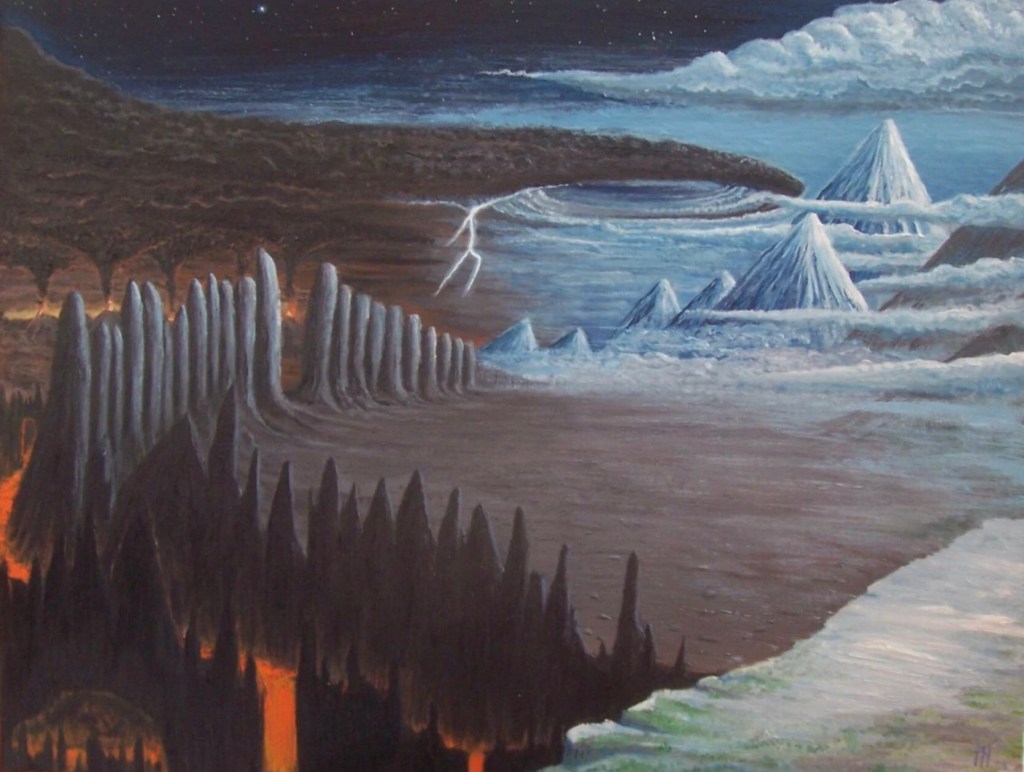
Ginnungagap (“seeming emptiness”), in the cosmology of Norse mythology, is the primordial void separating Niflheim and Muspell, the land of eternal ice and snow and the land of eternal heat and flame.In the beginning, before the world of men and gods existed, the spring Hvergelmir, deep in the frozen wastes of Niflheim, gave rise to eleven rivers known as the Elivagar. Over a long period of time, water of the Elivagar ran across Niflheim and poured into the northern part of Ginnungagap. The water froze, forming vast sheets of ice in the void. Hot air from Muspell melted some of the ice, creating a zone of meltwater amid the ice and snow. Here life began, and the first living thing was a frost giant.

The Younger Futhark

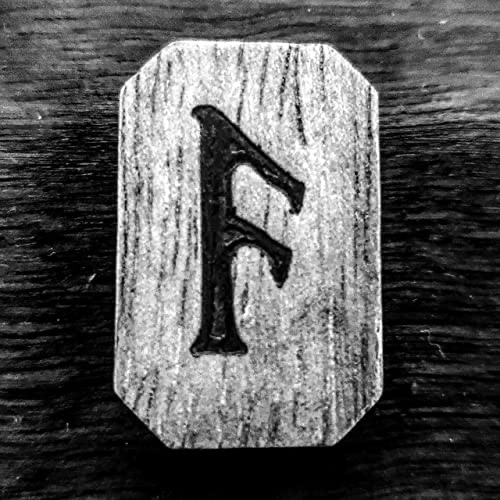
The runic alphabet that was used during the Viking Age is called Younger Futhark. These runes can be found on hundreds of runestones throughout Scandinavia. This alphabet does not consist of many runes, and that is because the Norse language evolved a lot during the Iron Age, which meant that the runic alphabet was reduced from 24 to 16 runes.

Each rune has its own name and sound. Some of the runes are used to spell the same letter, for instance, the Týr rune is used for the letters “t” and “d”, and kaun is used for “g” and “k”. 

The names on this list of the Younger Futhark runes have been taken from the website of The National Museum in Copenhagen. The names of the runes may vary slightly depending on the language and on which runologist has conducted the research.

Fólkvangr

In Norse mythology, Fólkvangr (“field of the host” or “people-field” or “army-field”) is a meadow or field ruled over by the goddess Freyja where half of those that die in combat go upon death, whilst the other half go to the god Odin in Valhalla.

Others were also brought to Fólkvangr after their death; Egils Saga, for example, has a world-weary female character declare that she’ll never taste food again until she dines with Freya. Fólkvangr is attested in the Poetic Edda, compiled in the 13th century from earlier traditional sources, and the Prose Edda, written in the 13th century by Snorri Sturluson. According to the Prose Edda, within Fólkvangr is Freyja’s hall Sessrúmnir. Scholarly theories have been proposed about the implications of the location.

After each battle, Odin and Freyja would choose the einherjar who have proven themselves to be the most courageous fighters and divide them among themselves. The fallen Viking warriors will later be brought to either Folkvangr or Valhalla. The less fortunate ones, however, had no choice and would go to Hel. In the underworld, they would live eternally, but only merely continuing their ordinary lives on earth: eating, drinking, and sleeping.

There are not many differences when it comes to practicality and routine in these two dwelling places of the Gods. In fact, life in both of them equally would be an envy of any Viking warrior. In Folkvangr, as well as in Valhalla, warriors would fight amongst each other every day, making sure they will be prepared when the Ragnarok comes. Many of them would be injured, many of them slaughtered; however, in the evening, their wounds would heal, and they would be ready to feast.

Actually, the only real difference between Valhalla and Folkvangr lies in the way of entering them. Namely, those who die honorably are chosen between Odin and Freya to enter their respective realms. The ones chosen by Odin enter Valhalla, while those who are selected by Freya enter Folkvangr.

Asgard

The word Asgard comes from the Old Norse word Ásgarðr, meaning Enclosure of the Aesir. Asgard is one of the nine worlds in Norse Mythology, along with Niflheim, Muspelheim, Midgard, Jotunheim, Vanaheim, Alfheim, Svartalfheim, and Helheim. Asgard is the home of the Aesir, deities of one of two tribes of Norse gods. The other tribe, the Vanir, used to share Asgard but the two tribes fought a long, epic war over their differences and the Vanir were forced to leave Asgard. The two tribes did reach an eventual truce as they joined forces against their common enemy, the Giants.

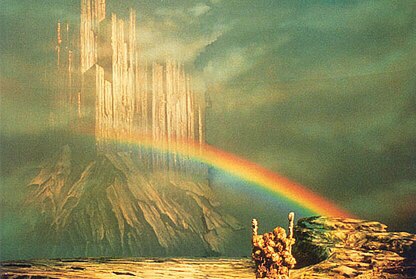
Snorri Sturluson, author of the Prose Edda, wrote that Asgard was created by the gods after they created Jotunheim (Giantland), Midgard (Middle Earth or home of humanity), the seas, sky, clouds and the Earth. The home of the gods is said to be a giant fortress with walls reaching up into the clouds to protect them from their enemies, particularly the frost-giants.

Asgard is situated in the sky upon the plains of Idavoll, where the gods met to discuss important matters. It was connected to Midgard by a rainbow bridge called Bifrost. The mythical place was invisible and inaccessible to mortal men.

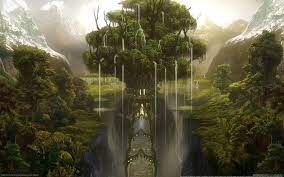
The ruler of the gods, Odin, had his throne in Asgard, in a hall called Valaskjalf. His throne was called Hlidskjalf and it is believed that when Odin sat on Hlidskjalf, he could see the whole of heaven and Earth and everything that happened anywhere! A hall made of pure gold was also situated in the home of the gods. It was called Gladsheim and housed the thrones of Odin and the 12 highest gods. The goddesses’ hall was called the Vingolf or hall of friendship. The gods and goddesses would meet every day and discuss the fate of world at the Well of Urd (destiny), from which the Yggdrasil (the tree connecting the nine worlds) grew.

Asgard also housed Valhalla (the hall of the fallen). Odin granted access to the worthy dead, the majority of whom were esteemed warriors. Here, he feasted and celebrated with the battle heroes. Valhalla was easily recognizable by its rafters formed of spears, and use of shields as roof tiles. According to certain sources, the doors of Valhalla were so wide that 800 warriors could walk through at the same time! A vast river, the Thund, and a barred gate, Valgrind, protected the entrances of Valhalla.

Aesir Gods

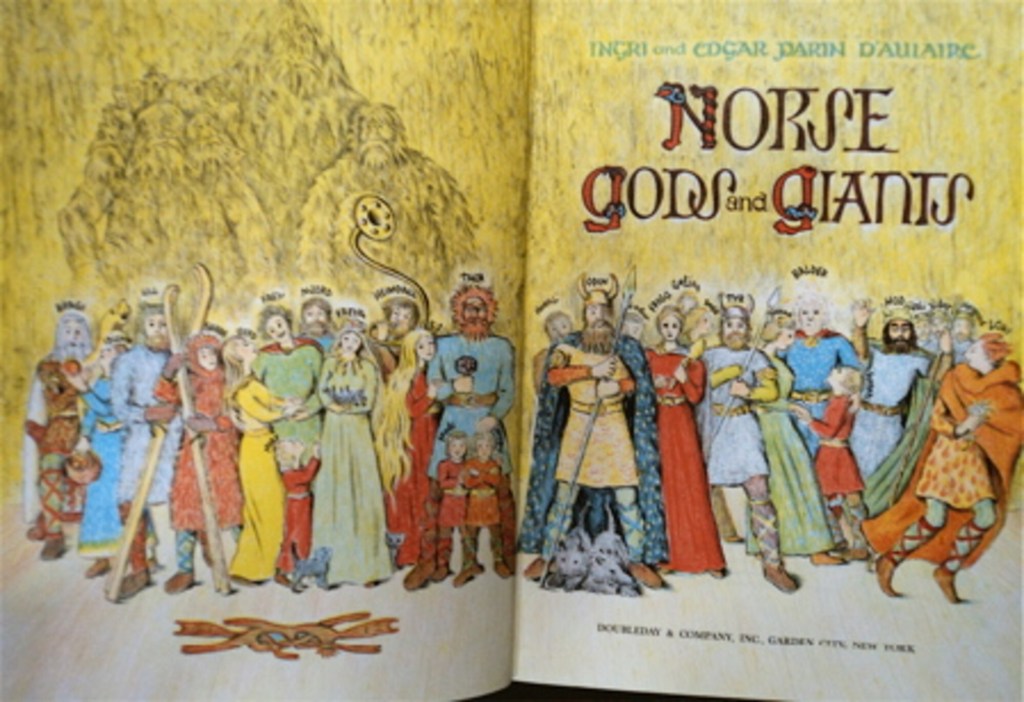
They are one of two clans of Norse gods, the other being the Vanir. The Aesir and Vanir were in conflict for quite some time, leading to the Aesir-Vanir war. Later on, however, they seemed to get along just fine and the Vanir were eventually considered to be a sub-group of the Aesir.

Therefore, depending on the time in which a specific myth is set, the word Aesir may refer to all Norse gods or only to the ones that began as Aesir.

In Norse mythology, there are nine world that various beings may inhabit. These worlds are held in the branches of the World Tree, also known as Yggdrasil. We humans live in Midgard, whereas the Aesir live in Asgard. The Vanir have their own world: Vanaheim.

Although they lived in a different world to humans, they actively ruled over the lives of men. Norse people would call on the different gods who represented specific aspects of life when they needed aid or blessing. There are many stories surrounding the Aesir, such as that of Odin the Allfather coming to Midgard. They would teach people lessons or otherwise influence what happened in Midgard.

The Aesir also acted in other worlds in Yggdrasil, such as Jotunheim, where the ice giants live. One of their most important duties is to keep the ice giants at bay, protecting the worlds from them.

Interestingly, although the Aesir are the principal gods of Norse mythology, they are not the creators of the cosmos. They are, however, the creators of mankind and the worlds within the cosmos.

In the beginning, there were two worlds: Muspelheim and Niflheim. Muspelheim was the realm of fire, while Niflheim was the realm of ice. Between them lay an empty void known as the Ginnungagap. The fire and ice met and filled the gap, and from this event, the first giant, Ymir, was formed. Ymir’s sweat produced further giants, who were the first beings in the cosmos. As the frost melted, the cow Audhumbla emerged to feed Ymir. The cow lived on the saltlicks in the ice. Her licking revealed Buri, the first Aesir, who had apparently been stuck in the ice.

Buri went on to marry a giant, Bestla, so his children Odin (who is the most famous), Vili and Ve were all half-giants. These three brothers decided to end Ymir’s life and, in a rather grisly development, used the various parts of his body to make the world. For example, his blood became the oceans, and the dome of his skull became the sky.

These gods then got around to creating us, the humans of Midgard. The first humans were a male and female pair with the names Ask and Embla. When they had finished jump-starting humanity, the gods decided to give humans their own world, a fenced-off region they named Midgard.

But why did they feel the need to slay Ymir? The most likely reason is that Ymir was a being of chaos, and the Aesir’s purpose is to bring order to the cosmos. That’s also the root of their main struggle with the ice giants, who want to destroy the world during Ragnarok, restoring the primordial chaos of the Ginnungagap.

Björketorp Runestone

Runes were the alphabetic system of the Vikings in the past. However, the Vikings didn’t commonly use runes for the communicative purpose between people and people. Rather, they used runes as a tool to communicate with their gods. One of the main sources that we have the information about runes is from the runestone. Thanks for the Vikings carving their runes onto materials like stone, we have something to look back at the age of the Vikings. One of the runestones surrounded by mysteries is the Björketorp Runestone.

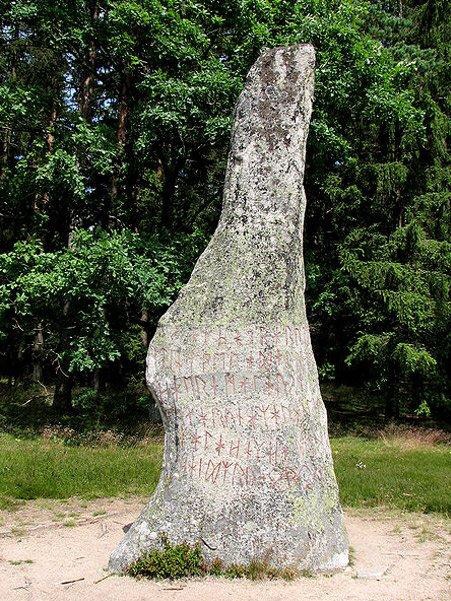
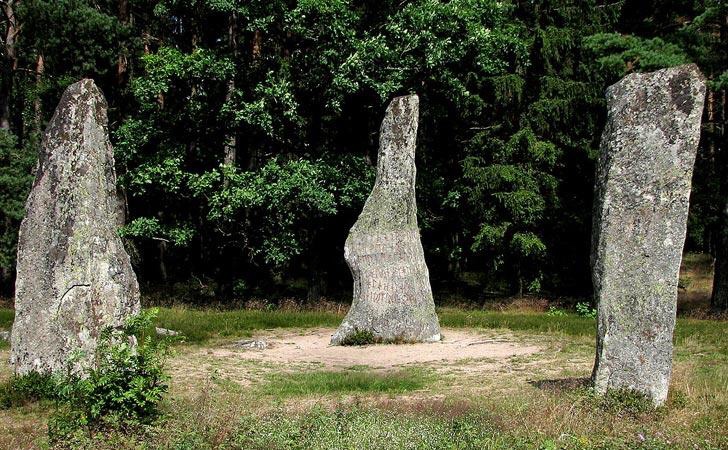
The Björketorp Runestone currently rests in Blekinge, Sweden. It is a part of the grave field including some standing stones that form a circle.

It is among the tallest runestones in the world, measuring 4.2 meters (~13.7ft) in height. The Björketorp Runestone is the only stone that has rune inscription on it. 

The runes were carved in Proto Norse language around 6th or 7th century. This language might have been in use from the 2nd to 8th century. Also, it might have been the foundation for the Old Norse language. There are two sides with the rune inscriptions on this stone. One side consists of a shorter line reading “I predict perdition”.

The other side with inscription evokes many controversies though. The message from the other side of the runestone reads: 

Haidz runo runu, falh’k hedra ginnarunaz. Argiu hermalausz, … weladauþe, saz þat brytz. Uþarba spa.

This can be translated into: 

I, master of the runes conceal here runes of power. Incessantly (plagued by) maleficence, (doomed to) insidious death (is) he who breaks this (monument).
I prophesy the destruction/prophecy of destruction.

While some runestones contain the names of the tribe, the Björketorp Runestone lacks the name of the creators. The scholars have been in dispute about the purpose of the runestone. But the major theory is that the runestone is erected as a grave and a kind of curse is carved onto to protect it.

Sources: bavipower.com

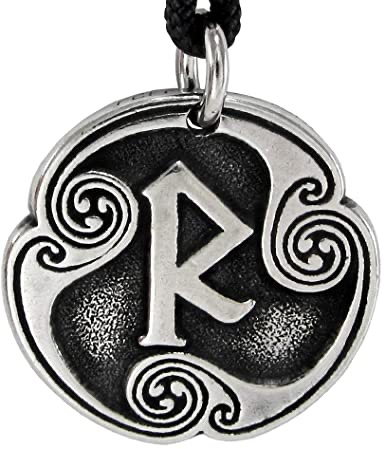
Raidho (Raido)

Raidho (Raido)

Pronounced: rah-eed-ho

Astrological: Sagittarius/Virgo

Tarot: The Hierophant

Element: Air

Key Words: Journey, Pilgrimage, Change, Action, Cartwheel

This Rune is concerned with communication, with the attunement of something that has two sides, two elements, and with the ultimate union that comes at the end of the journey, when what is above and what is below are united and of one mind.

Inner worth mounts here, and at such a time you are not intended to rely entirely upon your own power. Instead, ask what constitutes right action. Ask through prayer or meditation, through addressing the Witness Self, the Teacher Within. Once you are clear, you can neutralize your refusal to let right action flow through you. Not intent on movement, be content to wait; while you wait, keep on removing resistances. As the obstructions give way, all remorse arising from trying to make things happen disappears.

The journey is toward self-healing, self-change and union. You are concerned here with nothing less than unobstructed, perfect union. But the union of Heaven and Earth cannot be forced. Regulate any excesses in your life. Material advantages must not weigh heavily on this journey of the self toward the Self. Stand apart even from like-minded others; the notion of strength in numbers does not apply at such a time, for this part of the journey—the soul’s journey—cannot be shared.

Reversed: Receiving Raido Reversed puts you on notice to be particularly attentive to personal relationships. At this time, ruptures are more likely than reconciliations and effort may be required to keep your good humor. Whatever happens, how you respond is up to you.

The requirements for your growth may totally disrupt what you had intended. Desired outcomes may elude you. And yet what you regard as detours, inconveniences, disruptions, blockages and even failures and deaths, will actually be rerouting opportunities, with union and reunion as the only abiding destinations.

Sources: The Book of Runes, Runes: Pagan Portals

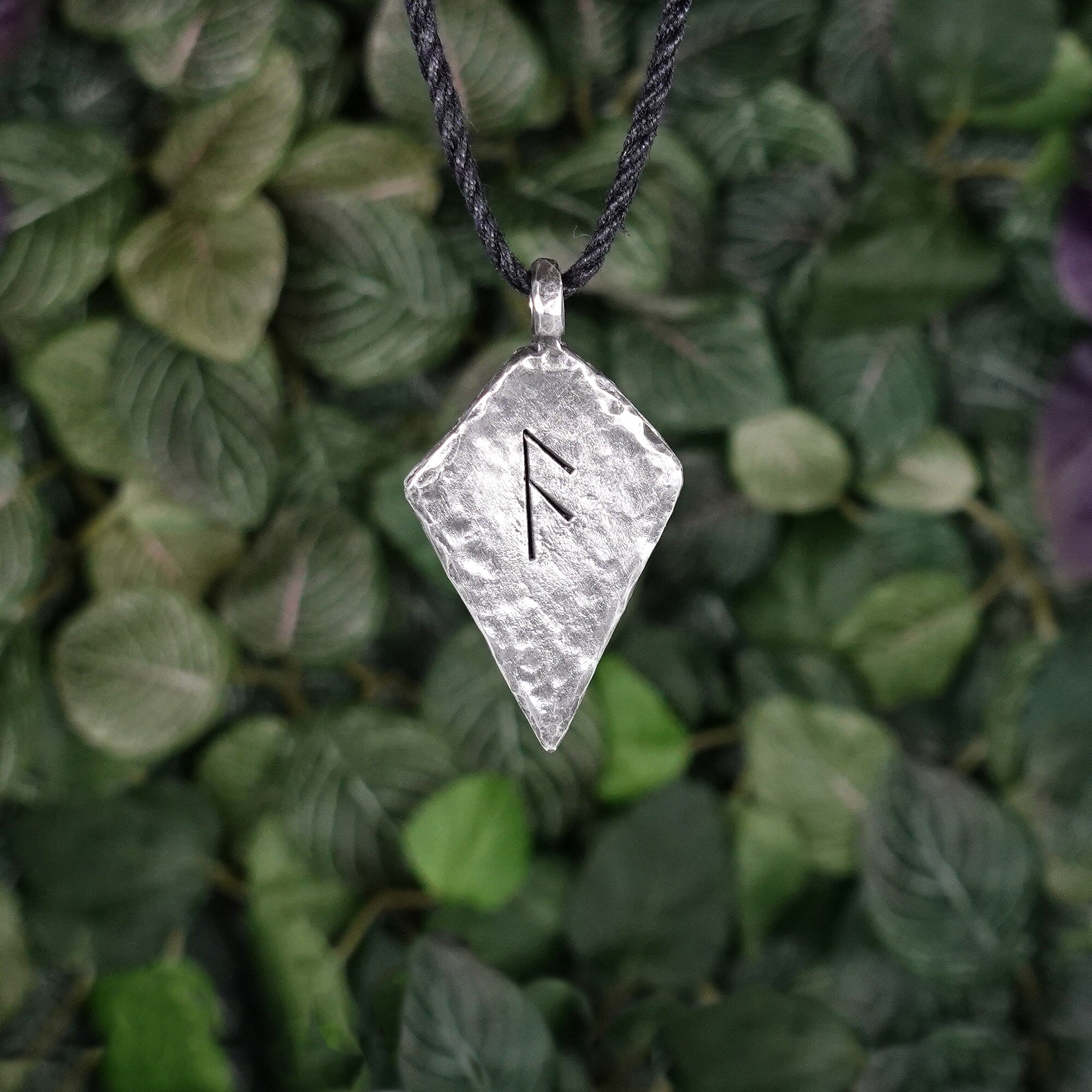
Ansuz

Ansuz

Pronounced: ahn-sooz

Astrological: Leo/Virgo

Tarot: Death

Element: Air

Key Words: Communication, Divine Inspiration, Spiritual Power, Wisdom, Ideas, knowledge

The keynote here is receiving: messages, signals, gifts. Even a timely warning may be seen as a gift. The message may be that of a new life unfolding. New lives begin with new connections, surprising linkages that direct you onto new pathways. Take care now to be especially aware during meetings, visits, chance encounters, particularly with persons wiser than yourself. When the Messenger Rune brings sacred knowledge, you are truly blessed.

Loki is the ancient trickster from the pantheon of the Norse gods. He is the heyeohkah of the Native Americans, a mocking shadow of the creator god, as well as the bringer of benefits to humankind. He is a reminder that even scoundrels and arch-thieves can be the bearers of wisdom. When you draw this Rune, expect the unexpected: The message is always a call, a call to new life.

Ansuz is the first of the thirteen Runes that make up the Cycle of Initiation—Runes that focus directly upon the mechanism of self-change—and as such, addresses our need to integrate unconscious motive with conscious intent.

Drawing Ansuz tells you that connection with the Divine is at hand. It is a signal to explore the depths, the foundations of life, and to experience the inexhaustible wellspring of the Divine in your nature.

At the same time, you are reminded that you must first draw from the well to nourish and give to yourself. Then there will be more than enough to nourish others. A new sense of family solidarity invests this Rune.

Reversed: You may be concerned over what appears to be failed communication, lack of clarity or awareness either in your past history or in a present situation. You may feel inhibited from accepting what is offered. A sense of futility; of wasted motion, may overwhelm you. Remember, however, that what is happening is timely to your process. If the well is clogged, this is the moment for cleaning out the old. Reversed, Ansuz is saying: Consider the uses of adversity.

Sources: The Book of Runes, Runes: Pagan Portals

Thurisaz

Pronounced: thur-ee-sahz

Astrological: Leo

Tarot: The Emperor

Element: Fire

Key Words: Strength, Good News, Protection

With a gateway for its symbol, this Rune indicates that there is work to be done both inside and outside yourself. Thurisaz represents the frontier between Heaven and the mundane. Arriving here is a recognition of your readiness to contact the numinous, the Divine, to illuminate your experience so that its meaning shines through its form.

Thurisaz is a Rune of non-action. Thus, the gateway is not to be approached and passed through without contemplation. Here you are being confronted with a clear reflection of what is hidden in yourself, what must be exposed and examined before right action can be undertaken. This Rune strengthens your ability to wait. Now is not a time to make decisions. Deep transformational forces are at work in this next-to-last of the Cycle Runes.

Reversed: A quickening of your development is indicated here. Yet even in times of accelerated growth, you will have reason to halt along the way, to reconsider the old, to integrate the new. Take advantage of these halts.

If you are undergoing difficulties, remember: The nature of your passage depends upon the quality of your attitude, the clarity of your intention and the steadfastness of your will. Be certain that you are not suffering over your suffering.

Drawing Thurisaz Reversed demands contemplation on your part. Hasty decisions at this time may cause regrets, for the probability is that you will act from weakness, deceive yourself about your motives, and create new problems more severe than those you are attempting to resolve. Impulses must be tempered by thought for correct procedure. Do not attempt to go beyond where you haven’t yet begun. Be still, collect yourself, and wait on the Will of Heaven.

Sources: The Book of Runes, Runes: Pagan Portals