Josephine Baker: American Born – French Entertainer

“I shall dance all my life. . . . would like to die, breathless,
spent, at the end of a dance.”

~ Josephine Baker, 1927

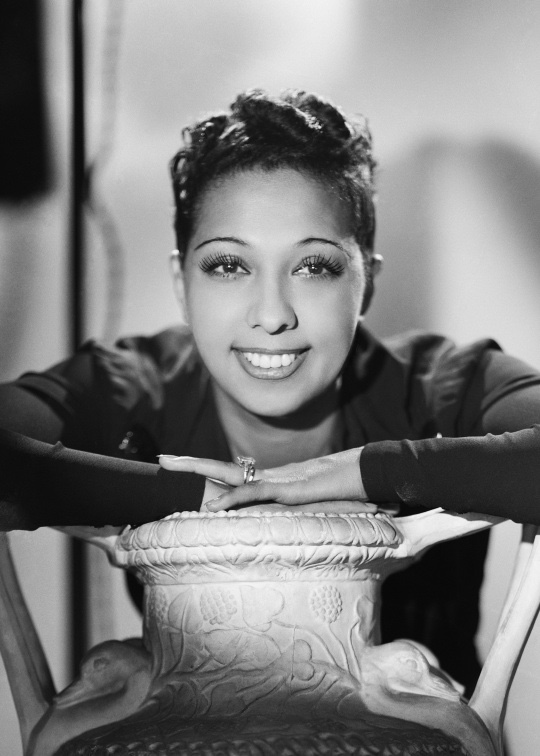
An international star of the Jazz Age, known for her daring dances, exotic costumes, and menagerie of pets, Josephine Baker was born into poverty in St. Louis in 1906. A natural comedian with dreams of performing on stage, she talked her way into her first dance role as a determined young teen and then jumped at the opportunity to travel with a vaudeville troupe. It didn’t take long for her natural talent to shine on stage, and she made her mark as “the funny one.” Josephine exploited her dancing and performance skills, doggedly pursuing her dream of becoming a respected star. By the time she was 19, Josephine was performing in Paris, and a whole new world opened up. In a few short years she had propelled herself from a St. Louis girl with a dream to a full-fledged Parisian sensation.

Outside being a famous entertainer her sense of commitment to fighting racism and injustice grew and matured as she traveled around the world, leading her to become an outspoken participant in the US Civil Rights Movement, conduct important espionage work for the French Resistance during World War II, and adopt her “rainbow tribe”— 12 children, each from a different nationality, ethnicity, or religious group—in an effort to prove racial harmony was possible.

Place Joséphine Baker in Paris.

Baker was celebrated by artists and intellectuals of the era, who variously dubbed her the “Black Venus”, the “Black Pearl”, the “Bronze Venus”, and the “Creole Goddess”. Born in St. Louis, Missouri, she renounced her U.S. citizenship and became a French national after her marriage to French industrialist Jean Lion in 1937. She raised her children in France.

n Paris, she became an instant success for her erotic dancing, and for appearing practically nude onstage. After a successful tour of Europe, she broke her contract and returned to France in 1926 to star at the Folies Bergère, setting the standard for her future acts.

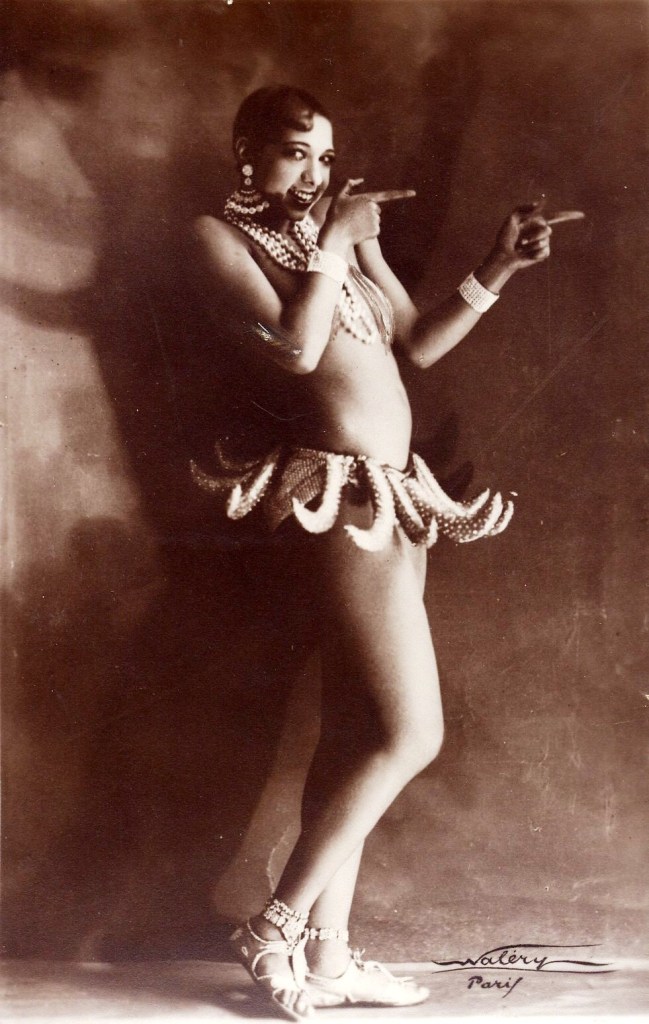
Her most infamous dancing costume. A costume consisting of a skirt made of a string of artificial bananas and Pearl necklaces.

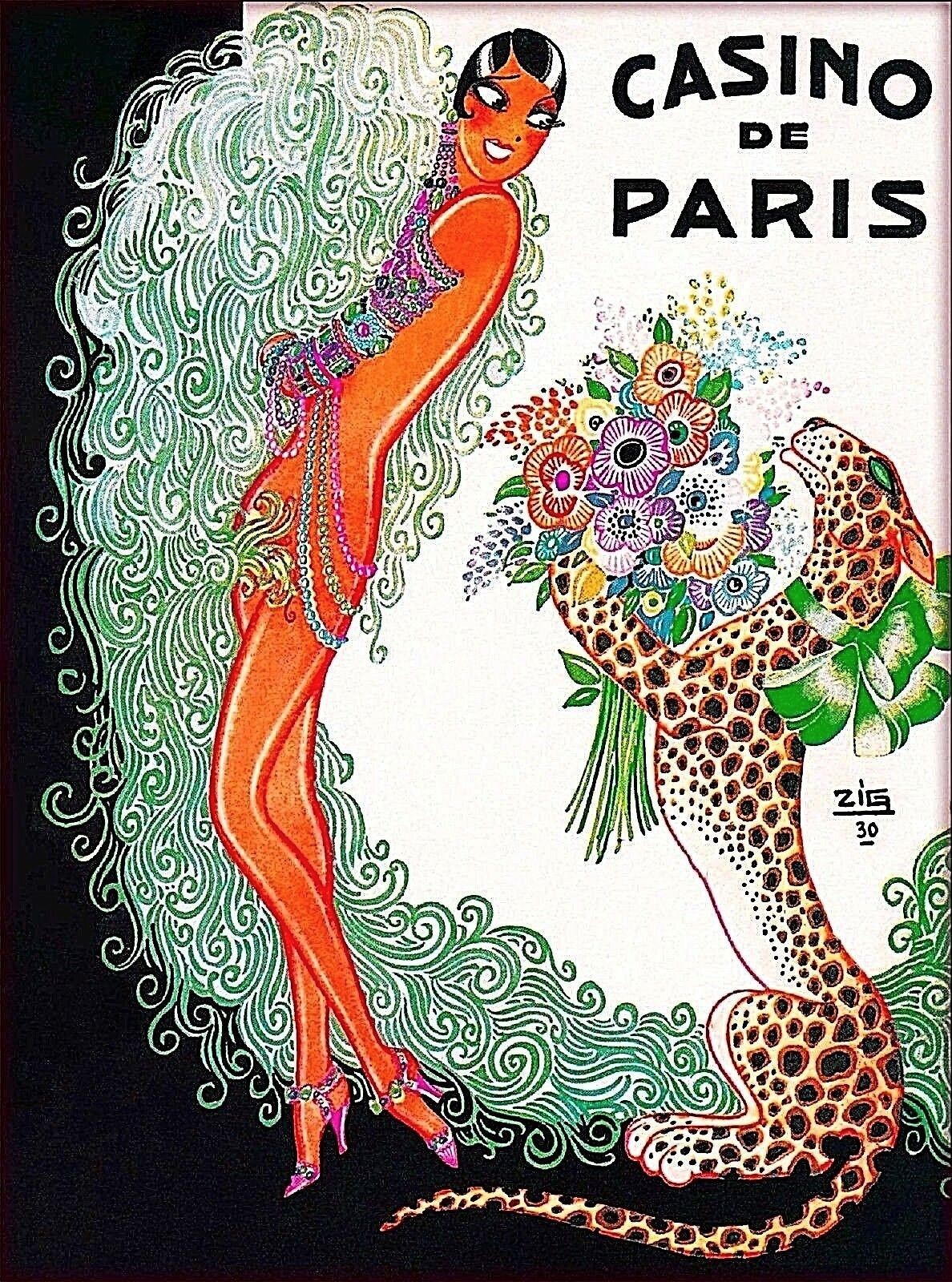
Baker performed the “Danse Sauvage” wearing a costume consisting of a skirt made of a string of artificial bananas. Her success coincided (1925) with the Exposition des Arts Décoratifs, which gave birth to the term “Art Deco”, and also with a renewal of interest in non-Western forms of art, including African. Baker represented one aspect of this fashion. In later shows in Paris, she was often accompanied on stage by her pet cheetah “Chiquita,” who was adorned with a diamond collar. The cheetah frequently escaped into the orchestra pit, where it terrorized the musicians, adding another element of excitement to the show.

She aided the French Resistance during World War II. After the war, she was awarded the Resistance Medal by the French Committee of National Liberation, the Croix de Guerre by the French military, and was named a Chevalier of the Légion d’honneur by General Charles de Gaulle. Baker sang: “I have two loves, my country and Paris.”

Baker refused to perform for segregated audiences in the United States and is noted for her contributions to the civil rights movement. In 1968, she was offered unofficial leadership in the movement in the United States by Coretta Scott King, following Martin Luther King Jr.‘s assassination. After thinking it over, Baker declined the offer out of concern for the welfare of her children.

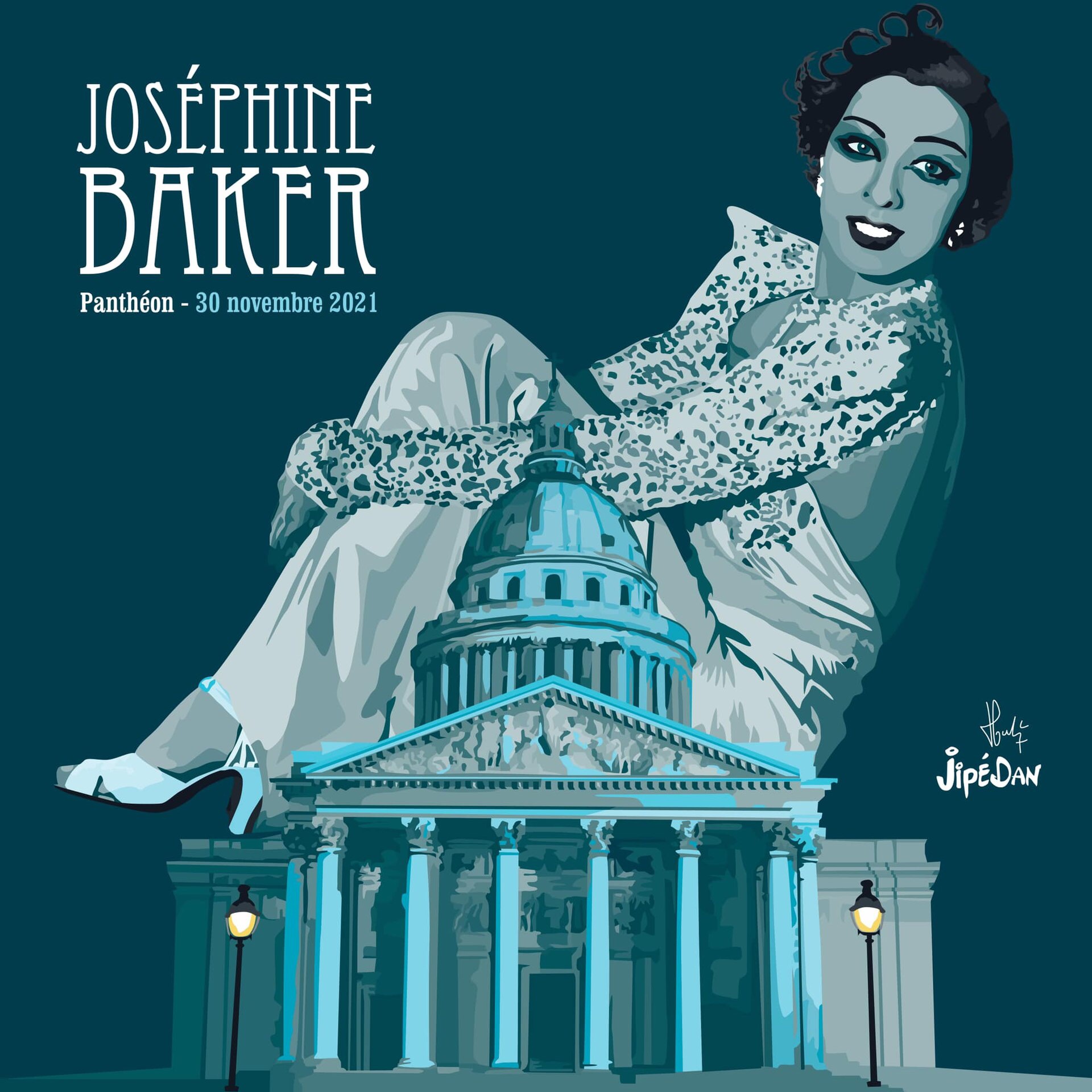
On 30 November 2021, she entered the Pantheon in Paris, the first black woman to receive one of the highest honors in France. As her resting place is to remain in Monaco a cenotaph will be installed in vault 13 of the crypt in the Panthéon

Sources: Peggy Caravantes

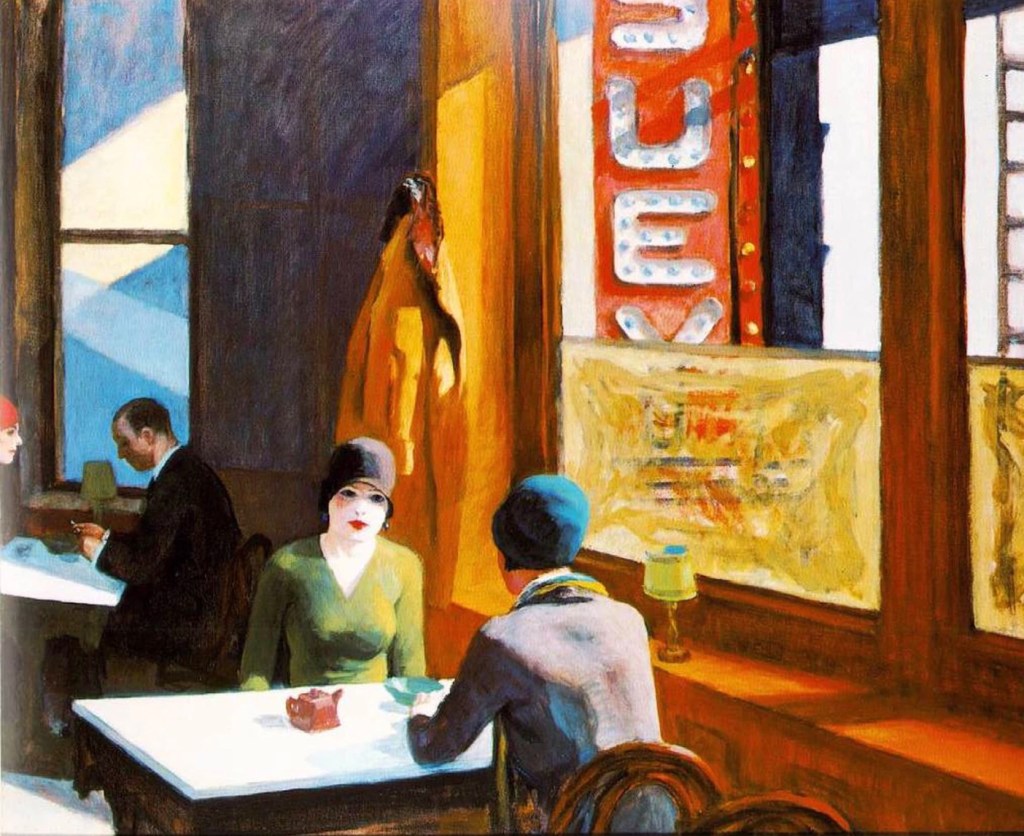
Chop Suey (1929) – Edward Hopper

Edward Hopper’s picture of social realism is comprised from a composition of multi-coloured geometric rectangles and depicts a scene within a Chinese restaurant. In the centre foreground are two women (both believed to be based on Hopper’s wife, Josephine) who appear to have an ambiguous relationship. They mirror each other’s solitary and aloof demeanour across a bright table in green and purple cloche hats. There is no tactile interaction, and the lady in green hides her hands in a defensive manner under the table, suggesting uneasiness. The four figures depicted are meeting for a social event, but the irony lies in a mutual lack of interest and spontaneity, which leaks through their detached facial expressions. A man in the background talking with a female friend seems to enjoy his cigarette more than his date. Hopper catches the each person’s loneliness despite them being in a public, open space. A mixture of natural and artificial light is seen throughout the composition; the sun reflects off the billboard directly onto the white tables and the woman in green, giving her a ghostly pallor.

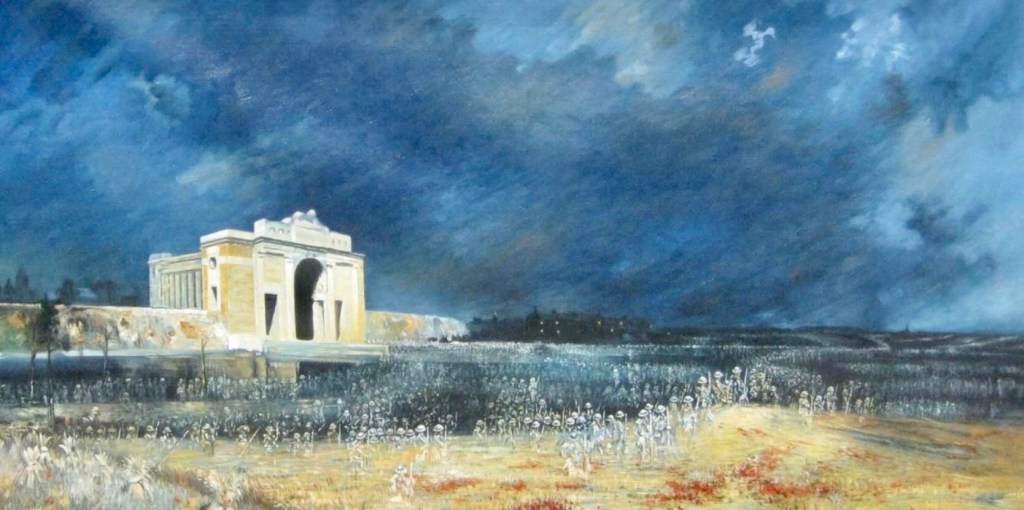
Menin Gate At Midnight (1927) – Will Longstaff

Will Longstaff’s depiction of the Menin Gate war memorial in Ypres (also known as Ghosts of Menin Gate) forms part of a collection at The Australian War Memorial in Canberra. The composition captures the spirits of soldiers marching in unison across a cornfield under an indigo evening sky. After attending the unveiling of Menin Gate in July 1927, Longfield claimed to have had an apparition of the steel-helmeted troops. The artist went home to London and completed his tribute in one sitting. The red poppies in the foreground represent the blood shed during World War I and the limestone memorial on the left shows a dark, sinister entrance. Buildings are dotted upon the far horizon (with intermittent light) suggesting that the area is under close scrutiny.

New York, Early Twenties (1920-24) – Thomas Hart Benton

Missouri-born artist Thomas Hart Benton pays homage to his adoptive city of New York in this oil composition, presenting a bird’s-eye view of Madison Square Park. Internationally renowned as a pioneer of the regionalist art movement, Benton studied urban space within New York, Early Twenties (1920-24), depicting moving people who are painted as dark matchstick figures. Filing neatly past stationary vehicles, these figures weather the dark storm forming above the imposing skyscrapers and American flag. The tempestuous climate is set during a period of personal and professional unrest for Benton as a leftist sympathiser.

He’s So Unusual – Helen Kane (June 14, 1929)

“He’s So Unusual” is a song from the late 1920s performed by Helen Kane, who was the inspiration for the Betty Boop character. The song was written by Al Sherman, Al Lewis and Abner Silver. Released on June 14, 1929, “He’s So Unusual” was featured in the motion picture, Sweetie. Shapiro, Bernstein & Co. Inc. are the publishers of record.

He’s So Unusual” was later covered by Cyndi Lauper, in a short (45 second) version, on her Grammy Awardwinning album, She’s So Unusual. The sung lyrics continue in the background of the subsequent song “Yeah Yeah”, while the beginning of the song plays before “Girls Just Want to Have Fun” in the song’s music video.

You talk of sweeties, bashful sweeties
I got one of those
Oh, he’s handsome as can be
But he worries me;
He goes to college and gathers knowledge
Hooh! What that boy knows!
He’s up in his Latin and Greek
But in his sheikin’, he’s weak!

‘Cause when I want some lovin’
And I gotta have some lovin’
He says, “Please! Stop it, please!”
He’s so unusual!

When I want some kissin’
And I gotta have some kissin’
He says, “No! Let me go.”
He’s so unusual!

I know lots of boys who would be crazy over me
If they only had this fellow’s opportunity
You know, I would let him pet me
But the darn fool, he doesn’t let me!
Oh, he’s so unusual that he drives me wild!

When we’re in the moonlight
He says, “I don’t like the moonlight
Aw, let’s not talk in the dark.”
Huh, he’s so unusual!

And when we’re riding in a taxi
He converses with the cheuffeur
Oh, why don’t he talk to me?
Oh, he’s so different!

Others would be tickled pink to bop-op-a-dop-e-dop!
He don’t even know what bop-op-op-a-dop’s about!
He says love is hokum
Oh, I’d like to choke, choke, choke him!
‘Cause he’s so unusual that he drives me wild!

You might as well be by yourself as in his company
When we’re out together, I’m as lonesome as can be

But still I’m mad about him
And I just can’t live without him;
‘Cause he’s so unusual that he drives me bop-bop-a-dop-bop!

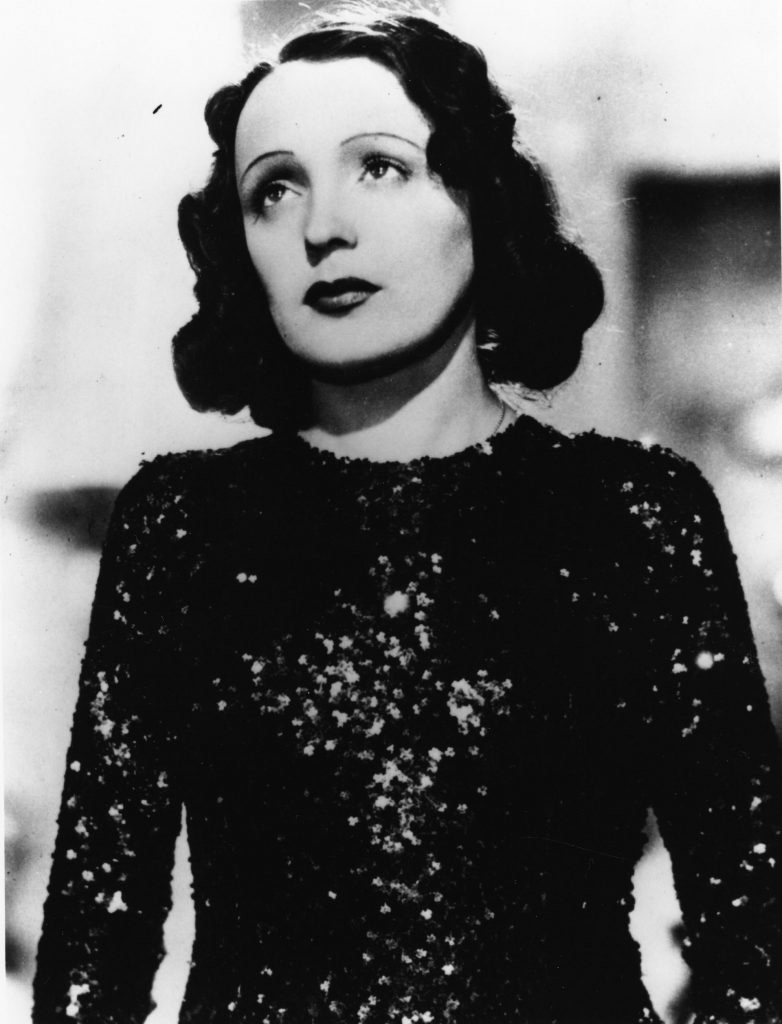
Born Today Jean Genet and Édith Piaf

Today in famous people born in French history:

1910 – Jean Genet, French novelist, playwright, and poet (d. 1986)
Genet was a petty criminal early in life, and after ten convictions was threatened with a life sentence, but through the intercession of luminaries like Sartre and Picasso was left alone, and never committed a crime again.

1915 – Édith Piaf, French singer-songwriter and actress (d. 1963)
Here’s La Môme (her nickname, meaning “the little sparrow”). She was born Édith Giovanna Gassion, and took “Piaf”—slang for “sparrow”—as her last name.

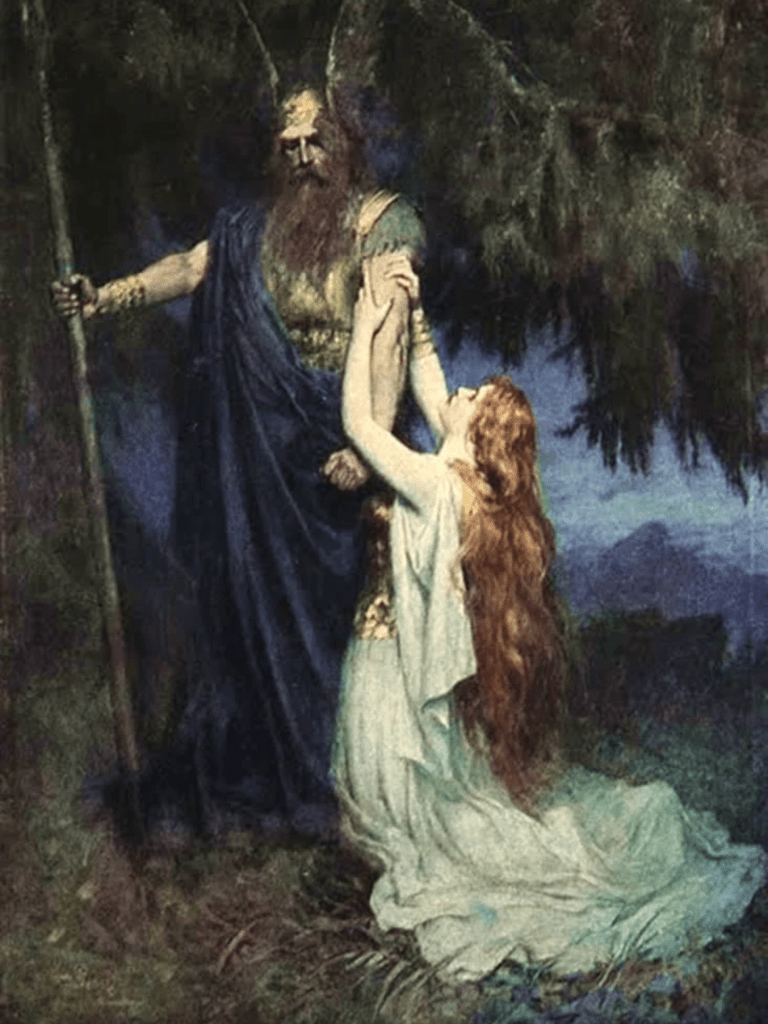
Brynhildr

Brynhildr was a princess, a shield-maiden, and was said to be a Valkyrie who disobeyed Odin. Stripped of her Valkyrie powers, she was put into a deep slumber, on a castle on top of a mountain surrounded by a magic fire, and can only awakened by a brave man with a kiss, which she was by Sigurd the Dragonslayer. With Sigurd, she had a daughter; Aslaug.

Although the pair fell in love, Sigurd was deceived by Gjuki, King of Burgundy, whose wife, the sorceress Grimhild, prepared a magic potion that made Sigurd forget about Brynhildr so he could marry their daughter Gudrun. When she found out about Brynhildr, they let their son Gunnar go to her castle. Gunnar was only able to cross the ring of fire when he switched places with the enchanted Sigurd and convinced Brynhildr to marry Gunnar instead of Sigurd.

Sigurd later regained his memories. Heartbroken upon finding out the truth from Gudrun, Brynhildr urged Gunnar to murder Sigurd. Gunnar and his brother Hogni had both sworn oaths of blood brotherhood with Sigurd and could not kill him in fear of angering the gods, so they instead incited their young brother Gutthorm to do the deed. Sigurd killed the young Gutthorm, and was also killed, while Brynhildr killed Sigurd’s and Gudrun’s son.

Distraught over her actions, Brynhildr committed suicide by throwing herself on Sigurd’s funeral pyre. They reunited in Hel, but left Aslaug alone in the world.

Mermaids

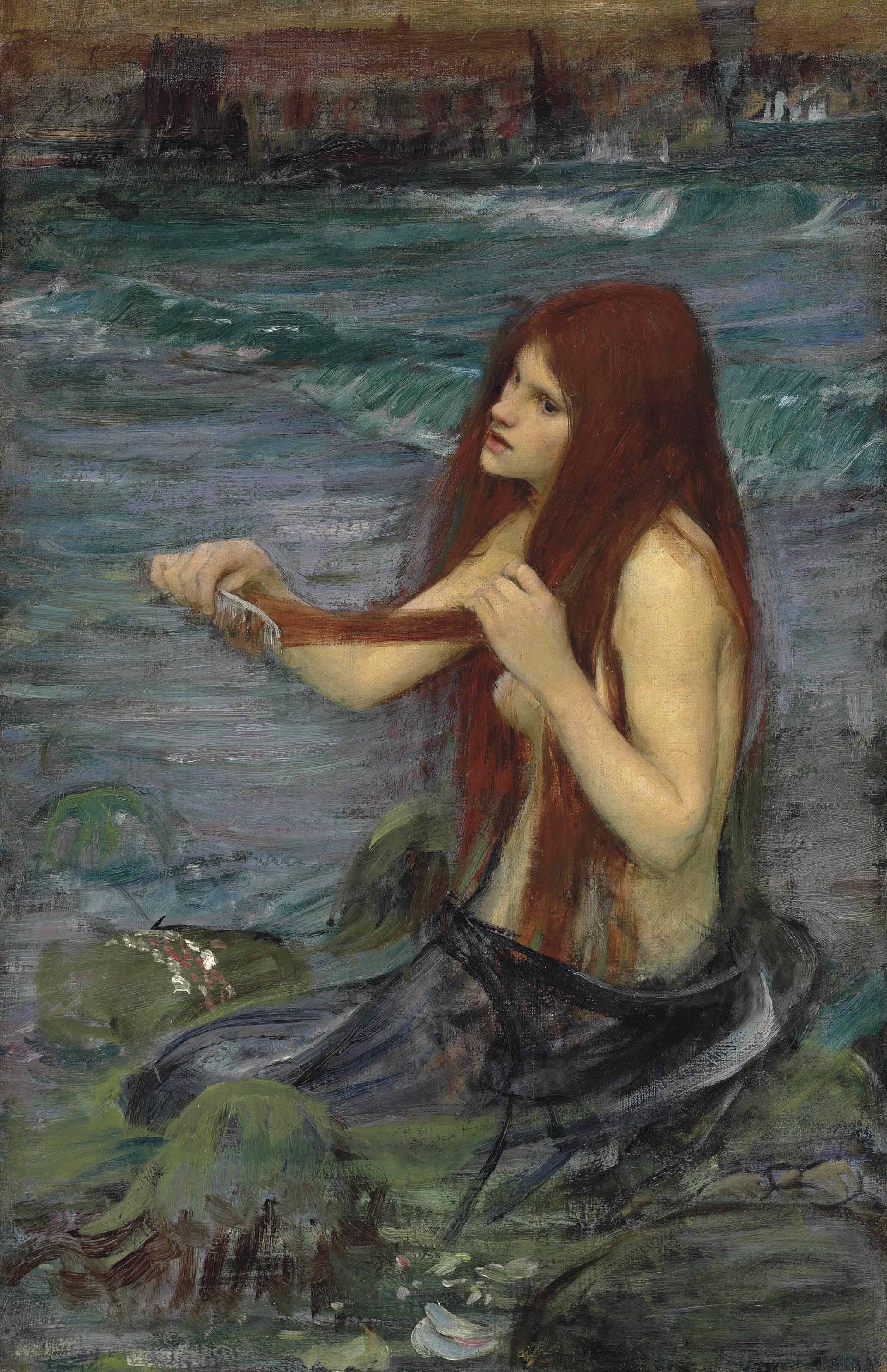
Mermaids are water spirits, and in Irish folklore, they’re known as Merrows. Mermaids are depicted as half-human, half-fish creatures and have been around for centuries in folklore and legends. Mermaids love music, and you’ll often hear them singing.

These water spirits have been linked to sorrow and destruction in modern and ancient folklore, while they can also be compassionate. They have provided the wisdom of natural remedies for deadly illnesses, lavish gifts, and storm advisories when rescued or saved. They may also lure sailors to doom and death by guiding them to rocks and causing their ships to wreck.

Mermen are sometimes associated with eating their own children or drowning people underwater out of spite and revenge for fishing in their territory.

Aquatic mammals, such as the dugong and manatee, that suckle their young in human fashion above water are considered by some to be the origin of myths about mermaids.

Britannica – Mermaid – Legendary being

Jewish Warsaw Before World War II

The Jewish community in Warsaw has a rich history. It is undoubtedly the story of one of the largest, most interesting and varied communities in the history of the Jewish people.

There has been a Jewish presence in Warsaw since the time it became the capitol of the small province in the Mazovia Principality. There was a Jewish settlement on the northwest outskirts of the Old Town, between Dunai and Piekarska Streets. There was a synagogue there and a cemetery further away, near the site of the Bristol Hotel today. The Jews were exiled from Warsaw towards the end of the 14th century by one of the Mazovian princes and the edict prohibiting Jews from residing in Warsaw remained in effect until the 19th century. In spite of that, as Warsaw became an important political-cultural center, more Jews were allowed to settle on its periphery, since the nobility recognized that the Jews represented a significant commercial force. The nobles exploited their right to rule over autonomous territories, and brought Jews to live under their protection. Legally, this system was called Juridica. Thus, the Potocki family, in the 18th century, created the neighborhood Nowy Potok, today the area of the Hotel Sobieski. The Sulkowski family established New Jerusalem – the street leading to the area is still called Aleje Jerozolimskie [Jerusalem Blvd].

In the beginning of the 19th century, the Leczczynski family founded a neighborhood, and hence the name of Leszno Street. A Venetian architect designed the Muranow neighborhood, and named it after the city of his birth, Merrano. Jews in increasingly large numbers also settled in the Praga district. One of the neighborhoods still carries the name Szmulowizna, in honor of the Jewish merchant Shmuel Zbytkower, who also received permission to build Jewish cemeteries, first in the Praga district, and later, on the western bank of the Vistula.
With the Prussian regime came the partition of Poland. During the period of the Napoleonic principality of Warsaw, and later Congress Poland, (named for the Congress of Vienna in 1815, which transferred control of Warsaw and the surrounding area from Prussia to Russia, and hence the name of all the territory annexed by Czarist Russia), more and more Jews settled in Warsaw. After the removal of all special tax restrictions on the rights of Jews in the city in 1862, Jews settled in all sections of Warsaw. Most of them, for economic, cultural and religious reasons, continued to reside in those areas where Jews were the majority.

The Jewish population of Warsaw grew significantly – from about 10,000 at the beginning of the 19th century to approximately 350,000 by the end of World War 1. It was the largest Jewish community in Europe at that time. Like all of European Jewry in the 19th century, the Jews of Warsaw vacillated between assimilation and attempts to preserve a distinctive Jewish character in their lives. The relationship between the Poles and the Jews changed frequently: there were periods of cooperation, active inclusion of Jews in Polish struggles for independence, and the protection and advancement of Jewish culture, followed by periods of crises, often with the “help” of the Russian powers, who practiced a policy of “divide and conquer”.

During the 19th century, two distinct approaches to the relationship with the Jews developed among the Poles. One approach – the romantic, liberal, democratic and later socialistic one – called for the inclusion of the Jews and other minorities in Polish civic life. Others took a different approach – the nationalistic, religious one. This group viewed the Jews and the German minority as eternal enemies and developed a politically motivated anti-Semitism, especially towards the end of the century. This modern antisemitism served to compound ancient antisemitism already prevalent in Polish society, especially in religious circles and among those who controlled financial competition. The PPS, The Polish Socialist Party, headed by Jozef Pilsudski, was founded in the 1890’s. In opposition to the Socialists, the ND, the National Democratic Party, called the Endeks, headed by Roman Dmowski, was established. A third political force was the Farmers’ Party, led by Wincenty Witos, which served as a balance.

Jewish figures like Berek Joselewicz [Yoselevich], Rabbi Meisels, Michael Landy and Henryk Wohl – are remembered for taking active roles in the history of the shared homeland. On the other hand, antisemitism, economic struggles and even riots -usually instigated by the Cossacks – were also prevalent. During the 19th century, the growing and developing Warsaw became a magnet for Jews, who streamed into the city for economic reasons, but also in order to obtain an education and participate in the building of a modern city.

Several Jewish families became influential in the financial, cultural and municipal life of the city. Scions of many families (Kronenberg, Nathanson, Berenson, Wawelberg, Bloch, Toeplitz and others) converted under pressure and are buried in cemeteries belonging to the different faiths. These families were major contributors to the development of education and trade in Warsaw. Yet thousands of Jews continued to live in poverty, with no electricity or running water.
Leopold Kronenberg (1812-1878). Banker, Industrialist and major philanthropist. He built the railway lines connecting Warsaw to St. Petersburg, Minsk, and Brest, and other places. He and his family assimilated and converted.

Warsaw became the center of Jewish activity. The Gur Rabbi temporarily established his court there while some progressive rabbis such as Kramsztyk and Jastrow preached a different approach. Zionism was an important force. At the same time a rabbinical school was established – a school which preached involvement in the life of the city, but produced not a single rabbi. Jewish schools were established and contributed to Jewish creativity in the Polish language. A Hebrew and Yiddish cultural center was also established.

While Polish society with its many different political parties became more united, all the conflicting Jewish ideologies flourished. At the same time, new ideas were burgeoning in the Jewish world. In independent Poland, Jews had been equal citizens by law since 1918 yet many began to feel more and more like strangers. In the streets of Warsaw, every fourth person was a Jew. Among them you could find rabbis from Agudat Israel, Zionists, leaders of the Bund and classic Polish intellectuals of Jewish background. Youth movements were active in the city, representing the entire range of political parties, educational trends, and community institutions. And all of these were constantly meeting and debating issues, fighting and arguing in a never-ending stream of Jewish creativity. Ten daily newspapers and several monthlies were published. Jews boxed, rode bikes and participated in many organized sports. Meir Balaban, Moshe Shorr, Yitzhak Shiper and the young Emanuel Ringelblum laid down the foundation of Jewish historiography and Shimon Ashkenazi and Marceli Handelsman joined forces with them. Jewish culture thrived – theatre, cabaret satirical performances, movies and literature. The most outstanding 20th century Polish authors and poets met in Cafe Ziminski – the Jewish writers, Julian Tuwim, Slonimski, Lesmian and Schulz. The Singer brothers, Sholem Asch, I.L. Peretz and others, sat somewhere in Krochmalna Street or in the Yiddish Authors House on Tlomacka Street.

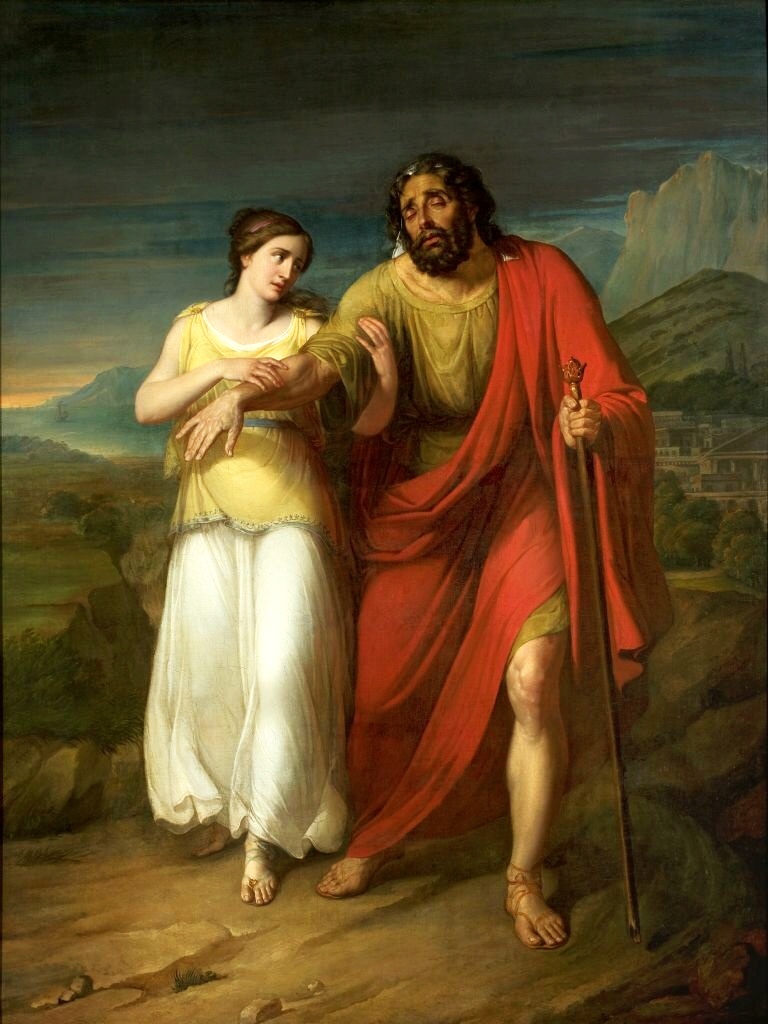
Oedipus and Antigone (1825) – Aleksander Kokular

In Greek mythology, Antigone was the daughter of Oedipus by his own mother, Jocasta, and the sister of Eteocles, Polyneices, and Ismene.

When her father went into exile she accompanied the blind man as his guide.

Two versions exist of Antigone’s fate after she defied King Creon. In the first, the subject of the tragedy Antigone by Sophocles, Creon ordered that she be immured as a punishment, but rather than face burial while alive she hanged herself; Haemon, the son of Creon to whom she was betrothed, committed suicide alongside her. In the second version, Creon turned Antigone over to Haemon for punishment, but he smuggled her away, and she later bore him a son. When Creon refused to forgive them, Haemon killed both himself and Antigone.