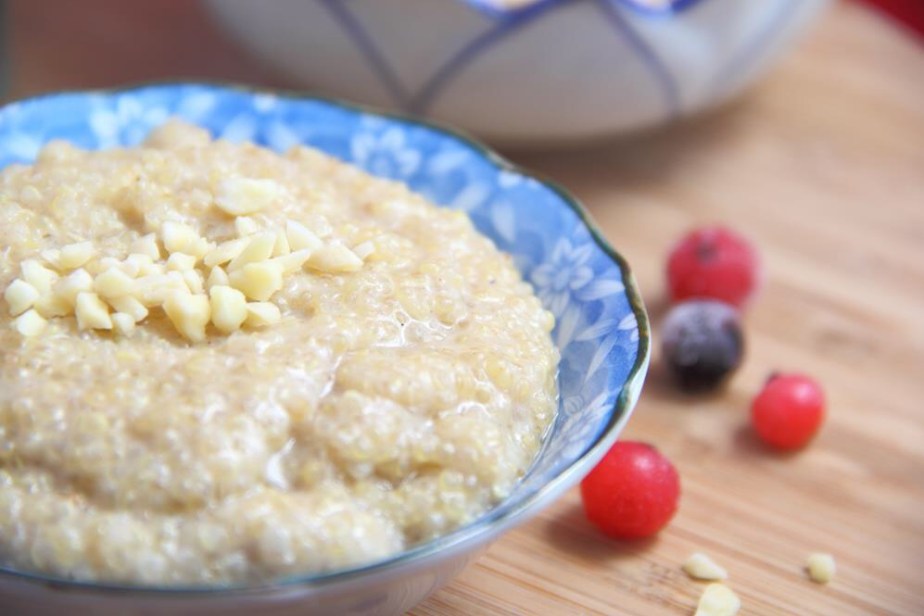
Quinoa is gluten free, high in protein and fibre, and is low GI, meaning it is slowly digested for longer-lasting energy. Lucuma gives the porridge a natural sweet kick, with cinnamon and nutmeg for a touch of spice
2 cups cooked quinoa
1½ cups rice milk
1 cup coconut cream
2 tablespoons maple syrup, plus extra to serve
1 teaspoon lucuma powder *
1 teaspoon ground cinnamon
½ teaspoon ground nutmeg
1/8 teaspoon Himalayan salt
2 tablespoons sunflower seeds
2 tablespoons chia seeds
1 tablespoon golden raisins
Bring the quinoa and rice milk to the boil in a separate saucepan. Add the remaining porridge ingredients, stirring well. Bring to a simmer and cook for 3–5 minutes, stirring occasionally.
When your porridge has reached a thick, creamy consistency, remove from the heat and ladle into four serving bowls.
Serve warm, with an extra drizzle of maple syrup.
* A natural sweetener prepared from the Peruvian lucuma fruit. Known as ‘Incan gold’, the pulp of the fruit is dehydrated to produce the powder, which is commonly added to smoothies, treats and breakfast foods.
Chia is a versatile, powerful little seed with outstanding health benefits. It is very high in calcium, and being high in fibre it keeps you feeling full for longer and is especially handy for regularity. It is also gluten, wheat and nut free.
40 g (1½ oz/¼ cup) chia seeds
250 ml (9 fl oz/1 cup) almond milk
225 g (8 oz/1½ cups) strawberries, hulled
1 teaspoon vanilla powder
1–2 teaspoons rice malt syrup
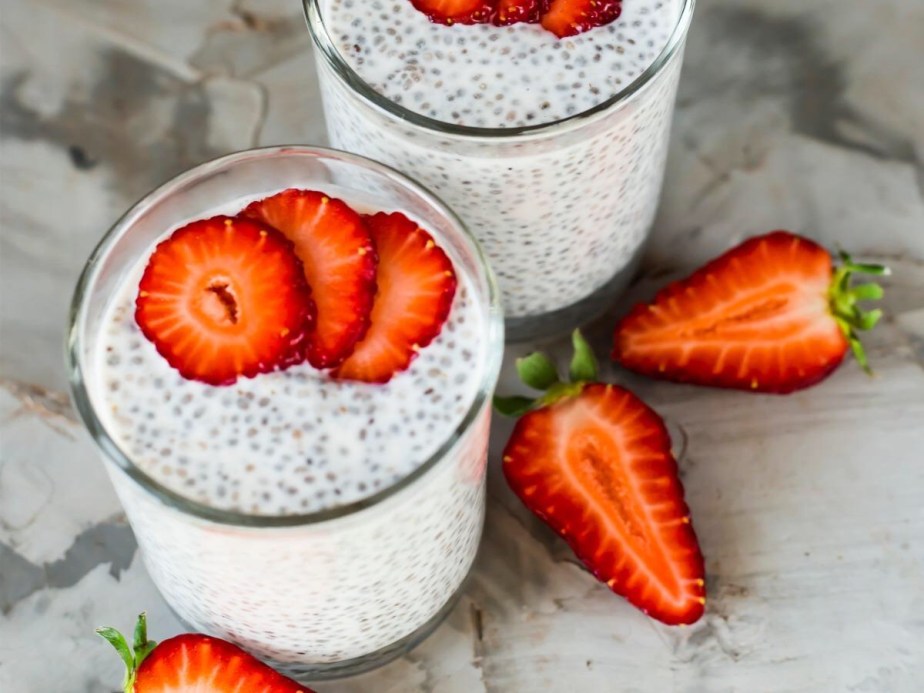
To make the strawberry chia, place the chia seeds in a bowl with the almond milk and whisk together with a fork. Set in the fridge for at least 8 hours, or overnight. When you’re ready to serve, place the strawberries, vanilla and rice malt syrup in a blender and whiz into a purée on high speed. Add the purée to the chia seeds and whisk well. Spoon into serving glasses, add your favourite topping and serve immediately
Chia is a versatile, powerful little seed with outstanding health benefits. It is very high in calcium, and being high in fibre it keeps you feeling full for longer and is especially handy for regularity. It is also gluten, wheat and nut free.
40 g (1½ oz/¼ cup) chia seeds
375 ml (13 fl oz/1½ cups) almond or coconut milk
1 tablespoon mesquite powder
1 teaspoon rice malt syrup
To make the caramel chia, place the chia seeds in a bowl with the coconut or almond milk and whisk together with a fork. Add the mesquite powder and rice malt syrup and whisk well. Set in the fridge for at least 8 hours, or overnight, before serving with your favourite topping.
Chia is a versatile, powerful little seed with outstanding health benefits. It is very high in calcium, and being high in fibre it keeps you feeling full for longer and is especially handy for regularity. It is also gluten, wheat and nut free.
40 g (1½ oz/¼ cup) chia seeds
375 ml (13 fl oz/1½ cups) coconut milk
1 tablespoon raw cacao powder
1 teaspoon lucuma powder
1–2 teaspoons rice malt syrup
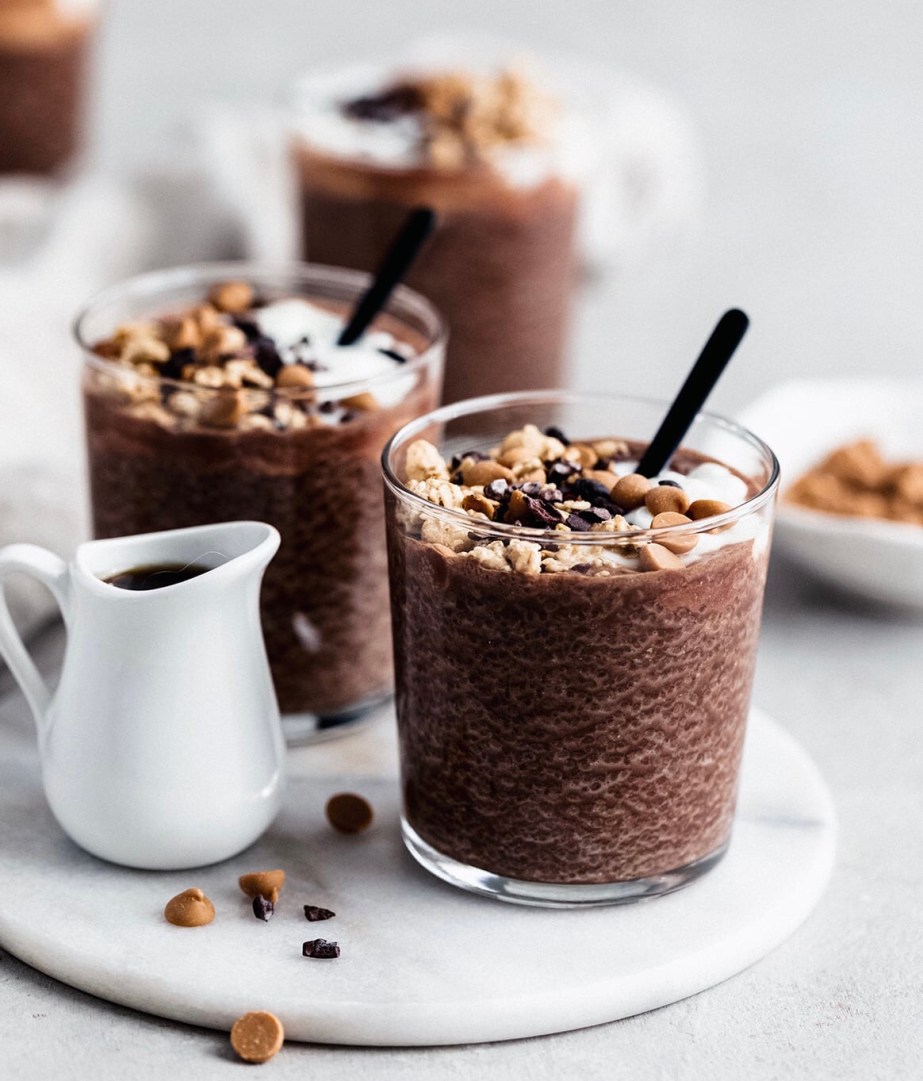
To make the chocolate chia, place the chia seeds in a bowl with the coconut milk and whisk together with a fork. Add the cacao, lucuma and rice malt syrup and whisk well. Set in the fridge for up to 8 hours, or overnight, before serving. Add toppings of your choice if desired.
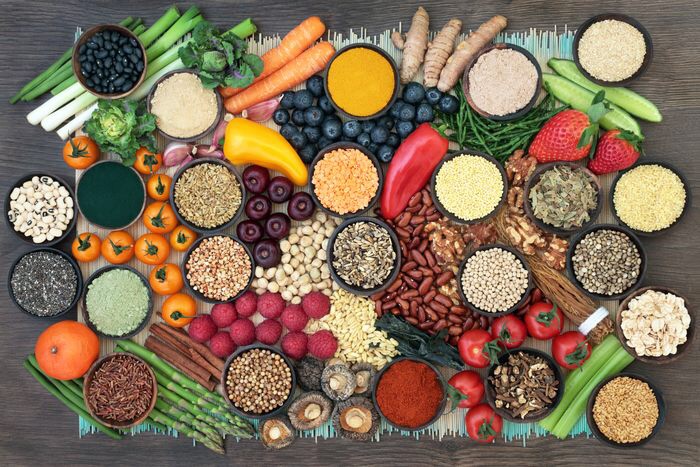
“For those of you who didn’t grow up eating lentil-and-brown-rice casseroles, it may be hard to recognize what came to be called “hippie food.” That’s because so many of the ingredients that the counterculture of the 1960s and 1970s adopted, defying the suspicion and disgust of the rest of the country, have become foods many of us eat every day.”
~ Jonathan Kauffman
Acai powder
Pronounced ah-sah-ee, acai powder is native to the Amazon, the dark purple acai berry is one of the richest known natural sources of antioxidants, and is also packed full of essential vitamins, minerals and dietary fibre. Combined with frozen fruit, it makes a deliciously simple and supercharged breakfast bowl. I’m obsessed!
Activated buckwheat groats
An absolute godsend to gluten-free people around the world! Deliciously crunchy and versatile, activated buckwheat can be used in so many ways. You can use it as a granola or cereal replacement for breakfast, or add some to smoothie bowls for crunch. I include it in the base of cheesecakes or slices.
You’ll find activated buckwheat in health food stores and online, or you can make your own by following these simple steps: soak 180 g (6½ oz/1 cup) raw buckwheat groats overnight in 500 ml (17 fl oz/2 cups) filtered water mixed with 1 teaspoon salt. Rinse and drain. Set a food dehydrator to 40ºC (105ºF), spread the groats on your dehydrating trays and leave for 24–48 hours, or until dry and crisp. Alternatively, spread the groats on a baking tray lined with baking paper and dry in the oven at its lowest setting for 24–48 hours, or until dry and crisp. Easy peasy!
Almond meal
Almond meal is simply made by grinding almonds. Super delicious in baked goods, it adds a nutty, moist texture and beautiful flavor to recipes. Almonds are well known for their healthy fats, fibre, protein, magnesium and vitamin E; health benefits may include lowering blood sugar levels, blood pressure and cholesterol. To maintain freshness, keep your almond meal in the fridge in an airtight container.
Berry powders
Blueberry and strawberry fruit powders are relatively new on the scene. Full of antioxidants, berry powders are not only delicious, but nutritious. I use them in smoothies, stir them through breakfast dishes, and sprinkle them on almost everything. You’ll find them in good health food stores and online.
Buckwheat flour
A big fan of buckwheat. It’s fabulous in its natural form, as activated groats, and when ground into a flour. Although its name suggests it is a form of wheat, buckwheat is classified as a seed, and is naturally gluten free. Low in fat, it contains disease-fighting antioxidants and highly digestible protein, as well as many vitamins and minerals. With its deliciously nutty flavor, buckwheat flour is the star ingredient in pancakes and baked cinnamon donuts. A definite pantry staple.
Cacao butter
One of the most stable fats around, cacao butter is the pure, cold-pressed oil of the cacao bean and provides a healthy dose of omega-6 and omega-9 fatty acids. I use it in place of coconut oil in some of my cakes, and for making chocolate. Cacao butter is solid, but I always use it in liquid form. To liquefy cacao butter, simply place it in a heatproof bowl over a saucepan of simmering water and stir it with a whisk or a spatula, checking with a thermometer to ensure the temperature does not rise above 48°C (118°F), to keep all the valuable nutrients intact. If it starts rising above this temperature, remove the bowl from the heat; the cacao butter will be warm enough to finish melting on its own.
Cacao powder, raw
If you want serious nutrition, raw cacao powder is where it’s at! Unlike regular cocoa powder, which is heat-treated, raw cacao powder is made by cold-pressing unroasted cacao beans. This process removes the fat, while keeping all its nutrients and enzymes intact. I
Cashews
Raw organic cashews contain a host of vitamins and minerals, including copper, magnesium, manganese, phosphorus, vitamin K and oleic acid. Together these nutrients promote bone strength and joint flexibility, may help discourage migraines, improve memory, lower blood pressure, and help protect against UV damage, heart disease and cancer.
Soak them in water overnight for maximum nutrient absorption. If you are running short of time, you can speed up the process by soaking them in boiling water for 30–60 minutes.
Chia seeds
Gluten free, and super high in omega-3 fatty acids, chia seeds are full of nutrition, unbelievably versatile and an essential pantry staple. Soak them to make breakfast puddings, and have them in muesli mixes, and in raw and baked treats. High in fibre, protein and calcium, they keep you regular and fully satisfied. You’ll find them in major supermarkets.
Coconut, dried
Dried coconut plays a starring role in many breakfast and treat recipes. It is so versatile, as well as totally delicious. Coconut also boasts many health benefits, mainly due to its high levels of lauric acid, an anti-fungal, anti-viral compound thought to be helpful for gut health and immunity.
Shredded coconut is made from coconut flesh that has simply been dried and shredded. I love its texture in raw treats and as a breakfast topper.
Flaked coconut is basically the same as shredded, but processed into flatter pieces, making it less stringy. Desiccated coconut is also dried, but contains less moisture than shredded or flaked coconut. Finer in texture, it works beautifully in raw and baked treats.
Coconut butter
A creamy, velvety spread made by blending coconut flesh, coconut butter is rich in immunity-boosting lauric acid. It may also help increase your metabolism, enhancing energy levels and aiding in weight loss. I love using it in frostings. You can find it in health stores and online.
Coconut cream & coconut milk
Use coconut milk in many recipes for its creamy texture and distinctive flavor. Coconut milk is the liquid that comes from the grated flesh of a coconut, which is processed with water to create a milk. Use it in combination with other plant milks, such as rice or almond milk, as they blend beautifully together. Coconut cream contains less water than coconut milk, resulting in a much thicker texture.
Most tinned coconut milks include an emulsifier; Use brands that are 100% organic and BPA free. You could also use long-life coconut milk if you wish.
Coconut flour
Coconut flour is made from grinding coconut pulp after it has been squeezed for coconut milk. It contains much of the fibre from the coconut, and absorbs lots of liquid. High in protein, it is particularly handy as a thickener, and simply for its delicious nutty flavor. Add some to my pancake mix to give it a little extra rise. It is naturally sweet and filling, which is an extra bonus.
Coconut oil
Possibly the most versatile oil on earth, coconut oil is a definite keeper. With its high smoke point, coconut oil can be used at high temperatures without becoming unstable and losing its anti-inflammatory and antioxidant nutrients. Use it in much of your savory cooking, as well as raw and baked treats. For maximum health and taste benefits, use cold-pressed (and preferably organic) coconut oil.
Coconut oil solidifies in colder temperatures. To liquefy it to use in recipes, immerse your jar in a bowl of boiling water. Within a few minutes, the oil will begin to melt. Keep it immersed a little longer for the oil to melt completely.
Coconut sugar
Coconut sugar (also known as coco sugar or coconut palm sugar) is a natural sugar produced from the sap of cut flower buds of the coconut palm. This tasty sugar is considered the most sustainably produced. Being high in sucrose, I wouldn’t call coconut sugar a health food, but it does offer some trace nutrients, and has a less dramatic impact on blood sugar than many other natural sweeteners.
Coconut yoghurt
Irresistibly creamy, full of flavor and totally satisfying, coconut yoghurt is a favorite dairy-free yoghurt. Consumed in moderation, it can benefit your health and help fight infection. It is made from coconut cream and is sold in major supermarkets and health food stores.
Dates, medjool and pitted
Dates are a must in your pantry. Use medjool and sometimes pitted dates in my recipes. Medjool are the larger fresh dates you’ll find in the fruit and veg section of your grocery store. They’re soft and super sweet, and perfect in shakes, smoothies and raw treats. They contain pits, which need to be removed before consuming.
Pitted dates are the dried variety most commonly found in the baking or dried fruit section of grocery stores. They are chewier and less moist than fresh dates, and ideal for baking.
Grapeseed oil
When pan-frying, use grapeseed oil for its mild flavor and high smoke point. The ‘smoke point’ is the temperature at which an oil will begin to smoke. When heated past its smoke point, the fat in the oil starts to break down, releasing toxic fumes and free radicals. Although we most often cook at moderate temperatures and the risk of heating the oil past its smoke point is unlikely, I like to play it safe.
Linseed meal
Also called flaxseeds, linseeds are one of the leading sources of plant-derived omega-3 fatty acids and dietary fibre. Ground linseeds are incredibly useful in plant-based baking as an egg substitute. When linseeds are ground and mixed with water, they thicken and act as a binding agent, and are commonly called a ‘flax egg’. Fortunately, linseed meal is easily processed by the body and provides many health benefits. Grinding your own linseed meal as you need it yields the best binding results; I store mine in the fridge to keep it as fresh as possible.
Lucuma powder
A natural sweetener prepared from the Peruvian lucuma fruit. Known as ‘Incan gold’, the pulp of the fruit is dehydrated to produce the powder, which is commonly added to smoothies, treats and breakfast foods. In recipes it is generally interchangeable with mesquite powder — they both offer a caramel-like flavor and contain a heap of nutrients.
Maca powder
Maca is a root plant known for its energizing and revitalizing properties. Often referred to as ‘Peruvian ginseng’, maca powder is nutritionally dense, containing vitamins, minerals, enzymes and amino acids. Loaded with vitamin C and iron, maca can help boost the immune system for daily wellness, and also help with stress, mood, PMS and menopausal symptoms. I add a teaspoon to smoothies or treats when I need an energy boost. However, too much maca can cause hormonal disruption and other side effects, and should be avoided altogether by people with thyroid illnesses. Check with your doctor or naturopath if you have concerns.
Mesquite powder
Mesquite is a nutritious superfood powder with a sweet, rich, nutty, caramel flavor that works beautifully in smoothies and treats. The powder is extracted by grinding the seed pods of the mesquite plant, commonly found in South America. It is high in protein, and rich in calcium, magnesium, iron, zinc and dietary fibre. Buy from good health food stores and online.
Millet
One of the world’s oldest crops, millet is a nutty, mildly sweet grain, once mainly used as bird and livestock feed. Increased interest in its nutritional and gluten-free properties has revitalized its image, and it is now enjoyed as a wheat-free alternative. Millet flakes can be used in Banana and maple bread. It has a mild flavor that pairs well with most foods. Millet contains B group vitamins, magnesium, potassium and dietary fibre, and may assist with toxin excretion. Adding millet to your diet while detoxing can help speed up the process.
Nut butter
Nut butter is an addictive spread achieved by grinding nuts into a paste. Use nut butter in a lot of recipes — and I often eat it straight out of the jar with a spoon! Nut butters can be found in most supermarkets and health food stores; or make your own.
Nutritional yeast
Besides its delicious cheesy taste, nutritional yeast (also called savory yeast flakes) is very nutritious, as its name would suggest. It is high in some B-complex vitamins, and is often fortified with B12. It is also a complete protein, low in fat and sodium, is free of sugar and gluten, and contains iron. You’ll find it in most health food stores, some supermarkets and online.
Oats
Oats have got to be the ideal breakfast comfort food, and add a subtle, delicious flavor to cookies, baked goods and raw treats. Much controversy surrounds the presence of gluten in oats, and whether gluten-free oats exist. Oats are naturally gluten free, but are almost always contaminated during the milling process. Oats contain a protein called avenin, which can produce a gluten-like reaction in some people with celiac disease.
Food Standards Australia New Zealand prohibits any form of oat being labelled as gluten-free in Australia or New Zealand, but a few international brands sell gluten-free oats that have been tested to not contain gluten.
While oats most often do not cause a reaction for people with an intolerance or sensitivity to gluten, the Celiac Australia society does not recommend that people with celiac disease consume oats of any kind.
If oats are a concern, you can almost always substitute them in my recipes with quinoa flakes.
Olive oil
Used heavily in Mediterranean cooking! Please pay attention to the quality of the oil you use. Extra virgin olive oil is the purest grade you can get. It is made by crushing olives and cold-extracting the juice, without altering the oil in any way, and using no additives during the process. Naturally, it has the finest flavor and more health benefits. The phenolic compounds in olive oil have been found to promote cardiovascular and digestive health, and have anti-inflammatory and cancer-fighting qualities.
The more processed and refined your olive oil is, the less beneficial it will be.
Potato flour
Potato flour is made from cooked, dried and ground potatoes. It works well with other gluten-free flours and adds a desirable moist, soft texture to pancakes and cupcakes. Don’t confuse it with potato starch. Ground from the whole potatoes, including the skin, potato flour is heavier and denser than potato starch and tastes more like potato. Potato starch is flavorless and is better used as a thickener.
Psyllium husks
Mainly used as a form of natural dietary fibre, psyllium husks are often sprinkled on breakfast bowls or added to smoothies. I find psyllium adds a beneficial texture to gluten-free baking in general, making the result more moist and tender. Psyllium is readily available in supermarkets and health food stores.
Quinoa
I love its taste and texture, and that it’s high in protein, less starchy than rice, and so versatile. I often use quinoa flakes in baked goods and savory patties, the cooked grain in salads and meals, and quinoa puffs in sweet treats. Quinoa is gluten-free, but if you are highly sensitive to gluten, ensure the quinoa you buy hasn’t been processed in a facility that also processes grains, to avoid any potential gluten cross-contamination.
Rice malt syrup
Organic brown rice malt syrup is a naturally malted whole-grain sweetener derived from brown rice. Characteristically rich but mildly flavored, it complements other flavors in a recipe, whereas sweeteners such as honey, maple syrup and molasses have a stronger, more distinctive flavor.
If you can’t find brown rice malt syrup, use pure Canadian maple syrup. It contains a decent amount of some minerals, especially manganese and zinc. Make sure you buy 100% Canadian maple syrup and not the cheaper maple-flavored syrups, which are often made from a nasty mix of sugar, corn syrup, molasses, caramel color, alcohol, vanilla extract, flavors and a sulphide-based preservative.
Sorghum flour
A popular option for gluten-free baking, sorghum flour is ground from wholegrain sorghum, and has a light texture and mild sweet flavor. Being high in fibre, it promotes digestive health, helps fight cardiovascular disease and aids in blood sugar control.
Used alone, sorghum flour produces dry, gritty, baked goods. I combine it with tapioca starch and rice flour to give my baked gluten-free recipes better volume and texture.
Tapioca flour
Tapioca flour, also called tapioca starch, adds structure to gluten-free baking. It comes from the root of the cassava plant, and in combination with other gluten-free flours, provides a chewy texture to baked goods.
Tapioca flour is similar to arrowroot powder, but also gives a little elasticity to baked items.
Teff flour
Like quinoa, teff is a really handy and nutritious gluten-free grain. Long a nourishing staple of highland Ethiopians, the grain may be the tiniest in the world, but packs in many health benefits. Teff is high in protein, iron and calcium, and contains all nine essential amino acids. It is excellent for maintaining blood sugar balance and feeding the friendly bacteria in the gut, for improved digestive health. Use ivory teff flour in baked cinnamon donuts and it works for a treat. Available online and in health food stores.
Vanilla powder
Organic vanilla powder is such a beautiful product, I can’t recommend it highly enough. It is simply made from grinding organically grown vanilla beans to a powder — and nothing else! Its aroma and taste is far superior to extracts and essences, particularly in smoothies and raw cakes.
You can make your own vanilla powder by simply grinding some organic vanilla bean pods in a coffee or nut grinder.
The next best thing is organic vanilla bean paste or extract. Most pastes and extracts contain some kind of added sugar, but there are a few superior products that don’t, so check the label.
Xanthan gum
Made from the outer layer of a tiny, inactive bacterium called Xanthomonas campestris, xanthan gum is commonly used in gluten-free baking as a binding agent. I use it as an emulsifier, and to add volume to gluten-free batters.
Za’atar
A tangy Middle Eastern spice mixture that includes dried thyme and oregano, ground sumac, sesame seeds and salt. Blend za’atar with olive oil and add it to a cauliflower ‘dough’ to create gluten-free mana’eesh ‘flatbread’.
In Middle Eastern culture, za’atar is believed to give strength and clear the mind. It is also said to boost the immune system and circulation, build strong bones, soothe inflammation, boost energy and improve mood.
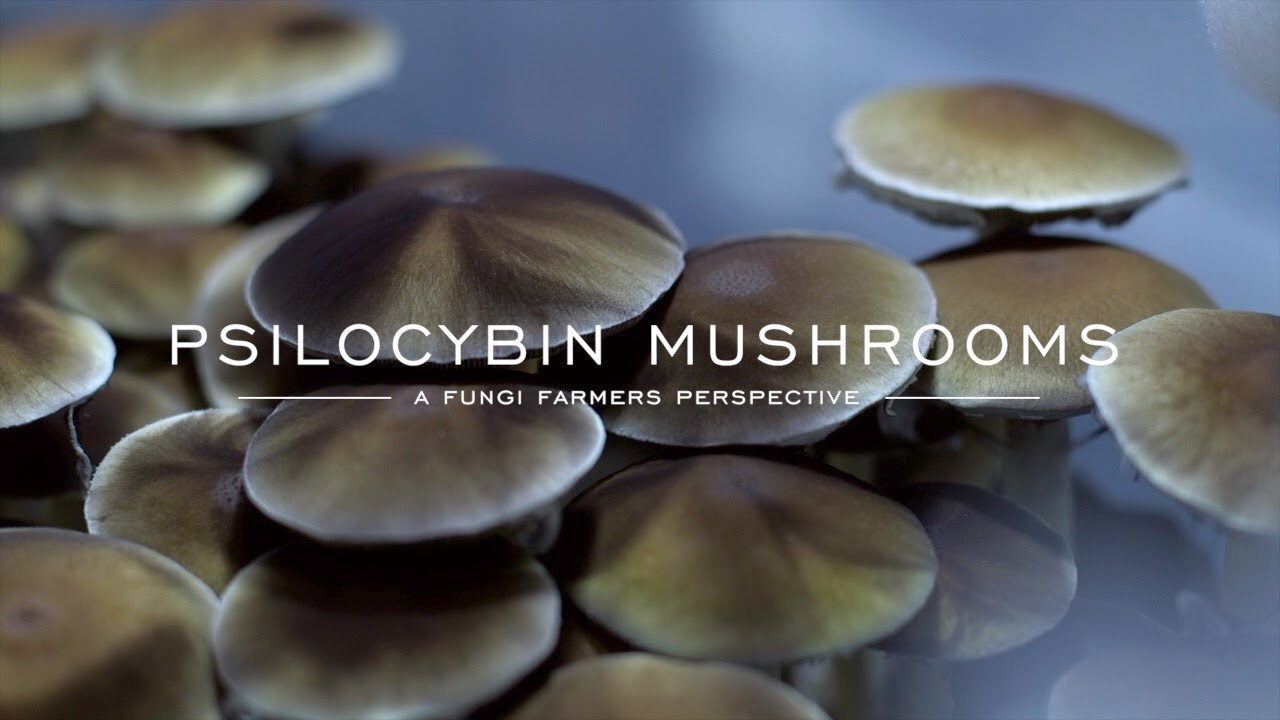
Psilocybin, like mescaline, is extracted from a plant. Psilocybin is extracted from Psilocybe mexicana, a small mushroom that grows in wet or marshy pastures. Other species of mushrooms which have psychedelic qualities are: Conocybe siliginoides, Psilocybe aztecorum, P. zapotecorum, P. caerulescens, and Stropharia cubenis.
Psilocybin, like peyote, was and is still used to a small degree in the religious rites of the Mexican Indians. It was referred to as teonanactl, or in English as God’s flesh. The Indians usually eat between 10 and 15 mushrooms, which, like peyote, have a very unpleasant acrid smell. Usually nausea follows ingestion. The effects of psilocybin last for about five to seven hours.
When you take the actual raw mushrooms, the dosage is about 10 to 20 medium-sized buttons. A faster method of ingestion is to prepare a soup, using any regular mushroom soup recipe. Although this tends to increase the speed in which the psilocybin enters the blood stream, it also increases the unpleasant taste and smell. When taking synthesized psilocybin, usually a capsule of between 20 and 60 milligrams will produce a four- to six-hour trip.
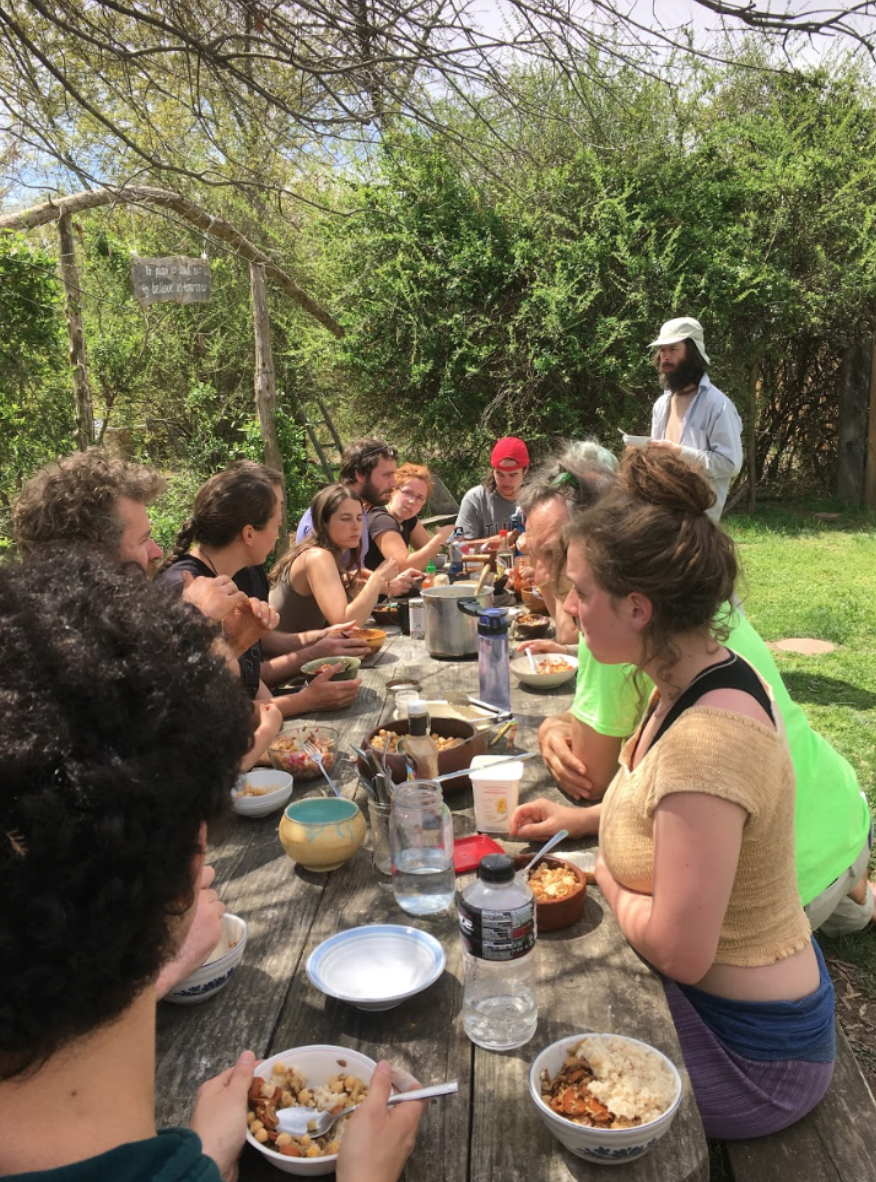
We are forming an egalitarian and income-sharing community. We are co-creating a culture of social sustainability and harmony that nourishes us as well as the earth.
“whatever makes a house into a home makes a game into play and makes culture come to life. but home, play and culture, strain to grow without a structure.”
Established: 2015
Shared Income: All or Close to All
Mission Statement: We aspire for a small and stable community with a high level of sharing and connection. We are inspired by the nature around us as we attempt to create human habitat that emulates the beauty and complexity of living systems. We seek to intertwine reason and intuition, aesthetics and efficiency. We are interested in increasing our skills and education through experience, mentorship, sharing and study, and growing as individuals. Within a thriving cluster of neighboring income sharing communities, we are creating a viable, regenerative alternative to the mainstream. We intend to strengthen the relationships between existing communities.
Community Description: We are forming an egalitarian and income sharing community. We are co-creating a culture of social sustainability and harmony that nourishes us as well as the earth. We focus on re-humanizing the scale of our lives. We do that with slower pace, balance in our lives, deep social connection, natural building, education, creativity, and intuitive structure to our time and space. While we are focused on interpersonal and cultural aspects of our community, we are interested in building small, beautiful, natural housing, doing our best to be ecologically conscious, using new and old technologies, and upholding values of minimalism. We want to continually learn about what works in community and do our best to integrate our lessons into our lifestyle. We are planning educational programs in subjects including experiential natural building workshops, off grid technologies, crafts, and nature awareness. We are working on understanding what makes communities thrive through sociological research.
Setting: Cambia is nestled within 15 acres, with about 5 of which is mostly a thicket of young scrubby vegetation and about 10 acres of mature (80 year old or so) forest. we have a small old house (over 100 years old) that we are restoring and currently using as our common house, it has our kitchen and living room and two bedrooms.
Personal dwellings are small and modest. We have a garden shed that’s converted to a duplex, a cozy sailboat with a deck, a fantastic vintage air stream trailer that’s completely remodeled inside, and a building that we built which we call “the barn” (due to lack of better names) which has a workshop, guest space, residence, and a sacred space for gathering and meditation.
Daily Schedule
7:30: Optional meditation, morning quiet time, breakfast. 9am: Coordination meeting 9:15: Priority Projects at Cambia and income work 1pm: Lunch 2pm: Personal and greater awesomeness projects 6:30pm: Dinner 8:30pm: Shared evening activities (3 or 4 days/week including writing group, cuddle puddles, listening to audiobooks, heart circle ceremony, singing)
“Faith expressly signifies the deep, strong, blessed restlessness that drives the believer forward so that he cannot settle down… A believer cannot sit still as one sits with a pilgrim’s staff in one’s hand. A believer travels forward.”
~ Soren Kierkegaard
Status: Established
Started Planning:2006
Started Living Together: 2006
Visitors Accepted:Yes
Open to New Members: Yes
Shared Income: All or Close to All
About: We are a small, relatively new community – a mix of families with small children, singles, and college students – in an urban coastal neighborhood on Tampa Bay. We founded this location at a time when we were seeking different expressions of communal living, and being in the South and on the coast is a new experience for us. The students living with us attend various area schools, including the University of South Florida, St. Petersburg; St. Petersburg College; and Pinellas Technical College.
Bayboro House, the first Bruderhof in Florida, is right on Tampa Bay in St. Petersburg. Founded in 2006, Bayboro is home to about twenty-five people, including university students, families, and children.
Setting: We have a large waterfront house that serves as our main accommodation and gathering space. Built in 1905, it features deep porches where we can sit and look at the bay. The lot, which is flat and has beautiful tropical landscaping, has six other smaller buildings. Though our house is on the coast, we are very much a part of our wider urban community.
Connecting with Neighbors: Friends and neighbors often drop by for visits throughout the week. Each month we help sponsor a meeting for many of the families in our area to discuss neighborhood issues. We reach out to the diverse faith communities here and have lively discussions about faith and how to put it into practice.
Point of Interest: We get to see a beautiful sunrise every morning, and we enjoy nearly 365 days of sunshine a year. You’ll often find us boating or kayaking on the bay, and we like to catch our own fish and seafood to eat.
Faith: Christian. We practice adult baptism. We are also pacifists and conscientious objectors. While we love our countries and countrymen, our faith transcends political and nationalistic affiliations.
The United States has a storied history of communal living attempts, from George Ripley’s Brook Farm utopia in the 1840s to Vermont’s back-to-the-land experiments in the 1960s, many of which failed. Today, however, “intentional living” is being reborn. Last year, the health care provider Cigna concluded that loneliness had reached “epidemic levels,” and with the dream of homeownership increasingly out of reach, many young people have sought out new ways to live and work. Co-working spaces like WeWork are booming. Co-housing settlements—which were founded in Scandinavia in the 1970s—are also springing up. (The United States now has around 170 such communities.) All told, the number of ecovillages, co-housing settlements, residential land trusts, communes, and housing cooperatives listed in the Foundation for Intentional Community’s global directory nearly doubled between 2010 and 2016, from 679 to about 1,200.
The Wall Street Journalonce called the Farm “the General Motors of American Communes.” Its founder, Stephen Gaskin, was a charismatic creative writing instructor from California who had, while tripping on LSD, developed a philosophy one of his followersdescribedas “Beat Zen and Buddhist economics.” Gaskin believed that America should return to natural living; chemical contraception and abortion, hesaid, were “damaging to the fabric of society.” In 1971, he and 300 hippies set out from San Francisco in search of a place to form an agrarian commune and “get it on with the dirt.” They eventually settled in central Tennessee. At first, they lived in teepees, Army tents, and the school buses they had driven out from California, avoiding birth control, makeup, coffee, meat, alcohol, violence, and haircutting. Everyone took a formal vow of poverty and forfeited their possessions.
Those who have stayed believe they can develop a vision for the future that builds off the Farm’s founding ideas: sustainability, and the desire to live in peaceful cooperation. “We realize that there is no viable way to start a full commune within a capitalist society right now,” Beyer said. “What we can do is slowly leverage our way out of it.” The Farm’s millennials are eager to try something radical again, but they have learned from the past generation that working within the systems of the outside world can be as important as working to build their own inside.














 Mark Bere Peterson’s Counterculture, Urban Legends, Paganism & Witchcraft