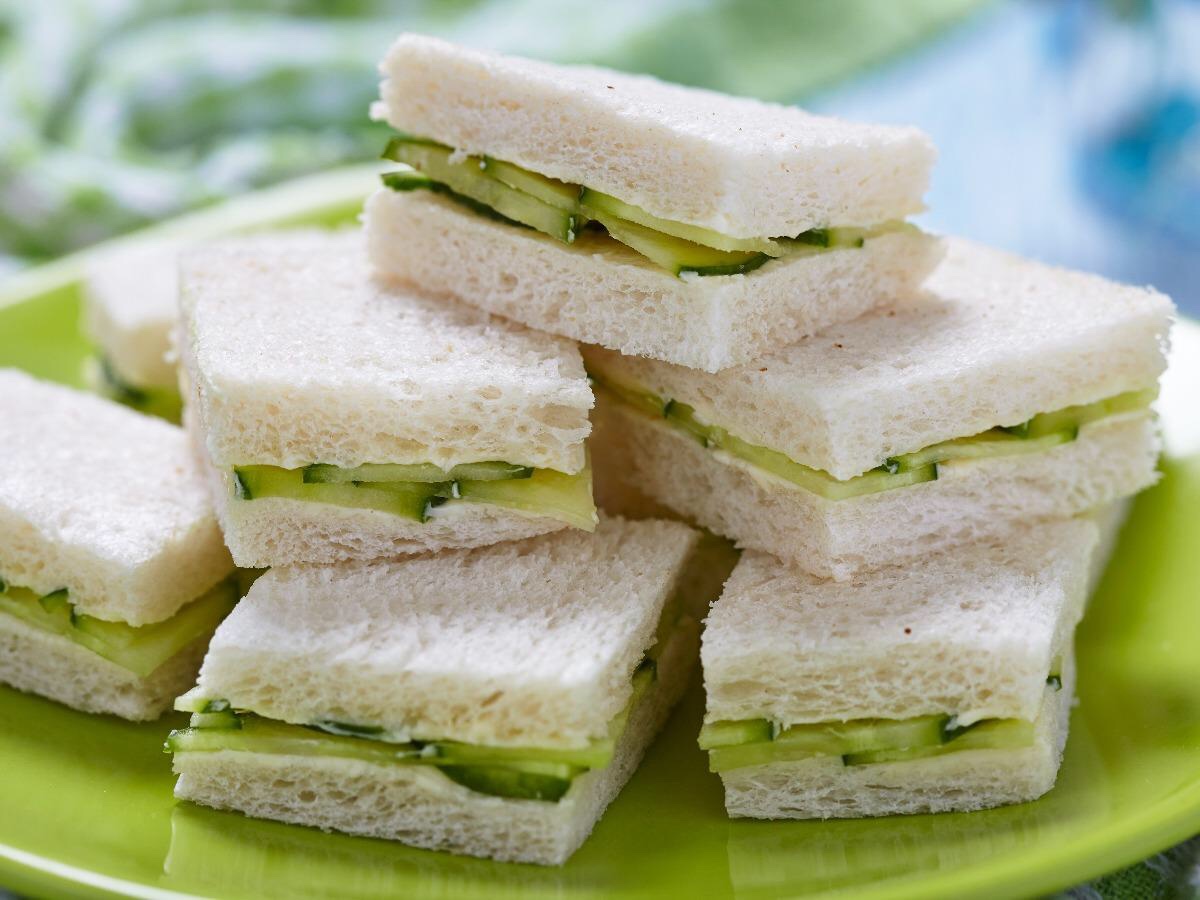
Cucumber Sandwiches with Yuzu Citrus Chive Butter

10 tablespoons butter, softened
2 teaspoons yuzu juice
1-2 tablespoon finely chopped fresh chives
salt and freshly ground black pepper
½ large cucumber
2 teaspoons cider vinegar
8 slices white bread

Makes 24

Beat the butter until really soft and spreadable. Gradually add the yuzu , mix in and season with salt and black pepper. Add the chives and mix to combine.

Peel the cucumber and thinly slice into rounds. Place the slices into a bowl, add the cider vinegar and toss to coat.

Lay half of the bread slices out on the work surface and spread with half of the yuzu and chive butter.

Arrange the cucumber slices on top as neatly and evenly as possible and season with salt and pepper. Spread the remaining bread with the yuzu and chive butter and press on top of the cucumber-topped bread, butter-side down.

Gently press the sandwiches together and trim off the crusts using a serrated knife.

Cut the sandwiches into rectangles or triangles to serve.

Inspired by: Afternoon Tea at Home

Bluebell (hyacinthoides non-scripta)

Bluebell (hyacinthoides non-scripta)

A native woodland plant that is potentially as dangerous as the foxglove since it contains glycosides called scillarens, which are similar to the glycosides in foxgloves. Like the snowdrop, the bulb can be mistaken for onions and eaten. Theoretically, it lowers the pulse rate and causes nausea, diarrhoea and vomiting and larger doses could cause cardiac arrhythmias, hypotension and electrolyte imbalance similar to the effects of digoxin in overdose. Folklore tells us that by wearing a wreath made of bluebell flowers, the wearer would be compelled to speak only the truth; the chemical that makes the plant poisonous was used in alchemy.

Magical propensities for speaking the truth; preventing nightmares; love spells; easing mourning.

Sources: By Wolfsbane & Mandrake Root

Saint John’s Wort (Hypericum perforatum)

Saint John’s wort (Hypericum perforatum): This true midsummer flower is strongly influenced by the midday sun. The countless gold-yellow filaments burst out of the calyx like sun rays. They make the flowers, which open only during dry weather, look like tiny suns. The flower petals look as if they might be small airplane propellers and are reminiscent of swirling beams of light and of the light chakras. As a medicinal herb, this plant of the Sunflower family has a soothing effect on the nerves, brings light into the soul, and chases away the darkness.

For centuries, St. John’s wort served as a talisman against evil. At the same time, it was prized for its medicinal power, both helping heal wounds and ease psychological stress. In ancient Rome and Greece, the herb was used to treat inflammation of all kinds, and was even put to use in compounds used on serious battle wounds.

Warning: St. John’s wort may interfere with some prescription medicines. If you take prescription drugs of any kind, be sure to talk with a naturopath or a health care professional familiar with Natural Standard, the top resource for drug-herb interactions, to determine a safe level before taking remedies containing the herb.

Homemade Toasted Nut Butters

Peanut butter
550 g (1 lb 4 oz/4 cups) peanuts
½ teaspoon Himalayan salt

Almond butter
650 g (1 lb 7 oz/4 cups) almonds
½ teaspoon Himalayan salt

Cashew butter
625 g (1 lb 6 oz/4 cups) cashews
½ teaspoon Himalayan salt

Pistachio & macadamia butter
350 g (12 oz/2½ cups) pistachio nut kernels
230 g (8 oz/1½ cups) macadamia nuts
½ teaspoon Himalayan salt

Preheat the oven to 150ºC (300ºF).

Line a baking tray with baking paper. Spread your chosen nuts on the baking tray, sprinkle with the salt and bake for 10–15 minutes, or until golden, shaking the tray occasionally to ensure they don’t burn.

Transfer the toasted nuts to a high-speed food processor and start blending. The blending time will depend on how smooth and creamy you like your nut butter, and how powerful your processor is. It can take up to 10–20 minutes to achieve a smooth nut butter, and you’ll need to stop and scrape down the sides of the processor bowl a few times, and to give the motor a rest. The nut butter is complete when it is smooth and creamy, with no nut pieces — unless you prefer a crunchy nut butter, in which case you can stop processing earlier.

Store your nut butter in a clean jar in the fridge. It will keep for up to 3 weeks.

Classical Sabayon

4 egg yolks
1/4 cup plus 1 tbsp/65 g granulated sugar
1/3 cup/75 ml sweet fortified wine such as Marsala, Madeira, or port

Pour water to a depth of 1 to 2 in into a medium saucepan and place over medium heat. Rest a medium stainless-steel bowl in the pan over (not touching) the water. Put the egg yolks and sugar in the bowl and, using a whisk, begin beating together the yolks and sugar. After about 1 minute, add the wine and continue beating. As the bowl heats up, the yolks will begin to thicken. Beat vigorously, scraping around the bowl with a heat-resistant rubber spatula from time to time so that bits of yolk don’t get stuck and overcook. Beat until thick and frothy but not quite fluffy, about 8 to 10 minutes. It is ready when it forms a thick ribbon as it trails off the end of the whisk. Remove the bowl from the heat and beat for another 30 seconds or so to stabilize the sauce and let the bowl cool down. If possible, serve right away.

Lavender of Provence

Flowers bloom throughout the year in Provence, but none are more synonymous with the region than lavender, which turns acres of land purple. With more than 2,000 producers and roughly 25,000 people employed in the industry, working across 20,000 hectares, lavender is big business. You’ll want to visit between the last week of June and the beginning of August, just before the harvest begins, to see the flowers at their best.

Fresh Soy Milk Sheets (Nama Yuba)

2 cups soy milk, preferably rich (with a high soy-solid content) and freshly extracted
½ teaspoon wasabi paste
Soy sauce or Vegan Seasoned Soy Concentrate

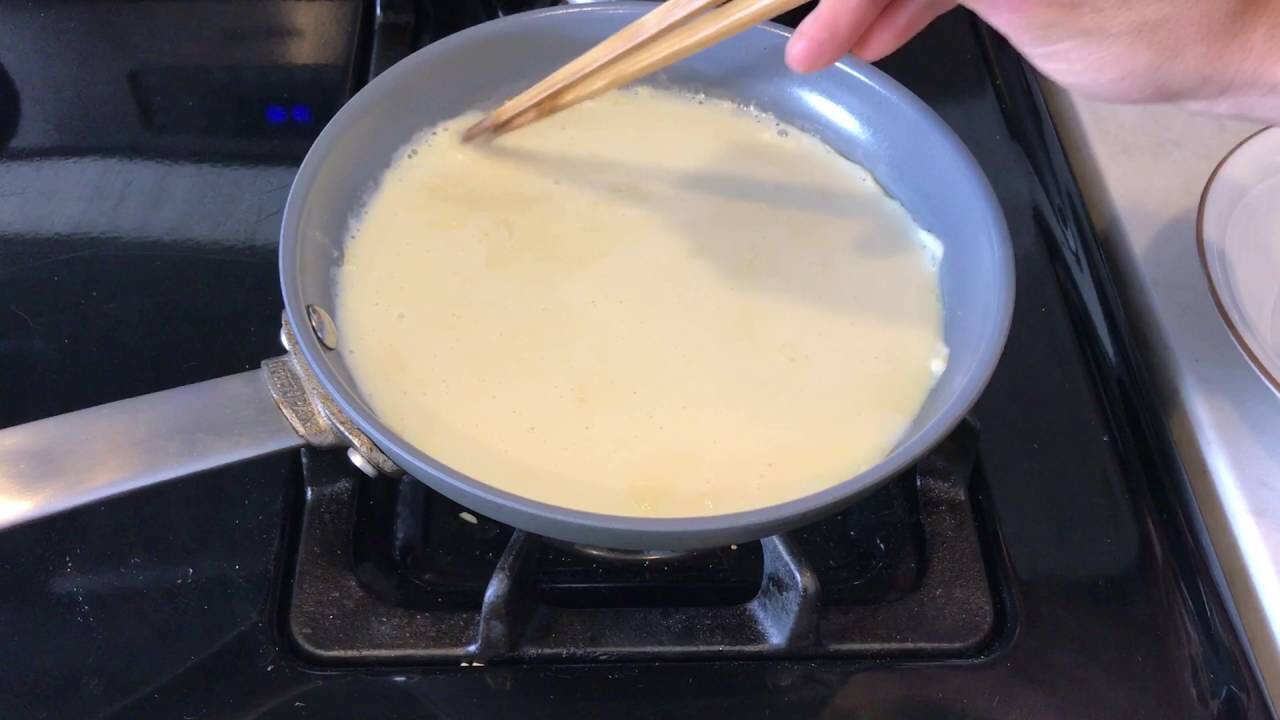
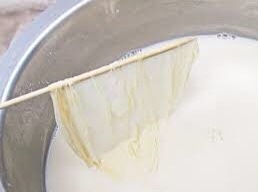
Ideally, your stove top provides a low but steady source of cooking heat. Place a 7- or 8-inch shallow skillet or pan, preferably nonstick, over low heat for about 1 minute. Slowly pour the soy milk into the warm pan. It should be about ¼ inch deep. Adjust the heat to the lowest possible setting and allow the soy milk to heat undisturbed.

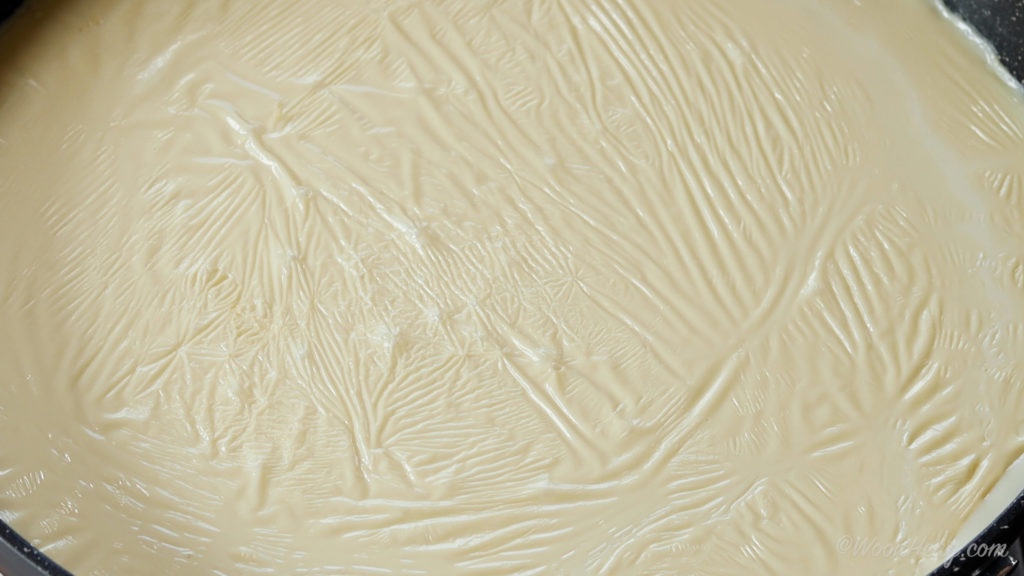
After several minutes, you will notice the surface of the soy milk beginning to thicken. At this point, the temperature of the soy milk will probably be 140°F. Using an uchiwa (Japanese fan) or a flat piece of cardboard (about 8 by 11 inches), gently fan the air above the pan to cause a drop in air temperature; this, in turn, will cool the surface of the warm soy milk. When the surface of the soy milk cools but the liquid beneath is still warm, wrinkles will form and the surface will thicken, making sheets of nama yuba.

Using a thick chopstick (or wooden knitting needle), scoop under and lift up the sheet and drape it across a small serving plate. Choose a dark or brightly colored plate for a dramatic presentation. Continue to fan, scoop, and lift sheets, arranging 2 or 3 of them slightly overlapping each other on each plate. You should be able to pull at least 8 sheets, and possibly 12 or more, from 2 cups soy milk. The sheets will be wrinkled, not smooth.

Set a small mound of the wasabi on, or near, the fresh yuba. Pour a small amount of soy sauce into individual dipping bowls. Each diner dissolves wasabi to taste in his or her soy sauce before grasping a yuba sheet, dipping it in the sauce, and enjoying.

Sources: Kansha

Green Tea (Matcha) Ice Cream

⅓ cup sugar
⅓ cup cold water
½ teaspoon mirin
2 teaspoons matcha
½ cup whole milk
½ cup half-and-half

In a small saucepan, combine the sugar and water. Stir the mixture over low heat to melt the sugar and then continue to simmer for about 5 minutes, or until a bit syrupy. Add the mirin, stir, and remove the pan from the heat.

In a small bowl, combine 1 tablespoon of the warm syrup and the matcha and stir until dissolved. Return this sweet tea concentrate to the saucepan and stir until completely blended. To retain optimal aroma and ensure an intense jade color, do not reheat the mixture. Stir in the milk and half-and-half and mix thoroughly.

If you are using an ice-cream maker:

Pour the tea-and-milk mixture into the machine and follow the manufacturer’s instructions for making a soft-set ice cream. For most models, about 10 minutes of chilling and churning should suffice. Pour the semifrozen mixture into a 3-cup freezer-safe container with a snug-fitting lid. Tap the container gently on a countertop to force out any air bubbles that might be trapped below the surface. Cover and freeze for at least 2 hours, or until firm throughout.

If you are using a blender, electric mixer, or whisk and freezer trays:

Pour the tea-and-milk mixture into a flat, shallow freezer-safe container, filling it no more than two-thirds full (the mixture will expand). Tap the container gently on a countertop to force out any air bubbles that might be trapped below the surface. Cover and freeze for 1½ hours, or until nearly firm. Transfer the semifrozen mixture to a blender and pulse in a few short spurts. Or, with a handheld electric mixer or a whisk, whip the mixture vigorously in a deep bowl. Return the mixture to the same container, re-cover, and freeze again for another 45 minutes, or until firm (but not rock-hard) throughout. Repeat the blend or whip step one more time to achieve a silkier texture.

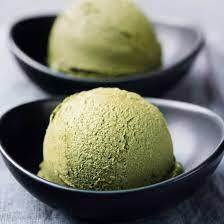
The final ice cream should be smooth but not too hard. When ready to serve, transfer one or two scoops to pre-chilled bowls. The jade color of the ice cream makes for a dramatic presentation against black tableware.

Sources: Washoku

Japanese Teas After Matcha

The vast majority of tea consumed in Japan is, and historically has been, green tea. But there are many different options that fall under the “green” category, varying based on qualities like the time of harvest, how much sun the leaves have seen, how the tea is processed, and what parts of the plant are used in the final product.

SENCHA: The most commonly consumed tea in Japan, sencha consists of green tea leaves that have been grown in full sunlight. Meaning simmered tea, sencha is delicate, mild, and slightly floral. It should be brewed for 2 minutes in simmering water (160 to 170° F).

GYOKURO: This high-end tea is made from first-flush green tea leaves grown partially in the shade. Sweet and mild, it should be brewed for about 3 minutes in relatively cool water (120 to 140° F).

BANCHA: This lower grade of sencha is harvested later in the year, and can include some stems in with the leaves. Its flavor is more robust and astringent than delicate sencha. It should be brewed for 1 to 3 minutes in simmering water (160 to 170° F).

HOJICHA: A reddish-brown tea made by roasting bancha in a clay pot over charcoal (most Japanese teas are steamed), hojicha is a roasty, nutty, mellow tea, low in caffeine, typically served during or after an evening meal. It should be brewed for about 1 minute in simmering water (160 to 170° F).

GENMAICHA: Genmaicha refers to any combination of dried green tea and toasted genmai rice grains, the latter of which provides the beverage with a nutty depth to offset the tea’s natural astringency. It can be made with sencha, bancha, or gyokuro tea and sold premixed or created on your own at home. Brew it for 1 minute in water at a steep simmer (185° F).

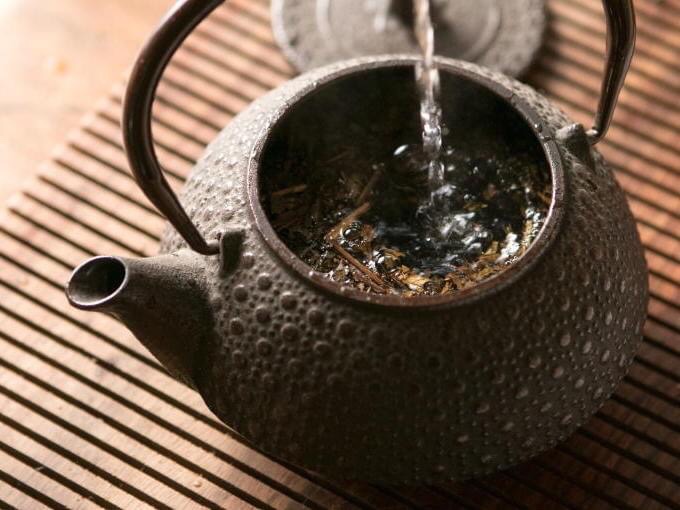
KUKICHA: Also known as twig tea, this blend of tea leaves, stems, and twigs is available as both a green tea and in roasted, oxidized form. Creamy and mild, it should be brewed for 3 minutes in simmering water (160 to 170° F).

MUGICHA: Not technically a tea at all, mugicha is made from roasted barley. This caffeine-free beverage is traditionally served cold as a summer drink in Japan; outside of Japan, it’s popular as a coffee substitute. Brewing conditions needn’t be as fussy for mugicha as for green teas, but plan to steep it for about 2 minutes in simmering water (160 to 170° F).

Sources: Kyotofu

Masaharu Morimoto Inspired Shrimp, Chicken and Fish Chawanmushi (茶碗蒸し)

3 cups Dashi (dried fish and kelp stock)
1 tablespoon plus 1 teaspoon usukuchi (Japanese light-colored soy sauce), plus 1 tablespoon
2 teaspoons mirin (sweet rice wine)
½ teaspoon kosher salt
4 large eggs
8 thin, bite-size slices boneless skinless chicken thigh (from 1 small thigh)
One 3-ounce fillet delicate white-fleshed fish, such as fluke or flounder, cut into 8 thin bite-size slices
4 medium shrimp, peeled and deveined
8 drained canned gingko nuts or 4 jarred or vacuum-packed roasted chestnuts, halved
¼ cup loosely packed very roughly chopped mitsuba, thinly sliced scallions or thinly sliced shiitake mushrooms

Combine the dashi, 1 tablespoon plus 1 teaspoon of the usukuchi, the mirin, and salt in a small pot, bring to a boil, then let cool completely.
Gently mix the eggs in a medium bowl so they’re well mixed but don’t develop bubbles. Pour in the dashi mixture, stir well, then strain into a measuring cup, discarding any solids.

Briefly toss the chicken, fish, and shrimp in a bowl with the remaining 1 tablespoon soy sauce, shake to let any excess drip off, and divide them among the 4 small bowls or ramekins. Divide the gingko nuts among the bowls or ramekins, then divide the egg mixture evenly among them and cover with foil.

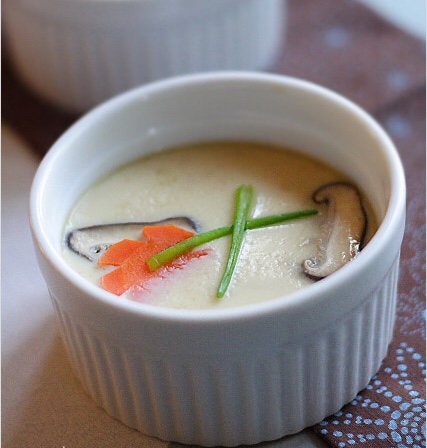
Line a wide, shallow-lidded pot or a Dutch oven with a paper towel. Add 1 inch of water and bring to a boil over high heat. Carefully add the bowls to the pot and cover with the lid. Cook until the custard turns pale, 3 to 4 minutes, then carefully remove the bowls from the pot. Add the mitsuba, scallion or shiitake mushroom to the surface of the custard and re-cover with the foil.

Reduce the heat to maintain a gentle simmer, return the bowls to the water, and cover the pot with the lid so it’s slightly ajar. Cook until the custard is just set but still jiggles when you shake the bowls (or a skewer inserted into the middle comes out clean), 12 to 15 minutes. Serve immediately.