Colcannon

Colcannon is an Irish dish of boiled potatoes and cabbage or kale mashed together and flavored with onion, shallots, or leeks and cream or butter. Colcannon is strongly associated with Samhain, in which it was used for various forms of divination.

Linguistic evidence suggests that cabbages were known to the Iron Age Celts. The Romans believed cabbages to have several medicinal qualities. While cabbage was a food of the working classes in Medieval Europe, the other principal ingredient of colcannon, potatoes, were a New World food that arrived in the sixteenth century.

The word “colcannon” comes from the Gaelic “cal ceannann” (‘white headed cabbage’). Some hold that the ‘cannon’ part of the name might be derived from the old Irish ‘cainnenn’ (‘garlic, onion, or leek’, depending on the translation). This suggests that early forms of colcannon were simple mixtures of brassica and allium. The earliest Irish reference to colcannon is found in the Diary of Wiliam Bulkely, of Bryndda, near Amlwch in Anglesey, in 1735. Colcannon appeared in England in 1774. In England, colcannon became a favorite of the upper classes.

1 lb shredded white cabbage

1 lb potatoes peeled and quartered

2 leeks finely chopped (white part only)

1/4 cup milk

Salt and pepper to taste

pinch of ground nutmeg

3 tablespoons butter

Boil the cabbage in water until cooked; drain and keep warm. Place the potatoes and leeks together in a pot of water and boil until tender, about 15 to 20 min. Drain the potatoes and leeks and mash in a large pot with the milk and butter. Stir in the cabbage. Add nutmeg, salt and pepper.

Arnica (Arnica montana)

Diagnosis:

Bruises do not break the skin as wounds do, but they do damage underlying tissues. Bruising causes pain and swelling, and the affected area turns purple after a while. Bruises are not a big deal as long as the blow that causes them is not too violent. While traveling, especially with younger children, always expect there to be bumps or painful bruises. It is in these cases when you should use arnica, whose active ingredients provide instant relief.

Dosage:

For external use, arnica is recommended when there is local inflammation brought on by a concussion. It works by lessening the bruises and blood clots that accumulate under the skin. It should be applied to the injured area as soon as possible, in diluted doses for people with sensitive skin, as it can be irritating and cause allergic reactions. It should never be applied to open wounds. If used for a prolonged period, it can cause swelling and sores on the skin.

Arnica is available as a powder, tincture, and oil, which are used to prepare ointments, plasters, or creams, and then applied to the affected area three times a day. It can also be found in liquid extract and as dry and crushed plant ready for making infusions.

Other Uses:

Besides being an effective treatment for shock, arnica alleviates muscle tears and frostbite, as well as inflammations caused by rheumatism. It is recommended for external use only.

Sources: Medicinal Plants at Home

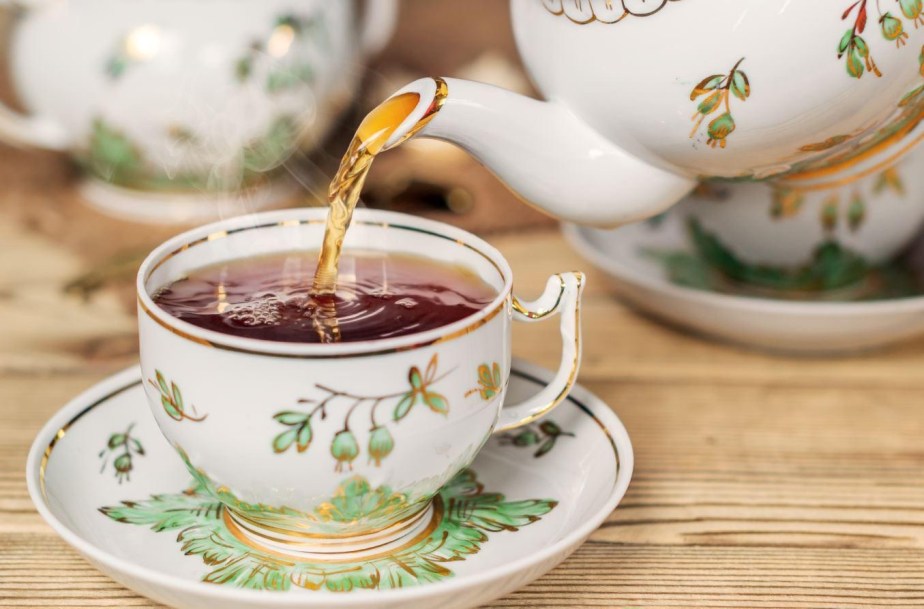
Nerve Soothing Tea

This tea is a general circulatory and heart tonic. It is soothing to the nerves and is particularly good for stressed-out people.

1 part dried hawthorn berries

1 part dried mixed hawthorn flowers and leaves

1 part dried linden blossoms

1 part dried motherwort

1 part dried mixed yarrow flowers and leaves

Gently crush the hawthorn berries using a pestle and mortar to break them up slightly. Mix with all the other dried herbs in a bowl, then transfer to an airtight container.

To use, add 1–2 teaspoons of the dried herb mixture per cup (250ml) of boiling water in a mug or teapot. Cover and leave to infuse for 15 minutes. Strain to serve. Alternatively, use an infuser to make the tea.

Take one cup of the tea, up to three times a day.

Shelf Life: Keep the dried herb mix in a cool, dark place for up to 1 year.

Peaceful Dream Tea

This tea promotes relaxation and sleep. Anyone can easily grow each of these herbs in the backyard, and since the herbs are gentle and effective for quieting a busy mind, releasing muscle tension, and promoting general relaxation your body naturally feels tired and falls asleep.

1.25 parts chamomile

1 part catnip

1 part skullcap

1 part mint

0.375 part licorice root

0.25 part hops

Steeping:

Hot Infusion: Pour 1 ½ cups hot water over 2 tablespoons tea. Steep for 10 to 15 minutes.

Cold Infusion: Combine 2 cups cold water and 1 to 2 tablespoons tea in a lidded jar. Shake the jar to make sure all the tea is saturated. Place in the refrigerator or a cool place for at least 2 hours.

Wolfsbane or Monkshood (aconitum napullus)

Wolfsbane or Monkshood (aconitum napullus)

One of the most beautiful and also oldest and most deadliest of poisons. The principal alkaloids are aconite and aconitine; of these aconitine is thought to be the key toxin and one of the most toxic plant compounds known. Ingestion of even a small amount results in severe gastrointestinal upset, but it is the effect on the heart, where it causes slowing of the heart rate, which is often the cause of death. The poison may be administered by absorption through broken skin or open wounds and there are reports of florists being unwell after working with the flowers.

Its distinctive taste makes it unpleasant to eat so accidental poisoning is extremely rare but not unknown. The taste is described as initially very bitter followed by a burning sensation and, then, a numbing of the mouth. All parts of the plant are extremely poisonous if eaten and may cause systematic poisoning if handled.

Magical propensities for invisibility and protection from evil. Excellent for redirecting predators.

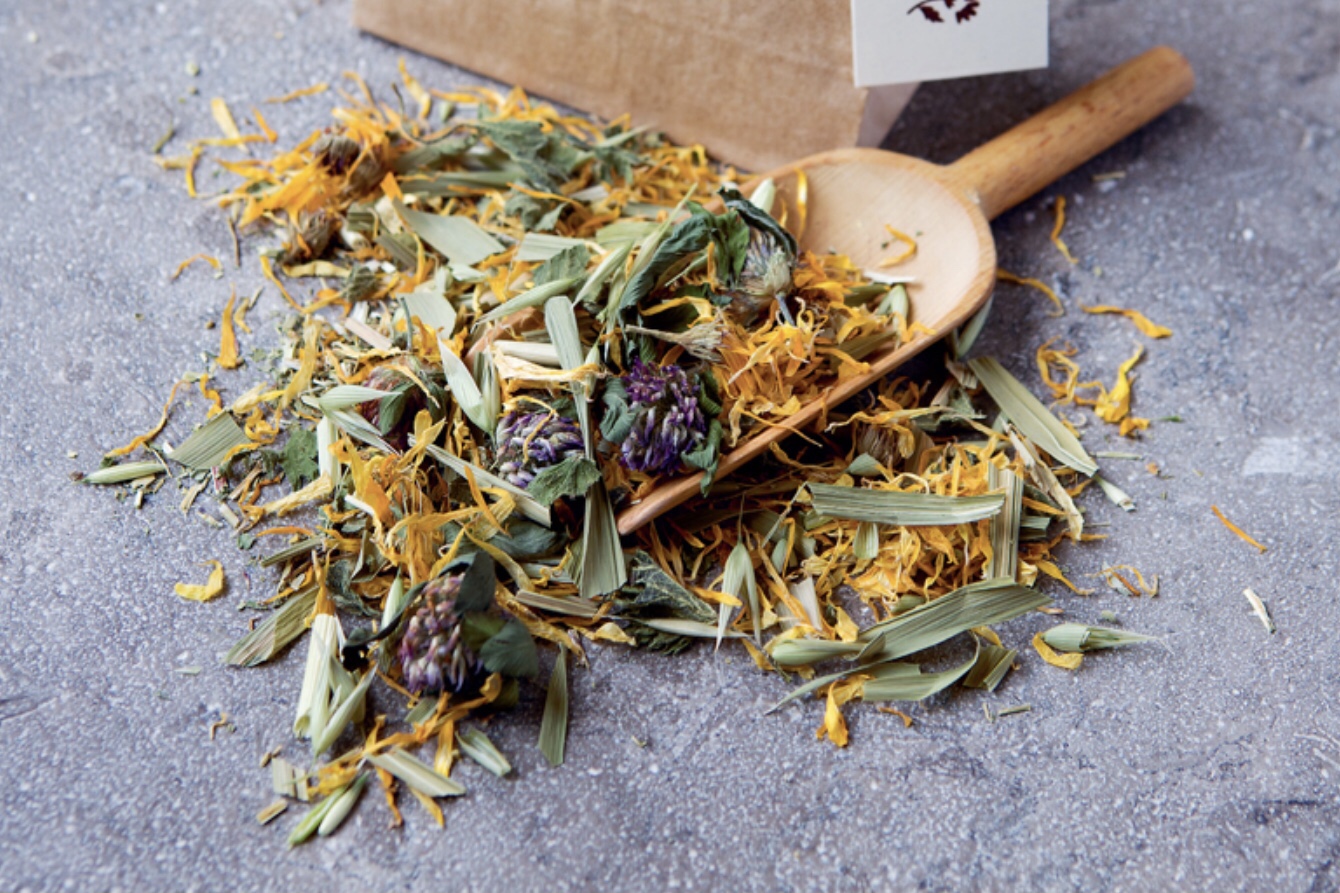
Lymph Cleansing Tea

This tea is nourishing to the body and cleansing to the lymph glands. Use for painful breasts and skin problems.

1part dried red clover flowers

1 part dried cleavers *

1 part dried calendula flowers

1 part dried oat straw

1 part dried nettle leaves

Mix all the dried herbs together in a sterilised jar, then seal, label and date.

To use, place 1 teaspoon of the dried herb mix in one cup (250ml) of boiling water and leave to infuse for 15 minutes, then strain and drink.

Take up to three times a day, as and when required.

Shelf Life: The dried herb mix will keep in a cool, dark place for up to 1 year.

* Common Names: hitchhickers, cleavers, clivers, bedstraw, goosegrass, catchweed, stickyweed, sticky bob, stickybud, stickyback, robin-run-the-hedge, sticky willy, sticky willow, stickyjack, stickeljack, grip grass, sticky grass, bobby buttons, whippysticks and velcroplant

Mandrake (mandragora officinarum)

A stemless perennial with a fleshy taproot and broadly ovate leaves; small white to blue-white, bell-shaped flowers are borne at ground level in spring, followed by aromatic yellow fruits. One of the most written about plants in history with whole books devoted to its properties and its ability to scream when pulled from the ground. It is a relative of deadly nightshade so contains the tropane alkaloids, notably hyoscine and atropine; the effects are hallucinogenic, narcotic, emetic and purgative similar to deadly nightshade and henbane. Mandrake root is supposed to look like the male form (having two legs, a body and often a hairy top) and, under the Doctrine of Signatures, its use ‘would give a man that power which men are always willing to spend a lot of money to get!’ Its high price was maintained, in part, by the difficulty of harvesting it.

Magical propensities for magical uses include protection; prosperity; fertility; exorcising evil. Carry to attract love. Wear to preserve health.

Sources: By Wolfsbane and Mandrake Root

Smoked Salmon, Rocket, Lemon and Capers Tea Sandwich

Smoked Salmon, Rocket, Lemon and Capers

2 cups cream cheese at room temperature

juice and zest of 1 lemon

2 teaspoon sea salt

1 teaspoon white pepper

1 cup chopped baby capers

1 small Spanish onion, finely diced

1 bunch chives, chopped

11½ ounces.smoked salmon

1 bunch washed rocket

12 slices dark rye bread

Makes 6 sandwiches

In a bowl cream together with an electric or hand beater the cream cheese, lemon zest, juice, sea salt and pepper to a whipped cream consistency. Fold in the capers, onion and chives.

Spread each slice of bread with a generous amount of the cream cheese mixture, distributing evenly, then the smoked salmon and rocket. Sandwich bread together, cut off the crusts and then cut into triangles.

Tip: I like to use dark rye for this recipe, but sourdough is a good alternative.

Swedish Crayfish

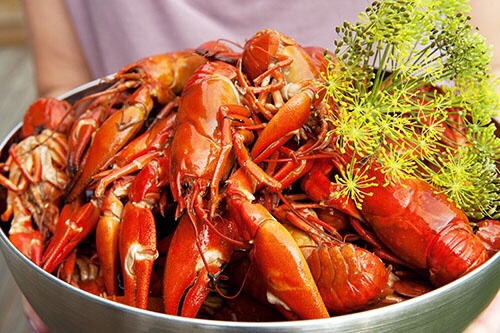
The annual ‘kräftskiva’, or crayfish party, in Sweden is not something to take lightly. It’s a celebrated with plenty of crayfish, salads and silly hats. Because the summers are so short in Scandinavia it feels right to mark the arrival of locally caught crayfish with a big party.

Dill crowns, the flowering part of the fully grown plant, are commonly found on farmers’ markets in Sweden but less readily available elsewhere. You can grow them at home, or source them from specialist suppliers who stock edible flowers and pollen varieties. Fennel fronds or dill fronds would make good alternatives.

about 50 crayfish

7oz sea salt

4 tsp caster sugar

1 pint beer

large bunch of dill crowns, stalks removed

Bring about 10½ pints (6 liters) water to the boil in a large pan and add the salt, sugar and beer. Add most of the dill crowns, reserving a few for serving, and simmer for about 5 minutes.

Add the crayfish and cook for 5–7 minutes before removing from the heat. Cool the pan quickly by placing in a tub or bath with cold water, iced if possible. The crayfish can be kept in their brine for up to 2 days.

To serve, drain and decorate with the remaining dill crowns. Serve with lemon aioli.

Thor Cake

Thor Cake

Apparently oats were originally a weed found in wheat and barley crops that eventually became a crop on its own. The Greeks and Romans of classical times regarded oats as coarse and used them mostly as animal fodder. The Romans called it avena, and considered them only fit to feed barbarians.

Their neighbors, the Celtic and Germanic peoples, took an entirely different view and used oats extensively. In the northern and upland regions of Europe, oats are the only cereal which will ripen in the cold wet climate. Oats were first cultivated around 1000 B.C.E. in Central Europe. The first record of the cultivation of oats in England is a location called athyll (“on oat hill”) in Anglo Saxon records from 779 CE. There is a record of the bishop of Worcester’s oat lands mentioned in a boundary charter dated 984 CE. Ground oats mixed with milk, cream or water was a very common meal for working people. It was not until the fifteenth century that flour made from oats was first referred to as oatmeal.

1 1/2 cups oatmeal

3 cups all purpose flour

1 cup brown sugar

1/2 cup molasses

1/2 cup golden syrup

3 teaspoons ground ginger

1/2 cup (1 stick) butter or lard

1 teaspoon allspice

1/8 teaspoon mace

1/8 teaspoon nutmeg

3 teaspoons cinnamon

2 teaspoon baking powder

1/2 teaspoon salt

1 egg

1 cup milk

Preheat oven to 350 F (180 C).

Soak the oats in the milk in a small bowl for a half hour.

Whisk together the rest of the dry ingredients in a larger bowl. Stir the brown sugar and the egg together in another large bowl. In a small saucepan over low heat, melt the butter and stir in the molasses and golden syrup. Mix the butter/syrup mixture to the brown sugar mixture. Stir in the dry ingredients until just blended. Place in a greased 9 X 11 inch pan. Bake for about 45 minutes, or until the cake starts to come away from the sides of the pan. A toothpick inserted into the middle should come out clean and the cake should spring back when touched.

Alternatively you can roll the batter into small balls, roll them in oatmeal, and bake them on a cookie sheet until brown.