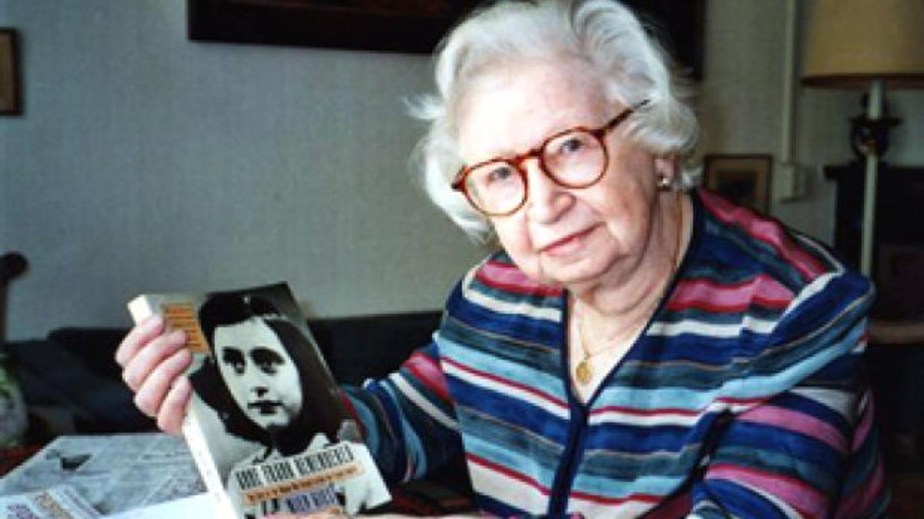
Today in History –> On this day in 2010, Miep Gies, the last survivor of a small group of people who helped hide a Jewish girl, Anne Frank, and her family from the Nazis during World War II, dies at age 100 in the Netherlands. After the Franks were discovered in 1944 and sent to concentration camps, Gies rescued the notebooks that Anne Frank left behind describing her two years in hiding. These writings were later published as “Anne Frank: The Diary of a Young Girl,” which became one of the most widely read accounts of the Holocaust.
In September 1724, Margaret Dickson, a woman accused of infanticide, was hanged in Edinburgh. Her body was left hanging for 30 minutes. On the way to the graveyard, Margaret woke up in the coffin. The courts pardoned her, believing God wanted her alive. #WyrdWednesday
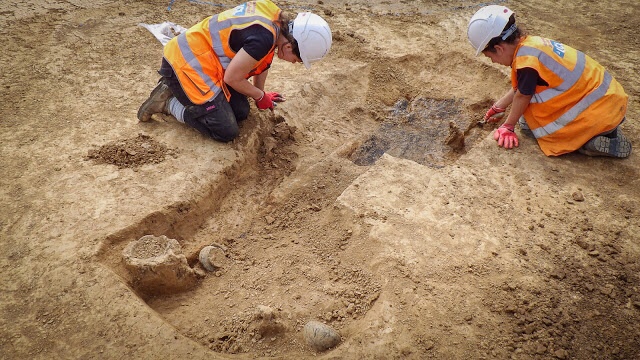
A richly-furnished grave belonging to an Iron Age ‘warrior’ buried 2,000 years ago has been uncovered in West Sussex. Iron weapons had been placed inside the grave, including a sword in a highly-decorated scabbard and a spear. The burial was discovered during an excavation commissioned by Linden Homes, who are developing a site on the outskirts of Walberton, near Chichester, to create 175 new homes.
ASE archaeologist Jim Stevenson, who is managing the post-excavation investigations into the burial, said: “There has been much discussion generally as to who the people buried in the ‘warrior’ tradition may have been in life. Were they really warriors, or just buried with the trappings of one? The grave is dated to the late Iron Age/ early Roman period (1st century BC – AD 50). It is incredibly rare, as only a handful are known to exist in the South of England.
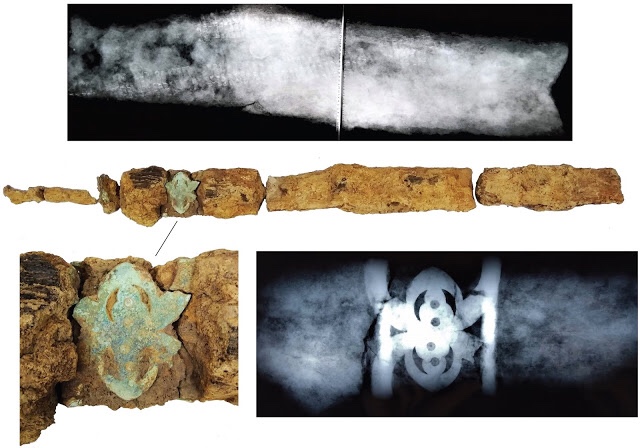
X-rays and initial conservation of the sword and scabbard reveal beautiful copper-alloy decoration at the scabbard mouth, which would have been highly visible when the sword was worn in life. Dotted lines on the X-ray may be the remains of a studded garment worn by the occupant when buried. This is particularly exciting for the archaeologists as evidence of clothing rarely survives.
The grave also held the remains of a wooden container, preserved as a dark stain, likely used to lower the individual into the grave. Four ceramic vessels were placed outside of this container, but still within the grave. The vessels are jars made from local clays and would usually have been used for food preparation, cooking and storage. It is likely that they were placed in the grave as containers for funerary offerings, perhaps intended to provide sustenance for the deceased in the afterlife.
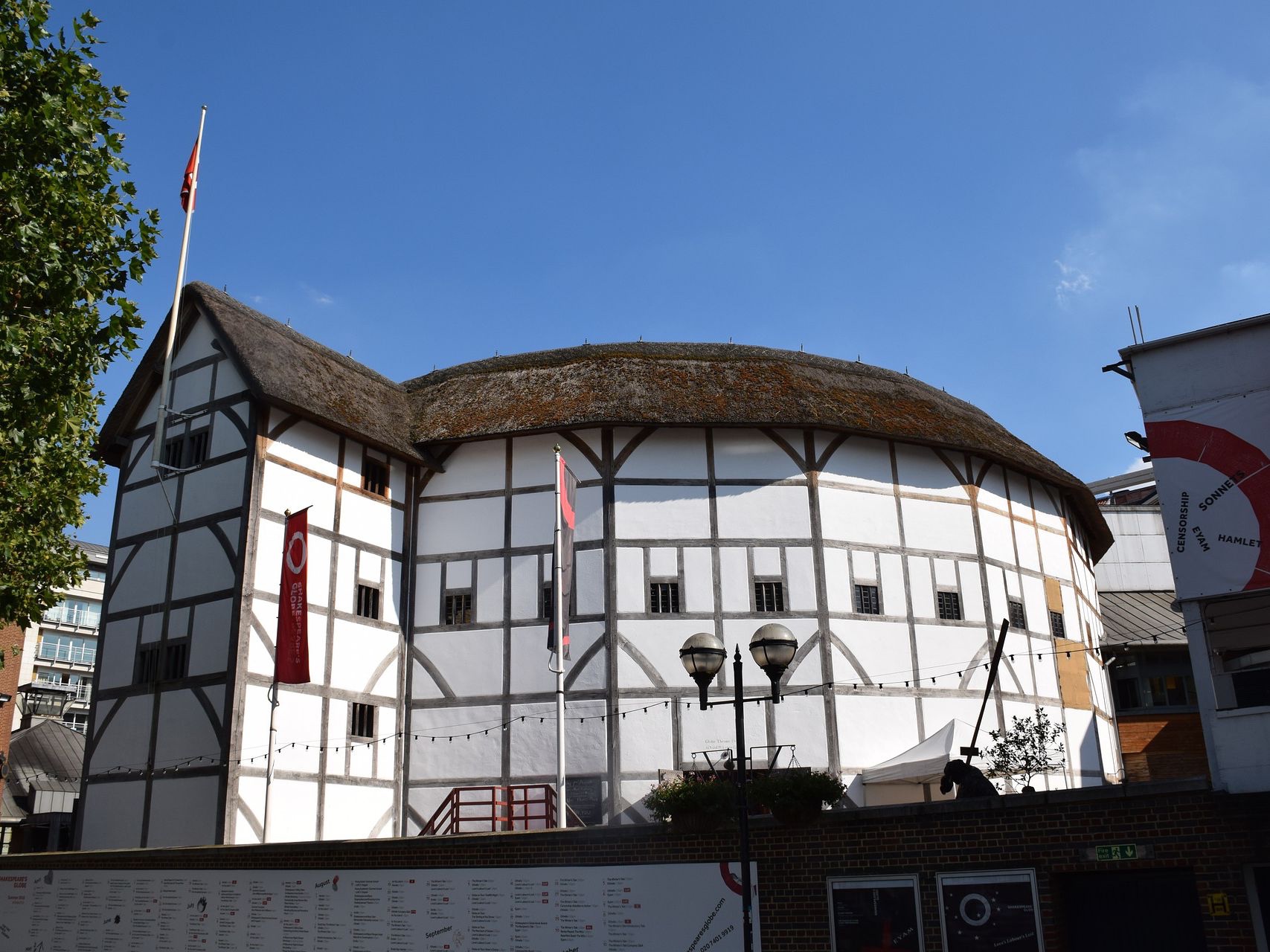
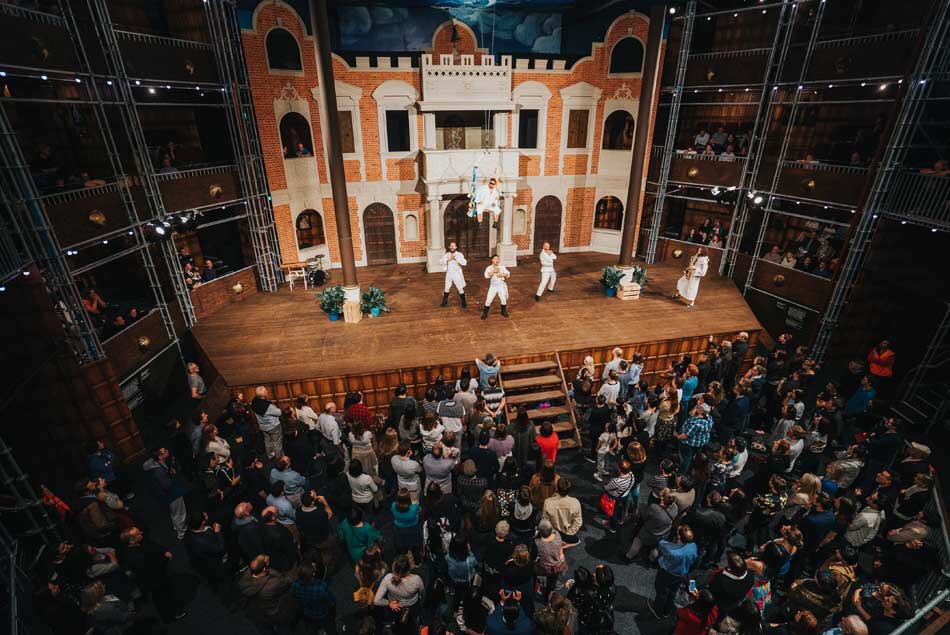
Globe Theater Fun Facts –> Opened in 1599, the Globe played host to Shakespeare for 14 years, during which time he wrote many of his greatest works. The theatre was destroyed by fire in 1613 after its thatch was accidentally set alight by a cannon during a performance of Henry VIII.
A new theatre was built in 1614, but was demolished in 1644 when all plays were banned by the Puritan parliament.
Archaeologists from the UCL’s Institute of Archaeology have discovered the remains of what may be the Red Lion, an early Elizabethan playhouse built around AD 1567.
The Red Lion was a purpose-built playhouse in the yard of the Red Lion, a farmhouse east of Aldgate near Mile End. This was to be the first known attempt to provide a purpose-built playhouse in London for the many Tudor age touring theatrical companies, in particular staging a young Shakespeare’s plays in the 1590s.
The Red was financed by John Brayne who also financed, with his brother-in-law James Burbage, the building of the Theatre in Shoreditch.
The only contemporary information previously known about the playhouse was from two lawsuits issued in the Records of the Court of King’s Bench in 1567, between John Brayne and the carpenters commissioned with aspects of the playhouse construction that noted “the house called the red lyon” and “farme house called and knowen by the name of the Sygne of the Redd Lyon”. Location of the Red Lion Playhouse The lawsuit details ‘scaffolds’ or galleries around the stage, suggesting they were substantial.
The second lawsuit relates to the quality of work, and crucially includes a description of the stage and dimensions: 40ft (12.2m) north to south, by 30ft (9.1m) east to west, and standing at a height of 5ft (1.5m) above the ground. While it appears to have been a commercial success, the Red Lion offered little that the prior tradition of playing in inns had not offered.
Situated in open farmland, it was too far from its audiences to be attractive for visiting in the winter. Archaeologists excavating the site discovered a rectangular timber structure, comprising 144 surviving timbers and measuring 12.27m north-south by 9.27m east-west.
People will disagree with me, but hands down best politician in history and it’s not even close:
~ He squared off against Caesar and was friends with young Brutus.
~ He advised the legendary Pompey on his somewhat botched transition from military hero to politician.
~ He lambasted Mark Antony and was master of the smear campaign, as feared for his wit as he was for exposing his opponents’ sexual peccadilloes.
~ Brilliant, voluble, cranky, a genius of political manipulation but also a true patriot and idealist, Cicero was Rome’s most feared politician, one of the greatest lawyers and statesmen of all times.
~ Machiavelli, Queen Elizabeth, John Adams and Winston Churchill all studied his example.
If you haven’t read any of his books I’d suggest reading his book: “Orations” and then one or more of “Tusculan Disputations” or “On the Commonwealth and On the Laws” or “On Moral Ends” or “The Nature of the Gods.”
So is it just me or have you wondered what was the worst year to be alive (btw it’s not 2020):
Was it 1349, when the Black Death wiped out half of Europe? Nope!
Was it 1918, when the flu colloquially known as Spanish flu infected 500 million people and killed 50 million to 100 million people, mostly young adults? Nope!
Was it any of the years of the Holocaust, between 1941 and 1945? Nope!
It was 536!!!
“It was the beginning of one of the worst periods to be alive, if not the worst year.” ~ Michael McCormick, Medieval Historian
A mysterious fog plunged Europe, the Middle East, and parts of Asia into darkness, day and night—for 18 months.
“For the sun gave forth its light without brightness, like the moon, during the whole year.” ~ Procopius (500-554 AD), Byzantine Historian
Temperatures in the summer of 536 fell 1.5°C to 2.5°C, initiating the coldest decade in the past 2300 years. Snow fell that summer in China; crops failed; people starved. The Irish chronicles record a failure of bread from the years 536–539. Then, in 541, bubonic plague struck the Roman port of Pelusium, in Egypt. What came to be called the Plague of Justinian spread rapidly, wiping out one-third to one-half of the population of the eastern Roman Empire and hastening its collapse.
The cause…a cataclysmic volcanic eruption in Iceland spewed ash across the Northern Hemisphere early in 536. Two other massive eruptions followed, in 540 and 547. The repeated blows, followed by plague, plunged Europe into economic stagnation that lasted until 640.
On October 15th in 1674, the Torsåker witch trials begin (the largest single witch trial in Sweden) with 71 people (65 women and 6 men) beheaded and burned.
The main accusation against the suspected witches was that they had abducted children and taken them to Satan’s Sabbat at Blockula, the legendary meadow of Swedish folklore where the Devil held his Earthly court during a witches’ festival.
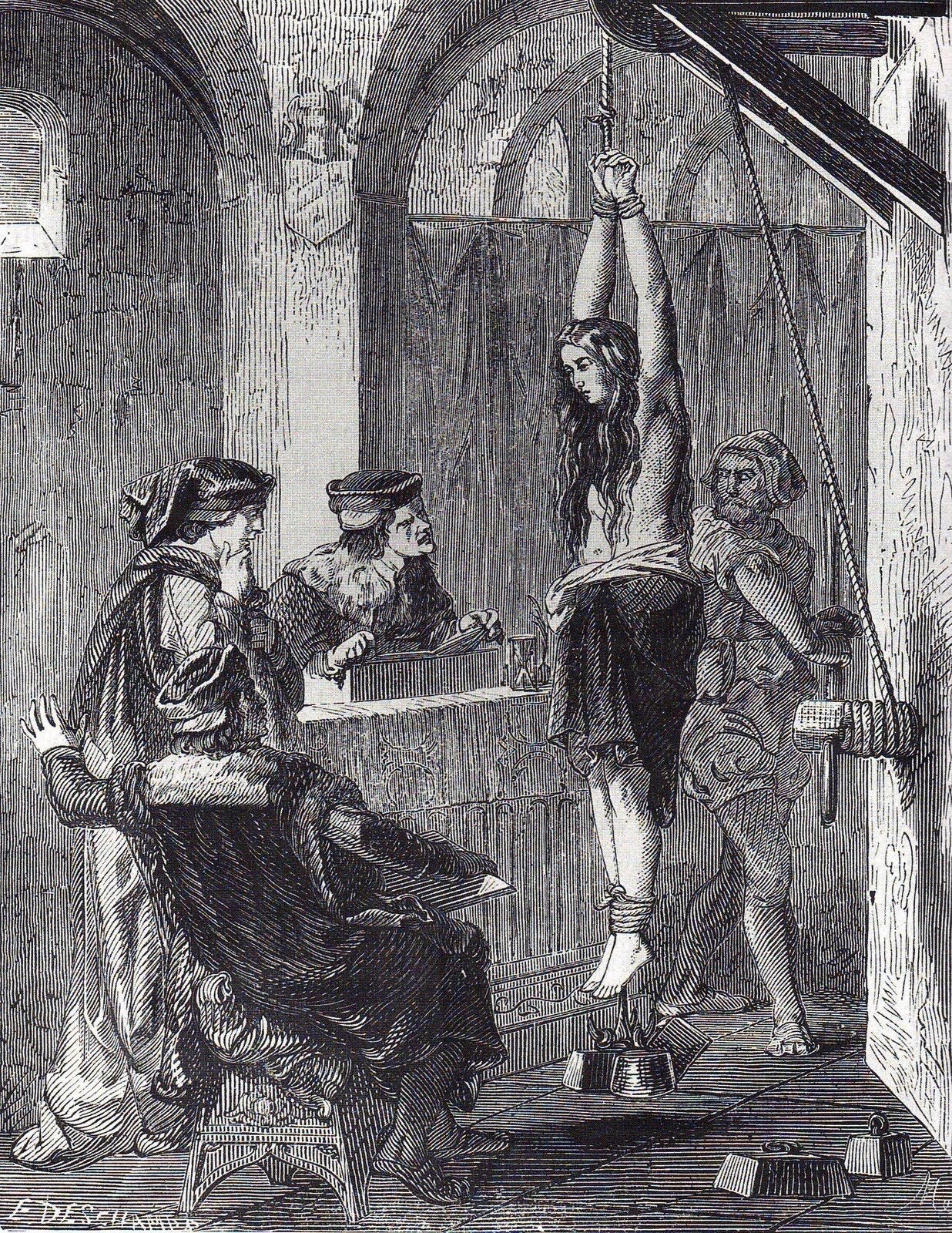
Most of the witnesses were children. Confessions were obtained through whippings, beatings, bathing them in an ice-cold lake, and threatening to roast them in ovens.
Jöns Hornæus, grandson of the priest who oversaw the trial, describes the execution in his book, where he wrote down the exact words of his grandmother, the eyewitness Britta Rufina: Then they began to understand what would happen.
Cries to heaven rose of vengeance over those who caused their innocent deaths, but no cries and no tears would help. Parents, men and brothers held a fence of pikes.
“I will never forget the excitement when a leaflet was pressed into my hand by somebody in the editorial room of the Allgemeine Zeitung. The leaflets were being circulated by White Rose followers in Hamburg. Something inflammatory, heartening—yes, magical!—emanated from these typewritten and hectographed [mimeographed] lines.
We copied them off and passed them on. A wave of enthusiasm swept over us—we who risked so damned little in comparison.”
~ Ursula von Kardoff (reporter at Nuremberg War Crimes Tribunal, 1945)
“How can we expect righteousness to prevail when there is hardly anyone willing to give himself up individually to a righteous cause? Such a fine, sunny day, and I have to go, but what does my death matter, if through us, thousands of people are awakened and stirred to action?”
~ Sophie Scholl, Her last words before execution.
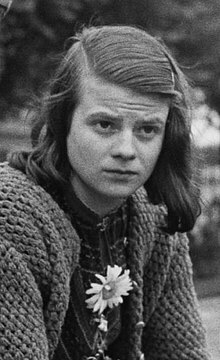
Sophie Scholl (1921-1943), German student and anti-Nazi political activist, active within the White Rose non-violent resistance group in Nazi Germany. Convicted of high treason after having been found distributing anti-war leaflets at the University of Munich (LMU). As a result, she was executed by guillotine.
In 1942, five young German students and one professor at the University of Munich (LMU) crossed the threshold of toleration to enter the realms of resistance, danger and death. Protesting in the name of principles Hitler thought he had killed forever, Sophie Scholl and other members of the White Rose realized that the ‘Germanization’ Hitler sought to enforce was cruel and inhuman, and that they could not be content to remain silent in its midst…






 Mark Bere Peterson’s Counterculture, Urban Legends, Paganism & Witchcraft