Simone Segouin

Simone Segouin, mostly known by her codename, Nicole Minet, was only 18-years-old when the Germans invaded. Her first act of rebellion was to steal a bicycle from a German military administration, and to slice the tires of all of the other bikes and motorcycles so they couldn’t pursue her. She found a pocket of the Resistance and joined the fight, using the stolen bike to deliver messages between Resistance groups.

She was an extremely fast learner and quickly became an expert at tactics and explosives. She led teams of Resistance fighters to capture German troops, set traps, and sabotage German equipment. As the war dragged on, her deeds escalated to derailing German trains, blocking roads, blowing up bridges and helping to create a German-free path to help the Allied forces retake France from the inside. She was never caught.

Segouin was present at the liberation of Chartres on August 23, 1944, and then the liberation of Paris two days later. She was promoted to lieutenant and awarded several medals, including the Croix de Guerre. After the war, she studied medicine and became a pediatric nurse. She is still going strong, and this October (2021) she will turn 96.

Democratic Party Symbolized As A Donkey

Today in History —> On this day in 1870 – A political cartoon for the first time symbolizes the Democratic Party with a donkey (“A Live Jackass Kicking a Dead Lion” by Thomas Nast for Harper’s Weekly).

Here’s the cartoon. Andrew Jackson’s enemies twisted his name to “jackass” as a term of ridicule regarding a stupid and stubborn animal. However, the Democrats liked the common-man implications and picked it up too, therefore the image persisted and evolved.

First Person Cryonically Preserved

Today in History —> 1967 – Dr. James Bedford becomes the first person to be cryonically preserved with intent of future resuscitation.

His body is still frozen until the day when he can supposedly be revived and cured of his metastasizing kidney cancer. The Facebook page that details his preservation says this: Compared to those employed by modern cryonics organizations, the use of cryoprotectants in Bedford’s case was primitive.

He was injected with dimethyl sulfoxide, a compound once thought to be useful for long-term cryogenics, so it is unlikely that his brain was protected.Vitrification was not yet possible, further limiting the possibility of Bedford’s eventual recovery.

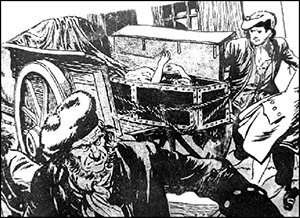
Here are some photos from that site.

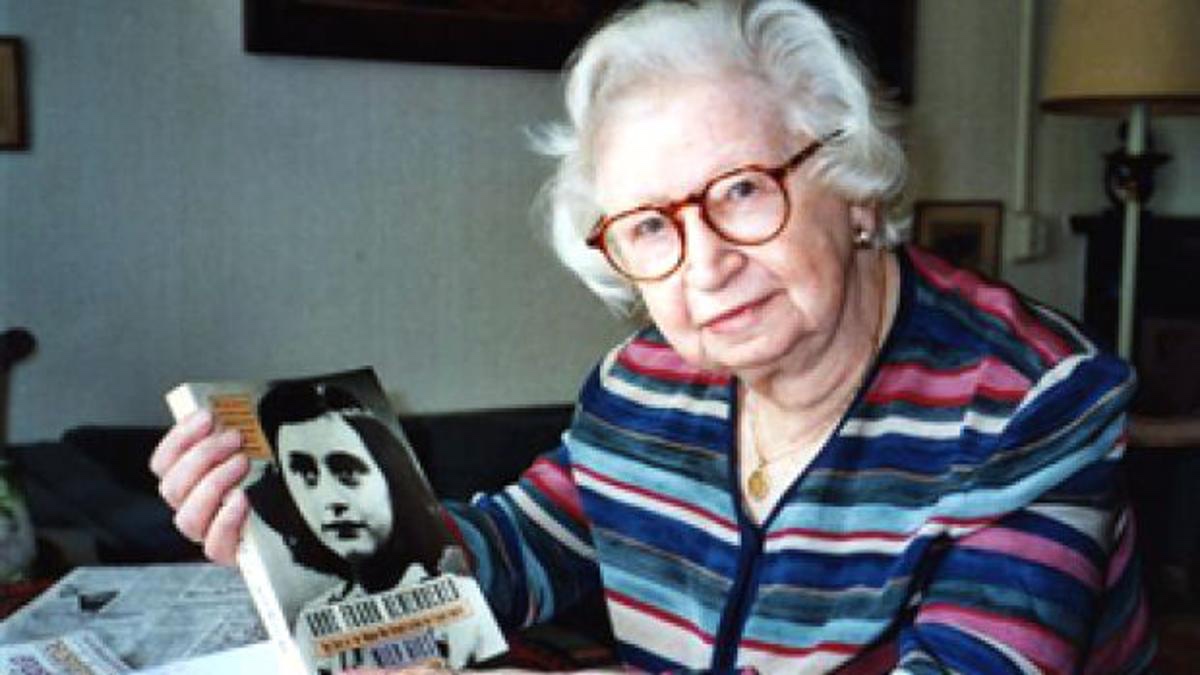
Miep Gies

Today in History –> On this day in 2010, Miep Gies, the last survivor of a small group of people who helped hide a Jewish girl, Anne Frank, and her family from the Nazis during World War II, dies at age 100 in the Netherlands. After the Franks were discovered in 1944 and sent to concentration camps, Gies rescued the notebooks that Anne Frank left behind describing her two years in hiding. These writings were later published as “Anne Frank: The Diary of a Young Girl,” which became one of the most widely read accounts of the Holocaust.

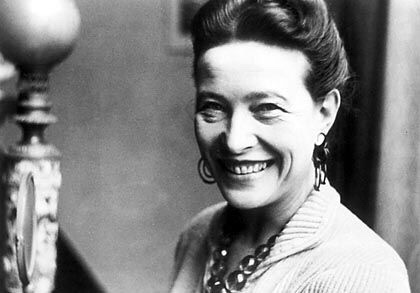
Today in History —> Simone de Beauvoir Born

Today in History –> On this day in 1908 the great feminist theorist Simone de Beauvoir was born. Though she did not recognise herself as a philosopher, she contributed to fields in philosophy such as ethics, phenomenology, politics and existentialism. Known for her treatise ‘The Second Sex’ she provided a detailed challenge to the social, political and religious categories used to justify women’s inferior status.

“On the day when it will be possible for woman to love not in her weakness but in strength, not to escape herself but to find herself, not to abase herself but to assert herself – on that day love will become for her, as for man, a source of life and not of mortal danger”.

~ Simone de Beauvoir, “The Second Sex” (1949)

#SimoneDeBeauvoir #FavoriteQuotes

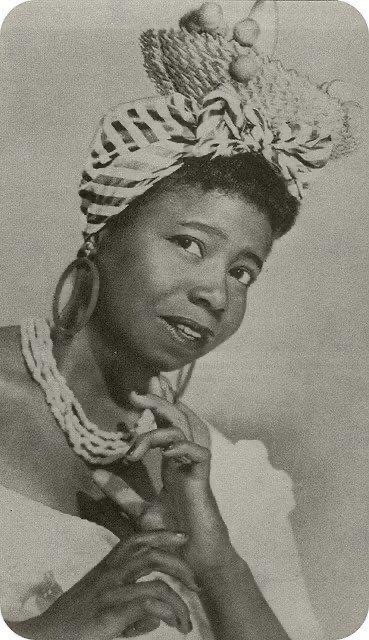
Today in History —> Butterfly McQueen

Notable born on this day in History —> Born today in 1911 Butterfly McQueen, American actress and dancer.

You may remember McQueen as the slave “Prissy” in the movie Gone with the Wind, famous for saying “I don’t know nothing about birthing babies.” She couldn’t even attend the film’s premiere in Atlanta in 1939 because the theater was segregated.

McQueen never married or had children.

In July 1983, a jury awarded McQueen $60,000 in a judgment stemming from a lawsuit she filed against two bus terminal security guards. McQueen sued for harassment after she claimed the security guards accused her of being a pickpocket and a vagrant while she was at a bus terminal in April 1979.

McQueen died at age 84 on December 22, 1995, at Doctors Hospital in Augusta, from burns sustained when a kerosene heater she attempted to light malfunctioned and burst into flames.McQueen donated her body to medical science and remembered the Freedom From Religion Foundation in her will.

“As my ancestors are free from slavery, I am free from the slavery of religion.”

“They say the streets are going to be beautiful in Heaven. Well, I’m trying to make the streets beautiful here … When it’s clean and beautiful, I think America is heaven. And some people are hell.”
~ Butterfly McQueen

Iron Age Burial Uncovered In West Sussex

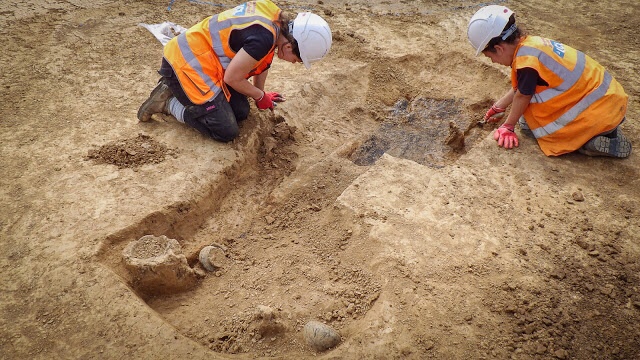
A richly-furnished grave belonging to an Iron Age ‘warrior’ buried 2,000 years ago has been uncovered in West Sussex. Iron weapons had been placed inside the grave, including a sword in a highly-decorated scabbard and a spear. The burial was discovered during an excavation commissioned by Linden Homes, who are developing a site on the outskirts of Walberton, near Chichester, to create 175 new homes.

ASE archaeologist Jim Stevenson, who is managing the post-excavation investigations into the burial, said: “There has been much discussion generally as to who the people buried in the ‘warrior’ tradition may have been in life. Were they really warriors, or just buried with the trappings of one? The grave is dated to the late Iron Age/ early Roman period (1st century BC – AD 50). It is incredibly rare, as only a handful are known to exist in the South of England.

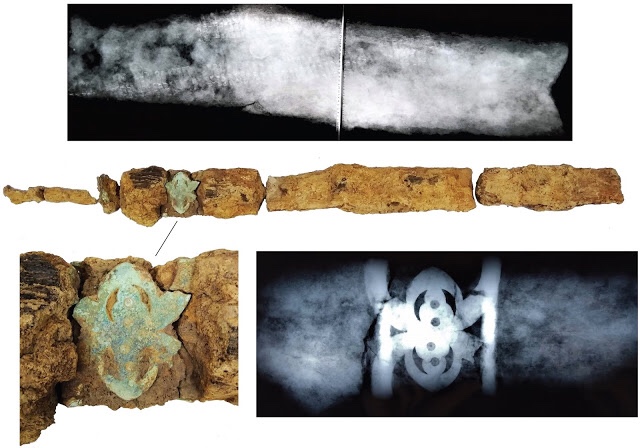
X-rays and initial conservation of the sword and scabbard reveal beautiful copper-alloy decoration at the scabbard mouth, which would have been highly visible when the sword was worn in life. Dotted lines on the X-ray may be the remains of a studded garment worn by the occupant when buried. This is particularly exciting for the archaeologists as evidence of clothing rarely survives.

The grave also held the remains of a wooden container, preserved as a dark stain, likely used to lower the individual into the grave. Four ceramic vessels were placed outside of this container, but still within the grave. The vessels are jars made from local clays and would usually have been used for food preparation, cooking and storage. It is likely that they were placed in the grave as containers for funerary offerings, perhaps intended to provide sustenance for the deceased in the afterlife.

Source: Archaeology News Network

If we are to get on the right side of the world revolution…

“I am convinced that if we are to get on the right side of the world revolution, we as a nation must undergo a radical revolution of values. We must rapidly begin the shift from a “thing-oriented” society to a “person-oriented” society. When machines and computers, profit motives and property rights are considered more important than people, the giant triplets of racism, materialism, and militarism are incapable of being conquered.”

~ Dr. Martin Luther King, Jr.

#FavoriteQuotes #MartinLutherKingJr