Doyo no Ushi no Hi

Japanese Cultural Spotlight:

【Doyo no Ushi no Hi – The Ox day in midsummer】

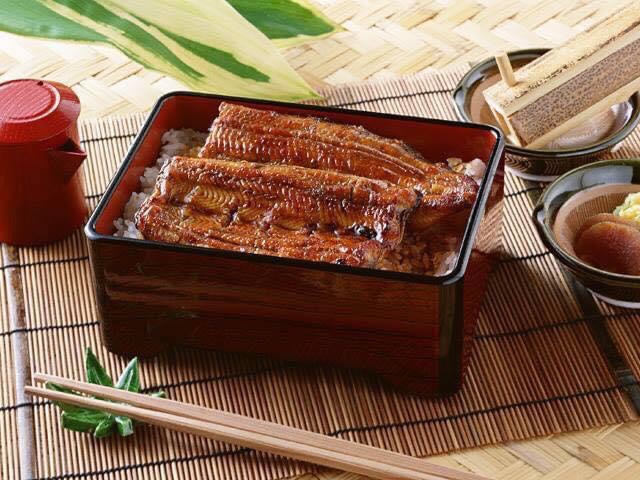
In the traditional calendar, Doyo no Ushi no Hi occurs around the hottest period of the year. The humidity is also high at this time in mid-July. This is a time to take special care of one’s health by eating nourishing food, and folklore has it that grilled eel flavored with a sweet and salty teriyaki sauce will fit the bill.

When the fragrance of this delicacy wafts from small kaba-yaki outlets, you may see people lined up to buy. The custom of eating eel in mid-summer began in the 18th century, promoted by merchants eager to sell the day’s catch.

Zen Mind, Beginner’s Mind

“In Japan we have the phrase shoshin, which means “beginner’s mind.” The goal of practice is always to keep our beginner’s mind.. For a while you will keep your beginner’s mind, but if you continue to practice one, two, three years or more, although you may improve some, you are liable to lose the limitless meaning of original mind.

For Zen students the most important thing is not to be dualistic. Our “original mind” includes everything within itself. It is always rich and sufficient within itself. You should not lose your self‑sufficient state of mind. This does not mean a closed mind, but actually an empty mind and a ready mind. If your mind is empty, it is always ready for anything; it is open to everything. In the beginner’s mind there are many possibilities; in the expert’s mind there are few.

If you discriminate too much, you limit yourself. If you are too demanding or too greedy, your mind is not rich and self‑sufficient. If we lose our original self‑sufficient mind, we will lose all precepts. When your mind becomes demanding, when you long for something, you will end up violating your own precepts: not to tell lies, not to steal, not to kill, not to be immoral, and so forth. If you keep your original mind, the precepts will keep themselves.

In the beginner’s mind there is no thought, “I have attained something.” All self‑centered thoughts limit our vast mind. When we have no thought of achievement, no thought of self, we are true beginners. Then we can really learn something. The beginner’s mind is the mind of compassion. When our mind is compassionate, it is boundless. Dogen‑zenji, the founder of our school, always emphasized how important it is to resume our boundless original mind. Then we are always true to ourselves, in sympathy with all beings, and can actually practice.

So the most difficult thing is always to keep your beginner’s mind. There is no need to have a deep understanding of Zen. Even though you read much Zen literature, you must read each sentence with a fresh mind. You should not say, “I know what Zen is,” or “I have attained enlightenment.” This is also the real secret of the arts: always be a beginner. Be very very careful about this point. If you start to practice zazen (meditation), you will begin to appreciate your beginner’s mind. It is the secret of Zen practice.”

~ Shunryu Suzuki
Zen Mind, Beginner’s Mind

Mindfulness Movement in Mental Health

Mindfulness Movement

The principles of mindful movement are the same as any other mindfulness practice. We aim to bring our full attention to the present moment to experience the here and now. We bring our awareness to our movement and focus on our breath or the way our body feels as it moves. When our mind wanders, we bring our attention back to the practice, to our breath, to our body.

4 Types of Mindful Movement

1. Breathing exercises are different from when we observe our breath at rest during seated meditation. Instead, we connect with our body by purposefully elongating our breaths to calm our parasympathetic nervous system, or shorten our breaths for short periods of time to refresh and refocus.

2. A walking meditation can be a simple and effective way to explore mindful movement. The biggest difference between a walking meditation and going for a walk as we usually would is that when we’re practicing meditation, we aren’t aiming to go anywhere. Instead, we walk slowly and try to bring our full awareness to the act of walking. That can look like focusing on our breath, or feeling the ground beneath our feet as one step turns into the next. When our mind wanders, we bring it back to the sensations of the moment.

3. Stretching and yoga can help us release tension, stiffness, and heavy emotions. When our bodies don’t move, they don’t feel good, and neither do our minds. Taking a moment to let go of the day’s distractions, getting away from the desk or couch, and engaging in gentle movement can help us boost our energy, focus, and resilience.

4. If you’re looking to blow off steam, working out is another opportunity for mindfulness. Getting exercise can be a great way to tune in to our body, synchronize our breath, and be in the moment, all while building strength and nourishing our muscles.

Please do not build a stupa by Thích Nhất Hạnh

“Please do not build a stupa (shrine) for me. Please do not put my ashes in a vase, lock me inside and limit who I am. I know this will be difficult for some of you. If you must build a stupa though, please make sure that you put a sign on it that says, ‘I am not in here.’ In addition, you can also put another sign that says, ‘I am not out there either,’ and a third sign that says, ‘If I am anywhere, it is in your mindful breathing and in your peaceful steps.’”

~ Thich Nhat Hanh

The Eight Branches of Chinese Medicine

The Eight Branches of Chinese Medicine

Meditation: As long ago as the fifth century B.C.E., Taoists practiced meditation as a tool for cultivating inner peace. There is always an aspect of the mind that is quiet, calm, and present; however, it can be masked by thoughts, stories, and emotions that pull us out of the present moment. The mind can be like a toddler, running around from place to place, with an attention span of about one minute. It can easily switch from one emotion to the next. Meditation is not simply the practice of stopping all this chaos and quieting the mind; rather, it is the building of awareness about the mind’s habitual nature and the reduction of its distractions.

Exercise: Moving our bodies daily is vital to our overall well-being. Physical activity also moves our blood and cleanses our organs. Tai chi and qigong are both ancient forms of exercise used in Chinese medicine for the cultivation of energy. When visiting east Asian countries, you will see groups of people coming together to practice these movements every day. Even if you don’t know these two ancient practices, walking, running, swimming, dancing, hiking, playing sports, and even stretching are all wonderful forms of exercise.

Nutrition: Food is like medicine. It can nourish us to our very bones, bring us back from illness, and give us a tremendous amount of energy for living.  Many of us are getting sick. Returning to natural, unprocessed, whole foods that match your constitution, align with the season, and support you through any imbalances you may be experiencing is the most direct way to find balance. Through this lens, each meal provides an opportunity to heal from the inside out and to prevent illness rather than be vulnerable to it.

Cosmology: Cosmology refers to the foundation of any spiritual tradition that reveals the core beliefs of how we human beings came to exist and what helps us to thrive. In Taoist cosmology, human beings are not seen as separate from the natural world but rather as a manifestation and integral part of it. Therefore, to cultivate a state of balance, we must look to the natural world around us and mimic the rhythms and cycles we see.

Fang Shui: Just as we can benefit from finding balance inside ourselves by meditating, exercising, and eating a diet that is aligned with nature, we can benefit from creating a similar balance outside ourselves. This is called feng shui, and it encompasses the practice of enhancing health through the environmental balancing of the home, office, garden, and other sacred spaces.

Bodywork: Touch is vital to our overall health. The physical practice of being touched in a therapeutic way allows us to relax deeply and experience the release of tension on all levels. Bodywork gifts us with a number of amazing endorphins (feel-good hormones) most especially, oxytocin.

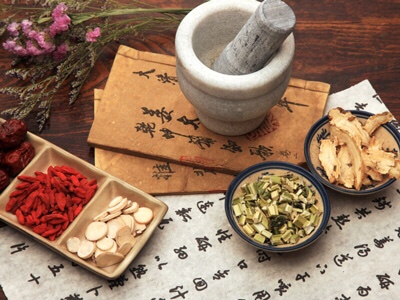
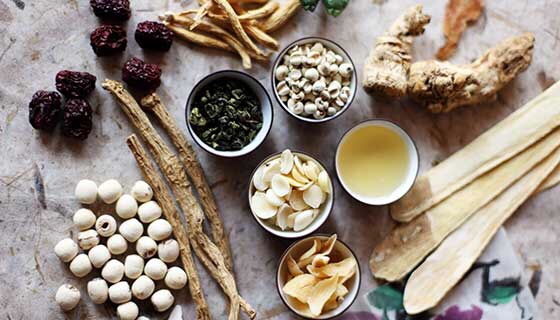
Herbal Medicine: Chinese herbal medicine has been around for thousands of years as a vital tool for maintaining health throughout the life cycles and seasons. Eating medicinal plants from the earth allows us to be in direct relationship with the earth. In addition to a diet that is in sync with our nature, herbal medicine can target specific health imbalances and enhance the healing benefits of meals.

Acupuncture: The final branch of Chinese medicine is also the newest of the eight (though still more than two thousand years old)—the practice of acupuncture. Acupuncture is the art of inserting very fine, sterile needles just under the skin in strategic places to nourish, calm, or otherwise direct the movement of energy. This ancient art form has been found not only to reduce pain but to influence myriad systems in the body, mind, and spirit. From anxiety to leaky gut syndrome to depression to inflammation, acupuncture treats us on many levels. While this practice can certainly address everyday imbalances, I have found it to be most beneficial when used as a tool for prevention.

Source: Everyday Chinese Medicine.

Traditional Chinese Medicine (TCM)

Traditional Chinese medicine (TCM) is thousands of years old and has changed little over the centuries. Its basic concept is that a vital force of life, called Qi, surges through the body. Any imbalance to Qi can cause disease and illness. This imbalance is most commonly thought to be caused by an alteration in the opposite and complementary forces that make up the Qi. These are called yin and yang.

Ancient Chinese believed that humans are microcosms of the larger surrounding universe, and are interconnected with nature and subject to its forces. Balance between health and disease is a key concept. TCM treatment seeks to restore this balance through treatment specific to the individual.

It is believed that to regain balance, you must achieve the balance between the internal body organs and the external elements of earth, fire, water, wood, and metal.

Treatment to regain balance may involve:

• Acupuncture

• Moxibustion (the burning of herbal leaves on or near the body)

• Cupping (the use of warmed glass jars to create suction on certain points of the body)

• Massage

• Herbal remedies

• Movement and concentration exercises (such as tai chi)

Acupuncture is a component of TCM commonly found in Western medicine and has received the most study of all the alternative therapies. Some herbal treatments used in TCM can act as medicines and be very effective but may also have serious side effects. In 2004, for example, the FDA banned the sale of dietary supplements containing ephedra and plants containing ephedra group alkaloids due to complications, such as heart attack and stroke. Ephedra is a Chinese herb used in dietary supplements for weight loss and performance enhancement. However, the ban does not apply to certain herbal products prepared under TCM guidelines intended only for short-term use rather than long-term dosing. It also does not apply to OTC and prescription drugs or to herbal teas.

If you are thinking of using TCM, a certified practitioner is your safest choice. The federally recognized Accreditation Commission for Acupuncture and Oriental Medicine (ACAOM) accredits schools that teach acupuncture and TCM. Many of the states that license acupuncture require graduation from an ACAOM-accredited school. The National Certification Commission for Acupuncture and Oriental Medicine offers separate certification programs in acupuncture, Chinese herbology, and Oriental bodywork.

TCM should not be used as a replacement for conventional or allopathic treatment, especially for serious conditions, but it may be beneficial when used as complementary therapy. Since some TCM herbal medicines can interfere or be toxic when combined with Western medicines, you should inform your doctor if you are using TCM.

Source: Johns Hopkins Medicine

Oishinbo

1CDAC4E4-0C83-48E5-88F7-A6DD90F43156

Oishinbo (美味しんぼ, “The Gourmet”) is a long-running cooking manga written by Tetsu Kariya and drawn by Akira Hanasaki. The manga’s title is a portmanteau of the Japanese word for delicious, oishii, and the word for someone who loves to eat, kuishinbo. The series depicts the adventures of culinary journalist Shirō Yamaoka and his partner (and later wife), Yūko Kurita. It was published by Shogakukan between 1983 and 2008 in Big Comic Spirits, and resumed again on February 23, 2009, only to be put on an indefinite hiatus after the May 12, 2014 edition in the weekly Big Comic Spirits as a response by the publisher to harsh criticism of Oishinbo’s treatment of the Fukushima Daiichi disaster.

Oishinbo is a drama featuring journalist Shiro Yamaoka who works for Touzai Shimbun. He is a cynical food critic who is tasked by the newspaper’s owner, along with the young Yuko Kurita, to provide recipes for the “ultimate menu”. During their search, the encounter Yamaoka’s fastidious and demanding father, Kaibara Yuzan, a famous gourmand who tries to sabotage Yamaoka’s project.

United States Release:

Oishinbo: Japanese Cuisine, Vol. 1 (January 20, 2009)

Japanese Cuisine introduces us to the fundamental ingredients–rice, sashimi, green tea, and dashi (cooking stock)–that constitute the soul of the Japanese kitchen. In each story we learn about the proper preparation and presentation of different dishes, as well as their history and cultural significance. The result is a moveable feast of a book, as informative as it is engaging.

Oishinbo: Sake, Vol. 2 (March 17, 2009)

In this volume, the focus shifts from food to drink: specifically, to sake. For centuries different types of sake have played the same roles in Japan as wine and beer have in the West, from inexpensive everyday drink to refined single-batch rarities. Above all, sake has been enjoyed as an accompaniment to a meal, and after a revelatory moment one night, Yamaoka decides that drink pairings must be an integral part of the Ultimate Menu. So which foods go best with which drinks? Sit down, pour yourself a glass, and read on!

Oishinbo: Ramen & Gyoza, Vol. 3 (May 19, 2009)

Few foods inspire as much passion and partisanship as the dish of noodles in broth known as “ramen.” Hot or cold, plain or miso, from fancy fusion creations to humble roadside takeout, ramen is truly a beloved food, one that can give rise to fierce loyalty or fiercer criticism (not to mention the occasional fistfight). In this volume of Oishinbo, Yamaoka and company inquire into the “soul of ramen,” from the flour used in the noodles to the chickens used in the broth. And where there’s ramen, there’s gyôza: little dumplings made with a variety of fillings and served as a side dish. Will Yamaoka be able to create an “ultimate” gyôza before Kaibara creates a “supreme” one?

Oishinbo: Fish, Sushi & Sashimi, Vol. 4 (July 21, 2009)

Yamaoka and his father, Kaibara Yūzan, have never enjoyed an ideal father-son relationship. In fact, it’s about as far from ideal as possible, and when they start arguing about food–which they inevitably do–the sparks really fly. In this volume of Oishinbo the subject of dispute is fish, starting with the question of whether mackerel can ever be truly good sashimi. Later, things come to a head during the “Salmon Match,” which pits father against son in an epic contest to develop the best dish before a panel of judges. Will Yamaoka finally defeat Kaibara? Or will he once again be left in his father’s shadow?

Oishinbo: Vegetables, Vol. 5 (September 15, 2009)

Weekly Time magazine sets up a series of culinary battles between the Tōzai News’s “Ultimate Menu,” represented by Yamaoka, and the Teito Times’s “Supreme Menu,” represented by Kaibara Yūzan, Yamaoka’s father and nemesis. The ingredient this time is vegetables, specifically cabbages and turnips. Who will win the Vegetable Showdown? Later, Yamaoka and Kurita help Tomii’s son get over his hatred of eggplant, and patch a rift between lovers using the power of asparagus.

Oishinbo: The Joy of Rice, Vol. 6 (November 17, 2009)

In this volume of Oishinbo, Yamaoka and company look into the single most essential food in Japanese cuisine: rice. Cultivated for millennia, a staple meal in itself and the basis of countless other dishes, rice is an important component not only of the Japanese kitchen but also of Japanese culture. When Yamaoka is asked by Tōzai’s head chef for help in coming up with a new rice dish, what starts out as a simple culinary request rapidly grows into a disquisition into the past, present and future of Japan’s food culture.

Oishinbo: Izakaya: Pub Food, Vol. 7 (January 19, 2010)

Izakaya occupy the same vital space in the Japanese culinary landscape as tapas bars in Spain or tavernas in Greece. Unpretentious, frequently boisterous, they’re places to meet with friends or business partners to unwind over drinks and small dishes that range from hearty standards to refined innovations. In this volume of Oishinbo, Yamaoka and Kurita investigate classic izakaya foods such as edamame and yakitori, devise new dishes to add to the menu of an old shop, and discover how the concept of “play” is essential to the enjoyment of food.

Sources: Oishinbo manga, Wikipedia

Tokyo Ghoul

Tokyo Ghoul is set in an alternate reality where ghouls, creatures that look like normal people but can only survive by eating human flesh, live among the human population in secrecy, hiding their true nature in order to evade pursuit from the authorities. Ghouls have powers including enhanced strength and regenerative abilities – a regular ghoul produces 4–7 times more kinetic energy in their muscles than a normal human; they also have several times the RC cells, a cell that flows like blood and can become solid instantly. A ghoul’s skin is resistant to ordinary piercing weapons, and it has at least one special predatory organ called a kagune, which it can manifest and use as a weapon during combat. Another distinctive trait of ghouls is that when they are excited or hungry, the color of their sclera in both eyes turns black and their irises red. This mutation is known as kakugan (“red eye”).

The story follows Ken Kaneki, a student who barely survives a deadly encounter with Rize Kamishiro, his date who reveals herself as a ghoul and tries to eat him. He is taken to the hospital in critical condition. After recovering, Kaneki discovers that he underwent a surgery that transformed him into a half-ghoul. This was accomplished because some of Rize’s organs were transferred into his body, and now, like normal ghouls, he must consume human flesh to survive. Ghouls who run a coffee shop called “Anteiku” take him in and teach him to deal with his new life as a half-ghoul. Some of his daily struggles include fitting into the ghoul society, as well as keeping his identity hidden from his human companions, especially from his best friend, Hideyoshi Nagachika.

Sources: Tokyo Ghoul Manga, Wikipedia