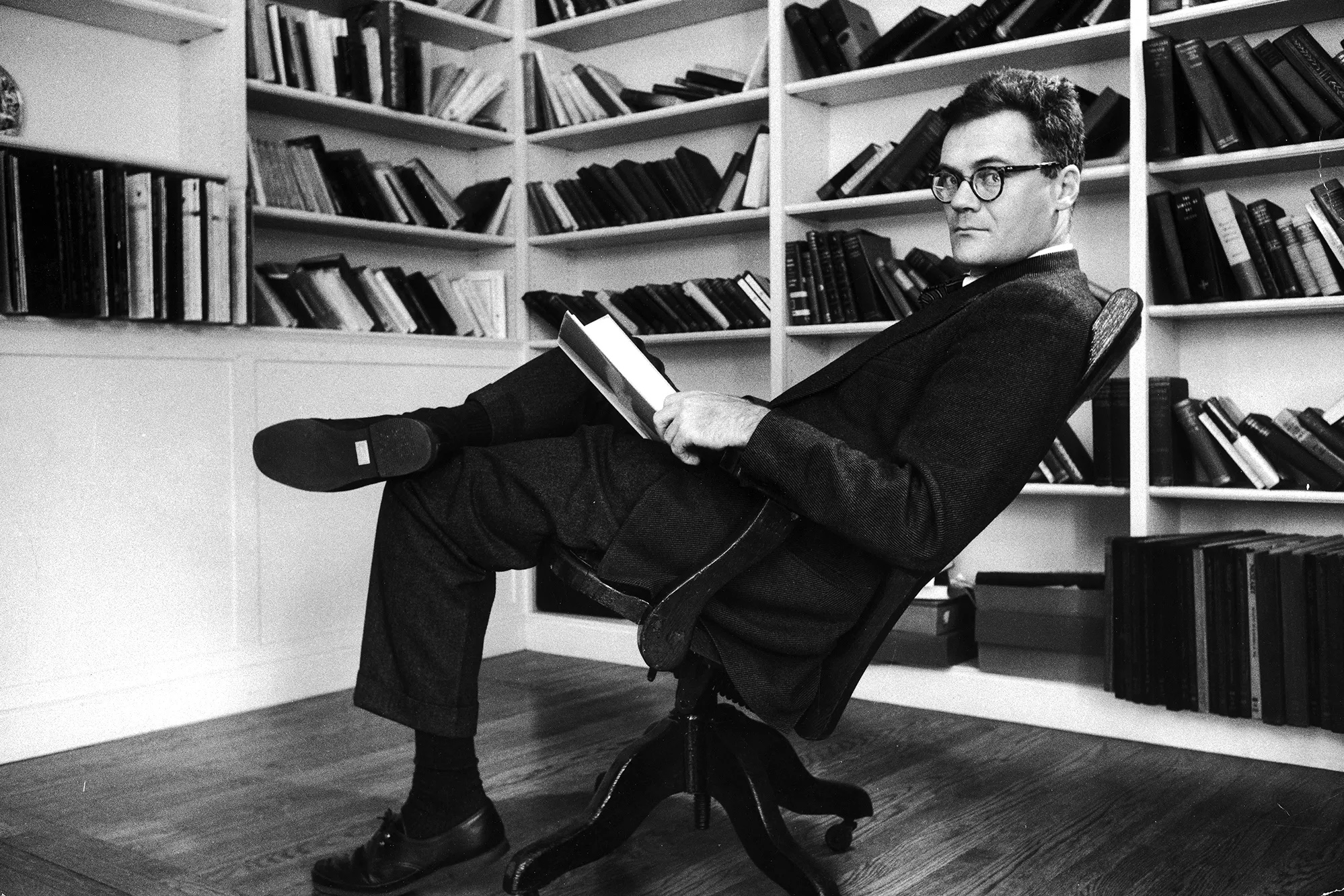
Waking in the Blue – By Robert Lowell

The night attendant, a B.U. sophomore,
rouses from the mare’s-nest of his drowsy head
propped on The Meaning of Meaning.
He catwalks down our corridor.
Azure day
makes my agonized blue window bleaker.
Crows maunder on the petrified fairway.
Absence! My hearts grows tense
as though a harpoon were sparring for the kill.
(This is the house for the “mentally ill.”)

What use is my sense of humour?
I grin at Stanley, now sunk in his sixties,
once a Harvard all-American fullback,
(if such were possible!)
still hoarding the build of a boy in his twenties,
as he soaks, a ramrod
with a muscle of a seal
in his long tub,
vaguely urinous from the Victorian plumbing.

A kingly granite profile in a crimson gold-cap,
worn all day, all night,
he thinks only of his figure,
of slimming on sherbert and ginger ale–
more cut off from words than a seal.
This is the way day breaks in Bowditch Hall at McLean’s;
the hooded night lights bring out “Bobbie,”
Porcellian ’29,
a replica of Louis XVI
without the wig–
redolent and roly-poly as a sperm whale,
as he swashbuckles about in his birthday suit
and horses at chairs.

These victorious figures of bravado ossified young. 

In between the limits of day, 
hours and hours go by under the crew haircuts 
and slightly too little nonsensical bachelor twinkle 
of the Roman Catholic attendants. 
(There are no Mayflower 
screwballs in the Catholic Church.) 

After a hearty New England breakfast,
I weigh two hundred pounds
this morning. Cock of the walk,
I strut in my turtle-necked French sailor’s jersey
before the metal shaving mirrors,
and see the shaky future grow familiar
in the pinched, indigenous faces
of these thoroughbred mental cases,
twice my age and half my weight.
We are all old-timers,
each of us holds a locked razor.

~ Robert Lowell, from Life Studies, 1959

Five principles of good writing according to George Orwell

Five principles of good writing according to George Orwell:

i. Never use a metaphor, simile or other figure of speech which you are used to seeing in print.

ii. Never use a long word where a short one will do.

iii. If it is possible to cut a word out, always cut it out.

iv. Never use the passive where you can use the active.

v. Never use a foreign phrase, a scientific word or a jargon word if you can think of an everyday English equivalent.

vi. Break any of these rules sooner than say anything outright barbarous.

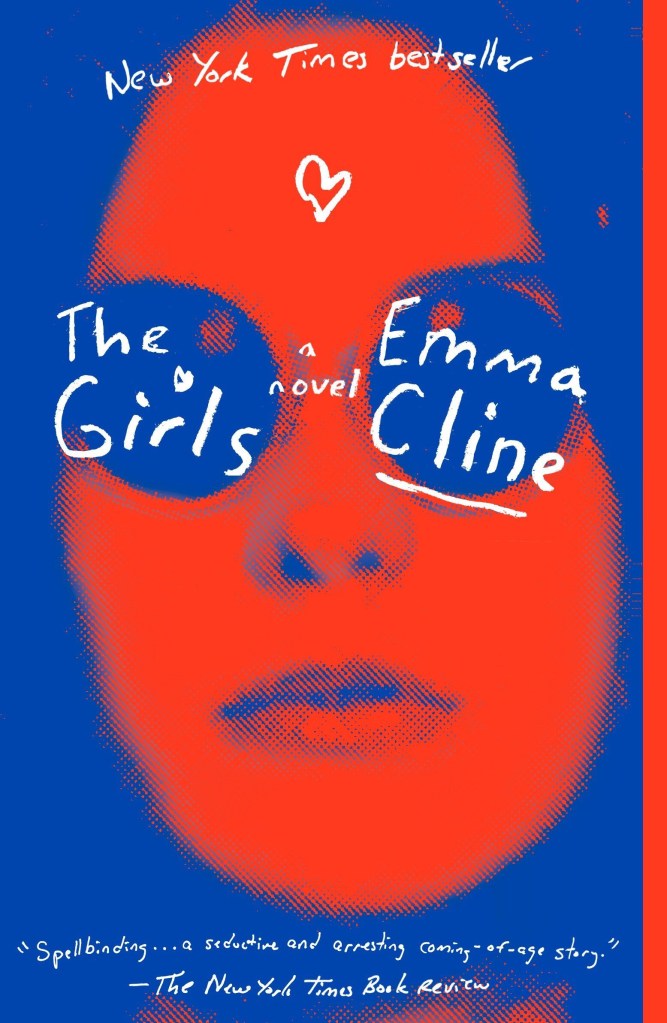
The Girls – Emma Cline

“Emma Cline’s first novel, “The Girls” (Random House), is a song of innocence and experience—in ways that she has intended, and perhaps in ways that she has not. It’s a story of corruption and abuse, set in 1969, in which a bored and groundless California teen-ager joins a Manson-like cult, with bloody, Manson-like results. Evie Boyd, an only child whose upper-middle-class parents have recently divorced, wants to be older than her fourteen years, and is drawn to the free-spirited, rebellious young women she sees one day in a Petaluma park. They are looking for food to take back to the ranch where they live. The novel charts Evie’s accelerated sentimental education, as she is inducted into the imprisoning liberties of free love, drugs, and eventual violence, all of it under the sway of the cult’s magus, Russell Hadrick. In another way, though, Cline’s novel is itself a complicated mixture of freshness and worldly sophistication. Finely intelligent, often superbly written, with flashingly brilliant sentences, “The Girls” is also a symptomatic product not of the sixties but of our own age: a nicely paced literary-commercial début whose brilliant style, in the end, seems to restrict its reach and depth.”

~ The New Yorker

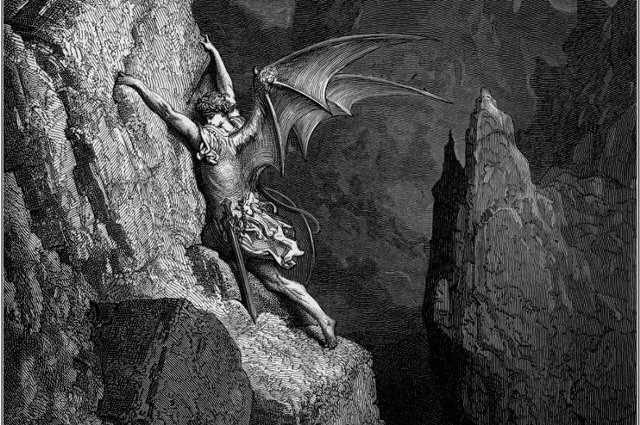
Paradise Lost, Book II Excerpt

“Into this wild abyss,
The womb of nature and perhaps her grave,
Of neither sea, nor shore, nor air, nor fire,
But all these in their pregnant causes mixed
Confusedly, and which thus must ever fight,
Unless the almighty maker them ordain
His dark materials to create more worlds,
Into this wild abyss the wary fiend
Stood on the brink of hell and looked a while,
Pondering his voyage . . .”

~ John Milton, Paradise Lost, Book II

#FavoriteQuotes #JohnMilton #ParadiseLost

The Chained Books of Hereford Cathedral (Hereford, Herefordshire – Great Britain)

The Chained Books of Hereford Cathedral (Hereford, Herefordshire – Great Britain)

This cathedral contains two medieval marvels: a chained library of rare books and one of the earliest maps of the world.

In the Middle Ages, before the availability of the printing press, volumes on law and religion were quite rare and valuable. To protect against theft, the books at Hereford Cathedral were chained to desks, pulpits, and study tables.

The chained library was created in 1611 when a collection of hand-transcribed, hand-bound books was moved into the Lady Chapel. Most of the volumes in the collection are acquisitions dating back to the 1100s, although the oldest book in the collection, the Hereford Gospels, dates to about the year 800.

The medieval world map stored at Hereford Cathedral depicts three continents: Europe, Asia, and Africa. On the as-yet-unexplored periphery of these lands roam fire-breathing dragons, dog-faced men, people who survive on only the scent of apples, and the Monocoli, a race of mythical beings who take shade under their giant feet when the sun becomes too bright.

The 5 × 4.5-foot map (1.5 × 1.4 m), created around 1300, is part geography, part history, and part religious teaching aid. A lack of confirmed information on Asian and African geography presented no obstacle for the mapmaker, who used hearsay, mythology, and imagination to fill in the gaps—which explains the four-eyed Ethiopians.

Sources: Atlas Obscura

Oberon, King of the Faeries

First mentioned as a King of the Fairies in a 15th century French romance, Oberon also appeared in Shakespeare’s A Midsummer Night’s Dream paired with the Fairy Queen Titania.  In contrast other sources say his queen was Mab, and while Shakespeare described Oberon as human sized, in the French story he was the size of a toddler.  This may reflect the shape-shifting powers of the fairies or the use of glamour to alter perceptions, or perhaps merely indicate the same name being used for two different Fairy Kings between cultures.

In Huon of Bordeaux, the first place Oberon appears as a Fairy King, he is described as small and deformed, yet extremely handsome, wearing a jeweled gown that glows. This Oberon carries a bow that never misses and a magical horn that cures all illnesses and acts as a cornucopia. A 16th century literary source described Oberon as tiny and said he could not bear sunlight and fled the light of day. The name Oberon is also strikingly similar to names used for familiar spirits during the Renaissance, including ‘Auberon’ and ‘Oberycom’; in this guise he was invoked as a spirit of luck and to gain power for the person calling him. This could mean that Oberon was a general term for a powerful male fairy that was later applied as a name for Fairy Kings. In that case, if we also view Diana/Titania as a similar generic name applied to a Fairy Queen there is a logic in pairing the two together.

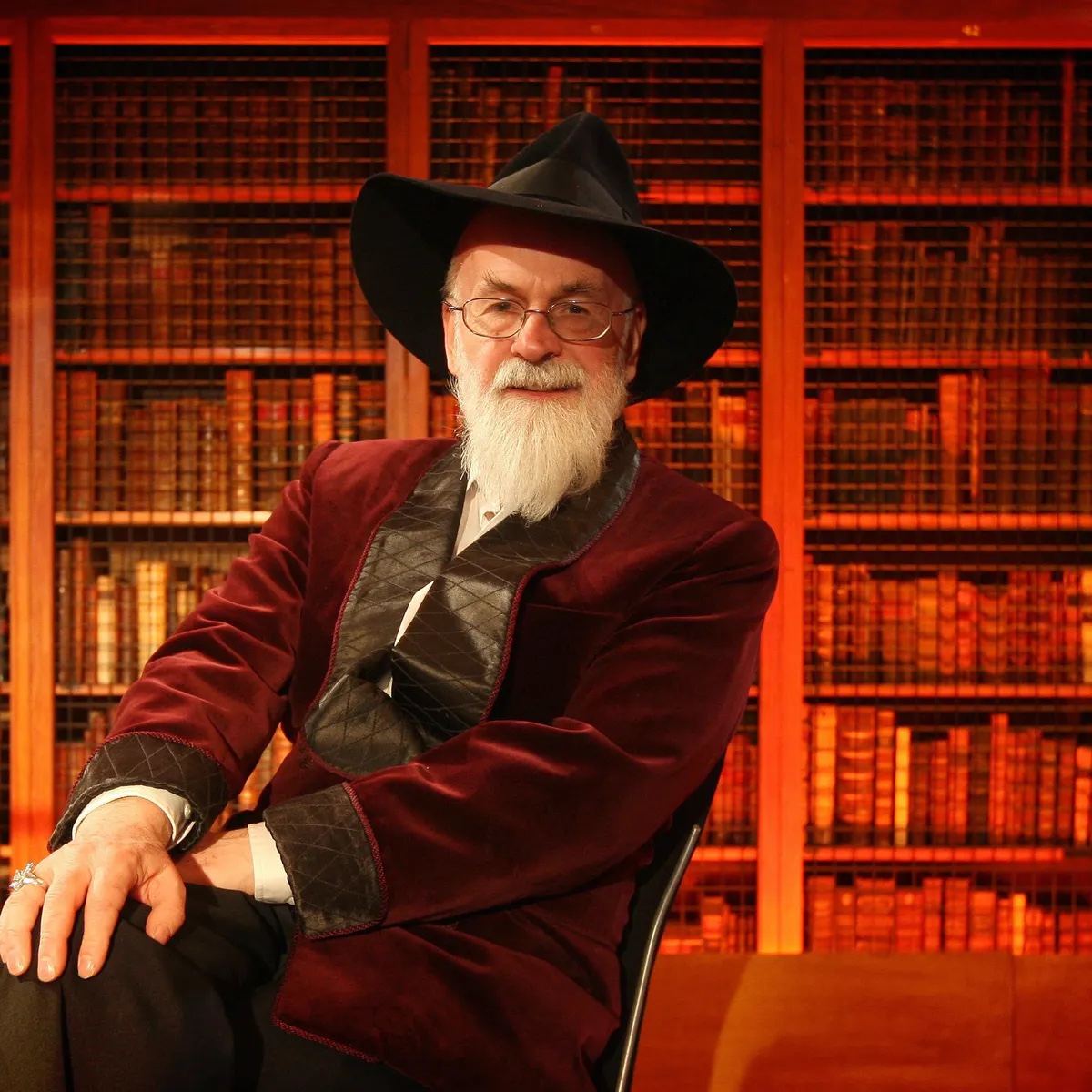
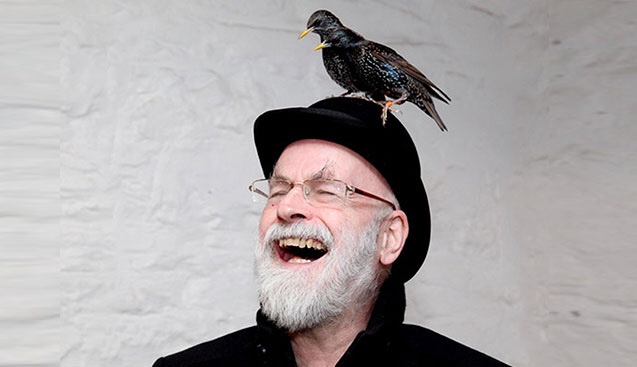
Terence (Terry) David John Pratchett

On this date in 1948, Terence (Terry) David John Pratchett was born in Buckinghamshire, England. He enjoyed reading, especially science fiction, fantasy, myth and ancient history. He has said that from a young age he was skeptical about Christianity and came to the conclusion that there was no god. He has won many awards, including the Carnegie Medal for The Amazing Maurice and Educated Rodents (2001), and was knighted in 2009 for his services to literature. Several of his books have been adapted as movies for television.

Pratchett’s first novel, Carpet People, a children’s fantasy, was published in 1971. Pratchett is best known for his “Discworld” novels, a fantasy series tied together not by characters or plot but by the setting of the Discworld, a flat world sitting on the backs of four elephants standing on the back of a giant turtle swimming through space. The first book in this series, The Color of Magic, a fantasy adventure starring a hapless wizard parodying many conventions of the genre, was published in 1983, and the thirty-eighth, I Shall Wear Midnight, a coming-of-age story featuring a strong young witch battling prejudice, was published in 2010. The Discworld, like many fantasy worlds, features gods who occasionally interfere directly in events or feature as characters in some way. In 2007, Pratchett was diagnosed with early-onset Alzheimer’s, but has continued to write and publish new books, albeit at a slower pace. He has made many public statements in support of the right to die, and talks openly about his Alzheimer’s experience, including his wish to take his own life before his disease is critical. He was knighted in 2009.

Throughout his work, Pratchett questions religion in many different ways, pointing out religious hypocrisy while at the same time illustrating how different the world would be if God, or any gods, were real. The 1992 Discworld novel Small Gods shows the god Om visiting his worshipers, and being deeply dissatisfied with the direction in which his church has gone. Good Omens (1990), co-written with fellow British fantasy author Neil Gaiman, deals with Christian mythology and the book of Revelations. It begins with an angel and a demon conversing outside the Garden of Eden and questioning God’s motives regarding the Tree of the Knowledge of Good and Evil. It ends with the ten-year-old antichrist, Adam, contemplating the raid of a neighbor’s orchard and thinking, “There never was an apple . . . that wasn’t worth the trouble you got into for eating it.” Pratchett said, “I read the Old Testament all the way through when I was about 13 and was horrified” (The Daily Mail, U.K., June 21, 2008).

“There is a rumor going around that I have found God. I think this is unlikely because I have enough difficulty finding my keys, and there is s evidence that they exist.”
~ Sir Terry Pratchett, The Daily Mail (U.K.), June 21, 2008

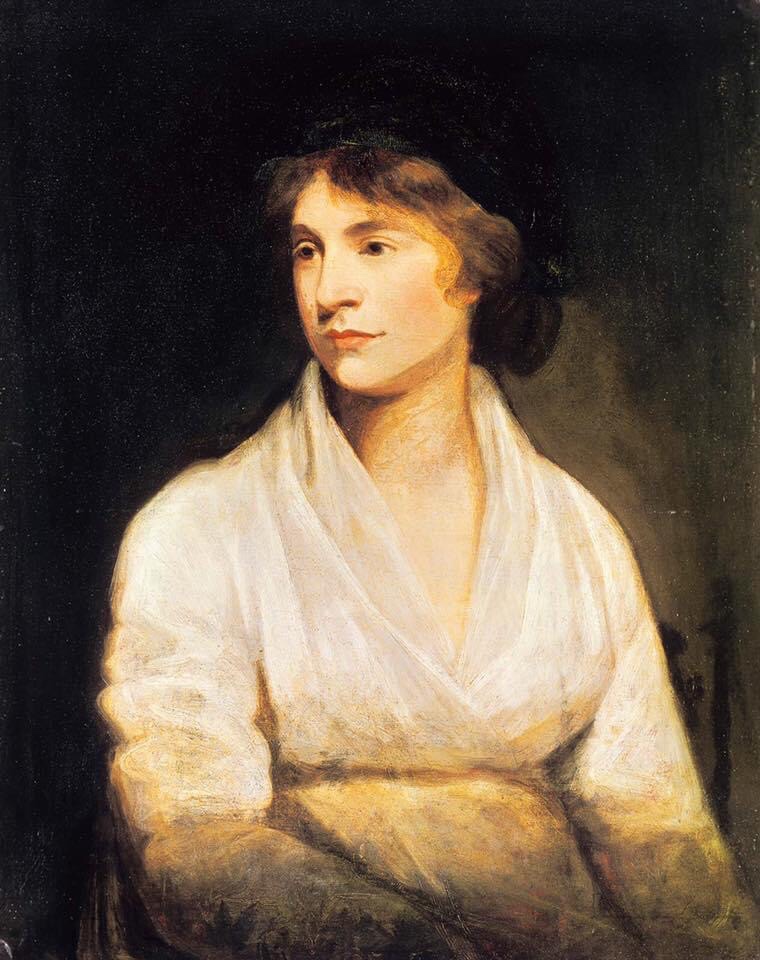
Mary Wollstonecraft Birthday

On this date in 1759, Mary Wollstonecraft was born in London, the second of seven children. The industrious young woman worked as a companion, governess and then opened her own school. Her first book, Thoughts on the Education of Daughters, was published in 1786, followed by a novel, a children’s book (re-issued with illustrations by William Blake), a translation, and The Female Reader. When Edmund Burke read her review of a sermon by dissenting minister Richard Price, he wrote a famous attack on the American and French Revolutions. Mary was the first to rebut his polemic. A Vindication of the Rights of Men was published five weeks later, rejecting all arguments from authority or precedent. Her seminal A Vindication of the Rights of Woman was published in 1792. The first influential book calling for the equality of the sexes, it urged that women be educated and treated as “rational creatures.” Wollstonecraft championed dress reform, breast-feeding, early education and a national system of coeducational primary schools. She warned of those who practice “on the credulity of women.”

She gave birth to a daughter in an unhappy liaison with Gilbert Imlay, then married atheist William Godwin in 1797. Following an uneventful pregnancy, 38-year-old Mary gave birth to a second daughter, Mary. The new mother died of a childbirth infection after ten intense days of suffering. Her daughter Mary ran off as a teenager with poet Percy Shelley, and wrote Frankenstein at age 19. Wollstonecraft was an ardent rationalist and Deist who adopted an agnostic point of view toward the end of her life. D. 1797.

“. . . the being cannot be termed rational or virtuous who obeys any authority but that of reason.”
~ Mary Wollstonecraft, A Vindication of the Rights of Woman (1792)