Austen Riggs Center Psychiatric Hospital

The Austen Riggs Center is an open psychiatric hospital and treatment program that promotes resilience and self-direction in adults (18+) with complex psychiatric problems. They specialize in the long-term treatment of psychiatric disorders with intensive psychodynamic psychotherapy and a full range of psychiatric services, offered in a completely voluntary continuum of care that includes inpatient, residential, and day treatment programs.

They treat the individual, not the diagnosis. Diagnostic labels cannot capture the essence of an individual’s struggles or strengths, and they often obscure what people have in common. Many of their patients have multiple diagnoses, and many have been identified as “treatment resistant” in the past. Often they seek psychiatric treatment at Riggs because they need a different approach, and many opt to stay in our long-term residential treatment program following an initial evaluation and treatment period.

All patients have intensive psychodynamic psychotherapy four times a week with a psychiatrist or clinical psychologist. The goal is to help the person expand their capacity for work, play, and love by fostering improved self-esteem and resilience, and by helping them acknowledge and come to terms with whatever has previously blocked their development.

Recognizing the importance of the social context, they offer in-depth family evaluation, support for family members, and family therapy, as well as a robust Therapeutic Community Program in which patients can develop supportive peer relationships and learn about themselves with others. They offer opportunities for participation in patient government, in social and recreational activities, in reflective process groups, and in health and wellness activities such as meditation and yoga.

The Erikson Institute for Education and Research of the Austen Riggs Center studies individuals in their social contexts through research, training, education, and outreach programs in the local community and beyond. Part of that offering includes an Adult Psychoanalytic Training Program and Fellowship in Hospital-Based Psychotherapy for psychiatrists and psychologists. The program takes a systems perspective, emphasizing cultural and familial contexts, as well as individual development across the lifespan.

The basic ingredients essential to fulfilling the Center’s mission are:

  • Treatment organized around an intensive individual therapeutic relationship, focusing on the patient’s recognition and tolerance of experiences of conflict and pain, leading to the development of a sense of perspective on the illness
  • An open therapeutic community involving all staff and patients
  • A careful assessment phase, including psychological testing
  • A range of programs, geared to individual levels of capability and need
  • Continuous treatment by the same multidisciplinary team as patients move between programs
  • Psychopharmacologic treatment
  • Group work, substance use treatment, family treatment and help with reintegration into the external community
  • A broad activities program offering creative expression, with patients in the role of student, and in a “treatment free zone”
  • Ongoing staff training, research and education to further the primary clinical task
  • Recruitment and retention of quality staff

Vision:

In an increasingly complex and fragmented world, the dignity of the individual, the importance of human relationships and the centrality of a sense of community are more difficult to find. The focus and traditions of the Austen Riggs Center orient the staff to help troubled patients meet these and other rapidly changing psychological challenges of contemporary society. We will continually build on our distinguished past, helping our patients develop personal competence in a completely open setting that emphasizes the individual’s capacity to face and take responsibility for his or her life—past, present, and future. We nurture our patients’ strengths, foster their social functioning and encourage family collaboration. Through our research and training programs, we educate professionals in our psychodynamic perspective, applying this learning to a broad range of psychosocial problems. Finally, in this time of diminishing mental health benefits, we will continue to develop cost-effective treatment settings that focus on individual psychotherapy, community living and that attend to resource limitations as both reality to deal with and metaphor for other limits and losses.

Values:

  • Affirmation of the dignity and responsibility of the individual
  • Recognition, appreciation and enhancement of individual strengths
  • Importance of human relationships
  • Respect for individual differences
  • Centrality of the psychotherapeutic relationship
  • Learning opportunities in a community of differentiated voices
  • Importance of examined living
  • Attention to the conflict between individual choice and the requirements of a community
  • Openness to innovation and creativity
  • Open setting to promote personal responsibility and freedom of choice in treatment
  • Importance of recognizing and preserving multiple roles, including those of student and community member
  • Provision of treatment based on quality and outcome, not profit

Located in the small New England town of Stockbridge, MA, three hours from New York City, two hours from Boston, and one hour from Albany, NY, the Austen Riggs Center is fully licensed by the Massachusetts Department of Health and accredited by the Joint Commission.

Distress Tolerance Skills: Reframe

Reframing refers to changing one’s perspective about something—in other words, helping make lemons out of lemonade or helping to see the silver lining. Of course a therapist, has to be careful that in doing so they don’t invalidate patients or minimize their worries. Here’s an example:

Patient: I can’t believe that I’ve been in therapy and doing all of this work for almost two years, and I’ve started bingeing again. What’s wrong with me that I can’t stop? I know how unhealthy it is, and I don’t want to gain weight again!

Therapist: Yes, you’re struggling, Anna, but it makes sense given all of the stressors in your life right now (validation). If this was two years ago, how do you think you’d be coping with everything that’s going on?

Patient: Well I’d probably be in the hospital already. At the very least, I’d be feeling suicidal and wouldn’t be functioning very well.

Therapist: Right. So even though you’ve gone back to an unhealthy behavior, you’re not where you were two years ago. In fact, you’re coping quite a bit better than you were back then, right?

Patient: Yeah, I guess you’re right.

There are many different ways to reframe. The above dialogue is an example of a patient comparing herself now to how she was in the past, at a time when she wasn’t coping as well. This can often help patients acknowledge the changes they’ve made, even though they may still be struggling.

The way patients talk to themselves about what’s happening in their lives can also change the way they think and feel about things. Often, especially when depression and anxiety are a problem, people tend to get fixated on the negatives. They focus on how bad the situation is and catastrophize or think about the worst possible thing that could happen. If you can change how you think about the situation, you’ll find that it’s more bearable than first imagined and you will be more likely to get through it without engaging in behaviors that could make it worse.

To help with self-talk, you should write out coping statements to use when you get into situations that you’re struggling with and that trigger intense emotions. That way you won’t make it worse with self-talk and can actually help yourself cope more effectively. Here are some examples:

  • I can get through this.
  • The emotions are intense and uncomfortable, but I know they won’t hurt me.
  • This pain won’t last forever.

Sources: DBT Made Simple by Sheri Van Dijk

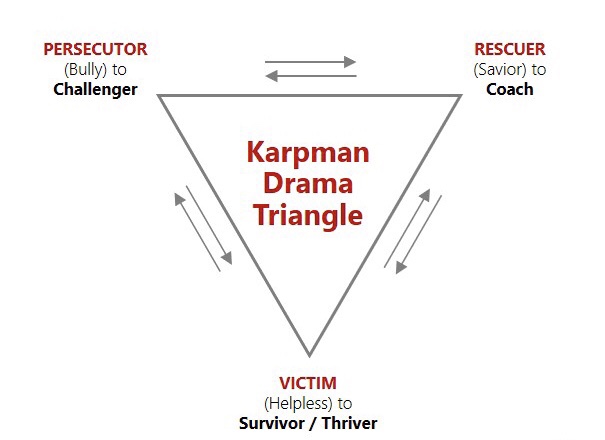
The Karpman Victim – Drama Triangle

The magical tool to figure this pattern out is called the Drama Triangle. Stephen Karpman created the model in 1968 within the framework of Transactional Analysis. Thanks to this tool we can analyze clearly what is happening in the relationships since the Drama Triangle sheds light on the automatic and dysfunctional interaction between 2 (or more) people.

In a relationship within the Drama Triangle, there are 2 main characters (male or female) who shift from one role to another:

  • The Rescuer
  • The Persecutor
  • The Victim.

The Three Roles In The Drama Triangle

What do the roles entail? 

The Rescuer

Rescuers get involved in other people’s lives eagerly waiting for recognition and approval. By making assumptions on other people’s needs they are stepping in to help before anyone has asked them for anything and create a debt of gratitude. They believe that others need them and they impose their solution. In doing so they prevent others from solving their problems themselves. At the same time they manifest their moral superiority.

Feeling responsible for others

Since Rescuers feel responsible for the happiness and well-being of others, they immediately strive to comfort, pacify or calm people down so that these people don’t get to feel their disagreeable emotions like pain, anger, disappointment or sadness. Rescuers also want to have good relationships with everyone, as they like harmony. That is why they avoid conflicts or standing their ground at all costs, even if they end up wasting their time, money or energy. They have a tendency to please people in order to avoid criticism and rejection. After all, they aspire to feel accepted and loved by everyone.

Emotionally disconnected

For all these reasons they are disconnected from their own emotions. Therefore, it is difficult, if not impossible, to have emotional intimacy in a relationship with them. They will flee in “doing”, they are busy at all times … the evidence is their diary: they don’t have a minute.

Codependent relationships

Despite having good intentions, they need Victims to be Rescuers. As a result their behavior encourages the Victim’s dependence and lack of autonomy. Rescuers will continue to be involved in codependent relationships (as with addicts, for example) that are harming them because they do not realize how damaging they are for them. 

Saying no is difficult

Rescuers have an imperative need to feel useful to cover up their anxiety and low self-esteem … in short, to give their life meaning. They never stop giving; basically because they don’t know how to say no. However, if they dare to say no, they will feel guilty and label themselves as selfish or stingy. They prioritize others’ needs ignoring their own, because they project on others their own unmet needs. Most of all they have difficulties in identifying their needs and desires.

Am I just nice or too nice? 

In short, they sacrifice themselves because they want to prove that they are good, generous and selfless people, who deserve love and recognition. And when someone tells them: “You are too nice”, they feel accordingly offended.

But Rescuing creates resentment and anger in themselves and in the Victims, not recognition, nor gratitude or respect. Whereupon Rescuers confirm their belief that Victims are ungrateful and take advantage of them.

Benefice of the coaching sessions for the Rescuer

When Rescuers attend coaching sessions, working on boundaries and the Drama Triangle guarantees favorable results. Once they have understood the detrimental dynamics and know what their needs are, they are able to control their eagerness to rescue and consequently to change their behavior.

The Persecutor

Am I right  or … am I totally right? 

Persecutors know everything and are always right. Those who are wrong are the others. Therefore they pretend to know what is best for other people. They characteristically see everything either in black or in white; Grey does not exist. Their motto is: either you are with me or you are against me.

Like Rescuers, they feel morally superior and need Victims in order to play their role as a Persecutor.

Discounting others 

They ignore not only other people’s feelings but also their value. That is why they criticize, find fault, persecute, blackmail and abuse their power. In particular they use shame and guilt to manipulate. They can even punish (if only with their moodiness or their silence) so that Victims feel anxious and inferior. Persecutors always find a culprit or an enemy: the other. Thus there is no way to resolve a conflict with them since in each conversation you have to tread carefully and not contradict them. They use threats to get what they want because they have a sense of entitlement. And what they want is for others not only to learn their lesson and to agree with them, but also to change and do things the Persecutor’s way.

Relationships based on power and control

Persecutors feel a lot of anger and righteous indignation, which they vent on “innocent” Victims with gusto. They do not consider themselves as abusive or aggressive though because they believe that the Victims deserve their lot.
In order to feel safe Persecutors want to be in control and they fight for the power in the relationship. They impose their point of view to establish a Winner-Loser relationship that allows them to cover up their inferiority complexes, their insecurity and their vulnerability that they don’t recognize. Moreover they confuse having needs with being needy. Consequently they won’t accept any help or will refuse even to consider that someone can do something for them.

Others are to blame 

But there will always be somebody to blame, somebody who doesn’t meet their expectations. When something goes wrong, Persecutors hold others accountable for what happens to avoid blaming themselves. With that attitude it seems unlikely that they will attend coaching sessions since the person responsible or the culprit is always the other. They project on others (outside of themselves) what they don’t want to see in themselves. In effect, they would call others arrogant because they are not able to recognize and accept their own arrogance.

Childhood trauma 

As they have often suffered some kind of abuse in childhood, they always get defensive. They reproduce the behavior of the abuser because they hope that by dominating others they will preventively protect themselves from abuse or contempt.

The Victim

Discounting themselves

Victims feel powerless, incompetent, stuck and sometimes desperate. They discount their skills and their resources. They don’t recognize their own ability to change things or to influence their destiny either. Besides, precisely because life happens to them, they often suffer from depression. And if by miracle something good happens, they attribute it to luck.

Not owning it 

According to Victims they can’t be blamed for anything because they are not responsible. What’s happening is not their fault. They are convinced that life is very hard, that nobody understands them and that no matter what they do they will be unable to change their lot. They always find excuses that justify their situation.

Avoiding responsibilities 

Victims take any opportunity to complain; even their usual tone of voice is querulous. They are the eternal victims of life itself and manage to get sick, have ailments and attract misfortunes. As soon as they get stressed, which happens very easily, they make a mountain out of a molehill. They simply avoid responsibilities and don’t want to make decisions for fear of being wrong.

In addition, you can recognize Victims by their usual way of apologizing for everything and nothing. You can often hear them say “Sorry!”, “Excuse me!”, “I beg your pardon!”.

“A Victim is someone who is waiting for something bad to happen … and it usually does.”

~ Barry K. Weinhold

Not only do they live in an illusory world composed of all the things they imagine or assume (dire consequences, negative emotions or adverse reactions of others, …), they also make assumptions without relying on reality, without having sound evidence that would justify their beliefs.

Passivity

Of course Victims adopt a passive behavior: they don’t take action, they don’t make any effort to get out of the pothole. They are experts in manipulating others to get what they need without getting too involved in the result. They usually sabotage the help they receive and secretly rejoice in their failures. No matter how often they attend coaching sessions, their passivity and lack of commitment may cause the attempt to fail, so that they can blame the coach for the lack of results and prove them incompetent.

Two types of Victims 

Victims attract either Rescuers or Persecutors. On the one hand, Victims create codependence – an excessive emotional or psychological dependence on the Rescuer. This attitude encourages a passive behavior that prevents them from developing fully their abilities. On the other hand, Victims confirm their belief that life is hard and unfair when they are abused by Persecutors.

Therefore, to play their role as Victims they need Rescuers or Persecutors … or both.

Three Styles of Thinking in DBT (Dialectical Behavioral Therapy)

Three Styles of Thinking in DBT

Marsha Linehan outlines three states of mind, or ways we have of thinking about things: the reasoning self, the emotional self, and the wise self.

The Reasoning Self:

The reasoning self: the part of ourselves that we use when we’re thinking logically or reasoning something out. When we use this part of ourselves, there are few or no emotions involved. If there are emotions present, they don’t significantly influence how we behave. Rather, the focus is on thinking logically about something: organizing your day at work, leaving instructions for the babysitter, deciding whether you should drive or take the subway to work, taking minutes at a meeting, and so on. It may take a while and you may need to help, but you can usually come up with at least one example.

The Emotional Self:

Usually we have more difficulties coming up with examples of times when we’ve acted from their emotional self—the part that often gets us into trouble, as our behaviors are controlled by the emotion we’re feeling in the moment. Some general examples, such as feeling angry and lashing out at someone, feeling anxious and avoiding whatever is causing the anxiety, or feeling depressed and withdrawing and isolating. Try to come up with some examples of your own: When have you acted from your emotional self? Usually you can relate to this thinking style and examples come rather easily.

The Wise Self:

The difficulty often lies in being able to see that you have a wise self, which is the combination of the reasoning self, the emotional self, and intuition.  In other words, we feel our emotions and are still able to think straight, and we weigh the consequences of our actions and choose to act in a way that’s in our best interests in the long run, even if that means behaving in a way that’s quite difficult. Again, some examples: You’re having an argument with your partner, and instead of saying something hurtful that comes to mind, you bite your tongue because you know you’ll regret it later. You have an urge to drink, but part of you recognizes this as an ineffective way of coping, so you call your mother or go to an AA meeting instead.

It’s also important to understand that acting from your wise self doesn’t necessarily entail a humongous achievement. Some smaller examples: You wake up in the morning and feel down; it’s cold, it’s still dark outside, and your first impulse is to call in sick. But instead you roll over, turn off the alarm, and get out of bed. This is your wise self. Or say it’s 5:00 p.m., your “partner’s going to be home from work soon, and you promised you would cook dinner, but you’re exhausted and don’t feel like it. Yet you do it anyway. This is your wise self.

Sometimes you’ll say something like, “But I have to go to work because I have to pay the bills; that’s not acting wisely.  But the truth is, no one has to go to work, we choose to go to work. We could choose to not go and the bills wouldn’t get paid. When you make a choice to get out of bed and go to work, that choice comes from your wise self. You weighed the consequences and decided what would be more effective in the long run, even though it wasn’t necessarily the easy thing to do.

Sources: DBT Made Simple by Sheri Van Dijk

Validation in Dialectical Behavioral Therapy (DBT)

This is the main dialectic in DBT: balancing pushing clients to make changes in life while at the same time accepting the way they are and the life they’re leading, as well as encouraging them to accept themselves. If the therapist pushes too hard for change and doesn’t focus enough on acceptance, the client will feel invalidated and will be unable to work effectively in therapy. But too much acceptance and not enough push for change will create a sense of hopelessness, which will also result in an inability to work effectively in therapy.

Linehan (1997) outlines six different levels of validation:

Listening and observing: The therapist actively tries to understand what the client is saying, feeling, and doing, demonstrating genuine interest in her and actively working to get to know her. This entails paying close attention to both verbal and nonverbal communication and remaining fully present.

Accurate reflection: The therapist accurately and nonjudgmentally reflects back the feelings, thoughts, behaviors, and so on expressed by the client. At this level, the therapist is sufficiently in tune with the client to identify her perspective accurately.

Articulating the unverbalized: The therapist communicates to the client that she understands the client’s experiences and responses that haven’t been stated directly. In other words, the therapist interprets the client’s behavior to determine what the client feels or thinks based on her knowledge of events. The therapist picks up on emotions and thoughts the client hasn’t expressed through observation and speculation based on her knowledge of the client. This type of validation can be very powerful because, while clients often observe themselves accurately, they can also invalidate themselves and discount their own perceptions because of the mistrust fostered in them by their environment.

Validating in terms of sufficient (but not necessarily valid) causes: The therapist validates client behavior in relation to its causes, communicating to the client that her feelings, thoughts, and behaviors make sense in the context of her current and past life experience and her physiology (e.g., biological illness). This level of validation goes against the belief of many clients that they should be different in some way (for example, “I should be able to manage my emotions better”)”

Validating as reasonable in the moment: The therapist communicates that the client’s behavior is understandable and effective given the current situation, typical biological functioning, and life goals. It’s important for the therapist to find something in the response that’s valid, even if it’s only a small part of the response (for example, letting a client know that it’s understandable she would resort to cutting herself because it provides temporary relief, even though it doesn’t help her reach her long-term goals).

Treating the person as valid—radical genuineness: The therapist sees the client as she is, acknowledging her difficulties and challenges, as well as her strengths and inherent wisdom. The therapist responds to her as an equal, deserving of respect, rather than seeing her as just a client or patient, or, worse, as a disorder. Linehan (1997) points out that level 6 validation involves acting in ways that assume the individual is capable, but that this must come from the therapist’s genuine self, and that at this level, almost any response by the therapist can be validating: “The key is in what message the therapist’s behavior communicates and how accurate the message is”

Sources: DBT Made Simple

Treatment Resistant Depression

If you’ve been treated for depression but your symptoms haven’t improved, you may have treatment-resistant depression. Taking an antidepressant or going to psychological counseling (psychotherapy) eases depression symptoms for most people. But with treatment-resistant depression, standard treatments aren’t enough. They may not help much at all, or your symptoms may improve, only to keep coming back.

If your primary care doctor prescribed antidepressants and your depression symptoms continue despite treatment, ask your doctor if he or she can recommend a medical doctor who specializes in diagnosing and treating mental health conditions (psychiatrist).

The psychiatrist reviews your medical history and may:

• Ask about life situations that might be contributing to your depression

• Consider your response to treatment, including medications, psychotherapy or other treatments you’ve tried

• Review all of the medications you’re taking, including nonprescription drugs and herbal supplements

• Discuss whether you’re taking your medications as prescribed and following other treatment steps

• Consider physical health conditions that can sometimes cause or worsen depression, such as thyroid disorders, chronic pain or heart problems

• Consider a diagnosis of another mental health condition,such as bipolar disorder, which can cause or worsen depression and may require different treatment; dysthymia, a mild but long-term (chronic) form of depression; or a personality disorder that contributes to the depression not getting better

Treatment-resistant depression symptoms can range from mild to severe and may require trying a number of approaches to identify what helps.

Medication strategies

If you’ve already tried an antidepressant and it didn’t work, don’t lose hope. You and your doctor simply may not have found the right dose, medication or combination of medications that works for you. Here are some medication options that your doctor may discuss with you:

Give your current medications more time. Antidepressants and other medications for depression typically take four to eight weeks to become fully effective and for side effects to ease up. For some people, it takes even longer.

Increase your dose, if indicated. Because people respond to medications differently, you may benefit from a higher dose of medication than is usually prescribed. Ask your doctor whether this is an option for you — don’t change your dose on your own as several factors are involved in determining the proper dose.

Switch antidepressants. For a number of people, the first antidepressant tried isn’t effective. You may need to try several before you find one that works for you.

• Add another type of antidepressant. Your doctor may prescribe two different classes of antidepressants at the same time. That way they’ll affect a wider range of brain chemicals linked to mood. These chemicals are neurotransmitters that include dopamine, serotonin and norepinephrine.

Add a medication generally used for another condition.Your doctor may prescribe a medication that’s generally used for another mental or physical health problem, along with an antidepressant. This approach, known as augmentation, may include antipsychotics, mood stabilizers, anti-anxiety medications, thyroid hormone or other drugs.

• Consider the cytochrome P450 (CYP450) genotyping test, if available. This test checks for specific genes that indicate how well your body can process (metabolize) a medication. Because of inherited (genetic) traits that cause variations in certain cytochrome P450 enzymes, medications may affect people differently. But a CYP450 test isn’t a sure way to tell which antidepressant will work — it only provides clues. And this test is not always covered by insurance.

Psychological counseling

Psychological counseling (psychotherapy) by a psychiatrist, psychologist or other mental health professional can be very effective. For many people, psychotherapy combined with medication works best. It can help identify underlying concerns that may be adding to your depression. For example, psychotherapy can help you:

• Find better ways to cope with life’s challenges

• Deal with past emotional trauma

• Manage relationships in a healthier way

• Learn how to reduce the effects of stress in your life

• Address substance use issues

If counseling doesn’t seem helpful, talk to your psychotherapist about trying a different approach. Or consider seeing someone else. As with medications, it may take several tries to find a treatment that works. Psychotherapy for depression may include:

• Cognitive behavioral therapy. This common type of counseling addresses thoughts, feelings and behaviors that affect your mood. It helps you identify and change distorted or negative thinking patterns and teaches you skills to respond to life’s challenges in a positive way.

• Acceptance and commitment therapy. A form of cognitive behavioral therapy, acceptance and commitment therapy helps you to engage in positive behaviors, even when you have negative thoughts and emotions. It’s designed for treatment-resistant conditions.

• Interpersonal psychotherapy. Interpersonal psychotherapy focuses on resolving relationship issues that may contribute to your depression.

• Family or marital therapy. This type of therapy involves family members or your spouse or partner in counseling. Working out stress in your relationships can help with depression.

• Psychodynamic treatment. The aim of this counseling approach is to help you resolve underlying problems linked to your depression by exploring your feelings and beliefs in-depth.

• Dialectical behavioral therapy. This type of therapy helps you build acceptance strategies and problem-solving skills. This is useful for chronic suicidal thoughts or self-injury behaviors, which sometimes accompany treatment-resistant depression.

• Group psychotherapy. This type of counseling involves a group of people who struggle with depression working together with a psychotherapist.

Procedures to treat depression

If medications and psychotherapy aren’t working, you may want to talk to a psychiatrist about additional treatment options:

Electroconvulsive therapy (ECT). While you are asleep, a carefully measured dose of electricity is passed through your brain, intentionally triggering a small, brief seizure. ECT seems to cause changes in brain chemistry that can relatively quickly reverse symptoms of major depression. Although there are potential side effects, such as temporary confusion or temporary memory loss, a series of ECT treatments may provide significant relief of severe depression.

• Repetitive transcranial magnetic stimulation (rTMS).Generally only used when ECT isn’t effective, rTMS uses magnetic fields to stimulate nerve cells in the brain to improve symptoms of depression. An electromagnetic coil is placed against your scalp near your forehead. The electromagnet used in rTMS creates electric currents that stimulate nerve cells in the region of your brain involved in mood control and depression.

• Vagus nerve stimulation (VNS). Generally, VNS is only tried after other brain stimulation therapies such as ECT and rTMS have not been successful in improving symptoms of depression. VNS stimulates the vagus nerve with electrical impulses. This treatment uses a device implanted in your chest that’s connected by a wire to a nerve in your neck (vagus nerve). Electrical signals from the implant travel along the vagus nerve to the mood centers of the brain, which may improve depression symptoms.

Be sure to find out whether your insurance covers any treatment that’s recommended.

Other steps you can take

To make the most of depression treatment:

Stick to your treatment plan. Don’t skip therapy sessions or appointments. It’ll take time to get better. Even if you feel well, don’t skip your medications. If you stop, depression symptoms may come back, and you could experience withdrawal-like symptoms. If side effects or drug costs are a problem, talk with your doctor and pharmacist to discuss options.

• Stop drinking or using recreational drugs. Many people with depression drink too much alcohol or use recreational drugs or marijuana. In the long run, alcohol and drugs worsen depression and make it harder to treat. If you can’t stop drinking alcohol or using drugs on your own, talk to your doctor or mental health professional. Depression treatment may be unsuccessful until you address your substance use.

• Manage stress. Relationship issues, financial problems, an unhappy work life and many other issues can all contribute to stress, which in turn worsens depression. Try stress-reduction techniques such as yoga, tai chi, meditation, mindfulness, progressive muscle relaxation or writing your thoughts in a journal.

• Sleep well. Poor sleep may worsen depression. Both the amount of time and how well you sleep can affect your mood, energy level, ability to concentrate and resilience to stress. If you have trouble sleeping, research ways to improve your sleep habits or ask your doctor or mental health professional for advice.

• Get regular exercise. Exercise has a direct effect on mood. Even physical activity such as gardening or walking can reduce stress, improve sleep and ease depression symptoms.

Don’t settle for a treatment that’s partially effective at relieving your depression or one that works but causes intolerable side effects. Work with your doctor or other mental health professional to find the best treatment possible, even though it may take time and effort to try new approaches.

Sources: The Mayo Clinic, McLean Hospital, NAMI, NIH, NIMH

Family Therapy

Family therapy is a type of psychological counseling (psychotherapy) that can help family members improve communication and resolve conflicts.

Family therapy is usually provided by a psychologist, clinical social worker or licensed therapist. These therapists have graduate or postgraduate degrees and may be credentialed by the American Association for Marriage and Family Therapy (AAMFT).

Family therapy is often short term. It may include all family members or just those able or willing to participate. Your specific treatment plan will depend on your family’s situation. Family therapy sessions can teach you skills to deepen family connections and get through stressful times, even after you’re done going to therapy sessions.

Why it’s done

Family therapy can help you improve troubled relationships with your partner, children or other family members. You may address specific issues such as marital or financial problems, conflict between parents and children, or the impact of substance abuse or a mental illness on the entire family.

Your family may pursue family therapy along with other types of mental health treatment, especially if one of you has a mental illness or addiction that also requires additional therapy or rehabilitation treatment. For example:

• Family therapy can help family members cope if a relative has a serious mental illness such as schizophrenia — but the person who has schizophrenia should continue with his or her individualized treatment plan, which may include medications, one-on-one therapy or other treatment.

• In the case of addiction, the family can attend family therapy while the person who has an addiction participates in residential treatment. Sometimes the family may participate in family therapy even if the person with an addiction hasn’t sought out his or her own treatment.

Family therapy can be useful in any family situation that causes stress, grief, anger or conflict. It can help you and your family members understand one another better and learn coping skills to bring you closer together.

How you prepare

You can ask your primary care doctor for a referral to a therapist. Family members or friends may give recommendations based on their experiences. You also can ask your employee assistance program, clergy, or state or local mental health agencies for suggestions for therapists.

Before scheduling sessions with a therapist, consider whether the therapist would be a good fit for your family. Here are some factors to consider and questions to ask:

• Education and experience. What is your educational and training background? Are you licensed by the state? Are you accredited by the AAMFT or other professional organizations? Do you have specialty training in family psychotherapy? What is your experience with my family’s type of problem?

• Location and availability. Where is your office? What are your office hours? Are you available in case of emergency?

• Length and number of sessions. How long is each session? How often are sessions scheduled? How many sessions should I expect to have?

• Fees and insurance. How much do you charge for each session? Are your services covered by my health insurance plan? Will I need to pay the full fee upfront? What is your policy on canceled sessions?

What you can expect

Family therapy typically brings several family members together for therapy sessions. However, a family member may also see a family therapist individually.

Sessions typically take about 50 minutes to an hour. Family therapy is often short term — generally about 12 sessions. However, how often you meet and the number of sessions you’ll need will depend on your family’s particular situation and the therapist’s recommendation.

During family therapy, you can:

• Examine your family’s ability to solve problems and express thoughts and emotions in a productive manner

• Explore family roles, rules and behavior patterns to identify issues that contribute to conflict — and ways to work through these issues

• Identify your family’s strengths, such as caring for one another, and weaknesses, such as difficulty confiding in one another

Example: Depression

Say that your adult son has depression. Your family doesn’t understand his depression or how best to offer support. Although you’re worried about your son’s well-being, conversations with your son or other family members erupt into arguments and you feel frustrated and angry. Communication diminishes, decisions go unmade, family members avoid each other and the rift grows wider.

In such a situation, family therapy can help you:

• Pinpoint your specific challenges and how your family is handling them

• Learn new ways to interact and overcome unhealthy patterns of relating to each other

• Set individual and family goals and work on ways to achieve them

Results

Family therapy doesn’t automatically solve family conflicts or make an unpleasant situation go away. But it can help you and your family members understand one another better, and it can provide skills to cope with challenging situations in a more effective way. It may also help the family achieve a sense of togetherness.

Psychotherapy: An Overview

Psychotherapy is a general term for treating mental health problems by talking with a psychiatrist, psychologist or other mental health provider.

During psychotherapy, you learn about your condition and your moods, feelings, thoughts and behaviors. Psychotherapy helps you learn how to take control of your life and respond to challenging situations with healthy coping skills.

There are many types of psychotherapy, each with its own approach. The type of psychotherapy that’s right for you depends on your individual situation. Psychotherapy is also known as talk therapy, counseling, psychosocial therapy or, simply, therapy.

Why it’s done

Psychotherapy can be helpful in treating most mental health problems, including:

• Anxiety disorders, such as obsessive-compulsive disorder (OCD), phobias, panic disorder or post-traumatic stress disorder (PTSD)

• Mood disorders, such as depression or bipolar disorder

• Addictions, such as alcoholism, drug dependence or compulsive gambling

• Eating disorders, such as anorexia or bulimia

• Personality disorders, such as borderline personality disorder or dependent personality disorder

• Schizophrenia or other disorders that cause detachment from reality (psychotic disorders)

Not everyone who benefits from psychotherapy is diagnosed with a mental illness. Psychotherapy can help with a number of life’s stresses and conflicts that can affect anyone. For example, it may help you:

• Resolve conflicts with your partner or someone else in your life

• Relieve anxiety or stress due to work or other situations

• Cope with major life changes, such as divorce, the death of a loved one or the loss of a job

• Learn to manage unhealthy reactions, such as road rage or passive-aggressive behavior

• Come to terms with an ongoing or serious physical health problem, such as diabetes, cancer or long-term (chronic) pain

• Recover from physical or sexual abuse or witnessing violence

• Cope with sexual problems, whether they’re due to a physical or psychological cause

• Sleep better, if you have trouble getting to sleep or staying asleep (insomnia)

In some cases, psychotherapy can be as effective as medications, such as antidepressants. However, depending on your specific situation, psychotherapy alone may not be enough to ease the symptoms of a mental health condition. You may also need medications or other treatments.

Risks

Generally, there’s little risk in having psychotherapy. But because it can explore painful feelings and experiences, you may feel emotionally uncomfortable at times. However, any risks are minimized by working with a skilled therapist who can match the type and intensity of therapy with your needs.

The coping skills that you learn can help you manage and conquer negative feelings and fears.

How you prepare

Here’s how to get started:

Find a therapist. Get a referral from a doctor, health insurance plan, friend or other trusted source. Many employers offer counseling services or referrals through employee assistance programs (EAPs). Or you can find a therapist on your own, for instance, by looking for a professional association on the Internet.

Understand the costs. If you have health insurance, find out what coverage it offers for psychotherapy. Some health plans cover only a certain number of psychotherapy sessions a year. Also, talk to your therapist about fees and payment options.

Review your concerns. Before your first appointment, think about what issues you’d like to work on. While you also can sort this out with your therapist, having some sense in advance may provide a good starting point.

Check qualifications

Before seeing a psychotherapist, check his or her background, education, certification, and licensing. Psychotherapist is a general term rather than a job title or indication of education, training or licensure.

Trained psychotherapists can have a number of different job titles, depending on their education and role. Most have a master’s or doctoral degree with specific training in psychological counseling. Medical doctors who specialize in mental health (psychiatrists) can prescribe medications as well as provide psychotherapy.

Examples of psychotherapists include psychiatrists, psychologists, licensed professional counselors, licensed social workers, licensed marriage and family therapists, psychiatric nurses, or other licensed professionals with mental health training.

Make sure that the therapist you choose meets state certification and licensing requirements for his or her particular discipline. The key is to find a skilled therapist who can match the type and intensity of therapy with your needs.

What you can expect

Your first therapy session:

At the first psychotherapy session, the therapist typically gathers information about you and your needs. You may be asked to fill out forms about your current and past physical and emotional health. It might take a few sessions for your therapist to fully understand your situation and concerns and to determine the best approach or course of action.

The first session is also an opportunity for you to interview your therapist to see if his or her approach and personality are going to work for you. Make sure you understand:

• What type of therapy will be used

• The goals of your treatment

• The length of each session

• How many therapy sessions you may need

Don’t hesitate to ask questions anytime during your appointment. If you don’t feel comfortable with the first psychotherapist you see, try someone else. Having a good fit with your therapist is critical for psychotherapy to be effective.

Starting psychotherapy

You’ll likely meet in your therapist’s office or a clinic once a week or every other week for a session that lasts about 45 to 60 minutes. Psychotherapy, usually in a group session with a focus on safety and stabilization, also can take place in a hospital if you’ve been admitted for treatment.

Types of psychotherapy

There are a number of effective types of psychotherapy. Some work better than others in treating certain disorders and conditions. In many cases, therapists use a combination of techniques. Your therapist will consider your particular situation and preferences to determine which approach may be best for you.

Although many types of therapies exist, some psychotherapy techniques proven to be effective include:

Cognitive behavioral therapy (CBT), which helps you identify unhealthy, negative beliefs and behaviors and replace them with healthy, positive ones

• Dialectical behavior therapy, a type of CBT that teaches behavioral skills to help you handle stress, manage your emotions and improve your relationships with others

Acceptance and commitment therapy, which helps you become aware of and accept your thoughts and feelings and commit to making changes, increasing your ability to cope with and adjust to situations

Psychodynamic and psychoanalysis therapies, which focus on increasing your awareness of unconscious thoughts and behaviors, developing new insights into your motivations, and resolving conflicts

Interpersonal psychotherapy, which focuses on addressing problems with your current relationships with other people to improve your interpersonal skills — how you relate to others, such as family, friends and colleagues

Supportive psychotherapy, which reinforces your ability to cope with stress and difficult situations

Psychotherapy is offered in different formats, including individual, couple, family or group therapy sessions, and it can be effective for all age groups.

During psychotherapy

For most types of psychotherapy, your therapist encourages you to talk about your thoughts and feelings and what’s troubling you. Don’t worry if you find it hard to open up about your feelings. Your therapist can help you gain more confidence and comfort as time goes on.

Because psychotherapy sometimes involves intense emotional discussions, you may find yourself crying, upset or even having an angry outburst during a session. Some people may feel physically exhausted after a session. Your therapist is there to help you cope with such feelings and emotions.

Your therapist may ask you to do “homework” — activities or practices that build on what you learn during your regular therapy sessions. Over time, discussing your concerns can help improve your mood, change the way you think and feel about yourself, and improve your ability to cope with problems.

Confidentiality

Except in rare and specific circumstances, conversations with your therapist are confidential. However, a therapist may break confidentiality if there is an immediate threat to safety (yours or someone else’s) or when required by state or federal law to report concerns to authorities. Your therapist can answer questions about confidentiality.

Length of psychotherapy

The number of psychotherapy sessions you need — as well as how frequently you need to see your therapist — depends on such factors as:

• Your particular mental illness or situation

• Severity of your symptoms

• How long you’ve had symptoms or have been dealing with your situation

• How quickly you make progress

• How much stress you’re experiencing

• How much your mental health concerns interfere with day-to-day life

• How much support you receive from family members and others

• Cost and insurance limitations

It may take only weeks to help you cope with a short-term situation. Or, treatment may last a year or longer if you have a long-term mental illness or other long-term concerns.

Results

Psychotherapy may not cure your condition or make an unpleasant situation go away. But it can give you the power to cope in a healthy way and to feel better about yourself and your life.

Getting the most out of psychotherapy

Take steps to get the most out of your therapy and help make it a success:

• Make sure you feel comfortable with your therapist. If you don’t, look for another therapist with whom you feel more at ease.

• Approach therapy as a partnership. Therapy is most effective when you’re an active participant and share in decision-making. Make sure you and your therapist agree about the major issues and how to tackle them. Together, you can set goals and measure progress over time.

• Be open and honest. Success depends on willingness to share your thoughts, feelings and experiences, and to consider new insights, ideas and ways of doing things. If you’re reluctant to talk about certain issues because of painful emotions, embarrassment or fears about your therapist’s reaction, let your therapist know.

• Stick to your treatment plan. If you feel down or lack motivation, it may be tempting to skip psychotherapy sessions. Doing so can disrupt your progress. Try to attend all sessions and to give some thought to what you want to discuss.

• Don’t expect instant results. Working on emotional issues can be painful and may require hard work. You may need several sessions before you begin to see improvement.

• Do your homework between sessions. If your therapist asks you to document your thoughts in a journal or do other activities outside of your therapy sessions, follow through. These homework assignments can help you apply what you’ve learned in the therapy sessions to your life.

• If psychotherapy isn’t helping, talk to your therapist. If you don’t feel that you’re benefiting from therapy after several sessions, talk to your therapist about it. You and your therapist may decide to make some changes or try a different approach that may be more effective.

Sources: The Mayo Clinic, NAMI, NIH, NIMH

The Mayo Clinic – Minnesota: Psychiatric & Behavioral Health Hospital

Mayo Clinic John E. Herman Home and Treatment Facility

The Mayo Clinic John E. Herman Home and Treatment Facility is a residential treatment program for adults who have a serious mental illness. Its goal is to help residents return to the community to engage in value-driven, productive and meaningful lives.

People in the program experience:

• Individualized treatment of psychiatric symptoms

• On-site, 24/7 support from a multidisciplinary team

• A supervised environment

• A stay of at least three months, usually

• Evidence-based individual and group therapy

• An opportunity to gain competitive employment in the community through an evidence-based vocational program, individual placement and support (IPS)

• Dedicated time for activities of daily living, physical activity and recreation, facility maintenance, and leisure

People age 18 or up may be eligible for the program if they are living with mood disorders (such as depression and bipolar disorder), psychotic disorders (such as schizophrenia), anxiety or personality disorders.

The program includes a treatment facility and two residential recovery homes in Rochester, Minnesota. The homes each have eight rooms with private baths and communal spaces for cooking and gathering.

Self-referrals are considered, as are referrals by family members and providers.

Mayo Clinic Psychiatric Hospital

In the hospital, psychiatrists work in integrated teams with internists, psychologists, social workers, physical and occupational therapists, and other specialists to provide comprehensive coordinated short-term care tailored to the needs of each patient. The hospital includes these units:

Psychiatric Acute Care Unit. This unit stabilizes and treats adults experiencing mental health crises, such as those who are suicidal, homicidal or psychotic. After being stabilized and evaluated, patients receive individualized care, which may include medical treatments, group psychotherapy, recreational therapy, and education about coping strategies, relapse prevention, and stress management.

Medical and Geriatric Psychiatry Unit. Admitted to this unit are adults with both medical and psychiatric conditions, as well as geriatric patients who need hospitalization for psychiatric issues — most commonly late-life mood and cognitive disorders. Treatment may include medication, recreational and relaxation therapy, and education about depression, anxiety and aging-related issues.

Mood Disorders Unit. This unit treats adults whose depression or bipolar illness is significantly affecting their quality of life, functioning or safety. Intensive daily treatment is personalized to each patient and may include talk therapy (psychotherapy), such as cognitive behavioral therapy, dialectical behavioral therapy, acceptance and commitment therapy or behavioral activation. Treatment may also involve medications, family and group therapy, occupational therapy, relaxation activities, and — when appropriate — electroconvulsive therapy (ECT) or transcranial magnetic stimulation (TMS).

Child, Adolescent and Family Services Unit: This secure unit specializes in stabilization and treatment for children and teenagers who are experiencing an acute mental health crisis, such as those who are suicidal, homicidal or experiencing psychosis. Treatment for a variety of conditions including mood and adjustment disorders, anxiety, self-injurious behavior and psychotic disorders is family-centered and multidisciplinary. The treatment team includes psychiatrists, advanced practice providers, psychologists, social workers, specialized nursing staff, Child Life Specialists, and occupational, physical, recreational and music therapists.

Mayo Clinic Depression Center

A member of the National Network of Depression Centers, Mayo Clinic Depression Center offers comprehensive evidence-based evaluation and treatment for adults and children with depression or bipolar disorder. Programs range from outpatient consultations to intensive inpatient treatment, with care provided by a team of Mayo Clinic psychiatrists, psychologists, nurse practitioners, social workers and other specialists with expertise in mood disorders. Services include:

Adult Mood Clinic. Outpatient evaluation and treatment for adults with treatment-resistant depression or bipolar disorder is available in the Mayo Mood Clinic. After an initial assessment and depending on the person’s needs, he or she may be referred to the Mood Disorders Unit or the two-week Mood Program.

Adult Mood Program. This is a 10-day, full-day group-based outpatient multidisciplinary psychotherapy for adults with depression or bipolar disorder. It uses three evidence-based supported psychotherapies: interpersonal and social rhythm therapy (also called IPSRT), mindfulness-based cognitive therapy, and behavioral activation. The program helps to develop more effective ways to manage interpersonal problems and stabilize the daily routine of activities.

Adult Mood Disorders Unit. This inpatient unit, described above, is part of the Mayo Clinic Psychiatric Hospital, which provides expert care tailored to individual needs.

Pediatric Mood Clinic. Staffed by experts in childhood mood disorders such as depression, bipolar disease, cyclothymic disorder and persistent depressive disorder (dysthymia), the clinic provides team-based diagnosis and treatment. Outpatient options include: Adolescents Coping with Depression, a 12-week intervention meeting for one hour a week for teens ages 14 through 18; and Multifamily Psychoeducational Psychotherapy, an 8-week intervention meeting for one hour a week for youths ages 11 through 14.

CAIMP. The Child and Adolescent Integrated Mood Program (CAIMP) is a two-week outpatient partial hospitalization program for children and teens (ages 10 to 18) with primary depression or bipolar disorder. It’s held Monday through Friday, 8 a.m. to 4 p.m., Central time. Treatment includes cognitive behavior therapies, interpersonal therapy, mindfulness, medication management, family-focused strategies, health and wellness interventions, and education about mood disorders. Caregivers are required to participate in the program with their child/teen to improve understanding of their child’s illness and develop techniques to both support their child and assist with their own coping.

Depression Improvement Across Minnesota, Offering a New Direction (DIAMOND). DIAMOND involves a primary care provider, care manager and consulting psychiatrist for Minnesota adults with depression who are seen in primary care settings, with a focus on relapse prevention. DIAMOND is currently only available for patients who have Mayo primary care providers in Rochester or Kasson, Minn.

Pain Rehabilitation Center

Mayo’s Pain Rehabilitation Center offers adult and pediatric outpatient programs for noncancer-related chronic pain to help people regain function and quality of life. These programs treat patients with a broad range of pain types, as well as those with medical and psychiatric complications. These may include chronic fatigue and nausea, fibromyalgia, cyclic vomiting, and autonomic disorders, such as postural orthostatic tachycardia syndrome (POTS). Programs include:

• Adult three-week program

• Adult two-day program

• Pediatric three-week program

Addiction Services

Since 1972, Mayo Clinic has been treating people addicted to alcohol, illegal drugs and prescription medications, using an individualized, holistic approach within a respectful environment. Multispecialty care teams include addiction psychiatrists, licensed alcohol and drug counselors, licensed clinical social workers, registered nurses and other specialists.

Learn more about Mayo’s options for addiction treatment, including the Outpatient Addiction Program, an Intensive Addiction Program and continuing care programs.

Other areas of excellence

The Department of Psychiatry and Psychology provides many other areas of excellence, such as:

• Comprehensive multidisciplinary psychiatric assessments for adults, teenagers and children

• Formal assessment of attention, concentration, memory, reasoning and learning abilities to help diagnose neuropsychological disorders such as dementia, mild cognitive impairment, traumatic brain injury, stroke, learning disabilities and attention deficits

• Clinic for attention-deficit/hyperactivity disorder (ADHD)

• Pediatric Anxiety Disorders Clinic, including treatment for panic disorder, obsessive-compulsive disorder, social phobia, generalized anxiety disorder and separation anxiety

• Behavioral Medicine Program

• Innovative memory training program called HABIT Healthy Action to Benefit Independence & Thinking®

• Telemedicine program for cognitively impaired elderly patients with behavior problems

• Rehabilitative services for people with traumatic brain injury

Cognitive behavioral therapy (CBT)

Cognitive behavioral therapy (CBT)

Cognitive behavioral therapy (CBT) is a common type of talk therapy (psychotherapy). You work with a mental health counselor (psychotherapist or therapist) in a structured way, attending a limited number of sessions. CBT helps you become aware of inaccurate or negative thinking so you can view challenging situations more clearly and respond to them in a more effective way.

Cognitive behavioral therapy is used to treat a wide range of issues. It’s often the preferred type of psychotherapy because it can quickly help you identify and cope with specific challenges. It generally requires fewer sessions than other types of therapy and is done in a structured way.

CBT is a useful tool to address emotional challenges. For example, it may help you:

• Manage symptoms of mental illness

• Prevent a relapse of mental illness symptoms

• Treat a mental illness when medications aren’t a good option

• Learn techniques for coping with stressful life situations

• Identify ways to manage emotions

• Resolve relationship conflicts and learn better ways to communicate

• Cope with grief or loss

• Overcome emotional trauma related to abuse or violence

• Cope with a medical illness

• Manage chronic physical symptoms

Mental health disorders that may improve with CBT include:

• Depression

• Anxiety disorders

• Phobias

• PTSD

• Sleep disorders

• Eating disorders

• Obsessive-compulsive disorder (OCD)

• Substance use disorders

• Bipolar disorders

• Schizophrenia

• Sexual disorders

During CBT

Your therapist will encourage you to talk about your thoughts and feelings and what’s troubling you. Don’t worry if you find it hard to open up about your feelings. Your therapist can help you gain more confidence and comfort.

CBT generally focuses on specific problems, using a goal-oriented approach. As you go through the therapy process, your therapist may ask you to do homework — activities, reading or practices that build on what you learn during your regular therapy sessions — and encourage you to apply what you’re learning in your daily life.

Steps in CBT

CBT typically includes these steps:

• Identify troubling situations or conditions in your life. These may include such issues as a medical condition, divorce, grief, anger or symptoms of a mental health disorder. You and your therapist may spend some time deciding what problems and goals you want to focus on.

• Become aware of your thoughts, emotions and beliefs about these problems. Once you’ve identified the problems to work on, your therapist will encourage you to share your thoughts about them. This may include observing what you tell yourself about an experience (self-talk), your interpretation of the meaning of a situation, and your beliefs about yourself, other people and events. Your therapist may suggest that you keep a journal of your thoughts.

• Identify negative or inaccurate thinking. To help you recognize patterns of thinking and behavior that may be contributing to your problem, your therapist may ask you to pay attention to your physical, emotional and behavioral responses in different situations.

• Reshape negative or inaccurate thinking. Your therapist will likely encourage you to ask yourself whether your view of a situation is based on fact or on an inaccurate perception of what’s going on. This step can be difficult. You may have long-standing ways of thinking about your life and yourself. With practice, helpful thinking and behavior patterns will become a habit and won’t take as much effort.

Length of therapy

CBT is generally considered short-term therapy — ranging from about five to 20 sessions. You and your therapist can discuss how many sessions may be right for you. Factors to consider include:

• Type of disorder or situation

• Severity of your symptoms

• How long you’ve had your symptoms or have been dealing with your situation

• How quickly you make progress

• How much stress you’re experiencing

• How much support you receive from family members and other people

Confidentiality

Except in very specific circumstances, conversations with your therapist are confidential. However, a therapist may break confidentiality if there is an immediate threat to safety or when required by state or federal law to report concerns to authorities. These situations include:

• Threatening to immediately or soon (imminently) harm yourself or take your own life

• Threatening to imminently harm or take the life of another person

• Abusing a child or a vulnerable adult ― someone over age 18 who is hospitalized or made vulnerable by a disability

• Being unable to safely care for yourself

Getting the most out of CBT

CBT isn’t effective for everyone. But you can take steps to get the most out of your therapy and help make it a success.

• Approach therapy as a partnership. Therapy is most effective when you’re an active participant and share in decision-making. Make sure you and your therapist agree about the major issues and how to tackle them. Together, you can set goals and assess progress over time.

• Be open and honest. Success with therapy depends on your willingness to share your thoughts, feelings and experiences, and on being open to new insights and ways of doing things. If you’re reluctant to talk about certain things because of painful emotions, embarrassment or fears about your therapist’s reaction, let your therapist know about your reservations.

• Stick to your treatment plan. If you feel down or lack motivation, it may be tempting to skip therapy sessions. Doing so can disrupt your progress. Attend all sessions and give some thought to what you want to discuss.

• Don’t expect instant results. Working on emotional issues can be painful and often requires hard work. It’s not uncommon to feel worse during the initial part of therapy as you begin to confront past and current conflicts. You may need several sessions before you begin to see improvement.

• Do your homework between sessions. If your therapist asks you to read, keep a journal or do other activities outside of your regular therapy sessions, follow through. Doing these homework assignments will help you apply what you’ve learned in the therapy sessions.

• If therapy isn’t helping, talk to your therapist. If you don’t feel that you’re benefiting from CBT after several sessions, talk to your therapist about it. You and your therapist may decide to make some changes or try a different approach.

Source: The Mayo Clinic