Ancient Egyptian Concept of the Soul

To the Ancient Egyptians, the soul was the most important part of a person and it was separated into different parts making up it’s vehicle (the human, in this case).  There was one physical form and eight semi-divine parts which made up one’s soul. These parts are as follows:

~ Kha: The physical body of the human which decayed after death, according to the Egyptians, only if it was not mummified and persevered properly.

~ Ka: The double that lingered on in the tomb inhabiting the body or even statues of the dead, but was also independent of the deceased body and could move, eat and drink at will.

~ Akhu: This was the immortal part, the radiant and shining being that lived on in the Sahu, the intellect, will and intentions of the deceased that transfigured death and ascended to the heavens to live with the gods.

~ Sahu: The incorruptible spiritual body of man that could exist in the heavens, appearing from the physical body after the judgement of the dead was passed (if successful) with all of the mental and spiritual abilities of a living body.

~ Sekhem : This was the incorporeal personification of the life force of man, which lived in heaven with the Akhu, after death.

~ Khaibit: The shadow of a man, it could partake of funerary offerings and was able to detach itself from the body and travel at will, though it always was thought to stay near the Ba.

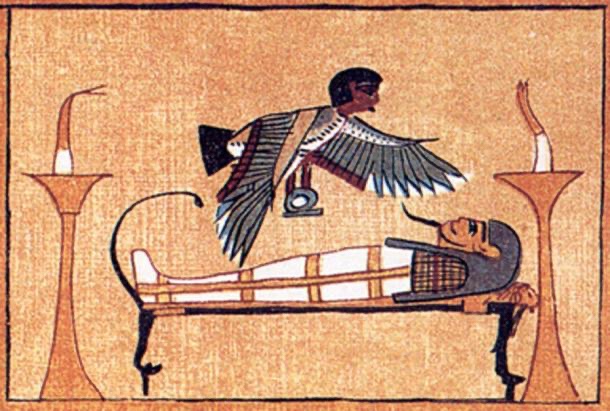
~ Ba: The human headed bird flitted around in the tomb during the day bringing air and and food to the deceased, but traveled with Ra on the Solar Barque during the evenings.

~ Ab: The heart, this was the source of good and evil within a person, the moral awareness and center of thought that could leave the body at will, and live with the gods after death, or be eaten by Ammut as the final death if it failed to weigh equally against Ma’at.

~ Ren: The true name, a vital part to man on his journey through life and the afterlife, a magical part that could destroy a man if his name was obliterated or could give power of the man if someone knew his Ren.

Duat: Ancient Egyptian Underworld

In ancient Egyptian mythology, the Duat is the underworld or the realm of the dead. It is the home of the god Osiris, Anubis, Thoth, Horus, Hathor, and Ma’at, and many grotesque spirits controlled by them. Ra, the sun god, also travels through the Duat every night and battles the serpent monster Apep.

The most important function of the Duat however is that it is where people’s souls go for judgment after death. Their tombs were viewed to be entrances into the Duat, and they could travel back and forth from the underworld through these burial chambers.

Within the Duat are many impressive geographical features. There are normal features like islands, fields, caverns, rivers, and mounds – but also unrealistic structures like lakes of fire, trees of turquoise, and walls of iron. Once someone had passed away, it was up to them to navigate this tricky landscape to become an akh, or blessed spirit. They had to pass through a series of gates protected by grotesque spirits with human bodies and heads of animals, knives, torches, or insects. Along the way were also mounds and caverns filled with animals or gods who would threaten the dead as they passed.

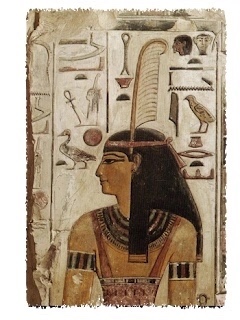
Once the dead passed all of these unpleasant spirits, if they did, they would reach the Weighing of the Heart. This ritual involved weighing the heart of the deceased against a feather, representing Ma’at – the goddess of truth and justice. This ritual was performed by Anubis. If the heart was out of balance, due to failure to follow Ma’at, then the heart would be devoured by Ammit, the Devourer of Souls. Those who did pass would travel to the paradise of Aaru.

** All we know about the Duat and the afterlife comes from funerary texts like the Book of the Dead, Pyramid Texts, Coffin Texts. **

Kemetism: An Introduction

01957F49-DB87-448F-A770-DED8CF480561

Neo-Paganism, also known as Contemporary Paganism and Modern Paganism, is a collective term for new religious movements influenced by or claiming to be derived from the various historical pagan beliefs of pre-modern Europe, North Africa and the Near East. Adherents rely on pre-Christian, folkloric and ethnographic sources to a variety of degrees; many follow a spirituality which they accept as being entirely modern, while others attempt to reconstruct or revive indigenous, ethnic religions as found in historical and folkloric sources as accurately as possible. Nep-Paganism in the United States is largely a phenomenon of a white college educated demographic with over 90% being whites and 65% having a college degree.

The 2014 Pew Research Center’s Religious Landscapes Survey included a subset of the New Age Spiritual Movement called “Pagan or Wiccan,” reflecting that ¾ of individuals identifying as New Age also identified as Pagan or Wiccan and placing Wiccans and Pagans at 0.3% of the total U.S. population or approximately 956,000 people of just over 1,275,000 individuals in the New Age movement. This is a dramatic increase from the 1990’s when only 200,000 individuals identified themselves as part of a New Age religion. Roughly 10 million Wiccan-related books were sold in 2000, up from 4.5 million in 1990. A division within modern Paganism rests on differing attitudes to the source material surrounding pre-Christian belief systems. “We might say that Reconstructionist Pagans romanticize the past, while Eclectic Pagans idealize the future. In the first case, there is a deeply felt need to connect with the past as a source of spiritual strength and wisdom; in the second case, there is the idealistic hope that a spirituality of nature can be gleaned from ancient sources and shared with all humanity,” according to Religious studies scholar Michael Strmiska.

7636908D-4FF4-4DE1-BD97-06F77FF3493A

Some of the more common Neo-Pagan religions are Wicca, the Goddess movement, Heathenism, Neo-Druidism, Eco-Paganism, and Syncretism. Today I am going to focus on the small, but growing religion of Kemetism. Kemetism also sometimes referred to as Neterism or Egyptian Neopaganism, is the contemporary revival of Ancient Egyptian religion and related expressions of religion in classical and late antiquity, emerging during the 1970s. A Kemetic is one who follows Kemetism. There are several main groups, each of which take a different approach to their beliefs, ranging from eclectic to reconstructionistic. Kemetic Orthodoxy is a modern religious sect based on Kemeticism, which is a reconstruction of Egyptian polytheism. It claims to derive a spiritual lineage from the Ancient Egyptian religion. It was founded in 1988 by Tamara Siuda, who remains its current Nisut or Pharaoh. Siuda’s leadership proved to be extremely successful, and in 1994, Kemetic Orthodoxy had attracted a sufficient number of new adherents to be officially recognized as a religious group by the federal government.

At the heart of the religion is a belief in ma’at: the guiding force of the universe and the principle of divine balance. Kemetics also believe in a supreme being, known as Netjer, and his many incarnations. Ancestor veneration, or Akhu veneration, is a very important aspect of Kemetic Orthodoxy. Adherents believe that their Akhu are their ancestors. As Akhu are believed to have already experienced human life, it is thought that they can give valuable advice and support regarding things related to daily human life. Kemetic Orthodoxy grew out of the personal teachings of Siuda. The temple began in 1988, when she claimed to have experienced a series of visions during her initiation as a Wiccan priestess. She started a small study and worship group at that time, which gradually grew in membership. In 1993, the group was federally recognized as a religious entity and changed its name from the House of Bast to the House of Netjer. The temple was granted tax-exempt status in 1999.

Kemetic Orthodoxy has a strong internet presence with rituals performed online via a chat room. They make the important distinction that they are a religion on the internet and not a internet religion. Members of Kemetic Orthodoxy gather at Tawy House (in Joliet, Illinois) in August for the Kemetic New Year, Wep Ronpet. As the largest gathering, it is the best example of an event held by the Kemetic Orthodox off-line. It includes rituals, fellowship, lectures and workshops. Personal worship is also observed in the form of personal deity-centered shrines in their homes as well as Senut ritual. The Senut ritual is composed of various rites, and is a fully functional ritual for individual use yet containing all of the necessary elements of all Kemetic ritual, whether practiced by one or a thousand.

If you’re interested you can find out more here: http://www.kemet.org/about

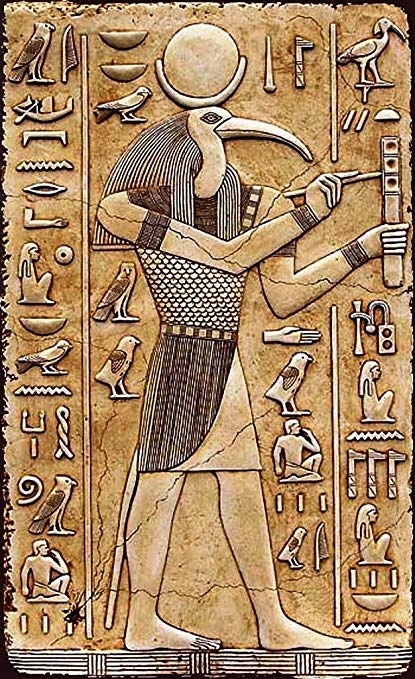
Thoth: God of Scribes

Moon-god presiding over scribes and knowledge.

Thoth or ‘Djeheuty’ in Ancient Egyptian – can be represented under two forms:

~ Sacred ibis (a large wading bird with a long down-curved bill, long neck, and long legs.)

~ Baboon

Thoth as ‘lord of the sacred words’ gave to the Egyptians the knowledge of how to write by picture symbols, hieroglyphs could always possess a magical force. Scribes regarded themselves as ‘followers of Thoth’. They were a privileged class and, according to one hymn to Thoth, the eye of the baboon watched out for scribes who abused their skill by applying it to illicit self-gain.

Thoth represented to the Egyptians the embodiment of all scientific and literary attainments, being in command of all ‘the sacred books in the house of life’. The house of life was a revered resource centre accessible only to scribes, containing a wealth of knowledge on papyri under the protection of Thoth. Examples were medical manuals, mathematical problems and instructional documents on social etiquette. The idea of Thoth transmitting wisdom, too secret for profane eyes, to a few initiates (notably to scribes in charge of temple libraries) comes across in the Middle Kingdom story set centuries before in the reign of King Khufu (Dynasty IV) about a magician called Djedi: Djedi knows the number of the secret chambers in the sanctuary of Thoth, powerful knowledge not even possessed by the pharaoh himself.

Source: George Hart. “The Routledge Dictionary of Egyptian Gods & Goddesses 2nd Edition.” 2005.

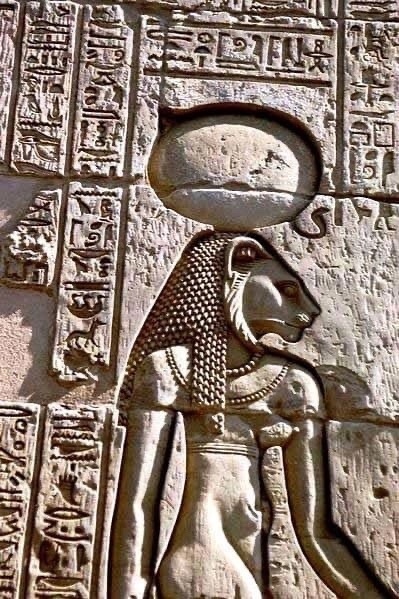
Sekhmet: Goddess Of War

Sekhmet was a powerful war goddess of Egypt, the destroyer of pharaoh’s enemies, called “She Who Is Powerful.” Sekhmet was a lioness deity, the consort of Ptah and the mother of Nefertem and Imhotep in Memphis. A daughter of the god Re, Sekhmet struck at evildoers and spread plagues. She also healed the righteous. Her clergy- men were physicians and magicians.

Sekhmet had a popular role among the rulers of Egypt, as she was believed to bring about the conception of the pharaohs. In the form of a cobra she was called Mehen, and she possibly came from Nubia (modern Sudan) in the early eras. She was also called the “Eye of Re.”

Her statues normally depicted her as a woman with a lion’s head, and at times she wore a sun disk on her head. In this form she was a warrior manifestation of the sun, causing flames to devour the enemies of Egypt. In some eras, the gates of Sekhmet’s temples were opened as a signal of the onset of a military campaign. Amenehmet III (1844–1797 B.C.E.) included 700 statues of Sekhmet in his mortuary temple in Dashur.

Source: Margaret R. Bunson, “Encyclopedia of Ancient Egypt.” 2002.

42 Divine Principles of Ma’at

Ma’at is the ancient Egyptian goddess of truth, justice, harmony, and balance who first appears during the period known as the Old Kingdom (c. 2613 – 2181 BCE) but almost assuredly existed in some form earlier.

The purpose of ma’at (law/justice/truth) among the Ancient Egyptian people of Upper and Lower Egypt was to divert chaos. Known as the principles of Ma’at or the Negative Confessions.

42 Divine Principles of Ma’at Simplified

  1. I have not committed sin.
  2. I have not committed robbery with violence.
  3. I have not stolen.
  4. I have not slain men or women.
  5. I have not stolen food.
  6. I have not swindled offerings.
  7. I have not stolen from God/Goddess.
  8. I have not told lies.
  9. I have not carried away food.
  10. I have not cursed.
  11. I have not closed my ears to truth.
  12. I have not committed adultery.
  13. I have not made anyone cry.
  14. I have not felt sorrow without reason.
  15. I have not assaulted anyone.
  16. I am not deceitful.
  17. I have not stolen anyone’s land.
  18. I have not been an eavesdropper.
  19. I have not falsely accused anyone.
  20. I have not been angry without reason.
  21. I have not seduced anyone’s wife.
  22. I have not polluted myself.
  23. I have not terrorized anyone.
  24. I have not disobeyed the Law.
  25. I have not been exclusively angry.
  26. I have not cursed God/Goddess.
  27. I have not behaved with violence.
  28. I have not caused disruption of peace.
  29. I have not acted hastily or without thought.
  30. I have not overstepped my boundaries of concern.
  31. I have not exaggerated my words when speaking.
  32. I have not worked evil.
  33. I have not used evil thoughts, words or deeds.
  34. I have not polluted the water.
  35. I have not spoken angrily or arrogantly.
  36. I have not cursed anyone in thought, word or deeds.
  37. I have not placed myself on a pedestal.
  38. I have not stolen what belongs to God/Goddess.
  39. I have not stolen from or disrespected the deceased.
  40. I have not taken food from a child.
  41. I have not acted with insolence.
  42. I have not destroyed property belonging to God/Goddess

The Negative Confessions Of The Papyrus of Ani

Hail, Usekh-nemmt, who comest forth from Anu, I have not committed sin.

Hail, Hept-khet, who comest forth from Kher-aha, I have not committed robbery with violence.

Hail, Fenti, who comest forth from Khemenu, I have not stolen.

Hail, Am-khaibit, who comest forth from Qernet, I have not slain men and women.

Hail, Neha-her, who comest forth from Rasta, I have not stolen grain.

Hail, Ruruti, who comest forth from heaven, I have not purloined offerings.

Hail, Arfi-em-khet, who comest forth from Suat, I have not stolen the property of God.

Hail, Neba, who comest and goest, I have not uttered lies.

Hail, Set-qesu, who comest forth from Hensu, I have not carried away food.

Hail, Utu-nesert, who comest forth from Het-ka-Ptah, I have not uttered curses.

Hail, Qerrti, who comest forth from Amentet, I have not committed adultery, I have not lain with men.

Hail, Her-f-ha-f, who comest forth from thy cavern, I have made none to weep.

Hail, Basti, who comest forth from Bast, I have not eaten the heart.

Hail, Ta-retiu, who comest forth from the night, I have not attacked any man.

Hail, Unem-snef, who comest forth from the execution chamber, I am not a man of deceit.

Hail, Unem-besek, who comest forth from Mabit, I have not stolen cultivated land.

Hail, Neb-Maat, who comest forth from Maati, I have not been an eavesdropper.

Hail, Tenemiu, who comest forth from Bast, I have not slandered [no man].

Hail, Sertiu, who comest forth from Anu, I have not been angry without just cause.

Hail, Tutu, who comest forth from Ati, I have not debauched the wife of any man.

Hail, Uamenti, who comest forth from the Khebt chamber, I have not debauched the wife of [any] man.

Hail, Maa-antuf, who comest forth from Per-Menu, I have not polluted myself.

Hail, Her-uru, who comest forth from Nehatu, I have terrorized none.

Hail, Khemiu, who comest forth from Kaui, I have not transgressed [the law].

Hail, Shet-kheru, who comest forth from Urit, I have not been wroth.

Hail, Nekhenu, who comest forth from Heqat, I have not shut my ears to the words of truth.

Hail, Kenemti, who comest forth from Kenmet, I have not blasphemed.

Hail, An-hetep-f, who comest forth from Sau, I am not a man of violence.

Hail, Sera-kheru, who comest forth from Unaset, I have not been a stirrer up of strife.

Hail, Neb-heru, who comest forth from Netchfet, I have not acted with undue haste.

Hail, Sekhriu, who comest forth from Uten, I have not pried into matters.

Hail, Neb-abui, who comest forth from Sauti, I have not multiplied my words in speaking.

Hail, Nefer-Tem, who comest forth from Het-ka-Ptah, I have wronged none, I have done no evil.

Hail, Tem-Sepu, who comest forth from Tetu, I have not worked witchcraft against the king.

Hail, Ari-em-ab-f, who comest forth from Tebu, I have never stopped [the flow of] water.

Hail, Ahi, who comest forth from Nu, I have never raised my voice.

Hail, Uatch-rekhit, who comest forth from Sau, I have not cursed God.

Hail, Neheb-ka, who comest forth from thy cavern, I have not acted with arrogance.

Hail, Neheb-nefert, who comest forth from thy cavern, I have not stolen the bread of the gods.

Hail, Tcheser-tep, who comest forth from the shrine, I have not carried away the khenfu cakes from the Spirits of the dead.

Hail, An-af, who comest forth from Maati, I have not snatched away the bread of the child, nor treated with contempt the god of my city.

Hail, Hetch-abhu, who comest forth from Ta-she, I have not slain the cattle belonging to the god.

Osirian Mysteries

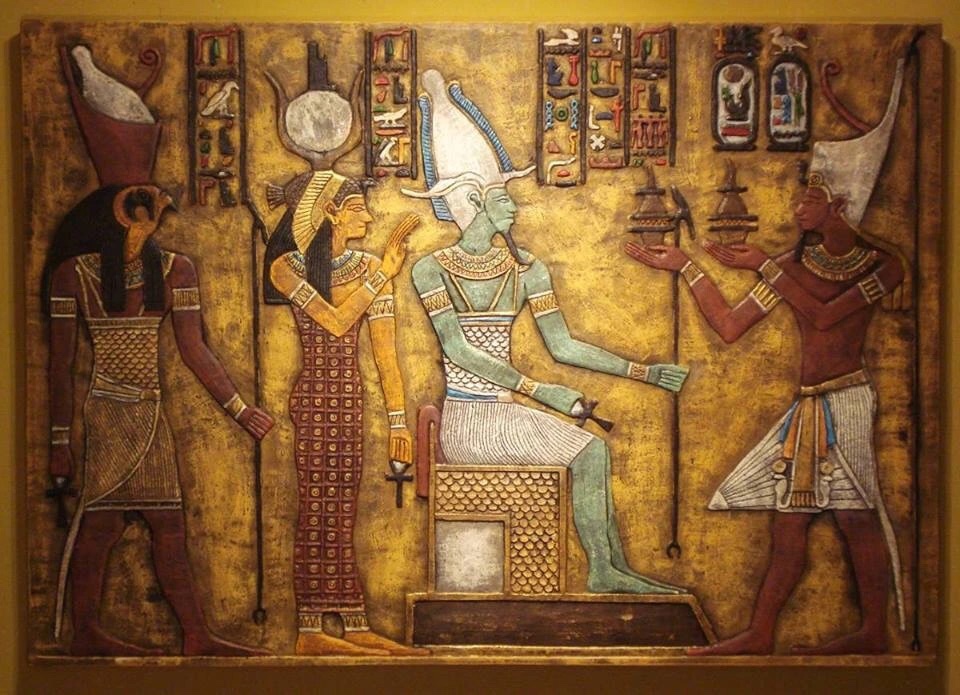
The month of Koiak (November) was the time to celebrate the Osirian Mysteries. For 3000 years, the chief sanctuaries of Osiris reenacted the epic story of Isis and Osiris. If you are familiar with this early myth, you know that Osiris was killed by his brother Seth, and hacked into fourteen pieces and thrown into the Nile. Upon learning of this dastardly deed, his wife Isis began her search for the remains of Osiris. Her grief was deep and dark and it carried her along the river for miles and miles. Wherever she found a body part, a temple was built in his name. It is thought that each temple celebrated the mysteries of Osiris in a different way depending on the body part found there. For thousands of years, these holy sites were extremely important for pilgrimage and worship…

#AncientEgypt #EgyptianMythology #Osiris #Isis #Seth

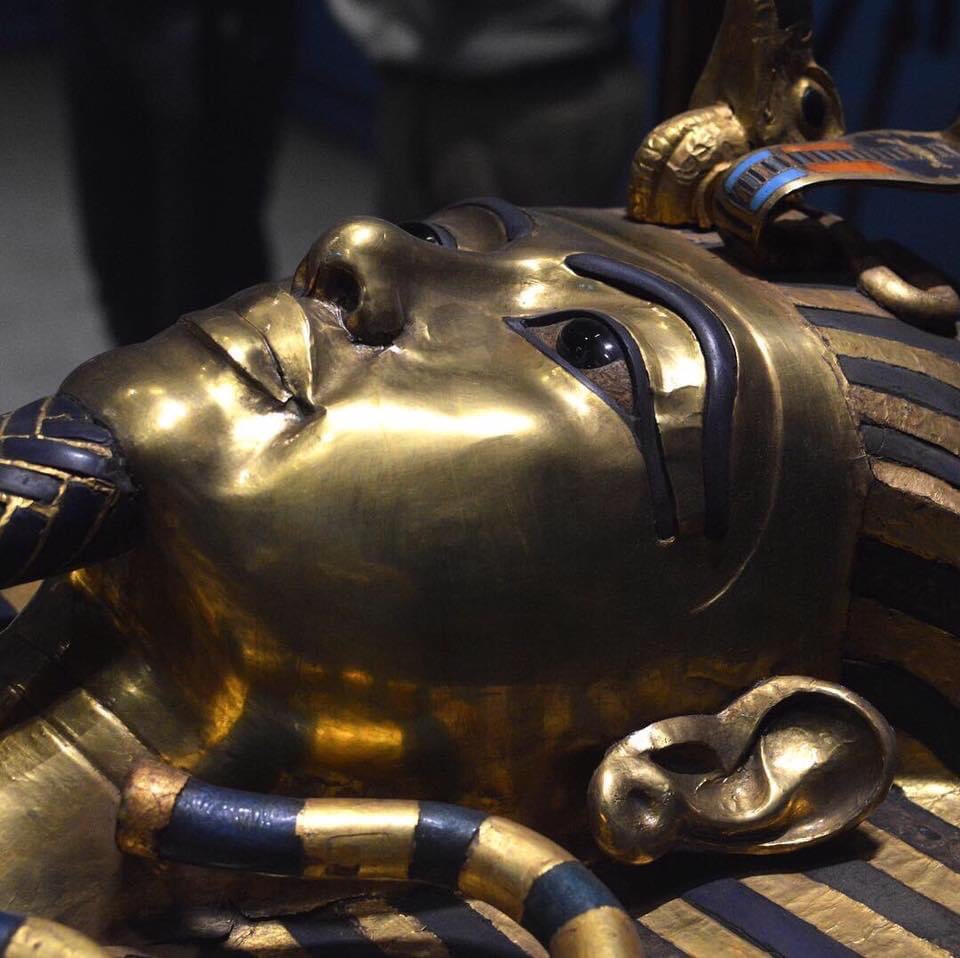
In 1915 Howard Carter Hired to Find Tutankhamun’s Tomb

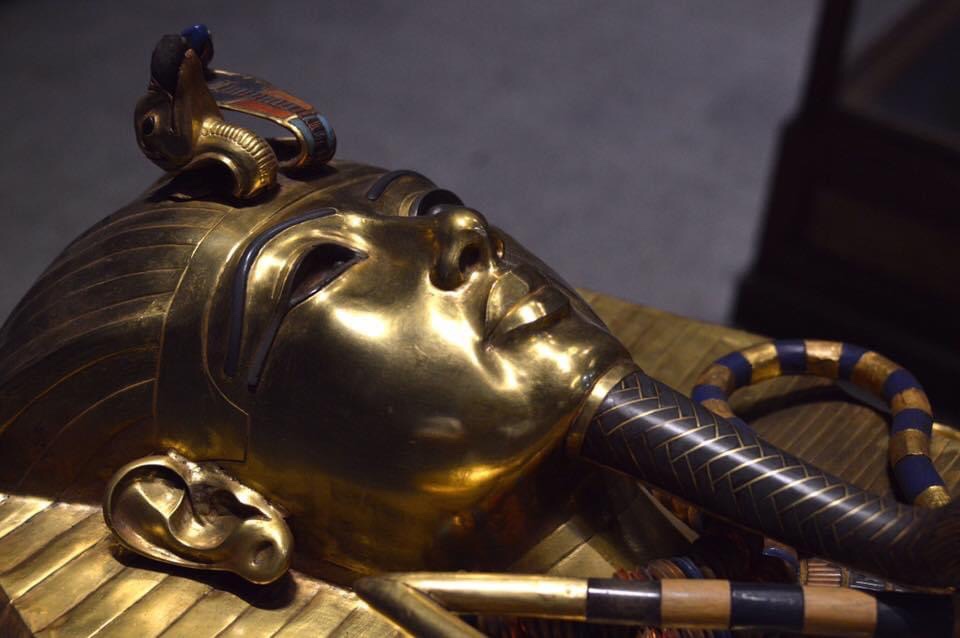
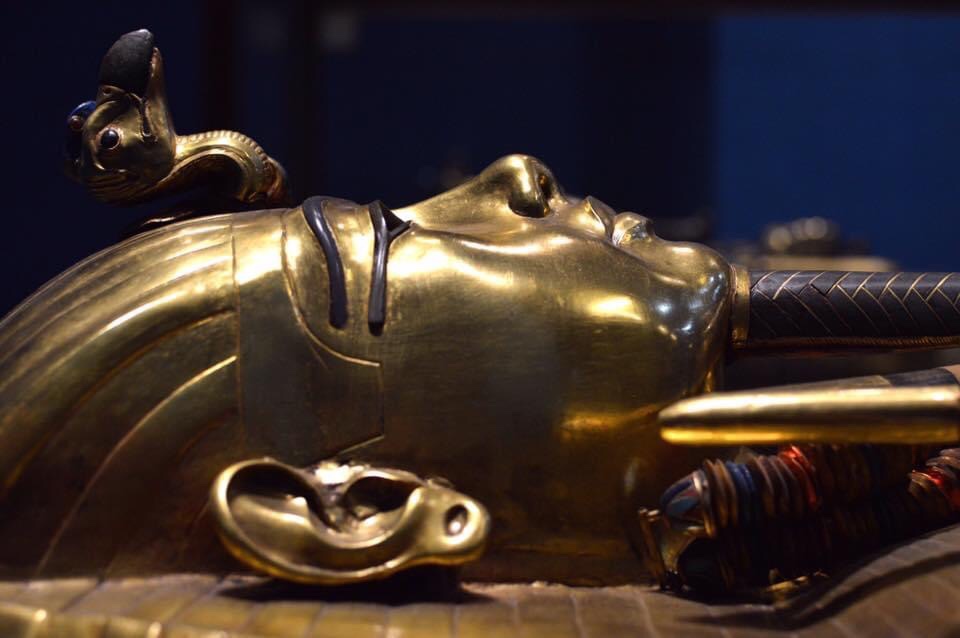
In 1915, George Herbert, 5th Earl of Carnarvon, the financial backer of the search for and the excavation of Tutankhamun’s tomb in the Valley of the Kings, employed English archaeologist Howard Carter to explore it. After a systematic search, Carter discovered the actual tomb of Tutankhamun (KV62) on November 4th 1922.

On November 26, 1922, Carter and fellow archaeologist Lord Carnarvon entered the interior chambers of the tomb, finding them miraculously intact.

Thus began a monumental excavation process in which Carter carefully explored the four-room tomb over several years, uncovering an incredible collection of several thousand objects. The most splendid architectural find was a stone sarcophagus containing three coffins nested within each other. Inside the final coffin, which was made out of solid gold, was the mummy of the boy-king Tutankhamen, preserved for more than 3,000 years. Most of these treasures are now housed in the Cairo Museum.

Egyptian Gods & Goddesses Of The Great Ennead 

Egyptian Gods & Goddesses Of The Great Ennead 

The Ennead or Great Ennead was a group of nine deities in Egyptian mythology worshiped at Heliopolis: the sun god Atum; his children Shu and Tefnut; their children Geb and Nut; and their children Osiris, Isis, Set, and Nephthys. 

According to the creation story of the Heliopolitan priests, the world originally consisted of the primordial waters of precreation personified as Nun. From it arose a mound on the First Occasion. Upon the mound sat the self-begotten god Atum, who was equated with the sun god Ra. Atum evolved from Nun through self-creation. Atum either spat or masturbated, producing air personified as Shu and moisture personified as Tefnut. The siblings Shu and Tefnut mated to produce the earth personified as Geb and the nighttime sky personified as Nut.

Geb and Nut were the parents of Osiris and Isis and of Set and Nephthys, who became respective couples in turn. Osiris and Isis represent fertility and order, while Set and Nephthys represent chaos to balance out Osiris and Isis. Horus, the son of Osiris and Isis, is often included in this creation tradition.

 Atum —> Atum was the oldest of the creations gods worshipped by the Egyptians and they thought he existed before anything else. He created Nun, the celestial waters, and everything else through his thoughts. Thoth was Atum’s intelligence and put his creative thoughts into words to bring them to life. In the Book of the Dead, Atum was the setting sun and his images show him as a human wearing the double crown of Egypt.

 Shu —> was the husband of Tefnut and the father of Nut and Geb. He and his wife were the first gods created by Atum. Shu was the god of the air and sunlight or, more precisely, dry air and his wife represented moisture. He was normally depicted as a man wearing a headdress in the form of a plume, which is also the hieroglyph for his name. Shu’s function was to hold up the body of the goddess Nun and separate the sky from the earth. He was not a solar deity but his role in providing sunlight connected him to Ra. Indeed, he was one of the few gods who escaped persecution under the heretic king Akhenaten.

 Tefnut —> Tefnut was the wife of Shu and mother of Nut and Geb. She and her husband were the first gods created by Atum. She was the goddess of moisture or damp, corrosive air, and was depicted either as a lioness or as a woman with a lioness’s head.

 Geb —> was the father of Osiris, Isis, Seth, and Nephthys, and was a god without a cult. As an Earth god he was associated with fertility and it was believed that earthquakes were the laughter of Geb. He is mentioned in the Pyramid Texts as imprisoning the buried dead within his body.

 Nut —> was the mother of Osiris, Isis, Seth, and Nephthys, Nut is usually shown in human form; her elongated body symbolizing the sky. Each limb represents a cardinal point as her body stretches over the earth. Nut swallowed the setting sun (Ra) each evening and gave birth to him each morning. She is often depicted on the ceilings of tombs, on the inside lid of coffins, and on the ceilings of temples.

 Osiris —> Osiris was originally a vegetation god linked with the growth of crops. He was the mythological first king of Egypt and one of the most important of the gods. It was thought that he brought civilization to the race of mankind. He was murdered by his brother Seth, brought back to life by his wife Isis, and went on to become the ruler of the underworld and judge of the dead.

 Isis —> A very important figure in the ancient world, Isis was the wife of Osiris and mother of Horus. She was associated with funeral rites and said to have made the first mummy from the dismembered parts of Osiris. As the enchantress who resurrected Osiris and gave birth to Horus, she was also the giver of life, a healer and protector of kings.

 Set —> Also known as Seth, Setekh, Suty and Sutekh. Set was the son of Geb and Nut, and the evil brother of Osiris. He was the god of darkness, chaos, and confusion, and is represented as a man with an unknown animal head, often described as a Typhonian by the Greeks who associated him with the god Typhon. He is sometimes depicted as a hippopotamus, a pig, or a donkey. Seth murdered his brother and usurped the throne of Egypt and most of the other gods despised him.

 Nephthys —> Daughter of Geb and Nut, sister of Isis, wife of Seth and mother of Anubis, Nephthys is depicted as a woman with the hieroglyphs for a palace and ‘Neb’ (a basket) on her head. She is thus known as “Lady of the Mansions” or “Palace.” Nephthys was disgusted by Seth’s murder of Osiris and helped her sister, Isis, against her husband, Seth. Together with Isis she was a protector of the dead, and they are often shown together on coffin cases, with winged arms. She seems to have had no temple or cult center of her own.