Yōkai: An Introduction

Yōkai, (妖怪) is a broad and vague term, and nothing exists in the English language that quite describes it. They can best be understood as supernatural creatures and phenomena from Japanese folklore. The word is a combination of the characters 妖(yō–attractive, bewitching, calamity) and 怪 (kai–mystery, wonder). Many English words have been used in translations. Yōkai can be translated as monster, demon, spirit, or goblin, but it encompasses all of that and more. The world of yōkai also includes ghosts, gods, transformed humans and animals, spirit possession, urban legends, and other strange phenomena. Even in Japanese, the term is difficult to define. The broadest possible definition of yōkai includes all supernatural creatures and phenomena from all parts of the world. On my site I narrow Yōkai to all supernatural creatures and phenomena which are found in Japanese folklore.

Japanese folklore is an amalgamation of different traditions, with its foundation in the folk religions of isolated tribes living on the Japanese isles. These traditions were modified by Shintō and later Buddhism, incorporating elements from Chinese and Indian folklore and mythology as well.

In ancient Japan, spirits were thought to be formless and invisible to the human eye. However, as artistic traditions developed, it became necessary to visually depict the spirits and monsters from stories. These begun as painted scrolls, and later expanded into multi-volume illustrated encyclopedias of strange tales and supernatural stories.

During the Edo period (1603-1868), there was an unprecedented flourishing of culture and art in Japan. Ghost stories and stories about monsters and strange phenomena from the all over Japan experienced a huge surge in popularity. The very first mythical bestiaries were put together by folklorists and artists like Toriyama Sekien, who collected the oral traditions of rural Japan for consumption by the growing urban population.  Sekien’s yōkai encyclopedias set the stage for other artists. It quickly expanded into every aspect of Japanese culture, from fine art to high theater, from aristocratic ghost story-telling parties to low class bawdlery, and so on.

Yōkai fell out of popularity during the Meiji restoration, when Japan modernized its society and culture. They were all but abandoned as a relic of a superstitious and past. After World War II, manga artist Shigeru Mizuki reintroduced them to a modern Japan. His series “GeGeGe no Kitaro” caused a second explosion of interest in the supernatural. Today, the influence of yōkai can again be seen in all aspects of Japanese culture, from manga and anime, to video games, brand labels, and even on Japanese currency.

Hecate (Hekate): Goddess of Witches, Magic and the Night

Greek Name: Ἑκατη Ἑκατα

Transliteration: Hekatê, Hekata

Latin Spelling: Hecate, Hecata

Translation: Worker from Afar

Hekate assisted Demeter in her search for Persephone, guiding her through the night with flaming torches. After the mother-daughter reunion became she Persephone’s minister and companion in Haides.

Three metamorphosis myths describe the origins of her animal familiars: the black she-dog and the polecat (a mustelid house pet kept by the ancients to hunt vermin). The dog was the Trojan Queen Hekabe (Hecuba) who leapt into the sea after the fall of Troy and was transformed by the goddess. The polecat was either the witch Gale, turned as punishment for her incontinence, or Galinthias, midwife of Alkmene (Alcmena), who was transformed by the enraged goddess Eileithyia but adopted by the sympathetic Hekate.

Her name means “worker from afar” from the Greek word hekatos. The masculine form of the name, Hekatos, was a common epithet of the god Apollon.

According to the most genuine traditions, she appears to have been an ancient Thracian divinity, and a Titan, who, from the time of the Titans, ruled in heaven, on the earth, and in the sea, who bestowed on mortals wealth, victory, wisdom, good luck to sailors and hunters, and prosperity to youth and to the flocks of cattle; but all these blessings might at the same time be withheld by her, if mortals did not deserve them. She was the only one among the Titans who retained this power under the rule of Zeus, and she was honoured by all the immortal gods.

“We are told that Helios (the Sun) had two sons, Aeetes and Perses, Aeetes being the king of Kolkhis (Colchis) and the other king of the Tauric Chersonese, and that both of them were exceedingly cruel. And Perses had a daughter Hekate (Hecate), who surpassed her father in boldness and lawlessness.”

~ Diodorus Siculus, Greek historian 1st Century B.C.

“If you think Latona [Leto] a goddess, how can you not think that Hecate is one, who is the daughter of Latona’s sister Asteria?”

~ Cicero, Roman rhetorician 1st Century B.C.

“Hekate whom Zeus the son of Kronos (Cronus) honoured above all. He gave her splendid gifts, to have a share of the earth and the unfruitful sea. She received honour also in starry heaven, and is honoured exceedingly by the deathless gods . . . For as many as were born of Gaia (Gaea, Earth) and Ouranos (Uranus, Heaven) [the Titanes] amongst all these she has her due portion. The son of Kronos [Zeus] did her no wrong nor took anything away of all that was her portion among the former Titan gods: but she holds, as the division was at the first from the beginning, privilege both in earth, and in heaven, and in sea. Also, because she is an only child, the goddess receives not less honour, but much more still, for Zeus honours her.”

~ Hesiod, 8th or 7th Century B.C.

Oracle of Delphi

4D353C64-BC13-4F81-B092-4BEAF7971DBE

Delphi (Greek: Δελφοί) is famous as the ancient sanctuary that grew rich as the seat of Pythia, the oracle who was consulted about important decisions throughout the ancient classical world. Moreover, the Greeks considered Delphi the navel, or center, of the world, as represented by the stone monument known as the Omphalos of Delphi.

Illustration from ÒAn Encyclopedia outline of Masonic, Hermetic, Quabbalistic and Rosicrucian Symbolical PhilosophyÓ by Manly P. Hall Illustration by J. Augustus Knapp titled ÒConsulting the Oracle of DelphiÓ, Mythology, Greek, myths, Delphic, wisdom, be

Delphi is perhaps best known for its oracle, the Pythia, the sibyl or priestess at the sanctuary dedicated to Apollo. According to Aeschylus in the prologue of the Eumenides, the oracle had origins in prehistoric times and the worship of Gaea. Gaea is the personification of the Earth and one of the Greek primordial deities. Gaea is the ancestral mother of all life: the primal Mother Earth goddess.

07151BEE-9D07-4670-8C83-9411FF6CB9E8

Apollo spoke through his oracle. She had to be an older woman of blameless life chosen from among the peasants of the area. Alone in an enclosed inner sanctum she sat on a tripod seat over an opening in the earth (the “chasm”). According to legend, when Apollo slew Python (Python was the serpent, sometimes represented as a medieval-style dragon, living at the centre of the earth, believed by the ancient Greeks to be at Delphi.) its body fell into this fissure and fumes arose from its decomposing body. Intoxicated by the vapours, the sibyl would fall into a trance, allowing Apollo to possess her spirit. In this state she prophesied. The oracle could not be consulted during the winter months, for this was traditionally the time when Apollo would live among the Hyperboreans. Dionysus would inhabit the temple during his absence.

B1A2796E-3F48-4C74-BBF6-0C66D15DB658

The site was first settled in Mycenaean times in the late Bronze Age (1500-1100 BCE) but took on its religious significance from around 800 BCE. The original name of the sanctuary was Pytho after the snake which Apollo was believed to have killed there. Votive offerings at the site from this period include small clay statues (the earliest), bronze figurines, and richly decorated bronze tripods.

Delphi was also considered the centre of the world, for in Greek mythology Zeus released two eagles, one to the east and another to the west, and Delphi was the point at which they met after encircling the world. This fact was represented by the omphalos (or navel), a dome-shaped stone which stood outside Apollo’s temple and which also marked the spot where Apollo killed the Python.

C15452DF-CA45-4DF6-938B-FECDD1222349

Perhaps the most famous consultant of the Delphic oracle was Croesus, the fabulously rich King of Lydia who, faced with a war against the Persians, asked the oracle’s advice. The oracle stated that if Croesus went to war then a great empire would surely fall. Reassured by this, the Lydian king took on the mighty Cyrus. However, the Lydians were routed at Sardis and it was the Lydian empire which fell, a lesson that the oracle could easily be misinterpreted by the unwise or over-confident.

The first temple in the area was built in the 7th century BCE and was itself a replacement for less substantial buildings of worship which had stood before it. The focal point of the sanctuary, the Doric temple of Apollo, was unfortunately destroyed by fire in 548 BCE. A second temple, again Doric in style, was completed in c. 510 BCE with the help of the exiled Athenian family, the Alcmeonids. Measuring some 60 by 24 metres, the facade had six columns whilst the sides had 15. This temple was destroyed by earthquake in 373 BCE and was replaced by a similarly proportioned temple in 330 BCE. This was constructed with poros stone coated in stucco. Marble sculpture was also added as decoration along with Persian shields taken at the Battle of Marathon. This is the temple which survives, albeit only partially, today.

Other notable constructions at the site were the theatre (with capacity for 5,000 spectators), temples to Athena (4th century BCE), a tholos with 13 Doric columns (c. 580 BCE), stoas, stadium (with capacity for 7,000 spectators), and around 20 treasuries, which were constructed to house the votive offerings and dedications from city-states all over Greece. Similarly, monuments were also erected to commemorate military victories and other important events. For example, the Spartan general Lysander erected a monument to celebrate his victory over Athens at Aegospotami. Other notable monuments were the great bronze Bull of Corcyra (580 BCE), the ten statues of the kings of Argos (c. 369 BCE), a gold four-horse chariot offered by Rhodes, and a huge bronze statue of the Trojan Horse offered by the Argives (c.413 BCE). Lining the sacred way, which wound from the sanctuary gate up to the temple of Apollo.

The site was ‘re-discovered’ with the first modern excavations being carried out in 1880 CE by a team of French archaeologists. Notable finds were splendid metope sculptures from the treasury of the Athenians (c. 490 BCE) and the Siphnians (c. 525 BCE) depicting scenes from Greek mythology.  In addition, a bronze charioteer in the severe style (480-460 BCE), the marble Sphinx of the Naxians (c. 560 BCE), the twin marble archaic statues – the kouroi of Argos (c. 580 BCE) and the richly decorated omphalos stone (c. 330 BCE) – all survive as testimony to the cultural and artistic wealth that Delphi had once enjoyed.

#ClassicalHistory #AncientGreece #OracleOfDelphi #Appolo

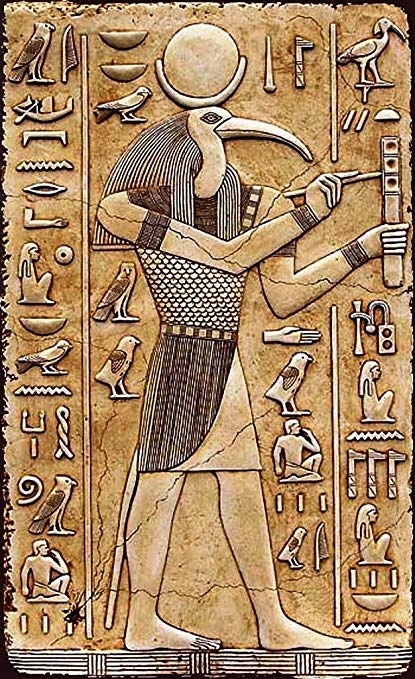
Thoth: God of Scribes

Moon-god presiding over scribes and knowledge.

Thoth or ‘Djeheuty’ in Ancient Egyptian – can be represented under two forms:

~ Sacred ibis (a large wading bird with a long down-curved bill, long neck, and long legs.)

~ Baboon

Thoth as ‘lord of the sacred words’ gave to the Egyptians the knowledge of how to write by picture symbols, hieroglyphs could always possess a magical force. Scribes regarded themselves as ‘followers of Thoth’. They were a privileged class and, according to one hymn to Thoth, the eye of the baboon watched out for scribes who abused their skill by applying it to illicit self-gain.

Thoth represented to the Egyptians the embodiment of all scientific and literary attainments, being in command of all ‘the sacred books in the house of life’. The house of life was a revered resource centre accessible only to scribes, containing a wealth of knowledge on papyri under the protection of Thoth. Examples were medical manuals, mathematical problems and instructional documents on social etiquette. The idea of Thoth transmitting wisdom, too secret for profane eyes, to a few initiates (notably to scribes in charge of temple libraries) comes across in the Middle Kingdom story set centuries before in the reign of King Khufu (Dynasty IV) about a magician called Djedi: Djedi knows the number of the secret chambers in the sanctuary of Thoth, powerful knowledge not even possessed by the pharaoh himself.

Source: George Hart. “The Routledge Dictionary of Egyptian Gods & Goddesses 2nd Edition.” 2005.

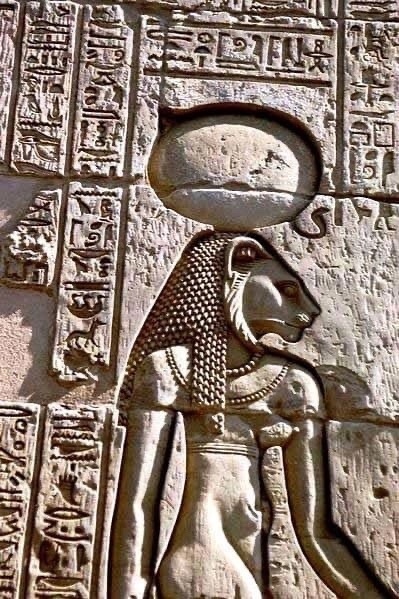
Sekhmet: Goddess Of War

Sekhmet was a powerful war goddess of Egypt, the destroyer of pharaoh’s enemies, called “She Who Is Powerful.” Sekhmet was a lioness deity, the consort of Ptah and the mother of Nefertem and Imhotep in Memphis. A daughter of the god Re, Sekhmet struck at evildoers and spread plagues. She also healed the righteous. Her clergy- men were physicians and magicians.

Sekhmet had a popular role among the rulers of Egypt, as she was believed to bring about the conception of the pharaohs. In the form of a cobra she was called Mehen, and she possibly came from Nubia (modern Sudan) in the early eras. She was also called the “Eye of Re.”

Her statues normally depicted her as a woman with a lion’s head, and at times she wore a sun disk on her head. In this form she was a warrior manifestation of the sun, causing flames to devour the enemies of Egypt. In some eras, the gates of Sekhmet’s temples were opened as a signal of the onset of a military campaign. Amenehmet III (1844–1797 B.C.E.) included 700 statues of Sekhmet in his mortuary temple in Dashur.

Source: Margaret R. Bunson, “Encyclopedia of Ancient Egypt.” 2002.

42 Divine Principles of Ma’at

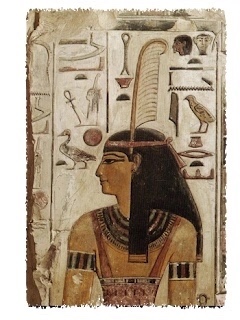
Ma’at is the ancient Egyptian goddess of truth, justice, harmony, and balance who first appears during the period known as the Old Kingdom (c. 2613 – 2181 BCE) but almost assuredly existed in some form earlier.

The purpose of ma’at (law/justice/truth) among the Ancient Egyptian people of Upper and Lower Egypt was to divert chaos. Known as the principles of Ma’at or the Negative Confessions.

42 Divine Principles of Ma’at Simplified

  1. I have not committed sin.
  2. I have not committed robbery with violence.
  3. I have not stolen.
  4. I have not slain men or women.
  5. I have not stolen food.
  6. I have not swindled offerings.
  7. I have not stolen from God/Goddess.
  8. I have not told lies.
  9. I have not carried away food.
  10. I have not cursed.
  11. I have not closed my ears to truth.
  12. I have not committed adultery.
  13. I have not made anyone cry.
  14. I have not felt sorrow without reason.
  15. I have not assaulted anyone.
  16. I am not deceitful.
  17. I have not stolen anyone’s land.
  18. I have not been an eavesdropper.
  19. I have not falsely accused anyone.
  20. I have not been angry without reason.
  21. I have not seduced anyone’s wife.
  22. I have not polluted myself.
  23. I have not terrorized anyone.
  24. I have not disobeyed the Law.
  25. I have not been exclusively angry.
  26. I have not cursed God/Goddess.
  27. I have not behaved with violence.
  28. I have not caused disruption of peace.
  29. I have not acted hastily or without thought.
  30. I have not overstepped my boundaries of concern.
  31. I have not exaggerated my words when speaking.
  32. I have not worked evil.
  33. I have not used evil thoughts, words or deeds.
  34. I have not polluted the water.
  35. I have not spoken angrily or arrogantly.
  36. I have not cursed anyone in thought, word or deeds.
  37. I have not placed myself on a pedestal.
  38. I have not stolen what belongs to God/Goddess.
  39. I have not stolen from or disrespected the deceased.
  40. I have not taken food from a child.
  41. I have not acted with insolence.
  42. I have not destroyed property belonging to God/Goddess

The Negative Confessions Of The Papyrus of Ani

Hail, Usekh-nemmt, who comest forth from Anu, I have not committed sin.

Hail, Hept-khet, who comest forth from Kher-aha, I have not committed robbery with violence.

Hail, Fenti, who comest forth from Khemenu, I have not stolen.

Hail, Am-khaibit, who comest forth from Qernet, I have not slain men and women.

Hail, Neha-her, who comest forth from Rasta, I have not stolen grain.

Hail, Ruruti, who comest forth from heaven, I have not purloined offerings.

Hail, Arfi-em-khet, who comest forth from Suat, I have not stolen the property of God.

Hail, Neba, who comest and goest, I have not uttered lies.

Hail, Set-qesu, who comest forth from Hensu, I have not carried away food.

Hail, Utu-nesert, who comest forth from Het-ka-Ptah, I have not uttered curses.

Hail, Qerrti, who comest forth from Amentet, I have not committed adultery, I have not lain with men.

Hail, Her-f-ha-f, who comest forth from thy cavern, I have made none to weep.

Hail, Basti, who comest forth from Bast, I have not eaten the heart.

Hail, Ta-retiu, who comest forth from the night, I have not attacked any man.

Hail, Unem-snef, who comest forth from the execution chamber, I am not a man of deceit.

Hail, Unem-besek, who comest forth from Mabit, I have not stolen cultivated land.

Hail, Neb-Maat, who comest forth from Maati, I have not been an eavesdropper.

Hail, Tenemiu, who comest forth from Bast, I have not slandered [no man].

Hail, Sertiu, who comest forth from Anu, I have not been angry without just cause.

Hail, Tutu, who comest forth from Ati, I have not debauched the wife of any man.

Hail, Uamenti, who comest forth from the Khebt chamber, I have not debauched the wife of [any] man.

Hail, Maa-antuf, who comest forth from Per-Menu, I have not polluted myself.

Hail, Her-uru, who comest forth from Nehatu, I have terrorized none.

Hail, Khemiu, who comest forth from Kaui, I have not transgressed [the law].

Hail, Shet-kheru, who comest forth from Urit, I have not been wroth.

Hail, Nekhenu, who comest forth from Heqat, I have not shut my ears to the words of truth.

Hail, Kenemti, who comest forth from Kenmet, I have not blasphemed.

Hail, An-hetep-f, who comest forth from Sau, I am not a man of violence.

Hail, Sera-kheru, who comest forth from Unaset, I have not been a stirrer up of strife.

Hail, Neb-heru, who comest forth from Netchfet, I have not acted with undue haste.

Hail, Sekhriu, who comest forth from Uten, I have not pried into matters.

Hail, Neb-abui, who comest forth from Sauti, I have not multiplied my words in speaking.

Hail, Nefer-Tem, who comest forth from Het-ka-Ptah, I have wronged none, I have done no evil.

Hail, Tem-Sepu, who comest forth from Tetu, I have not worked witchcraft against the king.

Hail, Ari-em-ab-f, who comest forth from Tebu, I have never stopped [the flow of] water.

Hail, Ahi, who comest forth from Nu, I have never raised my voice.

Hail, Uatch-rekhit, who comest forth from Sau, I have not cursed God.

Hail, Neheb-ka, who comest forth from thy cavern, I have not acted with arrogance.

Hail, Neheb-nefert, who comest forth from thy cavern, I have not stolen the bread of the gods.

Hail, Tcheser-tep, who comest forth from the shrine, I have not carried away the khenfu cakes from the Spirits of the dead.

Hail, An-af, who comest forth from Maati, I have not snatched away the bread of the child, nor treated with contempt the god of my city.

Hail, Hetch-abhu, who comest forth from Ta-she, I have not slain the cattle belonging to the god.

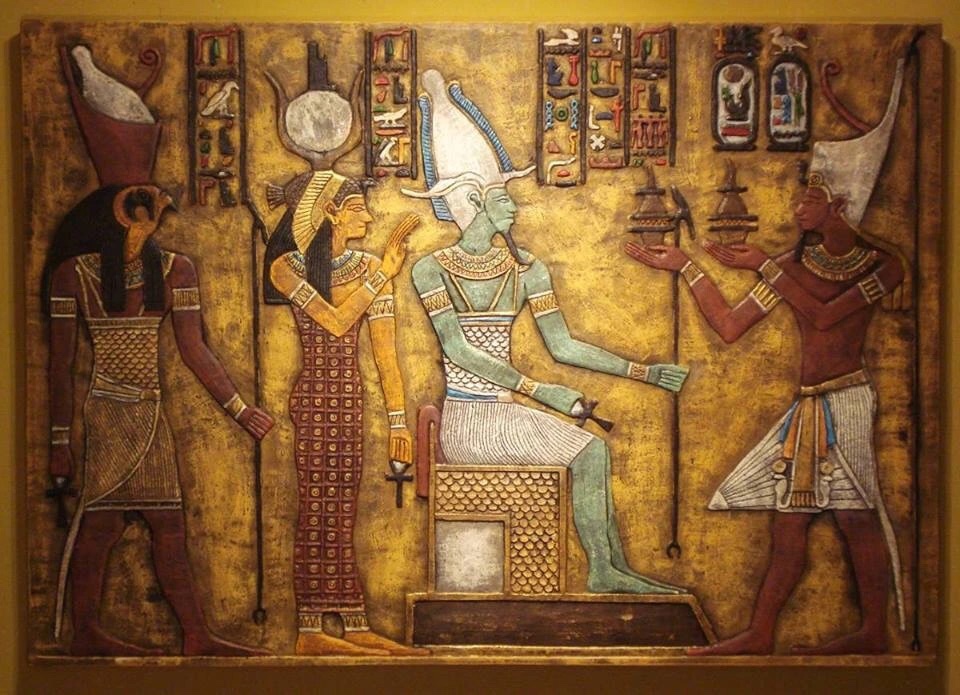
Osirian Mysteries

The month of Koiak (November) was the time to celebrate the Osirian Mysteries. For 3000 years, the chief sanctuaries of Osiris reenacted the epic story of Isis and Osiris. If you are familiar with this early myth, you know that Osiris was killed by his brother Seth, and hacked into fourteen pieces and thrown into the Nile. Upon learning of this dastardly deed, his wife Isis began her search for the remains of Osiris. Her grief was deep and dark and it carried her along the river for miles and miles. Wherever she found a body part, a temple was built in his name. It is thought that each temple celebrated the mysteries of Osiris in a different way depending on the body part found there. For thousands of years, these holy sites were extremely important for pilgrimage and worship…

#AncientEgypt #EgyptianMythology #Osiris #Isis #Seth

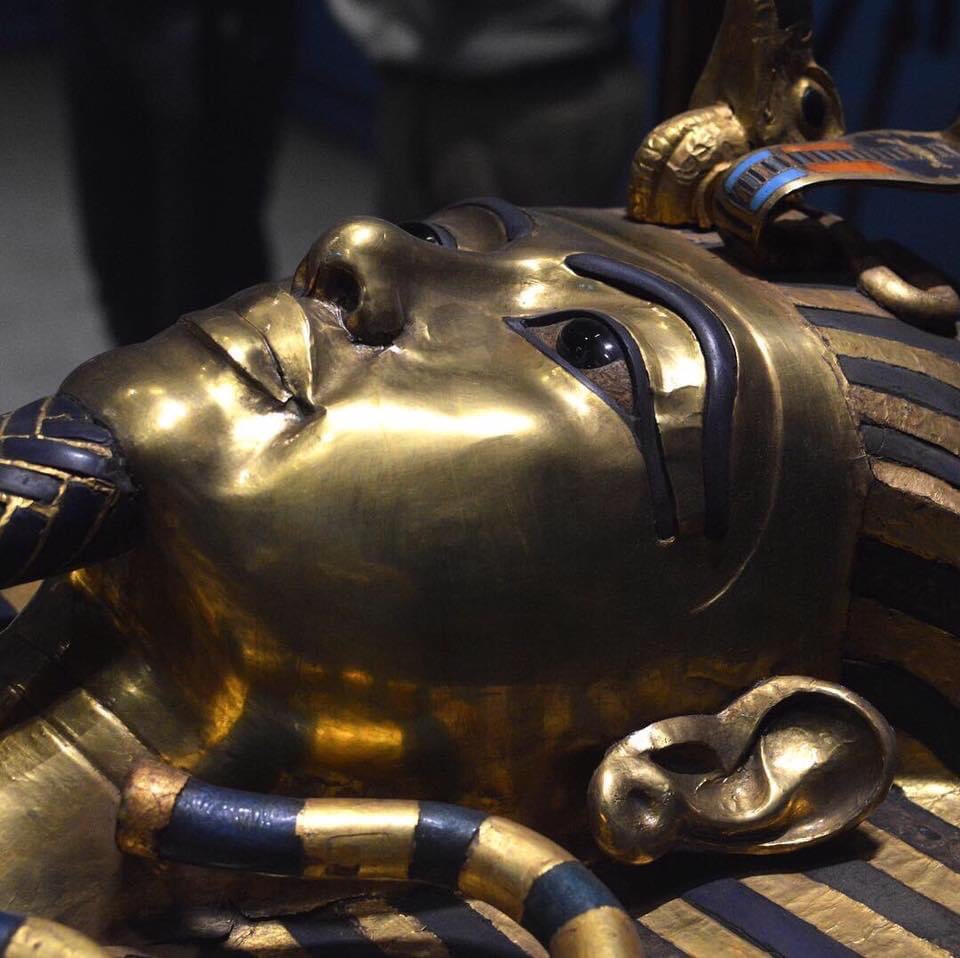
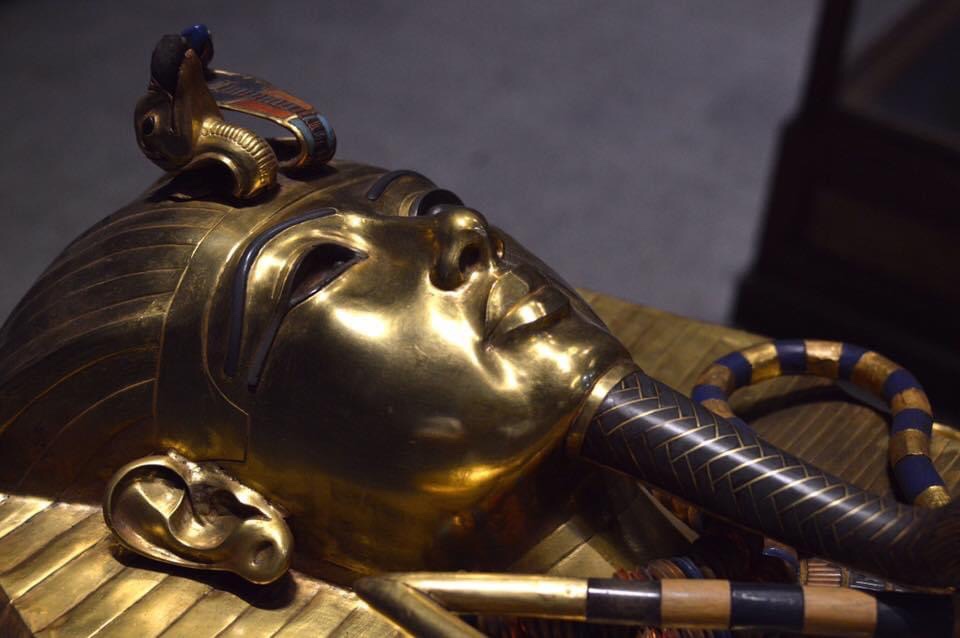
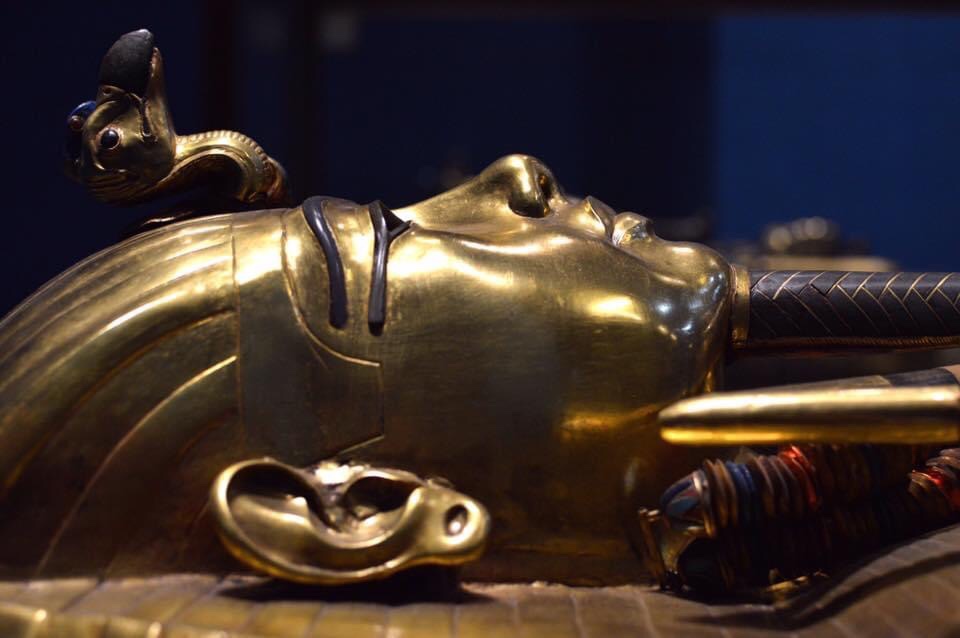
In 1915 Howard Carter Hired to Find Tutankhamun’s Tomb

In 1915, George Herbert, 5th Earl of Carnarvon, the financial backer of the search for and the excavation of Tutankhamun’s tomb in the Valley of the Kings, employed English archaeologist Howard Carter to explore it. After a systematic search, Carter discovered the actual tomb of Tutankhamun (KV62) on November 4th 1922.

On November 26, 1922, Carter and fellow archaeologist Lord Carnarvon entered the interior chambers of the tomb, finding them miraculously intact.

Thus began a monumental excavation process in which Carter carefully explored the four-room tomb over several years, uncovering an incredible collection of several thousand objects. The most splendid architectural find was a stone sarcophagus containing three coffins nested within each other. Inside the final coffin, which was made out of solid gold, was the mummy of the boy-king Tutankhamen, preserved for more than 3,000 years. Most of these treasures are now housed in the Cairo Museum.

Egyptian Gods & Goddesses Of The Great Ennead 

Egyptian Gods & Goddesses Of The Great Ennead 

The Ennead or Great Ennead was a group of nine deities in Egyptian mythology worshiped at Heliopolis: the sun god Atum; his children Shu and Tefnut; their children Geb and Nut; and their children Osiris, Isis, Set, and Nephthys. 

According to the creation story of the Heliopolitan priests, the world originally consisted of the primordial waters of precreation personified as Nun. From it arose a mound on the First Occasion. Upon the mound sat the self-begotten god Atum, who was equated with the sun god Ra. Atum evolved from Nun through self-creation. Atum either spat or masturbated, producing air personified as Shu and moisture personified as Tefnut. The siblings Shu and Tefnut mated to produce the earth personified as Geb and the nighttime sky personified as Nut.

Geb and Nut were the parents of Osiris and Isis and of Set and Nephthys, who became respective couples in turn. Osiris and Isis represent fertility and order, while Set and Nephthys represent chaos to balance out Osiris and Isis. Horus, the son of Osiris and Isis, is often included in this creation tradition.

 Atum —> Atum was the oldest of the creations gods worshipped by the Egyptians and they thought he existed before anything else. He created Nun, the celestial waters, and everything else through his thoughts. Thoth was Atum’s intelligence and put his creative thoughts into words to bring them to life. In the Book of the Dead, Atum was the setting sun and his images show him as a human wearing the double crown of Egypt.

 Shu —> was the husband of Tefnut and the father of Nut and Geb. He and his wife were the first gods created by Atum. Shu was the god of the air and sunlight or, more precisely, dry air and his wife represented moisture. He was normally depicted as a man wearing a headdress in the form of a plume, which is also the hieroglyph for his name. Shu’s function was to hold up the body of the goddess Nun and separate the sky from the earth. He was not a solar deity but his role in providing sunlight connected him to Ra. Indeed, he was one of the few gods who escaped persecution under the heretic king Akhenaten.

 Tefnut —> Tefnut was the wife of Shu and mother of Nut and Geb. She and her husband were the first gods created by Atum. She was the goddess of moisture or damp, corrosive air, and was depicted either as a lioness or as a woman with a lioness’s head.

 Geb —> was the father of Osiris, Isis, Seth, and Nephthys, and was a god without a cult. As an Earth god he was associated with fertility and it was believed that earthquakes were the laughter of Geb. He is mentioned in the Pyramid Texts as imprisoning the buried dead within his body.

 Nut —> was the mother of Osiris, Isis, Seth, and Nephthys, Nut is usually shown in human form; her elongated body symbolizing the sky. Each limb represents a cardinal point as her body stretches over the earth. Nut swallowed the setting sun (Ra) each evening and gave birth to him each morning. She is often depicted on the ceilings of tombs, on the inside lid of coffins, and on the ceilings of temples.

 Osiris —> Osiris was originally a vegetation god linked with the growth of crops. He was the mythological first king of Egypt and one of the most important of the gods. It was thought that he brought civilization to the race of mankind. He was murdered by his brother Seth, brought back to life by his wife Isis, and went on to become the ruler of the underworld and judge of the dead.

 Isis —> A very important figure in the ancient world, Isis was the wife of Osiris and mother of Horus. She was associated with funeral rites and said to have made the first mummy from the dismembered parts of Osiris. As the enchantress who resurrected Osiris and gave birth to Horus, she was also the giver of life, a healer and protector of kings.

 Set —> Also known as Seth, Setekh, Suty and Sutekh. Set was the son of Geb and Nut, and the evil brother of Osiris. He was the god of darkness, chaos, and confusion, and is represented as a man with an unknown animal head, often described as a Typhonian by the Greeks who associated him with the god Typhon. He is sometimes depicted as a hippopotamus, a pig, or a donkey. Seth murdered his brother and usurped the throne of Egypt and most of the other gods despised him.

 Nephthys —> Daughter of Geb and Nut, sister of Isis, wife of Seth and mother of Anubis, Nephthys is depicted as a woman with the hieroglyphs for a palace and ‘Neb’ (a basket) on her head. She is thus known as “Lady of the Mansions” or “Palace.” Nephthys was disgusted by Seth’s murder of Osiris and helped her sister, Isis, against her husband, Seth. Together with Isis she was a protector of the dead, and they are often shown together on coffin cases, with winged arms. She seems to have had no temple or cult center of her own.