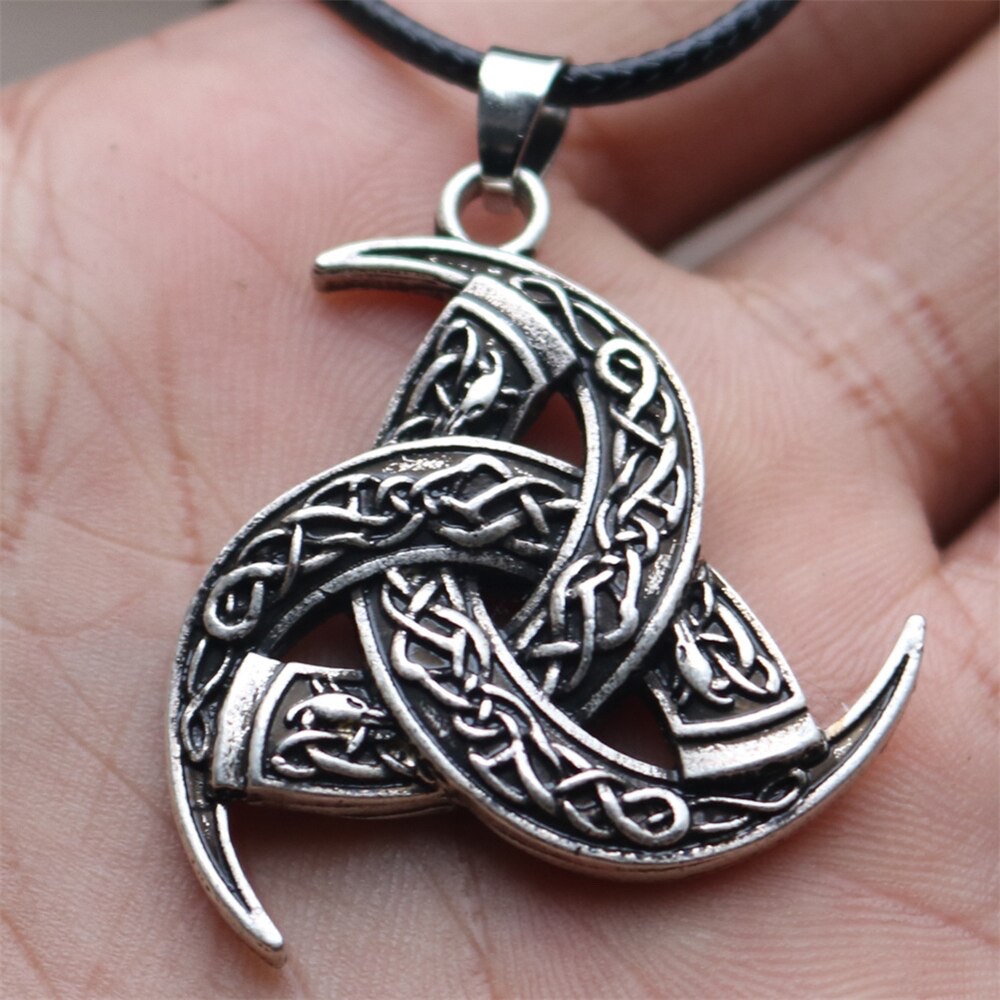
Asatru 101

What is Asatru?

Long before Christianity came to northern Europe, the people there – our ancestors – had their own religions. One of these was Asatru. It was practiced in the lands that are today Scandinavia, England, Germany, France, the Netherlands, and other countries as well. Asatru is the original or native religious belief for the peoples who lived in these regions.

What does the word “Asatru” mean?

It means, roughly, “belief in the Gods” in Old Norse, the language of ancient Scandinavia in which so much of our source material was written. Asatru is the name by which the Norsemen called their religion.

When did Asatru start?

Asatru is thousands of years old. Its beginnings are lost in prehistory, but it is older than Christianity, Islam, Buddhism, or most other religions. The spiritual impulses it expresses are as ancient as the European peoples themselves – at least 40,000 years, and perhaps much older.

Why do we need Asatru? Aren’t most people who want religion satisfied with Christianity or one of the other “Established” religions?

People are attracted to the better-known religions because they have genuine spiritual needs which must be filled. People are looking for community and for answers to the “big questions”: What life is all about, and how we should live it. For many people today, the so-called major faiths do not have answers that work. Asatru has answers, but it has not been an alternative for most seekers because they haven’t known about it. Once they realize that there is another way – a better, more natural, more honorable way – they will not be satisfied with anything less than a return to the religion of their ancestors.

Why is the Religion of our Ancestors the Best One for Us?

Because we are more like our ancestors than we are like anyone else. We inherited not only their general physical appearance, but also their predominant mental, emotional, and spiritual traits. We think and feel more like they did; our basic needs are most like theirs. The religion which best expressed their innermost nature – Asatru – is better suited to us than is some other creed which started in the Middle East among people who are essentially different from us. Judaism, Islam, and Christianity are alien religions which do not truly speak to our souls.

Why Did Asatru Die Out if it was the Right Religion for Europeans?

Asatru was subjected to a violent campaign of repression over a period of hundreds of years. Countless thousands of people were murdered, maimed, and exiled in the process. The common people (your ancestors!) did not give up their cherished beliefs easily. Eventually, the monolithic organization of the Christian church, bolstered by threats of economic isolation and assisted by an energetic propaganda campaign, triumphed over the valiant but unsophisticated tribes. 

Or so it seemed! Despite this persecution, elements of Asatru continued down to our own times – often in the guise of folklore – proving that our own native religion appeals to our innermost beings in a fundamental way. Now, a thousand years after its supposed demise, it is alive and growing. Indeed, so long as there are men and women of European descent, it cannot really die because it springs form the soul of our people. Asatru isn’t just what we BELIEVE, it’s what we ARE.

Wasn’t the Acceptance of Christianity a Sign of Civilization – A Step up From Barbarism?

No! The atrocities committed by Christians, Muslims, and Jews throughout history are hardly a step up from anything. The so-called “barbarians” who followed Asatru (the Vikings, the various Germanic tribes, and so forth) were the source of our finest civilized traditions – trial by jury, parliaments, Anglo Saxon common law, and the rights of women, to name a few. Our very word “law” comes from the Norse language, not from the tongues of the Christian lands. We simply did not and do not need Christianity to be civilized.

You Say That Asatru was the Religion of the Vikings, Among Other Early European Cultures. Weren’t They a Pretty Bloodthirsty Lot?

Modern historians agree that the Vikings were no more violent than the other peoples of their times. Remember, the descriptions of Viking raids and invasions were all written by their enemies, who were hardly unbiased. Both the Islamic and Christian cultures used means every bit as bloody, if not more so, than the Norsemen. It was a very rough period in history for all concerned!

We Keep Talking About the Vikings. Does This Mean That Asatru is Only for People of Scandinavian Ancestry?

No. Asatru, as practiced by the Norse peoples, had so much in common with the religion of the other Germanic tribes, and with their cousins the Celts, that it may be thought of as one version of a general European religion. Asatru is for all European peoples, whether or not their heritage is specifically Scandinavian.

What are the Basic Beliefs of Asatru?

We believe in an underlying, all-pervading divine energy or essence which is generally hidden from us, and which is beyond our immediate understanding. We further believe that this spiritual reality is interdependent with us – that we affect it, and it affects us. 

We believe that this underlying divinity expresses itself to us in the forms of the Gods and Goddesses. Stories about these deities are like a sort of code, the mysterious “language” through which the divine reality speaks to us. 

We believe in standards of behavior which are consistent with these spiritual truths and harmonious with our deepest being.

How Does Asatru Differ From Other Religions?

Asatru is unlike the better-known religions in many ways. Some of these are: 

We are polytheistic. That is, we believe in a number of deities, including Goddesses as well as Gods. We do not accept the idea of “original sin”, the notion that we are tainted from birth and intrinsically bad, as does Christianity. Thus, we do not need “saving”. 

The Middle Eastern religions teach either a hatred of other religions or a duty to convert others, often by force. They have often practiced these beliefs with cruel brutality. 

We do not claim to be a universal religion or a faith for all of humankind. In fact, we don’t think such a thing is possible or desirable. The different branches of humanity have different ways of looking at the world, each of which is valid for them. It is only right that they have different religions, which of course they do.

Do You Consider the Norse Myths to be True?

The myths are stories about the Gods and Goddesses of Asatru. They are ways of stating religious truths. That is, we would say they contain truths about the nature of divinity, our own nature, and the relationship between the two. We do not contend that the myths are literally true, as history.

What About These Gods and Goddesses? Are They Real?

Yes, they are real. However, just as most Christians do not think their God is really an old bearded figure sitting on a golden chair in heaven, we do not believe Thor (for example) is actually a muscular, man-shaped entity carrying a big hammer. There is a real Thor, but we approach an understanding of him through this particular mental picture.

Do followers of Asatru Pray to Their Gods and Goddesses?

Yes, but not quite the way most people mean by the word. We never surrender our will to theirs or humble ourselves before them, because we see ourselves as their kin, not as inferior, submissive pawns. Nor do we beg and plead. We commune with them and honor them while seeking their blessing through formal rites and informal meditation. Living a full and virtuous live is a form of prayer in itself. Our religion affects all parts of our lives, not just those fragments that we choose to call “religious”.

Don’t You Worship Stones and Trees and Idols?

No. These objects are not Gods, so we don’t worship them. We do sometimes use these items as reminders of a God or Goddess, and we believe they can become “charged” with a certain aspect of the divine energy, but we would never confuse them with the actual deities.

What are the Standards of Behavior Taught in Asatru?

Some of the qualities we hold in high regard are strength, courage, joy, honor, freedom, loyalty to kin, realism, vigor, and the revering of our ancestors. To express these things in our lives is virtuous, and we strive to do this. Their opposites – weakness, cowardice, adherence to dogma rather than to the realities of the world, and the like – constitute vices and are to be avoided. Proper behavior in Asatru consists of maximizing one’s virtues and minimizing one’s vices. This code of conduct reflects the highest and most heroic ideals of our people.

Don’t all Religions Believe in These Things You’ve Just Named?

No. People may honestly believe that this is the case, but examination does not bear this out. They believe in freedom, yet their scriptures say they are slaves to their God. They accept that joy is good, but their teachings laden them with guilt because of some imaginary “original sin”. Their instinct is to understand Nature’s world from verifiable evidence, yet they are trained to believe black is white, round is flat, and natural instincts are evil without question when the teachings of their church conflict with reason or with known facts. 

Many of us instinctively believe in the values of Asatru because they have been passed down to us from our ancestors. We want to believe that other religions espouse those values, so we see what we want to see. Most people just haven’t yet realized that the major religions are saying things that conflict with the values we know in our hearts are right. To find northern European virtues, one should look where those virtues have their natural home – Asatru.

What do You Have to Say About Good and Evil?

Good and evil are not constants. What is good in one case will not be good in another, and evil in one circumstance will not be evil under a different set of conditions. In any one instance, the right course of action will have been shaped by the influence of the past and the present. The result may or may not be “good” or “evil”, but it will still be the right action. 

In no case are good and evil dictated to us by the edicts of an alien, authoritarian deity, as in the Middle East. We are expected to use our freedom, responsibility, and awareness of duty to serve the highest and best ends.

What Does Asatru Teach About an Afterlife?

We believe that there is an afterlife, and that those who have lived virtuous lives will go on to experience greater fulfillment, pleasure, and challenge. Those who have led lives characterized more by vice than by virtue will be separated from kin and doomed to an existence of dullness and gloom. The precise nature of the afterlife – what it will look like and feel like – is beyond our understanding and is dealt with symbolically in the myths. 

There is also a tradition in Asatru of rebirth within the family line. Perhaps the individual is able to choose whether or not he or she is re-manifested in this world, or there may be natural laws which govern this. In a sense, of course, we all live on in our descendents quite apart from an afterlife as such. 

We of Asatru do not overly concern ourselves with the next life. We live here and now, in this life. If we do this and do it well, the next life will take care of itself.

Does Asatru Involve Ancestor Worship?

Asatru says we should honor our ancestors. It also says we are bonded to those ancestors in a special way. However, we do not actually worship them. 

We believe our forebears have passed to us certain spiritual qualities just as surely as they have given us various physical traits. They live on in us. The family or clan is above and beyond the limits of time and place. Thus we have a reverence for our ancestry even though we do not involve ourselves in ancestor worship as such.

Does Asatru Have a Holy Book, Like the Bible?

No. There are written sources which are useful to us because they contain much of our sacred lore in the form of myths and examples of right conduct, but we do not accept them as infallible or inspired documents. Any religion which does this is deceiving its members about the purity and precision of the written word. The various competing factions of Middle Eastern religions are proof of this. Their conflicting interpretations can not all be correct! 

There are two real sources of holy truth, and neither expresses itself to us in words. One is the universe around us, which is a manifestation of the underlying divine essence. The other is the universe within us, passed down from our ancestors as instinct, emotion, innate predispositions, and perhaps even racial memory. By combining these sources of internal and external wisdom with the literature left us by our ancestors, we arrive at religious truths. This living spiritual guidance is better than any dusty, dogmatic “holy book”, whose writings are often so ambiguous that even clerical scholars disagree and whose interpretations change with the politics of the times.

Asatru has Been Described as a “Nature Religion”. What Does That Mean?

We treasure the spiritual awe, the feeling of “connecting” with the Gods and Goddesses, which can come from experiencing and appreciating the beauty and majesty of Nature. Our deities act in and through natural law. By working in harmony with Nature we can become co-workers with the Gods. This attitude removes the opposition between “natural” and “supernatural” and between religion and science. 

For us, following a “Nature religion” means recognizing that we are part of Nature, subject to all its laws, even when that offends our Christian-influenced misconceptions. We may be Gods-in-the-making, but we are also members of the animal kingdom – a noble heritage in its own right. Our ancestors and their predecessors prevailed through billions of years of unimaginable challenges, a feat which must awe even the Gods themselves.

Where Did the Universe Come From, According to Asatru?

Our myths describe the beginning of the universe as the unfolding of a natural process, rather than one requiring supernatural intervention. Followers of Asatru need not abandon modern science to retain their religion. The old lore of our people describes the interaction of fire and ice and the development of life from these – but this is symbolic, and we will leave it to our scientists to discover how the universe was born.

What are the Runes, and What do They Have to do With Asatru?

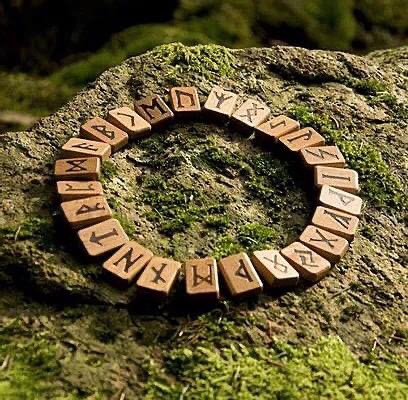
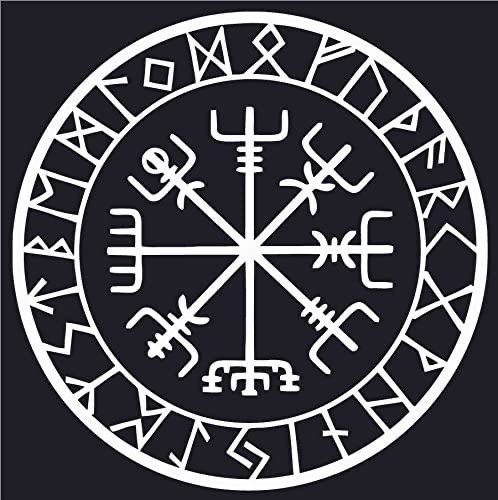
Runes are ancient Germanic symbols representing various concepts or forces in the universe. Taken together, they express our ancestors’ world view. Their meanings are intimately connected with the teachings of Asatru. Our myths tell how Odin, father of the Gods, won them through painful ordeal so that Gods and humans alike might benefit from their wisdom.

How is Asatru Organized?

Asatru is non-authoritarian and decentralized, expressing our love of freedom. While we do have definite tenets, we have little dogma. There is no all-powerful spiritual leader whose word is law, no “pope” of Asatru to dictate truth. No guru or priest has an exclusive direct line to the Gods. The Gods live in you!

Sources: asatru.org
Nidhogg

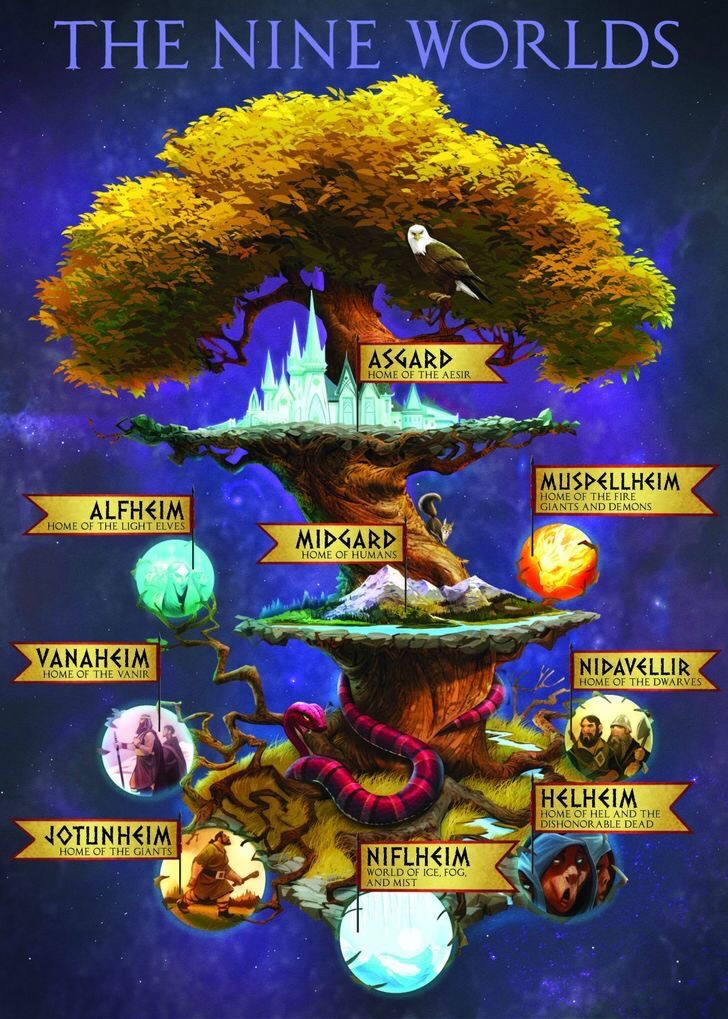
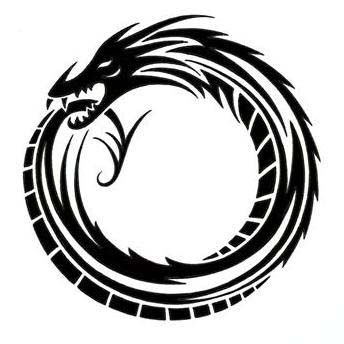
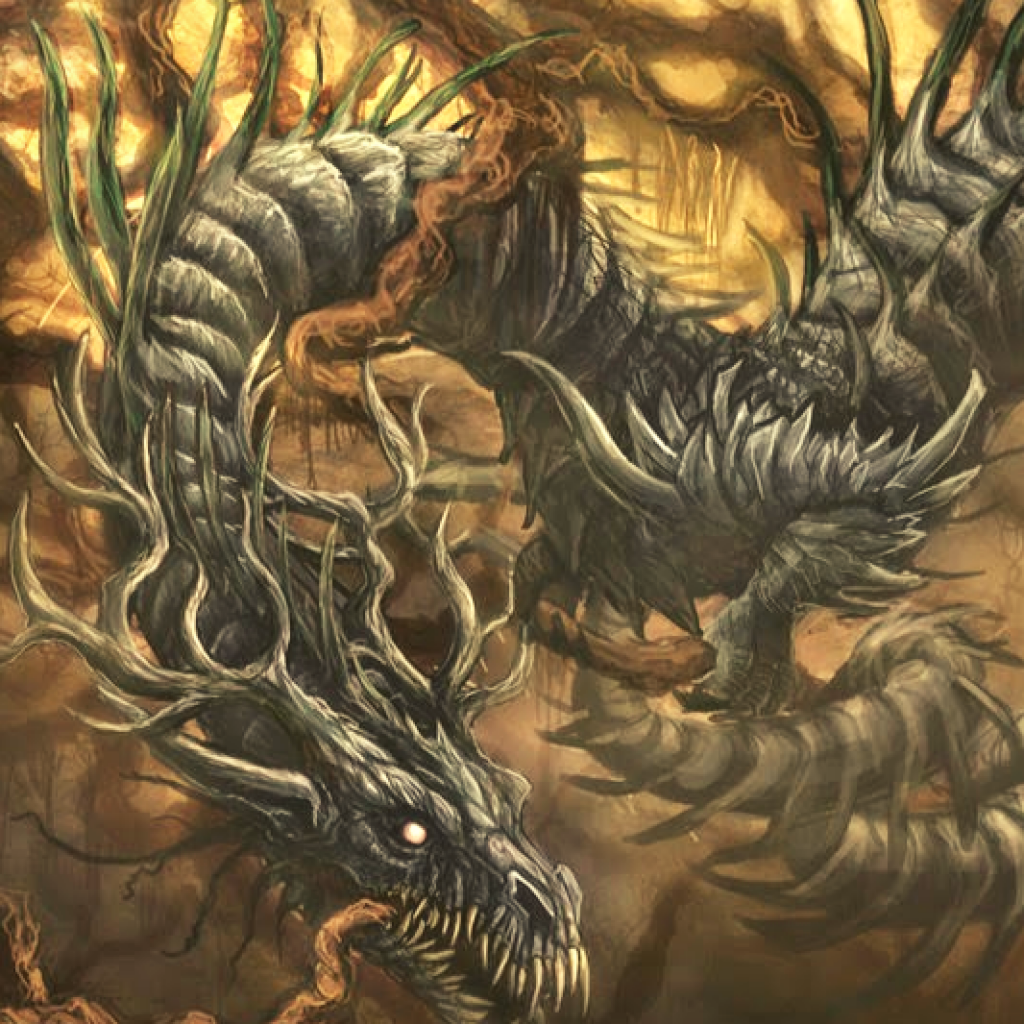
Nidhogg (Norse Níðhöggr) is a ferocious dragon who gnaws at the roots of Yggdrasil, the tree which supports the nine worlds of Norse mythology. This power-hungry monster is sometimes referred to as “the Malice Striker,” an appropriate name given that he rules over dark criminals and is bent on destroying peace and virtue.

Nidhogg is a tremendous dragon. His body is covered in bright scales, and horns erupt from his head. A pair of forelegs, complete with massive claws, help him to rip at the roots of Yggdrasil, but he has no back legs, only a serpentine tail. Beneath his bat-like wings, he carries the corpses of criminals.

His mammoth body can be found twisting through the roots of Yggdrasil, especially around Niflheimr, the cold world from which all the rivers of Midgard spring. Occasionally, he might slither into Hel to visit the dark goddess who some people consider his master.

Balance is extremely important in Norse mythology, and while Nidhogg does represent a ghastly force, he is still important to supporting the balance of Yggdrasil. A great eagle, who represents wisdom and virtue, perches in the uppermost branches of the tree, while Nidhogg, representing chaos and evil, lurks in its roots. The constant tension between the eagle and the dragon is fueled by Ratatoskr, a squirrel who runs up and down the tree ferrying insults between the two enemies. This tension may seem undesirable, but it actually promotes a cycle of growth in the tree of life. After the eagle and the dragon spend the day destroying Yggdrasil in their frenzy to attack each other, the tree is bathed in water from the wells of Urd, which promotes healing and new growth.

In addition to bringing balance to Yggdrasil, the monster also figures in the punishment of criminals. He rules over the dark shores of Nadastrond, to which the corpses of murderers, adulterers, and oath-breakers are banished. A terrifying hall, with walls woven from serpents and a ceiling that drips venom, waits for these criminals, and inside the hall, the dragon chews on their bodies.

Finally, the dreaded dragon has a role to play in Ragnarok, the day when the giants will attack the gods and destroy most of their world. Ragnarok will begin when the dragon finally manages to chew through the roots of Yggdrasil, causing the tree to yellow and the worlds it supports to plunge into a three-year winter. At the end of this frigid and chaotic period, he will fly up from the underworld, carrying dead criminals and leading the giants on an attack against the gods. Ultimately, the he will survive this battle and become the force of evil which balances good in the post-Ragnarok world.

Sources: mythology.net, Sons of Vikings

Modern European Paganism

Just as Christianity, Judaism, and Islam can be grouped together as monotheistic “Abrahamic” religions that believe in a single all-powerful god, polytheistic religions that honor a multitude of deities also form religious “families.” Among them we find the myriad Hindu sects, Buddhism, which is nontheistic in its theology but includes polytheistic elements in its practice, tribal traditions from the Americas and Asia, the African and Afro-diasporic faiths, which include modern Umbanda and Santeria, and European paganism.

Until very recently, the possibility that a Native European polytheistic faith could be a viable option would have been met with incomprehension. Today, however, a linear worldview that includes an inevitable progress toward a cataclysm decreed by a single, all-powerful God is proving dangerously attractive to some, and to the rest of us, simply dangerous. Instead of a worldview in which neither humanity nor nature have intrinsic meaning because all such meaning derives only from God, or polarizes into a conflict between absolute Good and absolute Evil, we need a worldview that sees holiness in everything, recognizes that spirit takes many forms, and believes that history moves in circles, not a straight line.

The first European polytheistic religion to become well known in Europe and North America in the twentieth century was Pagan Witchcraft, or Wicca, which includes a multitude of traditions derived from or inspired by survivals from European folk religion and the work of Gerald Gardner.  However, Wicca is by no means the only kind of European paganism to flourish today. A second, and rapidly growing, branch of the family consists of the “reconstructed” traditions based on the practices and beliefs of specific cultures. These include the Celtic traditions, among them the different kinds of Druids; the Hellenic traditions, which draw from ancient Greece; the Kemetics, who base their practice on the religion of Egypt; Baltic traditionalists, who have revived their native religions in their newly independent nations; and the religions of the Germanic peoples in Scandinavia, on the Continent, and in England.

Sources: Diana L. Paxson from “Essential Asatru”

Vanaheim

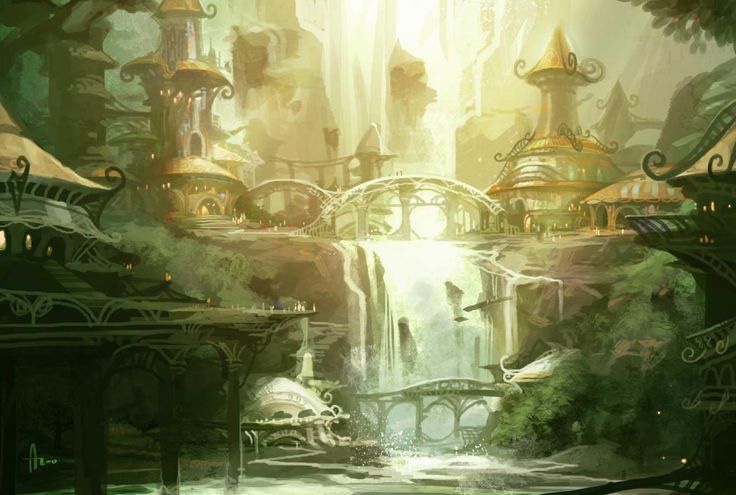
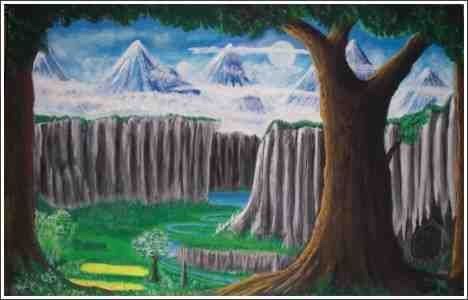
Vanaheim (Old Norse Vanaheimr, “Homeland of the Vanir“) is one of the Nine Worlds that are situated around the world-tree Yggdrasil. As the name implies, it’s the home of the Vanir tribe of deities, who tend to be somewhat more associated with fertility and what we today would call “nature” than the other tribe of Norse deities, the Aesir, who have their home in Asgard.

The surviving sources for our information on Norse mythology and religion, as fragmentary as they are, don’t contain any explicit mention of where exactly Vanaheim is located.  The sole clue we have comes from the Lokasenna (“The Taunting of Loki“), one of the poems in the Poetic Edda, which states that the Vanir god Njord went eastward when he went to Asgard as a hostage at the conclusion of the Aesir-Vanir War.  Presumably, then, Vanaheim lies somewhere to the west of Asgard.

Some scholars have gone so far as to claim that Vanaheim was invented by the thirteenth-century Icelandic Christian historian and poet Snorri Sturluson. However, there is one authentic and reliable Old Norse poem that mentions Vanaheim by name, so we can be reasonably certain that it was a genuine element of pre-Christian Norse religion.

It should come as no surprise, then, that the sources are completely silent as to what kind of world Vanaheim is. However, its name may contain an indication of the place’s character. One of the primary ways the pre-Christian Norse and other Germanic peoples classified geographical spaces (as well as psychological states) was with reference to their concept of the distinction between the innangard and utangard. That which is innangard (“inside the fence”) is orderly, law-abiding, and civilized, while that which is utangard (“beyond the fence”) is chaotic, anarchic, and wild. This psychogeography found its natural expression in agrarian land-use patterns, where the fence separated pastures and fields of crops from the wilderness beyond them. Of the Nine Worlds, two are innangard spaces: Asgard and Midgard, the world of human civilization. Both of these contain -gard in their names and are depicted as having a fence or fortification surrounding them. The rest of the Nine Worlds’ names end in -heim, and there’s no reference to their being enclosed in any way, which seems to indicate that they’re essentially utangard places. Such a designation is certainly in keeping with the way these places are described in Old Norse literature. Thus, we can infer that Vanaheim, like the Vanir themselves, is somewhat more wild or “natural,” and less “cultural,” than the world of the Vanir’s Aesir counterparts, or even that of humanity.

Sources: Sons of Vikings, norse-mythology.org

Frigga’s Handmaidens

Frigga’s Handmaidens:

Eir

She is known as a healer. That said, Eir’s name translates roughly to the word “mercy,” and in addition to being one of Frigga’s handmaidens, she is listed among Odin’s Valkyries. This has led some modern heathens to speculate that, in addition to her healing skills, she was the source of “mercy on the battlefield,” which, depending on the circumstances, could mean a clean death for those already dying from their wounds.

Fulla

Not much is known about Fulla. She is called a virgin and goes about with her hair unbound and flowing. She wears a gold band around her head. She carries Frigga’s casket, a small chest, and also cares for Frigga’s shoes. She is considered someone with whom Frigga shares her secrets. Fulla may be the Volla listed in the Second Meresburg Charm, Frigga’s sister, or, potentially, Frigga herself.

Gefjon

Gefjon has four sons, whom she changed into oxen in order to carve land for herself out of Denmark; folklore has it that Zealand is Gefjon’s property. Her name means “giver,” and this has caused her to be confused with Freyja, whose byname, Gefn, means the same thing. However, as Frigga’s handmaiden, she protects maidens and unmarried women. This, taken along with the myth about Zealand, is enough evidence to suggest that she is a goddess in her own right.

Lofn

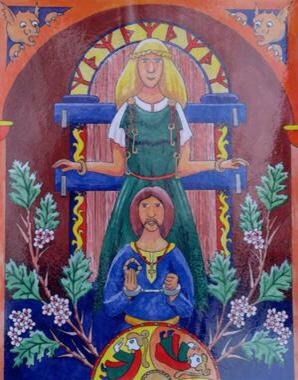
Lofn is the handmaiden who clears the way for permission to be granted for marriages, particularly those marriages which would otherwise be seen as forbidden.

Sága

Sága is an interesting character. Her hall, Sökkvabekk, refers to sunken benches, the implication being a bog or fen. Frigga’s hall is Fensalir, which also involves a fen. Frigga is married to Odin; Sága is known to sit with Odin in her hall and drink mead with him. In fact, there are so many similarities between Sága and Frigga that many scholars contend that they are one and the same, and that Sága is one of Frigga’s bynames. The Prose Edda mentions her as one of Frigga’s handmaidens.

Sjofn

Sjofn helps turn the minds of men and women to love.

Snotra

Snotra is known to be wise and courteous.

Syn

Syn is known as the handmaiden who bars the doors to the hall and guards against those who are forbidden to enter. It is also said that she can stand in assembly as a party for the defense, in cases that involve her.

Var

Var is most concerned with hearing the oaths people make, particularly the marriage oath.

Vor

Vor is also known to be wise, but she asks questions, and nothing can be concealed from her. Vor is the last of Frigga’s handmaidens that we have record of.

The Arctic Henge (Raufarhöfn, Iceland)

The Arctic Henge (Raufarhöfn, Iceland)

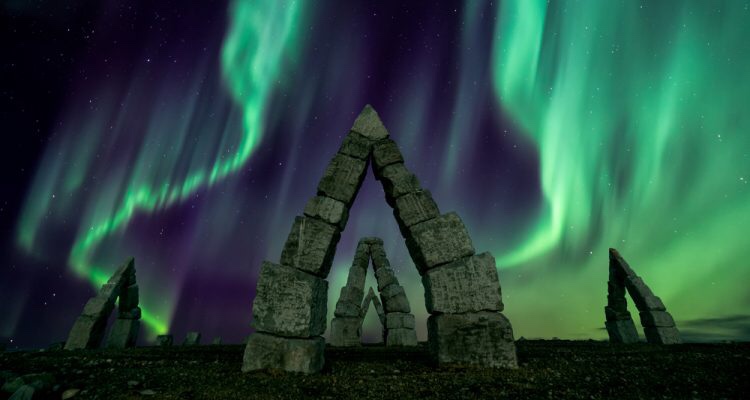
Located in one of Iceland’s most remote northern villages, the Arctic Henge is a colossal piece of stone construction that, when finished, will make Stonehenge look like amateur hour.

Started in 1996, the Arctic Henge project is a monument not only to the country’s nordic roots, but also to some of the neo-pagan beliefs that have arisen in certain areas. The piece was inspired directly from the eddic poem Völuspá (Prophecy of the Seeress), taking from it the concept of 72 dwarves who represent the seasons in the world of the poem, among other symbolic queues. In the Arctic Henge, 72 small blocks, each inscribed with a specific dwarven name will eventually circle four larger stone monuments, which in turn will surround a central balanced column of massive basalt blocks. Each aspect of the deliberate layout corresponds to some aspect of ancient Norse belief and when each piece of the monument is installed, visitors will be able to “capture the midnight sun” by viewing it through the various formations at different vantage points depending on the season.

At current, only the imposing central tri-column and one of the four larger gates have been constructed, along with a smattering of the smaller stones, but it is still a work in progress. When it is complete, the Arctic Henge could easily become the premiere site for Paganism in the entire world and millennia from now it might seem as mysterious as Stonehenge seems to us today.

Source: Atlas Obscura

How Iceland Saved Viking Lore and Traditions

A majority of the written sources we do have are from Iceland. Vikings discovered Iceland in the middle of the 9th century. This discovery led to a land rush as many families were eager to carve out a new life in this austere place of stark beauty. Many of these settlers were escaping Harald Fairhair and other despotic kings who were nation-building in Scandinavia. These pioneer families were fiercely independent and wanted to preserve their way of life and culture without becoming the serfs of greedy lords.

Consequently, many of the Vikings who settled Iceland were from western Norway. Other Vikings came to Iceland indirectly, by way of the Hebrides, Orkney, Ireland, or the Faroe Islands, with Celts from those lands making up portions of their households.

The Vikings set up a democracy in Iceland, with a firm sense of law based on honor and restitution. In the year 1000, the Icelanders voted to accept Christianity as the public religion, while allowing people to practice whatever religion they chose in private. This decision was made for the sake of peace and to keep up with the changing times. But this peculiar conversion would have another effect as well: while Viking descendants in Christianized Scandinavia, Normandy, England, and elsewhere actively distanced themselves from their pagan past, the Icelanders were much more comfortable with that part of their heritage. This, combined with natural isolation and a conservative disposition, led to Iceland remaining a bastion of Old Norse culture. 

Even today, a thousand years later, the modern Icelandic language is very similar to Old Norse. Though some word meanings and pronunciation have naturally shifted, Icelandic college students can read the Medieval manuscripts without much difficulty. This retention of language is a tremendous testament to the cultural preservation that occurred in that island nation.

In the middle of the 13th century – more than 150 years after the last Vikings sailed the seas or stood in battle – Iceland was undergoing a violent political crisis. This crisis of politics became a crisis of identity, and perhaps because of this, there was a strong intellectual impulse to record the remnants of their ancient heritage. For the first time, Viking lore was set down in writing for future generations to read. 

This creative impulse expressed itself in two forms: The first was the Eddas – the collected poetry and myths of the Old Norse gods, goddesses, and heroes. But the second impulse may have been the more remarkable: the Icelanders set down the stories of their ancestors – ordinary men and women. These sagas were a unique accomplishment in medieval literature. Even today, the sagas are recognized as one of the world’s great literary achievements and a forerunner of the modern novel. 

Even in the Viking Age, poets from Iceland were considered among the best. But after their time, their descendants expanded the Norse oral tradition into a vibrant literary culture. To this day, Icelanders read more books and even write more books per capita than any other nation in the world.

Source: Son of Vikings

Time to take back Viking history and Symbolism from racists and white supremacists

“All manner of Viking symbols and misconceptions about a golden age of Nordic racial purity have been appropriated by racist extremists looking to justify their xenophobia and acts of violence, according to the University of Alberta researcher.

Van Deusen said the age of racial purity never existed and she is determined to debunk the corrosive myth at every turn, especially in the classroom.

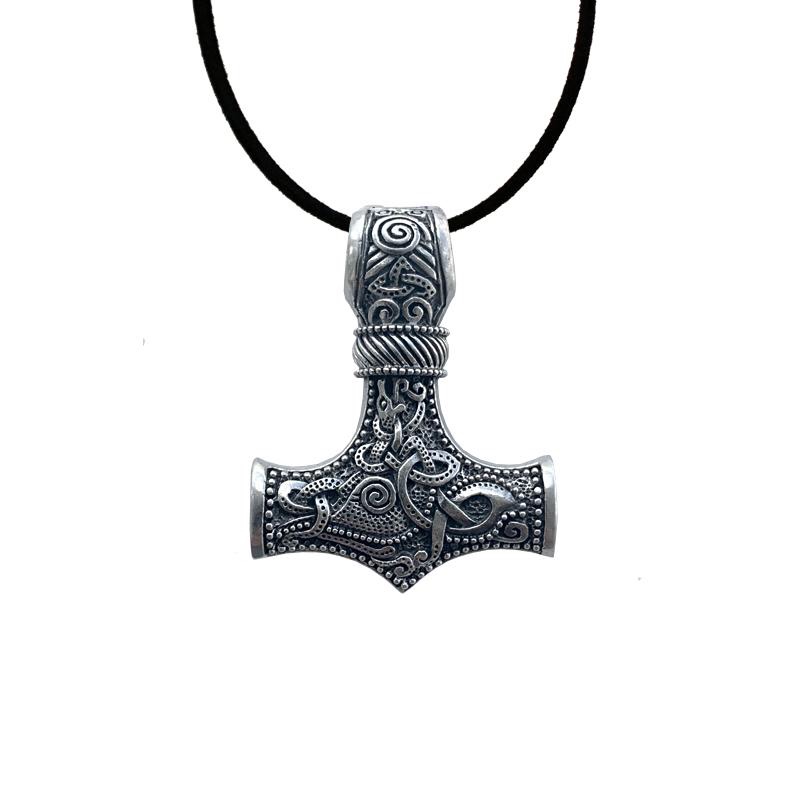
Viking symbols are everywhere among the ultra-right. When the Unite the Right rally took place in Charlottesville in 2017, some protesters carried banners featuring the Norse god Thor’s hammer, popular among the Nazis and neo-Nazi groups.

The perpetrator of New Zealand’s Christchurch massacre last year wrote, “See you in Valhalla”-referring to the great hall where heroes of Norse mythology go after they die-at the end of his manifesto.

Closer to home, the Soldiers of Odin-a Finnish white supremacist movement named after another Norse god in 2015-have recently emerged in Alberta and throughout Canada.

“The precedent was set with the Nazis,” said Van Deusen. “National Socialism and Hitler idealized the Norse people-those who lived in the Nordic areas. Even the swastika is based in part on a symbol based on Viking artifacts.”

Source: https://www.ualberta.ca/folio/2020/07/white-supremacists-are-misappropriating-norse-mythology-says-expert.html

Who Were The Norse?

“The term ‘Norse’ is used to describe the various peoples of Scandinavia who spoke the Old Norse language between the eighth and thirteenth centuries AD. While it had eastern and western dialects it would have been generally mutually understood across the range of areas within which it was spoken. A third recognisable form was spoken on the island of Gotland.

The Old Norse language later developed into modern Danish, Faroese, Icelandic, Norwegian and Swedish. In addition, there once existed the so-called Norn languages of Orkney and Shetland that are now extinct. It was, essentially, the language of the Vikings.”

~ Martyn Whittock, from Tales of Valhalla