Witch Trials Of Europe

Valais: France/Switzerland, 1428–1447

Often considered to be the first in Europe, the Valais trials began in the French-speaking southern region of Valais and spread to German-speaking Wallis. The trials claimed at least 367 victims (the actual toll may be higher), with just as many men as women killed. It all began in August 1428, when delegates from seven different districts demanded investigations into any accused witches or sorcerers. They established a rule that if any single person was accused of witchcraft three times, they were to be arrested. Once arrested, there was no way to escape; those that confessed were burned at the stake and those who didn’t were tortured until they did confess. While the trials were poorly documented, there are a few records that remain from the local clerk of the court, Johannes Fründ.

Trier: Germany, 1581–1593

One of the largest witch trials in European history started in the rural diocese of Trier in 1581, eventually reaching the city itself six years later. The motives behind this massive witch-purging were likely political. Wanting to prove his loyalty to the Jesuits, the newly-appointed Archbishop Johann von Schöneburg ordered a purge of three groups of nonconformists: Protestants, Jews and witches. Very few of those accused of witchcraft were ever released. Between 1587 and 1593, 368 of the accused from 22 villages were burned alive, almost all confessing under torture. Almost a third of the victims were nobility or held positions in the government or local administration, including judges, burgermeisters, councilors, canons and parish priests.

North Berwick: Scotland, 1590–1592

When King James VI of Scotland sailed to Copenhagen to marry Princess Anne of Denmark, a severe coastal storm forced him to land in Norway and take refuge for several weeks. The storm was blamed on witchcraft, which brewed the king’s obsession with eliminating the practice. He became so obsessed he even penned a book, Daemonologie, endorsing witch hunting. The first to fall victim was Gilly Duncan. Accused of using healing cures and subject to prolonged torture, Duncan confessed to having a contract with the devil. She was burned at the stake for her crime. In total, 70 people were accused of witchcraft, including several members of Scottish nobility, although the actual number of those killed remains unknown. These events had such a profound effect that it’s believed Shakespeare adapted parts of the trial—including the torture rituals—into “Macbeth.” The North Berwick witch trials were the first major trials in Scotland, but many followed, claiming an estimated total of 3,000-4,000 lives between 1560 and 1707.

Fulda: Germany, 1603–1606

After returning from a 20-year exile from his post, Balthasar von Dernbach, the prince-abbot of the Fulda monastery, joined the ongoing efforts of the Catholic Counter-Reformation to thwart perceived religious liberalism. Dernbach launched an aggressive investigation into witchcraft and sorcery to purge the city of Fulda of “improper” things. The most well-known victim was a pregnant woman named Merga Bien. Accused of murdering her second husband, their children and a family member of her husband’s employer, she was tortured and forced to confess. Found guilty, Bien was burned at the stake. The witch hunts were stopped upon the death of Dernbach in 1605.

Pendle: England, 1612–1634

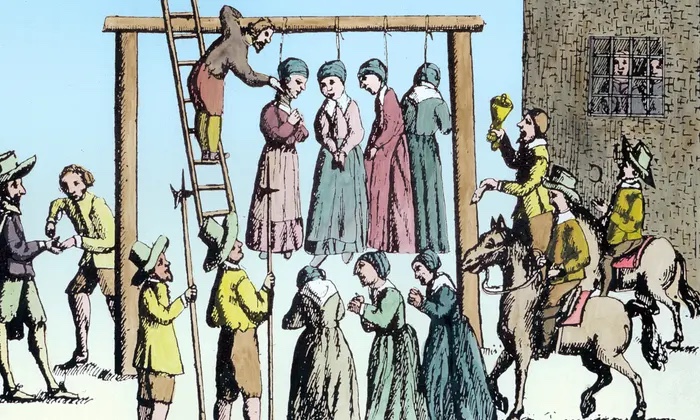
Taking place in Pendle Hill—a poor, lawless region in Lancashire, England, where begging and magical healing were common—these trials were among the most famous and well-documented of the 17th century. The previous decades had been rife with a fear of witchcraft, which was only magnified by the obsession of James VI (now also King James I of England) in purging his lands of witches and sorcerers. Required to report anyone who refused to attend the English Church or take communion, the local Justice of the Peace, Roger Nowell, was also tasked with investigating claims of witchcraft. One such claim was made by a local Halifax peddler who accused a local woman, Alizon Device, of giving him a stroke through witchcraft. Device freely confessed to the crime and implicated many of her family members. Other locals implicated their families, only later to be accused themselves. Altogether, 12 were accused of using witchcraft to murder 10 people. Eleven of the accused went to trial—nine women and two men—and 10 were found guilty and hanged.

Torsåker: Sweden, 1674–1675

The largest witch trial in Swedish history—and one of the largest mass killings of witches in recorded history—saw 71 accused witches, including 65 females, or roughly one-fifth of all women in the region, beheaded and burned in a single day. The bloodshed began when minister Laurentius Christophori Hornæus of Ytterlännäs was instructed to investigate witchcraft within his parish. He ordered two young boys to stand at the doors and identify witches by the invisible devil’s mark on their forehead as they walked into church. Much to the dismay of Hornæus, one of the boys identified the minister’s wife, a situation that was quickly hushed up. The accused were suspected of abducting children and taking them to Satan’s Sabbath (eight festivals celebrated by Wiccans and Neopagans) at Blockula (a meadow popular in Swedish folklore where the devil held court). Relying mostly on children, testimonies were extracted through whippings, forced bathing in frozen lakes or by threats to bake the children in an oven. There were very few records of these trials, and the primary source was recorded 60 years after their conclusion by the grandson of minister Hornæus, who recorded his grandmother’s eyewitness account to the proceedings. The trials were thought to have shaky legitimacy since the commission and local courts failed to report the death sentences to a higher court before carrying them out.

Sources: history.com, Cultures of Witchcraft, The Witch Hunts


Color Magic

Color Magic

Essential oils are used in anointing oil blends, and candles are frequently anointed in botanical magic. Here’s a cheat sheet of what all the different colored candles signify:

Red—passion, fertility, enthusiasm, conquering fear, bravery, fast action

Magenta—fuel for immediate action, enhances other colors, adds speed to magic

Pink—gentle romance, friendship, honor, harmony, heart relationships, family

Peach—quiet emotions of joy, strength, peace, truth

Orange—adaptability, success, encouragement, uplifting, thoughtful

Yellow—success, thought, will, intent

Green—prosperity, fast money, healing past lives (use with brown for stable financial resources)

Blue—spiritual and physical healing, wisdom, balance, trust, tranquility

Purple—intuition, the Divine, guidance, power, ambition, prophetic dreams

Black—banishing, hex breaking, breaking bad habits

White—spiritual enlightenment, cancel magical aims, stalemate, purity, neutral (all-purpose), serenity

Brown—stability, material wealth (physical goods, real estate), decision making, emotional balance, professional growth

Gray—neutrality, can be used to cause confusion in an enemy if hexes are directed your way, self-defense, neutralizing harmful energies

Gold—the God, fast luck, success, intelligence, solar influence

Silver—the Goddess, resolve inner conflict, persistence, remove negativity

Cleansing Smoke

Regular use of cleansing smoke with a variety of materials is beneficial to an energetically healthy home. Too many folks rely solely on one cleaning method and one protection method. For example, many people enjoy the way white sage (Salvia apiana) smells, and though it is a good ally for clearing and cleansing space, it should not be your only ally.

Smoke Tools Hierarchy:

  • The weakest of the smoke tools is floral smoke. Lavender buds, for example, are very pleasant smelling. Flowers are well suited to brightening a space.
  • Leaves are slightly stronger and are good for refreshing the energy of a space. White sage is a common example. Since white sage (Salvia apiana) is largely wildcrafted (harvested in the wild) and used by native peoples, the increasing use of herbal cleansing smoke has led to skyrocketing prices and difficulty in sourcing the materials for the native peoples to whom white sage is sacred. The Salvia genus has many allies that can be farmed and don’t infringe on the beliefs and practices of First Nations and Native American people. 
  • The roots of a plant are stronger magically than its leaves. Roots will remove energies and entities that were not bothered by leaf smoke. Consider the strength of plant allies like ginger root, calamus root, and galangal root (Low John).
  • Even stronger than the root allies are wood allies. Palo santo is a popular wood-based smoke tool. This tree, native to Peru and the Yucatán Peninsula, has become increasingly popular in the last few years. Because of the popularity of this wood, the trees that take decades to reach maturity are over-harvested.
  • The strongest smoke tool of the plant ally families is the resin group. Tree resins are hardened sap structures like dragon’s blood (Dracaena draco), frankincense (Boswellia carteri), copal (Protium copal), and myrrh (Commiphora myrrha). If there is a problem that has not been affected by the lower energy signatures of the plant allies, a resin should do the trick.
    • Dragon’s Blood: This popular incense resin, resembling red chalk, commonly comes from two species, Dracaena draco and Dracaena cinnabari. Though there are more than the two varieties of Dracaena that produce this fragrant resin, many assume that all dragon’s blood is Dracaena draco. Both produce a similarly colored sap, with musky, warm notes with a hint of floral, though D. cinnabari has a touch more of the floral note than its cousin D. draco. D. cinnabari is the slower growing of the two varieties, though both trees take over ten years to produce their signature red sap. Due to over-harvesting and habitat loss, both species of Dracaena are on the threatened list.
    • Note: While no essential oil of dragon’s blood exists at this time, high-quality dragon’s blood oils can be sourced.

Sources: Blackthorn’s Botanical Magic, The Homemade Apothecary

Pagan Groups of Jacksonville, Florida

Sanctuary: Realms of Spiritual Growth
Rev Dustin – ashriakok@live.com
Melanie – jaxppa@gmail.com
Mark

Sanctuary: RSG is an open Pagan group for those seeking to share their spiritual knowledge and experiences, practice Paganism, and help our community! Our gatherings include rituals, spiritual discussions, workshops, and community service. Our community service include: charity donation drives, fundraiser walks / runs, trash clean ups, and more! To further support our local community, we run Jacksonville Pagan Pride Alliance, Inc and founded Northeast Florida Pagan Leadership Coalition, Inc. We encourage a friendly spirit of mutual cooperation and positive growth in the community! We maintain a Meet Up group for local Pagan groups and covens to post their events in.
Join us on Facebook or Meet up!
Facebook groups:
https://www.facebook.com/groups/sanctuaryrsg
https://www.facebook.com/groups/jaxpagancommunity
Meet up Group:
https://www.meetup.com/Jacksonville-Pagan-Pride/

Jacksonville CUUPS 
Coordinator: Erin Rogers
CUUPS@BBUUC.org

​​Jacksonville Covenant of the Unitarian Universalist Pagans (CUUPs) is an affinity group that meets at Buckman Bridge Unitarian Universalist Church (http://bbuuc.org) and is open to ALL people in the Duval, Clay, Nassau, etc counties. You do not have to be a member of the church or identify with any particular tradition or religion to attend our meetings. We do celebrate all solar holidays; perform some full or new moon rituals; hold book studies or have open topic discussions.  Join us on Facebook or visit the Buckman Bridge UU Church website below.
FB Page: https://www.facebook.com/JacksonvilleFlCuups
Group: https://www.facebook.com/groups/473021186108846/
BBUUC website: https://www.bbuuc.org

Olympic House of Venus-Hathor (E.O.C.T.O)
Hierophant Arch-Mages Moonraven

​A GLBT-inclusive house serving the Occult Pagan & Alternative Spiritual community in Northern Florida. We are a family of love, fellowship and worship of the Old Gods celebrating each full and new moon plus 10 religious Sabbats per year. We believe that all nature is sacred and that divinity is present in all things. Through Hellenic Alexandrian Traditional Witchcraft, the Old Gods speak to us today through the Greek Esoteric Magical Tradition (Greek, Roman, Egyptian), revealing Their divine wisdom.  We offer sacramental rites to all who ask without regard to sex, sexual orientation, race, family status or any other prejudice that separates one from the Gods.
https://www.facebook.com/VenusHathorFL/

Chosen Path Church
Correllian Nativist Temple
Rev Laurie Denman

​Founded in 2014 to provide spiritual, social, and educational opportunities for Jacksonville area Correllians and other Pagans. All Paths are welcomed at Chosen Path Church. You do not need to be a Correllian to participate with us. Chosen Path Church  is a charter member of the North East Florida Pagan Leadership Coalition. We offer rituals in honor of the Goddess and God for all Sabbats and Esbats, a monthly study group, handfastings and legal marriages, funerals, individual rites of passage, cleansings, Chaplaincy, and other Pagan services, all free of charge. We also have an extensive lending library for members.
The Correllian-Nativist Church teaches that humans interpret Deity in a way that speaks to them. Each interpretation is as equally valid as the other. We work heavily with the Ancestors and psychic training is a core curriculum for our Clergy. Through the Crystal Web, we do energy workings to bring Peace to our members and the entire world.
Monthly Meet and Greet opportunities are held so you can come ask any questions you may have, get to know the Temple Keeper and learn more about the Chosen Path Church and the Correllian-Nativist Tradition. http://www.chosenpathchurch.com/meet-and-greet-opportunities-and-contact-form.html
Find out more at our website or by contacting Temple Keeper Rt. Rev. Laurie Denman, AP by text at 904-483-9001 
http://www.chosenpathchurch.com

Pillars of Prophecy  
Rev Paolo Santo
info@PillarsofProphecy.org


We are a spiritual temple & school dedicated in the aid and devotion to spiritual conditioning and application in the Ancient Esoteric Mysteries and Metaphysical Sciences. The ultimate goal of the Pillars of Prophecy is to guide individuals in becoming a living embodiment of spiritual knowledge and empowerment. We work by employing spiritual techniques which strengthen the “Will” and give control over the mind, allowing the practitioner to bring about personal changes as well as changes for other. Fulfilling the prophecy that every man, woman, & child will live as divine beings in the flesh. Working in the Enochian Tradition for we draw upon many traditions and historical influences including Enochian, Solomonic & Egyptian magic, Greek philosophy, the Mystery religions, Gnosticism, Neo-Platonism, Alchemy, the Qabalah, and Hermetic literature.
http://www.PillarsofProphecy.org

Compassion League Temple
Temple Head: Lady Angela
CompassionLeague@Yahoo.com

​Compassion League Temple is a fully chartered Correllian Nativist Tradition Temple established in 2013. CLT offers in-person or online mentoring for First, Second, and Third Degree Wiccan studies.
The Correllian Nativist Tradition offers many study opportunities, including Shaman Training. Compassion Crafts, a division of the Temple, provides chemo caps free of charge to any Pagan undergoing treatment regardless of location.
CLT is proud to announce First Coast Crone Connection, a Pagan Circle by women for women in Jacksonville. 

Three Roots Kindred
Gythia/Leader: Nicole Hargis 
threerootskindred@gmail.com
 
Three Roots Kindred was established in 2019 by Nicole and Anthony Hargis. Currently based in the South Side of Jacksonville, Florida. Three Roots is a home and a community for local area Heathens. Three Roots celebrates diversity and community well honoring the Gods and Goddess of the Germanic Tribes, the Old Gods. Three Roots is active in Jacksonville both in working with the local area pagans and the community. 
We are a closed group but seeking new members. We have many public events through out the year along with many that are for kindred members only. 
We welcome anyone who has heard the calling of the Gods and the ones who want to know more. 
https://www.facebook.com/groups/threeroots/
www.threerootskindred.com

Wiccan Church of Florida – ATC  
Rev Trisha Parker
RevTrishaParker@gmail.com 

​Wiccan Church of Florida – ATC is a proud member of the Northeast Florida Pagan Leadership Coalition – a group founded to serve the NE Florida pagan community through education, support, acceptance, consistency and leadership.  We are a non-profit, tax-exempt church with the mission to bring Earth based religions into equality with the other varying faiths of the world.  WCF – ATC is dedicated to the Advancement of Wicca.  Seekers of Gardnerian Traditional Wicca can contact Rev Trisha via email.
Website: https://www.wcf-atc.org/   

Coven Albion’s Spirit
Contact Bobbi Jo or Dennis 
904-298-0067

​Coven Albion’s Spirit is a Gardnerian coven in North Florida that functions as a family made up of diverse individuals.  They meet and worship together in a Traditional Manner to ritual and hold observances on the Sabbats and Esbats. They honor the Goddess and God and celebrate our lives. They hold ongoing traditional Wiccan education classes and support the overall Pagan Community. They practice a nature based fertility religion that believes in a female and male aspect of divinity, reincarnation, affecting change through concentration of will and personal responsibility for one’s actions.

Whisperers of the Waters: A Colloquy on Modern Paganism 
​Rev Symbliene Griffin


Welcome to Whisperers of the Waters: A Colloquy on Modern Paganism! We are a study and action group. We host book-studies on modern Paganism and community service activities, particularly those focused on serving the Earth, as well as rituals and private study groups.
https://www.facebook.com/groups/whisperers.of.the.waters/

Phoenix Festivals, Inc
Neo-Pagan Festival held March & October
Eric and Trisha 

Phoenix Festivals Inc. is a registered not-for-profit corporation whose mission is to provide Neo-Pagan education to the public. Every March and October, we gather for a five-day, four-night outdoor event in Gilchrist County (west of Gainesville) Florida to share and celebrate our beliefs. Each day is filled with classes, community meals, live entertainment, rituals, drumming and dancing. We strive to provide an unforgettable, spiritual experience in a fun and safe environment. All people are welcome, and a children’s program is available for families. Check out our “Coming Events” tabs to see when you can expect our new Phoenix Events. Day passes as well as weekend and full event passes are available to help accommodate most schedules.    
Check us out at https://www.phoenixfestivals.com/  or on Facebook:  ​​https://www.facebook.com/Phoenixfestivals

Heart of Manannán
Rev. E.J. OakLore
oaklore@yahoo.com

Heart of Manannán Coven, FoA is a unique Druidic-Wiccan fellowship serving northeastern Florida that encourages the reverence and preservation of the old ways with the inspired inclusion of contemporary Earth-based ideals. We offer fellowship, guidance, and mentorship to those interested in a serious study of Celtic-inspired Witchcraft and Druidism, a harmony we have come to know as “Druidcraft”.  
https://www.facebook.com/groups/heartofmanannan/

Jacksonville Pagan Parents Group


Jacksonville Pagan Parents is a fun group for Pagan families to chat together and learn from each other. Get togethers usually involve a potluck and/or craft. We teach our children about the turning of the wheel and give them space and time to interact with other pagan children in the area. If you are a pagan parent in Northeast Florida, please join us on facebook!
https://www.facebook.com/groups/877951582361541/

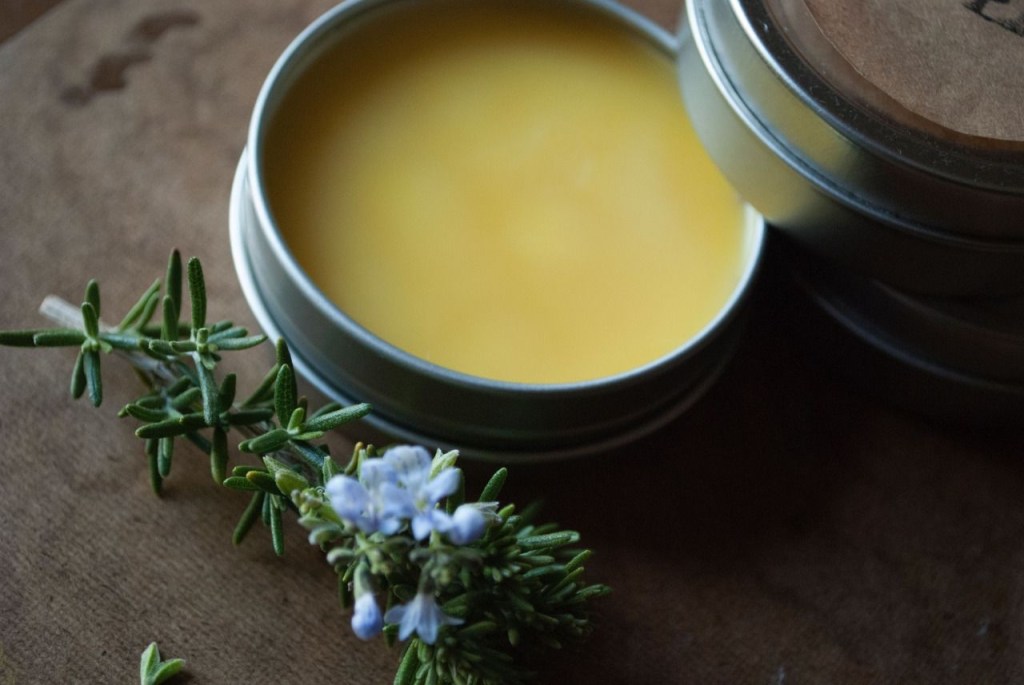
Aches & Bruises Balm

Aches & Bruises Balm

A healing balm for aches, sprains and bruises.

3 tablespoons beeswax

5 fluid ounces comfrey-infused oil

5 fluid ounces elder leaf-infused oil

20 drops of wintergreen essential oil

10 drops of marjoram essential oil

10 drops of lavender essential oil

Melt the beeswax in a bain-marie, then add the infused oils and mix well until fully combined. Remove from the heat and leave to cool for 5 minutes, then add the essential oils and stir well. Pour into jars, seal, label and date.

To use, massage into the affected area up to three times a day for a maximum of 2 months at a time.

Shelf Life: Up to 1 year in a cool, dark place.

Herbal Muscle Bath Salt

Herbal Muscle Bath Salt

The salt and herbs in this bath salt work together to relax tired muscles, improve circulation and ease aches and pains.

4 ounces of salts of your choice, e.g. Epsom salts, Dead Sea salts, pink Himalayan salt

2 teaspoons chopped fresh or dried pine needles

2 teaspoons chopped fresh or dried eucalyptus leaf

2 teaspoons fresh or dried lavender flower heads

2 teaspoons dried daisy heads

10 drops of essential oil of your choice, e.g. rosemary, lavender, mint, eucalyptus

Put the salts and herbs into a blender and pulverize them together. This allows the cell walls of the herbs to be broken down so medicinal properties can be extracted into the bath water. Transfer the mixture to a glass or ceramic bowl, add the essential oil and mix well.

To use, add the mixture to a square of muslin cloth. Tie into a bundle at the top with string and then tie this to your hot water bath tap, allowing it to sit just below the tap. Run the hot water directly over and through the bundle, allowing the salt to dissolve and the herbs to be retained inside the muslin (so preventing drain blockage).

Add cold water to the bath to the desired temperature. Soak and relax in the bath for at least 30 minutes.

Tip: This mix can be made in bulk (with dried herbs) and stored in a sealed jar in a cool, dark place for up to 1 year.

Immune System Tonic Tincture

Immune System Tonic Tincture

Echinacea and elderberry are two herbs used to boost the immune system for prevention and treatment of infection. Combine the health-enhancing effects of mushrooms and anti-microbial properties of eucalyptus and you have an all-round infection-busting tonic.

7 ounces fresh elderberries (or 3.5 ounces dried)

2 ounces dried echinacea root

10 eucalyptus leaves, shredded

5 ounces fresh shiitake mushrooms, chopped

Vodka

Place all the ingredients, except the vodka, loosely in a large, sterilised preserving jar to about two-thirds full. Fill the jar with vodka. Seal the jar, then store in a cool, dark place, shaking the jar every couple of days for a month.

Strain, discarding the plant material and keeping the liquid. Pour the liquid into a sterilised bottle, seal, label and date.

Take 1 teaspoon in a little water, up to three times a day, as needed.

Shelf Life Up to 2 years in a cool, dark place.

Modern European Paganism

Just as Christianity, Judaism, and Islam can be grouped together as monotheistic “Abrahamic” religions that believe in a single all-powerful god, polytheistic religions that honor a multitude of deities also form religious “families.” Among them we find the myriad Hindu sects, Buddhism, which is nontheistic in its theology but includes polytheistic elements in its practice, tribal traditions from the Americas and Asia, the African and Afro-diasporic faiths, which include modern Umbanda and Santeria, and European paganism.

Until very recently, the possibility that a Native European polytheistic faith could be a viable option would have been met with incomprehension. Today, however, a linear worldview that includes an inevitable progress toward a cataclysm decreed by a single, all-powerful God is proving dangerously attractive to some, and to the rest of us, simply dangerous. Instead of a worldview in which neither humanity nor nature have intrinsic meaning because all such meaning derives only from God, or polarizes into a conflict between absolute Good and absolute Evil, we need a worldview that sees holiness in everything, recognizes that spirit takes many forms, and believes that history moves in circles, not a straight line.

The first European polytheistic religion to become well known in Europe and North America in the twentieth century was Pagan Witchcraft, or Wicca, which includes a multitude of traditions derived from or inspired by survivals from European folk religion and the work of Gerald Gardner.  However, Wicca is by no means the only kind of European paganism to flourish today. A second, and rapidly growing, branch of the family consists of the “reconstructed” traditions based on the practices and beliefs of specific cultures. These include the Celtic traditions, among them the different kinds of Druids; the Hellenic traditions, which draw from ancient Greece; the Kemetics, who base their practice on the religion of Egypt; Baltic traditionalists, who have revived their native religions in their newly independent nations; and the religions of the Germanic peoples in Scandinavia, on the Continent, and in England.

Sources: Diana L. Paxson from “Essential Asatru”

Witch Trial Tests

1. Swimming Test 

As part of the infamous “swimming test,” accused witches were dragged to the nearest body of water, stripped to their undergarments, bound and then tossed in to to see if they would sink or float. Since witches were believed to have spurned the sacrament of baptism, it was thought that the water would reject their body and prevent them from submerging. According to this logic, an innocent person would sink like a stone, but a witch would simply bob on the surface. The victim typically had a rope tied around their waist so they could be pulled from the water if they sank, but it wasn’t unusual for accidental drowning deaths to occur. 

Witch swimming derived from the “trial by water,” an ancient practice where suspected criminals and sorcerers were thrown into rushing rivers to allow a higher power to decide their fate. This custom was banned in many European counties in the Middle Ages, only to reemerge in the 17th century as a witch experiment, and it persisted in some locales well into the 18th century. For example, in 1710, the swimming test was used as evidence against a Hungarian woman named Dorko Boda, who was later beaten and burned at the stake as a witch.

2. Prayer Test

Medieval wisdom held that witches were incapable of speaking scripture aloud, so accused sorcerers were made to recite selections from the Bible—usually the Lord’s Prayer—without making mistakes or omissions. While it may have simply been a sign that the suspected witch was illiterate or nervous, any errors were viewed as proof that the speaker was in league with the devil. This twisted test of public speaking ability was commonly used as hard evidence in witch trials. In 1712, it was applied in the case Jane Wenham, an accused witch who supposedly struggled to speak the words “forgive us our trespasses” and “lead us not into temptation” during her interrogation. Still, even a successful prayer test didn’t guarantee an acquittal. During the Salem Witch Trials, the accused sorcerer George Burroughs flawlessly recited the prayer from the gallows just before his execution. The performance was dismissed as a devil’s trick, and the hanging proceeded as planned.

3. Touch Test

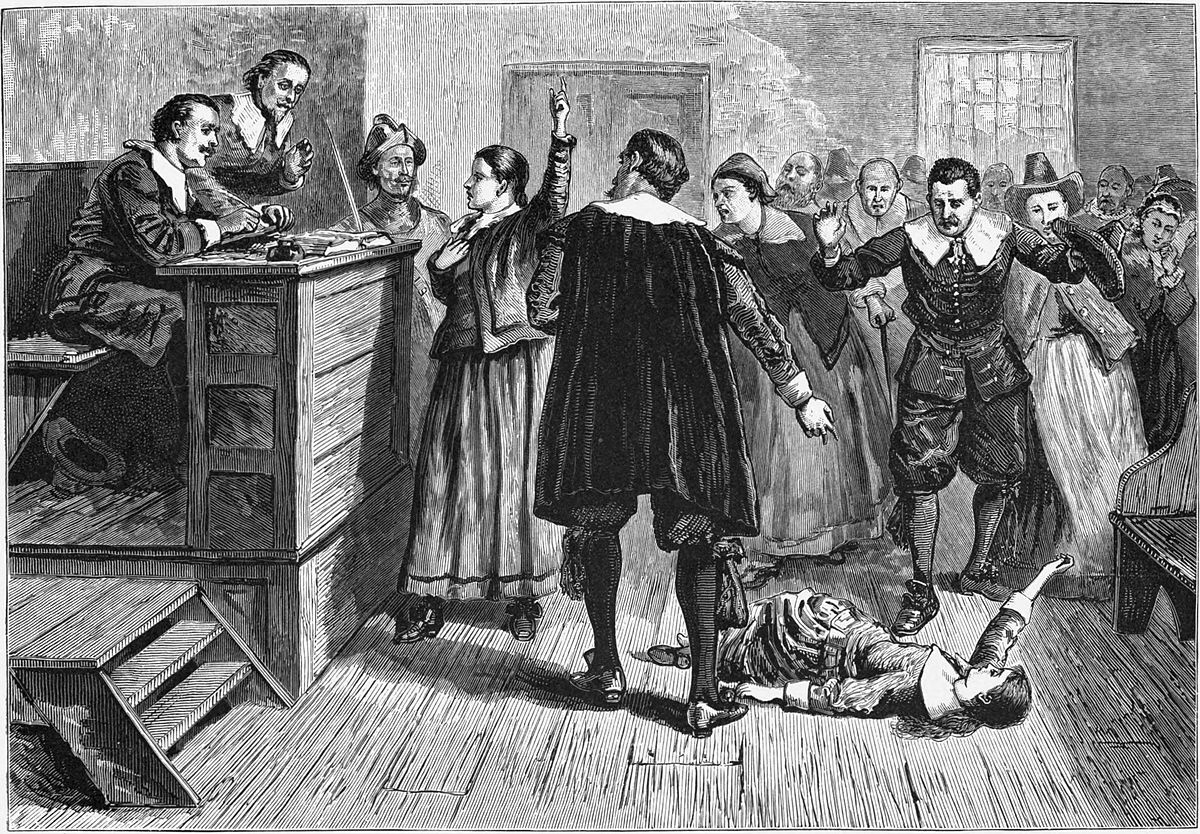
The touch test worked on the idea that victims of sorcery would have a special reaction to physical contact with their evildoer. In cases where a possessed person fell into spells or fits, the suspected witch would be brought into the room and asked to a lay a hand on them. A non-reaction signaled innocence, but if the victim came out of their fit, it was seen as proof that the suspect had placed them under a spell. 

Touch tests played a famous part in the 1662 trial of Rose Cullender and Amy Denny, two elderly English women charged with bewitching a pair of young girls. The children had been suffering from fits that left their fists clenched so tightly that even a strong man could not pry their fingers apart, but early tests showed they easily opened whenever Cullender or Denny touched them. To ensure the reaction was genuine, judges had the children blindfolded and touched by other members of the court. The girls unclenched their fists anyway, which suggested they were faking, but even this was not enough to prove the women’s innocence. Cullender and Denny were both later hanged as witches. 

4. Witch Cakes

A bizarre form of counter-magic, the witch cake was a supernatural dessert used to identify suspected evildoers. In cases of mysterious illness or possession, witch-hunters would take a sample of the victim’s urine, mix it with rye-meal and ashes and bake it into a cake. This stomach-turning concoction was then fed to a dog—the “familiars,” or animal helpers, of witches—in the hope that the beast would fall under its spell and reveal the name of the guilty sorcerer. During the hysteria that preceded the Salem Witch Trials, the slave Tituba famously helped prepare a witch cake to identify the person responsible for bewitching young Betty Parris and others. The brew failed to work, and Tituba’s supposed knowledge of spells and folk remedies was later used as evidence against her when she was accused of being a witch.

5. Witch’s Marks 

Witch-hunters often had their suspects stripped and publicly examined for signs of an unsightly blemish that witches were said to receive upon making their pact with Satan. This “Devil’s Mark” could supposedly change shape and color, and was believed to be numb and insensitive to pain. Prosecutors might also search for the “witches’ teat,” an extra nipple allegedly used to suckle the witch’s helper animals. In both cases, it was easy for even the most minor physical imperfections to be labeled as the work of the devil himself. Moles, scars, birthmarks, sores, supernumerary nipples and tattoos could all qualify, so examiners rarely came up empty-handed. In the midst of witch hunts, desperate villagers would sometimes even burn or cut off any offending marks on their bodies, only to have their wounds labeled as proof of a covenant with the devil.

6. Pricking and Scratching Tests

If witch-hunters struggled to find obvious evidence of “witch’s marks” on a suspect’s body, they might resort to the ghastly practice of “pricking” as a means of sussing it out. Witch-hunting books and instructional pamphlets noted that the marks were insensitive to pain and couldn’t bleed, so examiners used specially designed needles to repeatedly stab and prick at the accused person’s flesh until they discovered a spot that produced the desired results. In England and Scotland, the torture was eventually performed by well-paid professional “prickers,” many of whom were actually con men who used dulled needlepoints to identify fake witch’s marks. 

Along with pricking, the unfortunate suspect might also be subjected to “scratching” by their supposed victims. This test was based on the notion that possessed people found relief by scratching the person responsible with their fingernails until they drew blood. If their symptoms improved after clawing at the accused’s skin, it was seen as partial evidence of guilt. 

7. Incantations

Also known as “charging,” this test involved forcing the accused witch to verbally order the devil to let the possessed victim come out of their fit or trance. Other people would also utter the words to act as a “control,” and judges would then gauge whether the statements had any effect on the victim’s condition. Charges were famously used in the 16th century witch trial of Alice Samuel and her husband and daughter, who were accused of bewitching five girls from the wealthy Throckmorton family. During the proceedings, judges forced the Samuels to demand that the devil release the girls from their spell by stating, “As I am a witch…so I charge the devil to let Mistress Throckmorton come out of her fit at this present.” When the possessed girls immediately recovered, the Samuels were found guilty and hanged as witches.

Sources: history.com, historycollection.com, washingtonpost.com

The First American Witch Hunt (Hartford, Connecticut)

In March 1662, John and Bethia Kelly grieved over the body of their 8-year-old daughter inside their home. Little Elizabeth had been fine just days before when she returned home with a neighbor, Goodwife Ayres. The distraught parents, grasping at any explanation for their loss, saw the hand of the devil at work.

The parents were convinced that Elizabeth had been fatally possessed by Goody Ayres. The Kellys testified that their daughter first took ill the night after she returned home with her neighbor, and that she exclaimed, “Father! Father! Help me, help me! Goodwife Ayres is upon me. She chokes me. She kneels on my belly. She will break my bowels. She pinches me. She will make me black and blue.”

After Elizabeth’s death, accusations of bewitchment flew, and fingers were pointed at numerous townspeople. Hysteria gripped Hartford, a town that a generation before had witnessed the first execution of a suspected witch in the American colonies. Alse Young of Windsor, Connecticut, was sent to the gallows erected in Hartford’s Meeting House Square on May 26, 1647.

Witchcraft was one of 12 capital crimes decreed by Connecticut’s colonial government in 1642. The legal precedent cited by the devoutly Puritan colonists was of a divinely higher order: biblical passages such as Exodus 22:18 (“Thou shalt not suffer a witch to live”) and Leviticus 20:27 (“A man also or woman that hath a familiar spirit, or that is a wizard, shall surely be put to death”).

After Young’s public hanging, at least five other Connecticut residents met a similar fate. However, it was in Hartford in 1662, 30 years before the infamous Salem witch trials, that a witch hunt hysteria took hold, resulting in seven trials and four executions.

Shortly after Elizabeth Kelly’s death, the pious Ann Cole suddenly became “afflicted,” shaking violently and spouting blasphemy. According to one account, Cole was “taken with strange fits, wherein she held a discourse for a considerable time.” Cole blamed her bewitchment on neighbor Rebecca Greensmith, described by one townsperson as “a lewd, ignorant, considerably aged woman,” and others already suspected of witchcraft in the Kelly case. The accused began to accuse others, and even their spouses, of being the true witches. In what became a vicious circle, neighbors began testifying against neighbors. Goody Ayres’ husband, perhaps in an attempt to save his wife, joined in the chorus of Greensmith’s accusers.

The most damning testimony supposedly came from Greensmith herself, who reportedly admitted to having “familiarity with the devil” and said that “at Christmas they would have a merry meeting” to form a covenant. Greensmith implicated her husband and said she had met in the woods with seven other witches, including Goody Ayres, Mary Sanford and Elizabeth Seager. Neighbors testified that they saw Seager dancing with other women in the woods and cooking mysterious concoctions in black kettles.

Two of the suspects, likely the Greensmiths, were subjected to the swimming test in which their hands and feet were bound and they were cast into the water to test the theory that witches are unable to sink. After they were tried, the Greensmiths were indicted “for not having the fear of God before thine eyes; thou hast entertained familiarity with Satan the grand enemy of God and mankind and by his help hast acted things in a preternatural way.” The court’s verdict: “According to the law of God and the established law of this commonwealth, thou deserves to die.”

Rebecca Greensmith had confessed in open court. Nathaniel Greensmith had protested his innocence. But they both met the same fate: the noose. Sanford was also sent to the gallows. After their executions, Cole reportedly was “restored to health.” Ayres fled Hartford, while Seager was finally convicted of witchcraft in 1665, although the governor reversed the verdict the following year. Mary Barnes of Farmington, Connecticut, was also swept up in the region’s witch hunt and executed alongside the Greensmiths.

The four executions of suspected witches in Hartford were to be Connecticut’s last. Another hysteria broke out in Fairfield, Connecticut, in 1692, but none of those convicted met death. Connecticut held its final witch trial in 1697, a half century after Alse Young’s execution. During that period, there were 46 prosecutions and at least 11 executions.

Sources: history.com, historycollection.com, washingtonpost.com