
Vanaheim

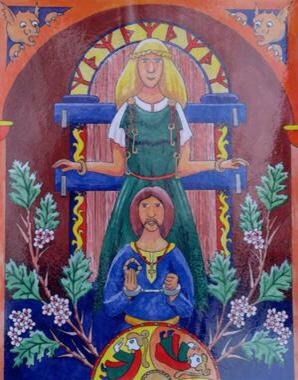
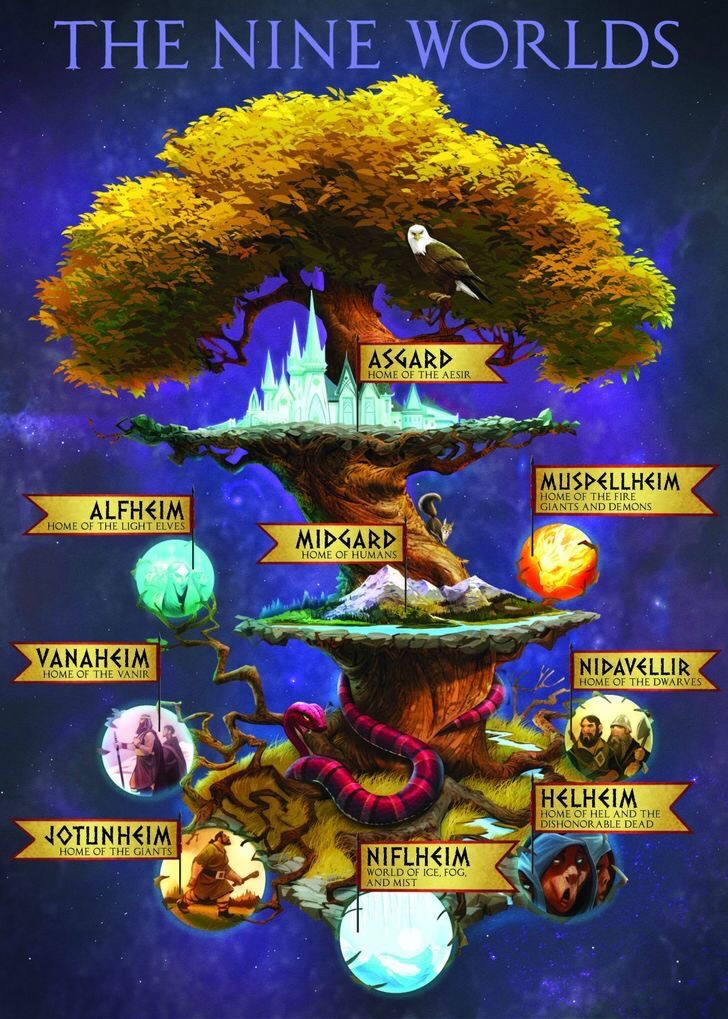
Vanaheim (Old Norse Vanaheimr, “Homeland of the Vanir“) is one of the Nine Worlds that are situated around the world-tree Yggdrasil. As the name implies, it’s the home of the Vanir tribe of deities, who tend to be somewhat more associated with fertility and what we today would call “nature” than the other tribe of Norse deities, the Aesir, who have their home in Asgard.

The surviving sources for our information on Norse mythology and religion, as fragmentary as they are, don’t contain any explicit mention of where exactly Vanaheim is located.  The sole clue we have comes from the Lokasenna (“The Taunting of Loki“), one of the poems in the Poetic Edda, which states that the Vanir god Njord went eastward when he went to Asgard as a hostage at the conclusion of the Aesir-Vanir War.  Presumably, then, Vanaheim lies somewhere to the west of Asgard.

Some scholars have gone so far as to claim that Vanaheim was invented by the thirteenth-century Icelandic Christian historian and poet Snorri Sturluson. However, there is one authentic and reliable Old Norse poem that mentions Vanaheim by name, so we can be reasonably certain that it was a genuine element of pre-Christian Norse religion.

It should come as no surprise, then, that the sources are completely silent as to what kind of world Vanaheim is. However, its name may contain an indication of the place’s character. One of the primary ways the pre-Christian Norse and other Germanic peoples classified geographical spaces (as well as psychological states) was with reference to their concept of the distinction between the innangard and utangard. That which is innangard (“inside the fence”) is orderly, law-abiding, and civilized, while that which is utangard (“beyond the fence”) is chaotic, anarchic, and wild. This psychogeography found its natural expression in agrarian land-use patterns, where the fence separated pastures and fields of crops from the wilderness beyond them. Of the Nine Worlds, two are innangard spaces: Asgard and Midgard, the world of human civilization. Both of these contain -gard in their names and are depicted as having a fence or fortification surrounding them. The rest of the Nine Worlds’ names end in -heim, and there’s no reference to their being enclosed in any way, which seems to indicate that they’re essentially utangard places. Such a designation is certainly in keeping with the way these places are described in Old Norse literature. Thus, we can infer that Vanaheim, like the Vanir themselves, is somewhat more wild or “natural,” and less “cultural,” than the world of the Vanir’s Aesir counterparts, or even that of humanity.

Sources: Sons of Vikings, norse-mythology.org
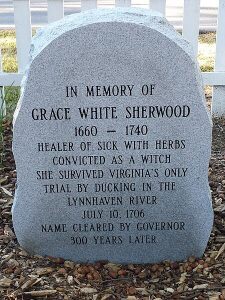
Witchy History: Grace Sherwood

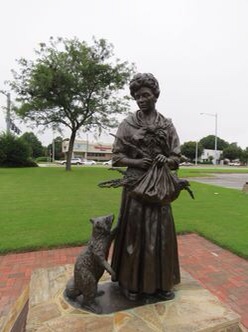
One of the most famous witches in Virginia’s history is Grace Sherwood, whose neighbors alleged she killed their pigs and hexed their cotton. A farmer, healer, and midwife, she was accused by her neighbors of transforming herself into a cat, damaging crops, and causing the death of livestock. She was charged with witchcraft several times. Sherwood was accused of bewitching her neighbor, Elizabeth Hill, causing Hill to miscarry. Other accusations followed and Sherwood was brought to trial in 1706.

The court decided to use a controversial water test to determine her guilt or innocence. Sherwood’s arms and legs were bound and she was thrown into a body of water. It was thought if she sank, she was innocent; if she floated, she was guilty. Sherwood didn’t sink and was convicted of being a witch. She wasn’t killed but put in prison and for eight years.

A satirical article (supposedly written by Benjamin Franklin) about a witch trial in New Jersey was published in 1730 in the Pennsylvania Gazette. It brought to light the ridiculousness of some witchcraft accusations. It wasn’t long before witch mania died down in the New World and laws were passed to help protect people from being wrongly accused and convicted.

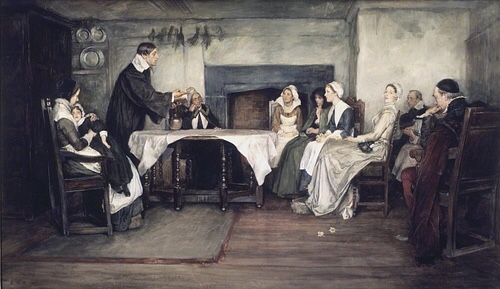
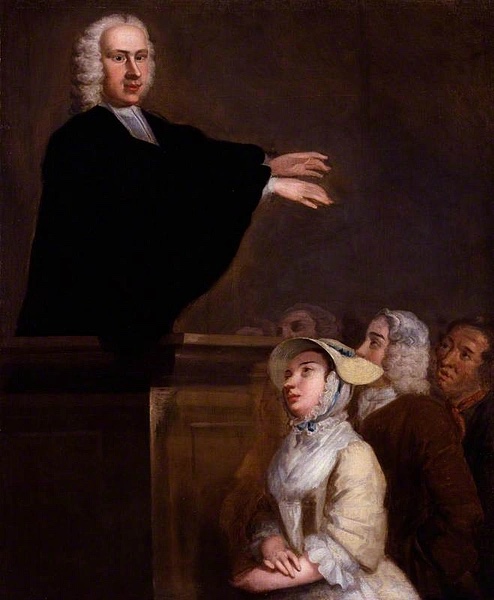
Witchcraft and Dark Magic in Colonial America

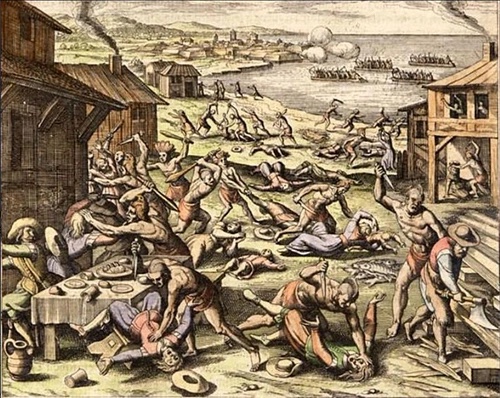
The power of the “Indian Curse” – whether in New England or in Virginia, as in the case of the equally famous Curse of Chief Cornstalk – was considered an irrefutable truth by the colonists because of their belief in the Native Americans as diabolical servants of Satan. This belief was strengthened early on by the Indian Massacre of 1622 in Virginia when, on the morning of 22 March 1622, the chief of the Powhatan Confederacy, Opchanacanough (l. 1554-1646) launched a surprise attack on the settlements, killing 347 people. Prior to the attack, the natives had appeared friendly (purposefully so, on Opchanacanough’s orders, to lower the colonists’ defenses), and this, to the colonists, was proof that no native could be trusted and all posed a potential threat.

The belief in natives wielding supernatural powers continued, however, as they became more marginalized, and it was understood that they had grounds for holding a grudge. Other minorities were equally apt to be suspect though, whether African slaves – who were thought to be able to cast spells through their own associations with Satan – or Catholics whose religious beliefs were considered diabolic by the majority of Protestants.

Witchcraft, thought to be practiced by all three of these groups, was understood as an intimate relationship between a person or people with Satan himself, God’s adversary, who continually plotted against those whom the Bible claimed God had made in his own image. Although the Salem Witch Trials are easily the most famous expression of the fear and hysteria generated by a belief in witchcraft, marginalized people – most often women – were charged, convicted, and hanged or otherwise dispatched in colonies from Massachusetts down to Florida.

Source: World History Encyclopedia Online, ancient.eu

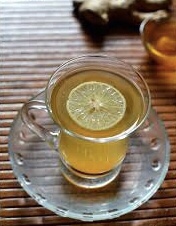
Gingerade Tea

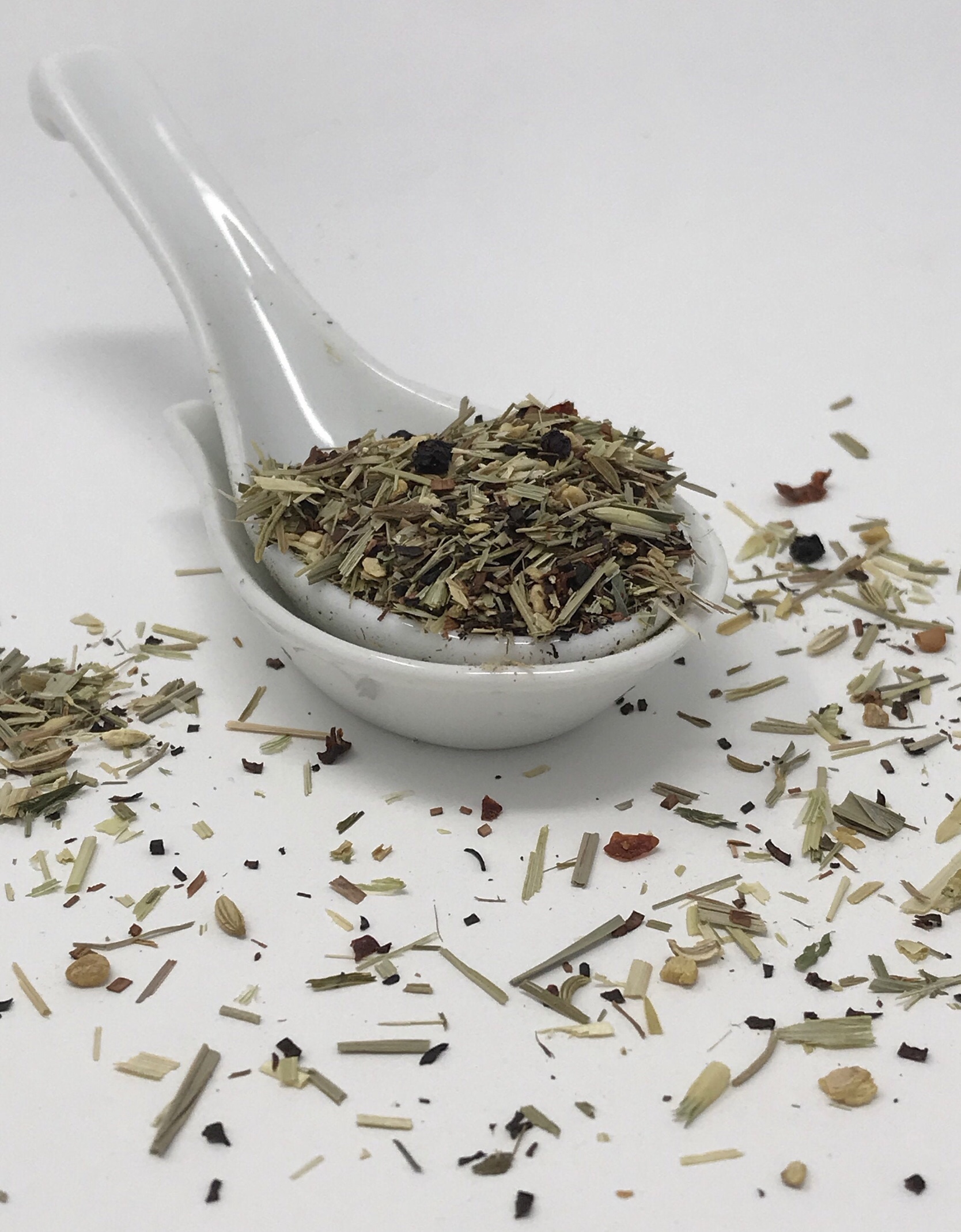
If you love the toning effects of ginger on your immunity and digestion, this tea is for you. In addition to the ginger, Gingerade contains the nutritive sweet herbs milky oats, fennel, and honeybush, which create a delicious blend. Rosemary, known as the herb of remembrance, supports the mind and memory. Lemongrass, with its delicate citrus scent, brightens the mind and uplifts mood. Adding fresh or dried fruits provides a little sweetness and a touch of sour.

3 parts milky oats

2 parts ginger

2 parts honeybush (Cyclopia)

1 part lemongrass

1 part rose hips

1 part fennel

1 part dried berries (e.g., elderberry, blackberry, blueberry)

0.5 part rosemary

1 drop lemon essential oil, or fresh lemon zest to taste

Steeping

Hot Infusion: Pour 1.5 cups hot water over 2 tablespoons tea. Steep for 10 to 15 minutes.

Cold Infusion: Combine 2 cups cold water and 1 to 2 tablespoons tea in a lidded jar. Shake the jar to make sure all the tea is saturated. Place in the refrigerator or a cool place for at least 2 hours.

Taste: sweet, spicy, fruity

Herbal Actions: supports digestion, mineral rich

Systems Affected: digestive, general tonic

Frigga’s Handmaidens

Frigga’s Handmaidens:

Eir

She is known as a healer. That said, Eir’s name translates roughly to the word “mercy,” and in addition to being one of Frigga’s handmaidens, she is listed among Odin’s Valkyries. This has led some modern heathens to speculate that, in addition to her healing skills, she was the source of “mercy on the battlefield,” which, depending on the circumstances, could mean a clean death for those already dying from their wounds.

Fulla

Not much is known about Fulla. She is called a virgin and goes about with her hair unbound and flowing. She wears a gold band around her head. She carries Frigga’s casket, a small chest, and also cares for Frigga’s shoes. She is considered someone with whom Frigga shares her secrets. Fulla may be the Volla listed in the Second Meresburg Charm, Frigga’s sister, or, potentially, Frigga herself.

Gefjon

Gefjon has four sons, whom she changed into oxen in order to carve land for herself out of Denmark; folklore has it that Zealand is Gefjon’s property. Her name means “giver,” and this has caused her to be confused with Freyja, whose byname, Gefn, means the same thing. However, as Frigga’s handmaiden, she protects maidens and unmarried women. This, taken along with the myth about Zealand, is enough evidence to suggest that she is a goddess in her own right.

Lofn

Lofn is the handmaiden who clears the way for permission to be granted for marriages, particularly those marriages which would otherwise be seen as forbidden.

Sága

Sága is an interesting character. Her hall, Sökkvabekk, refers to sunken benches, the implication being a bog or fen. Frigga’s hall is Fensalir, which also involves a fen. Frigga is married to Odin; Sága is known to sit with Odin in her hall and drink mead with him. In fact, there are so many similarities between Sága and Frigga that many scholars contend that they are one and the same, and that Sága is one of Frigga’s bynames. The Prose Edda mentions her as one of Frigga’s handmaidens.

Sjofn

Sjofn helps turn the minds of men and women to love.

Snotra

Snotra is known to be wise and courteous.

Syn

Syn is known as the handmaiden who bars the doors to the hall and guards against those who are forbidden to enter. It is also said that she can stand in assembly as a party for the defense, in cases that involve her.

Var

Var is most concerned with hearing the oaths people make, particularly the marriage oath.

Vor

Vor is also known to be wise, but she asks questions, and nothing can be concealed from her. Vor is the last of Frigga’s handmaidens that we have record of.

Herbal Hand Sanitizer

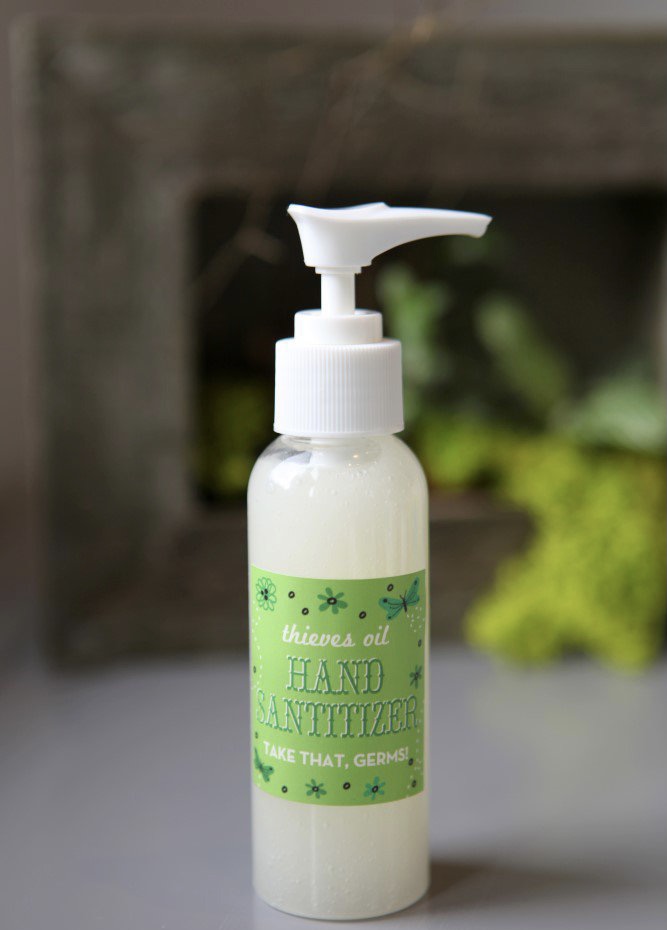
This natural hand sanitizer combines antimicrobial herbs to kill the bugs that cause infection. It can be used when out and about without the need for water.

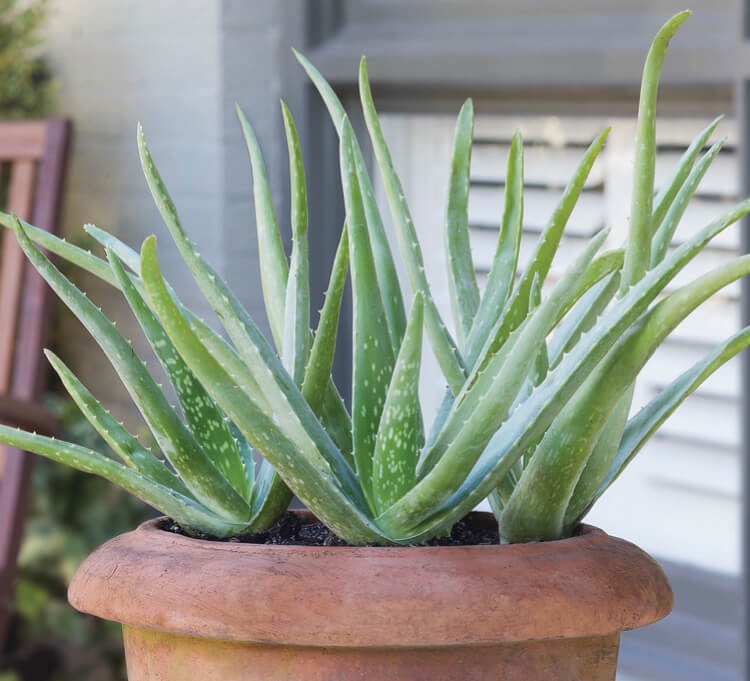
½ cup aloe vera gel

2 tsp. herbal-infused oil

1 tsp. thyme tincture

10 drops of lavender essential oil

10 drops of eucalyptus essential oil

Put the aloe vera gel into a small mixing bowl, then slowly add the infused oil, whisking together thoroughly.

Add the tincture and essential oils and whisk again.

Pour into pump or squeeze bottles, seal, label and date. Use as needed.

Shelf Life Up to 1 year in a cool, dark place.

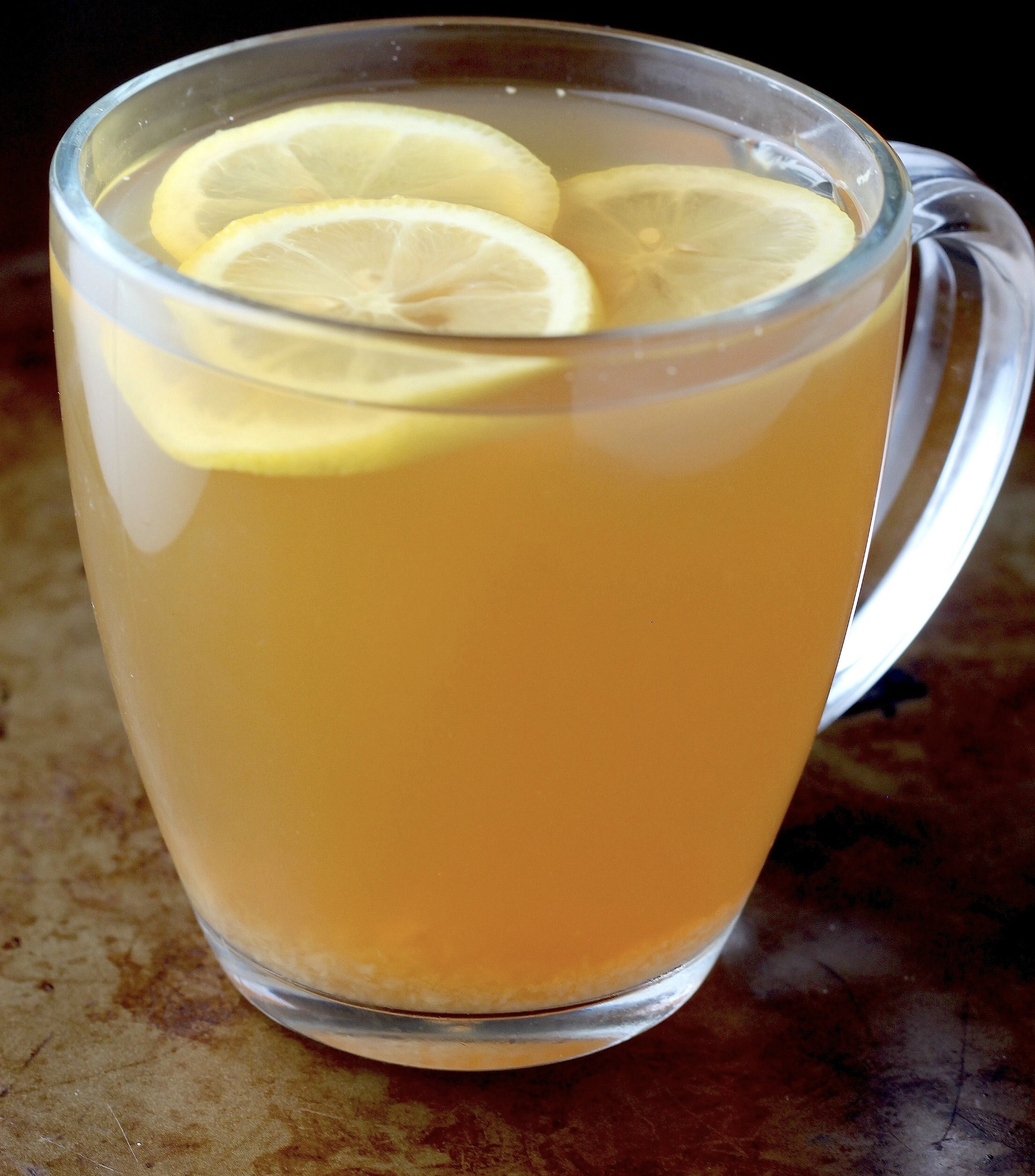
Gingerade Tea

If you love the effects of ginger on your immunity and digestion, this tea is a must add to your catalogue of teas. In addition to the ginger, Gingerade contains the nutritive herbs of milky oats, fennel, and honeybush, which create a delicious blend. Rosemary, known as the herb of remembrance, supports the mind and memory. Lemongrass, with its delicate citrus scent, brightens the mind and uplifts mood.

3 parts milky oats

2 parts ginger

2 parts honeybush

1 part lemongrass

1 part rose hips

1 part fennel

1 part dried berries (e.g., elderberry, blackberry, blueberry)

0.5 part rosemary

1 drop lemon essential oil, or fresh lemon zest to taste

Hot Infusion: Pour 1.5 cups hot water over 2 tablespoons tea. Steep for 10 to 15 minutes.

Cold Infusion: Combine 2 cups cold water and 1 to 2 tablespoons tea in a lidded jar. Shake the jar to make sure all the tea is saturated. Place in the refrigerator or a cool place for at least 2 hours.

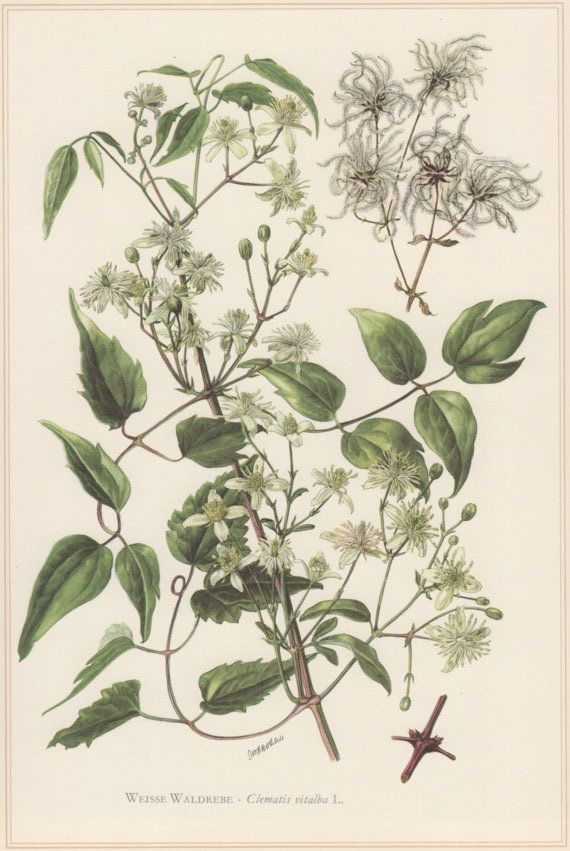
Old Man’s Beard or Traveller’s Joy (clematis vitalba)

Old Man’s Beard or Traveller’s Joy (clematis vitalba)

A native perennial found in hedgerows, wood edges and scrub, it may be a beautiful plant, but it was said to do the Devil’s work for him by trailing into the other plants and choking them. Used medicinally in homeopathic preparations for rheumatism and skin eruptions, the plant contains protoanemonin and ingestion leads to severe abdominal pain and gastrointestinal irritation. Contact can cause skin irritation, which is why it was known as herbe aux gueux (‘beggar’s weed’) in France, having once been used by beggars to irritate the skin in order to simulate sores. The acrid smell of the foliage causes profuse watering of the eyes and nose when inhaled.

Magical propensities: None found.

Warming Ointment

This ointment is ideal for cold hands and feet. Warming juniper and ginger help assist circulation to the small capillaries in the extremities, while comfrey heals chapped skin.

2 tablespoons chopped fresh rosemary

2 tablespoons dried comfrey leaf

2 tablespoons dried juniper berries, lightly crushed

2 inch piece of fresh ginger, peeled and sliced

1 fresh red chilli, chopped

1 cup olive oil

1 oz. beeswax

Place the herbs, berries, spices and oil in a bain-marie. Leave to infuse over a very low heat for 2 hours, stirring occasionally.

Strain, discarding the herbs and retaining the oil. Return the oil to the bain-marie, then add the beeswax, stirring until dissolved and melted. Pour into jars, then seal, label and date.

Apply as needed. Wash hands after applying and do not touch eyes.

Shelf Life: Up to 2 years.

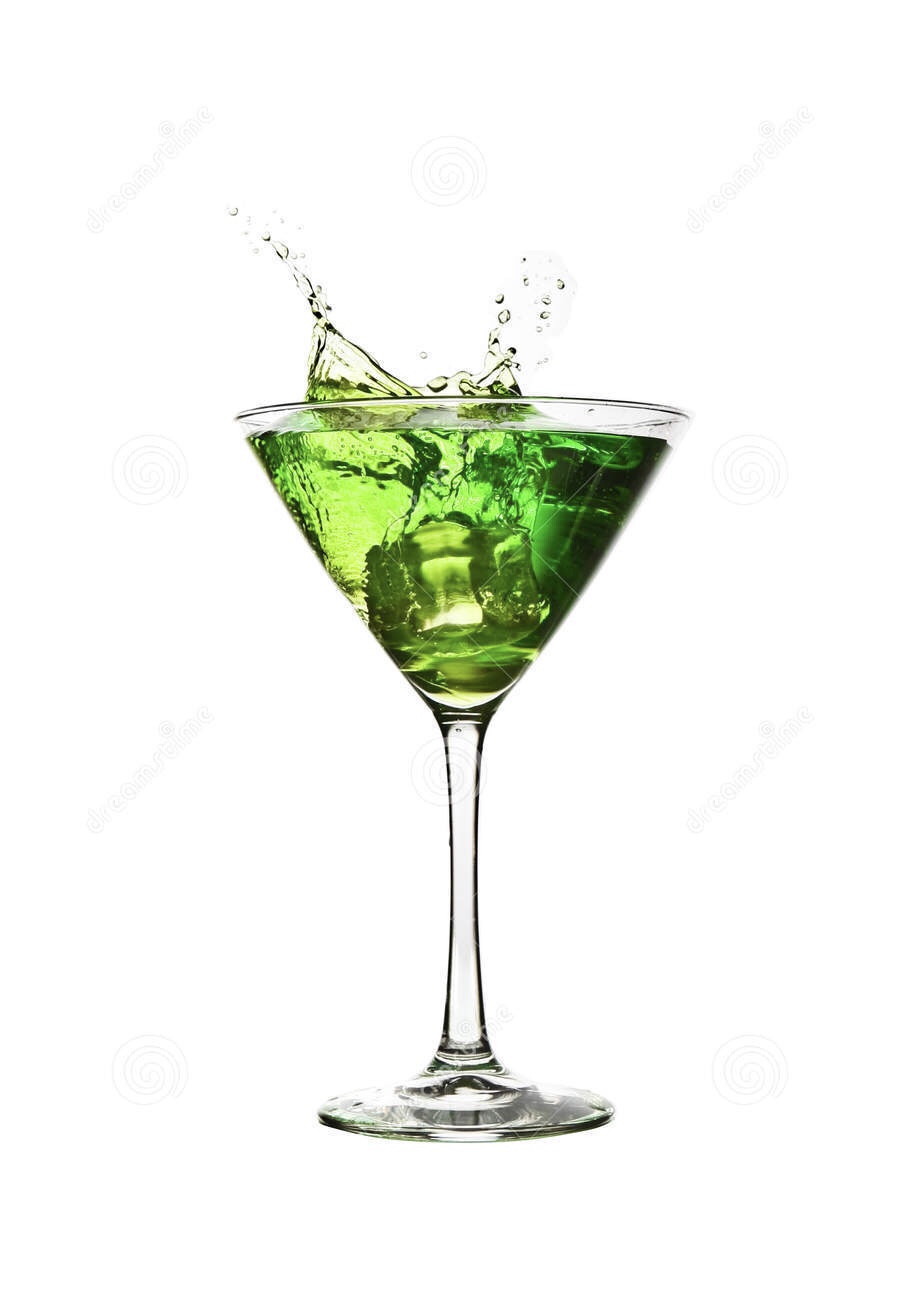
Garden of Eden

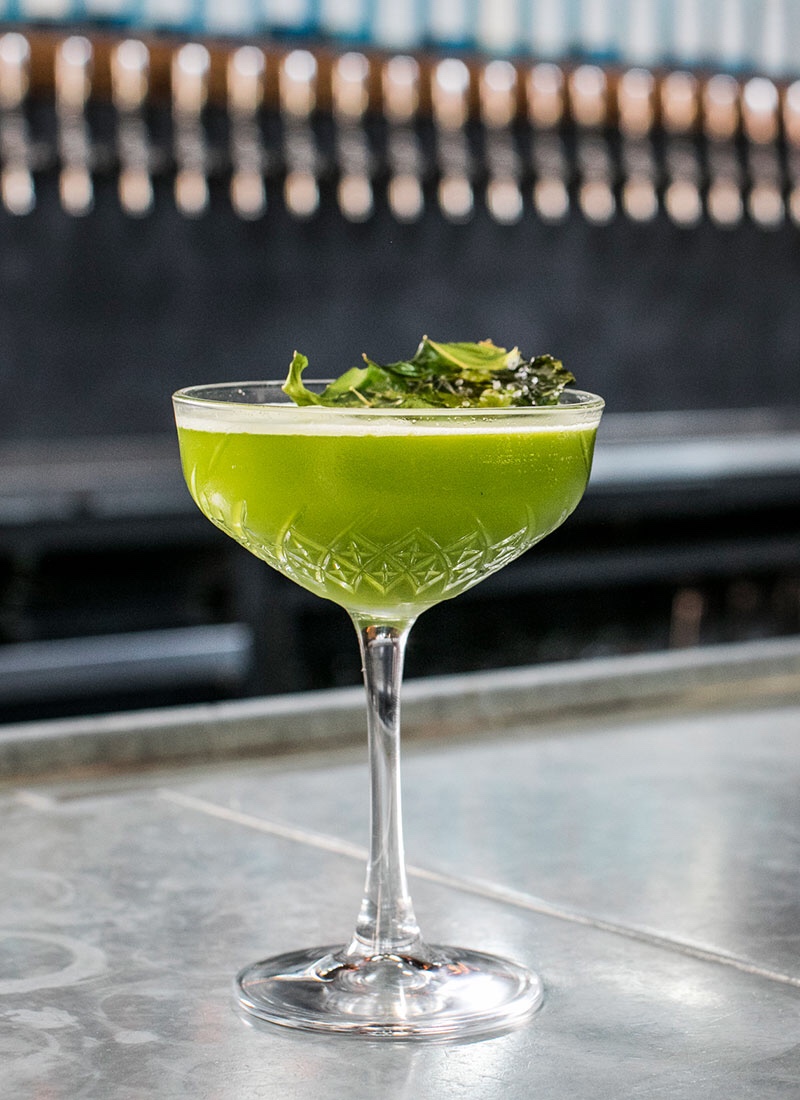
This vegetable concoction is a beautiful green color reminiscent of a lush, grassy meadow. Gin is the perfect base for the savory ingredients. The preparation of the drink is quick and simple due to the ease with which snow peas and basil are muddled.

3 snow peas

3 basil leaves

Sprig dill

Bar spoon pink and black peppercorns

2 ounces gin

¾ ounce Sour Mix

Garnish basil leaf and pink peppercorns

Muddle the snow peas, basil, dill, and peppercorns in a shaker. Add the gin, Sour Mix, and ice to the shaker and shake vigorously. Double strain into a coupe glass. Garnish with a basil leaf and pink peppercorns or garnish of your choice.