In a darkened room stands a 40-year-old woman named Catherine Monvoisin. Her figure is lit only by torches held by the faceless men standing in front of her, men who are sentencing her to death by fire. It is the 17th century, where such a death sentence is an unusual ending to someone’s life. But Catherine is an unusual woman.
Catherine was the wife of a silk merchant and jeweler and lived a life of comfort in Parisian Society. She was a philanthropist, entrepreneur, fortune teller, mother, and art lover. But she was also a professional poisoner, alleged provider of sorceries, and an alleged witch who plunged the French aristocracy into turmoil, and even tried to kill a king.
She was more famously known as “La Voisin” and was a central figure in “L’affaire des Poisons” or the “Affair of the Poisons”. Catherine controlled a wide network of fortune-tellers from her position in Paris society. She provided poison, abortion, aphrodisiacs, arranged black masses, and even claimed to offer magical services.
She was so famous that she even drew clients from the aristocracy, who could afford to pay her high prices which funded her lavish lifestyle. Her organization, in performing commissioned black magic and murder by poison, took thousands of lives.
The claimed alchemist Adam Lesage, one of the lovers of Catherine, told of her murdering her own husband, an accusation she denied. It is believed that throughout her life, she might have been responsible for the deaths of around 2,500 infants due to her poisoning. However, throughout this time she remained a high-profile socialite, and her sheer charm made no one suspect her.
Bezoars are a mass of undigested fiber formed in the stomach of animals, and were once believed to be an antidote to poison. They have been found in the guts of cows and even elephants, but mostly they come from the “bezoar goat.” Bezoars were first introduced into medieval Europe by Arab physicians. Although doubts were sometimes cast over their properties, the demand continued well into the 18th century.
Wealthy collectors spent considerable sums to acquire the best “stones,” which were kept in elaborate cases. According to A Compleat History of Druggs, first published in French in 1694, the medicinal strength of the bezoar depended on the animal that produced it. “Bezoar Stones taken from Cows,” for instance, “have nothing near the good Qualities” of the true bezoar goat. On the other hand, a mere two grains of “the Bezoar that is found in Apes” will have a far greater effect than that of a mere goat.
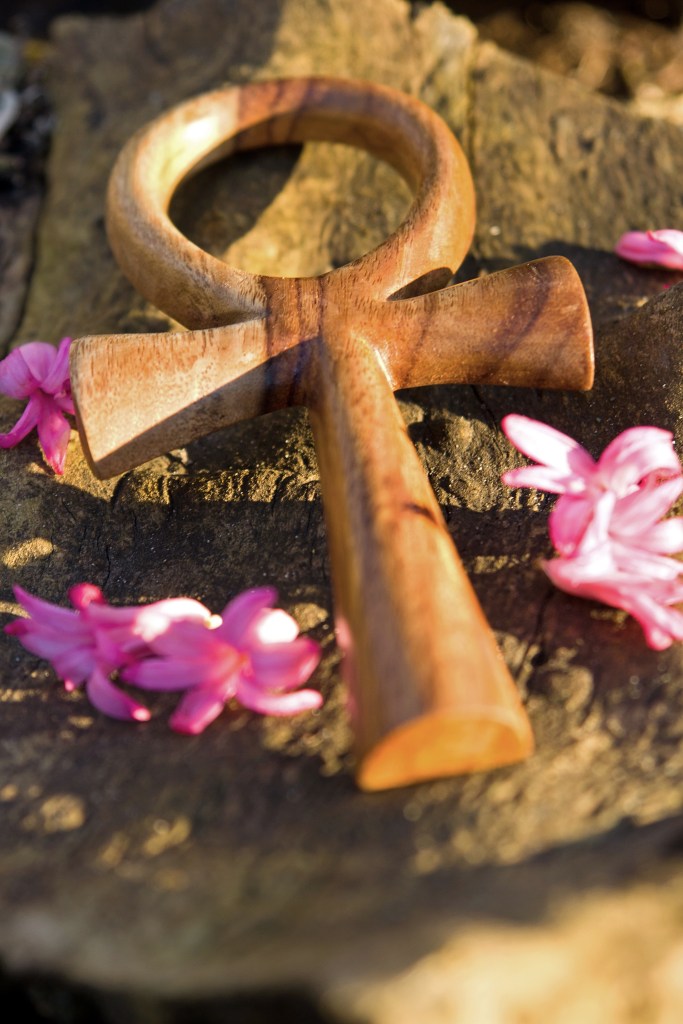
One of the most recognizable ancient Egyptian symbols, the ankh, is one of the few vestiges to survive the decay of the old religions and still be in use today.
What Is the Ankh?
The ankh is an ancient Egyptian hieroglyph or symbol known as the cross of life or key of life and dates back to the Early Dynastic period (3150 BC – 2613 BC). The symbol resembles a cross with a loop on the top. The ankh is seen in the hands of almost every deity, carried by the loop or with arms crossed and one in each hand. The symbol was found as far afield as Persia and Mesopotamia in dig sites and was said to connote both mortal existence as well as eternal life.
Origin
Various theories exist about the origin of the symbol, but popular opinion suggests the origin is unknown. In 1869, mythologist Thomas Inman believed the ankh was a sexual symbol, and Egyptologist E. A. Wallis Budge similarly thought it may symbolize the belt buckle of Isis or Tyet. The ceremonial girdle or Knot of Isis, was alleged to represent female genitalia and fertility. Egyptologist Alan Gardiner posited it represented a sandal strap, as the word sandal and ankh came from the same root word. His theory was further affirmed by the fact that the sandal was a part of daily life in Egypt and the ankh also represented life. In a more recent publication, The Quick and the Dead, the authors claim the ankh ties to ancient cattle culture.
Usage
The symbol was portrayed on amulets, with the Djed (meaning stability) or Was (meaning strength) – symbols which were said to provide the protection of the gods to the wearer. Ptah is also seen making offerings with these three symbols in images representing him. The ankh was associated with the purifying power of water. This was evident on numerous temples where the king was depicted with two gods pouring a stream of ankhs over his head to cleanse him.
Gods and kings are frequently depicted holding the ankh to show their immortality and command over life and death. For those that had passed into the afterlife, the symbol was carried when their souls were weighed or aboard the boat of the Sun God, indicating their desire for immortality like the gods. According to the Dictionary of Symbols by Jean Chevalier and Alain Gheerbrant, it also represents the spring of eternal life and divine virtues. When it was held by the loop, usually in funeral rites, it may have been perceived as the key to opening the gateway to the Fields of Aalu, the Egyptian version of the Elysium Fields. Chevalier and Gheerbrant further postulated that when the ankh was placed between the eyes, it symbolized the duty of the person to keep the mystery he was initiated into a secret.
Early Dynastic and Old Kingdom Period
In the Early Dynastic period, the symbol became popular through the rise of the cult of Isis and Osiris. Isis is seen holding the ankh more frequently than other deities. Since the cult of Isis promised immortality through personal resurrection, the symbol became imbued with greater meaning and potency.
During the Old Kingdom Period, the ankh was well known as a symbol of eternal life. The dead were called ankhu and the symbol appeared frequently on sarcophagi and caskets.
Middle Kingdom and New Kingdom Period
The word ’nkh became associated with mirrors, from the Middle Kingdom Period onward. The Egyptians believed mirrors were magical and used them in divination. An ankh-shaped gilded mirror was found in Tutankhamun’s tomb. The Egyptians believed the afterlife was a perfect reflection of life on earth – a mirror image. During a particular festival, called the Festival of Lanterns, the Egyptians would light oil lamps to create a night sky of stars on earth to mirror the stars in the sky and the afterlife. When they did this, it was said to help them commune with the dead who had passed on the Fields of Aalu or Field of Reeds.
During the New Kingdom, the ankh was used in ceremonies and became associated with the cult of Amun. During the Amarna period, images of Aten the sun-disk often contained ankhs at the end of the sun’s rays.
Knot of Isis
The Tyet, or Knot of Isis, is very similar to the ankh. The arms of the cross are bent downward, differentiating the Knot of Isis from its counterpart, but it similarly means life or welfare. Sources claim the Tyet combines the concept of life and immortality with the knots which fasten mortal life to earth. To savor immortal life, the knot purportedly needs to be unraveled.
Modern Use
The symbol is used by modern Pagans as a symbol of faith, in healing and to promote psychic communication. It is viewed as a symbol of life by various new age religions. Thelemites, followers of the religion created by Aleister Crowley, also make use of the ankh as a union of opposites, a symbol of advancing one’s destiny or of divinity.
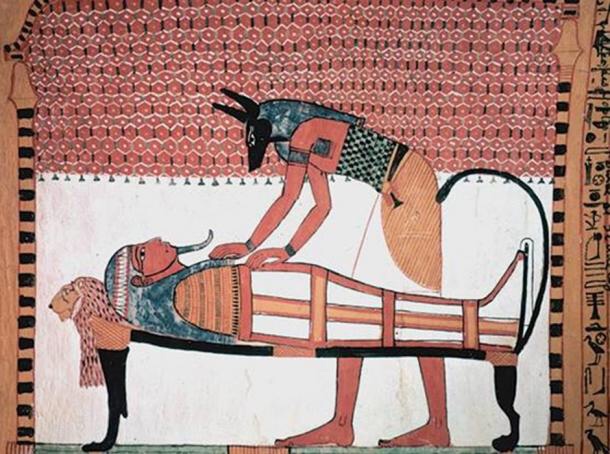
“Anubis was the guardian of all kinds of magical secrets. In the Papyrus Jumilhac, he appears as the leader of the armed followers of Horus. His ferocity is a match for the violence of Seth. In magical texts of a similar date, Anubis is named as ‘Lord of the Bau’. Whole battalions of messenger demons are under his command. In the magical papyri dating to Roman times, Anubis acts as the main enforcer of curses. The gracious deities of the cult temples are scarcely recognizable in the pitiless gods and goddesses encountered in everyday magic. (…) A story in Papyrus Jumilhac (c. 300 BC) explains the custom by relating how Seth once turned himself into a panther after attacking the body of Osiris. Anubis captured and branded the panther, creating the leopard’s spots. The jackal god decreed that leopard skins should be worn by priests in memory of his victory over Seth.”
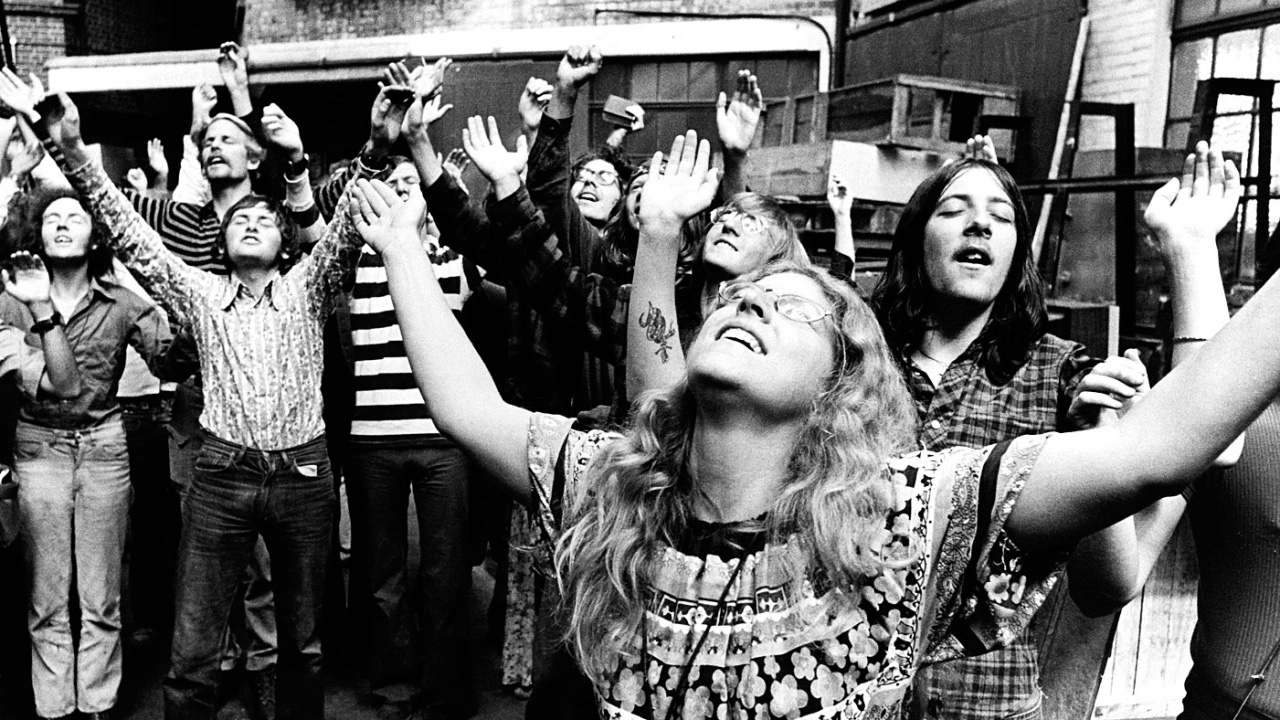
Cults whether fictional or real are having a cultural moment. The recent success of Hulu’s “The Path” and “American Horror Story: Cult” in which we see versions of cult leaders like David Koresh and Jim Jones – all portrayed by Evan Peters. Our fascination with cults – real or fictional – may stem from the fine line between being drawn to what appears to be a utopian community and a dangerous, free-will-stripping group.
The Peoples Temple (1955 – 1978)
When Jim Jones founded the Peoples Temple in Indiana in 1955, it appealed to many as a progressive organization advocating for civil rights, and operating homes for the elderly and those with mental health issues. Like previous progressive groups, Jones’s goal was to create an egalitarian utopian community. In 1965, Jones moved his family and the Peoples Temple to the Redwood Valley in California, based on recommendations from an article in Esquire suggesting places to survive a nuclear war. In 1974, the Peoples Temple leased land in Guyana, where the group would flee media scrutiny in the United States and set up an agricultural commune. By 1978, the population of “Jonestown” in Guyana had grown to around 900, but a few disillusioned members tipped off the American media of the armed compound in South America and rehearsals of mass suicide. In November 1978 Congressman Leo Ryan traveled to Jonestown where he, three journalists and one defector were shot and killed, before Jones ordered his followers to drink a cyanide-laced drink, resulting the loss of 909 lives.
The Branch Davidians (1955 – 1993)
Although this extremist sect of the Seventh Day Adventists has been active since the 1950s, the Branch Davidians are best known for the 1993 standoff in Waco, Texas. David Koresh, the leader at the time, believed he was the Messiah and declared all women – including those underage or already married – his “spiritual wives.”The group believed the apocalypse was imminent and, fearing its arrival, locked themselves into a sprawling compound. On February 28th, 1993, agents from the Department of Alcohol, Firearms and Tobacco raided the Waco compound on the suspicion that Koresh was stockpiling weapons. What started as a shootout soon turned into a standoff between the Branch Davidians and the FBI. Itlasted 51 days, and eventually ended when tanks were brought in: the compound was filled with tear gas and caught on fire, leaving more than 80 people dead.
Sullivanians (1957 – 1991)
Saul B. Newton founded The Sullivan Institute in 1957 with his wife, Dr. Jane Pearce, in an attempt to create a viable alternative to the traditional nuclear family, which he viewed as the root of all social anxiety. Located in three buildings on the Upper West Side of Manhattan, the Sullivan Institute operated as both a therapy center and a polyamorous commune, despite the fact that Newton, the leader, had no formal training as a therapist. Unlike other practicing therapists who worked under a strict code of ethics, there were no such boundaries for the Sullivanians, as the members of the Institute were known, with therapists and other members of the community sleeping with each other regularly. In fact, they were forbidden from engaging in exclusive relationships. Any children born to Sullivanians were sent away to boarding school or caretakers with very little visitation from their parents. All members were encouraged to cut ties with their former friends and family members. In the 1970s, the group – which had around 500 members – merged with a progressive theater collective call the Fourth Wall and relocated to Orlando in 1979 following the nuclear meltdown at Three Mile Island. After seeing a decline in membership in the 1980s, the Sullivan Institute ended with the death of Newton in 1991.
Children of God – Family International (1968 – Present)
David “Moses” Berg founded this communist Christian offshoot in California in 1968. For someone so concerned with moral decay and evolution, Berg had a very sex-centric perspective on how to spread the views of Jesus, including reported recruitment through “flirty fishing” (i.e. using young women to lure in new members by having sex with them) and apparently opposing anti-pedophilia laws – according to some former members, having sex with children was not only permitted, but also a divine right. Berg was a master of propaganda, writing, publishing and distributing pamphlets discussing his teachings. The group changed its name several times – most recently to “Family International” in 2004 – and still exists today, operating in 80 countries, although no longer permits sex between adults and children. Actors Joaquin Phoenix and Rose McGowan were born into the cult and have since left and spoken out against the group.
Heaven’s Gate (1972 – 1997)
Heaven’s Gate – founded in San Diego in 1972 by Marshall Applewhite and Bonnie Nettles – was based on the premise that aliens would escort members of the group to the “Kingdom of Heaven” via extraterrestrial spacecraft. They first made headlines in 1975, when they convinced 20 new followers to give up their earthly possessions, leave their families and disappear. On the CBS Evening News, Walter Cronkite reporting that “it’s a mystery whether they’ve been taken on a so-called trip to eternity – or simply taken.” (They turned out to be living underground, camping everywhere from Rhode Island to Oklahoma.) But Heaven’s Gate is best known for a much more tragic event two decades later. In March 1997, the group carefully planned and then executed a mass suicide, timed to coincide with the arrival of the Hale-Bopp comet, which members thought would conceal the alien spacecraft on its way to earth. Clad in black tunics and Nikes, 39 Heaven’s Gate members ate applesauce mixed chased a sedative with vodka, covered their heads in plastic bags and died. Nine of the 18 men – including Applewhite – had been surgically castrated, as the group mandated celibacy. An upbeat videotaped message made the members prior to the suicide indicated that they were willing – even happy – to die and move to the “next level.”
This practice of strategically “scraping” body surfaces is performed to relieve pain, reduce inflammation, increase circulation, and boost the immune system. Traditionally this is done with a small, flat jade stone with rounded edges, which can be used on the body, muscles, acupressure points, and/or meridians to release heat, toxins, and so on. You usually scrape in the direction of the meridians only until you see small red dots (called petechia). These red dots indicate that blood has been brought to the surface of the skin, where it is able to release the heat and toxins. Chinese medicine calls this “raising the sha,” which is said to eliminate stagnation and inflammation in the blood and protect the immune system for days or even weeks after the treatment. You can easily learn to do this at home for certain conditions, such as when you are feeling vulnerable to a cold, have tight or sore muscles, or are feeling inflamed in a particular part of your body. For chronic conditions such as cancer or autoimmune disease, or if there are lumps, cysts, or fibroids, I recommend working with a practitioner before performing gua sha.
Witch hysteria really took hold in Europe during the mid-1400s, when many accused witches confessed, often under torture, to a variety of wicked behaviors. Within a century, witch hunts were common and most of the accused were executed by burning at the stake or hanging. Single women, widows and other women on the margins of society were especially targeted.
Between the years 1500 and 1660, up to 80,000 suspected witches were put to death in Europe. Around 80 percent of them were women thought to be in cahoots with the Devil and filled with lust. Germany had the highest witchcraft execution rate, while Ireland had the lowest.
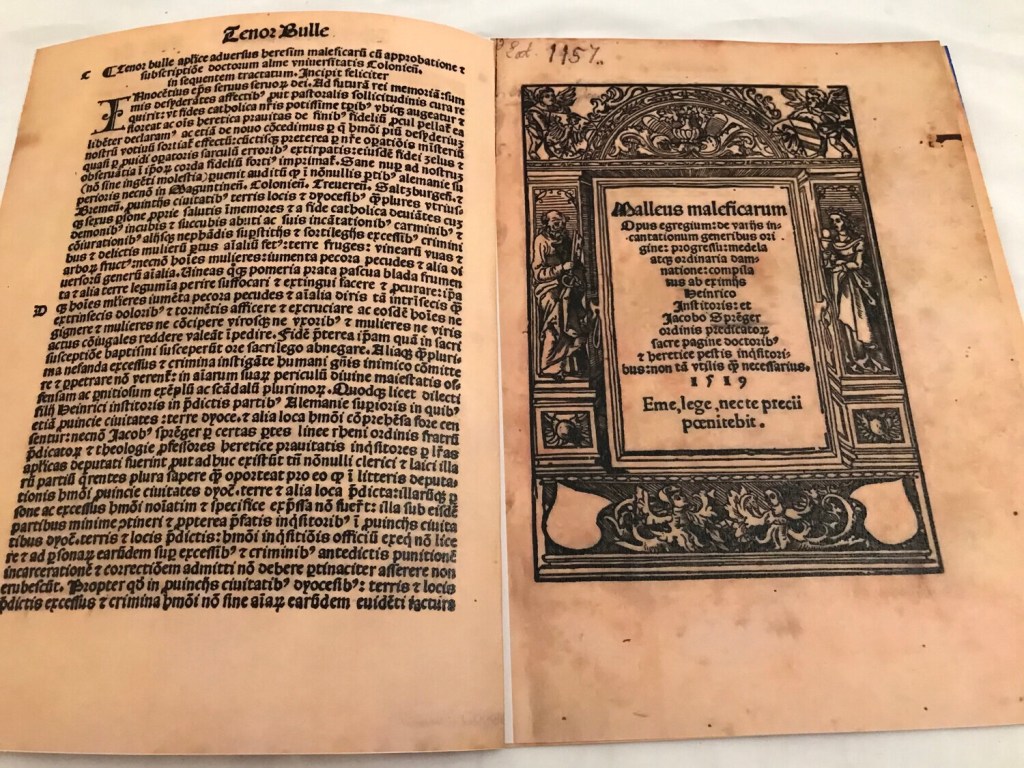
The publication of “Malleus Maleficarum”—written by two well-respected German Dominicans in 1486—likely spurred witch mania to go viral. The book, usually translated as “The Hammer of Witches,” was essentially a guide on how to identify, hunt and interrogate witches.
“Malleus Maleficarum” labeled witchcraft as heresy, and quickly became the authority for Protestants and Catholics trying to flush out witches living among them. For more than 100 years, the book sold more copies of any other book in Europe except the Bible.
This is a hand-held facial massage tool that is used to increase circulation in the face and neck, increase absorption of skin care products and reduce fine lines, wrinkles, under-eye swelling, and dark circles. It works by supporting lymphatic drainage away from the face. The roller is typically made with two smooth jade stones, one at each end. Depending on the size of the area you are working on, you can use either the small or large end. To use, simply massage your favorite skin cream or oil onto your face and neck and, using the roller, make small sweeping motions from the center of your face, out toward your hairline or down toward your neck. Do this for about five minutes each morning. If you tend to have puffiness under your eyes or red, irritated skin, you can put the roller into the freezer overnight and use it cold the next morning.
Early witches were people who practiced witchcraft, using magic spells and calling upon spirits for help or to bring about change. Most witches were thought to be pagans doing the Devil’s work. Many, however, were simply natural healers or so-called “wise women” whose choice of profession was misunderstood.
It’s unclear exactly when witches came on the historical scene, but one of the earliest records of a witch is in the Bible in the book of 1 Samuel, thought be written between 931 B.C. and 721 B.C. It tells the story of when King Saul sought the Witch of Endor to summon the dead prophet Samuel’s spirit to help him defeat the Philistine army.
The witch roused Samuel, who then prophesied the death of Saul and his sons. The next day, according to the Bible, Saul’s sons died in battle, and Saul committed suicide.
Other Old Testament verses condemn witches, such as the oft-cited Exodus 22:18, which says, “thou shalt not suffer a witch to live.” Additional Biblical passages caution against divination, chanting or using witches to contact the dead.








 Mark Bere Peterson’s Counterculture, Urban Legends, Paganism & Witchcraft