The Astronomical Clock of Besançon Cathedral (Besançon, Franche-Comté, France)

Besançon Cathedral, located in the center of France’s 19th-century clock-making capital, is home to a 19-foot-tall (5.8 m) clock with 30,000 pieces. It is one of the most complicated horological devices ever made. Installed in 1860, the clock shows the local time in 17 places around the world, as well as the time and height of the tides in eight French ports, a perpetual calendar with leap-year cycles, and the times of sunrise and sunset.

The many dials of what may be the most complicated horological device ever constructed.

Nicolaus Copernicus‘s book “On the Revolutions of the Heavenly Spheres” is added to the Index of Forbidden Books

Today in Science:

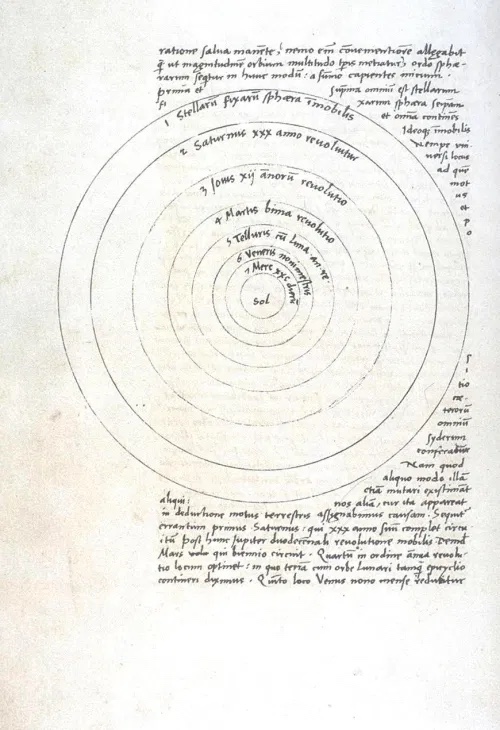
1616 – Nicolaus Copernicus‘s book On the Revolutions of the Heavenly Spheres is added to the Index of Forbidden Books 73 years after it was first published.

Here’s Copernicus’s heliocentric model in the book’s manuscript. Note the Sun in the center with seven planets around it. The Index Librorum Prohibitorum was finally abolished as church law in 1965

Mijikenda Tribes and the Vigango Statues

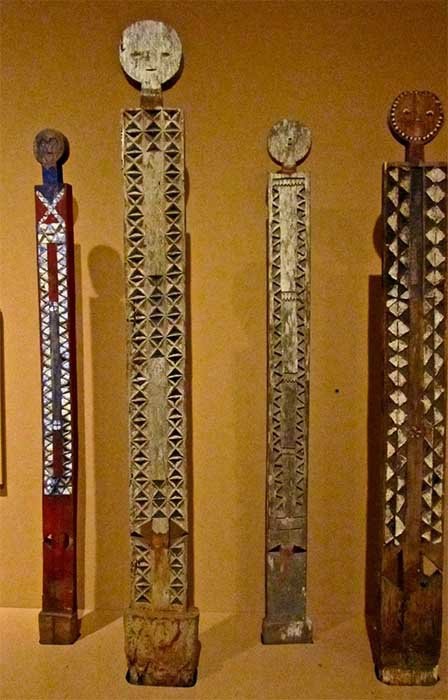
During the 1980s, Coastal Kenya experienced the largest heist of ancestral artifacts in history. Over 300 wooden Vigango statues were taken from the sacred grounds of several Mijikenda tribes. These 4-foot wooden statues were stolen and sold to western tourists and international art collectors. Since then, the Vigango statues have been discovered in private art collections and museums throughout Europe and the United States.

A majority of those Vigango pieces in circulation were sold by art dealer Ernie Wolfe III, who was accused by the New York Times in 2006 of being a prime suspect to the sale of stolen Vigango statues. Although hundreds of the statues which he sold remained in circulation, Wolfe III mentioned making efforts to stop further sales of newer Vigango statues. Much work has been made by American anthropologists Linda Giles, Monica Udvardy, and John B. Mitsanze to repatriate the looted statues back to Kenya.

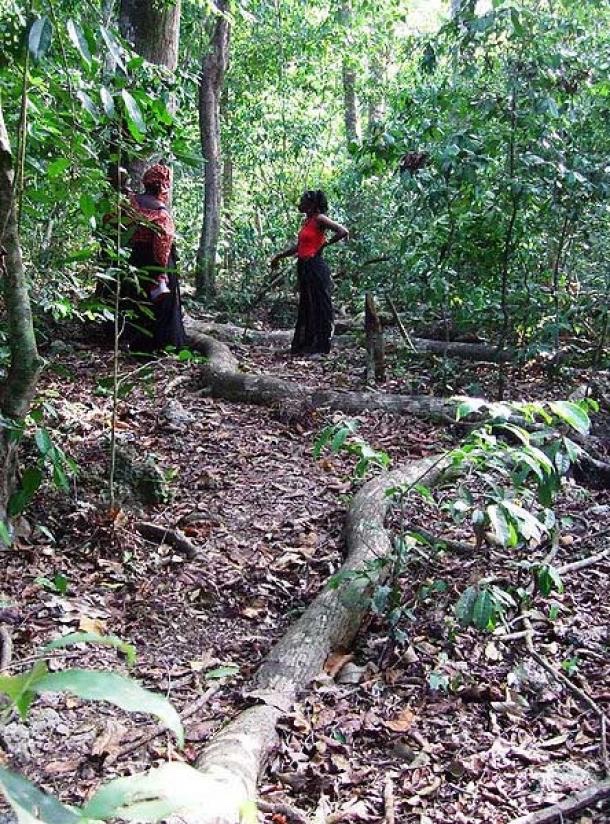
The Mijikenda culture consists of nine tribes related to the Bantu ethnic groups of Kenya. Other Kenyans have derogatorily referred to the Mijikenda people either as the ‘Nyika’ or ‘Nika,’ meaning ‘bush people.’ This prejudice may be why their sacred statues may have been targets for looting, along with the pressures of crushing poverty. There are over 30 sacred Kaya forests that are used for prayer by the Mijikenda.

Vigango statues are created from the wood these sacred forests provide. The wood is resistant to termites and very dense. The statues stand 4 feet (1.22 meters) tall and have unique carved triangle etchings that symbolize abstract forms of identity that once bestowed the deceased Mijikenda elder they represent.

The purpose of the Vigango’s creation is to incarnate the spirits of dead male Gohu elders who held significant respect and immense responsibility within the Mijikenda tribal community. It is the secretive Gohu society of men who are responsible for the construction of Vigango statues.

It is customary for a family to commission a member of the Gohu to create a Vigango statue of their respected male elder a week after death. The sculptures appear two dimensional in their depiction of revered elders of significance, but in their simplicity, a plethora of complex identities are shaped with each individual Vigango statue. This ritual is often followed by a festive meal and a family gathering.

These statues also act as liaisons of communication for living community members to ask advice from wise elder spirit ancestors. The Vigango statues were said to aid in advice regarding plague, famine, and drought. Because of their essential role in the Mijikenda tribal community, Gohu are usually placed in the center of their town or near the current chief’s homestead. However, it is believed that Vigango’s advice can only be heard by those related to the people who have passed.

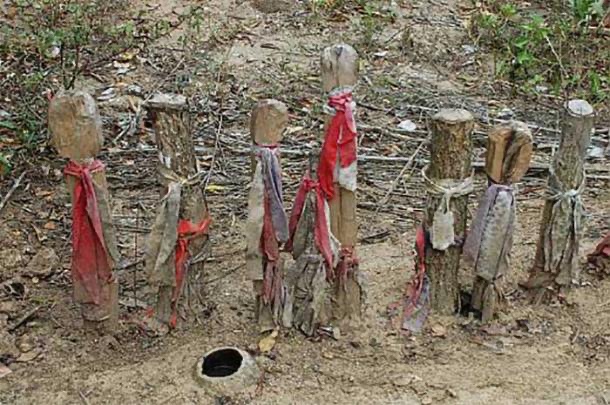
Ernie Wolfe III mentioned that the statues are sometimes left behind when a village relocates to another fertile region. Once the village has settled, it is up to the tribe to erect smaller statues carrying no carvings, known as Vibaos, to take the place, power, and spiritual connectivity that make the abandoned Vigango statues powerless. If this ritual is not performed, the spirits of the elders, along with their enchanted magic, remain alone and isolated in the region no longer inhabited by their people.

But the belief of deactivated Vigango statues being replaced by Vibao may be subject to scrutiny due to the controversy of Wolfe III’s own collection. In another account mentioned by the New York Times, the anthropologist Udvardy believes that Wolfe III had misinterpreted the situation and that Vigango are to forever remain in the land they were erected.

Whichever is the truth, the fact remains that the theft and displacement of these powerful spirit vessels result in their wrath towards whoever steals, purchases, and acquires them. To carry a Vigango statue is both a blessing and a curse. And those who are cursed suffer the most.

Sources: B. B Wagner

Johannes Kepler

Born in the city of Weil der Stadt near Stuttgart, southern Germany, in 1571, Johannes Kepler witnessed the Great Comet of 1577 as a small child, marking the start of his fascination with the heavens. While studying at the University of Tübingen, he developed a reputation as a brilliant mathematician and astrologer. He corresponded with various leading astronomers of the time, including Tycho Brahe, ultimately moving to Prague in 1600 to become Brahe’s student and academic heir.

Following Brahe’s death in 1601, Kepler took on the post of Imperial Mathematician, with a royal commission to complete Brahe’s work on the so-called Rudolphine Tables for predicting the movements of the planets. He completed this work in Linz, Austria, where he worked from 1612 until his death in 1630.

Key works:

1596 The Cosmic Mystery

1609 Astronomia Nova (New Astronomy)

1619 The Harmony of the World

1627 Rudolphine Tables

Anika Chebrolu: 3M’s 2020 Young Scientist Challenge Winner

14-year-old Anika Chebrolu was just named the winner of the 2020 3M Young Scientist Challenge, an annual innovation competition hosted in partnership with Discovery Education. The eight-grader from Frisco, Texas earned the ‘America’s Top Young Scientist’ title for using in-silico methods to identify a molecule that can selectively bind to the Spike protein of the SARS-CoV-2 virus in an attempt to develop a potential cure – in the form of a novel antiviral drug – for COVID-19.

When Anika entered 3M’s 2020 Young Scientist Challenge her original goal was to identify a lead compound that could bind to a protein of the influenza virus to develop a novel anti-influenza drug. But she switched gears when the COVID-19 pandemic quickly spread across the globe. In an interview with CNN, the young scientist whose future goal is to be a medical researcher and professor explained, “Because of the immense severity of the COVID-19 pandemic and the drastic impact it had made on the world in such a short time, I, with the help of my mentor, changed directions to target the SARS-CoV-2 virus.”

Of her reasons for entering the Young Scientist Challenge Anika said, “I have always been amazed by science experiments since my childhood and I was drawn towards finding effective cures for Influenza disease after a severe bout of the infection last year. I would like to learn more from 3M scientists to pursue my drug development and with their help, would like to conduct in-vitro and in-vivo testing of my lead drug candidate.”

In taking this year’s top prize, which includes the ‘America’s Top Young Scientist’ title, a $25,000 cash prize, and a one-of-a-kind 2 day/1-night destination trip, Anika competed against nine other finalists.

Source: Women You Should Know Website

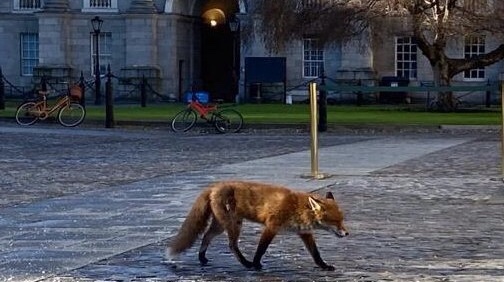
Sam the Trinity Fox

As the Irish Times reports:

Sam, the fox living on the grounds of Trinity College in Dublin, and who was seen wandering the streets of Dublin during the first lockdown, has found love and is pregnant.

Last year the health of the vixen was of concern as she appeared emaciated. With all restaurants and bars closed and the city centre all but deserted during the first lockdown she was deprived of scraps. She also developed mange on her tail.

In response, staff at Trinity College Dublin left out meat infused with an antibiotic for her and she has not looked back.

The latest development involving Sam the fox happened last month, when she was in heat.

She attracted two suitors, who have been named Prince and Scar by college staff, who fought for her affections.

Arctic Permafrost Releases More Carbon Dioxide Than Once Believed

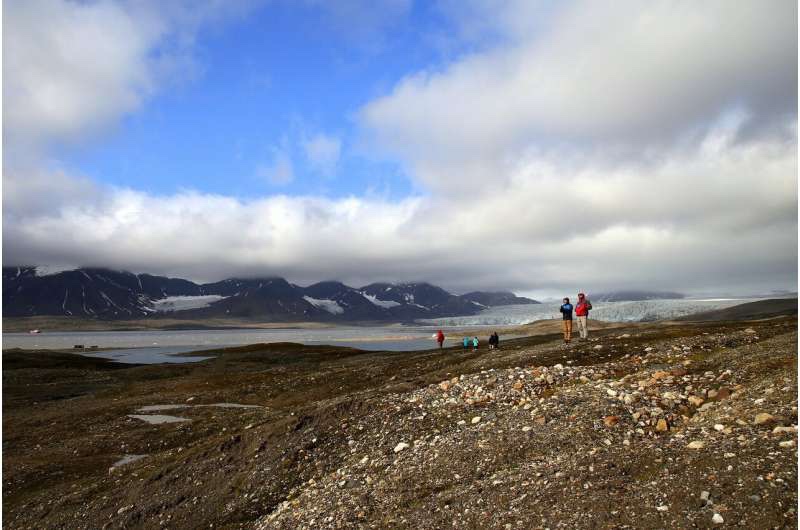
Rising global temperatures are causing frozen Arctic soil— permafrost—in the northern hemisphere to thaw and release CO2 that has been stored within it for thousands of years. The amount of carbon stored in permafrost is estimated to be four times greater than the combined amount of CO2 emitted by modern humans.

Research results from an international team, which includes a researcher from the University of Copenhagen among others, suggests that the newly discovered phenomenon will release even larger quantities of CO2 than once supposed from organic matter in permafrost—a pool of carbon previously thought to be bound tightly and safely sequestered by iron.

The amount of stored carbon that is bound to iron and gets converted to CO2 when released is estimated to be somewhere between two and five times the amount of carbon released annually through anthropogenic fossil fuel emissions.

Iron doesn’t bind organic carbon after all

Researchers have long been aware that microorganisms play a key role in the release of CO2 as permafrost melts. Microorganisms activated as soil thaws convert dead plants and other organic material into greenhouse gases like methane, nitrous oxide and carbon dioxide.

What is new, is that the mineral iron was believed to bind carbon even as permafrost thawed. The new result demonstrates that bacteria incapacitate iron’s carbon trapping ability, resulting in the release of vast amounts of CO2. This is an entirely new discovery.

“What we see is that bacteria simply use iron minerals as a food source. As they feed, the bonds which had trapped carbon are destroyed and it is released into the atmosphere as greenhouse gas,” explains Associate Professor Carsten W. Müller of the University of Copenhagen’s Department of Geosciences and Natural Resource Management. He elaborates:

“Frozen soil has a high oxygen content, which keeps iron minerals stable and allows carbon to bind to them. But as soon as the ice melts and turns to water, oxygen levels drop and the iron becomes unstable. At the same time, the melted ice permits access to bacteria. As a whole, this is what releases stored carbon as CO2,” explains Müller.

The study has just been published in Nature Communications.

Absent from climate models

Although the researchers have only studied a single bog area in Abisko, northern Sweden, they have compared their results with data from other parts the northern hemisphere and expect their new results to also be valid in other areas of permafrost worldwide.

“This means that we have a large new source of CO2 emissions that needs to be included in climate models and more closely examined,” says Carsten W. Müller.

Even though carbon stored in permafrost has a major impact on our climate, researchers know very little about the mechanisms that determine whether carbon in soil is converted into greenhouse gases.

“The majority of climate research in the Arctic focuses on the amount of stored carbon and how sensitive it is to climate change. There is a great deal less of a focus on the deeper mechanisms which trap carbon in soil,” says Carsten W. Müller.

Researchers remain uncertain about how much extra carbon from soil could potentially be released through this newly discovered mechanism. Closer investigation is needed.

Source: University of Copenhagen

Green New Deal Polling

Green New Deal Polling:

Green New Deal Very General Summary: The proposal would achieve net-zero greenhouse-gas emissions by creating millions of green jobs and investing in a new, clean-energy infrastructure.

Research shows that age strongly predicts support for the Green New Deal, even controlling for several variables like party, ideology, and race. One wonders if this is because young people, unlike older generations, must contemplate living through the worst effects of climate change a few decades down the line.

Polling Question: “Would you support or oppose a Green New Deal to end fossil fuel use in the United States and have the government create clean energy jobs? The plan would be paid for by raising taxes, including a tax on carbon emissions.”

Reference: Millennials as ages 18–37, Generation X as 38–53, baby boomers as 54–72, and Silent as 72 or older.

Note: “Data For Progress” who conducted the poll is a progressive think tank.

#GreenNewDeal #ClimateChange

Cosmological considerations in the general theory of relativity

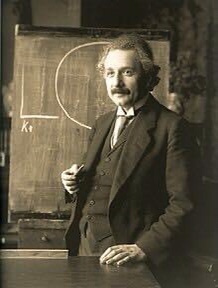
Today in Science history —> On this day 104 years ago, Albert Einstein presented the paper “Kosmologische Betrachtungen zur allgemeinen Relativitätstheorie” (“Cosmological considerations in the general theory of relativity”) at the weekly meeting of the Prussian Academy of Sciences in Berlin. The pivotal research, often overlooked amid Einstein’s many accomplishments, applied his newly minted general theory of relativity to the universe as a whole. The study of cosmology would never be the same again. Despite the shortcomings of Einstein’s model universe, the paper was a major advance at a time when many astronomers believed that the Milky Way constituted the entire universe.

#Science #Einstein

SS Katherine Johnson

Considering the crucial role Katherine Johnson played in helping humankind reach space, it’s only fitting that a space craft would finally be named after her.

Northrop Grumman has announced that it will name its new NG-15 Cygnus spacecraft after the legendary NASA mathematician. The ship, which will bear the name the SS Katherine Johnson, will be used for an upcoming cargo delivery mission to the International Space Station.