Svalbard Global Seed Vault (Longyearbyen, Svalbard – Norway)

Svalbard Global Seed Vault (Longyearbyen, Svalbard – Norway)

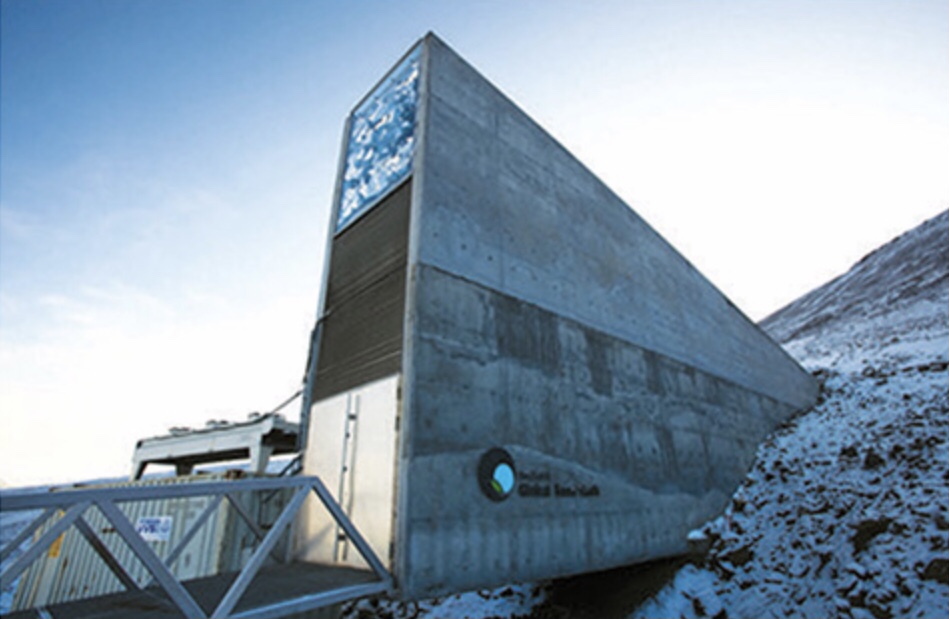
A winter night in Longyearbyen lasts four months. In the ice-covered mountains, the darkness is broken only by a slim concrete building that emits a pale blue glow as it overlooks the 1,000-resident town. The simple structure offers no hint as to what’s protected inside: a collection of seeds that could save humanity.

Due to the loss of genetic diversity among commercially cultivated crops, which tend to be grown from clonal monocultures, many worldwide food crops are at risk of disease. Mutated strains of fungus, or a new bacterium, could potentially wipe out an entire world crop in a matter of months, causing massive food shortages. The Svalbard Global Seed Vault was established by the Norwegian government in 2008 to function as a sort of genetic safe-deposit box.

The facility has the capacity to conserve 4.5 million seed samples. Under the current temperature conditions in the vault, which are similar to those in a kitchen freezer, the seed samples can remain viable to begin new crops for anywhere from 2,000 to 20,000 years.

Svalbard was chosen as the location because it is tectonically stable and its permafrost provides natural refrigeration in case of a power failure. There is no permanent staff at the seed bank, but it is monitored constantly using electronic surveillance. Access to the vaults, open only to employees, requires passing four locked doors protected by coded access keys.

Sources: Atlas Obscura

Icelandic Elf School (Reykjavík, Iceland)

Icelandic Elf School (Reykjavík, Iceland)

When Icelandic member of parliament Árni Johnsen escaped unharmed from a car crash in 2010, he knew whom to credit for his survival: elves. After rolling five times, the politician’s SUV came to rest beside a 30-ton boulder. Johnsen, believing that multiple generations of elves called that boulder home, concluded that they used their magic to save him. When roadwork later required the removal of the boulder, he claimed it for himself, transporting it to his home to ensure the elves would continue to watch over him.

Johnsen’s beliefs are not unusual. According to Icelandic folklore, thousands of elves, fairies, dwarves, and gnomes—collectively known as “hidden people”—live in rocks and trees throughout the country. It is no wonder, then, that the world’s only elf school is located in Reykjavík.

Historian Magnús Skarphéðinsson, who has spent decades documenting people’s encounters with elves, established the school in 1991. Classes focus on the distinguishing characteristics of Iceland’s 13 varieties of hidden people. The school also offers five-hour classes for travelers, which include a tour of Reykjavík’s elf habitats. Students receive a diploma in “hidden people research.”

Skarphéðinsson has never seen an elf. His knowledge of their appearance and behavior comes from the hundreds of testimonies he has collected from people who claim to have made contact with hidden people.

Though Skarphéðinsson has devoted 30 years to the subject and considers himself the foremost authority on elves, he maintains a sense of humor about it all. At the end of class, he serves homemade coffee and pancakes and tells stories about the people who come up to him to say, “I swear I’m not on drugs, but I saw the strangest thing . . .”

Source: Atlas Obscura

Tollund Man (Silkeborg, Central Denmark)

Tollund Man (Silkeborg, Central Denmark)

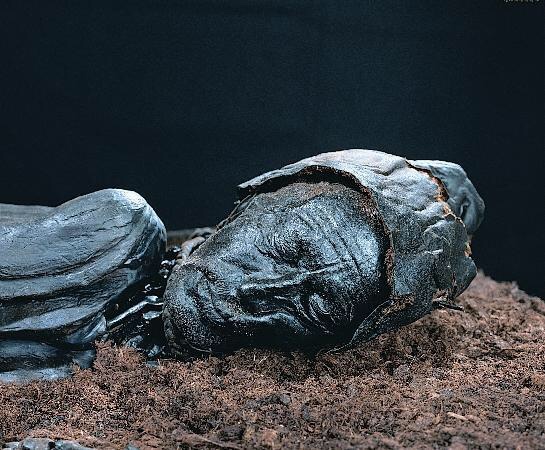
Walking around the Bjældskovdal bog in 1950, brothers Emil and Viggo Højgaard (along with Grethe, Viggo’s wife) stumbled upon a body. Believing the man to be the victim of a recent killing, they called the police. Further investigations revealed that he had indeed been murdered—some 2,300 years earlier.

The Tollund Man was found curled in the fetal position with his eyes closed and a serene expression frozen on his face. The cold, acidic, oxygen-starved conditions of the peat bog had kept him remarkably well preserved. His hair, beard stubble, eyelashes, and toenails were all intact, and he was nude, but for a sheepskin cap and wide belt around his waist. A rope was wound tightly around his neck. The Iron Age man had been hanged, likely during a ritual sacrifice.

In 1950, it was not yet known how best to preserve discoveries like Tollund Man. Accordingly, only the head of the original specimen was kept intact. The rest of the body was subjected to various tests to determine his probable age (probably around 40, due to the presence of wisdom teeth and wrinkles) and the conditions surrounding his life and death. Among the details found: Tollund Man was 5 feet 3 inches (1.6 m) tall, his final meal was a gruel made from barley and flaxseed, and his “sacrificers” (read: killers) took the time to close his mouth and eyes after death.

Thousands of “bog bodies” have been discovered in sphagnum swamps across Northern Europe, but the Tollund Man remains the best preserved. His original head and reconstructed body now reside at the Silkeborg Museum. The rope used to end his life is still wrapped around his throat.

Source: Atlas Obscura

3500 years old Ancient Egyptian Lost City Discovered

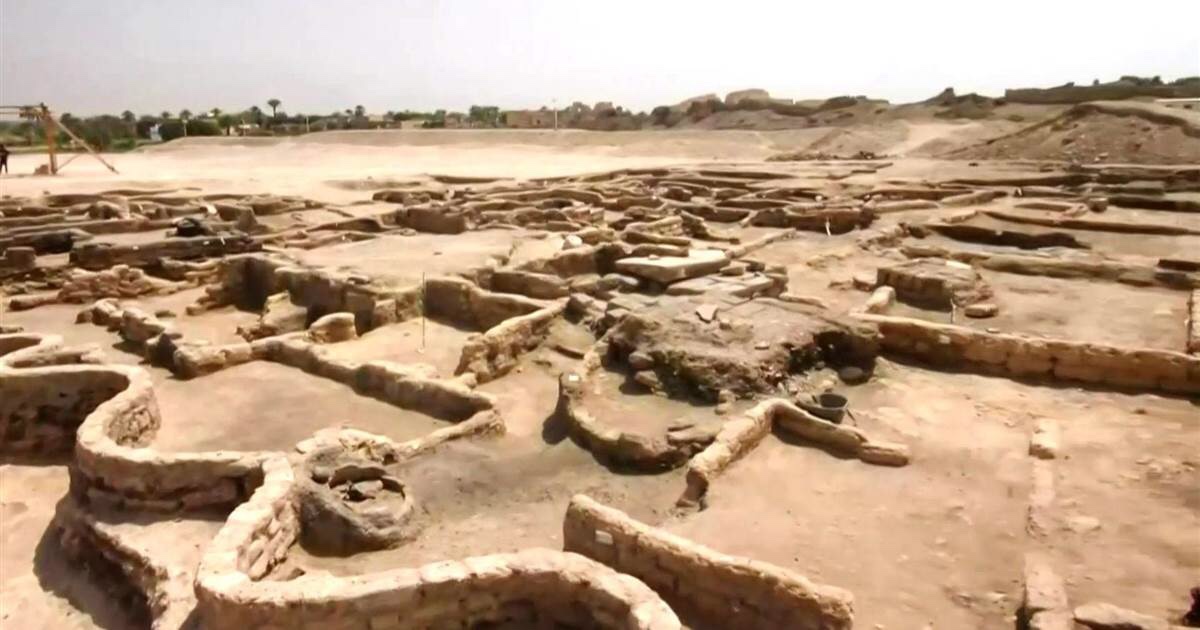
Archaeologists have announced the discovery of a 3500 years old Ancient Egyptian city near Luxor in Egypt.

The Egyptian Expedition under Dr Zahi Hawass made the discovery whilst excavating an area between Rameses III’s temple at Medinet Habu, and Amenhotep III’s temple at Memnon in search of Tutankhamun’s Mortuary Temple.

The city dates from the period of Amenhotep III (also known as Amenhotep the Magnificent – the ninth pharaoh of the Eighteenth Dynasty) based on a large number of archaeological finds, such as rings, scarabs, coloured pottery vessels, and mud bricks bearing seals of King Amenhotep III’s cartouche.

Excavations which first started in September 2020 have revealed several streets flanked by houses that extend all the way to Deir el-Medina, the village of artisans who worked on the tombs in the Valley of the Kings. Many of the houses have relatively intact walls, whilst the interior contains everyday tools and domestic items.

Several districts have been identified, with a southern area being used for the storage and production of food items, a residential and administrative district, and an industrial district for the manufacturing of mud bricks and decorative jewelry.

One notable find is a storage vessel containing 10kg of dried meat that has the inscription: “Year 37, dressed meat for the third Heb Sed festival from the slaughterhouse of the stockyard of Kha made by the butcher luwy.”

Another discovery is a mud seal inscription that reads: “gm pa Aton” – meaning “the domain of the dazzling Aten”, the name of a temple built by King Akhenaten at Karnak.

Betsy Brian, Professor of Egyptology at John Hopkins University in Baltimore USA, said ‘The discovery of this lost city is the second most important archaeological discovery since the tomb of Tutankhamun”.

“The discovery of the Lost City not only gives us a rare glimpse into the life of the Ancient Egyptians at the time when the Empire was at his wealthiest, but it will help us shed light on one of history’s greatest mystery: why did Akhenaten & Nefertiti decide to move to Amarna,” Brian added.

Sources: Heritage Daily, Egyptian Ministry of Tourism and Antiquities

Charles Fourier

Today in history —> French philosopher Charles Fourier was born on this day in 1772. Although he was considered a radical in his time for his philosophy of utopian socialism, many of his ideas have now become mainstream. For instance, Fourier was a fervent believer in gender equality and is credited with coining the term “feminism” in 1837.

#FrenchPhilosophers #CharlesFourier #Feminism

New Zealand Travel Ad

New Zealand has just opened up a bit for travel. Prime Minister Jacinda Ardern announced that both Australia and New Zealand are in a “bubble,” and people will be able to travel between the two countries without mandatory quarantining in hotels. (Both countries have very low infection rates.) The Kiwis, of course, are celebrating this with their typical wry humor: here’s a NZ travel ad.

#Travel #NewZealand

St. George’s Monastery (West Bank, Palestine)

St. George’s Monastery (West Bank, Palestine)

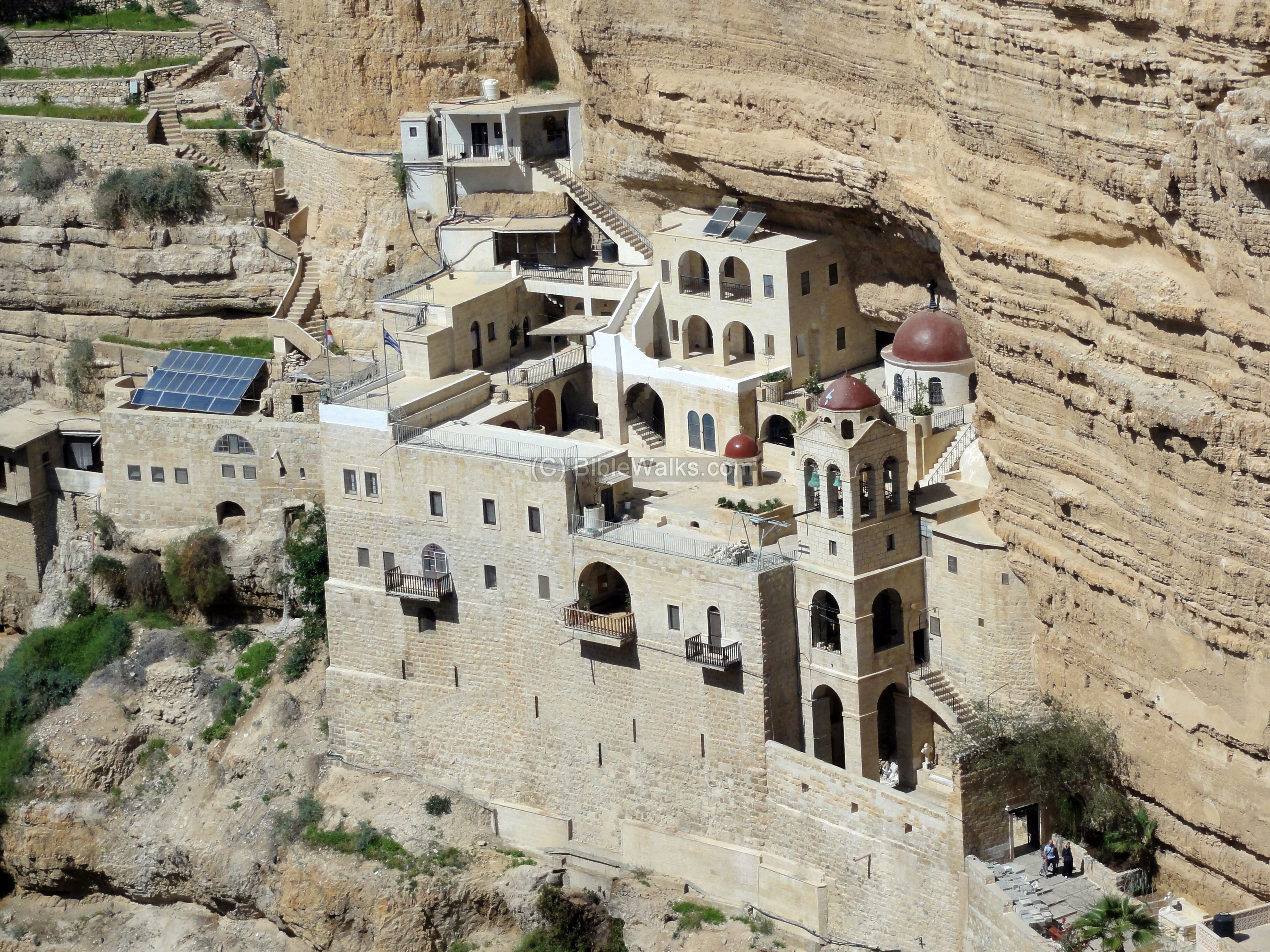
Clinging to a cliff on the edge of the Wadi Qelt gorge is a Greek Orthodox monastery that’s endured many centuries of turmoil and destruction.

The original monastery was founded in the 5th century by a group of cave-dwelling hermits. They chose the site because it was located next to the cave where the prophet Elijah is said to have been fed by ravens during the 9th century BCE.

A Persian invasion in the 7th century drove out the hermits and left the monastery in ruins. Around 500 years later, Crusaders rebuilt St. George’s, only to be driven from the site following the Islamic re-conquest of Jerusalem.

The late 19th century saw St. George’s restored once again. The monastery is now home to two churches, a small group of Greek Orthodox monks, and the tombs of the five hermits who got the whole thing started.

A 15-minute drive from St. George’s is the Mount of Temptation—so named because, according to the Bible, it is the place where Jesus was tempted by the devil. This mountain has its own cliffside monastery, established in the 6th century, which has only a single permanent resident. There is also a nearby collection of hermit caves—some of which are said to still occasionally be inhabited by ascetic monks.

Source: Atlas Obscura

Razzouk Ink (Jerusalem, Israel)

As the sole surviving pilgrimage-tattoo business, Razzouk Ink is a place where ancient artifacts meet contemporary machines and rich history intersects with modern technology.

Just inside the Jaffa Gate in Jerusalem’s Old City, a big sign above a tiny shop reads tattoo with heritage since 1300. For over 700 years the Razzouk family has been tattooing marks of faith. As Coptic Christians who settled in Jerusalem generations ago, the family had learned the craft in Egypt, where the devout wear similar inked inscriptions. Evidence of such tattoos dates back at least as far as the 8th century in Egypt and the 6th century in the Holy Land, where Procopius of Gaza wrote of tattooed Christians bearing designs of crosses and Christ’s name. Early tattoos served as a way for indigenous Christians in the Middle East and Egypt to self-identify. Later, as the faithful came to the Holy Land on pilgrimage, the practice expanded to offer these travelers permanent evidence of their devotion and peregrination.

Razzouk Ink’s stone walls and exposed beams lend antique character to the space. A museum-like case holds heirlooms, and an exhibition of pictures on the walls offers glimpses into the family’s past.

Pilgrims’ accounts dating to the late 16th century show how purveyors such as the Razzouks must have tattooed back then, with sewing needles bound to the end of a wooden handle.

Ubuntu

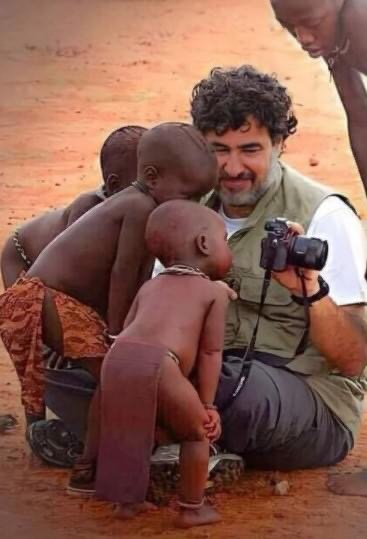
An anthropologist showed a game to the children of an African tribe:

He placed a basket of delicious fruits near a tree trunk and told them: The first child to reach the tree will get the basket.

When he gave them the start signal, he was surprised that they were walking together, holding hands until they reached the tree and shared the fruit!

When he asked them why you did that when every one of you could get the basket only for him!

They answered with astonishment: Ubuntu.

“That is, how can one of us be happy while the rest are miserable?”

Ubuntu in their civilization means: (I am because we are).

That tribe knows the secret of happiness that has been lost in all societies that transcend them and which consider themselves civilized societies.

President’s Room (Jerusalem, Israel)

President’s Room (Jerusalem, Israel)

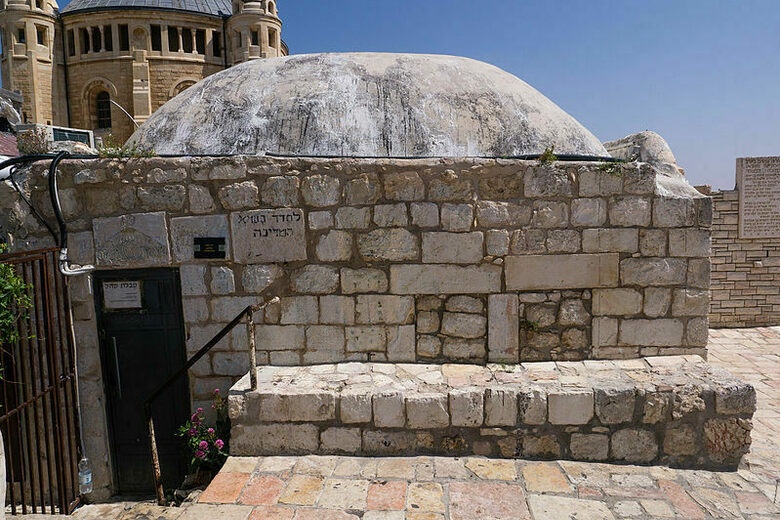
Just south of the Old City on Mount Zion is a building that houses two holy sites. On the ground floor is the Tomb of King David; upstairs is the Upper Room, or Cenacle—the location of the Last Supper.

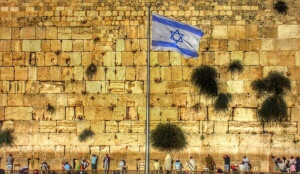
Less conspicuous is the small domed chamber on the roof, known as the President’s Room. From 1948 to 1967, when Jordan controlled East Jerusalem, Jews were prevented from visiting sacred places in the Old City, such as the Western Wall and the Mount of Olives. During this time, Mount Zion was one of the closest vantage points for viewing the forbidden sites. The Ministry of Religious Affairs established the President’s Room so that Israel’s first head of state, Chaim Weizmann, could keep watch over the Western Wall.

Weizmann never used the room. But his successor, President Yitzhak Ben-Zvi, did. Three times a year, he would ascend the stairs to the dome and look toward the Temple Mount.

Source: Atlas Obscura