Takayama Jinya (岐阜県 Gifu-ken)

National Historic Relic : The Takayama Local Agency of the Tokugawa Shogunate.

“Jinya” refers to a venue where political proceedings were conducted during the Edo period (1603-1868), and the term collectively refers to the administrative headquarters, as well as the residence of the local magistrate. Takayama Jinya was built by the shogunate as an administrative base to enforce its rule over the Hida Province. You’ll also find the rice storehouse, where rice collected as land taxes was stored. Takayama Jinya is also famous as the lone remaining magistrate’s office in Japan, and offers a vivid, firsthand glimpse of life in feudal Japan.

Although there were 64 regional headquarters and sub-headquarters during the Edo period, the Takayama Jinya is the only one existing today.

In 1692, Shogun Tokugawa took direct rule over Hida, and for the next 176 years until the Meiji restoration, 25 generations were sent from Edo to work as Administrators, Accountants and Police in the Takayama Jinya.

The present main building was constructed in 1816, and consists of the Public Administration Office, Grand Hall and Messengers Hall, all in their original condition. The Rice Storehouse that was used to store the rice collected as a tax was built in the 1600’s, and is presently used as an exhibition space, displaying items from the time of direct rule to the Meiji period. There are over 250 separate historical displays including documents, maps and artifacts.

Takayama Jinya received two stars in the 2015 Michelin Green Guide Japan. ★★ Two stars … “worth a detour”.

Hours:

March to October (except August) —> 8:45 – 17:00 (last admission)

August —> 8:45 – 18:00 (last admission)

November to February —> 8:45 – 16:30 (last admission)

Closed —> December 29th and 31st, January 1st

Admission:

Adults —> 440 yen

Groups (30 or more) —> 390 yen

Children 18 and under with student I.D. —> Free

Hida Kokubunji Temple (飛騨国分寺)

National Historical Site and Important Cultural Treasure.

There is a huge ginko tree over 1200 years old and a ‘Triple Pagoda’ in the precincts, as well as Bell Tower Gates, said to have been moved from Takayama Castle and the cornerstone of the pagoda built over 1200 years ago. The main temple building is the oldest structure in the city, constructed in the Muromachi era (about 500 years ago). It has a style worthy of its reputation as Hida’s greatest ancient temple.

Kokubunji is the oldest temple in Takayama, possibly founded during the Nara Period. A Shingon sect temple, it preserves a seated image of Yakushi (the Buddha of medicine) and a standing image of Kannon )the Goddess of Mercy). There is also a wooden image of Hida-no-Takumi, a sculptor from the Edo Period of Japanese history. The main gate was originally part of Takayama Castle. The fine 7-story pagoda dates from the Muromachi Period.

300 yen per adult, 250 yen per elementary or junior high school student.
Group (30 or more people): 250 yen per adult, 150 yen per elementary or junior high school student

Le Bistrot Paul Bert (18 rue Paul Bert, 75011)

Le Bistrot Paul Bert (18 rue Paul Bert, 75011)

Opening the year I was living in Paris and was literally a few blocks from where I lived. I dined there a few times and obviously didn’t fully appreciate and realize how good of a bistro I had almost literally in my backyard. Now considered by many to be the very best bistro in Paris.

“You’ll hear plenty of English and French in the dining room because everyone—local and foreign—loves the place for its time-honored classicism.”
~ Alice Waters

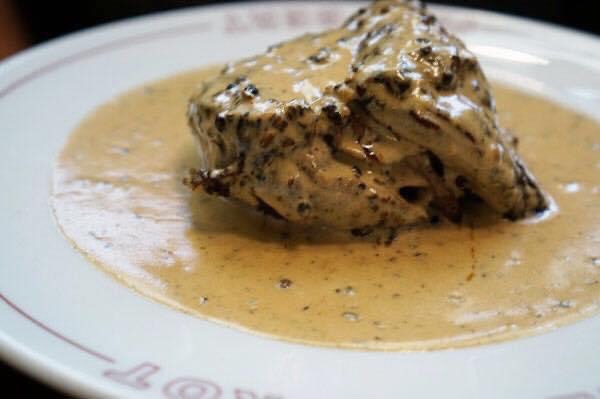
“Although it opened in 2000, it has the feel of a place that’s been around forever. The wonderful steak is served with Cognac and peppercorns, or you can get a single fried egg with truffles.”
~ Dorie Greenspan

“You’d think it would be easy to create a ‘new’ classic bistro in Paris, but no one’s done it as well as Bertrand Auboyneau, who makes it look effortless.”
~ Patricia Wells

Gifu Castle (岐阜城)

First built as a fortress on the top of Mt. Kinka in 1201, Gifu Castle has a history of about 800 years. ODA Nobunaga, a famous general in Sengoku period, occupied the castle and became its master in 1567. At this time, ODA changed the name of this area from “Inokuchi” to “Gifu” and of the castle itself from “Inabayama Castle” to “Gifu Castle”. As ODA expanded his empire and unified the nation with his fresh ideas and unique politics, Gifu Castle became a bustling center of activity.

The ODA family lost the castle after Hidenobu, Nobunaga’s grandson, allied his clan with the losing side of the decisive Battle of Sekigahara in 1600 that resulted in over 250 years of Edo Shogunate rule of Japan.

The present three-story and four-floor castle was rebuilt in 1956 and has been a popular symbol of Gifu City ever since. You can enjoy displays in the castle’s exhibition hall and the observation gallery on its top floor.

From the observation gallery, you can enjoy the magnificent landscape of the area, including the clear waters of the Nagara River below against a backdrop of mountain ranges, and Ise Bay to the south.

Gifu Castle is dramatically illuminated every night from sunset to 10 p.m. For a limited period during summer, the castle’s opening hours are extended to nighttime. Providing a dynamic 360-degree panoramic view of the region, this castle is one of Gifu’s most popular night spots.

Adults (16 and above): 200 yen

Children (4 years and above): 100 yen

Wisteria Tunnel

Wisteria Tunnel

Kitakyushu, Japan

For most of the year, the wisteria tunnel at Kawachi Fuji Gardens is a latticed canopy overlaid with barren, twisting vines. But for a few weeks every spring, the tunnel is in magnificent bloom, its dangling flowers and sweet scent enveloping all those who walk its path.
The private garden is home to around 150 wisteria plants in shades of purple, pink, and white. Visit between late April and mid-May to see the wisteria in bloom—the exact dates vary each year.

A member of the pea family, wisteria is an ornamental vine, wildly popular in both Eastern and Western gardens for its graceful hanging flowers and its ornate, winding branches. Easily trained, the woody vines tend to reach maturity within a few years, at which point they bloom in cascades of long, lavender flowers of varying pastel shades.

A Soldier’s Life: Escoffier & The Brigade de Cuisine

The art of cuisine is perhaps one of the most useful forms of diplomacy.”
~ Auguste Escoffier

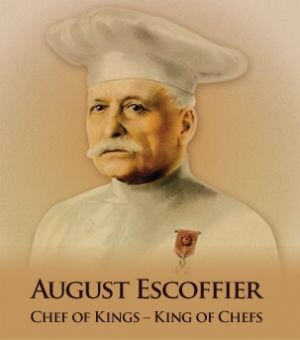
On October 28, 1846 one of the most important French chefs the world has ever known was born Georges Auguste Escoffier. He modernized and simplified the French culinary system. Among his achievements was codifying the five mother sauces of French cuisine. He also instituted a military hierarchy into the kitchen, a system that is followed to this day worldwide with few changes. This brigade de cuisine is a structured team system which delegates different responsibilities to different team members who specialize in certain tasks.

Escoffier began his apprenticeship aged 12 at his uncle’s restaurant in Nice, France. At 19 he moved to Paris and continued his apprenticeship. He was the first great chef that worked his entire career in the public sphere, as opposed to working for royalty. Among his customers were kings, heads of state, and stars on the London and Paris opera. He became known as, “the chef of kings and King of chefs”.

His belief, “above all, keep it simple,” led to him revolutionizing cuisine and a gastronomic philosophy of highly refined simplicity. Escoffier established sanitation standards that up until that point had been unheard of in the kitchen. He was an expert in food science of the time as well as preservation. He was one of the first to develop bottled sauces for the homemaker. Escoffier was dedicated to the belief that food service professionals should improve their skills through education. He wrote multiple books to this effect including Le Guide Culinaire.

The brigade system was instituted in the 19th century at London’s Savoy Hotel. The size and scope will vary according to the size of the kitchen and the establishment. In a large hotel kitchen, especially during Escoffier’s age, a brigade would consist of the following:

Executive Chef – An administrator in charge of all kitchen operations including menu planing, costing and scheduling.
Chef de Cuisine – A active cook who works in the kitchen during preparation periods as well as service. Also responsible for ordering and other administrative duties.
Sous Chef – Second in command under the chef de cuisine. Supervises all the cooks. Oversees the preparation of food and service in the chef de cuisine’s absence.
Chef de Partie – In charge of a specific station.
Commis – Assistants to the chef de partie.
Apprentice – Assists the commis. Common in Europe.

Stations:
Saucier – Responsible for the preparation of all stocks and sauces.
Rotisseur – Responsible for all roasts. Oversaw next two positions.
Grillardin – Responsible for all grilled meats.
Friturier – Responsible for frying everything from French fries to oysters and tempura.
Poissonier – Responsible for the cleaning and preparation of all fish.
Entremetier – Responsible for the “entrance” to the meal, a small lighter first course. Oversaw next two positions.
Potager – Responsible for making soups.
Legumier – Responsible for all vegetable hot dishes and sides.
Garde Manger – Responsible for the preparation of all cold dishes including hors d’oeuvres, terrines, pates, etc.
Patissier – Pastry chef. Responsible for the creation and presentation of all desserts.
Boulanger – Baker. Responsible for all bread and breakfast pastries.

Photo Essay : Palm Valley Fish Camp & Marker 32 (Jacksonville Beach, FL)

Palm Valley Fish Camp Palm Valley Fish Camp

Palm Valley Fish Camp and Marker 32 are two restaurants in the Jacksonville area that I frequent.  They are both seafood restaurants owned and operated by the same owners.  Palm Valley is a much more casual restaurant, and usually my preference, but Marker 32 is a great date or special occasion restaurant.

Palm Valley Fish Camp

Broiled Oysters Broiled Oysters
Fried Green Tomatoes Fried Green Tomatoes
Cajun Crawfish Cajun Crawfish
Stone Crab Stone Crab
Flounder Pan Sauteed Flounder With Mashed Skin-On Red Potatoes And Sauteed Zuchinni & Yellow Squash
Fried Shrimp Fried Shrimp, Fries, Hushpuppies, Coleslaw
Bacon Butter Beans Bacon Butter Beans
Cod Roasted Cod with Blackeye Pea Succotash, Squash Puree over a Fried Green Tomato.
Lowcountry Boil Lowcountry Boil : Shrimp, Clams, Crawfish and Andouille Sausage for two.

Marker 32

Broiled Oysters Broiled Oysters Appetizer : with bacon, spinach & sundried tomatoes.
Crab Cakes Southern style Blue Crab cakes with caper dill aiolli, Crushed Portatoes & steamod Spinach
Fried Shrimp & Fennel Fries Fried local shrimp with celery root slaw, sweet fennel salt fries
Seared Scallops with spicy shrimp and corn broth, Grits, Collard Greens and House Dried Tomatoes Seared Scallops with spicy shrimp and corn broth, Grits, Collard Greens and House Dried Tomatoes
Herb grilled Snapper with basil pesto and Hoppin John Herb grilled Snapper with basil pesto and Hoppin John
Bouillabaisse Bouillabaisse

Bistro Provence (Bethesda, MD)

Cam

Executive Chef Yannick Cam opened Bistro Provence, a decidedly casual restaurant, in the spring of 2010. Arriving in America in 1973 Cam has built his strong reputation as one of the top French chefs in the Washington DC area. His long list of restaurants begins with his four years as the head of the Four Seasons Restaurant, to Le Coup de Fusil, Le Pavillion, Yannick’s, and Le Paradou before Bistro Provence. His awards as a James Beard award finalist are staggering. I knew his pedigree before I stepped into his restaurant and was anticipating quite honestly to be blown away. If it was anything but near perfection I was bound to be disappointed. Simply I expected a lot from this meal, after all it was exactly the type of restaurant I love casual atmosphere and incredible food.

BistroProvence

So did Cam and Bistro Provence meet my lofty expectations? Walking up to the restaurant my initial reaction can best be described as disappointed. If there was one thing I was asked to make it a better evening it would be to clean up the front of the restaurant. It not only wasn’t inviting, but I seriously wondered if there were two Bistro Provence in Bethesda. This simply couldn’t be the place. While I appreciated the embarrassment of plants outside, they could have some rhyme or reason to them and not the jungle of foliage that you must explore. We attempted to first enter the side service entrance as the entrance is not clearly marked. Entering the restaurant that is where my disappointment ended. I loved the décor, the casual elegant atmosphere. Don’t get me wrong it wasn’t paper placemats and plastic knives and forks. As a matter of fact it was one of the few restaurants you’ll enter these days with true linen tablecloths. My dining partner and I were allowed to choose a table; we were the first ones there that evening, not always a good sign but it was early.

Bis1

We ordered a bottle of San Pellegrino mineral water, as many of you know I do not drink alcohol or wine due to my liver transplant. I used to be such a wine snob, but ah that was in another lifetime now. A quick glance at the menu and I knew the choices would not be easy or at least they shouldn’t be. To be honest though I am a one-hundred percent confirmed absolute escargots fanatic, addict, and snob, pick your adjective. My eyes eagerly scanned the menu finding my quarry. There it was, “Fricassée D‘Escargots aux Pleurotes, Purée D’Aubergines, Beurre a L’Ail” (Escargots, Eggplant Puree, Pleurotes, Garlic Butter). Pleurotes, it had been thirteen years since I lived in Paris and my French was rusty to say the least. Honestly I didn’t have a clue to what it meant. I knew it was a fricassée so my guess was a kind of mushroom, Oyster mushroom by the way was the answer. They were pure perfection. Honestly the perfect amount for an appetizer, but if there had been twice as much I would have greedily devoured them.

Bis2

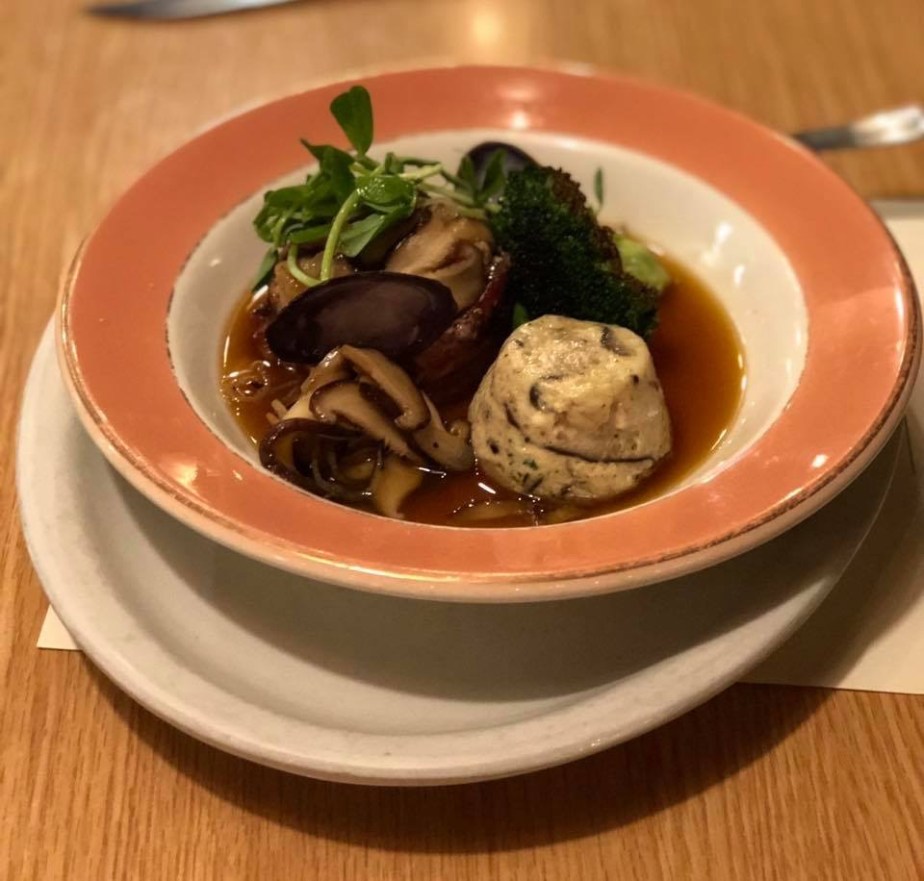
My aunt, my dining partner, ordered “Poupetons de Poisson Jus de Bouillabaisse,” (Fishcake, Bouillabaisse Jus). As much as I am an escargots devotee, my aunt sees the word bouillabaisse and the rest of the menu might as well be blank. She enjoyed every last bite and we were both more than pleased with our first course. A little about my aunt, she is a vegan with a seafood exception. Yes, that is a mighty big exception but she mostly keeps a vegan diet except on special occasions. To say I am not used to a vegan diet is a gross understatement. I have to admit that keeping a vegan diet probably made this meal even more luscious for me. I have great respect and admiration for vegans for their dedication to depriving themselves of so many delicious bites. The thought of merely giving up bacon makes me shiver, much less all meat. I was tempted to order a tall glass of milk, because that seemed so elegant to me at the moment after all the soy I had been drinking. One thing I learned on this trip, that I could have guessed before, there was absolutely zero chance I would ever become vegetarian or vegan. At least not by choice. I simply do not have the constitution to deprive myself of so many things which I love.

Bis3

My main course option was simply elegant, delicious and absolutely perfect for the night and most definitely not vegan. “Poitrine de Canard Roti, Gateau de Patate Douce, Boudin de Volaille, Choux de Bruxelles,” (Roasted Duck Breasts, Sweet Potato Cake, Boudin, Brussel Sprouts). Roasted duck breast sounded delicious, I love properly cooked brussel sprouts, the sweet potato cake was enticing, but oh Boudin de Volaille. Duck and Foie Gras sausage was all I needed to know. I was sold. As I waited for the meal to arrive I realized I could easily be disappointed as this bite was so set up in my mind. The verdict… it was absolute perfection. It was easily the best thing I’ve eaten this past year. The duck breast was exquisitely cooked, the perfect counterpoint to the sausage. The roasted brussel sprouts were delicious. The sweet potato cake was light and elegant. The sausage though blew away all of my lofty expectations. I knew this restaurant would definitely go onto my list of restaurants to return to simply due to that one bite of perfection, much less for the rest of the elegant meal.

Bis4

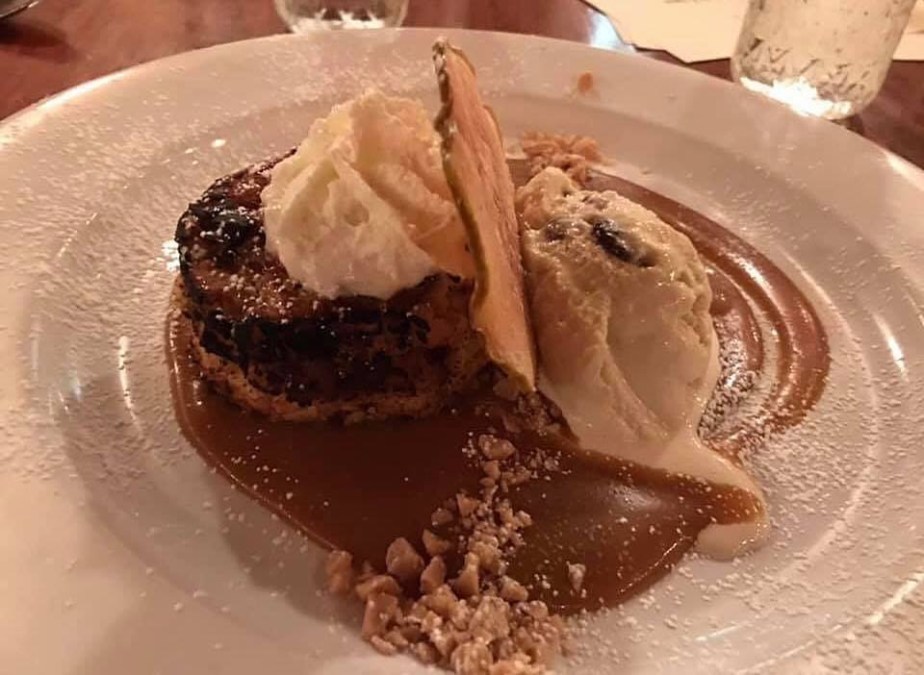
There was really no doubt what my aunt would select, “Bouillabaisse de Coquilles St. Jacques Poelees, Grosses Crevettes, Bar Roti,” (Bouillabaisse of Sea Scallops, Shrimp Sautéed and Bass). She seemed to enjoy every bite. The desserts were delicious, but couldn’t match the elegance of the first two courses. Unless you are an absolute dessert devotee then I would say focus on the first two courses and if you have room left for dessert then great. I’m honestly not the dessert fan that I once was, so the chances of a sweet course blowing away a savory one were very slim. The desserts were very good and my aunt seemed to adore hers’.

Bis6

Bis5

Would I return? Without a doubt next time I am in the area Bistro Provence will be on my short list of restaurants for an elegant evening. There are so many mysteries left on the menu waiting to be discovered. I might even discover one of them if I can pull myself away from the escargots and boudin. Thank you Chef Yannick Cam for exceeding my lofty expectations.