Vjesci

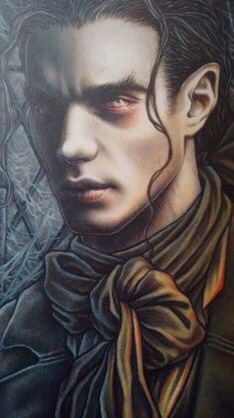
Vjesci was the name given to a Polish vampire known by the Kashubian people. The Vjesci vampire resembled the Nachzeher found to the west in northern Germany.

According to myths, a person was destined to become a vjesci if it was born with a caul. When a child was born with the membrane cap, it was removed, dried, ground up, and fed to the child on its 7th birthday in attempts to prevent the child from becoming a vampire.

Potential vjesci appeared to be completely normal and grew up in the community undetected, although in some cases, the potential vjesci had a restless and easily excitable nature and a ruddy complexion.

At the time of death, the person refused to take sacrament. His body cooled slowly, the limbs remained limber, and the lips and cheeks retained their color. Spots of blood often appeared under the fingernails and on the face of the body.

The vjesci didn’t really die, though. At midnight, after the burial, the vampire awakened and ate his clothing and some of his own flesh. He then left the grave and attacked his family, sucking their blood to the point of death. If the vampire is not satiated, he may go after the neighbors.

In order to protect oneself from a vjesci, steps could be taken.

  • The dying people should receive the Eucharist.
  • A little bit of earth was placed in the coffin under the body to prevent it from returning home.
  • A crucifix or coin was placed underneath the tongue for the vampire to suck.
  • A net may be placed in the coffin because the vampire had to untie the knots before it could leave the coffin.
  • A bag of seeds or sand man be placed in the coffin for the vampire to count each seed or grain. before leaving the coffin.
  • The body may be laid face down so that the vampire would dig further into the ground instead of out.
  • A nail may be driven through the forehead.
  • The head may be severed and placed between its feet.

If you were to open the coffin of a vjesci vampire, you would find a few tell-tale signs.

  • The eyes would open.
  • The head may move.
  • It may make noise.
  • The shirt may have been eaten.

If the precautions at the time of burial had not stopped the vampire to either drive a nail through the head or sever the head, there may be blood flowing from a new wound. It was said that if the blood was captured, it could be given to anyone who had been attacked by the vampire to prevent the victim from becoming a vampire.

The vjesci was closely related to the wupji (or opji), except the wupji had two teeth rather than a caul at birth. The Kashubian people immigrated to Ontario, Canada, bringing the vjesci with them. The vjesci and wupji were often used interchangeably.

Cleansing Smoke

Regular use of cleansing smoke with a variety of materials is beneficial to an energetically healthy home. Too many folks rely solely on one cleaning method and one protection method. For example, many people enjoy the way white sage (Salvia apiana) smells, and though it is a good ally for clearing and cleansing space, it should not be your only ally.

Smoke Tools Hierarchy:

  • The weakest of the smoke tools is floral smoke. Lavender buds, for example, are very pleasant smelling. Flowers are well suited to brightening a space.
  • Leaves are slightly stronger and are good for refreshing the energy of a space. White sage is a common example. Since white sage (Salvia apiana) is largely wildcrafted (harvested in the wild) and used by native peoples, the increasing use of herbal cleansing smoke has led to skyrocketing prices and difficulty in sourcing the materials for the native peoples to whom white sage is sacred. The Salvia genus has many allies that can be farmed and don’t infringe on the beliefs and practices of First Nations and Native American people. 
  • The roots of a plant are stronger magically than its leaves. Roots will remove energies and entities that were not bothered by leaf smoke. Consider the strength of plant allies like ginger root, calamus root, and galangal root (Low John).
  • Even stronger than the root allies are wood allies. Palo santo is a popular wood-based smoke tool. This tree, native to Peru and the Yucatán Peninsula, has become increasingly popular in the last few years. Because of the popularity of this wood, the trees that take decades to reach maturity are over-harvested.
  • The strongest smoke tool of the plant ally families is the resin group. Tree resins are hardened sap structures like dragon’s blood (Dracaena draco), frankincense (Boswellia carteri), copal (Protium copal), and myrrh (Commiphora myrrha). If there is a problem that has not been affected by the lower energy signatures of the plant allies, a resin should do the trick.
    • Dragon’s Blood: This popular incense resin, resembling red chalk, commonly comes from two species, Dracaena draco and Dracaena cinnabari. Though there are more than the two varieties of Dracaena that produce this fragrant resin, many assume that all dragon’s blood is Dracaena draco. Both produce a similarly colored sap, with musky, warm notes with a hint of floral, though D. cinnabari has a touch more of the floral note than its cousin D. draco. D. cinnabari is the slower growing of the two varieties, though both trees take over ten years to produce their signature red sap. Due to over-harvesting and habitat loss, both species of Dracaena are on the threatened list.
    • Note: While no essential oil of dragon’s blood exists at this time, high-quality dragon’s blood oils can be sourced.

Sources: Blackthorn’s Botanical Magic, The Homemade Apothecary

Cu Chi Tunnels (Ho Chi Minh City, Vietnam)

Cu Chi Tunnels (Ho Chi Minh City, Vietnam)

Beneath the suburban Cu Chi district of Ho Chi Minh City is a network of tunnels that served as a home, air raid shelter, weapon storage facility, and supply route for the Viet Cong during the Vietnam War. For years, thousands of people effectively lived underground, only emerging after dark to gather supplies. It was a grim existence—the air was stale, the food and water scarce, and malaria spread fast through the claustrophobic, insect- and vermin-infested passages.

Construction on the tunnels began in the 1940s, as Vietnam fought to gain its independence from France. By the 1960s, the network stretched to over 100 miles (161 km). Tiny tunnel entrances, concealed beneath leaves on the jungle floor, required bodily contortion to squeeze into. To guard against enemy infiltration, the tunnel maintainers incorporated traps, such as dead-end passages and revolving floor panels that sent enemies tumbling into pits of sharpened bamboo. Should a foe make it past these snares and into the underground city, the Viet Cong might respond with a handful of scorpions or a well-aimed snake to the face.

Large sections of the tunnels are gone, having collapsed or been destroyed, but a preserved section, enlarged to fit larger tourist bodies, is open to the public. Visits end with the seemingly inappropriate opportunity to fire AK-47s and M-16s at a shooting range.

Sources: Atlas Obscura

Clémence-Auguste Royer

On this date in 1830, Clémence-Auguste Royer was born in Nantes, France. Her parents were Catholic royalists, and Royer’s early education took place in a convent school. Royer became a republican following the Revolution of 1848, and began to question other common views at that time. Royer obtained a teaching certificate and taught at girls schools in Wales, where she mastered English, and in France. She read widely on science in these school libraries. In 1855, as a result of her inquiries, she rejected Catholicism thoroughly, and devoted herself to science. She began to offer lectures on science and logic for women in Lausanne, Switzerland, in 1858. Royer translated Charles Darwin’s Origin of Species into French in 1863. She famously wrote a preface to the work which used Darwin’s mechanism for evolution as part of an anti-religious argument which Darwin himself did not make — by this time, the book was in its third English edition and contained several strong references to a creator. Royer had been an evolutionist before reading Darwin, having been strongly influenced by the writings of Jean Baptiste LaMarck. French scientists, especially atheists and anthropologists, were strongly influenced by evolution and natural selection as framed by Royer, who also discussed the implications of evolutionary theory for human beings and society in her introduction (it would be almost ten years before Darwin himself grappled with these issues in The Descent of Man). Royer continued as Darwin’s official French translator until the third French edition of Origin was published in 1870.

Royer, despite not being a research scientist, remained a popular interpreter of science as well as a philosopher of science throughout her life. As a woman, she was denied access to many learned societies, as well as university teaching positions. It has been argued by Jennifer Michael Hecht, among others, that Royer opened doors to women within the freethinking movement. Royer was a feminist who argued passionately for the rights of women, married and unmarried, to child custody, property, education and equality with men. In 1866, she had a son by her lover and life partner, Pascal Duprat, a married man, which sharpened her concern about the major legal obstacles then present to unwed mothers and their children. She published many books and articles throughout her life, and considered the pinnacle to be 1900’s Natura rerum, her theory of nature. In 1900, Royer was named a Chevalier of the Legion of Honor for her contributions as “a woman of letters and a scientific writer.” D. 1902

“Yes, I believe in revelation, but a permanent revelation of man to himself and by himself, a rational revelation that is nothing but the result of the progress of science and of the contemporary conscience, a revelation that is always only partial and relative and that is effectuated by the acquisition of new truths and even more by the elimination of ancient errors. We must also attest that the progress of truth gives us as much to forget as to learn, and we learn to negate and to doubt as often as to affirm.”
~ Clémence Royer, preface to Charles Darwin, L’origine des espèces, in Jennifer Michael Hecht, The End of the Soul

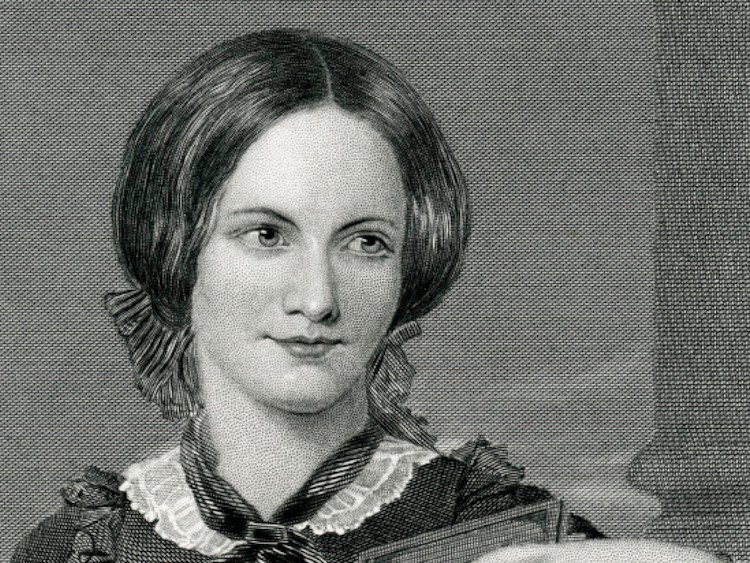
Charlotte Bronte

Charlotte Brontë was born the 21 April 1816 was an English novelist and poet, the eldest of the three Brontë sisters who survived into adulthood and whose novels have become classics of English literature. She first published her works (including her best known novel, Jane Eyre) under the pen name Currer Bell.

Jane Eyre had immediate commercial success and initially received favourable reviews. G. H. Lewes wrote that it was “an utterance from the depths of a struggling, suffering, much-enduring spirit,” and declared that it consisted of “suspiria de profundis!” (sighs from the depths). Speculation about the identity and gender of the mysterious Currer Bell heightened with the publication of Wuthering Heights by Ellis Bell (Emily) and Agnes Grey by Acton Bell (Anne). Accompanying the speculation was a change in the critical reaction to Brontë’s work, as accusations were made that the writing was “coarse”, a judgement more readily made once it was suspected that Currer Bell was a woman. However, sales of Jane Eyre continued to be strong and may even have increased as a result of the novel developing a reputation as an “improper” book.

“Averse to personal publicity, we veiled our own names under those of Currer, Ellis and Acton Bell; the ambiguous choice being dictated by a sort of conscientious scruple at assuming Christian names positively masculine, while we did not like to declare ourselves women, because — without at that time suspecting that our mode of writing and thinking was not what is called “feminine” – we had a vague impression that authoresses are liable to be looked on with prejudice; we had noticed how critics sometimes use for their chastisement the weapon of personality, and for their reward, a flattery, which is not true praise.”
~ Charlotte Bronte

John Muir

John Muir was born April 21, 1838 also known as “John of the Mountains”, was an American naturalist, author, environmental philosopher, glaciologist and early advocate for the preservation of wilderness in the United States. His letters, essays, and books describing his adventures in nature, especially in the Sierra Nevada, have been read by millions. His activism has helped to preserve the Yosemite Valley, Sequoia National Park and many other wilderness areas. The Sierra Club, which he founded, is a prominent American conservation organization. The 211-mile (340 km) John Muir Trail, a hiking trail in the Sierra Nevada, was named in his honor. Other such places include Muir Woods National Monument, Muir Beach, John Muir College, Mount Muir, Camp Muir and Muir Glacier. In Scotland, the John Muir Way, a 130-mile-long route, was named in honor of him.

In his later life, Muir devoted most of his time to the preservation of the Western forests. He petitioned the U.S. Congress for the National Park bill that was passed in 1890, establishing Yosemite National Park. The spiritual quality and enthusiasm toward nature expressed in his writings has inspired readers, including presidents and congressmen, to take action to help preserve large nature areas. Today Muir is referred to as the “Father of the National Parks” and the National Park Service has produced a short documentary about his life.

John Muir has been considered “an inspiration to both Scots and Americans”. Muir’s biographer, Steven J. Holmes, believes that Muir has become “one of the patron saints of twentieth-century American environmental activity,” both political and recreational. As a result, his writings are commonly discussed in books and journals, and he is often quoted by nature photographers such as Ansel Adams. “Muir has profoundly shaped the very categories through which Americans understand and envision their relationships with the natural world,” writes Holmes. Muir was noted for being an ecological thinker, political spokesman, and religious prophet, whose writings became a personal guide into nature for countless individuals, making his name “almost ubiquitous” in the modern environmental consciousness. According to author William Anderson, Muir exemplified “the archetype of our oneness with the earth”, while biographer Donald Worster says he believed his mission was “…saving the American soul from total surrender to materialism.” On April 21, 2013, the first ever John Muir Day was celebrated in Scotland, which marked the 175th anniversary of his birth, paying homage to the conservationist.

“Keep close to Nature’s heart… and break clear away, once in awhile, and climb a mountain or spend a week in the woods. Wash your spirit clean.”
~ John Muir

4/20 Day

The stoners among you will recognize that, being 4/20 in American date notation, it’s also a day to celebrate smoking weed, since “420” is American argot for marijuana. Why? Here’s why:

In 1971, five high school students in San Rafael, California, used the term “4:20” in connection with a plan to search for an abandoned cannabis crop, based on a treasure map made by the grower. Calling themselves the Waldos, because their typical hang-out spot “was a wall outside the school”, the five students — Steve Capper, Dave Reddix, Jeffrey Noel, Larry Schwartz, and Mark Gravich —designated the Louis Pasteur statue on the grounds of San Rafael High School as their meeting place, and 4:20 pm as their meeting time. The Waldos referred to this plan with the phrase “4:20 Louis”. After several failed attempts to find the crop, the group eventually shortened their phrase to “4:20”, which ultimately evolved into a code-word the teens used to refer to consuming cannabis.

Ubour

This Bulgarian vampiric revenant is created when a person dies a sudden and violent death and the spirit refuses or does not realize it needs to leave its body.

After 40 days the vampire will dig itself free from its grave and begins a reign of terror though this mainly consists of smearing manure on the sides of a person’s home and breaking the dishes in his house.

Active only between noon and midnight this vampire will exhaust all other food sources and options before seeking out a human to attack for his blood. If the person can make an offer to the vampire to spare their life the vampir must accept.

The only one with enough skill and knowledge to destroy this type of vampire is a Vampirdzhija (a type of vampire hunter).

Lawrence Krauss on the Universe

“… the fact that the universe itself may have no purpose doesn’t affect our purpose, in fact it’s the incredible height of solipsism to assume that without us the universe doesn’t matter, and that if the universe is purposeless we don’t matter. We make our own purpose, and it seems to me life is more precious because it’s temporary and accidental, and we should take advantage of that. And we have evolved brains and that allows us to ask questions not just about how the universe works but how we should behave.”

~ Lawrence Krauss, (born May 27, 1954) is an American-Canadian theoretical physicist and cosmologist who is Foundation Professor of the School of Earth and Space Exploration at Arizona State University, and director of its Origins Project.

#FavoriteQuotes #LawrenceKrauss #Science

David John Chalmers

On this date in 1966, philosopher David John Chalmers was born in Australia. Chalmers earned a bachelor’s degree in mathematics and computer science from the University of Adelaide in 1986. He was briefly a Rhodes Scholar at Oxford University, but transferred to Indiana University at Bloomington, where he obtained a Ph.D. in 1993 in philosophy and cognitive science. He worked at Washington University in St. Louis from 1993 to 1995, and at the University of California – Santa Cruz from 1995 to 1998. He worked in the Department of Philosophy and the Center for Consciousness Studies at the University of Arizona from 1999 to 2004. Since 2004, Chalmers is professor of philosophy and director of the Centre for Consciousness at Australian National University. As of 2009, he is also a part-time professor of philosophy at New York University. His 1996 book, The Conscious Mind, is considered a seminal work on consciousness. His numerous papers and books have had great influence in the realms of cognitive science, philosophy of the mind and philosophy of language.

“Now I have to say I’m a complete atheist. I have no religious views myself and no spiritual views, except very watered down humanistic spiritual views. And consciousness is just a fact of life. It’s a natural fact of life.”
~ David Chalmers in an interview on “Encounter” with Margaret Coffey for Australian ABC National Radio, April 10, 2011