Draugr

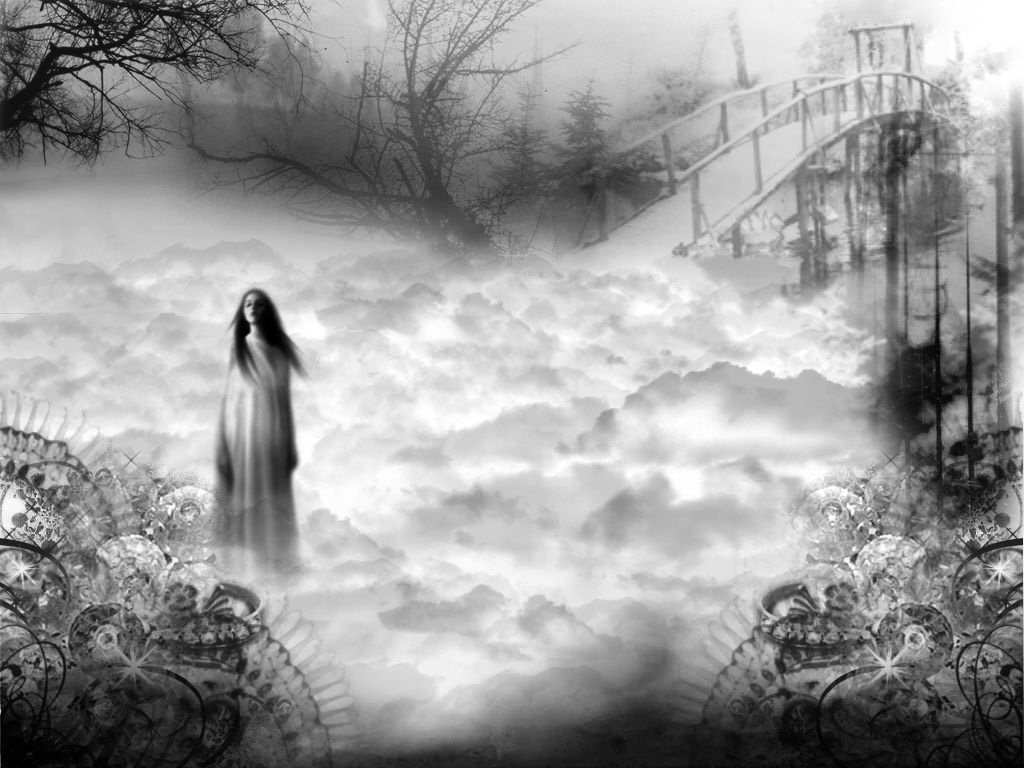
The draugr (also called an aptrgangr) literally means “one who walks after death. There are many Norse myths and tales about the draugr and its creation.

The person may become a draugr if he has unfinished business after death, or if he is infected by another draugr. Some believed that anyone who was mean, nasty or greedy could become a draugr after dying. Others believed that a draugr arises because he felt he was wronged in life.

A corpse can be identified as a draugr if it is found in an upright or sitting position. If seen walking around, a draugr will have several distinctive characteristics.

• A pale, deathly skin tone

• Superhuman strength

• Stench of decay

• Large, bulky body

A draugr was said to be able to shape-shift, control the weather and see into the future. He would rise from the grave as a wisp of smoke and float through rock. Most are active at night, but there isn’t any proof that they are sensitive to sunlight.

Some myths about the draugr claim that the spirit may have some form of intelligence and ability to communicate.

The draugr would slay his victims, devour the flesh and drink the blood. After drinking the blood and consuming the flesh, it was thought the draugr would grow larger.

A draugr could be destroyed by beheading or burning. If the spirit is burnt, the ashes need to be poured into the ocean.

There are different methods of preventing a draugr.

• Place a pair of open, iron scissors placed on the chest of a recently deceased.

• Hide straw or twigs inside the clothes of the deceased.

• Tie the big toes together.

• Drive needles through the soles of the feet to prevent the deceased from being able to walk.

• When lowering the coffin, lift and lower it three times to confuse the draugr’s sense of direction.

Denmark spread the belief that a corpse could only rise and return from the dead by walking through the door it entered. Norse culture adopted the same belief; they would prevent the return of a deceased by surrounding the body with people and carry the deceased feet-first through a door. The door was then bricked up so that the draugr could not enter it.

Vitamin Tea

Rich in vitamins and antioxidants, this is a simple fruity blend. Using dried fruits creates a wonderfully sweet tea — a healthy and satisfying choice when you crave sweet foods.

2 parts rose hips

2 parts hibiscus

2 parts dried berries

1 part lemongrass

1 part linden

1 part white tea

0.75 part cinnamon

Hot Infusion: Pour 1.5 cups hot water over 2 tablespoons tea. Steep for 10 to 15 minutes.

Cold Infusion: Combine 2 cups cold water and 1 to 2 tablespoons tea in a lidded jar. Shake the jar to make sure all the tea is saturated. Place in the refrigerator or a cool place for at least 2 hours.

Holocaust Best Friend Reunion

The Washington Post has a heartwarming story about two women who were best friends as children in 1938 Germany, when Kristallnacht took place and the Holocaust descended. They fled Germany separately, and, after searching for each other for decades, finally found each other. One lives in New Jersey, the other in Chile.

Every Sunday, Betty Grebenschikoff and Ana María Wahrenberg have a scheduled phone call. They often lose track of time talking, as best friends tend to do.

The weekly calls are only a recent ritual. In fact, just four months ago, both women believed the other had died in the Holocaust.

“For 82 years, I thought my best friend from Germany was dead,” Grebenschikoff said. “I’d been looking for her for all those years, and I never found her.”

That’s right: 82 years! Betty Grebenschikoff and Ana María Wahrenberg are now 91 years old, and they searched for each other for a lifetime. And they found each other, thanks to Stephen Spielberg, but I’ll let you read about that for yourself. It was the merest chance. Now they talk every Sunday in a video call:

When the women heard the other was still alive, they were shocked and delighted in equal measure.

“It was such a miracle,” said Grebenschikoff, who called the unlikely reunion “bashert,” Yiddish for “destiny.”

Grebenschikoff joined the Zoom call on Nov. 19 from her home in St. Petersburg, Fla., while Wahrenberg signed on from Santiago. Right away, they started chatting in German, their shared language.

“It was like no time had passed,” Grebenschikoff said. “Of course, 82 years makes a difference, but more or less, we just picked up where we left off.”

The story will make you tear up:

https://www.washingtonpost.com/lifestyle/2021/03/09/holocaust-best-friends-reunion/

The Eight Branches of Chinese Medicine

The Eight Branches of Chinese Medicine

Meditation: As long ago as the fifth century B.C.E., Taoists practiced meditation as a tool for cultivating inner peace. There is always an aspect of the mind that is quiet, calm, and present; however, it can be masked by thoughts, stories, and emotions that pull us out of the present moment. The mind can be like a toddler, running around from place to place, with an attention span of about one minute. It can easily switch from one emotion to the next. Meditation is not simply the practice of stopping all this chaos and quieting the mind; rather, it is the building of awareness about the mind’s habitual nature and the reduction of its distractions.

Exercise: Moving our bodies daily is vital to our overall well-being. Physical activity also moves our blood and cleanses our organs. Tai chi and qigong are both ancient forms of exercise used in Chinese medicine for the cultivation of energy. When visiting east Asian countries, you will see groups of people coming together to practice these movements every day. Even if you don’t know these two ancient practices, walking, running, swimming, dancing, hiking, playing sports, and even stretching are all wonderful forms of exercise.

Nutrition: Food is like medicine. It can nourish us to our very bones, bring us back from illness, and give us a tremendous amount of energy for living.  Many of us are getting sick. Returning to natural, unprocessed, whole foods that match your constitution, align with the season, and support you through any imbalances you may be experiencing is the most direct way to find balance. Through this lens, each meal provides an opportunity to heal from the inside out and to prevent illness rather than be vulnerable to it.

Cosmology: Cosmology refers to the foundation of any spiritual tradition that reveals the core beliefs of how we human beings came to exist and what helps us to thrive. In Taoist cosmology, human beings are not seen as separate from the natural world but rather as a manifestation and integral part of it. Therefore, to cultivate a state of balance, we must look to the natural world around us and mimic the rhythms and cycles we see.

Fang Shui: Just as we can benefit from finding balance inside ourselves by meditating, exercising, and eating a diet that is aligned with nature, we can benefit from creating a similar balance outside ourselves. This is called feng shui, and it encompasses the practice of enhancing health through the environmental balancing of the home, office, garden, and other sacred spaces.

Bodywork: Touch is vital to our overall health. The physical practice of being touched in a therapeutic way allows us to relax deeply and experience the release of tension on all levels. Bodywork gifts us with a number of amazing endorphins (feel-good hormones) most especially, oxytocin.

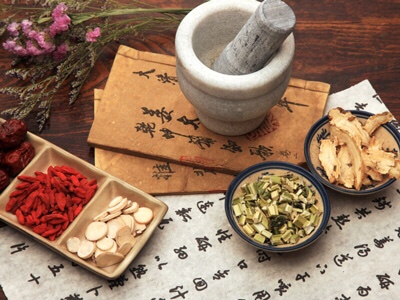
Herbal Medicine: Chinese herbal medicine has been around for thousands of years as a vital tool for maintaining health throughout the life cycles and seasons. Eating medicinal plants from the earth allows us to be in direct relationship with the earth. In addition to a diet that is in sync with our nature, herbal medicine can target specific health imbalances and enhance the healing benefits of meals.

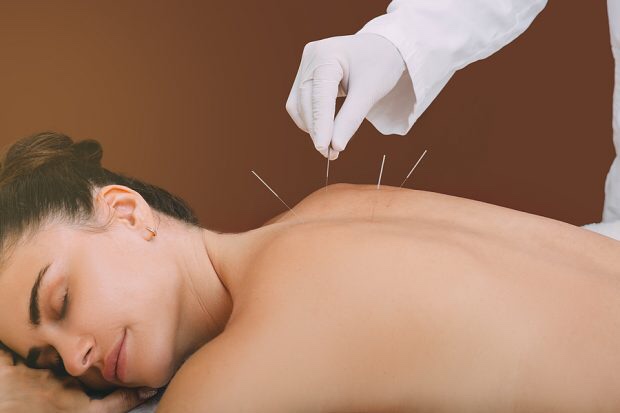
Acupuncture: The final branch of Chinese medicine is also the newest of the eight (though still more than two thousand years old)—the practice of acupuncture. Acupuncture is the art of inserting very fine, sterile needles just under the skin in strategic places to nourish, calm, or otherwise direct the movement of energy. This ancient art form has been found not only to reduce pain but to influence myriad systems in the body, mind, and spirit. From anxiety to leaky gut syndrome to depression to inflammation, acupuncture treats us on many levels. While this practice can certainly address everyday imbalances, I have found it to be most beneficial when used as a tool for prevention.

Source: Everyday Chinese Medicine.

Digestive System Tea

Drinking this delicious tea, especially prior to or immediately following a meal, helps balance the digestive system and relieve digestive upset. This is a all-purpose digestive system tea that is designed to be drunk daily. Supporting digestion is one of the best things you can do for daily health. A healthy digestive system can prevent many diseases over the long term. Adding a pinch of slippery elm or marsh­mallow root to each cup will soothe inflamed tissues in the throat, stomach, or intestines.

3 parts dandelion root

1 part fennel

1 part ginger

1 part peppermint

1 part spearmint

O.5 part Chamomile

Steeping:

Hot Infusion: Pour 1.5 cups hot water over 2 tablespoons tea. Steep for 10 to 15 minutes.

Cold Infusion: Combine 2 cups cold water and 1 to 2 tablespoons tea in a lidded jar. Shake the jar to make sure all the tea is saturated. Place in the refrigerator or a cool place for at least 2 hours.

Vein Relief Ointment

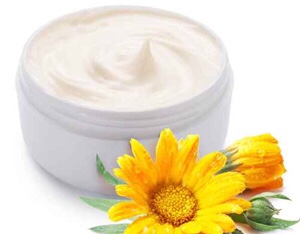
This cream is cooling and soothing for varicose veins, spider veins and hemorrhoids. The astringent properties of witch hazel water and oak bark help to shrink the veins, while yarrow and horse chestnut help maintain vein wall integrity.

1 cup aloe vera gel

2 tsp. horse chestnut leaf-infused oil

2 tsp. calendula oil

2 tsp. yarrow tincture

2 tsp. oak bark tincture

2 tsp. horse chestnut seed tincture

20 drops of rosemary essential oil (for varicose veins only, omit for haemorrhoids)

2 tsp. witch hazel water

Place the aloe vera gel in a bowl. Slowly add the oils, 1 teaspoon at a time, and whisk thoroughly.

Once combined, add the tinctures, one at a time, and whisk again, then add the essential oil and whisk. Finally, whisk in the witch hazel water. Place in a sterilised jar, seal, label and date.

Alternatively, use a plain base cream instead of the aloe vera gel, and whisk in the oils, tinctures and witch hazel water.

For optimal results, apply this cream twice a day, as well as taking internal circulatory herbs.

Shelf Life: Up to 1 year in a cool, dark place.

Wanting to Die – by Anne Sexton

Since you ask, most days I cannot remember.

I walk in my clothing, unmarked by that voyage.

Then the almost unnameable lust returns.


Even then I have nothing against life.

I know well the grass blades you mention,

the furniture you have placed under the sun.


But suicides have a special language.

Like carpenters they want to know which tools.

They never ask why build.


Twice I have so simply declared myself,

have possessed the enemy, eaten the enemy,

have taken on his craft, his magic.


In this way, heavy and thoughtful,

warmer than oil or water,

I have rested, drooling at the mouth-hole.


I did not think of my body at needle point.

Even the cornea and the leftover urine were gone.

Suicides have already betrayed the body.


Still-born, they don’t always die,

but dazzled, they can’t forget a drug so sweet

that even children would look on and smile.


To thrust all that life under your tongue!–

that, all by itself, becomes a passion.

Death’s a sad Bone; bruised, you’d say,


and yet she waits for me, year after year,

to so delicately undo an old wound,

to empty my breath from its bad prison.


Balanced there, suicides sometimes meet,

raging at the fruit, a pumped-up moon,

leaving the bread they mistook for a kiss,


leaving the page of the book carelessly open,

something unsaid, the phone off the hook

and the love, whatever it was, an infection.

Sea Slug Regeneration

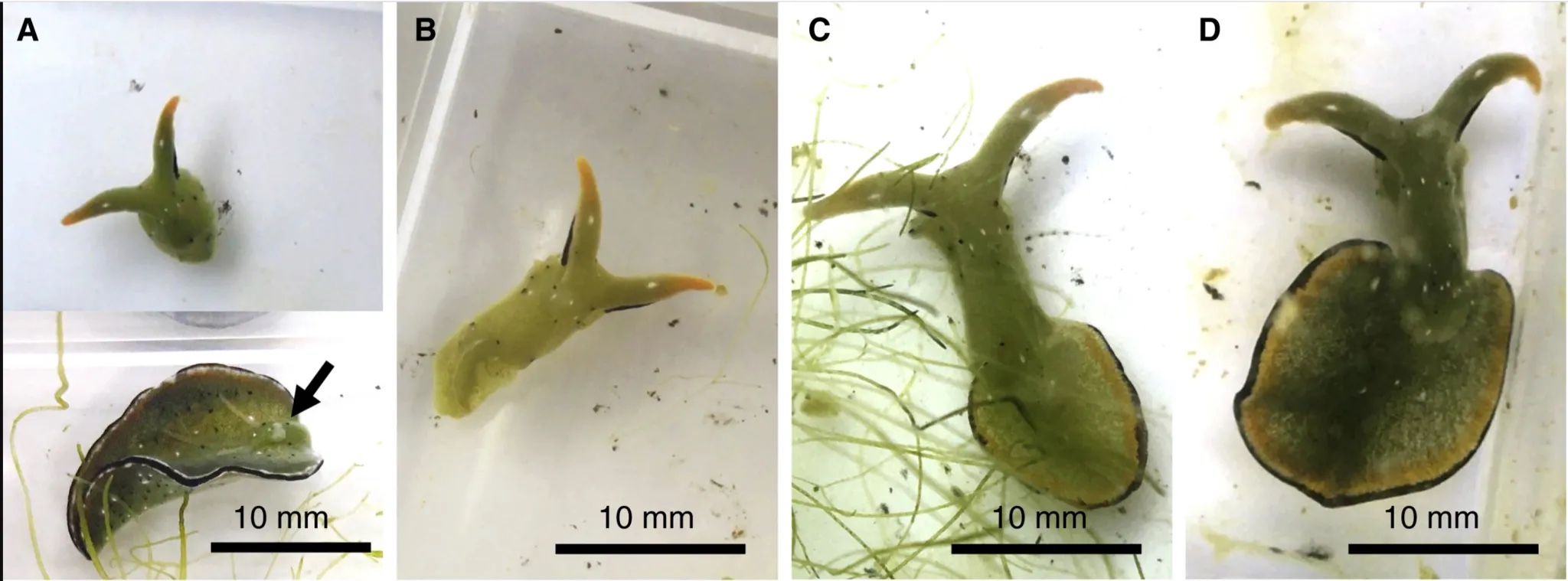
Two Japanese researchers found that a substantial proportion (33%) of two species of sea slugs (Elysia cf. marginata and E. atroviridis) were observed to shed their own heads (“autotomy”, a fancy word for “self amputation”) in the laboratory. Moreover, the heads regenerated new bodies—and quite quickly: within 20 days. The shed bodies, which did not regenerate new heads but died, contained the heart and the digestive systems. The heads, meanwhile, closed the wound from “voluntary” separation, began eating algae within hours, and the regeneration of the entire body was complete within 20 days.

Here’s a shot of four phases of the autotomy from the paper (as is the caption):

A) Head and body of Elysia cf. marginata (individual no. 1) just after autotomy (day 0), with the pericardium (heart) remaining in body section (arrow). (B) day 7, (C) day 14, (D) day 22, showing whole-body regeneration.

Traditional Chinese Medicine (TCM)

Traditional Chinese medicine (TCM) is thousands of years old and has changed little over the centuries. Its basic concept is that a vital force of life, called Qi, surges through the body. Any imbalance to Qi can cause disease and illness. This imbalance is most commonly thought to be caused by an alteration in the opposite and complementary forces that make up the Qi. These are called yin and yang.

Ancient Chinese believed that humans are microcosms of the larger surrounding universe, and are interconnected with nature and subject to its forces. Balance between health and disease is a key concept. TCM treatment seeks to restore this balance through treatment specific to the individual.

It is believed that to regain balance, you must achieve the balance between the internal body organs and the external elements of earth, fire, water, wood, and metal.

Treatment to regain balance may involve:

• Acupuncture

• Moxibustion (the burning of herbal leaves on or near the body)

• Cupping (the use of warmed glass jars to create suction on certain points of the body)

• Massage

• Herbal remedies

• Movement and concentration exercises (such as tai chi)

Acupuncture is a component of TCM commonly found in Western medicine and has received the most study of all the alternative therapies. Some herbal treatments used in TCM can act as medicines and be very effective but may also have serious side effects. In 2004, for example, the FDA banned the sale of dietary supplements containing ephedra and plants containing ephedra group alkaloids due to complications, such as heart attack and stroke. Ephedra is a Chinese herb used in dietary supplements for weight loss and performance enhancement. However, the ban does not apply to certain herbal products prepared under TCM guidelines intended only for short-term use rather than long-term dosing. It also does not apply to OTC and prescription drugs or to herbal teas.

If you are thinking of using TCM, a certified practitioner is your safest choice. The federally recognized Accreditation Commission for Acupuncture and Oriental Medicine (ACAOM) accredits schools that teach acupuncture and TCM. Many of the states that license acupuncture require graduation from an ACAOM-accredited school. The National Certification Commission for Acupuncture and Oriental Medicine offers separate certification programs in acupuncture, Chinese herbology, and Oriental bodywork.

TCM should not be used as a replacement for conventional or allopathic treatment, especially for serious conditions, but it may be beneficial when used as complementary therapy. Since some TCM herbal medicines can interfere or be toxic when combined with Western medicines, you should inform your doctor if you are using TCM.

Source: Johns Hopkins Medicine