Warsaw Ghetto Uprising

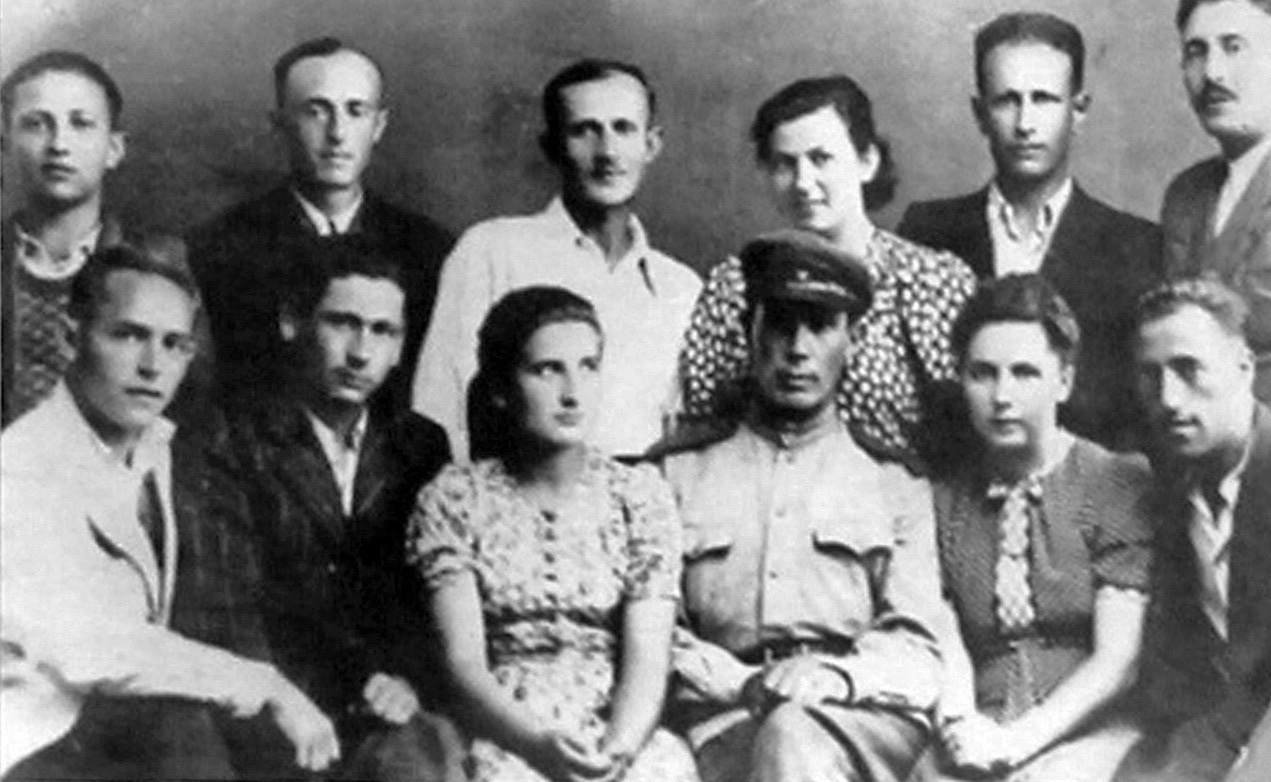
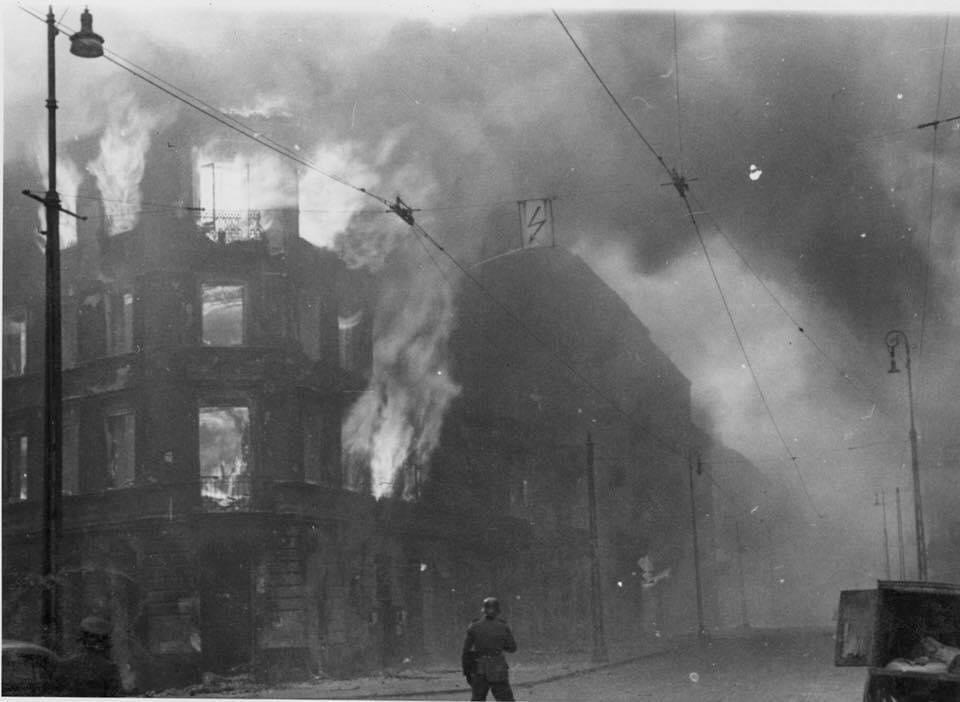
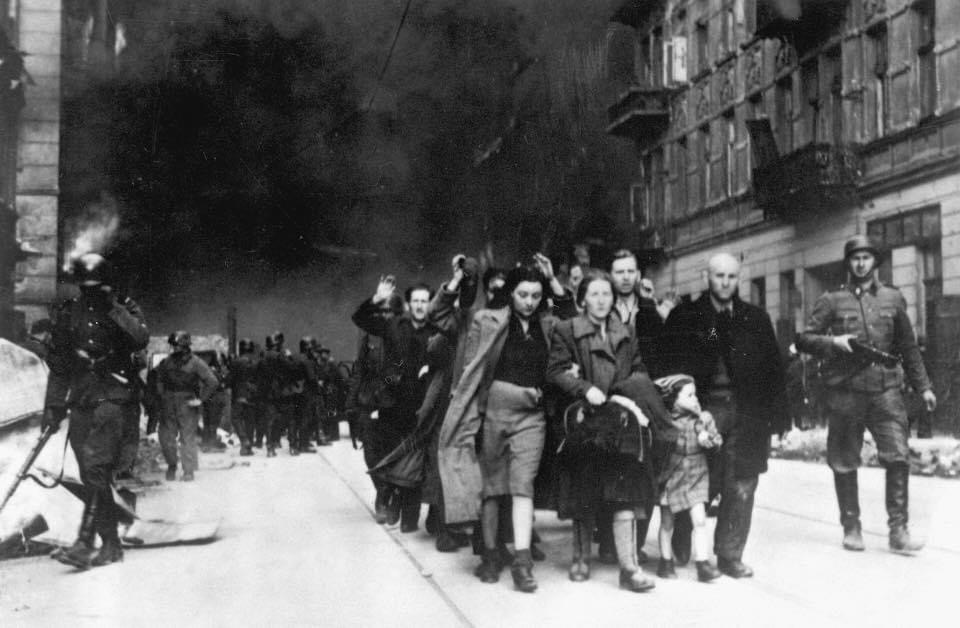
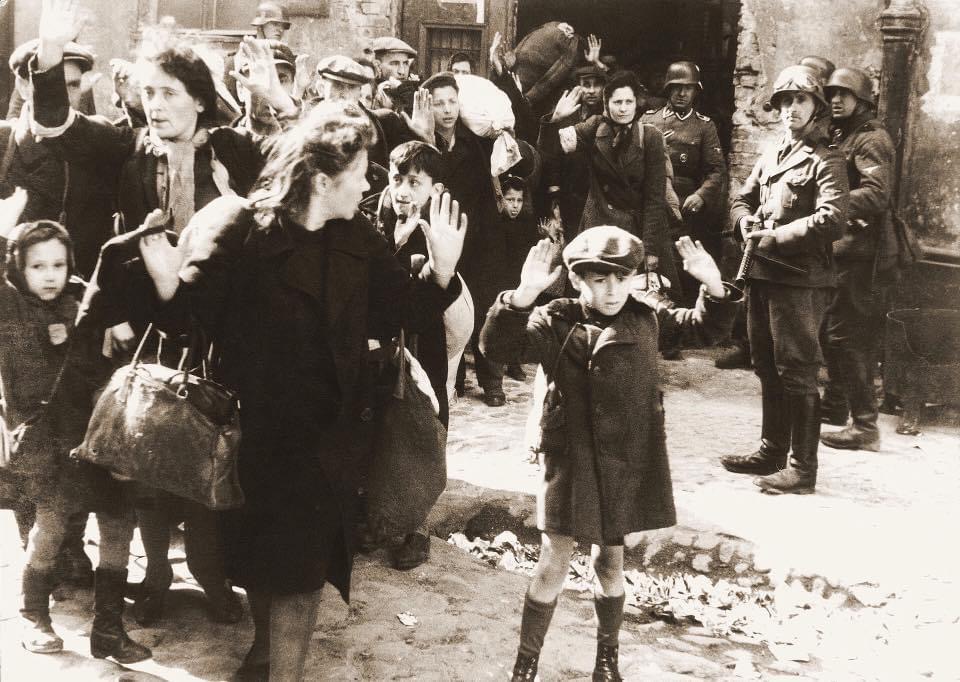
On April 19th 1943, the Warsaw Ghetto Uprising began. It was the 1943 act of Jewish resistance that arose within the Warsaw Ghetto in German-occupied Poland during World War II, and which opposed Nazi Germany’s final effort to transport the remaining Ghetto population to Treblinka. The uprising started on 19 April when the Ghetto refused to surrender to the police commander SS-Brigadeführer Jürgen Stroop, who then ordered the burning of the Ghetto, block by block, ending on 16 May. A total of 13,000 Jews died, about half of them burnt alive or suffocated. German casualties are not known, but were not more than 300. It was the largest single revolt by Jews during World War II.

On 19 April 1943, on the eve of Passover, the police and SS auxiliary forces entered the Ghetto. They were planning to complete the deportation action within three days, but were ambushed by Jewish insurgents firing and tossing Molotov cocktails and hand grenades from alleyways, sewers, and windows. The Germans suffered 59 casualties and their advance bogged down. Two of their combat vehicles (an armed conversion of a French-made Lorraine 37L light armored vehicle and an armored car) were set on fire by insurgent petrol bomb. Following von Sammern-Frankenegg’s failure to contain the revolt, he lost his post as the SS and police commander of Warsaw. He was replaced by SS-Brigadeführer Jürgen Stroop, who rejected von Sammern-Frankenegg’s proposal to call in bomber aircraft from Kraków and proceeded to lead a better-organized and reinforced ground attack.

The longest-lasting defense of a position took place around the ŻZW stronghold at Muranowski Square, where the ŻZW chief leader, Dawid Moryc Apfelbaum, was killed in combat. On the afternoon of 19 April, a symbolic event took place when two boys climbed up on the roof of a building on the square and raised two flags, the red-and-white Polish flag and the blue-and-white banner of the ŻZW. These flags remained there, highly visible from the Warsaw streets, for four days. After the war, Stroop recalled:

“The matter of the flags was of great political and moral importance. It reminded hundreds of thousands of the Polish cause, it excited them and unified the population of the General Government, but especially Jews and Poles. Flags and national colours are a means of combat exactly like a rapid-fire weapon, like thousands of such weapons. We all knew that – Heinrich Himmler, Krüger, and Hahn. The Reichsfuehrer [Himmler] bellowed into the phone: ‘Stroop, you must at all costs bring down those two flags!’”
~ Jürgen Stroop, 1949

#WarsawGhettoUprising #JewishResistance #Holocaust

Sonderkommando Auschwitz Revolt

On October 7th, 1944, the Sonderkommando of Auschwitz-Birkenau—a group of Jewish prisoners tasked with removing corpses from gas chambers and burning them—rose up against their Nazi captors. Using gunpowder smuggled by young Jewish women forced to work in munitions factories, a group of Sonderkommando prisoners blew up one crematorium and killed some of the guards.

250 of the revolt’s participants died fighting the SS and police, and 200 more were shot by the SS after the fighting ended. Although the SS quashed the uprising, the Auschwitz-Birkenau revolt remains an example of bravery in the face of extraordinary oppression.

#AuschwitzRevolt #Resistance

Sobibór Revolt

On October 14th, 1943 prisoners at the Sobibór extermination camp in Poland revolt against the Germans.

Sobibor is notable for the prisoner revolt which took place on 14 October 1943. The plan for the revolt, developed by Alexander Pechersky and Leon Feldhendler, involved two phases. In the first phase, teams of prisoners were to assassinate all of the on-duty SS officers in discreet locations. Then in the second phase, all 600 prisoners would assemble for roll call and walk to freedom out the front gate. However, the revolt did not go as planned. The operation was discovered while several SS officers were still alive and prisoners ended up having to escape by climbing over barbed wire fences and running through a mine field under heavy machine gun fire. Even so, about 300 prisoners made it out of the camp, of whom roughly 60 survived to the end of the war. Thus the Sobibor revolt is often described as the most successful to take place in any Nazi camp.

After the revolt, the Nazis demolished the camp and planted it over with pine trees to conceal the evidence of what had happened there. In the first decades after World War Two, Sobibor was not well known and the site was rarely visited except by locals digging for buried valuables. Since then, it has become better known through its depictions in the TV miniseries Holocaust and the film Escape from Sobibor. The site now hosts the Sobibor Museum as well as ongoing archaeological excavations.

Above a few of the survivors.

Einsatzgruppen: An Overview

0842A60C-29CA-4235-8F76-3D5DDAFA3F8E

“Einsatzgruppen were special SS and police units tasked with securing occupied territories as German armed forces advanced in eastern Europe. Following the invasion of the Soviet Union in June 1941, these squads ruthlessly carried out the mass murder of Soviet Jews, Roma, and political opponents.”

~ United States Holocaust Memorial Museum

From  1941-1944, Nazi SS and German police forces, German military units, and local collaborators killed more than 2 million Jews residing in the Soviet Union in mass shooting operations.  The Germans deployed four Einsatzgruppen, dozens of police battalions, and units of the Military SS in the occupied Soviet Union. They conducted so-called pacification actions with a priority placed on annihilating Soviet Jews in shooting operations.  Of the Jewish victims of the Holocaust, about 40 percent were killed in mass shootings. Confiscation of property was an integral aspects of the mass shooting process. Following massacres, Jewish property not directly seized by the Germans was typically auctioned or distributed to their neighbors. Shootings were local, public, and witnessed by neighbors. The Germans pressed many of these neighbors into service as clerks, grave diggers, wagon drivers, and cooks to provide support for the mass killing actions.

Today, remains of Nazi Germany’s victims lie in hundreds of mass graves.  They were under the command of the German Security Police and Security Service officers. The Einsatzgruppen had among their tasks the murder of those perceived to be racial or political enemies found behind German combat lines in the occupied Soviet Union.  These victims included Jews, Roma (Gypsies), and officials of the Soviet state and the Soviet Communist party. The Einsatzgruppen also murdered thousands of residents of institutions for the mentally and physically disabled. Many scholars believe that the systematic killing of Jews in the occupied Soviet Union by Einsatzgruppen and Order Police battalions was the first step of the “Final Solution.”

5A22726F-C27A-4E4B-9D5B-B2B77826D78D.jpeg

The German army provided logistical support to the Einsatzgruppen, including supplies, transportation, housing, and occasionally manpower in the form of units to guard and transport prisoners. At first the Einsatzgruppen shot primarily Jewish men, but by late summer 1941 wherever the Einsatzgruppen went they shot Jewish men, women, and children without regard for age or sex, and buried them in mass graves. Often with the help of local informants and interpreters, Jews in a given locality were identified and taken to collection points.

Shooting was the most common form of killing used by the Einsatzgruppen. Yet in the late summer of 1941, Heinrich Himmler, noting the psychological burden that mass shootings produced on his men, requested that a more convenient mode of killing be developed. The result was the gas van, a mobile gas chamber surmounted on the chassis of a cargo truck which employed carbon monoxide from the truck’s exhaust to kill its victims. Gas vans made their first appearance on the eastern front in late fall 1941, and were eventually utilized, along with shooting, to murder Jews and other victims in most areas where the Einsatzgruppen operated.

The Einsatzgruppen were composed of four battalion-sized operational groups:

Einsatzgruppe A fanned out from East Prussia across Lithuania, Latvia, and Estonia toward Leningrad.

Einsatzgruppe B started from Warsaw in occupied Poland, and fanned out across Belorussia toward Smolensk and Minsk.

Einsatzgruppe C began operations from Krakow and fanned out across the western Ukraine toward Kharkov and Rostov-on-Don. Around Kiev, famously in two days in late September 1941 units of Einsatzgruppe detachment 4a massacred 33,771 Kiev Jews in the ravine at Babi Yar.

Einsatzgruppe D operated farthest south of the four units. in the southern Ukraine and the Crimea.

Einsatzgruppen members were drawn from the SS, Waffen SS (military formations of the SS), SD, Sipo, Order Police, and other police units.  By the spring of 1943, the Einsatzgruppen and Order Police battalions had killed over a million Soviet Jews and tens of thousands of Soviet political commissars, partisans, Roma, and institutionalized disabled persons. The mobile killing methods, particularly shooting, proved to be inefficient and psychologically burdensome to the killers. Even as Einsatzgruppen units carried out their operations, the German authorities planned and began construction of special stationary gassing facilities at centralized killing centers in order to murder vast numbers of Jews.

Sources: “Masters of Death,” Rhodes, Richard. 2003. “Ordinary Men: Reserve Police Battalion 101 and the Final Solution in Poland,” Browning, Christopher. 1994. “Hitler’s Willing Executioners: Ordinary Germans and the Holocaust.” Goldhagen, Daniel Jonah. 1996.  ushmm.org.  jewishvirtuallibrary.org.

Babi Yar

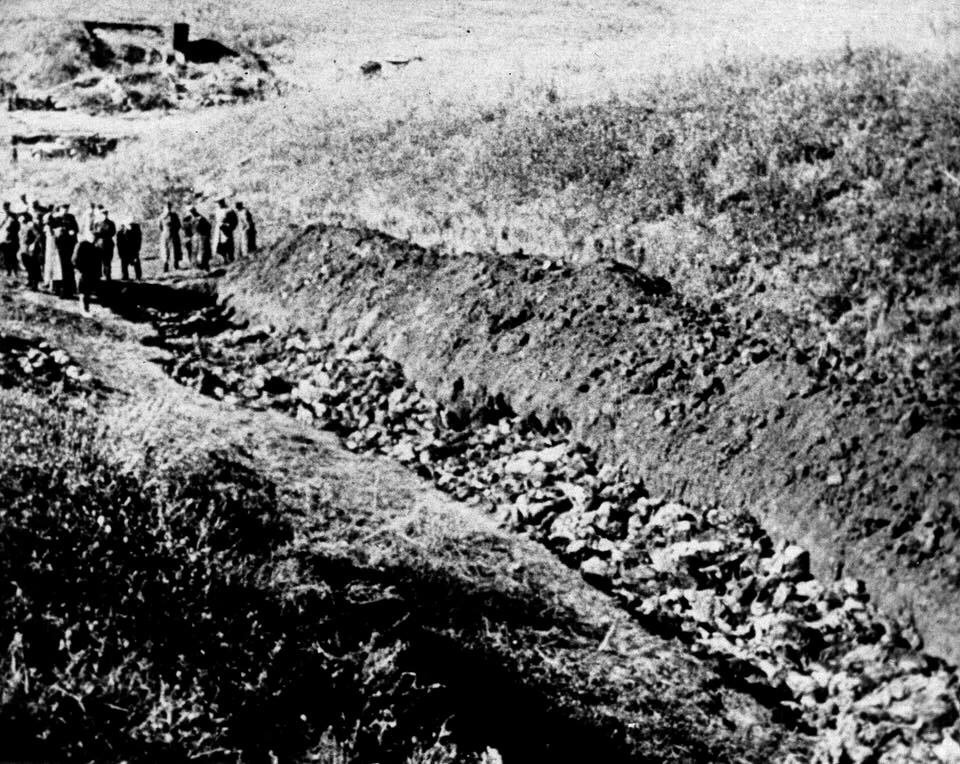
On September 29th, we remember one of the largest single mass murders of the Holocaust. Beginning on September 29, 1941, German forces and their auxiliaries rounded up and killed the Jews of Kiev, Ukraine, at a ravine called Babi Yar. In just two days, 33,771 Jewish men, women, and children were shot.

The Babi Yar massacre remains a harrowing example of Nazi atrocities during the invasion of the Soviet Union. In the months following the massacre, German authorities stationed at Kiev killed thousands more Jews at Babi Yar, as well as non-Jews including Roma (Gypsies), Communists, and Soviet prisoners of war. It is estimated that some 100,000 people were murdered at Babi Yar.

#Holocaust #Remembrance #BabiYar

Anti-Semitism Rising In Europe

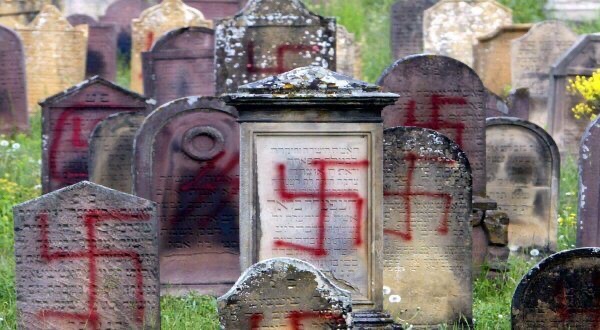
“Studying the Holocaust shouldn’t be limited to history classes. It must become part of curricula of political & civic education, ethics, media or religious studies. Ideologies of hatred that led to Auschwitz still poison people’s minds.”
~ Piotr Cywiński, Historian and Director of the Auschwitz-Birkenau State Museum, active participant and often initiator in the Polish-Jewish and Christian-Jewish dialogue.

Anti-Semitism in Europe (ComRes Polling for CNN):

~ One in four said Jews have too much influence in conflict and wars across the world.

~ One in five said they have too much influence in the media and politics.

~ A third of Europeans in the poll said they knew just a little or nothing at all about the Holocaust. One in 20 in had never heard of the Holocaust.

~ A third of Europeans said that Jews use the Holocaust to advance their own positions or goals.

~ A third of Europeans said supporters of Israel use accusations of anti-Semitism to shut down criticism of Israel.

~ A third of Europeans said commemorating the Holocaust distracts from other atrocities today.

~ 40% said Jews were at risk of racist violence in their countries and half said their governments should do more to fight anti-Semitism.

~ Americans do not fare any better: A survey carried out on behalf of the Claims Conference earlier this year found that 10% of American adults were not sure they’d ever heard of the Holocaust, rising to one in five millennials. Half of all millennials could not name a single concentration camp, and 45% of all American adults failed to do so.

Anne Frank’s Last Diary Entry

On August 1st 1944, Anne Frank penned her last entry into her diary.

“… Believe me, I’d like to listen, but it doesn’t work, because if I’m quiet and serious, everyone thinks I’m putting on a new act and I have to save myself with a joke, and then I’m not even talking about my own family, who assume I must be ill, stuff me with aspirins and sedatives, feel my neck and forehead to see if I have a temperature, ask about my bowel movements and berate me for being in a bad mood, until I just can’t keep it up any more, because when everybody starts hovering over me, I get cross, then sad, and finally end up turning my heart inside out, the bad part on the outside and the good part on the inside, and keep trying to find a way to become what I’d like to be and what I could be if … if only there were no other people in the world.”

Three days later, Anne was arrested with her family in the “secret annex” of a house in Amsterdam, Netherlands, where they had hidden for two years. She later died at the Bergen-Belsen concentration camp when she was 15.

(Anne Frank at the Sixth Montessori School, Amsterdam, 1941)

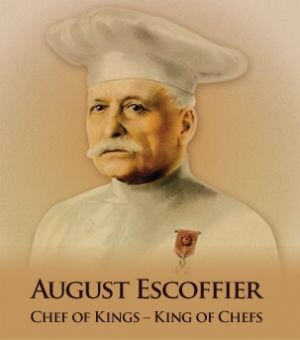
A Soldier’s Life: Escoffier & The Brigade de Cuisine

The art of cuisine is perhaps one of the most useful forms of diplomacy.”
~ Auguste Escoffier

On October 28, 1846 one of the most important French chefs the world has ever known was born Georges Auguste Escoffier. He modernized and simplified the French culinary system. Among his achievements was codifying the five mother sauces of French cuisine. He also instituted a military hierarchy into the kitchen, a system that is followed to this day worldwide with few changes. This brigade de cuisine is a structured team system which delegates different responsibilities to different team members who specialize in certain tasks.

Escoffier began his apprenticeship aged 12 at his uncle’s restaurant in Nice, France. At 19 he moved to Paris and continued his apprenticeship. He was the first great chef that worked his entire career in the public sphere, as opposed to working for royalty. Among his customers were kings, heads of state, and stars on the London and Paris opera. He became known as, “the chef of kings and King of chefs”.

His belief, “above all, keep it simple,” led to him revolutionizing cuisine and a gastronomic philosophy of highly refined simplicity. Escoffier established sanitation standards that up until that point had been unheard of in the kitchen. He was an expert in food science of the time as well as preservation. He was one of the first to develop bottled sauces for the homemaker. Escoffier was dedicated to the belief that food service professionals should improve their skills through education. He wrote multiple books to this effect including Le Guide Culinaire.

The brigade system was instituted in the 19th century at London’s Savoy Hotel. The size and scope will vary according to the size of the kitchen and the establishment. In a large hotel kitchen, especially during Escoffier’s age, a brigade would consist of the following:

Executive Chef – An administrator in charge of all kitchen operations including menu planing, costing and scheduling.
Chef de Cuisine – A active cook who works in the kitchen during preparation periods as well as service. Also responsible for ordering and other administrative duties.
Sous Chef – Second in command under the chef de cuisine. Supervises all the cooks. Oversees the preparation of food and service in the chef de cuisine’s absence.
Chef de Partie – In charge of a specific station.
Commis – Assistants to the chef de partie.
Apprentice – Assists the commis. Common in Europe.

Stations:
Saucier – Responsible for the preparation of all stocks and sauces.
Rotisseur – Responsible for all roasts. Oversaw next two positions.
Grillardin – Responsible for all grilled meats.
Friturier – Responsible for frying everything from French fries to oysters and tempura.
Poissonier – Responsible for the cleaning and preparation of all fish.
Entremetier – Responsible for the “entrance” to the meal, a small lighter first course. Oversaw next two positions.
Potager – Responsible for making soups.
Legumier – Responsible for all vegetable hot dishes and sides.
Garde Manger – Responsible for the preparation of all cold dishes including hors d’oeuvres, terrines, pates, etc.
Patissier – Pastry chef. Responsible for the creation and presentation of all desserts.
Boulanger – Baker. Responsible for all bread and breakfast pastries.